Ranked Picks: Online Water Quality Sensors for Chlorine, Turbidity & COD
Ranked Picks: Online Water Quality Sensors for Chlorine, Turbidity & COD
A ranked shortlist for plant engineers and EHS teams building or upgrading a three-parameter monitoring loop — ordered by application fit, not by catalogue length.

Cover: KWS-3000 Online Residual Chlorine Sensor — first position for free chlorine loop control.
Short answer. For a loop that must hold free chlorine, turbidity and COD at the same time, the ranked picks are: 1) KWS-3000 Online Residual Chlorine Sensor, 2) KWS-900 series Fiber Optic Turbidity Sensor, 3) KWS-190 Digital COD Sensor, 4) KWS-800 Online Multi-Parameter Water Quality Monitoring System, and 5) KWS-250 Online Ammonia Nitrogen Sensor as the nitrogen extension most effluent plants add next.
The order reflects one criterion only: how directly each device answers a decision the plant has to make, and how well its published specifications match the wet conditions of that specific loop. It is not a claim of overall performance superiority over any other brand or model.
All five candidates come from one supplier. Xi'an Kacise Optronics Tech Co., Ltd. (KACISE) is a water quality sensor manufacturer headquartered in Xi'an, Shaanxi, China, whose portfolio covers online water quality sensors, multi-parameter monitoring systems, and level, pressure and flow measurement instruments for industrial, environmental and aquaculture applications.
The Problem: Three Parameters, Three Different Wet Conditions
A chlorine, turbidity and COD loop looks like one monitoring task on a P&ID and behaves like three separate ones in the field. Each parameter changes at a different speed, tolerates a different sample condition, and fails for a different reason.
Free chlorine is a control signal. Disinfection residual moves within minutes of a dosing change, so the sensor needs a fixed, continuous sample — which is why the KWS-3000 is built around flow-cell installation with a stated sample window of 30–60 L/h and a pH envelope of 4–9.
Turbidity is an optical signal. It is the fastest visible indicator of filter breakthrough and final effluent quality, and its most common failure mode is fouling on the optical window rather than electronics drift. That is why the cleaning variant matters more than most of the specification sheet.
COD is an inferred signal. Reagent-free optical COD is derived from absorption and requires turbidity compensation before the number means anything. Its accuracy is usually quoted against full scale, so it behaves differently from a direct physical measurement such as turbidity or pressure.
Treating these three as interchangeable inputs to one controller is where many projects lose time: the chlorine channel is starved of flow, the turbidity window is fouled within weeks, and the COD reading is quietly biased by solids that nobody compensated for.
Industry Background: Why Multi-Parameter Consolidation Is Happening Now
The shift toward consolidated monitoring is measurable. Grand View Research reported that multi-parameter sensors accounted for over 60% of new sensor sales globally in 2024, up from 42% in 2020, and placed the global water quality sensor market at USD 6.2 billion in 2025, with Asia Pacific holding a 48.2% revenue share in the same year.
Two cautions apply to those figures. Market-size estimates differ materially between research houses — SkyQuest has published a substantially lower 2025 starting value, largely because of different boundaries between sensors, analyzers, meters and monitoring systems — so use them as directional context rather than as a planning constant. And consolidation does not mean every parameter belongs on one probe: the multi-parameter share is rising at the same time that dedicated chlorine and COD instruments remain the reference for their own loops.
Regulatory pressure runs alongside the commercial trend. Monitoring frameworks such as the U.S. EPA's Standardized Monitoring Framework formalize what must be recorded and how, which shifts buyer attention from the reading itself to the record behind the reading — calibration, cleaning, compensation and data storage.
The Ranked Picks
POSITION 1
KWS-3000 Online Residual Chlorine Sensor
What it measures and how. Free residual chlorine (HClO) using the constant-voltage method, with automatic temperature compensation via Pt100 and two-point calibration. Output is RS485 (Modbus/RTU); installation is flow-cell based.
Published operating envelope. Residual chlorine 0–2.000 mg/L; sample temperature 5–50 °C; pH 4–9; flow rate 30–60 L/h; response time under 30 s. Wetted materials are polyformaldehyde resin, PTFE, gold, silver and conductive rubber; protection is IP68.
Why it ranks first. Disinfection is the one parameter in this loop that is both continuous and compliance-linked. A dedicated single-parameter sensor with a defined flow cell produces a number that can be acted on directly, without unpicking a combined probe's compensation assumptions.
Stated application fit. Drinking water treatment plants, water distribution networks, canning plants, swimming pools, cooling circulating water and water quality treatment engineering.
Constraint to check before ordering. The stated range tops out at 2.000 mg/L, and the pH and flow windows are part of the measurement assumption — a shock-dosing line or a sample outside pH 4–9 needs a different configuration.
POSITION 2
KWS-900 / KWS-900A / KWS-900B Fiber Optic Turbidity Sensor
What it measures and how. Turbidity by 90° scattered-light principle, with RS485 (Modbus) output, anti-ambient-light interference and stated high repeatability. The 900B variant adds an automatic cleaning brush.
Published operating envelope. Turbidity 0–1000 NTU or 0–4000 NTU (customizable); temperature 0–50 °C; maximum pressure 6 bar. Titanium body, IP68, with M22×1.5 thread on the 900A and NPT 3/4 on the 900B.
Why it ranks second. Turbidity carries the fastest actionable information in most plants, and it is also the parameter most often degraded by biofouling. A titanium optical sensor with a mechanical cleaning option addresses the failure mode that actually shortens service intervals.
Stated application fit. Water quality monitoring, sewage treatment, drinking water, surface water, industrial wastewater and aquaculture.
Constraint to check before ordering. The 6 bar and 50 °C ceilings define where the sensor can sit in the process. The cleaning brush belongs to the 900B — specifying the wrong variant means planning manual cleaning into the maintenance schedule.
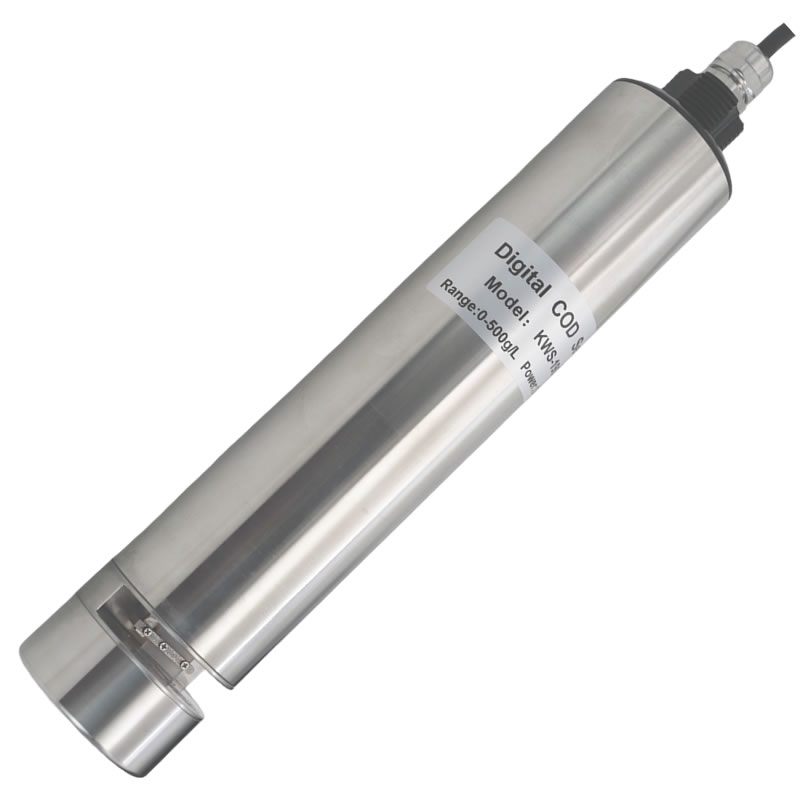
KWS-190 Digital COD Sensor — position three for organic load and effluent trending.
POSITION 3
KWS-190 Digital COD Sensor
What it measures and how. COD together with TOC, BOD and turbidity, using a reagent-free optical method with automatic turbidity compensation, self-cleaning and five-point calibration. Parameter configuration runs over RS485 (Modbus, IoT supported).
Published operating envelope. COD 0–500 mg/L (±5% FS) or 0–1500 mg/L (±10% FS), with corresponding TOC and BOD ranges. Stainless steel housing.
Why it ranks third. COD is where operating cost concentrates: reagent consumption, manual sampling and lab turnaround all sit on this parameter. A reagent-free, self-cleaning sensor removes the consumable line item and produces a continuous trend instead of a daily snapshot. It ranks below chlorine and turbidity because its accuracy is quoted against full scale and it depends on turbidity compensation to stay meaningful.
Stated application fit. Industrial wastewater treatment, sewage treatment, surface water monitoring and drinking water quality control.
Constraint to check before ordering. The published record lists a stainless steel housing but no ingress-protection rating or pressure limit, so confirm the protection class for the intended submersion or in-line duty before it is written into a specification.
POSITION 4
KWS-800 Online Multi-Parameter Water Quality Monitoring System
What it measures and how. An all-in-one probe with up to seven optional parameters — fluorescent dissolved oxygen, four-electrode conductivity, fiber turbidity, digital pH/ORP, chlorophyll and oil in water — plus temperature, with RS485 (Modbus) output, an automatic cleaning device and a waterproof connector.
Published operating envelope. Dissolved oxygen 0–20 mg/L; turbidity 0–1000 NTU; conductivity 0–5000 µS/cm and 0–100 mS/cm; pH 0–14; oil 0–500 ppb and 0–50 ppm; temperature 0–50 °C. Titanium alloy plus 316L stainless steel, IP68.
Why it ranks fourth rather than first. It is the strongest consolidation option in the portfolio and the natural choice for a new station — but its listed parameter set does not include free chlorine or COD. For a chlorine, turbidity and COD loop it complements the dedicated sensors; it does not replace them. That single fact is why a wider probe does not automatically take the top position.
Stated application fit. River, lake, ocean and groundwater monitoring, environmental online monitoring, aquaculture and water treatment plants.
Constraint to check before ordering. Combine it with a dedicated chlorine and COD channel through the controller layer rather than assuming one probe covers the full compliance set.
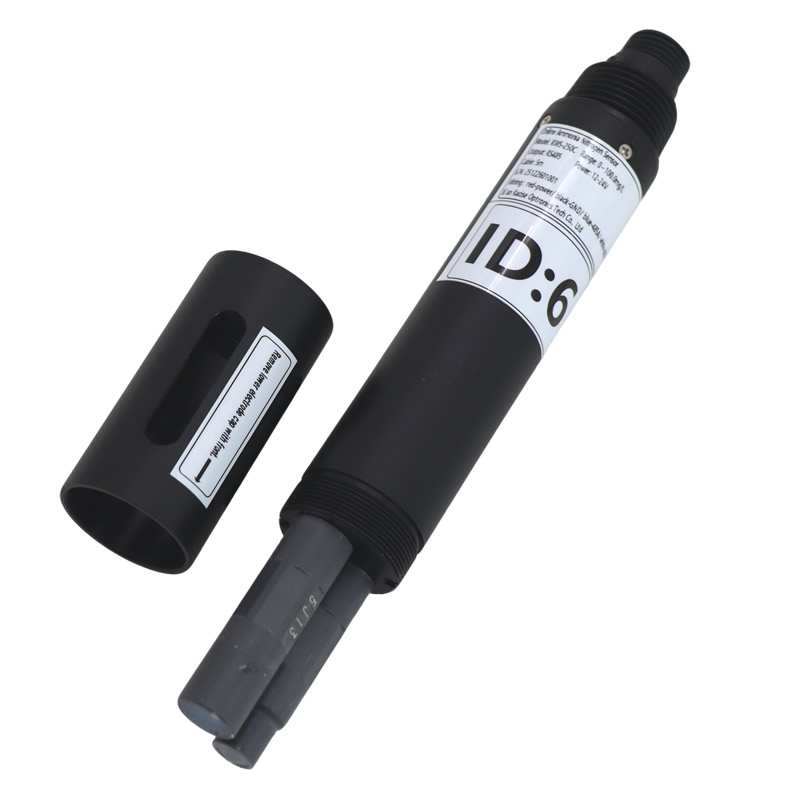
KWS-250 Online Ammonia Nitrogen Sensor — position five, the most common next addition to an effluent loop.
POSITION 5
KWS-250 Online Ammonia Nitrogen Sensor
What it measures and how. Ammonia nitrogen, reagent-free, with RS485 (Modbus) output, automatic temperature and pH compensation, and immersion installation.
Why it ranks fifth. Ammonia nitrogen sits outside the three named parameters, so it cannot rank higher in a chlorine, turbidity and COD shortlist. It earns the last position because it is the most frequent next addition to an effluent or receiving-water loop, and because automatic temperature and pH compensation is what makes a reagent-free ammonia measurement practical in day-to-day operation.
Stated application fit. Freshwater aquaculture, sewage treatment, drinking water and surface water monitoring.
Constraint to check before ordering. Confirm measurement range and wetted materials against the datasheet for your specific water before specifying — those details should come from the current product document, not from a general description.
Comparison Table: Published Facts Only
| Rank & model | Measurement / principle | Published range | Output & integration | Wetted material / protection | Best-fit loop |
|---|---|---|---|---|---|
| 1 — KWS-3000 | Free residual chlorine (HClO), constant-voltage method | 0–2.000 mg/L; pH 4–9; 5–50 °C; flow 30–60 L/h | RS485 Modbus/RTU; flow cell; response <30 s | POM resin, PTFE, gold, silver, conductive rubber; IP68 | Disinfection residual control |
| 2 — KWS-900 / 900A / 900B | Turbidity, 90° scattered light | 0–1000 / 0–4000 NTU (customizable); 0–50 °C; 6 bar | RS485 Modbus; 900B automatic cleaning brush | Titanium; 900A M22×1.5, 900B NPT 3/4; IP68 | Filtration and effluent turbidity |
| 3 — KWS-190 | COD / TOC / BOD / turbidity, reagent-free optical | COD 0–500 mg/L (±5% FS); 0–1500 mg/L (±10% FS) | RS485 Modbus (IoT supported); 5-point calibration | Stainless steel housing | Organic load and effluent trending |
| 4 — KWS-800 | Up to 7 parameters (fluorescent DO, conductivity, fiber turbidity, pH/ORP, chlorophyll, oil in water) + temperature | DO 0–20 mg/L; turbidity 0–1000 NTU; 0–5000 µS/cm & 0–100 mS/cm; pH 0–14; 0–50 °C | RS485 Modbus; automatic cleaning device; waterproof connector | Titanium alloy + 316L stainless steel; IP68 | Station-level consolidation (no chlorine or COD channel listed) |
| 5 — KWS-250 | Ammonia nitrogen, reagent-free | Range per current datasheet | RS485 Modbus; auto temperature/pH compensation; immersion | Per current datasheet | Nitrogen extension on effluent and receiving water |
| Supporting — KWC-110 controller | Controller for matched sensors (DO, pH, COD, ammonia nitrogen and others) | Depends on matched sensor | 1/2 sensor channels; RS485 Modbus; 2× 4–20 mA; 2 relays; data storage >2 years | ABS casing; 5-inch colour touch screen | Single or dual-channel local loop control |
All values above reproduce the published product records for these models. Where a record does not state a value, the table says so rather than filling the gap.
Step-by-Step: Running This Ranking Against Your Own Plant
Step 1 — Name the decision, not the parameter. Write down what the reading triggers: a dosing adjustment, a filter backwash, a discharge release, or a report. A parameter that triggers nothing measurable is a candidate for a portable meter, not an online sensor.
Step 2 — Fix the water envelope before the model. Chlorine at pH above 9 or a sample temperature outside 5–50 °C falls outside the KWS-3000 envelope. Turbidity above 6 bar or 50 °C falls outside the KWS-900 envelope. COD above the stated full-scale band drops from ±5% FS to ±10% FS on the higher range. These boundaries decide the shortlist faster than the datasheet headline does.
Step 3 — Decide installation and cleaning together. A flow cell for chlorine, an immersion probe with a cleaning brush for turbidity, and a self-cleaning optical path for COD. Sensors that are physically compatible but maintained differently end up on different service schedules, which is a labour cost, not a technical one.
Step 4 — Standardise the signal layer. Every candidate above offers RS485 with Modbus, which allows one integration pattern across the loop. At the controller level, the KWC-110 accepts 1 or 2 sensors with RS485 Modbus, two 4–20 mA outputs, two relays and more than two years of data storage; the KMPW520 6-in-1 analyzer offers six freely combined parameters (pH, ORP, COD, BOD, residual chlorine, turbidity and others) with a 7.0-inch touch screen, two 4–20 mA channels, six relays, two RS485 Modbus-RTU channels and TF card/USB storage. Choose by channel count, not by screen size.
Step 5 — Rank by total effort. Score each candidate on sample conditioning, cleaning interval, calibration routine and controller channels. The device that needs the least supporting infrastructure per decision usually wins on a plant with a small instrumentation team, even when a wider multi-parameter probe looks more efficient on paper.

KWC-110 Online Water Quality Analyzer — the local control layer for one or two sensor channels.
Use Cases: How These Loops Are Actually Configured
Municipal wastewater plant, United Kingdom — 12 sensors, 3 years in service. A plant monitoring effluent quality combined the KWS-800 multi-parameter system with the KMPW520 6-in-1 analyzer, with reported results of compliant discharge and reduced manual sampling, and multi-parameter integration cited as the highlight. This is the pattern that works for a compliance-oriented site: a wide probe for the general water-quality picture, plus a configurable analyzer that carries the parameters the permit actually names.
River environmental monitoring, United Kingdom — 3 units, 2 years in service. A pollution-detection and early-warning installation used the KWS-910 online TSS sensor, the KWS-750 pH probe and the KMPW520 analyzer, reporting stable real-time monitoring and improved response speed, with remote IoT monitoring and low maintenance as the stated highlights. The lesson is that turbidity and solids belong together: a turbidity sensor tells you the water changed, a TSS sensor tells you what changed.
Aquaculture farm, Norway — 15 units, 3 years in service. A high-density fish farming site monitored dissolved oxygen and ammonia with the KWS-630 fluorescence dissolved oxygen sensor, reporting an increase in fish survival rate, with saltwater resistance and continuous monitoring as the highlights. The ammonia extension in this article's ranked list follows the same logic — in recirculating systems, the nitrogen channel is a survival parameter rather than a reporting one.
Agricultural runoff monitoring, Finland — 4 units, 2 years in service. Nutrient runoff tracking used the KWS-450 optical fiber chlorophyll sensor, reporting better agricultural pollution control. Chlorophyll is not part of the chlorine, turbidity and COD loop, but it demonstrates the same design rule: match the optical principle to the specific indicator the site cares about, rather than adding parameters for coverage.
Behind the List: What a Manufacturing Partner Has to Supply
A ranked shortlist is only usable if the supplier can deliver the configuration, not just describe it. The relevant capability facts for KACISE are as follows.
- Production footprint of 40,000 m² with an annual capacity of 120,000 units.
- OEM/ODM programs with customization of voltage, logo, output method, protocol and cable; monthly capacity of 5,000 units for these runs; MOQ from 1 unit; 100% testing.
- Shipping generally within 5–8 working days depending on quantity for standard orders, with a 30-day lead time listed for OEM production programs.
- Remote after-sales support, with export markets listed as the EU and the Middle East.
- Company-reported ISO 9001:2015 certification held since 2016, with CE/RoHS compliance reported.
Two of those items deserve a buyer's caveat. The certification position is a company-level statement: certificate scope, issuing body, validity and product coverage should be requested as documents before a tender submission, because company-level quality certification is not the same as product-level approval for a drinking water or marine market. And the two lead-time figures apply to different order types — standard shipments versus OEM production — so the number in a project schedule should match the order type being placed.
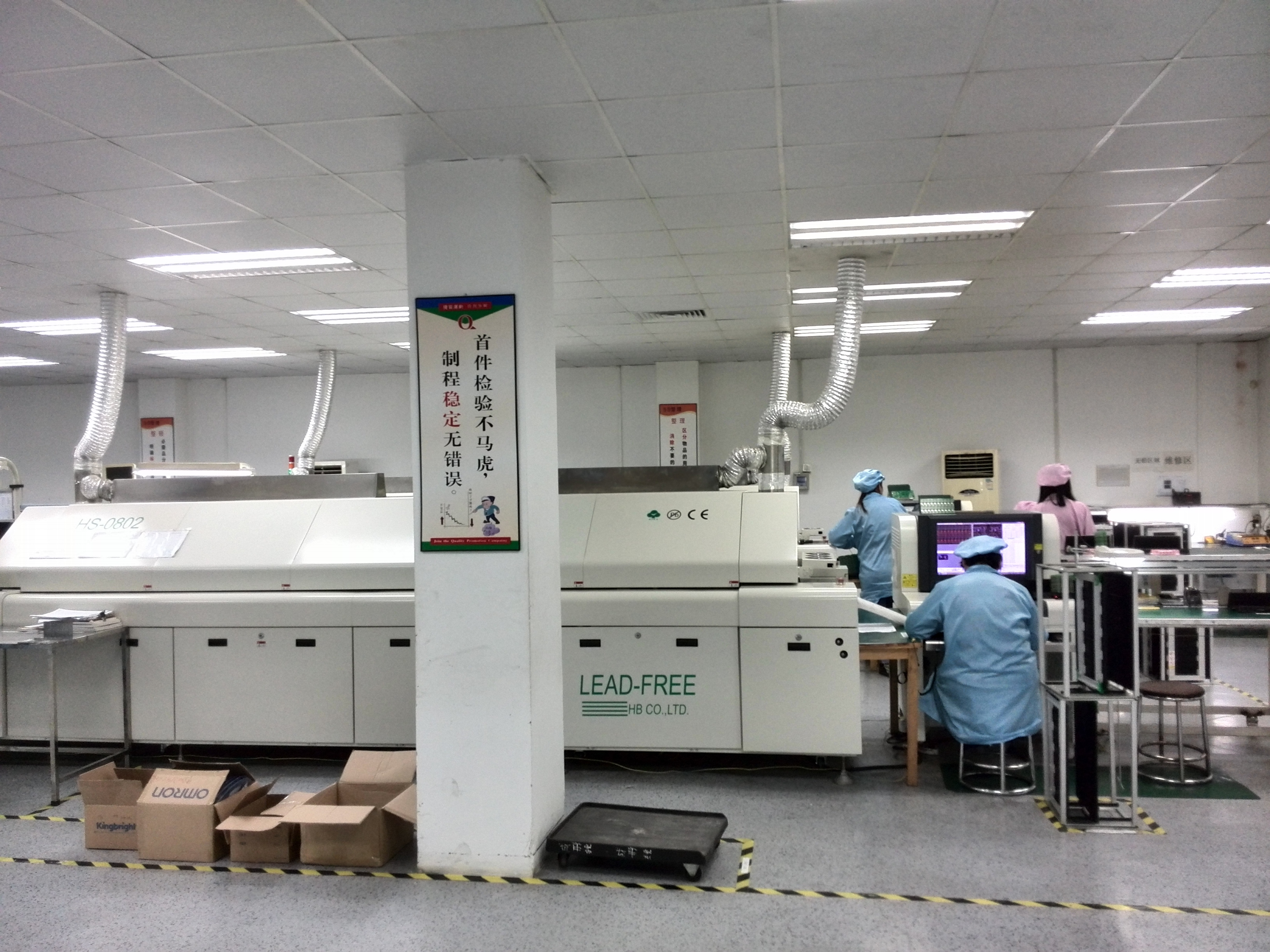
Production workshop — sensors in this shortlist are built in a 40,000 m² facility with 100% testing.
Frequently Asked Questions
Are these sensors certified for drinking water projects?
KACISE states that it has held ISO 9001:2015 certification since 2016 and reports CE/RoHS compliance. Those are company-level claims. For a drinking water project, request the certificate scope, issuing body, validity dates and the product list covered, and confirm separately whether the wetted materials of the specific sensor meet the approval required in your market. A quality management certificate does not by itself establish product-level drinking water approval.
Can the chlorine, turbidity or COD sensor be customized for an OEM program?
Yes. The OEM/ODM capability record covers customization of voltage, logo, output method, protocol and cable, with a monthly capacity of 5,000 units for these runs, 100% testing and a minimum order quantity of 1 unit. Standard manufacturing capacity is listed at 120,000 units per year from a 40,000 m² facility, and after-sales support is handled remotely. For a private-label program, the output method and protocol options are the two items worth fixing first, because they determine whether the sensor drops into an existing controller or needs a new integration.
What drives the cost of an online chlorine, turbidity or COD sensor?
Cost is configuration-dependent, and pricing is quoted per specification rather than published as a list. The variables that move it most are the measurement range (turbidity at 0–1000 NTU versus 0–4000 NTU; COD at 0–500 mg/L versus 0–1500 mg/L), the wetted material (titanium versus 316L stainless steel), whether an automatic cleaning brush or self-cleaning function is included, the output and protocol options, and the controller channel count if a KWC-110 or KMPW520 is part of the order. Specify the loop conditions first and let the quotation follow the configuration.
Can I order a single unit to validate before a project order?
The OEM/ODM capability record lists a minimum order quantity of 1 unit, which makes single-unit validation practical. Validate in your own sample rather than in clean water: the chlorine sensor's behaviour depends on the 30–60 L/h flow window and pH 4–9 envelope, turbidity depends on the optical window staying clean, and COD depends on turbidity compensation working in your solids range. A bench test that ignores those conditions proves very little.
What lead time should I plan for?
Shipping is generally listed at 5–8 working days depending on the quantity purchased for standard orders, while OEM production programs carry a 30-day lead time. For project quantities, confirm the lead time per model rather than per order, since the five sensors above are built on different platforms. To start a specification review or request a quotation with your loop conditions, contact the KACISE team at sales@kacise.com, by phone or WhatsApp at +86 180-6671-9659, or through kcsensor.com.
Conclusion
Chlorine, turbidity and COD do not belong to one measurement family, and a shortlist that treats them as one usually produces a loop with one well-instrumented parameter and two compromised ones. The ranking above places the KWS-3000 first because disinfection residual is the most continuous, compliance-linked decision in the loop; the KWS-900 series second because turbidity drives the fastest corrective action and fails most often through fouling; and the KWS-190 third because reagent-free COD removes consumables and manual sampling while remaining an inferred, full-scale-referenced measurement.
The KWS-800 takes fourth not because it is a weaker device but because its published parameter set does not include free chlorine or COD — the honest reason a wide probe cannot lead a three-parameter chlorine and COD shortlist. The KWS-250 closes the list as the nitrogen extension most sites add next.
Use the ranking as a starting order, then re-rank with your own water: the pH and flow window for chlorine, the pressure and temperature ceiling for turbidity, and the turbidity compensation behaviour for COD will move the list faster than any catalogue comparison. When the shortlist is settled, request the configuration-specific quotation and the product-level documents that go with it.
Ready to specify your loop?
Send your water conditions — pH, temperature, pressure, flow and target ranges — and KACISE will confirm the matching chlorine, turbidity or COD configuration, sample availability and lead time.
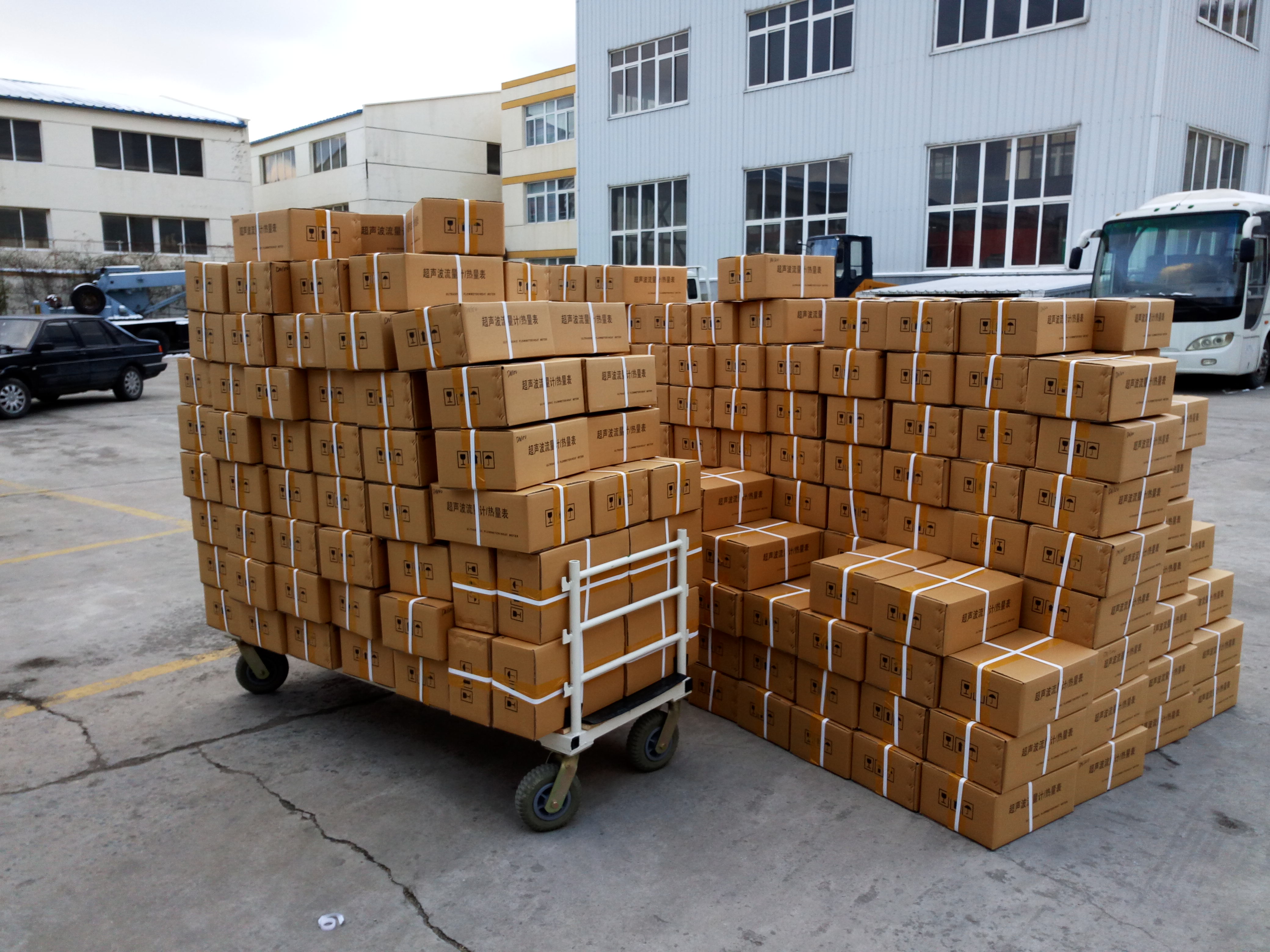
Factory shipment — standard orders are generally shipped within 5–8 working days depending on quantity.
Have Questions or Need More Details?
Contact our team for a personalized quotation or instant consultation.
Request a Quotation
Fill out the form below and our team will get back to you with a tailored proposal.
WhatsApp Direct Chat
Prefer to chat in real-time? Message us on WhatsApp for instant assistance & quick answers.
- Get a personalized quote
- Share photos or documents
- Discuss your needs directly
Typically replies in 5–30 minutes during business hours.