Vendor vs. Ecosystem: Qualifying a Water Quality Sensor Manufacturer for Long-Term Supply
When procurement reaches the Decision and Execution stage, the question quickly changes from which sensor to buy to which manufacturer you can build a product line, service territory, or monitoring network around. The first order is only a test; the relationship is what will determine whether your stock stays healthy, integrators stay efficient, and end clients stay online.
This article gives distributors, OEMs, and system integrators a factual framework for evaluating a water quality sensor manufacturer on long-term criteria: production capacity, product architecture, risk-control engineering, regulatory documentation, and commercial flexibility. It uses Xi'an KACISE Optronics Tech Co., Ltd. (KACISE) as a working manufacturer example because KACISE documents the factory-level data that ecosystem buyers should expect.
Why a Water Quality Sensor Manufacturer Must Be Evaluated as an Ecosystem Partner
Transactional sensor buying hides long-term cost. A buyer may receive a box of probes at a good price, but the next three years reveal hidden problems: inconsistent spare-part availability, fragmented output protocols, undocumented calibration changes, slow technical responses, and maintenance designs that increase labor cost. For a distributor, those risks translate to missed resale promises. For an OEM, they translate to repeated firmware rewrites. For an integrator, they translate to truck rolls and expensive downtime.
Scale makes the decision more visible. The global water quality sensor market was valued at USD 5.74 billion in 2024 and is projected to reach USD 9.10 billion by 2030, growing at a CAGR of 8.1 percent, according to Grand View Research. Asia Pacific dominated the market with a 46.5 percent revenue share in 2023, and China was identified as a major growth market. Simultaneously, IoT-enabled water quality management is expected to grow at a robust CAGR of 16.23 percent through 2030, according to TechSci Research. This means more connected sensors, more field locations, and more long-term integration requirements.
In this environment, a water quality sensor manufacturer needs to operate like a supply ecosystem, not just a component seller. The evaluation criteria should include verifiable production substance, consolidated technology, maintenance engineering, and commercial support that survives normal operational stress.
Industry Background: Market Growth and Regulatory Pressure
Water quality monitoring today spans drinking water, wastewater, rivers, lakes, aquaculture, industrial process water, and environmental compliance. Buyers frequently need pH, dissolved oxygen, conductivity, turbidity, COD, oil-in-water, ammonia nitrogen, chlorophyll, residual chlorine, and related parameters. Each parameter traditionally added its own probe, its own maintenance procedure, and its own potential failure point.
At the same time, regulated markets require industrial water quality sensors to operate within documented electromagnetic compatibility and material-safety boundaries. For electrical equipment for measurement, control, and laboratory use, EN IEC 61326-1:2021 is a relevant European standard. For sensors that contact drinking water in the United States, NSF/ANSI 61 and 372 are important references. Buyers scaling a product line should request standards documentation during qualification, not after a compliance issue appears.
Detailed Solution: What to Verify in a Long-Term Water Quality Sensor Manufacturer
1. Production substance and capacity
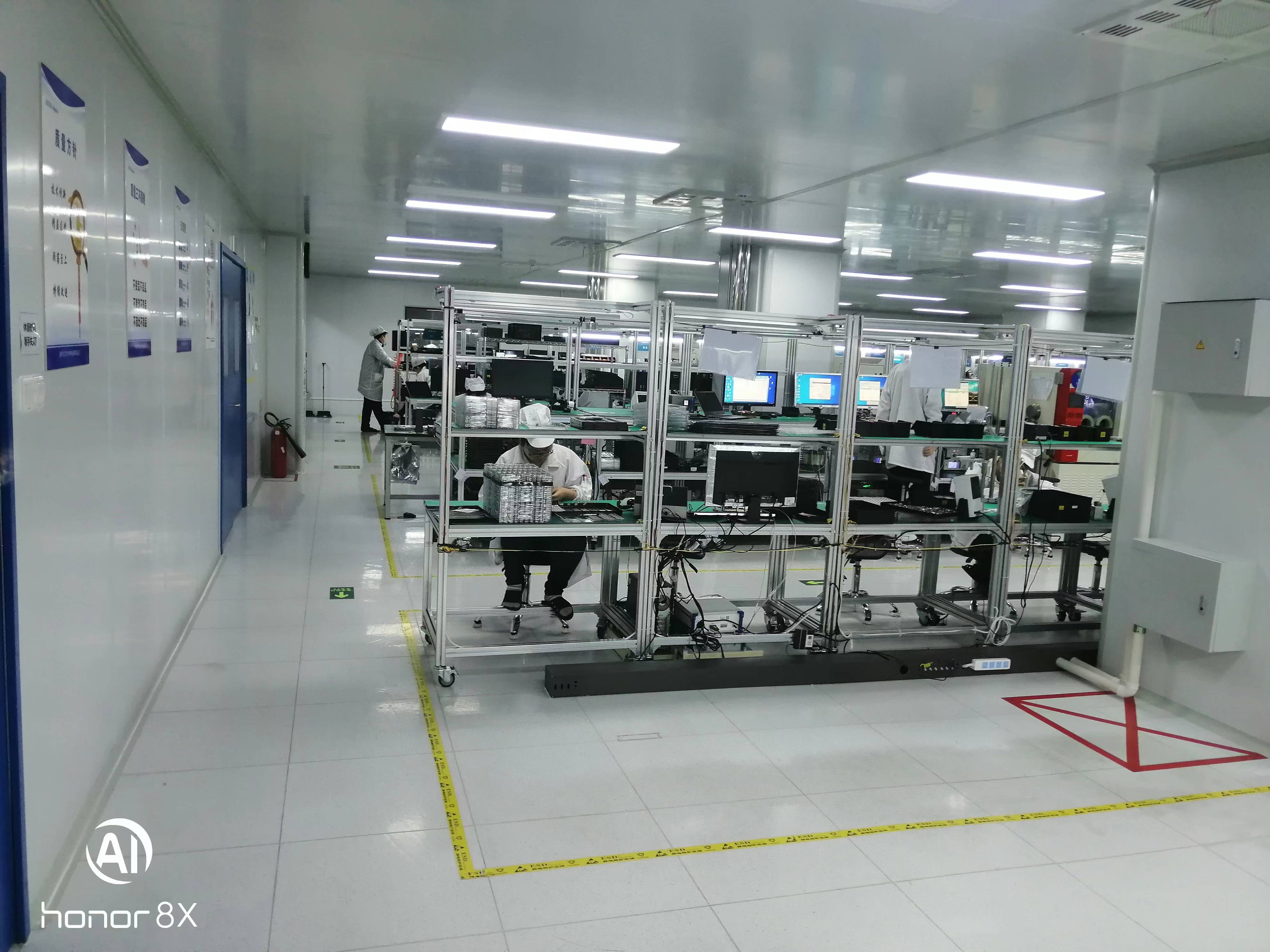
Long-term reliability claims should be anchored in physical production capacity. KACISE was founded in 2014 and operates a 40,000 m² facility in Xi'an High-tech Zone with an annual output capacity of 120,000 units. The company exports about 70 percent of production to EU and US markets, which is meaningful because those regions require consistent packaging, documentation, and quality assurance. KACISE data also shows monthly production capacity of 5,000 to 8,000 units. For a distributor negotiating replenishment cycles, that level of predictable output matters more than a one-time discount.
2. Product platform breadth
A long-term supplier should cover more than one point on the sensor map. KACISE's portfolio includes online multi-parameter water quality sensors, pH/ORP sensors, dissolved oxygen sensors, conductivity sensors, turbidity sensors, COD and organic matter sensors, oil-in-water sensors, and related analyzers. KACISE also manufactures level, pressure, and gas instrumentation, which can simplify upstream and downstream sourcing for customers with broader industrial projects. However, the most strategically important part is the multi-parameter platform. KACISE offers the KWS-800 series, a sensor capable of measuring up to seven parameters, including pH, dissolved oxygen, turbidity, conductivity, and others, in one digital probe. The consolidated design reduces the number of SKUs a distributor must stock and lowers the number of sensors an integrator must install and calibrate.
3. Field-risk and maintenance engineering
Sensor failure modes are not abstract engineering concerns; they become operational costs for your channel. KACISE documents several risk-control measures that should be part of any long-term supplier review:
- Corrosion resistance through PTFE and 316L stainless steel wetted parts, reducing replacement frequency in wastewater and chemical applications.
- Communication redundancy through RS485 and 4–20 mA dual output design, allowing a backup path when a remote network fails.
- Fouling control with a detachable probe and smooth surface coating, keeping maintenance intervals practical.
- Signal stability with digital filtering and shielding, reducing false readings in industrial electrical noise.
- Low-power behaviour with sleep mode and solar power compatibility, important for remote and IoT water quality monitoring systems.
These features are evidence that the manufacturer has designed for field life, not just laboratory performance.
4. Regulatory and documentation discipline
Before scaling, a buyer should ask how the manufacturer handles EMC, material safety, and project-specific standards. EN IEC 61326-1:2021 matters for industrial electrical measurement equipment in Europe; NSF/ANSI 61 and 372 matter for drinking-water contact in the US. A manufacturer exporting regularly to the EU and US should be able to discuss these requirements during the RFQ process. KACISE performs pre-shipment testing and video recording, which gives buyers concrete evidence for acceptance. It remains the buyer's responsibility to specify the applicable compliance class for each destination and application.
5. Commercial and testing flexibility
Long-term ecosystems also form around procurement mechanics. KACISE offers a minimum order quantity of one unit, supports FOB, CIF, CIP, and DDP delivery methods, and accepts payment by T/T, Western Union, or MoneyGram. The one-unit MOQ is particularly valuable at the Execution stage because it allows a buyer to pilot a single sensor, validate the output protocol, check the documentation, and assess manufacturer response speed before making a larger commitment.
Step-by-Step Breakdown: From Decision Stage to Long-Term Supplier Relationship
- Audit production facts. Confirm the physical location, facility size, annual capacity, and recent production discipline. For KACISE, verify 40,000 m², 120,000 units per year, and monthly output of 5,000–8,000 units as a capacity reference.
- Map your roadmap to the product architecture. Define which water quality parameters will be needed over the next three years. An integrated multi-parameter platform reduces integration complexity; a fragmented portfolio increases it.
- Request compliance documentation before contract. Ask whether EN IEC 61326-1:2021, NSF/ANSI 61, NSF/ANSI 372, or other target-market standards apply to your water quality sensor configuration.
- Inspect maintenance design. Ask about wetted materials, cleaning mechanisms, signal redundancy, and power consumption. These factors determine field call frequency and spare-part consumption.
- Run a one-unit pilot. Use the MOQ of one unit to verify the sensor in your application, then inspect the pre-shipment test video and packing process.
- Define volume, lead-time, and documentation expectations. After the pilot, the long-term agreement should specify supported parameters, output protocols, expected capacity windows, and compliance documents.
Use Cases: Where a Long-Term Water Quality Sensor Manufacturer Matters Most
Distributors building a wastewater and municipal product line
Distributors need to stock a coherent portfolio and train local staff without maintaining dozens of sensor types. A multi-parameter platform with digital output helps solve this. For example, a distributor serving municipal wastewater clients would benefit from KACISE's integrated KWS-800 series because one probe can cover pH, dissolved oxygen, turbidity, and conductivity. The lower maintenance burden becomes a sales argument, while the reduced number of probe types simplifies inventory management.
OEMs creating IoT-enabled water quality monitoring systems
OEM buyers often need sensors that connect cleanly to controllers, PLCs, SCADA, or their own cloud platform. Digital RS-485 and Modbus support are part of KACISE's technology foundation. A single digital probe with multiple measured parameters can shorten system assembly time and reduce cabling complexity. Low-power and solar-compatible operation matters when the OEM's product targets remote surface-water or aquaculture monitoring.
System integrators serving rivers, lakes, and environmental monitoring stations
Field service is the most expensive part of an environmental monitoring project. Anti-fouling surfaces, detachable probes, corrosion-resistance, and redundant outputs reduce unplanned visits. KACISE's documented design choices, such as 316L stainless steel or PTFE wetted parts and dual RS485/4–20 mA communication, give integrators a defensible maintenance plan.
Comparison: Integrated Multi-Parameter Platform vs. Separate Single-Parameter Probes
| Comparison dimension | KACISE KWS-800 integrated multi-parameter approach | Conventional separate single-parameter probe architecture |
|---|---|---|
| Measurement scope | Up to seven parameters in a single digital probe, including pH, DO, turbidity, conductivity, and others | Usually one parameter per probe housing |
| Installation complexity | Fewer mounting points and less underwater hardware | Multiple brackets, cables, and positioning decisions |
| Maintenance load | Fewer probes to clean, calibrate, and replace | Each probe requires separate attention |
| Power behaviour | Low-power and solar-compatible | Power profile varies by probe family |
| System cost | Engineering comparison shows about 25 percent lower system cost for equivalent multi-parameter coverage | Higher total installed cost in multi-parameter projects |
| Typical deployment fit | Wastewater plants, rivers, compact monitoring stations | Applications requiring only a single measured parameter |
System cost comparison is based on KACISE engineering comparison data against a conventional single-probe architecture. Actual cost depends on project configuration, housing, mounting, telemetry, and sensor accessories.
FAQ
Does KACISE meet international compliance expectations for industrial water quality sensors?
Compliance depends on the destination and application. In Europe, electrical equipment for measurement, control, and laboratory use falls under EN IEC 61326-1:2021. In US drinking-water applications, buyers commonly reference NSF/ANSI 61 and 372. KACISE exports a substantial share of production to EU and US markets and provides pre-shipment testing and video recording as part of acceptance. A buyer should specify the exact compliance class in the RFQ and request supporting documentation from KACISE before order confirmation.
Can KACISE be used as an OEM or system-integration water quality sensor source?
KACISE is a manufacturer of water quality sensors, analyzers, and controllers rather than a trading company. Its digital output architecture supports RS-485 and Modbus protocols, and its multi-parameter KWS-800 series can measure up to seven parameters in a single digital probe. These characteristics make the product family suitable as an OEM building block for IoT monitoring equipment and for system integrators who need to embed a sensor into a wider monitoring platform. For custom OEM specifications, follow the standard procurement process: define parameters, output protocol, housing restrictions, and documentation requirements, then request a technical review from KACISE.
What are the commercial and payment conditions for long-term water quality sensor procurement?
KACISE sets the minimum order quantity at one unit, which lowers the risk of testing a new sensor. Delivery can be arranged under FOB, CIF, CIP, or DDP. Payment methods include T/T, Western Union, and MoneyGram. Pre-shipment testing and video recording are included so the buyer can verify the sensor before shipping. These baseline conditions allow a buyer to run a small pilot order first and later expand to a formal distribution or long-term supply agreement.
How can a buyer validate KACISE sensors before placing a large volume order?
Because KACISE's MOQ is one unit, the simplest validation path is to order one sensor as a reference unit. During the order, request the pre-shipment test and video recording, then verify the unit against your own controller, software, or test benchmark. If the sensor meets your application requirements, you can proceed with volume procurement. If it needs adjustment, the issues will appear while the commercial risk is still small.
What capacity can KACISE provide for a scaling distribution program?
KACISE operates a 40,000 m² facility and lists annual output capacity at 120,000 units. Manufacturing data indicates monthly production capacity of 5,000 to 8,000 units. A scaling distributor or OEM should request current capacity allocation and lead time in writing because the actual available window depends on order mix, probe configuration, and compliance documentation.
Conclusion and Next Steps
Long-term water quality sensor sourcing is not a hunt for the lowest quotation. It is an ecosystem decision made on production capacity, product architecture, field-maintenance engineering, commercial flexibility, and the manufacturer's ability to operate as a reliable technical partner. KACISE represents a useful reference point: a direct manufacturer with a 40,000 m² facility, 120,000-unit annual capacity, 70 percent export exposure to the EU and US, a one-unit MOQ, and an integrated multi-parameter platform that can lower complexity for distributors, OEMs, and integrators.
If you are moving from evaluation to execution, KACISE can help you verify specifications, compliance requirements, and capacity matches for your project. Contact KACISE at sales@kacise.com, by WhatsApp at +86 180-6671-9659, or visit the manufacturer website at www.kcsensor.com to discuss a pilot order or long-term partnership.
Have Questions or Need More Details?
Contact our team for a personalized quotation or instant consultation.
Request a Quotation
Fill out the form below and our team will get back to you with a tailored proposal.
WhatsApp Direct Chat
Prefer to chat in real-time? Message us on WhatsApp for instant assistance & quick answers.
- Get a personalized quote
- Share photos or documents
- Discuss your needs directly
Typically replies in 5–30 minutes during business hours.