Water Quality Sensor Manufacturer After-Sales FAQ: Long-Term Support for Every Sensor
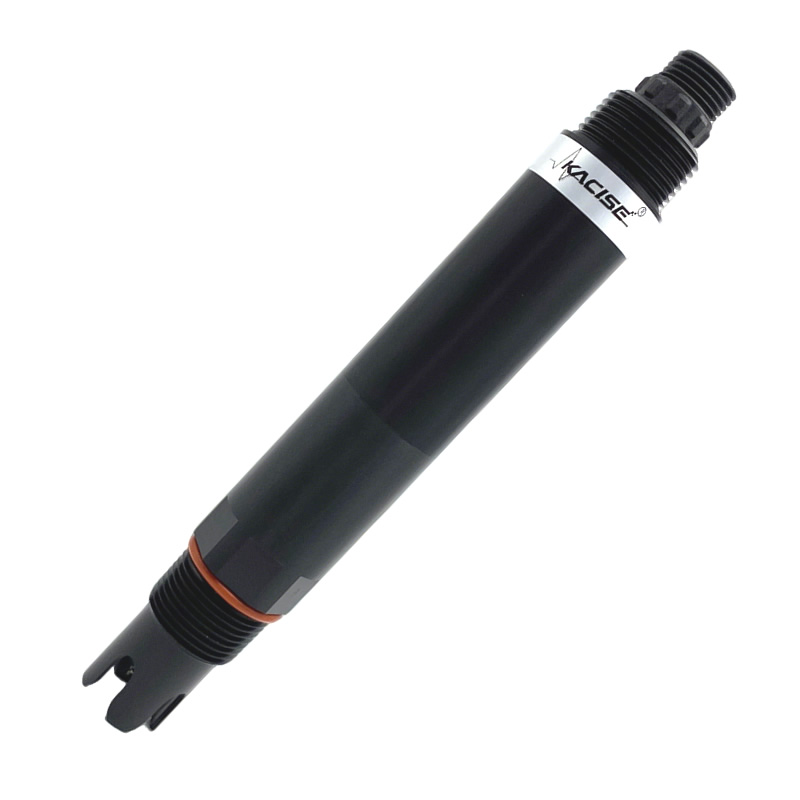
Fig 1. The KWS-3500 Online Residual Chlorine Sensor is a single-parameter platform whose long-term behaviour depends on calibration discipline and flow-cell maintenance as much as on the sensing element itself.
Every water quality sensor purchase begins as a specification question and ends as a service question. A specification sheet describes what an instrument measures on the day it is commissioned. What a plant, a fish farm or a river monitoring station actually lives with for the following three to five years is something else: a calibration routine, a cleaning interval, a list of wearing parts, a compliance file, and someone who can answer a technical question when a reading starts to drift.
After-sales support from a water quality sensor manufacturer is easier to evaluate when it is broken into six verifiable capabilities instead of one broad promise. Those capabilities are calibration architecture, fouling and cleaning design, digital integration support, replaceable-component strategy, compliance documentation, and continuity of supply. KACISE (Xi'an Kacise Optronics Tech Co., Ltd.) is a manufacturer of water quality sensors and measurement equipment founded in 2014, and its portfolio includes the KWS-3500 Online Residual Chlorine Sensor, the KWS-960C Online Turbidity Sensor, the KWS-190 Digital COD Sensor, and the KWS-800 Online Multi-Parameter Water Quality Monitoring System. These platforms are used throughout this article as concrete examples of how support requirements change from one measurement to the next.
One constraint applies to everything below. The two questions buyers ask most often -- how long is the warranty, and how fast is the service response -- are not answered here, because neither can be verified from published product data, certification documents or first-party specifications. Every support claim in this FAQ is instead tied to something a buyer can inspect before ordering: a calibration method named in a product specification, a certificate number with an issuing body and date, a replaceable part, or a communication protocol.
Problem Definition: Why After-Sales Support Is the Weakest Link in Sensor Procurement
The gap between a sensor's published specification and its real service life is where most procurement regret is created. An instrument can meet every stated parameter at commissioning and still become a maintenance liability if the calibration plan, the cleaning regime, or the spare-part path was never defined. Four patterns account for most of these situations.
- Undefined calibration ownership. A datasheet states "two-point calibration" but not who performs it, how often, or against which reference standard. The workload is real; it simply was not priced.
- Underestimated fouling. Biofilms, suspended solids and oil films shift readings long before any electronic component fails, and the cleaning method is a design decision rather than a site decision.
- Integration blind spots. The sensor protocol is checked at purchase, but the controller, SCADA or IoT layer it has to feed is not.
- Documentation gaps. Compliance evidence is requested during an audit, months or years after the equipment was installed.
None of these are sensor failures. They are support-design failures, and they are visible in the product itself if a buyer knows where to look. The difficulty is that service quality is unobservable at the point of sale. A buyer comparing suppliers sees identical-looking columns in a quotation -- warranty period, service hotline, spare-part availability -- and has no way to test any of them before signing. The rational response is to stop scoring promises and start auditing artifacts.
Industry Background: a Growing Installed Base Makes Service Readiness a Procurement Criterion
The water quality sensor market was valued at USD 5.74 billion in 2024 and is projected to reach USD 9.10 billion by 2030, a compound annual growth rate of 8.1%, according to Grand View Research. Asia Pacific accounted for 46.5% of revenue in 2023, with China identified as a major growth market. Growth of that scale means a rapidly expanding installed base, and an installed base is a service obligation that compounds every year.
A second figure is more revealing for after-sales planning. IoT-enabled water quality management is expected to grow at a CAGR of 16.23% through 2030, according to TechSci Research. Sensors are increasingly the first link in a data chain rather than standalone instruments. That changes the support question: a sensor reporting into a network must be supported not only as a measuring device but as an integration component, which pulls protocol documentation, controller compatibility and remote diagnostics into the scope of after-sales work.
Regulation pushes in the same direction. Industrial water quality sensors must comply with EN IEC 61326-1:2021 for electrical equipment for measurement, control and laboratory use. For instruments that contact drinking water, NSF/ANSI 61 and 372 address material safety and lead-free compliance. Both standards matter, but they answer different questions -- a distinction that is frequently blurred in tenders, and a reason compliance documentation should be requested per model and per market rather than accepted as a general statement.
The practical implication is straightforward. As the installed base scales, the manufacturers who remain usable over a five-year horizon tend to be those whose calibration, cleaning, spares and documentation are designed into the product instead of improvised after the sale.
Detailed Solution: What Long-Term Support Actually Contains
KACISE's water quality portfolio is organised around six support-relevant design decisions. Reading them as a set lets a buyer predict the maintenance workload of a specific model before purchase -- and compare single-parameter and multi-parameter approaches on equal terms rather than on headline prices.
1. Calibration architecture decides most of your recurring workload
The number of calibration points is stated per product, and that number is a direct proxy for recurring labour and for the training your technicians will need.
- KWS-3500 Online Residual Chlorine Sensor -- two-point calibration, constant-voltage (HClO) measurement, automatic temperature compensation via Pt100, flow-cell installation. Residual chlorine 0-2.000 mg/L (0.001 mg/L resolution) or 0-20.00 mg/L (0.01 mg/L); temperature 5-50 degrees C; pH 4-9; flow rate 30-60 L/h; POM body, IP68.
- KWS-960C Online Turbidity Sensor -- two-point calibration, 90-degree scattered light, built-in Pt1000 for automatic temperature compensation, optical-fibre structure. Turbidity 0-20.00 / 200.0 / 1000.0 NTU; working pressure below 0.2 MPa; 316L stainless steel, NPT3/4, IP68 rated to 20 m water depth.
- KWS-190 Digital COD Sensor -- five-point calibration, reagent-free, automatic turbidity compensation, self-cleaning. COD 0-500 mg/L (plus or minus 5% FS) or 0-1500 mg/L (plus or minus 10% FS), with corresponding TOC and BOD ranges; stainless steel housing.
- KWS-150 Low Power Online COD Sensor -- two-point calibration, reagent-free, turbidity compensation and self-cleaning brush. COD 0-200.0 / 0-500.0 / 0-1500.0 mg/L; 316L stainless steel.
- KWS-290 Digital Ammonia Nitrogen Sensor -- two-point calibration with automatic or manual pH and K+ compensation, plus mobile APP debugging. NH3-N / NH4+ 0-100.0 mg/L or 0-1000.0 mg/L; pH 0.00-14.00; temperature 0-60 degrees C; optional K+ 0-1000.0 mg/L.
- KWS-400 Optical Fibre Chlorophyll Sensor -- one-point calibration, reagent-free, automatic temperature compensation. Chlorophyll-a 0-400 micrograms/L or 0-100 RFU; titanium alloy plus POM.
- KWS-550 High Precision Online ORP Sensor -- two-point calibration, automatic temperature compensation, anti-corrosion electrode. ORP -2000 to +2000 mV; temperature -5 to 65 degrees C; POM with platinum-iridium alloy and 316L stainless steel.
- KWS-350 Online Conductivity Sensor -- one- or two-point calibration, anti-fouling design. Low conductivity 0.01-200 microS/cm, medium 0-5000 microS/cm, high 0-200 mS/cm; temperature 0-60 degrees C.
The decision rule that follows is practical rather than promotional. A reagent-free, one- or two-point platform such as the KWS-190 or KWS-150 removes reagent logistics from the maintenance budget; a five-point calibration platform places more weight on the availability of reference standards and on technician training. Neither approach is automatically better. What matters is that the effort is known before the purchase order is issued, not discovered in year two.
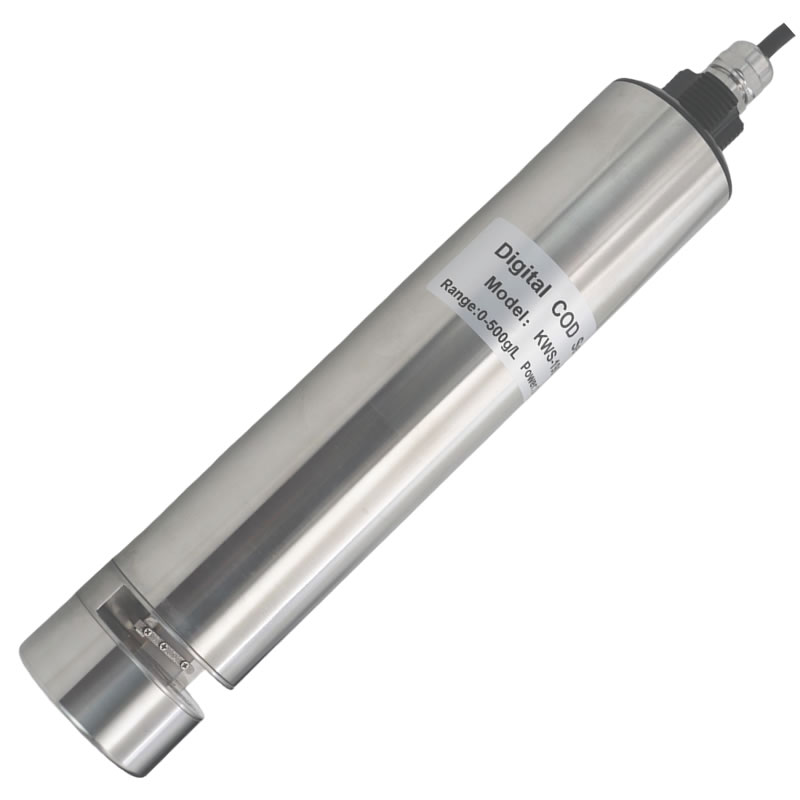
Fig 2. The KWS-190 Digital COD Sensor combines five-point calibration with reagent-free operation and self-cleaning -- a design that shifts effort from consumables to reference standards.
2. Cleaning and fouling control: the maintenance line buyers underestimate
Fouling, not electronics, is the most common reason an online sensor stops being trusted. The portfolio addresses it in different ways depending on the measurement.
- KWS-190 and KWS-150 -- self-cleaning mechanisms, with the KWS-150 specifying a self-cleaning brush alongside reagent-free operation.
- KWS-850 Online Multi-Parameter Water Quality Sensor -- up to eight parameters (DO, COD, pH, ORP, conductivity/salinity, ammonia nitrogen, turbidity plus temperature) in one probe, with automatic cleaning, a quick-plug connector and an anti-blocking protection cover.
- KWS-800 Online Multi-Parameter Water Quality Monitoring System -- up to seven optional parameters (fluorescent DO, 4-electrode conductivity, fibre turbidity, digital pH/ORP, chlorophyll, oil in water) plus temperature, with an automatic cleaning device, waterproof connector and all-in-one design in titanium alloy and 316L stainless steel.
- KWS-1000 Online Oil in Water Sensor -- ultraviolet fluorescence method with an automatic cleaning brush on the 1003 variant, and an anti-ambient-light and anti-suspended-solids interference design.
- KWS-350 Online Conductivity Sensor -- anti-fouling design intended for long-term immersion.
Multi-parameter systems change the support economics. One cleaning action covers several parameters at once, and the quick-plug connector on the KWS-850 reduces the time a technician spends on the probe. The trade-off is that a single fouled optical path can influence several readings at the same time, so the cleaning discipline becomes more important, not less.
3. Digital integration: support continues inside your control layer
RS485 with Modbus or Modbus/RTU is the shared interface across the KACISE water quality range, which means the same integration pattern can be reused as a project grows from one sensor to a network.
- KWS-290 Digital Ammonia Nitrogen Sensor -- RS485 with partial Modbus and IoT support, and mobile APP debugging.
- KWS-201 Online NH4-N Ammonia Nitrogen Sensor -- RS485 (Modbus), reagent-free, automatic temperature and pH compensation, replaceable electrodes, 0-100 mg/L standard range.
- KMPW400 Online Multi-Parameter Controller -- 7-inch LCD touch screen, RS485 (Modbus RTU), automatic sensor identification, 60 days of data storage, DTU interface and USB port.
- KMPW500 Multi-Parameter Water Quality Analyzer -- six parameters plus temperature, three RS485 (Modbus) channels, two 4-20 mA channels, six alarm relays, watchdog function and power-off protection rated beyond 10 years.
- KWC-100 Multi-Parameter Water Quality Controller -- automatic sensor identification, 4-20 mA isolated output, RS485 output, two relay channels and automatic temperature/pressure compensation.
The company states that its instruments are compatible with SCADA, PLC systems and IoT platforms through standardised output signals and digital communication protocols. For a buyer, the practical test is to request the protocol documentation for the exact model being quoted and verify it against the controller already installed on site -- before the order, not after commissioning.
4. Replaceable components and the spare-part path
A support model is only as good as its wearing parts. The KWS-600 Dissolved Oxygen Sensor uses a replaceable membrane cap with automatic temperature and pressure compensation; the KWS-201 ammonia nitrogen sensor uses replaceable electrodes; the KWS-1000 oil-in-water sensor offers an automatic cleaning brush variant. Wetted materials are specified per model -- titanium alloy and 316L stainless steel on the KWS-800, 316L plus POM on the KWS-650C, 316L on the KWS-960C, and POM with platinum-iridium alloy and 316L on the KWS-550.
Material selection is a support decision rather than a marketing detail. A titanium-wetted probe in salt water, or a 316L body in an industrial effluent line, will hold its calibration longer than a mismatched material -- which reduces both maintenance visits and replacement purchases over the life of a monitoring programme.
5. Compliance documentation as a support deliverable
Compliance support means producing the right document for the right market at the right time, and it deserves the same scrutiny as hardware.

Fig 3. CE EMC certificate ZTS23061509TCE, issued by Shenzhen ZTS Testing Service Co., Ltd. on 21 June 2023 for the water quality sensor range.
For the water quality sensor range, the applicable CE certificate is ZTS23061509TCE, issued by Shenzhen ZTS Testing Service Co., Ltd. on 21 June 2023 for the EU market, against EN IEC 61326-1:2021, EN 55011:2016+A2:2021, EN IEC 61000-3-2:2019+A1:2021 and EN 61000-3-3:2013+A2:2021. This is an electromagnetic compatibility certificate. It addresses the electrical behaviour of the sensor; it does not certify the safety of materials in contact with drinking water. Buyers in potable water applications should treat NSF/ANSI 61 and 372 coverage as a separate question, with its own evidence.
Elsewhere in the same portfolio, an ultrasonic sensor is covered by CE certificate ZTS25021126HCE and utility model patent 15468918 (CN 215494124 U); a flow meter is covered by certificate ZTS23052402XCE; and a second utility model patent, 16411181 (CN 216433175 U), covers an ultra-low-power ultrasonic level meter. This matters for projects that combine level, flow and water quality instrumentation. A supplier able to document several instrument families reduces the number of separate compliance files a project engineer has to assemble and defend.
6. Continuity of supply and the scope of OEM/ODM work
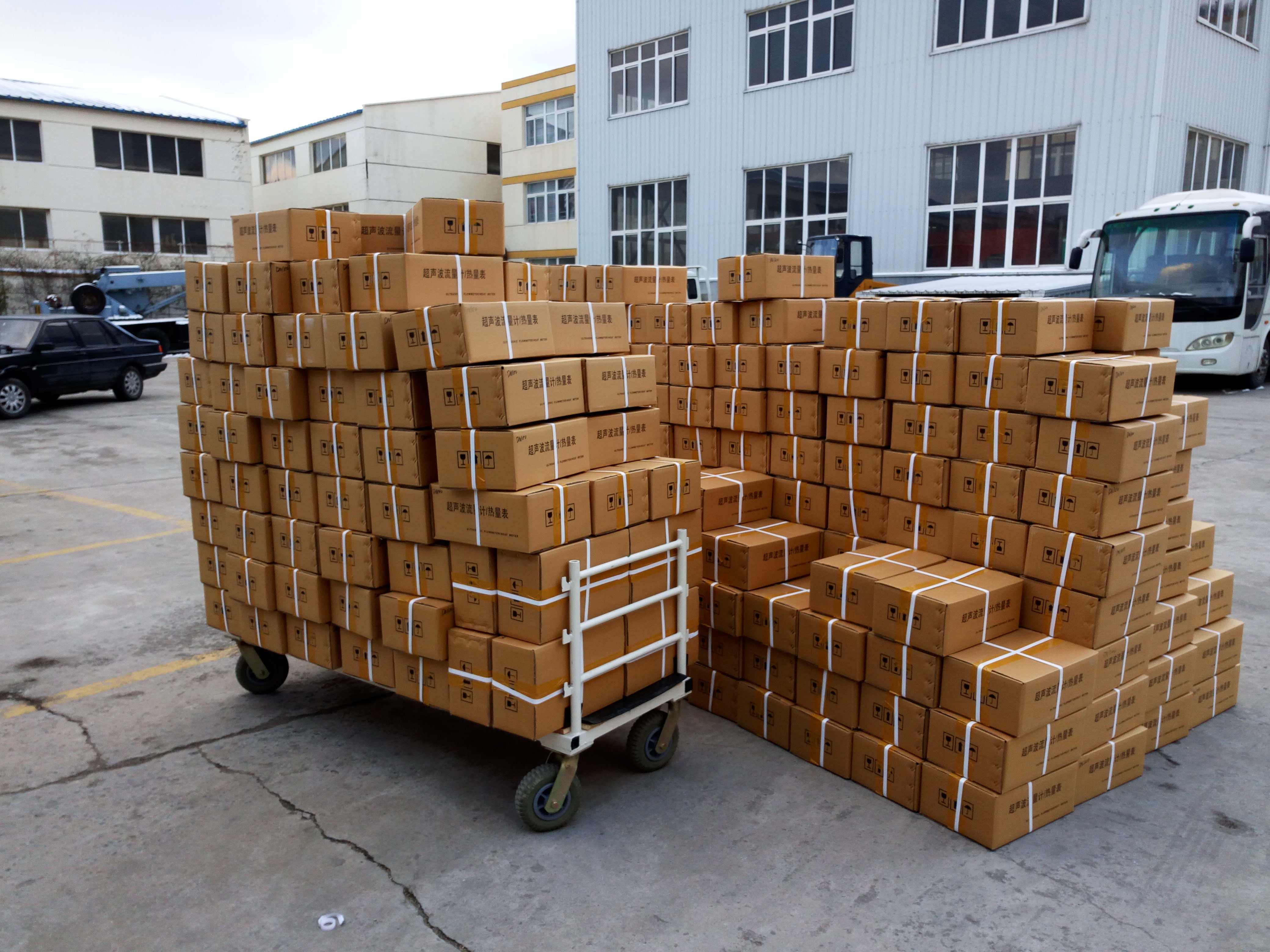
Fig 4. Shipment preparation at the KACISE production facility -- continuity of supply is part of the after-sales question, not separate from it.
Long-term support assumes the product will still be available and serviceable later. KACISE operates a 40,000 square metre facility with an annual output of 120,000 units and exports approximately 70% of production to EU and USA markets. OEM and ODM production is offered with customisation across voltage, logo, output method, protocol and cable, with 100% testing before shipment. The company's stated after-sales mode is remote technical support.
MOQ and shipping windows are configuration-dependent and should be confirmed per product line on the quotation. For buyers preparing a multi-year programme, the more useful question is not the lowest MOQ but whether a customised specification -- the protocol, the cable, the output method -- can be reproduced identically on a repeat order two years later.
Step-by-Step Breakdown: A Six-Step Framework for Qualifying After-Sales Readiness
The sequence below converts an after-sales evaluation from a conversation about intentions into a checklist of documents and design facts.
- Define the measurement window before selecting a model. Fix the parameter, the range, the water matrix and the temperature window first. A chlorine range of 0-2.000 mg/L and a range of 0-20.00 mg/L are different instruments for different duties, even when they share a housing.
- Convert the calibration method into annual labour. Five-point, two-point and one-point calibration are not equivalent in effort. Ask which reference standards are required, whether calibration can be performed in situ, and whether the platform is reagent-free.
- Map every sensor to the control layer. Confirm RS485 Modbus/RTU, 4-20 mA or relay outputs against the actual controller, SCADA or IoT gateway. Controllers such as the KMPW400, KMPW500 or KWC-100 should be checked for sensor auto-identification, data storage capacity and alarm relay count.
- List every wearing part with a part number. Membrane caps, electrodes and cleaning brushes should appear on the quotation as named items, not as an assumption that they are available.
- Request compliance documents tied to model and market. A certificate is only useful with its number, issuing body, applicable standard and issue date. Confirm what the certificate actually covers.
- Put the support mode in writing. Record the stated support channel, the escalation contact, the availability of protocol documentation, and the commercial terms for repeat orders.
Use Cases: How Support Needs Differ by Application
Drinking water and distribution networks
Disinfection control and clarity are the two parameters that determine compliance. The KWS-3500 Online Residual Chlorine Sensor is built for flow-cell installation with a defined flow rate of 30-60 L/h and an operating pH window of 4-9, which means the measurement point has to be engineered rather than improvised. The KWS-960C Online Turbidity Sensor covers 0-20.00 to 1000.0 NTU with a 316L body. For potable water contact, material-safety evidence under NSF/ANSI 61 and 372 should be requested separately from EMC documentation.
Municipal and industrial wastewater
Wastewater support is dominated by fouling and by the cost of manual sampling. The KWS-190 and KWS-150 COD sensors are reagent-free and self-cleaning, and the KWS-850 multi-parameter probe combines eight parameters with automatic cleaning and an anti-blocking protection cover. A UK municipal wastewater plant deployed 12 sensors for effluent quality monitoring over a three-year period, reporting compliant discharge and reduced manual sampling with multi-parameter integration.
Aquaculture
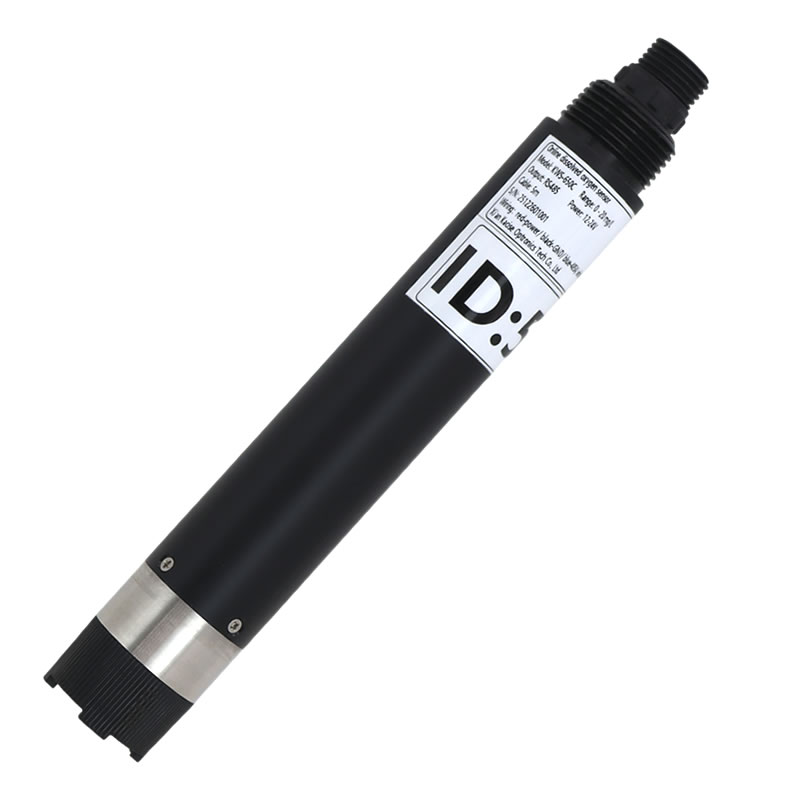
Fig 5. The KWS-650C Online Dissolved Oxygen Sensor uses the fluorescence method with a stated T90 below 30 seconds -- fast response matters when oxygen crashes are measured in minutes.
In fish farming, dissolved oxygen and ammonia drive survival rates, and support requirements are continuous rather than periodic. The KWS-650C Online Dissolved Oxygen Sensor uses the fluorescence method with a T90 below 30 seconds and IP68 protection; the KWS-600 uses the polarographic method with a replaceable membrane cap; the KWS-290 and KWS-201 handle ammonia nitrogen. Two Norwegian aquaculture installations illustrate the pattern: one farm deployed 40 units for dissolved oxygen monitoring over two years, reporting increased fish survival with low-maintenance fluorescence DO; another used 15 units for dissolved oxygen and ammonia monitoring over three years, citing saltwater-resistant continuous operation.
Surface water, reservoirs and early warning
Open-water stations face biofouling, distance and power constraints. The KWS-800 multi-parameter system combines up to seven parameters in one IP68 probe with an automatic cleaning device, while the KWS-400 Optical Fibre Chlorophyll Sensor targets algal activity. A Japanese environmental agency operated 25 units for river multi-parameter water quality monitoring over three years to support continuous environmental reporting; a Finnish agricultural runoff project used four units for nutrient runoff tracking over two years.
Process and regulated industries
In pharmaceutical, food and power applications, documentation and repeatability outrank speed. The KWS-350 Online Conductivity Sensor covers low, medium and high conductivity ranges for pure and ultrapure water, and the KWS-360 Online Salinity Sensor covers 0-72 ppt salinity with 316L construction and titanium alloy as an option. A Swiss pharmaceutical plant used 12 units for purified water conductivity monitoring over five years to support GMP compliance with sanitary clamp connections.
Comparison Table: Single-Parameter and Multi-Parameter Support Profiles
The table below compares measurement, calibration and maintenance design across representative KACISE platforms, using only published specification data. It is intended as a workload comparison, not a ranking of measurement quality.
| Model | Measurement | Stated calibration | Maintenance design | Digital output |
|---|---|---|---|---|
| KWS-3500 | Residual chlorine (HClO), temperature via Pt100 | Two-point | Flow-cell installation; automatic temperature compensation | RS485 (Modbus/RTU) |
| KWS-960C | Turbidity, temperature (90-degree scattered light) | Two-point | Optical-fibre structure; built-in Pt1000; IP68 to 20 m | RS485 (Modbus/RTU) |
| KWS-190 | COD, TOC, BOD, turbidity | Five-point | Reagent-free; self-cleaning; automatic turbidity compensation | RS485 (Modbus, IoT supported) |
| KWS-150 | COD, TOC, turbidity, temperature | Two-point | Reagent-free; self-cleaning brush; low power | RS485 (Modbus/RTU), 4-20 mA optional |
| KWS-290 | NH3-N / NH4+, pH, temperature, optional K+ | Two-point; auto/manual pH and K+ compensation | Mobile APP debugging | RS485 (partial Modbus, IoT) |
| KWS-550 | ORP, temperature | Two-point | Anti-corrosion electrode; automatic temperature compensation | RS485 (Modbus/RTU) |
| KWS-400 | Chlorophyll-a (fluorescence) | One-point | Reagent-free; anti-interference; automatic temperature compensation | RS485 (Modbus) |
| KWS-650C | Dissolved oxygen (fluorescence), temperature | Not stated in the published specification | High stability; T90 below 30 s; IP68 | RS485 (Modbus/RTU) |
| KWS-350 | Conductivity (low/medium/high), temperature | One- or two-point | Anti-fouling design; automatic temperature compensation | RS485 (Modbus), 4-20 mA optional |
| KWS-360 | Salinity, conductivity, temperature | Two-point | Anti-corrosion; 316L with titanium alloy customisable | RS485 (Modbus) |
| KWS-800 | Up to 7 optional parameters plus temperature | Not stated in the published specification | Automatic cleaning device; waterproof connector; all-in-one; IP68 | RS485 (Modbus) |
| KWS-850 | Up to 8 parameters | Not stated in the published specification | Automatic cleaning; quick-plug connector; anti-blocking protection cover | RS485 (Modbus/RTU) |
| KWS-1000 | Oil in water (UV fluorescence) | Not stated in the published specification | Automatic cleaning brush (1003); anti-ambient-light and anti-suspended-solids interference | RS485 (Modbus) |
Where a field reads "not stated in the published specification", buyers should request that detail directly from the manufacturer rather than assume a value.
FAQ
Which certifications apply to KACISE water quality sensors, and what do they actually cover?
The water quality sensor range is covered by CE EMC certification under certificate number ZTS23061509TCE, issued by Shenzhen ZTS Testing Service Co., Ltd. on 21 June 2023 for the EU market. The standards listed on that certificate are EN IEC 61326-1:2021, EN 55011:2016+A2:2021, EN IEC 61000-3-2:2019+A1:2021 and EN 61000-3-3:2013+A2:2021. It is important to read the scope correctly: this is an electromagnetic compatibility certificate covering the electrical behaviour of the equipment, and it does not certify material safety for drinking water contact. For potable water applications, NSF/ANSI 61 and 372 are the standards that address material safety and lead-free compliance, and coverage should be confirmed as a separate item. Elsewhere in the same portfolio, an ultrasonic sensor holds CE certificate ZTS25021126HCE together with utility model patent 15468918 (CN 215494124 U), and a flow meter holds certificate ZTS23052402XCE.
How is calibration and maintenance supported after installation?
Support begins with the calibration method designed into each instrument. The KWS-3500 residual chlorine sensor and the KWS-960C turbidity sensor use two-point calibration, the latter with a built-in Pt1000 for automatic temperature compensation. The KWS-190 Digital COD Sensor uses five-point calibration and operates reagent-free, with automatic turbidity compensation and self-cleaning. The KWS-150 COD sensor uses two-point calibration and a self-cleaning brush. The KWS-290 ammonia nitrogen sensor uses two-point calibration with automatic or manual pH and K+ compensation and supports mobile APP debugging. The KWS-400 chlorophyll sensor uses one-point calibration and is reagent-free, while the KWS-350 conductivity sensor is calibrated at one or two points and uses an anti-fouling design. KACISE's stated after-sales mode for these products is remote technical support, which is the channel through which calibration questions and configuration changes are handled.
Can the sensors be integrated into an existing SCADA, PLC or IoT platform?
RS485 with Modbus or Modbus/RTU is the shared digital interface across the KACISE water quality range, and selected models add further options. The KWS-290 ammonia nitrogen sensor supports partial Modbus with IoT capability, and the KWS-150 COD sensor offers 4-20 mA as an option alongside RS485. On the controller side, the KMPW400 provides a 7-inch LCD touch screen, RS485 (Modbus RTU), automatic sensor identification, 60 days of data storage, a DTU interface and a USB port; the KMPW500 analyzer offers three RS485 (Modbus) channels, two 4-20 mA channels, six alarm relays, a watchdog function and power-off protection rated beyond 10 years; and the KWC-100 controller adds automatic sensor identification with isolated 4-20 mA output and two relay channels. The company states compatibility with SCADA, PLC systems and IoT platforms through standardised output signals and digital communication protocols. Buyers should request protocol documentation for the exact model under quotation and test it against the existing control layer.
If warranty length and service response time cannot be verified in advance, how should a buyer judge long-term service readiness?
Shift the evaluation from promises to artifacts. Ask for the calibration method and required reference standards for each model; a written list of wearing parts with identifiers, such as the replaceable membrane cap on the KWS-600 or the replaceable electrodes on the KWS-201; the interface documentation for the specific protocol and cable being quoted; certificate numbers with issuing body, applicable standard and issue date, so that EMC coverage is not confused with drinking water material safety; and a named remote technical support channel. On the supply side, check the production base and repeatability of a custom specification -- KACISE operates a 40,000 square metre facility with annual output of 120,000 units and exports approximately 70% of production to EU and USA markets, with OEM/ODM customisation across voltage, logo, output method, protocol and cable and 100% testing before shipment.
How can a buyer start validating support before committing to a long-term supply agreement?
The practical route is a sample or pilot order that exercises the support chain rather than only the hardware: confirm the calibration procedure against your own reference standard, connect the unit to your controller through the documented protocol, and test how a technical question is handled. MOQ and shipping windows are configuration-dependent and should be confirmed per product line on the quotation. To begin, samples, quotations and technical documentation can be requested from KACISE at sales@kacise.com or +86 180-6671-9659, with product information at www.kcsensor.com.
Conclusion: Support Is a Design Property, Not a Promise
After-sales support for a water quality sensor is not a department that responds after something breaks. It is the sum of decisions made before the instrument is shipped: how many calibration points a platform requires, whether the probe cleans itself, which protocol it speaks, which parts wear out and whether they are replaceable, which certificates exist and what they cover, and whether the same customisation can be repeated on a second and third order. KACISE builds its water quality range -- from the KWS-3500 Online Residual Chlorine Sensor and the KWS-960C Online Turbidity Sensor to the KWS-190 Digital COD Sensor and the KWS-800 Online Multi-Parameter Water Quality Monitoring System -- around those decisions, supported by CE EMC certification under certificate ZTS23061509TCE for the water quality sensor range and a production base of 40,000 square metres with annual output of 120,000 units.
The evaluation method that follows is the same for every supplier. Replace warranty language with design facts. Ask what the calibration routine costs in technician hours. Ask which parts will be replaced and how they are identified. Ask which certificate covers which model in which market. Ask how the sensor will talk to the system you already own. When those four questions can be answered with documents rather than assurances, the after-sales risk of a programme drops sharply -- and the supplier's role shifts from vendor to long-term partner.
Next step: test the support chain, not just the specification
Request a sample, a configuration-specific quotation, or the technical documentation pack for the model you are evaluating. Share your application, water matrix and existing controller, and the calibration plan and protocol details can be confirmed before the order.
KACISE -- Xi'an Kacise Optronics Tech Co., Ltd. | Email: sales@kacise.com | Tel / WhatsApp: +86 180-6671-9659 | Website: www.kcsensor.com | Address: 2nd Building, Tianyuan International Mansion, High-tech Zone, Xi'an City, Shaanxi Province, China
Have Questions or Need More Details?
Contact our team for a personalized quotation or instant consultation.
Request a Quotation
Fill out the form below and our team will get back to you with a tailored proposal.
WhatsApp Direct Chat
Prefer to chat in real-time? Message us on WhatsApp for instant assistance & quick answers.
- Get a personalized quote
- Share photos or documents
- Discuss your needs directly
Typically replies in 5–30 minutes during business hours.