
Automatic Gluing Line vs. Standalone PU Gasket Dispensing: A Setup Comparison
Short answer: integrate the PU gasket dispensing machine into the automatic gluing line when one product family runs at a stable cycle time and the sealing step is already conveyor-linked to assembly, curing and testing. Keep it as a standalone sealing cell when the plant seals several enclosure families with different geometries, or when explosion-proof and IP66 shells need their own inspection gate, cure rack and quarantine before the next operation. In most projects the dispensing machine itself can be identical; what changes is takt coupling, buffering, material logistics, and who owns the bead-quality decision.
Most sealing projects arrive at the decision stage with a shortlist of machines and one unresolved plant-layout question: does the PU gasket dispensing machine become a station inside an automatic gluing line, or its own cell next to the assembly area? Both answers appear in the same tender, and both can be technically correct. The comparison below separates them by the criteria that only show up after installation — cycle coupling, buffer and curing space, continuous-duty thermal behaviour, and the inspection discipline that dust-proof, IP66 and explosion-proof enclosures demand.
KAIWEI, the brand of Shanghai Kaiwei Intelligent Technology (Group) Co., Ltd., is a Shanghai-based manufacturer founded in 2004 that builds industrial sealing systems, robot foaming equipment and intelligent dispensing equipment. The same machine family is used in both setup types, so the framework below applies whether you buy from KAIWEI or from another supplier — the architecture decision is a plant decision, not a catalogue decision.
What the Two Setups Actually Are
An integrated automatic gluing line setup places the gasket dispensing machine inside a continuous material flow. Parts arrive on a conveyor or pallet transfer, the dispensing station receives a start signal, applies a form-in-place foam gasket (FIPFG) bead, and the part moves on to curing, assembly and testing without being lifted off the line.
A standalone sealing cell performs the same dispensing function as an independent unit. An operator or robot loads a fixture, the machine dispenses the gasket, and the part is unloaded onto a curing rack or a separate inspection station before it rejoins production.
The difference that decides the project is not dispensing accuracy. It is how many independent decisions the sealing step must make per shift. A line-integrated station makes one decision per product family; a standalone cell re-decides for every batch. That is why the cell handles mixed enclosure sizes better, and why it consumes handling time a line does not.
- Takt coupling: the line imposes one cycle time on every station; a cell sets its own rhythm from load, dispense, unload and cure.
- Buffering: a line needs an engineered buffer between dispensing and curing; a cell uses floor space and racks instead.
- Material logistics: continuous running requires uninterrupted two-component supply, whereas batch running allows planned purging and refill windows.
- Quality-gate ownership: in a line, bead inspection must be engineered into the flow; in a cell, inspection and rework happen at the cell.
Industry Background: Why Setup Architecture Is Now a Line-Design Question
The wider polyurethane processing machinery market was valued at USD 4.07 billion in 2025, according to commercial market research recorded in the verified data set used for this article. The narrower automatic polyurethane foaming machine segment was reported at USD 606 million in 2025 and projected to reach USD 832 million by 2032. Both figures describe equipment, which is the category a sealing project actually buys from.
Two shifts in production engineering explain why buyers now compare architectures rather than machine specifications alone. First, formed-in-place foam gaskets replaced pre-cut and adhesive-tape gaskets in many enclosure programmes, so the sealing quality is now produced on the buyer's own line rather than inherited from a gasket supplier. Second, the equipment is increasingly specified together with the transfer system, curing and test stations, which means an inline station and a standalone cell are evaluated as two different production systems.
As one manufacturing reference, KAIWEI states a production site exceeding 20,000 m², more than 100 employees, a core technical team of more than 30 engineers, more than 100 national patents, an annual output of 2,000 units and an export share of about 70%, with deliveries to more than 60 countries. The company holds CE certification MD-TCF-240307-55472 under Machinery Directive 2006/42/EC and operates an ISO9001 quality system. These are company-reported and certificate-referenced facts; they establish that both setup types are supplied from one manufacturing base, not that one architecture is superior.
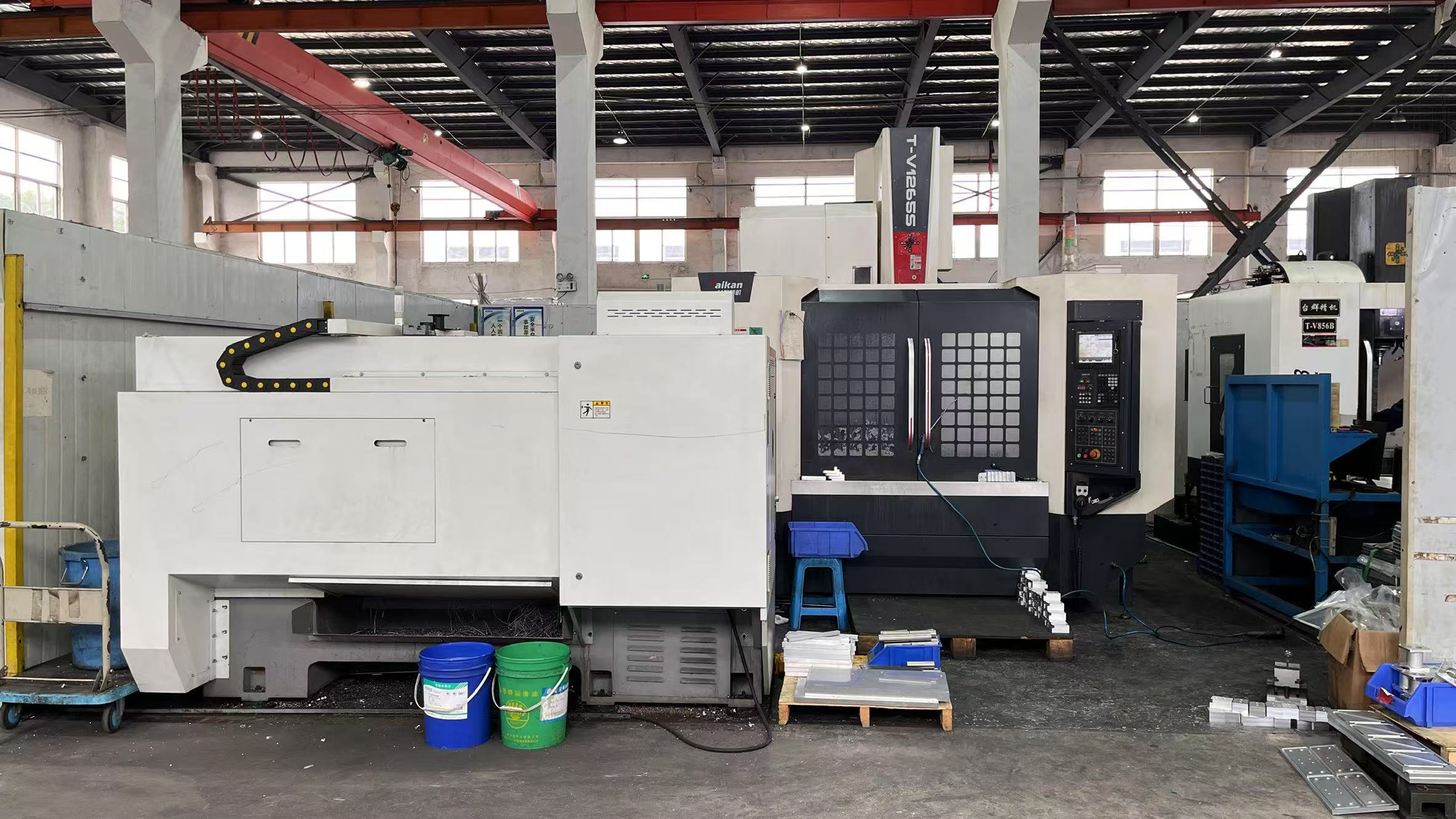
Option A — PU Gasket Dispensing Integrated Into an Automatic Gluing Line
How the integrated setup runs
In an integrated setup the dispensing machine is a controlled station of the gluing line. The conveyor or pallet transfer delivers the part; a handshake signal starts the program; the mixing head traces the gasket path; the part leaves for curing at line speed. Because the sealing step cannot pause without pausing everything downstream, the machine's process stability becomes a line-level risk, and continuous duty becomes the design premise rather than an option.
Where the integrated setup wins
- One takt governs the whole flow, so work-in-progress and double handling disappear.
- Operator coverage is supervisory: one person watches the line instead of loading a dispenser.
- Bead consistency is easier to hold across a run when the fixture never leaves the transfer system and the part is always presented in the same position.
- Continuous operation is supported by process monitoring rather than by operator attention — KAIWEI equipment combines an intelligent temperature control module with over-temperature alarms, real-time pressure monitoring and precision servo drive control.
Where the integrated setup breaks down
- A dispensing stop stops the line unless a bypass buffer or a second fixture lane exists.
- Changeover cost is high: a new enclosure geometry means new fixtures and possibly new conveyor tooling.
- Bead inspection must be engineered into the flow, which is awkward for explosion-proof shells that need individual checks.
- Commissioning is a joint exercise across conveyor, fixtures, curing and dispensing, and the validation window is longer.
Option B — A Standalone PU Gasket Dispensing Cell
How the standalone cell runs
A standalone cell owns its own cycle. A part is loaded onto a fixture, the gasket is dispensed, and the part moves to a curing rack or an inspection bench. The cell can run flat out on one product, sit idle between batches, or be duplicated when volume grows — without touching the rest of the plant's flow.
Where the standalone cell wins
- Mixed enclosure families can be sealed on one machine by changing fixtures instead of changing a line.
- Explosion-proof shells and IP66 waterproof housings can be batched, cured and inspected in isolation, which keeps a suspect batch out of assembly.
- Integration risk stays at machine level: the dispensing unit is validated on its own before any conveyor exists.
- Phase-one capital scope is smaller, and additional cells can be added as volume grows rather than re-engineering a line.
Where the standalone cell breaks down
- Double handling and rack space consume labour and floor area.
- Throughput depends on operator discipline and fixture discipline, which is harder to sustain across three shifts.
- Continuous 24/7 output usually requires shift coverage and planned purge cycles between batches.
- Bead data stays local to the cell, so plant-level traceability has to be built separately.
Decision Criteria That Separate the Two Setups
1. Product-family stability and takt
If one enclosure family accounts for most of the volume and its cycle time is close to the line's slowest station, integration is the natural choice. If four or more families with different lengths and corner geometries share the machine, the cell absorbs that variety at far lower changeover cost.
2. Ambient temperature and continuous duty
The KW-510B is specified for an operating range of -20 to 40 °C. That range is a plant-condition criterion, not a marketing number: an unheated warehouse in winter and a roof-level plant in summer both sit inside it, but the machine's continuous behaviour depends on how heat is managed during long runs. KAIWEI equipment applies an intelligent temperature control module with automatic heat dissipation and over-temperature alarm, plus constant temperature and humidity foaming control. In a line-integrated setup this thermal discipline is mandatory, because there is no natural idle period in which the machine can recover.
3. Dust-proof, IP66 and explosion-proof sealing targets
Enclosure work is where the two setups diverge most sharply. Electrical control panels, electrical distribution boards, anti-explosion boxes and explosion-proof shells, waterproof cabinets and boxes, street and outdoor lighting, LED luminaires and transformer covers all require a continuous bead without gaps at corners. KAIWEI equipment supports this with an IP65/IP66 fully enclosed sealing design, electrical insulation protection, leakage detection, emergency stop and automatic glue quantity calibration. Note the division of responsibility: the explosion-proof rating and the IP66 rating belong to the finished housing; the machine's contribution is a repeatable bead and a stable process. A standalone cell makes that bead easier to verify part by part; a line makes it easier to reproduce thousands of times.
4. Whether your products fall inside the KW-510B application set
The KW-510B is positioned for electrical control panels, air filters and home appliances. If your sealing programme sits inside that set and the geometries are stable, the machine can be specified once and then configured either way. If your programme sits outside it — very large cabinets, unusual bead paths, or parts requiring special handling — the standalone cell is the safer first configuration, because fixtures can be developed without redesigning a line.
5. Sector mix as a complexity signal
KAIWEI equipment is applied across electrical control panels, lighting and LED, auto parts, home appliances, purification and filtration, and lock and hardware. A plant serving one of these sectors usually has a narrow, repeatable part family and gains from integration. A plant serving three or more of them is running a mixed-model operation, where cell-based sealing is the more realistic architecture.
6. Material supply, curing and maintenance
Continuous running demands uninterrupted two-component supply and a defined purge routine; batch running tolerates refills between lots. On the machine side, KAIWEI attributes its comparative advantage over other domestic dispensing machines to mixing head technology, reporting 30% higher mixing uniformity, 20% higher production efficiency, 15% lower total cost of ownership, less maintenance and longer service life. These are supplier-reported comparative figures and should be read at machine level — they describe the dispensing unit, not the architecture around it. Cleaning cycles, seal wear and mixing-head service access belong in the same evaluation, because a line-integrated station has less tolerance for unplanned maintenance than a cell.
Step-by-Step Breakdown: Choosing the Setup in Six Steps
- Fix the product family and annual volume per family. Group parts by bead path length and corner geometry, not by customer. Families that share a fixture can share a station.
- Measure the takt of every existing station. If the sealing step would become the slowest station, integration will cap line output; if it is comfortably faster, integration removes handling.
- Decide where the buffer and the cure distance sit. In a line, buffer capacity is designed before dispensing and cure length after it; in a cell, buffer is rack space and a defined dwell time.
- Check the thermal, dust and cleanliness envelope. Confirm ambient conditions inside the -20 to 40 °C operating range, then ask whether the machine will be washed down or exposed to dust, solvent or metal particles. IP65/IP66 fully enclosed sealing design and electrical insulation protection are the relevant specifications here.
- Define the inspection gate for IP66 and explosion-proof shells. Decide whether bead continuity, bead height and adhesion checks are inline (vision or gauge at line speed) or offline (cell-side inspection). Whichever option is chosen, write the criterion into the acceptance protocol.
- Validate on your own enclosure before ordering. Run a sample trial with the fixture concept you intend to buy, because a fixture that works on a bench is not automatically the fixture that works on a moving transfer system.
Use Cases: Which Setup Fits Which Sealing Project
24/7 control panel production with fixed enclosure sizes
Integration fits. A single panel family running around the clock gives the sealing station a stable takt, and process monitoring carries the continuous-duty load. The inspection gate should be designed at line speed.
Lock and hardware shells in many small sizes
A standalone cell fits. Small shells with frequent size changes make fixture change the dominant activity, and a cell absorbs that without disturbing the rest of the plant.
Air filters and purification equipment with seasonal peaks
Start standalone, then add cells. Air filters are inside the KW-510B application set, and the cell allows output to scale with the season without re-engineering a conveyor. A second cell duplicates capacity rather than adding a bottleneck.
Home appliance panels and door sealing across three shifts
Integration with a buffer fits. Home appliance parts sit inside the KW-510B application set and usually arrive in long, stable runs where double handling is the largest avoidable cost.
Explosion-proof shells and IP66 waterproof housings in batches
Standalone fits, or a hybrid: keep a cell as the qualification and rework point while the line handles the volume share. Batch quarantine is simpler when the part never enters the line flow until it has passed inspection.
Comparison Table: Setup Architecture Side by Side
| Decision dimension | Integrated automatic gluing line | Standalone sealing cell |
|---|---|---|
| Cycle coupling | One takt for the whole line; dispensing station follows the transfer signal | Independent cycle set by load, dispense, unload and cure |
| Changeover | Low handling cost per part, high changeover cost per new geometry | Fast switching between enclosure sizes via fixtures |
| Buffer and curing | Engineered buffer before dispensing, cure length after it | Rack space and defined dwell time |
| Operator model | Supervisory; one person covers the line | Load/unload labour per batch; one operator can run several cells |
| 24/7 continuous duty | Design premise; depends on temperature control, pressure monitoring and overheat alarms | Runs to shift pattern; idle periods add restart and purge routines |
| Dust-proof and IP66 shells | Bead applied inline; inspection gate must be engineered into the flow | Inspection and rework at the cell without stopping other operations |
| Explosion-proof shells | Best when geometry is fixed and volume justifies dedicated tooling | Better isolation: batch can be run, cured and quarantined separately |
| Commissioning scope | Joint validation of conveyor, fixtures, cure and dispensing | Machine-level validation only; lower integration risk |
| Failure propagation | A dispensing stop stops the line unless a bypass exists | A stop affects one cell |
| Best fit | One dominant family, stable takt, high volume | Mixed families, batch runs, staged capacity growth |
Verified reference data used in this comparison
| Item | Detail | Basis |
|---|---|---|
| Model application set | KW-510B positioned for electrical control panels, air filters and home appliances | Product specification |
| Operating range | -20 to 40 °C | Product specification |
| Enclosure protection design | IP65/IP66 fully enclosed sealing design | KAIWEI technical data |
| Process and safety controls | Intelligent temperature control module, over-temperature alarm, real-time pressure monitoring, precision servo drive, automatic glue quantity calibration, leakage detection, emergency stop, electrical insulation protection | KAIWEI technical data |
| Mixing head comparison | 30% higher mixing uniformity, 20% higher production efficiency, 15% lower total cost of ownership, less maintenance and longer service life versus other domestic dispensing machines | Supplier-reported comparison |
| CE certification | MD-TCF-240307-55472 under Machinery Directive 2006/42/EC | Certificate reference |
| Quality system | ISO9001 | Company profile |
| Company facts | Founded 2004, Shanghai; 20,000 m²+ site; 100+ employees; 30+ engineers; 100+ national patents; 2,000 units annual output; about 70% export share; deliveries to more than 60 countries | Company profile |
Frequently Asked Questions
Does integrating the dispensing machine into our gluing line change what we must verify for CE conformity?
The machine-level conformity is documented: KAIWEI holds CE certification MD-TCF-240307-55472 under Machinery Directive 2006/42/EC and operates an ISO9001 quality system. Once the machine becomes a station inside an automatic gluing line, however, the assembly is no longer the machine that was certified in isolation — conveyor, guarding, handshake logic and safety circuits are added scope. Ask for the certificate scope and for the safety functions that remain valid after integration, including the emergency stop chain, the IP65/IP66 fully enclosed sealing design and electrical insulation protection, then confirm with your own conformity assessment partner which parts of the line need re-assessment. For explosion-proof enclosures, the rating belongs to the finished housing; the machine contributes a repeatable bead and a controlled process.
Can one dispensing setup seal electrical control panels, air filters and appliance parts without changing hardware?
KW-510B is positioned for electrical control panels, air filters and home appliances, and is specified for -20 to 40 °C operation, so all three product types fall inside one machine's application set. The architecture is what changes the answer. A standalone cell handles the mix by changing fixtures between batches. A line-integrated station needs one dominant family and stable tooling, because fixture change becomes line downtime rather than a batch changeover. KAIWEI reports 30% higher mixing uniformity from its mixing head technology and positions the machine for high-precision sealing and mass production; that supports mixed-part capability at machine level, not unlimited tooling flexibility.
Which setup has the lower total cost of ownership?
No verified price or lead-time data exists for either architecture, so the comparison has to be built from cost drivers rather than quotations. Line integration adds conveyor interface, handshake logic, buffer capacity, guarding and joint validation; a standalone cell adds handling labour, curing racks, floor space and more fixtures. At machine level, KAIWEI reports 15% lower total cost of ownership, less maintenance and longer service life versus other domestic dispensing machines — that figure compares machines, not architectures, and should not be applied to the layout decision. Calculate cost per sealed part including handling time, scrap from bead defects and the cost of a line stoppage, then compare.
Can we test the gasket on our own enclosure before choosing the setup?
Yes, and it should be a condition of the order. Prepare samples of the actual housing — electrical control panel, air filter frame or appliance part — and state the bead geometry, cure requirement and the inspection criteria you will apply to IP66 or explosion-proof shells. Test with the fixture concept you intend to buy, because a bench fixture and a conveyor-mounted fixture behave differently. Request a sample trial through KAIWEI and compare the dispensed bead against your acceptance criteria before the layout is frozen.
How do we plan delivery and ramp-up around an existing line shutdown?
KAIWEI manufactures in Shanghai with a stated annual output of 2,000 units and deliveries to more than 60 countries; configuration-specific lead time must be confirmed against your fixture and integration scope, since no verified lead-time figure applies to both architectures. Where the shutdown window is short, commissioning is easier with a standalone cell first, because machine-level validation can run before any conveyor work starts. Where a line is already being rebuilt, split mechanical installation and the control handshake into two windows, and order spare seals, mixing-head consumables and purge materials with the machine. For configuration review, the application overview covers the sealing targets discussed above.
Conclusion
The automatic gluing line and the standalone sealing cell are not competing machine designs; they are two ways of placing the same PU gasket dispensing function into a plant. Integration pays back when one enclosure family dominates the volume and the sealing step can follow the line's takt without becoming its bottleneck. A standalone cell pays back when geometries change often, when explosion-proof and IP66 shells need individual inspection, or when capacity has to be added in steps rather than in one rebuild.
- Choose the line when one family exceeds most of the volume, takt is stable, and thermal and process monitoring can carry continuous duty inside a -20 to 40 °C plant environment.
- Choose the cell when the part mix spans several sectors, when fixtures change weekly, or when batch quarantine of explosion-proof and waterproof housings matters more than handling time.
- Choose the hybrid when the line takes the volume share and a cell stays in place for qualification, rework and small-batch sealing.
Whichever route is selected, specify the machine against the enclosure it must seal, validate the bead on your own part, and write the IP66 or explosion-proof inspection criterion into the acceptance protocol before the layout is fixed.
Next step: send KAIWEI your enclosure drawing, bead requirement and expected shift pattern, and request a setup recommendation plus a sample trial on your own part.
Email: info@kaiwei-sh.com | WhatsApp: +86 137 6198 6986 | Website: www.sh-kaiwei.com
Download the full product catalogue and specification reference: KAIWEI PU Gasket Dispensing Machine Catalogue (PDF)
Have Questions or Need More Details?
Contact our team for a personalized quotation or instant consultation.
Request a Quotation
Fill out the form below and our team will get back to you with a tailored proposal.
WhatsApp Direct Chat
Prefer to chat in real-time? Message us on WhatsApp for instant assistance & quick answers.
- Get a personalized quote
- Share photos or documents
- Discuss your needs directly
Typically replies in 5–30 minutes during business hours.