
Sealing Solutions for Auto Parts & Components: A PU Gasket Dispensing Application Guide
Sealing Solutions for Auto Parts & Components: A PU Gasket Dispensing Application Guide
A PU gasket dispensing machine applies a two-component polyurethane bead directly onto a part, where the material foams and cures into a compressible gasket. In the auto parts and components sector, this formed-in-place foam gasket (FIPFG) method is used to close housings, covers and enclosures against dust ingress — on battery covers, lamp housings, filter assemblies, handles, locks and mounting components — without pre-cut gasket inventory or manual adhesive work.
This application guide explains how PU gasket dispensing equipment is adapted to the sealing requirements of auto parts and components manufacturers, how the machine is configured into automatic gluing production lines in high-volume manufacturing, and what buyers should verify before committing to a machine and to a long-term supply relationship.
Problem Definition: Dust Ingress Control Is a Dispensing Problem
For most auto parts, the sealing task is not defined by pressure or fluid containment. It is defined by dust ingress: the enclosure has to keep particulate matter out of an interior volume across the service life of the part, while the part itself is produced at a line rate. That combination — a long-life sealing function and a short production cycle — is what makes the dispensing method, and not only the gasket material, the deciding factor.
Three failure patterns recur in this application:
- Manual placement variability. Hand-applied gaskets, adhesive strips and manual dispensing produce gasket cross-sections that vary between parts, so dust ingress performance becomes inconsistent within a single production batch.
- Glue leakage or overflow during dispensing. Material that escapes the intended gasket path contaminates the part, wastes material and can stop the production line.
- Equipment overheating during long-term continuous operation. Continuous running conditions stress pumps, metering units and control components and can lead to component damage or safety hazards when thermal behaviour is not actively managed.
Equipment specified for this type of work addresses those failure patterns directly rather than relying on operator attention. Control measures in this equipment class typically include an intelligent temperature control system, real-time pressure monitoring, precision servo drive control, an IP65/IP66 fully enclosed sealing design, overheat protection alarm, leakage detection sensor, emergency stop safety mechanism, automatic glue quantity calibration, electrical insulation protection, and constant temperature and humidity foaming control.
The practical consequence for a buyer is that the specification conversation should start with the failure pattern that matters most on the line — gasket consistency, material waste, or uptime under continuous running — because those three priorities lead to different machine configurations.
Industry Background: Why Auto Parts Sealing Demand Is Rising
The equipment category behind this application is already substantial. The global market for polyurethane (PU) gasket dispensing machines was valued at approximately USD 1.2 billion in 2025, according to Kaiwei industry analysis. The wider polyurethane processing machine market was valued at USD 6.627 billion in 2024 and is projected to grow at a CAGR of 10.21% through 2035, based on Market Research Future data.
Regional and product-level data explain where that demand is concentrated:
- Asia-Pacific dominated the polyurethane processing machine market with a 42.2% share, driven by industrial manufacturing growth in China (Grand View Research, 2021).
- High-pressure PU processing units accounted for 68% of the global machine type market share (Grand View Research, 2021), which indicates how strongly high-volume production environments shape equipment selection.
- The form-in-place (FIP) liquid gaskets market reached USD 270 million in 2023, with increasing adoption in EV battery enclosures (Maximize Market Research).
On the supply side, global competitors in the FIPFG and PU dispensing equipment sector include Sonderhoff (Henkel), RAMPF Group and Cera-Tec, alongside KAIWEI, according to industry coverage of the segment. Buyers sourcing for auto parts programs therefore compare equipment from European and Asian suppliers, and the comparison criteria differ from those used for general-purpose dispensing equipment.
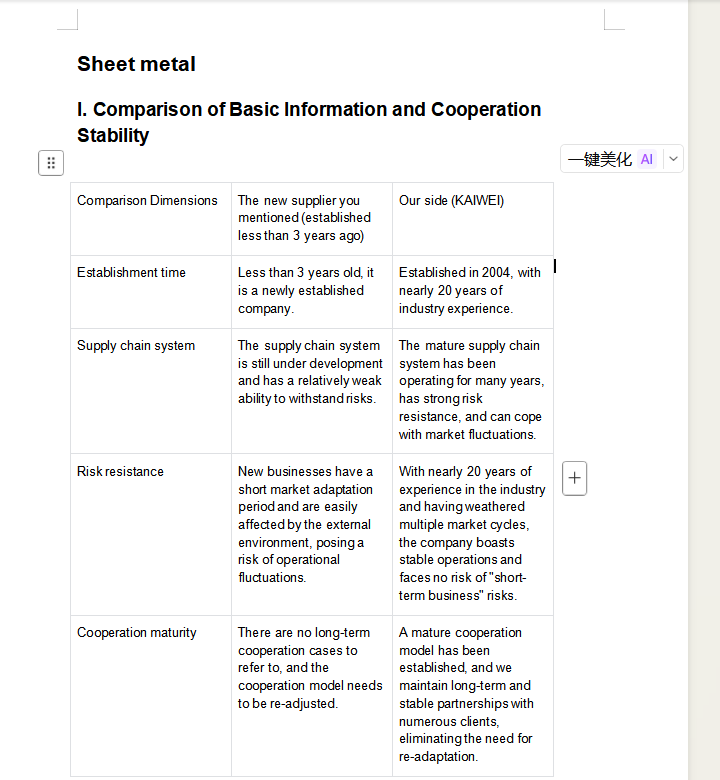
Shanghai Kaiwei Intelligent Technology (Group) Co., Ltd. — the manufacturer behind the KAIWEI brand — is a Shanghai-headquartered, state-level high-tech enterprise founded in 2004 that focuses on the R&D and manufacturing of industrial sealing systems, robot foaming equipment, intelligent sealing and dispensing equipment, and six-axis robotic foaming systems. The company operates with a core technical team of more than 30 members and holds over 100 national patents, including innovations related to robot quantitative foaming machines. Its products have passed international certifications such as CE and ISO9001, and its automatic adhesive and dispensing equipment is used in electric cabinets, air filters, air conditioning purification equipment, lamps, automobiles and new energy fields. KAIWEI exports to more than 60 countries including Germany, the United States and Southeast Asia, with an export ratio of 70%.
Detailed Solution: How a PU Gasket Dispensing Machine Is Adapted to Auto Parts Sealing
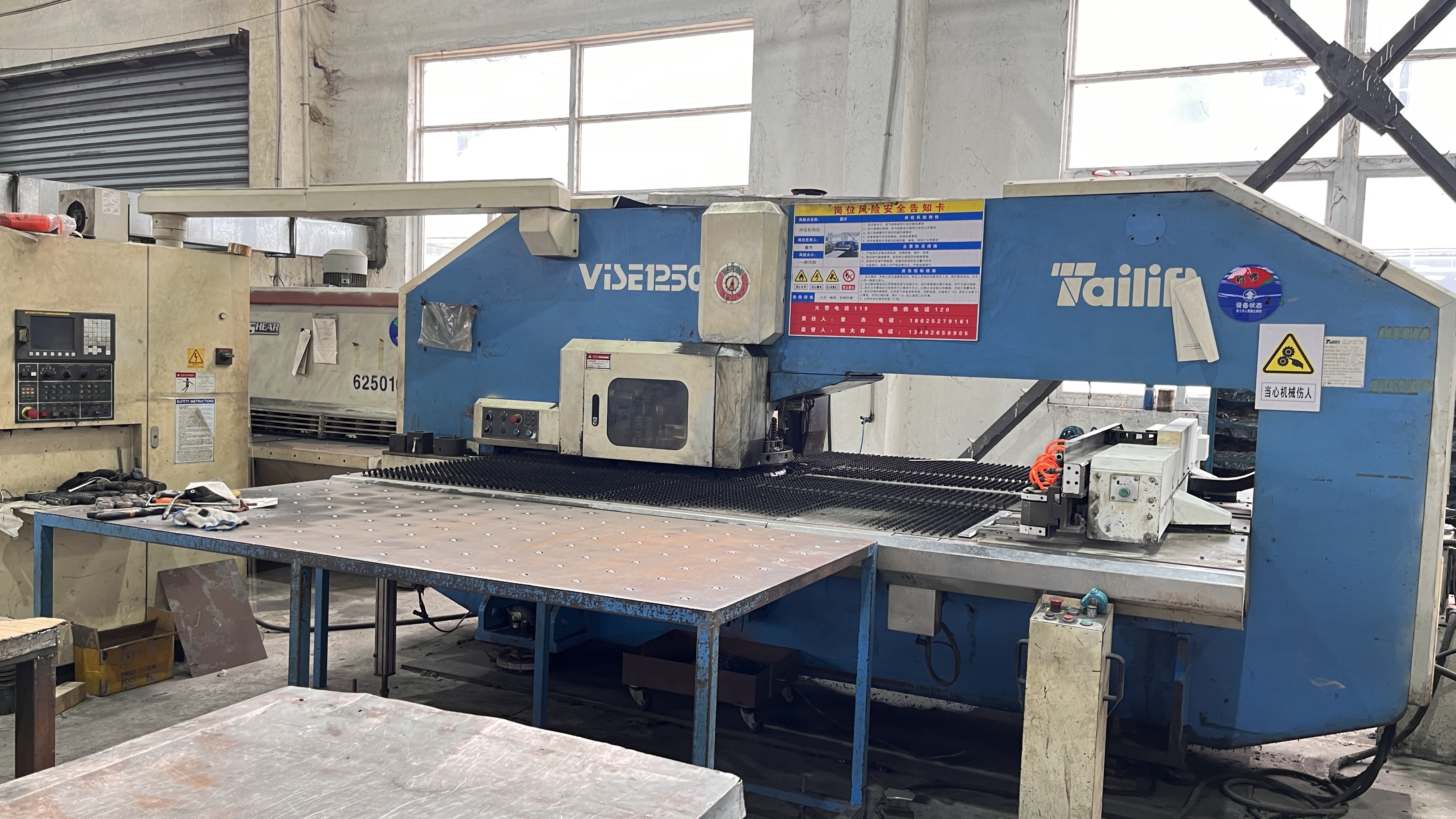
Adapting a PU gasket dispensing machine to auto parts sealing means matching three subsystems to the part being produced: the metering and mixing head, the thermal and pressure control loop, and the motion and line-interface configuration. Each of them maps to one of the failure patterns described above.
Two-component metering and mixing head
Sealing in this sector uses a two-component polyurethane system: the reactive components are metered in a fixed ratio, mixed, and dispensed as a bead that expands and cures into a foam gasket. Because the gasket geometry is generated by the material itself, mixing uniformity determines how consistent the finished seal is from part to part. KAIWEI's comparison data for its dispensing machines against other domestic dispensing machines states 30% higher mixing uniformity, a characteristic that matters specifically in high-precision sealing and mass production environments.
Thermal, pressure and leakage control
In a continuous production run, process stability matters as much as the initial gasket geometry. KAIWEI equips its machines with an independently developed intelligent temperature control module that monitors operating temperature in real time and performs automatic heat dissipation and over-temperature alarming to prevent overheating damage. Dispensing uses a high-precision servo dispensing valve with a real-time pressure feedback system, combined with automatic glue leakage detection and a shutdown protection function to avoid glue overflow. Constant temperature and humidity foaming control supports repeatable foaming behaviour across a shift rather than across a single test part.
Integration with automatic gluing production lines
Auto parts production is normally organised around automatic gluing and dispensing lines, so the machine has to operate as a station inside a line rather than as a standalone bench tool. The equipment families used in this role include polyurethane foaming machines, two-component foaming machines, automatic foam gasket machines, automatic foam sealing machines, PU foam gasket machines and glue dispensing machines; configuration ranges from low-pressure PU foam machines to high-pressure PU processing units, which accounted for 68% of the global machine type market share (Grand View Research, 2021). Motion configuration is the second integration variable: gantry-style movement suits flat, repetitive gasket paths, while a six-axis robotic foaming system is used where the gasket path wraps around a three-dimensional part such as a housing or cover. KAIWEI manufactures robot foaming equipment and six-axis robotic foaming systems for this type of work.
Capacity, verification and long-term supply
For programs that move from sample approval to volume production, the ability of the supplier to keep supplying the same machine configuration over years is part of the technical fit. KAIWEI's monthly production capacity is 2,000 SET, supported by a factory area of more than 20,000 m² and a team of more than 100 employees. The company's listed markets include India, Indonesia and Saudi Arabia in Asia; Russia in Europe; the United States in the Americas; and Algeria and Egypt in Africa, with a wider export list covering markets such as Vietnam, Malaysia, Thailand, Brazil, Mexico, Poland, Italy, Spain and Turkey. This matters for auto parts manufacturers because sealing equipment is usually qualified once and then kept in service for many production cycles.
Step-by-Step Breakdown: Specifying the Machine for Your Part
Specifying a gasket dispensing machine for auto parts sealing is a sequence, not a single purchase decision. The following order keeps specification, validation and supply planning aligned.
- Define the sealing requirement around dust ingress. Record the part geometry, the gasket path (closed loop or open path), the required compressed gasket cross-section, and the surface the foam will bond to. This defines whether the application is a flat-path job or a three-dimensional one, which drives the motion decision later in the sequence.
- Confirm the machine family and pressure class. Match the part and production volume to a polyurethane foaming machine, a two-component foaming machine, or a foam gasket sealing machine, and decide between a low-pressure PU foam machine and a high-pressure processing unit. High-pressure units account for the larger share of the global machine type market (Grand View Research, 2021), but the correct choice depends on material system and gasket geometry rather than on category size.
- Select the mixing head and dispensing valve. This is where gasket consistency is decided. Mixing uniformity and the accuracy of the servo dispensing valve determine whether the bead that lands on the part matches the bead specified in the drawing, and whether that stays true across a full shift.
- Set thermal and dosing parameters. Define the temperature and humidity control window for foaming, confirm automatic glue quantity calibration, and verify the over-temperature alarm and leakage detection behaviour against your own acceptance procedure.
- Plan line integration and motion axis. Confirm how the machine will sit inside the automatic gluing line: part presentation, cycle time, and the axis configuration needed to follow the gasket path. KAIWEI supplies equipment ranging from gantry-style dispensing machines to six-axis robotic foaming systems.
- Validate before shipment and, where required, on your samples. Acceptance criteria for KAIWEI equipment are full inspection before shipment, and third-party testing can be provided for such acceptance procedures. MOQ is 1 unit, delivery terms are FOB/CIF, and payment terms are 30/70.
- Lock in long-term supply. Confirm spare-part availability, service access and material supply alongside machine delivery, and confirm the supplier's production capacity against your forecast — KAIWEI's monthly production capacity is 2,000 SET.
Use Cases: Auto Parts Sealing Applications
The same dispensing platform is used across several auto parts and components categories, with the gasket path and part geometry changing from one to the next:
- Automobile battery covers. Enclosure sealing where dust ingress control is required over the life of the part, and where the gasket path follows a perimeter rather than a simple straight line. EV battery enclosures are one of the segments driving growth in form-in-place liquid gaskets (Maximize Market Research, 2023).
- Automobile inner door handles and mountings. Smaller parts produced in high volumes, where consistency between parts matters more than gasket cross-section size.
- Auto fittings and mountings. Brackets, mounts and similar components where a formed-in-place foam gasket replaces a separate gasket part in the assembly.
- Lamps and lighting components. Lamp covers, brake lights and LED luminaires, where the gasket closes a housing against dust while the housing geometry is often three-dimensional.
- Air filters and filtration housings. Sealing of filter assemblies and air cleaning filters, an application category that also appears in KAIWEI's wider dispensing equipment usage.
Outside the automotive category, the same machine configuration is used for electric cabinets, electrical enclosures, waterproof boxes and other housing sealing work, which means auto parts manufacturers are working with a mature equipment platform rather than a single-purpose machine.
Comparison Table: KAIWEI vs Other Domestic Dispensing Machines
The table below summarises the relative performance figures KAIWEI publishes for its dispensing machines against other domestic dispensing machines, translated into what each figure means on an auto parts sealing line.
| Comparison dimension | KAIWEI dispensing machine | Other domestic dispensing machines | Relevance to auto parts sealing |
|---|---|---|---|
| Mixing head technology | 30% higher mixing uniformity | Baseline | More repeatable gasket cross-section in high-precision sealing and mass production |
| Production efficiency | 20% higher production efficiency | Baseline | Better fit for automatic gluing production lines running at high volume |
| Total cost of ownership | 15% lower total cost of ownership | Baseline | Lower material waste and rework per sealed part |
| Maintenance | Less maintenance, longer service life | Baseline | Fewer unplanned stops during long-term continuous operation |
These figures are relative performance values published by KAIWEI for its dispensing machines compared with other domestic dispensing machines. They describe equipment-level differences and should be re-validated against your own part geometry and two-component PU material system before a volume decision.
Frequently Asked Questions
Which compliance requirements apply to a PU gasket dispensing machine used for auto parts sealing?
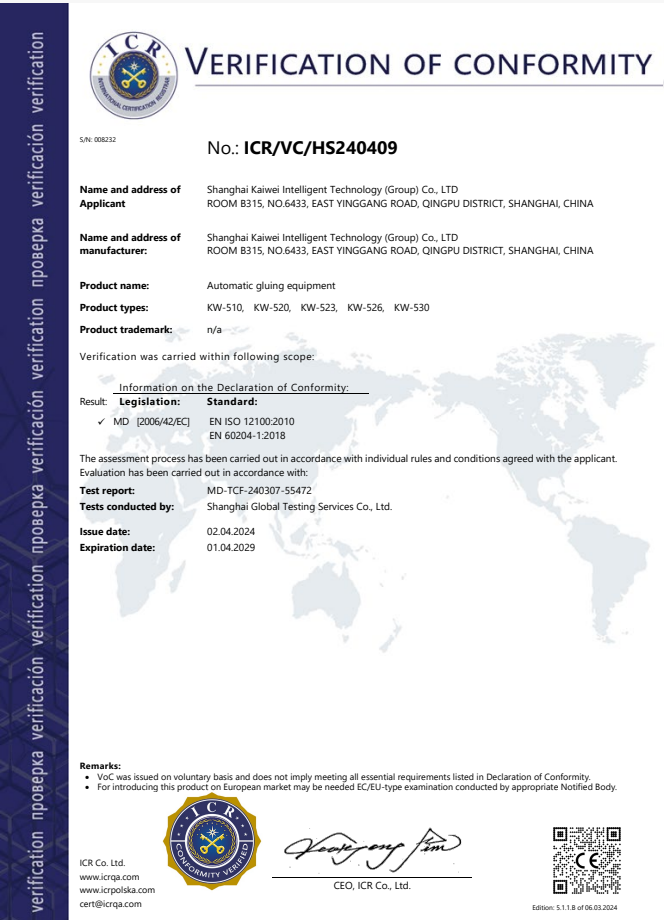
In the European Union, PU foaming machines must comply with the EU Machinery Directive 2006/42/EC and EN 60204-1 for electrical safety in order to obtain CE marking (European Commission / Intertek). KAIWEI states that its products have passed international certifications such as CE and ISO9001. Because machinery compliance applies to the machine as placed on the market, buyers should confirm that the certification documents correspond to the exact configuration and the destination market of the unit being ordered.
Can a PU gasket dispensing machine run inside an automatic gluing production line?
Yes. Equipment in this class is built to operate as a station within automated production rather than as a standalone bench unit. KAIWEI manufactures industrial sealing systems, robot foaming equipment, intelligent sealing and dispensing equipment, and six-axis robotic foaming systems, and its automatic adhesive and dispensing equipment is used in electric cabinets, air filters, air conditioning purification equipment, lamps, automobiles and new energy fields. For line integration, the determining variables are the motion axis (gantry or robot), the metering and mixing configuration, and the dispensing valve with real-time pressure feedback.
What drives the total cost of ownership of a PU gasket dispensing machine?
In auto parts sealing, total cost of ownership is driven mainly by mixing uniformity, production efficiency and maintenance demand. KAIWEI's comparison data for its dispensing machines against other domestic dispensing machines states 30% higher mixing uniformity, 20% higher production efficiency, 15% lower total cost of ownership, and less maintenance with longer service life. Machine class also affects cost structure: high-pressure PU processing units accounted for 68% of the global machine type market share (Grand View Research, 2021). Material, spare parts and service access should be budgeted alongside the machine price.
How does sample validation and acceptance work?
MOQ is 1 unit, and delivery terms are FOB/CIF. Acceptance criteria are full inspection before shipment, and third-party testing can be provided for such acceptance procedures. Payment terms are 30/70. In practice, gasket geometry, foaming behaviour and cycle time should be checked on your own part samples before a volume release.
What production capacity and long-term supply support can be expected?
The monthly production capacity is 2,000 SET. KAIWEI has been manufacturing sealing and dispensing equipment since 2004 and exports to more than 60 countries including Germany, the United States and Southeast Asia, with an export ratio of 70%. For long-term programs, confirm spare-part availability, service response and material supply at the same time as machine delivery. Sample requests and quotations can be sent to info@kaiwei-sh.com or via WhatsApp at +86 137 6198 6986.
Conclusion: Sealing Auto Parts Is a Specification Decision
For auto parts and components manufacturers, dust ingress control is decided at the dispensing stage, not at the assembly stage. A PU gasket dispensing machine that delivers uniform mixing, stable thermal and pressure behaviour, and reliable line integration produces a gasket that behaves the same on part number one and part number one hundred thousand — which is the requirement that manual sealing cannot meet at volume.
Three checks make the difference between a machine purchase and a working sealing process: match the machine family and pressure class to your gasket geometry and material system; verify mixing head and dispensing valve behaviour on your own parts; and confirm that the supplier can keep supplying the same configuration, spares and support over the life of the program. KAIWEI's stated monthly capacity of 2,000 SET, CE and ISO9001 certification, and export footprint across more than 60 countries are the facts to weigh against your own production forecast.
Next step: if you are specifying sealing equipment for auto parts or components, request a sample evaluation or a quotation. KAIWEI can be reached at info@kaiwei-sh.com or on WhatsApp at +86 137 6198 6986.
Download the full product brochure: KAIWEI product catalogue (PDF). Product and application information is also available at www.sh-kaiwei.com and www.pugasket.com.