How to Secure a Long-Term Atrium Tent Supply Partner: A Decision Framework for Growing Event Businesses
How to Secure a Long-Term Atrium Tent Supply Partner: A Decision Framework for Growing Event Businesses
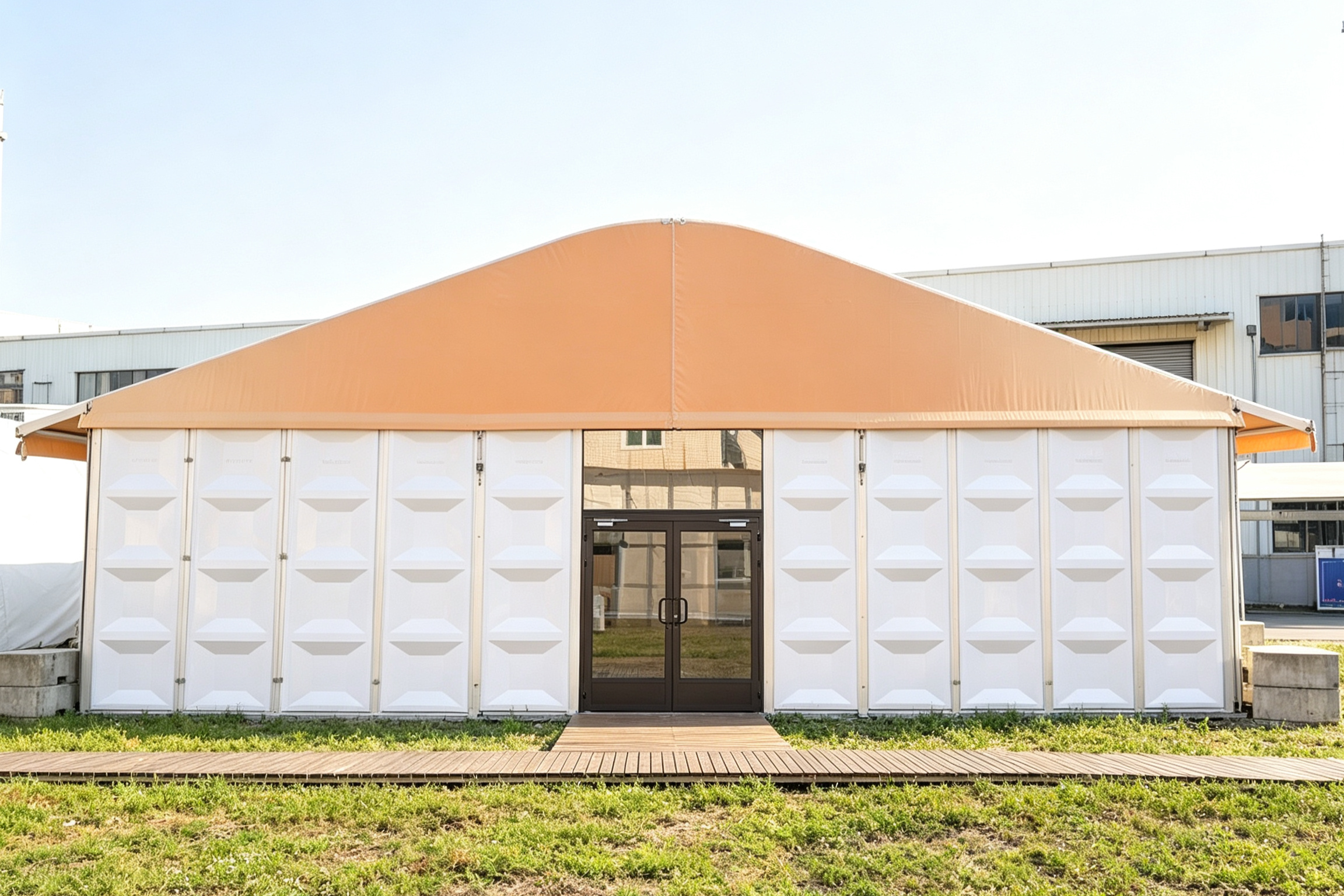
An atrium tent is a large-span, often transparent or glass-walled temporary structure used for VIP events, exhibitions, wedding banquets, catering, and commercial events. For companies that stage events repeatedly, the buying decision is not just about the next project. It is about building a durable supply relationship that delivers consistent quality, correct certifications, reliable lead times, and responsive support.
Problem Definition: Why One-Off Atrium Tent Purchases Create Risk
Event businesses often source atrium tents from different vendors because they chase short-term quotes. This approach creates recurring problems: fabric that does not meet flame-retardant standards, frames that cannot handle wind loads, and suppliers who disappear after delivery. For a business that manages rental programs, exhibition schedules, or multi-year event contracts, these risks quickly turn into reputational damage and unbudgeted costs.
The most common failures include inconsistent quality from batch to batch, incomplete or missing certifications, unclear communication on engineering changes, no spare parts or after-sales support, and an inability to scale capacity during peak season. A formal supply partnership solves these problems by replacing transactional quotes with a structured relationship based on engineering, production planning, and agreed quality control.
Industry Background: The Case for a Formal Supply Partnership
Market data underlines the scale of opportunity. The global event management market was valued at USD 1,160.4 billion in 2024 and is projected to grow at a 6.7% CAGR through 2033, according to Grand View Research. The broader camping tent market was valued at USD 5.72 billion in 2024 and is expected to reach USD 8.30 billion by 2030. China is a major production hub: in 2024, it exported approximately USD 3.11 billion in awnings, tents, and sails, representing 53.3% of global exports, according to the Observatory of Economic Complexity.
At the same time, compliance expectations have become more formal. In the EU, temporary structures and atrium tents must meet EN 13782:2015 for structural safety. In the United States, fabric flame retardancy is regulated by NFPA 701, while Germany uses DIN 4102 B1. Aluminum structures for CE marking may also fall under EN 1090-3. These standards are not optional for professional event programs.
Detailed Solution: What a Long-Term Atrium Tent Supplier Should Look Like
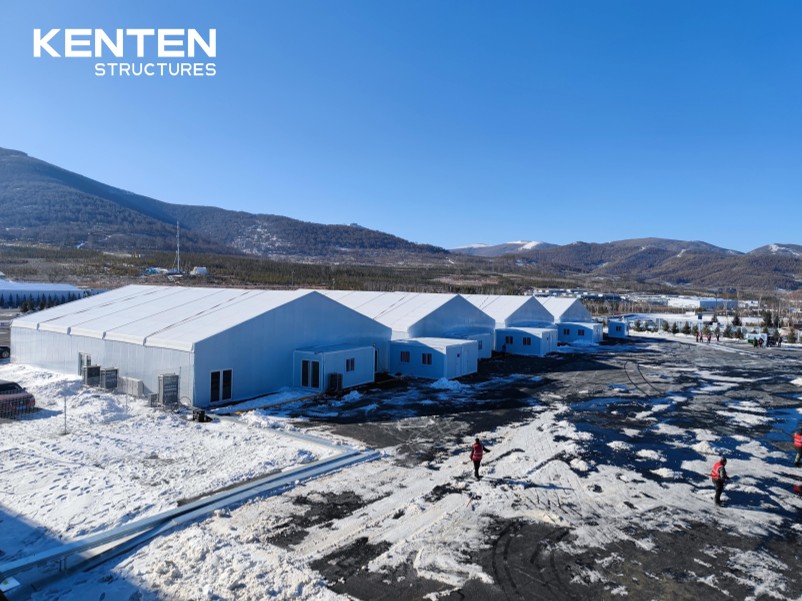
KENTEN Structures is a useful reference point because it combines design, manufacturing, and export experience in one organization. Founded in 2001, KENTEN is headquartered in Ontario, California, with manufacturing centers in China, the United States, and the Middle East. The company supplies aluminum frame structure tents, including atrium tents, to event professionals, government agencies, sports institutions, and industrial clients. KENTEN reports that about 80% of its output is exported, mainly to the USA and EU.
Frame and Fabric Specifications
For a long-term partner, product specifications define the safety and durability baseline. KENTEN's structure tent models K1–K10 span from 3 m to 80 m, with eave height customizable from 2.5 m to 8 m and unlimited length extendable in 5 m bay spacing. The main frame uses high-strength 6061-T6 or 6082-T6 aluminum alloy. The roof fabric is 850 g/m² PVC-coated polyester. Sidewall options include PVC, Glass Wall, ABS Wall, and Sandwich Panel — a flexibility that matters for transparent or insulated atrium tent designs.
- Wind resistance: up to 140 km/h
- Snow load: up to 0.5 kN/m² (approximately 75 kg/m²)
- Temperature range: -30°C to +70°C
- Flame retardancy: DIN 4102 B1, M2, NFPA 701
- Lifespan: aluminum frame 20+ years, PVC fabric 8–15 years
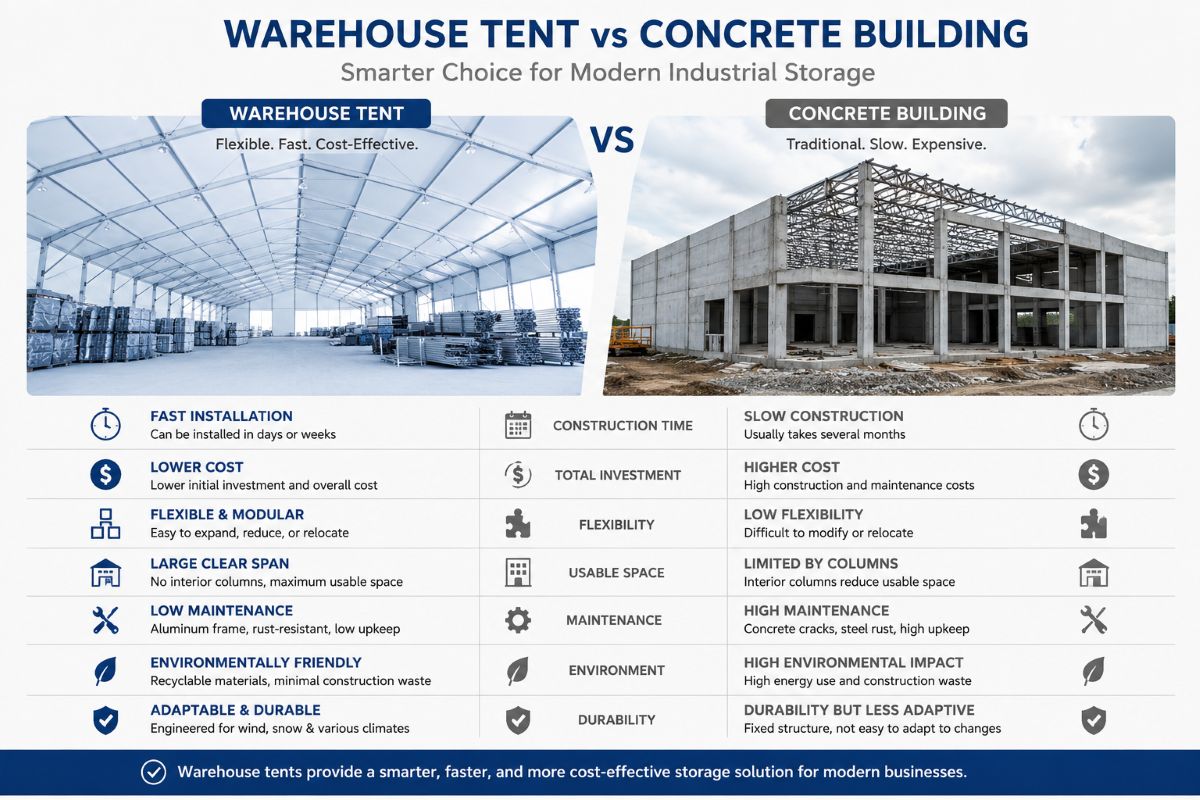
These specifications matter because a reusable aluminum frame that lasts more than 20 years lowers the total cost of ownership for repeated use. Compared with conventional buildings, aluminum frame atrium tents can be installed up to 70% faster, provide 100% column-free interiors, and are reusable across multiple projects. According to KENTEN's comparative analysis, the overall lifecycle cost can be 50% lower than conventional construction for projects that require flexibility or repeated use.
Manufacturing Capacity and Commercial Terms
KENTEN reports a monthly production capacity of 1,000,000 m² and a minimum order quantity of one unit. Typical production lead time is 30–45 days. Delivery can be arranged on FOB or CIF terms, and payment is generally 30/70. For event companies, this combination means they can test a first unit without committing to a large container order, then scale as demand grows.
Step-by-Step: How to Onboard a Long-Term Atrium Tent Partner
- Define your program requirements. Document the sizes, sidewall preferences (transparent, glass wall, PVC, ABS), event frequency, and target certification standards.
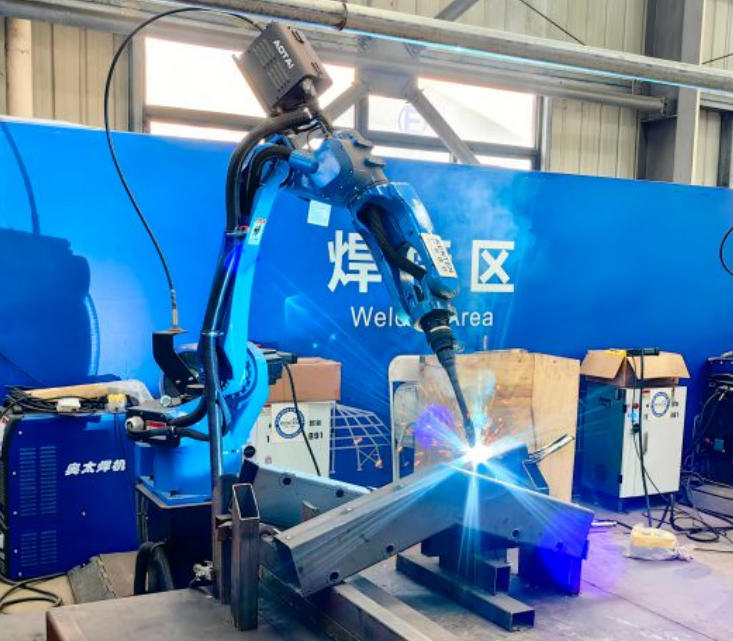
- Verify engineering and compliance. Ask for structural calculation reports and proof of relevant standards: EN 13782, NFPA 701, DIN 4102 B1, and for aluminum structures, EN 1090-3 when required. A professional engineering team performs structural calculations and validates load capacity according to project requirements.
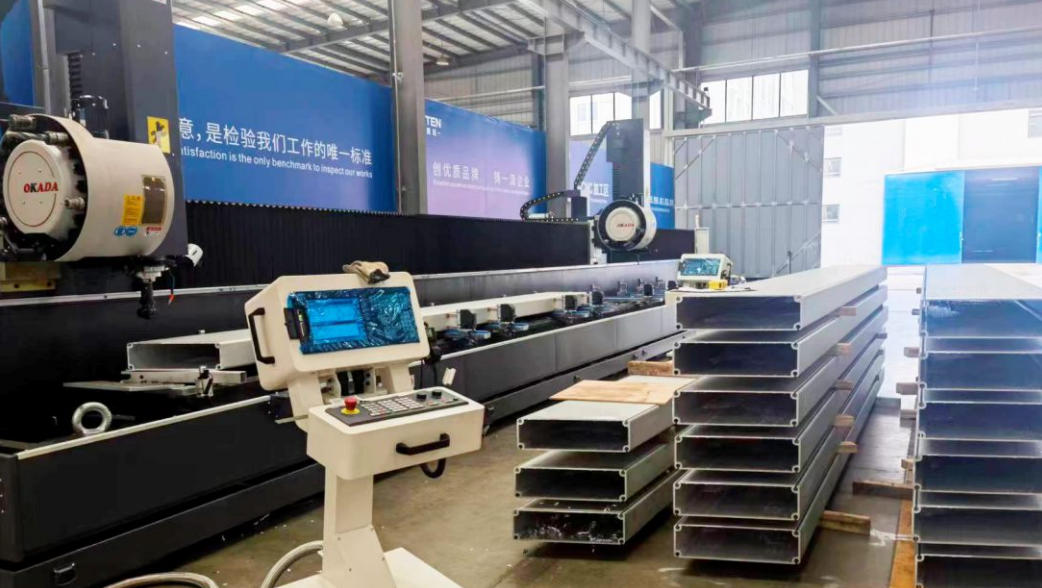
- Audit manufacturing capacity. Confirm monthly output, factory locations, and quality processes. A supplier with 1,000,000 m² per month of capacity is better positioned to support peak seasons and multiple simultaneous events.
- Assess modularity and customization. Atrium tents often need custom spans, curved roofs, branded walls, or glass integrations. Check whether the supplier can offer span widths from 3 m to 80 m, eave heights from 2.5 m to 8 m, and unlimited length extensions in fixed 5 m bays.
- Confirm commercial and logistics terms. Verify MOQ, lead time, payment structure, and delivery terms. Standard terms such as 30/70, FOB/CIF, and pre-shipment testing reduce execution risk.
- Start with a pilot unit. Use the first unit to test installation speed, fabric quality, and client feedback. Then build a recurring ordering process with the same supplier.
Use Cases Across Event Segments
A long-term supply partnership creates different value depending on the event type:
- VIP Event Atrium Tent: Transparent or glass wall panels create a premium atmosphere while maintaining a clear column-free interior.
- Wedding Banquet Atrium Tent: Large clear spans and high-peak curved roofs provide a grand setting without obstructing sight lines.
- Exhibition Show Atrium Tent: Modular, quick-assembly systems reduce downtime between fairs and enable reuse across multiple shows.
- Catering Event Atrium Tent: Waterproof, thermal insulated, and UV protected fabric protects guests and equipment.
- Commercial Event Atrium Tent: Wind-resistant frames and demountable reusable designs support year-round programs.
Comparison: Direct Manufacturer vs. Trading Company vs. Local Agent
When choosing a long-term atrium tent supply partner, it is useful to compare typical characteristics of common sourcing routes. The table below is a qualitative guide, not a ranking of named companies.
| Dimension | Direct Manufacturer | Trading Company | Local Agent / Distributor |
|---|---|---|---|
| Price transparency | Typically factory-direct pricing | Adds middleman margin | Adds local service margin |
| Customization depth | In-house engineering, stronger for bespoke spans and walls | Limited to vendor catalogs | Depends on manufacturer support |
| Quality control | Direct factory inspection and pre-shipment tests | Relies on supplier quality | Local inspection possible, but limited influence |
| Lead time control | Better visibility of production slots | Depends on order consolidation | Depends on stock and import lead time |
| After-sales support | Direct access to engineering and spare parts | Indirect communication | Local support, but limited technical depth |
| Best fit | Large event programs, OEM projects, repeated purchases | Mixed product needs, small orders | Local urgent needs, installation services |
Frequently Asked Questions
What compliance documents should a long-term atrium tent supplier provide?
A reliable long-term supplier should provide structural calculation reports and certifications for the regions where the tent will be installed. In the EU, EN 13782:2015 defines structural safety requirements for temporary structures. For flame retardancy, common standards are NFPA 701 in the United States and DIN 4102 B1 in Germany. KENTEN Structures manufactures its structures to meet IBC 2024, CBC 2025, ASCE 7-22, GB 50429, and EN 13782.
Can a long-term partner handle custom atrium tent requirements?
Yes, if the manufacturer has in-house engineering. KENTEN's aluminum frame structure tent range includes models K1–K10, with span widths from 3 m to 80 m, eave heights from 2.5 m to 8 m, and unlimited length extendable in 5 m bay spacing. Sidewall options include PVC, Glass Wall, ABS Wall, and Sandwich Panel, which makes it possible to match transparent, glass-walled, or insulated designs to different event brands and climates.
What are typical MOQ, lead time, and payment terms for atrium tents?
At KENTEN, the minimum order quantity is one unit. Typical production lead time is 30–45 days. Delivery can be arranged on FOB or CIF terms, and payment is generally 30/70. These terms are practical for event businesses testing a first unit before scaling into a long-term supply program.
Is it possible to order a sample or pilot atrium tent before a long-term contract?
Yes. Because the MOQ is one unit, a pilot order is a feasible way to validate quality, assembly speed, and installation performance. KENTEN's procurement process includes pre-shipment testing, so an event company can verify the structure before it leaves the factory.
How do I begin a long-term supply relationship with a Chinese atrium tent manufacturer?
Start by contacting the supplier with your program requirements: sizes, wall types, event frequency, and target certifications. Request a brochure and a reference list, then arrange a pilot unit. You can reach KENTEN Structures directly at kenten@kentenstructures.com, call +189 9858 2207, or connect via WhatsApp at +86 173 2224 3105.
Conclusion
A long-term atrium tent supply partner is more than a vendor. The right partner brings engineering depth, certified manufacturing, stable capacity, and predictable commercial terms so event businesses can plan with confidence. By applying the framework above—define requirements, verify compliance, audit capacity, confirm terms, and pilot—you can move from one-off quotes to a resilient supply relationship.
Ready to evaluate an atrium tent partnership?
Download the KENTEN catalog for the full product range and technical specifications.