
OEM Atrium Tent for VIP Events: What to Verify Before You Commit
OEM Atrium Tent for VIP Events: What to Verify Before You Commit
Atrium tents are increasingly used for VIP events — weddings, hospitality suites, product launches, and sports hospitality. These semi-permanent structures can provide column-free interior space, large glazing areas, and a polished appearance. But when you choose an OEM atrium tent manufacturer, the decision goes beyond the brochure. It depends on factory capability, certifications, customization depth, and evidence of similar completed projects.
This article is written for event agencies, rental companies, and project owners evaluating an OEM atrium tent manufacturer for a VIP event. It explains what to check, what questions to ask, and what KENTEN Structures — as one example — can document during evaluation.
Problem Definition: Why OEM Atrium Tent Evaluation Is Difficult
The main challenge is not finding a manufacturer; it is verifying actual capability. In the atrium tent industry, many suppliers can quote a price, but fewer can produce a certified, code-compliant aluminum structure with custom glazing, fire-rated fabric, and a reliable delivery schedule. Buyers often face these problems:
- Factory claims cannot be confirmed without a visit or audit.
- Certification documents are incomplete or do not match the product.
- Customization is limited to color or logo, not structural dimensions.
- There are no reference projects at the same scale as your event.
- Lead times and after-sales responsibilities are unclear.
This guide turns those problems into a verification list for evaluation and execution.
Industry Background: The Growing Need for Certified Event Tents
The demand for event tents is connected to growth in the broader event management market. According to Grand View Research, the global event management market was valued at USD 1,160.4 billion in 2024 and is projected to grow at a CAGR of 6.7% through 2033. The specialized commercial event tent segment was expected to exceed USD 3 billion by 2025, based on industry reporting by Rethinking The Future and Shelter Structures.
China is a major production base for tents. The Observatory of Economic Complexity reports that China’s exports of awnings, tents, and sails reached approximately USD 3.11 billion in 2024, representing 53.3% of global exports in this category. This explains why many OEM atrium tent buyers source from China. However, for VIP events in the US, EU, or Middle East, the manufacturer must also meet international engineering and safety standards, not just production efficiency.
Detailed Solution: A Six-Area Framework for Supplier Verification
To evaluate an OEM atrium tent manufacturer for VIP events, use the following six areas. Each area is supported by verifiable facts and can be checked during the RFQ or site audit stage.
1. Confirm OEM/ODM Production and Customization Scope
A manufacturer should clearly state whether it offers OEM, ODM, or both. KENTEN Structures, for example, provides OEM and ODM production services. For custom projects, KENTEN can adapt structure dimensions, roof and fabric options, sidewall options, flooring systems, interior accessories, and branding and appearance.
For VIP events, the most relevant options are often transparent PVC walls, glass walls, ABS walls, and sandwich panels, because they directly affect visual identity and thermal insulation. A glass wall atrium tent or transparent atrium tent can create a premium environment, but the manufacturer must engineer the frame to support the selected glazing system.
2. Verify Manufacturing Footprint and Quality Control
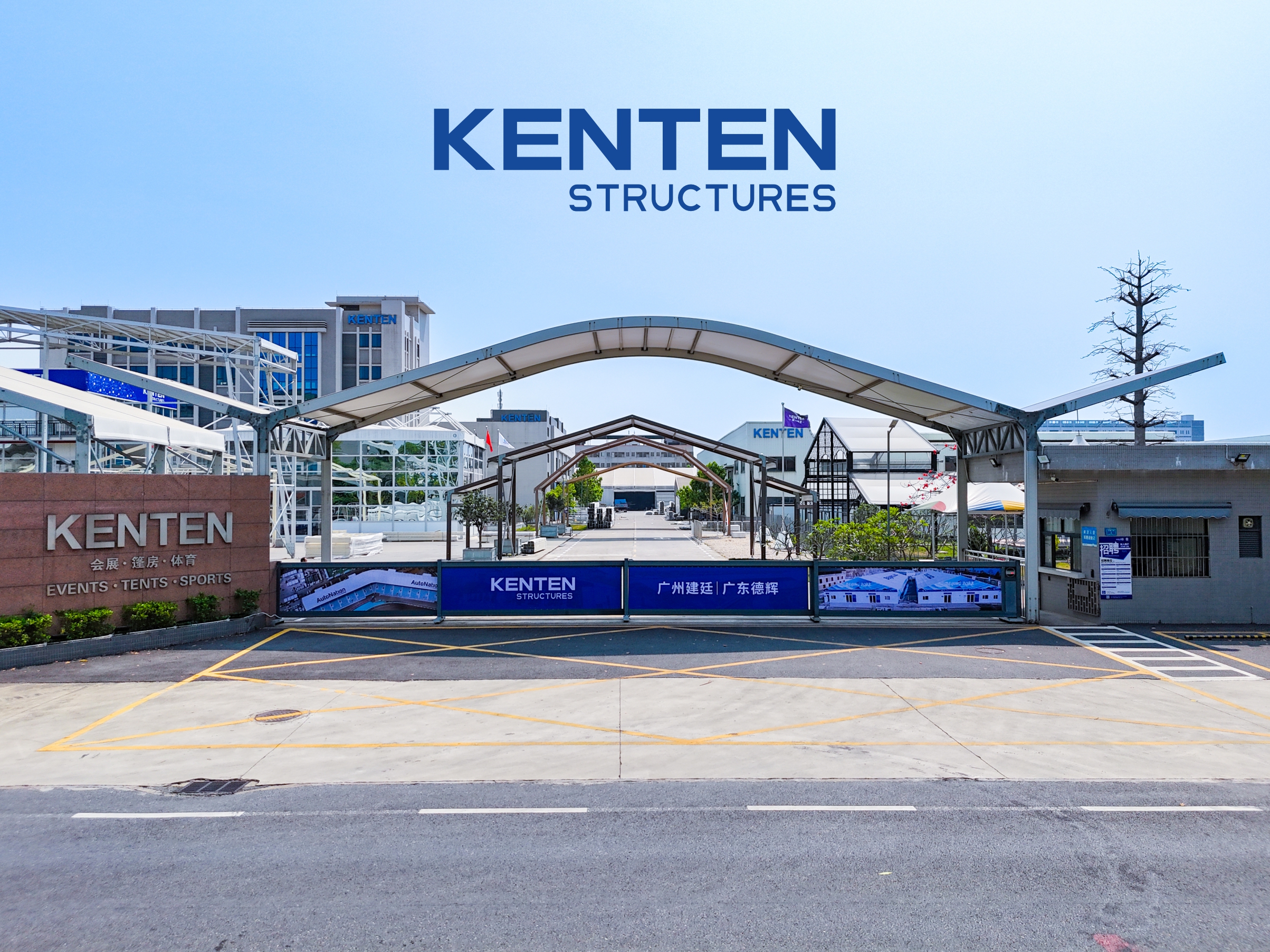
Factory scale is not the only measure, but it demonstrates capacity. KENTEN reports a factory area of 80,000 m², 200 employees, an annual output of 1,000,000 m², and a monthly capacity of 1,000,000 m². Its engineering team includes 10 engineers. Quality control includes raw material incoming inspection and 100% full inspection before shipment.
KENTEN also operates manufacturing centers in China, the United States, and the Middle East. For an event company serving North America or the Gulf region, multiple production locations can reduce logistics risk and shorten response times.
3. Check Certifications and Standards
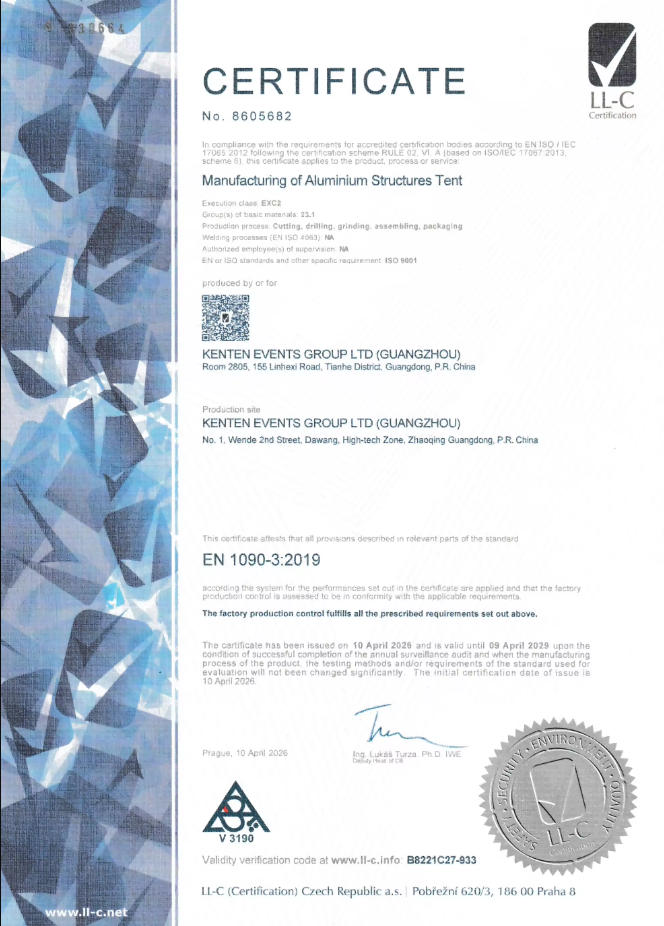
For an atrium tent used in VIP events, ask for certification documents with certificate numbers. KENTEN holds a CE certificate No. 8605682 issued under EN 1090-3 for the manufacturing of aluminum structure tents, with execution class EXC2. The certified scope covers cutting, drilling, grinding, assembling, and packaging.
KENTEN also holds ISO 9001 quality management certification (No. 51816Q00846R3), ISO 14001 environmental management certification (No. 51815E00262R3), and ISO 45001 occupational health and safety certification (No. 51815O00263R3). The company states that its structures are produced and certified to IBC 2024, CBC 2025, ASCE 7-22, GB 50429, and EN 13782. For fabric flame retardancy, the available standards include DIN 4102 B1, M2, and NFPA 701.
4. Assess Product Engineering and Material Quality
VIP events often require wide spans without internal columns, high ceilings, and glazed walls. The Structure Tent platform used by KENTEN, available in models K1–K10, offers a span width from 3 m to 80 m depending on model, an eave height from 2.5 m to 8 m, and an unlimited length extendable in 5 m bay spacing.
The main frame is high-strength 6061-T6 or 6082-T6 aluminum alloy. The standard roof is 850 g/m² PVC-coated polyester fabric. The structure supports wind resistance up to 140 km/h, snow load up to 0.5 kN/m², and a temperature range of -30°C to +70°C. The aluminum frame is designed for a lifespan of 20+ years, while the PVC fabric lasts 8–15 years.
For exhibition or event applications, a 100% column-free interior is a major advantage. KENTEN used a column-free structure tent for an exhibition hall in Kuwait, maximizing usable space for exhibition purposes.
5. Review Event-Specific Proof Points
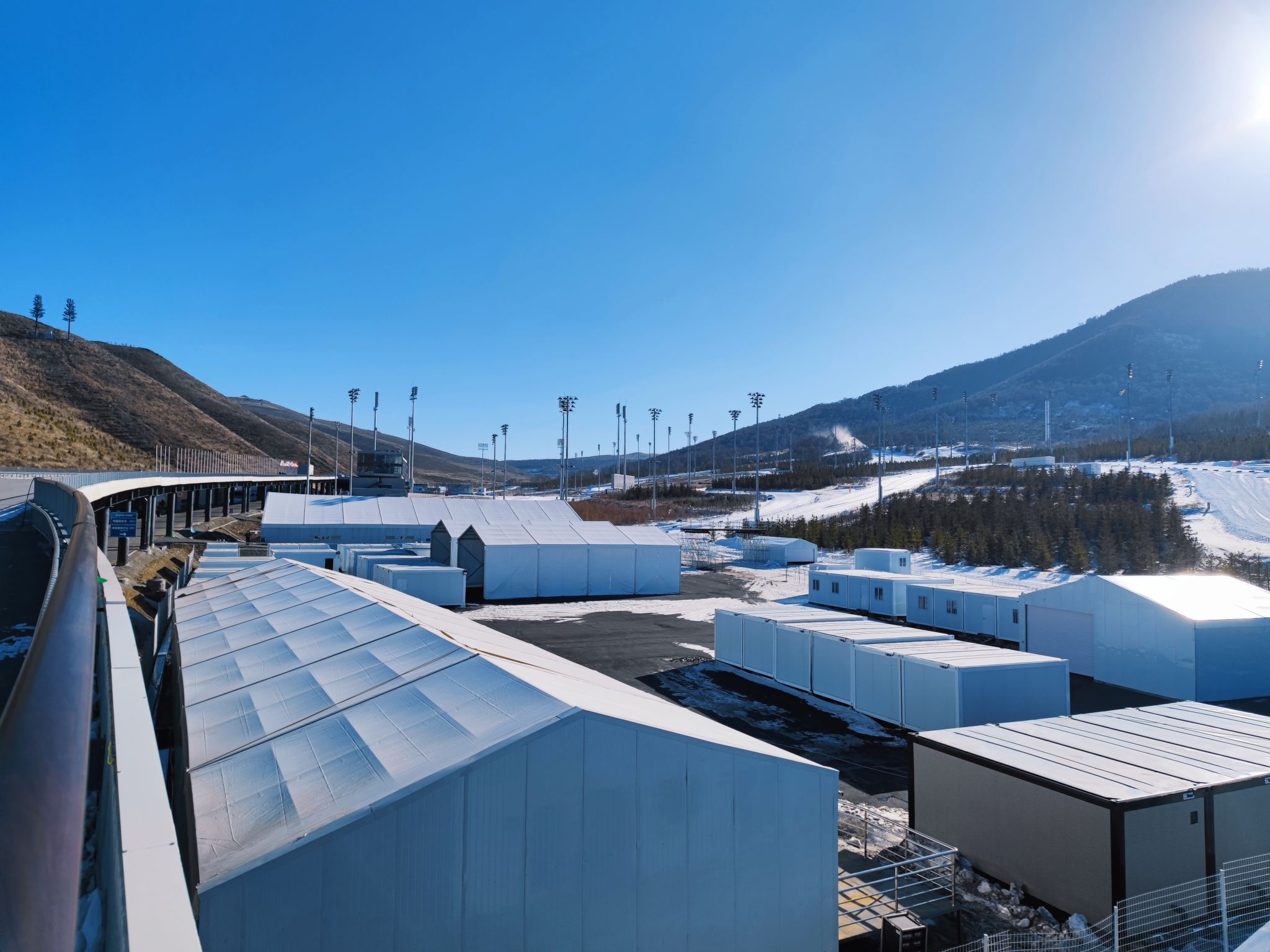
Large-scale sports events are strong proof because they demand rapid installation, security integration, and reliable operation under pressure. KENTEN supplied 50 units for the 2008 Beijing Olympic Games, covering VIP reception areas, media service points, and operation management areas. For the 2022 Beijing Winter Olympic Games, KENTEN supplied A-structure tents and double-decker tents used for security checkpoints, staff offices, dining areas, meeting rooms, and command centers.
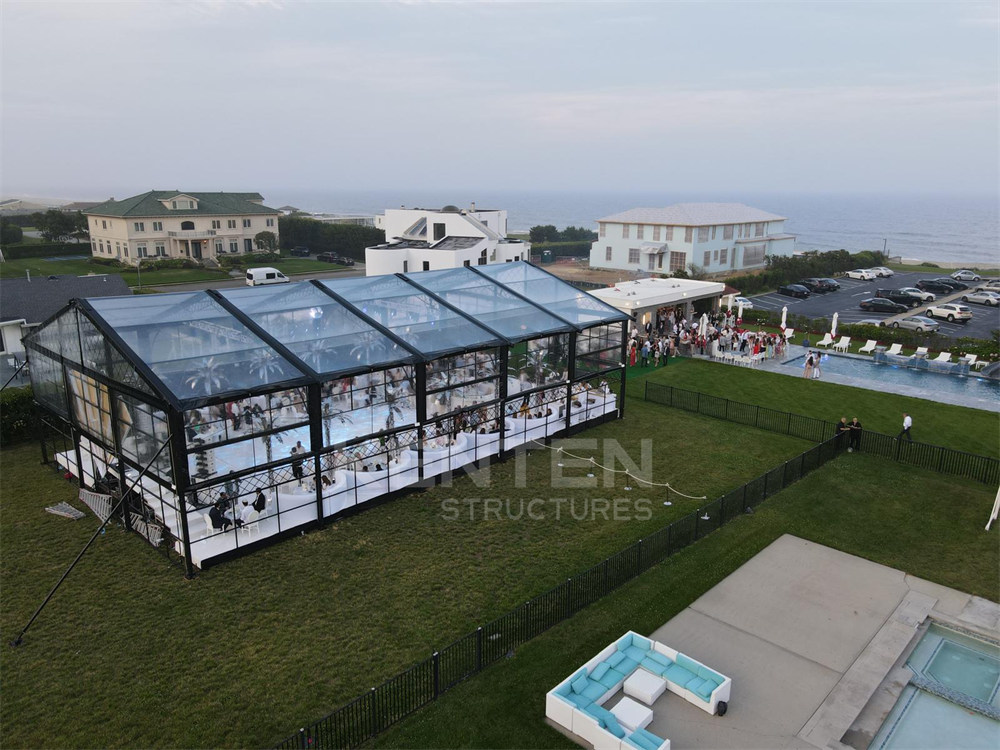
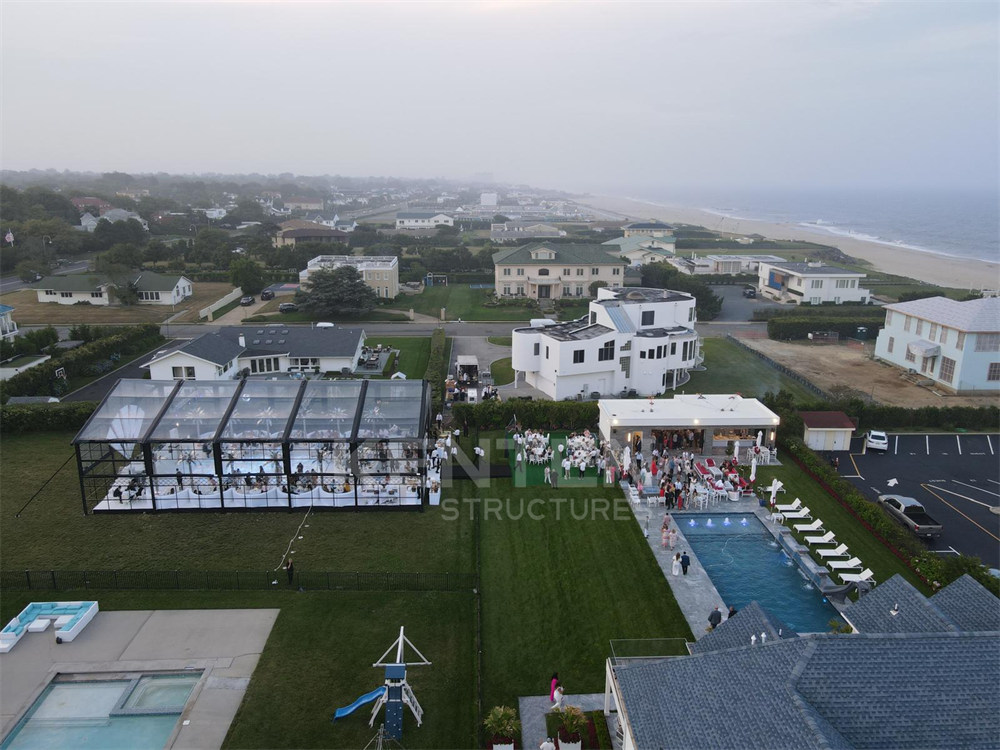
For the 19th Asian Games in Hangzhou, KENTEN provided 100 units of A-structure tents and pagoda tents for audience security checks, temporary storage, and restrooms across multiple venues. In the private event sector, KENTEN supplied a 15 m × 25 m atrium tent for a luxury wedding venue on the East Coast of the United States, located steps from the ocean and equipped with a climate-controlled interior.
6. Align Commercial Terms and After-Sales Support
OEM buyers need clear commercial terms before moving to execution. KENTEN’s MOQ is 1 unit, which is useful for event companies testing a supplier for the first time. Standard lead time is 30–45 days. Payment terms are 30/70. Delivery can be arranged on FOB or CIF basis. Acceptance includes a pre-shipment test.
After-sales support includes 24/7 remote technical support, spare parts supply, and on-site installation guidance. For event rental companies, this kind of support reduces downtime during installation and reuse cycles.
Step-by-Step Breakdown: From Evaluation to Execution
Here is a seven-step process you can use when selecting an OEM atrium tent manufacturer for VIP events.
- Define event requirements. Determine required span, length, eave height, sidewall style, climate control needs, and site constraints.
- Shortlist manufacturers by certification. Look for EN 13782 or equivalent structural compliance, CE marking under EN 1090-3, and fabric flame retardancy standards such as NFPA 701 or DIN 4102 B1.
- Request a technical proposal. Ask for drawings, specifications, frame material details, and sidewall options. Confirm that the proposal matches your event dimensions and loading conditions.
- Audit the factory or request evidence. Review factory size, production equipment, incoming inspection, and pre-shipment inspection process. If site audit is not possible, request documented case studies and client references.
- Verify certification documents. Check certificate numbers, issuing bodies, scope, and validity dates. Confirm that the certificate covers the product model you are buying.
- Finalize commercial terms. Confirm MOQ, lead time, payment structure, delivery terms, and acceptance procedures such as pre-shipment testing.
- Plan logistics and installation. Coordinate FOB or CIF shipping, site preparation, ground anchors or ballast, and installation support. For rental projects, discuss reusability and demounting.
Use Cases: How OEM Atrium Tents Are Applied in VIP Environments
The following use cases show how an OEM atrium tent manufacturer can support different event scenarios.
Luxury Wedding in the USA
KENTEN designed and supplied a 15 m × 25 m atrium structure tent for a private luxury residence on the East Coast of the United States. Installed near the ocean, the venue provided a fully enclosed, climate-controlled environment for high-end wedding receptions. This case demonstrates the ability to combine large span, glazing, and climate control in an oceanfront setting.
Formula 1 Hospitality in Canada
For a Formula 1 event in Canada, KENTEN delivered 10 units used for VIP lounges, hospitality suites, viewing platforms, and operational areas. The project supplied fast, reliable, and premium temporary infrastructure with a designed lifespan of 20 years. This case is useful for event organizers who need customized VIP spaces under intense operational schedules.
Major Multi-Sport Events in China
For the 19th Asian Games in Hangzhou, KENTEN was selected as a key infrastructure partner, providing 100 units of A-structure tents and pagoda tents for public areas. The structures supported audience security checks, temporary storage, and restrooms across competition venues. This case shows scalability across multiple locations and event functions.
Exhibition Halls in the Middle East
In Kuwait, a structure tent with a 100% column-free interior was supplied for an exhibition hall, maximizing usable space for exhibition clients. In Qatar, a pyramid structure exhibition hall was built for the Doha Photography Festival. These projects demonstrate the ability to deliver architecturally distinctive temporary buildings for cultural and trade events.
Comparison Table: OEM Atrium Tent Evaluation Scorecard
The table below is an evaluation scorecard you can use with any atrium tent manufacturer. The left column is the criterion; the right column shows documented KENTEN evidence for comparison.
| Evaluation Criterion | KENTEN Structures - Documented Evidence |
|---|---|
| OEM / ODM production | OEM and ODM services available |
| Monthly production capacity | 1,000,000 m² |
| Minimum order quantity | 1 unit |
| Lead time | 30–45 days |
| Payment terms | 30/70 |
| Delivery method | FOB / CIF |
| Certifications | CE (No. 8605682), ISO 9001, ISO 14001, ISO 45001 |
| Structural standards | IBC 2024, CBC 2025, ASCE 7-22, GB 50429, EN 13782 |
| Frame material | 6061-T6 / 6082-T6 aluminum alloy |
| Roof fabric | 850 g/m² PVC-coated polyester fabric |
| Sidewall options | PVC, glass wall, ABS wall, sandwich panel |
| Wind resistance | Up to 140 km/h (customizable) |
| Snow load | Up to 0.5 kN/m² |
| Flame retardancy | DIN 4102 B1, M2, NFPA 701 |
| Reference event scale | 2022 Winter Olympics, 19th Asian Games, F1 events |
| After-sales support | 24/7 remote support, spare parts, on-site installation guidance |
FAQ
What certifications should an OEM atrium tent manufacturer for VIP events have?
For aluminum frame atrium tents, the most relevant certification is CE marking under EN 1090-3, which confirms the execution quality of aluminum structures. KENTEN holds CE certificate No. 8605682 with execution class EXC2. In addition, ISO 9001, ISO 14001, and ISO 45001 show management system maturity. For fabric, ask for DIN 4102 B1, M2, or NFPA 701 flame retardancy. KENTEN structures are stated to comply with IBC 2024, CBC 2025, ASCE 7-22, GB 50429, and EN 13782.
What customization options can an OEM atrium tent manufacturer provide for VIP events?
Typical OEM customization includes structure dimensions, roof and fabric choices, sidewall types such as PVC, glass wall, ABS wall, and sandwich panel, flooring systems, interior accessories, and branding or appearance. KENTEN provides these options and has a monthly capacity of 1,000,000 m² to support custom production.
What is the minimum order quantity and lead time for an OEM atrium tent?
KENTEN’s MOQ is 1 unit, which allows event companies to test the product before a larger order. Standard lead time is 30–45 days. Payment terms are 30/70, and delivery is available on FOB or CIF basis.
How can I verify a manufacturer’s experience with large VIP events?
Ask for project names, quantities, applications, and case photos. KENTEN’s record includes 50 units for the 2008 Beijing Olympics, 50 units for the 2022 Beijing Winter Olympics, 100 units for the Hangzhou Asian Games, 10 units for Formula 1 in Canada, and a 15 m × 25 m atrium tent for a US luxury wedding. These cases demonstrate scale and premium application.
How do I request a quote or brochure from KENTEN?
You can contact KENTEN Structures directly by email at kenten@kentenstructures.com or via WhatsApp at +86 173 2224 3105. The product catalog is available for download, and you can request a custom quote for your event.
Ready to evaluate an OEM atrium tent partner for your VIP event?
Download the KENTEN catalog to review specifications and project references, or contact KENTEN directly for a quote.
Download the KENTEN Catalog | kenten@kentenstructures.com | WhatsApp: +86 173 2224 3105