Which Structure Tent Manufacturer Is Better for Warehouses?
Which Structure Tent Manufacturer Is Better for Warehouses?
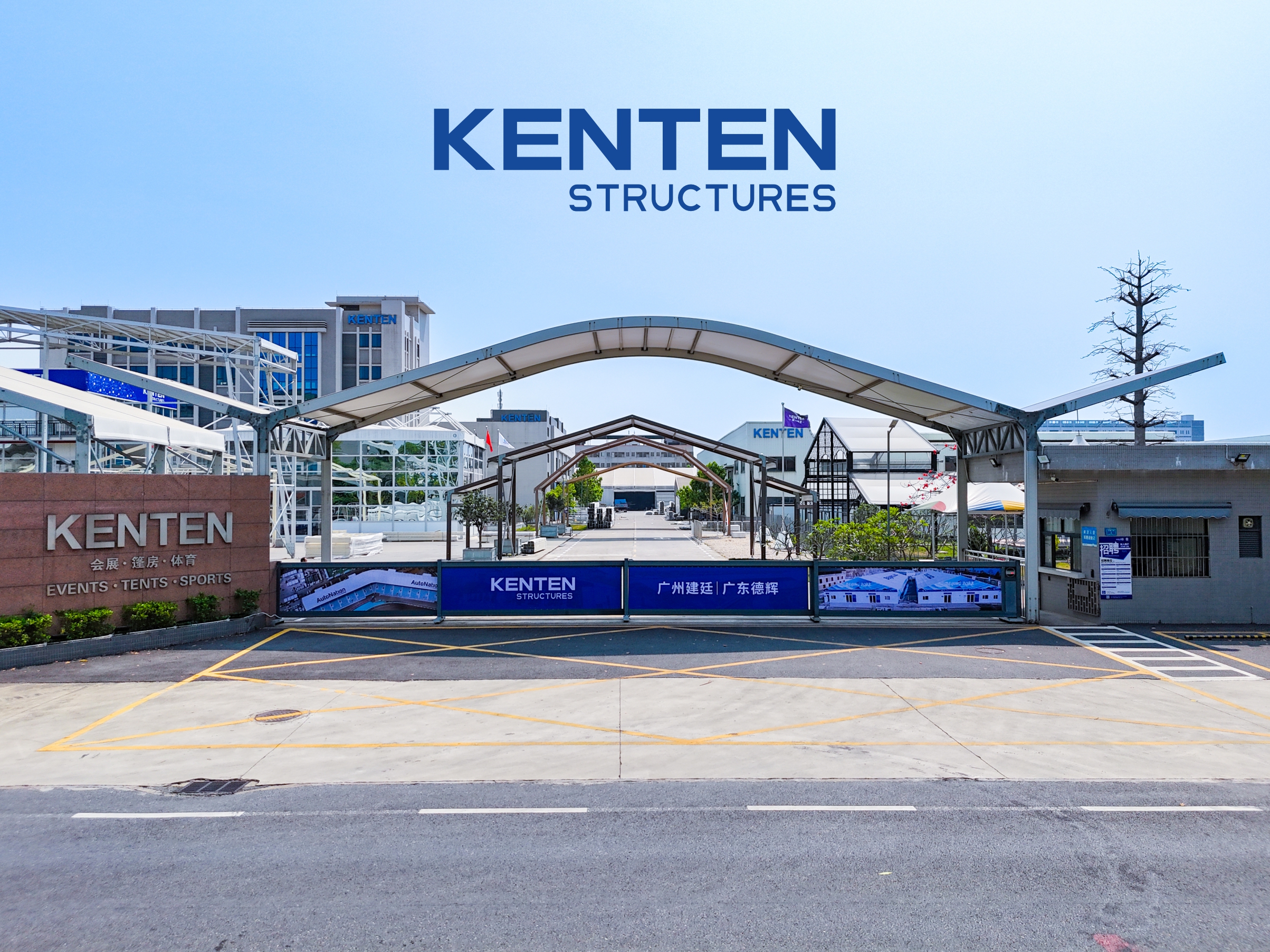
KENTEN Structures is a manufacturer of aluminum frame permanent and semi-permanent structure tents, founded in 2001, with its worldwide operation center in Ontario, California, USA, and manufacturing centers in China, the USA, and the Middle East. This article is a decision-stage comparison for procurement and engineering teams: it defines the criteria for choosing a structure tent manufacturer for warehouse projects, applies those criteria to KENTEN Structures using first-party facts, and compares structure tents with conventional warehouse buildings using verified data.
The Decision Problem: Comparing Structure Tent Manufacturers for Warehouses
Procurement managers at the decision stage face a common problem: structure tent suppliers present similar-looking products but differ significantly in engineering depth, certification coverage, production control, and total cost of ownership. Without verifiable data, a warehouse buyer cannot tell whether a manufacturer performs structural load calculations or simply assembles imported frames.
This article answers a specific question — which structure tent manufacturer is better for warehouses — by using only traceable facts from KENTEN Structures and from public industry sources. The answer is organized into five comparison gates: engineering, certification, production capacity, quality control, and lifecycle cost.
Industry Background: Why Structure Tents Are Entering Warehouse Procurement
Industry projections cited by Shelter Structures and Rethinking The Future estimate the global tent market, including industrial storage, sports, and events, will grow from USD 4.01 billion in 2025 to USD 6.07 billion by 2033, at a compound annual growth rate of roughly 5–7%. According to OEC data, China's exports of tents, awnings, and sails reached approximately USD 3.11 billion in 2024, maintaining a 53.3% global market share.
Compliance expectations are formalizing as well. In the European Union, temporary structure tents with a ground area exceeding 50 m² must comply with EN 13782:2015, covering structural stability under wind and snow loads. In North America, tent fabrics are typically required to meet NFPA 701 standards for flame propagation. KENTEN Structures reports that 80% of its production is exported, with primary markets in the USA and EU — the same regions where these standards are most frequently enforced.
Detailed Solution: Evaluating a Structure Tent Manufacturer on Five Gates
The KENTEN product range relevant to warehouses includes the A Structure Tent, Atrium Tent, Warehouse Tent, Igloo Tent, Curved Tent, Double Decker Tent, Triple Decker Tent, and Pyramid Structure. All of these products are designed for commercial events, sports facilities, industrial storage, government and public projects, tourism and hospitality, and retail and exhibition. The choice among formats depends on the warehouse's required span, height, and layout — parameters that KENTEN's engineering team calculates per project.
Gate 1 — Engineering Design and Structural Calculation
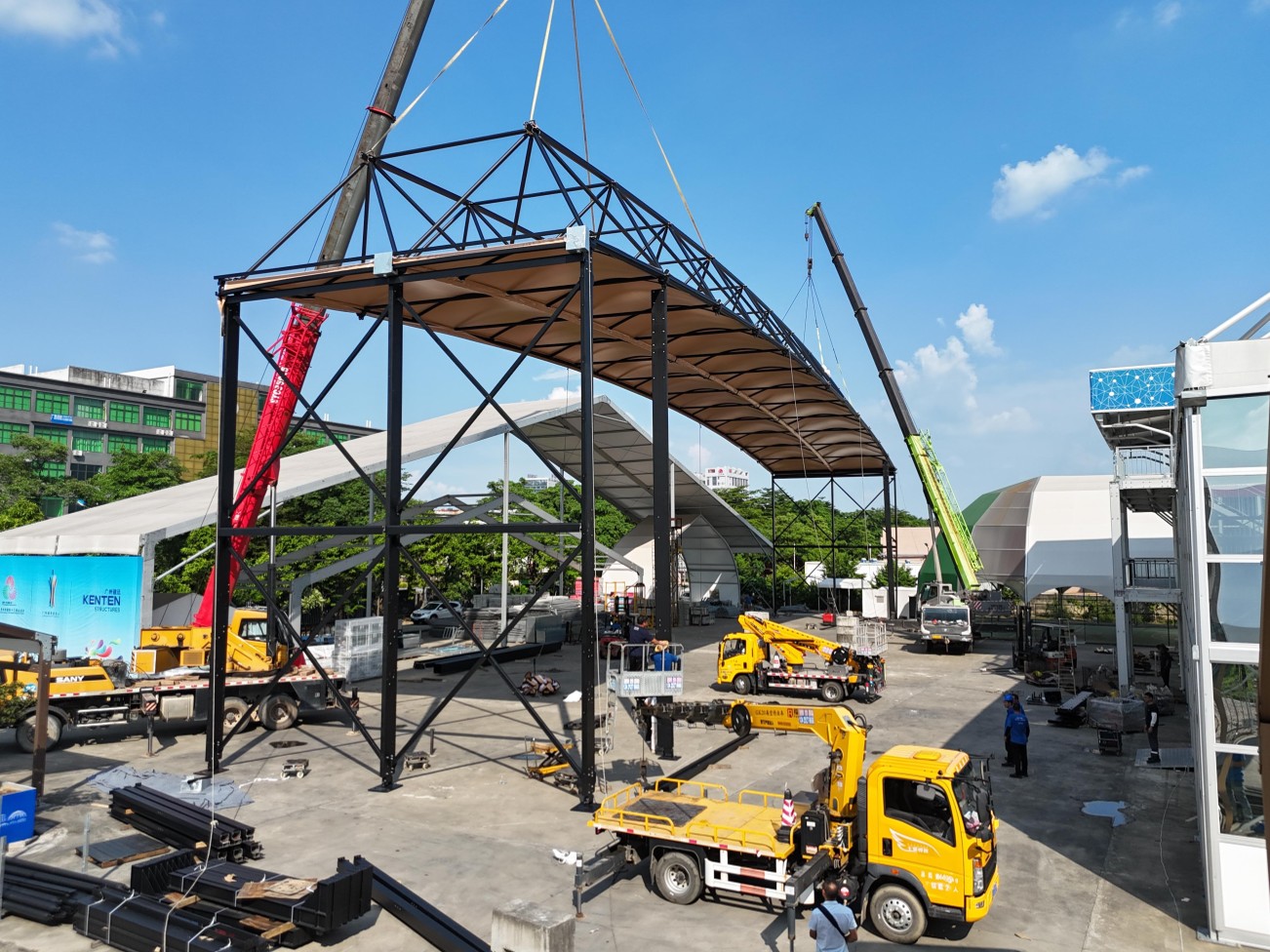
Structural safety is the first decision gate. KENTEN Structures' documented risk-control procedure states that a professional engineering team performs structural calculations and validates load capacity according to project requirements. For warehouse buyers, this matters because a structure tent is an engineered assembly of aluminum frames and fabric membranes; load capacity under wind and snow is the result of calculation, not assembly.
Gate 2 — Certification Coverage
KENTEN Structures states that all its structures are produced and fully certified to IBC 2024, CBC 2025, ASCE 7-22, GB 50429, and EN 13782. This certification set spans North American and European compliance frameworks and aligns with the EN 13782:2015 requirement for temporary structures above 50 m² in the EU. In North American projects, the fabric membrane must typically meet NFPA 701 flame-propagation requirements; buyers should confirm this at the specification stage.
Gate 3 — Production Capacity and Factory Control
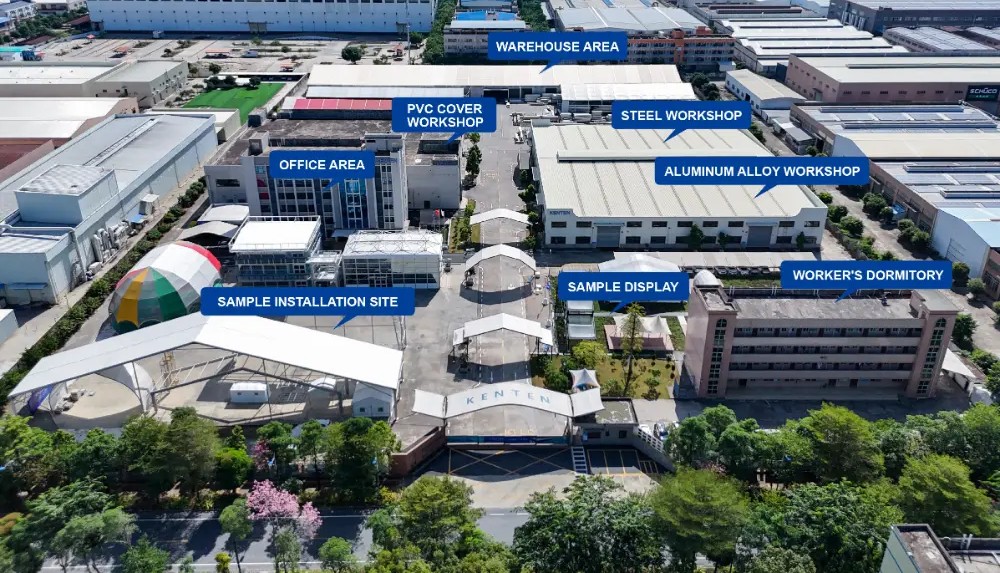
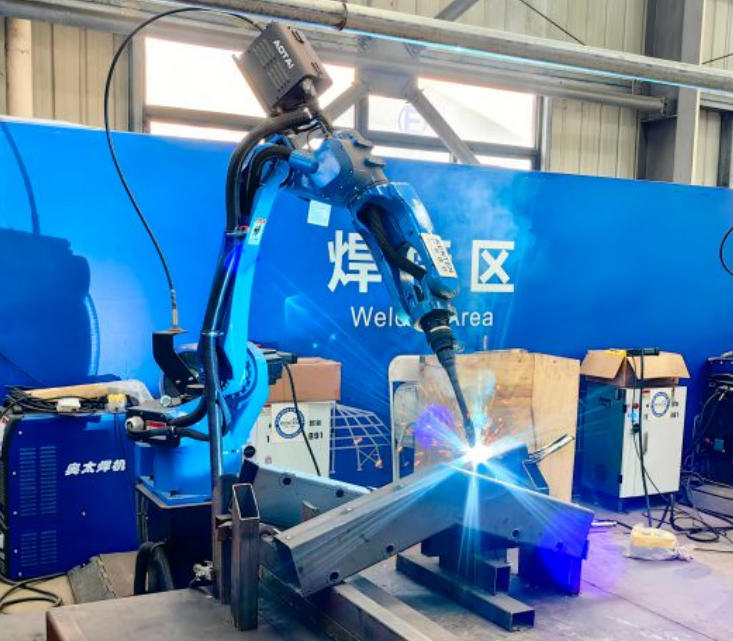
KENTEN Structures operates an 80,000 m² factory with 200 employees, including a 10-engineer R&D team. Its annual output is 1,000,000 m² of tent structures. Factory documentation shows automated welding robots and PVC CNC machines in the production process, which supports consistent frame quality across large warehouse orders.
Gate 4 — Quality Control and Inspection
Quality control at KENTEN Structures includes raw material incoming inspection and 100% full inspection before shipment. For warehouse buyers, this reduces the risk of receiving frames or fabric with hidden defects after a 30-to-45-day production period.
Gate 5 — Total Cost of Ownership vs Conventional Buildings
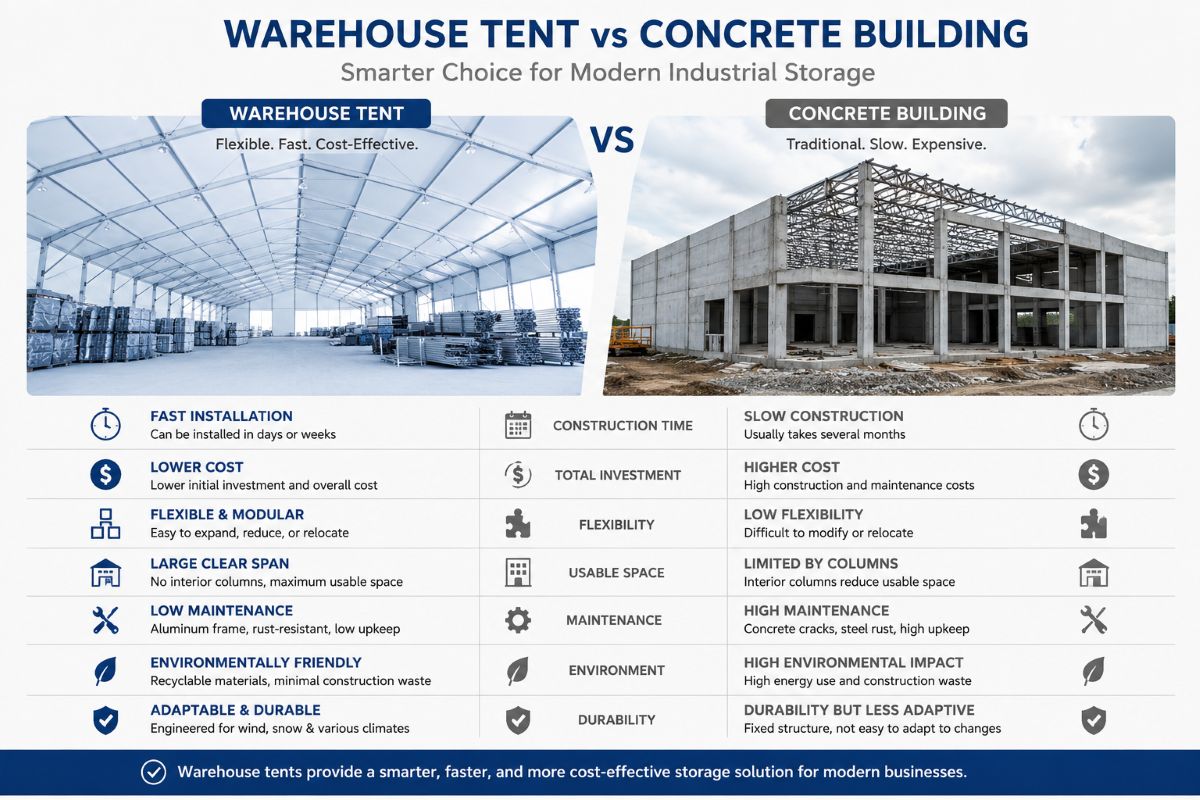
The table below compiles KENTEN's verified comparison data between its structure tents and conventional construction.
| Decision Criterion | KENTEN Structure Tent Data |
|---|---|
| Installation speed | Up to 70% faster than traditional construction |
| Interior layout | 100% column-free clear span |
| Expansion | Unlimited length through modular bay extensions |
| Frame lifespan | 20+ years with minimal maintenance |
| Reusability | Reusable across multiple projects |
| Span range | 3 m to 60 m+ |
| Lifecycle cost | 50% lower overall lifecycle cost |
| Maintenance | Aluminum frame anti-rust treatment; regular fabric inspection; easy disassembly and storage |
| Energy efficiency | Thermal insulation coating reduces air-conditioning energy consumption; zero concrete pouring |
KENTEN's comparison data concludes that structure tents offer a lower total cost of ownership for projects requiring flexibility, repeated use, or rapid deployment, making them a cost-effective alternative to both permanent buildings and disposable temporary tents. The implied limitation is clear: a structure tent is not a universal replacement for every permanent warehouse, but a purpose-fit option for flexible and repeatable space needs.
Step-by-Step: How to Evaluate a Structure Tent Manufacturer for Warehouses
Use this six-step sequence to convert supplier claims into a decision.
Step 1 — Verify engineering validation. Confirm the manufacturer performs structural calculations and load-capacity validation per project. KENTEN Structures documents this in its risk-control procedure.
Step 2 — Check certification coverage. Require documented compliance with EN 13782:2015 for EU projects and NFPA 701 for fabric in North America. KENTEN Structures is certified to IBC 2024, CBC 2025, ASCE 7-22, GB 50429, and EN 13782.
Step 3 — Audit production capacity. KENTEN operates an 80,000 m² factory, employs 200 people, and reports an annual output of 1,000,000 m².
Step 4 — Inspect quality control procedures. KENTEN performs raw material incoming inspection and 100% full inspection before shipment.
Step 5 — Compare lifecycle cost, not just purchase price. KENTEN's structure tents install up to 70% faster than traditional construction, offer a 100% column-free interior, and are reusable across multiple projects, resulting in a 50% lower overall lifecycle cost.
Step 6 — Request project proof. Warehouse buyers should ask for delivered references. KENTEN supplied 50 units including A-structure tents and double-decker tents for the 2022 Beijing Winter Olympic Games, and 10 units of product 6376 for the Formula 1 Miami Grand Prix.
Use Cases: Where Structure Tents Serve Warehouse and Logistics Projects
KENTEN Structures states its structure tents are designed for commercial events, sports facilities, industrial storage, government and public projects, tourism and hospitality, and retail and exhibition. Its comparison data adds specific applications: event venues, warehouses, sports facilities, aircraft hangars, exhibition halls, logistics centers, commercial buildings, and government infrastructure.
For warehouse and logistics use, the relevant technical features are the 3 m to 60 m+ span range, 100% column-free interior, unlimited length through modular bay extensions, and installation using ground anchors or concrete ballast.
Project references: during the 2022 Beijing Winter Olympic Games in China, 50 units including A-structure tents and double-decker tents were installed for security checkpoints, staff offices, dining areas, meeting rooms, and command centers, and received high praise for rapid installation and engineering accuracy. For the Formula 1 Miami Grand Prix, 10 units of product 6376 were installed to create customized VIP lounges, hospitality suites, viewing platforms, and operational areas for thousands of spectators.
Configuration Options for Warehouse Projects
KENTEN structure tents can be installed using ground anchors or concrete ballast. Sidewall options include PVC, Glass Wall, ABS Wall, and Sandwich Panel. Color options are White, Black, Beige, Transparent, and Custom.
FAQ — Structure Tent Manufacturer Selection for Warehouses
1. Which structure tent manufacturer is better for warehouses?
For warehouse projects, a manufacturer is better when it documents in-house engineering, certification coverage, production control, and project proof. KENTEN Structures is a manufacturer of aluminum frame permanent and semi-permanent structures founded in 2001, with manufacturing centers in China, the USA, and the Middle East. KENTEN is certified to IBC 2024, CBC 2025, ASCE 7-22, GB 50429, and EN 13782; operates an 80,000 m² factory; employs 200 people including 10 R&D engineers; reports an annual output of 1,000,000 m²; and performs raw material incoming inspection plus 100% full inspection before shipment. These verified facts give warehouse buyers a concrete basis for comparing suppliers.
2. What certifications should a warehouse structure tent manufacturer hold?
In the EU, temporary structure tents with a ground area exceeding 50 m² must comply with EN 13782:2015, covering structural stability under wind and snow loads. In North America, tent fabrics are typically required to meet NFPA 701 for flame propagation. KENTEN Structures reports full certification to IBC 2024, CBC 2025, ASCE 7-22, GB 50429, and EN 13782.
3. What production capacity and quality control should a warehouse structure tent manufacturer have?
Buyers should verify factory size, annual output, inspection steps, and lead time. KENTEN Structures operates an 80,000 m² manufacturing base with 200 employees and an annual output of 1,000,000 m². Quality control includes raw material incoming inspection and 100% full inspection before shipment. The typical production lead time is 30 to 45 days.
4. Is a structure tent more cost-effective than a conventional warehouse building?
KENTEN's verified comparison data shows structure tents can be installed up to 70% faster than traditional construction, provide a 100% column-free interior, and offer a 20+ year aluminum frame lifespan with minimal maintenance. The structure is reusable across multiple projects, and the overall lifecycle cost is 50% lower. Available spans range from 3 m to 60 m+, with unlimited length through modular bay extensions.
5. What is the production lead time for a warehouse structure tent, and how can I request a quote?
The typical production lead time is 30 to 45 days after project confirmation, with quality control including 100% full inspection before shipment. To request a quote, a sample, or a project-specific recommendation, contact KENTEN Structures at kenten@kentenstructures.com, by phone at +189 9858 2207, or via WhatsApp at +86 173 2224 3105. The full product catalog is available for download at KENTEN Structures Catalog (PDF).
Conclusion
The question "which structure tent manufacturer is better for warehouses" is answered by evidence, not adjectives. KENTEN Structures documents engineering load validation, holds certifications across IBC 2024, CBC 2025, ASCE 7-22, GB 50429, and EN 13782, operates an 80,000 m² factory with an annual output of 1,000,000 m², and performs 100% pre-shipment inspection. For warehouse buyers at the decision stage, these verifiable facts — combined with a 50% lower lifecycle cost than conventional buildings and a 30-to-45-day production lead time — provide a defensible basis for supplier selection.
Request a quote or sample for your warehouse structure tent project
Contact KENTEN Structures: kenten@kentenstructures.com | +189 9858 2207 | WhatsApp +86 173 2224 3105
Download the KENTEN Structures catalog (PDF)
Address: 1270E. Mission Blvd, Ontario, CA 91761, USA