
Choosing the Right Orbital Welding Machine for Your Plant: A Project Fit Guide for 2026
Choosing the Right Orbital Welding Machine for Your Plant: A Project Fit Guide for 2026
Selecting an orbital welding machine is ultimately a project-fit decision. The right system depends on your pipe or tube diameter, wall thickness, material, production mode, cleanroom or sanitary requirements, and the compliance standards your end customer must meet. This guide maps those project variables to specific orbital welding machine types and manufacturers so that procurement, engineering, and plant maintenance teams can evaluate options with a common framework.
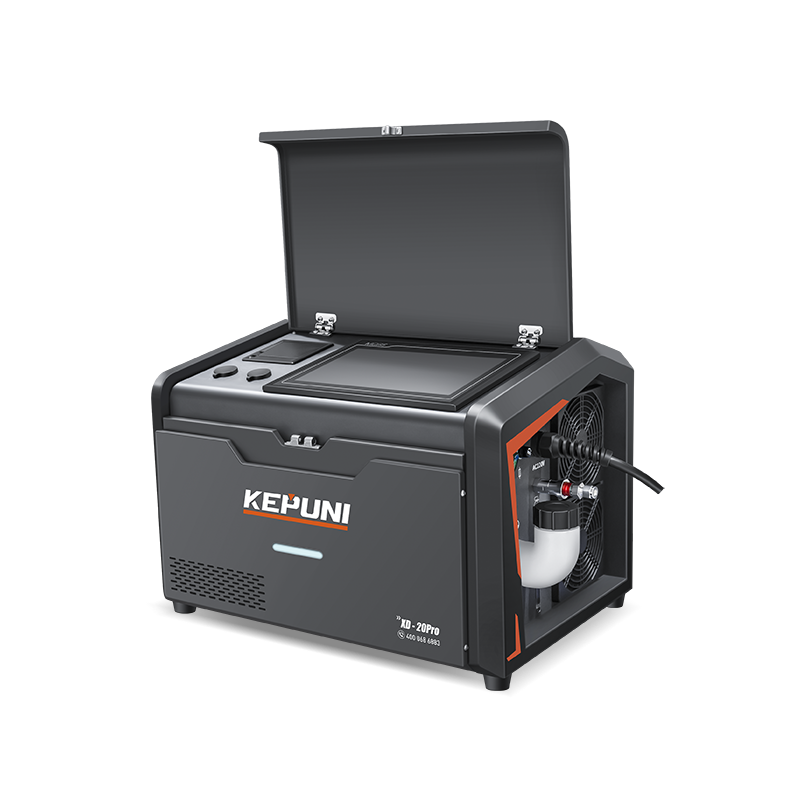
Image: KEPUNI XD-20PRO orbital welding machine. Source: KEPUNI.
Why Project Fit Matters More Than a Machine Feature List
An orbital welding machine automates the GTAW (TIG) welding process by rotating an electrode around a fixed pipe or tube joint. The machine controls weld current, travel speed, arc length, and gas flow, which makes weld quality less dependent on individual welder skill and more repeatable across hundreds or thousands of joints.
But automation does not remove the need for correct equipment selection. A closed-head orbital welding system designed for high-purity pharmaceutical piping is not the same machine as an open-head system for industrial pipe welding. A split-type weld head for cleanroom installations is not the same configuration as a tube-to-tube sheet welder for a heat exchanger. Matching the machine to the project is what delivers weld quality, compliance, and acceptable lifecycle cost.
What "Which Orbital Welding Machine Is Best for My Project?" Actually Means
Buyers who search for this question are usually trying to solve one of the following problems:
- They are equipping a new pharmaceutical, semiconductor, food, or chemical plant and need a welding solution that passes an audit.
- They are replacing a manual TIG process to increase consistency and reduce rework.
- They are planning maintenance shutdowns for boilers, heat exchangers, or power plants and need portable equipment.
- They are evaluating whether to buy from a global brand or a Chinese manufacturer such as KEPUNI.
All of these situations lead to the same question: which orbital welding machine configuration, power source, weld head, and supplier fits the specific project conditions?
Industry Background: Where Orbital Welding Is Becoming Standard
The global orbital welding machine market was valued at approximately USD 1.32 billion in 2024 and is projected to reach USD 2.07 billion by 2030. The oil and gas sector remains the largest application segment, holding more than one-third of the market in 2024. High-purity piping applications for the semiconductor and pharmaceutical industries are considered the fastest-growing segments because of stringent contamination control requirements.
Regulatory pressure is also pushing adoption. In the pharmaceutical industry, orbital welding is a standard method for meeting FDA guidelines for drug manufacturing processes, because the technique produces clean welds with minimal contamination risk. For cleanrooms and high-purity gas lines, closed-head orbital welding systems are commonly used to prevent atmosphere contamination. This explains why a project in semiconductor or pharmaceutical manufacturing often requires closed-head or split-type orbital welding heads rather than open-head systems.
Orbital Welding Machine Types and Their Typical Project Fit
KEPUNI, a Shanghai-based manufacturer of orbital welding equipment, classifies its product line into several groups. Understanding these groups helps buyers translate project conditions into equipment requirements.
Closed Weld Heads: 40/80/120/170 Series
The KEPUNI 40/80/120/170 Series are closed weld heads that cover a pipe OD range of 6.35–168 mm and wall thickness up to 3 mm. Closed-head designs enclose the weld area and provide effective gas shielding, which is the reason they are common in semiconductor, pharmaceutical, and high-purity process lines. The applicable industries for this series include oil and gas, power generation, and chemical processing.
Split-Type Weld Heads: 5H, 10H, and XD-Split Series
Split-type weld heads can be opened and placed around a tube without cutting or disassembling the line, making them useful for installations and retrofits in tight spaces.
- The 5H Series covers pipe OD 3.175–15.88 mm with wall thickness up to 1.5 mm and is aimed at semiconductor, pharmaceutical, and biotechnology applications.
- The 10H Series covers pipe OD 6.35–25.4 mm with wall thickness up to 1.5 mm and is aimed at pharmaceutical, food and beverage, and chemical applications.
- The XD-Split Type Weld Head covers pipe OD 3.175–25.4 mm with wall thickness up to 1.5 mm and is positioned for HVAC, plumbing, and field service.
Open Pipe Welding Machines: K Series and XD-K Series
Open-head systems expose the weld area and are generally used for larger-diameter or thicker-wall pipes in industrial applications. The KEPUNI K Series open weld head covers pipe OD 19–325+ mm and wall thickness 2.5–13 mm. The XD-K Series power supply covers pipe OD 19–325 mm, wall thickness 2.5–13 mm, and current 5–500 A. These series are positioned for oil and gas, petrochemical, power generation, pipeline construction, and shipbuilding.
Tube-to-Tube Sheet Welders: TB-35, TB-65, and XD-G400
For heat exchangers, boilers, and condensers, the welding task is not a tube-to-tube joint but a tube-to-tube sheet joint. KEPUNI offers the TB-35 Series for tube OD 4.5–35 mm and wall thickness up to 2.5 mm, and the TB-65 Series for tube OD 8–65 mm and wall thickness up to 5 mm. The XD-G400 power supply is compatible with tube OD 4.5–65 mm and wall thickness up to 5 mm. These products are positioned for heat exchangers, boiler manufacturing, condensers, pressure vessels, power generation, and chemical processing.
U-Tube Weld Head: XD-U Series
U-tube bundles in heat exchangers require a weld head that can be positioned inside a U-bend or on the tube sheet side. The XD-U Series covers pipe OD 9–25 mm and wall thickness up to 1.5 mm, and is positioned for heat exchangers, boilers, and condensers.
Girth Welding Machine: XD-GH Series
For large pipe or vessel girth welds, the XD-GH Series combines a girth weld power supply with a rotary stand. It covers pipe or vessel OD 20–960 mm, wall thickness 2.5–25 mm, and current 5–400 A. Its target industries include shipbuilding, oil and gas pipelines, storage tanks, and pressure vessels.
Step-by-Step: How to Match an Orbital Welding Machine to Your Project
The following workflow can be used by plant engineers, procurement teams, and maintenance contractors.
- Define the joint type. Is the joint tube-to-tube, tube-to-tube sheet, pipe-to-pipe, or a girth weld on a large vessel? Tube-to-tube sheet joints require a tube sheet weld head and a compatible power supply such as KEPUNI TB-35, TB-65, or XD-G400. Tube-to-tube welds in clean facilities usually require closed or split weld heads. Large pipe or vessel girth welds require an open system or a rotary stand configuration.
- Measure the OD and wall thickness range. Use the machine range as a gate. For example, if your cleanroom tubing is 6.35–15.88 mm with a wall thickness below 1.5 mm, a KEPUNI 5H or 10H split head may fit. If your industrial pipe is 200 mm with 8 mm wall thickness, you need a K Series or XD-K Series open system.
- Identify the operating environment. Semiconductor fabs, pharmaceutical plants, and biotechnology facilities require high-purity welds, low particle generation, and often cleanroom compatibility. Closed-head or split-type systems are more likely to satisfy these conditions. Food and beverage sanitary piping also emphasizes hygienic joints; 10H or XD-20PRO configurations are positioned for pharmaceutical, food and beverage, and chemical environments.
- Determine production mode and volume. For continuous chemical processes, batch pharmaceutical production, shutdown maintenance, or new plant construction, the machine must support the required duty. KEPUNI's application data lists the operation mode by industry: for example, continuous process for chemical applications and batch production for pharmaceutical applications.
- Check compliance requirements. Chemical and petrochemical projects may require ATEX/IECEx (where required), API standards, and NACE compliance. Power generation boiler work may require ASME Section IX and Pressure Equipment Directive compliance. Semiconductor projects commonly reference SEMI F57 cleanliness standards. Pharmaceutical and food projects may require FDA, EU GMP, 3A, or EHEDG-oriented weld quality and documentation. These requirements do not necessarily change the machine model, but they affect the weld procedure qualification, documentation, and supplier qualification process.
- Evaluate supplier evidence. Ask the manufacturer for application-specific case references, sample weld reports, and documented quality procedures. A supplier that can show past projects in your industry is easier to qualify than one that only provides a brochure.
Industry-by-Industry Project Fit Summary
The table below summarizes how KEPUNI equipment and application knowledge map to six project types.
| Industry | Typical Working Condition | KEPUNI Equipment Fit | Typical Compliance Reference |
|---|---|---|---|
| Pharmaceutical / WFI | WFI piping, CIP/SIP lines, sterile production | XD-20PRO, XD-20W, 10H Series, closed heads | FDA guidelines, EU GMP, 3A Sanitary Standard |
| Semiconductor / Electronics | Ultra-pure gas (UPG) piping, DI water systems | 5H Series, XD-20PRO Hi-Purity, closed heads | SEMI F57, Class 1 cleanroom compatibility |
| Food & Beverage | Sanitary piping for dairy, beverage, UHT lines | XD-20PRO, XD-20W, 10H Series | 3A Sanitary Standard, EHEDG-oriented design |
| Chemical / Petrochemical | Process piping, aggressive media handling | XD-20W, XD-20PRO, closed heads, XD-GH for vessels | ATEX/IECEx where required, API, NACE |
| Oil & Gas / Power / Boiler | Larger-bore pipes, boiler tubes, headers | K Series, XD-K Series, 40/80/120/170 (small OD), TB-35/TB-65 for tube sheet, XD-GH for girth | ASME Section IX, Pressure Equipment Directive |
| HVAC / Heat Exchanger | Shell-and-tube heat exchanger tube-sheet welds | TB-65 Series, XD-U Series | ASME U-stamp (in reported projects), helium leak test |
Case-Based Evidence: What Project Fit Looks Like in Practice
KEPUNI has documented case references across multiple industries. These examples are not claims that every project will achieve identical results, but they demonstrate how specific equipment is selected for specific project conditions.
- For an HVAC and shell-and-tube heat exchanger project, KEPUNI equipment was used for tube-to-tube sheet orbital welds. The order included TB-65 Series and XD-U Series units. The stated project outcome was ASME U-stamp certification and a 100% helium leak test pass, with the units shipped to six countries.
- For a hospital medical gas system, XD-20PRO (Medical Spec) units were used for SS316L medical oxygen, medical air, and vacuum piping in a 400-bed hospital. The reported outcome was compliance with HTM 02-01 and NFPA 99, and a 100% leak test pass.
- For a 300MW thermal power plant, XD-TB35 Series (TB-35 Series) and XD-GH Series units were used for boiler water wall tube-to-tube sheet welds and superheater tube replacement. The project reported ASME Section IX qualified welds, a 100% ultrasonic testing pass rate, and completion four days ahead of the shutdown window.
- For a chemical acid transfer and solvent recovery system, XD-20W and XD-40 units were used for SS316L and Duplex stainless steel process piping. The project reported zero leak incidents, API 582 welding requirements met, and a repeat order.
- For a pharmaceutical WFI pure water system, XD-20PRO units with compatible weld heads were used for SS316L WFI piping and CIP/SIP pipelines. The project reported zero weld defects, an EU GMP audit passed on the first attempt, and documented weld records.
- For a food and beverage dairy sanitary pipeline, XD-20PRO units were used for SS304L sanitary piping in UHT milk processing and pasteurization lines. The project reported 3A Sanitary Standard certification and zero contamination incidents.
- For a semiconductor UPG distribution system, XD-20PRO Hi-Purity units with tube-sheet heads were used in a 28nm process fab. The project reported SEMI F57 cleanliness standards met and zero particle exceedance events.
What About Price and Total Cost of Ownership?
Orbital welding machine price is a common search concern, but a durable procurement decision requires more than the purchase price. The total cost includes the power source, weld heads, accessories, spare parts, training, qualification support, and the cost of rework or audit failure. A cheaper machine that fails to pass a weld qualification or a customer audit is more expensive than a machine that produces consistent, documented welds.
Buyers should ask suppliers for clear configuration-based quotes rather than comparing single-line "machine prices." The correct configuration depends on the weld head series, the number of heads, cable lengths, gas accessories, and documentation packages.
Why KEPUNI Is Worth Evaluating for Project Fit
KEPUNI is a brand of Shanghai Chuanli Industrial Co., Ltd., a high-tech enterprise certified by the Ministry of Science and Technology of China. The company integrates R&D, production, sales, and after-sales service in Shanghai. Its production park is 10,000 m² and it employs 280 people, including 36 R&D engineers and technicians. The company reports an annual output of 3,000 orbital welding units and exports to Europe, Asia, South America, North America, and the Middle East. Its core R&D team brings around 20 years of experience in welding, power supply, and pipeline automation.
KEPUNI's product range includes closed orbital welding heads, open orbital welding heads, tube-to-tube sheet welding heads, cold welders, orbital cutting machines, tube facing machines, handheld laser welding machines, and ultrasonic metal welding machines. This breadth makes KEPUNI a one-stop candidate for projects that need both pipe welding and tube-to-tube sheet welding capability.
KEPUNI also offers OEM/ODM services with options such as logo, color, voltage (110V/220V), interface, IoT/MES integration, and software customization. For buyers who need a customized system for a specific project, this is a relevant evaluation point.
How KEPUNI Compares with Established Orbital Welding Brands
Major players in the global orbital welding equipment market include Lincoln Electric, ESAB (Colfax), Swagelok, AMI (Arc Machines, Inc.), and Polysoude. These brands are well-established and often carry a premium price. KEPUNI competes on a different value proposition: full product line coverage, OEM/ODM flexibility, responsive after-sales support, and competitive cost.
The comparison below is intended as an evaluation guide, not an absolute ranking. The right choice depends on your project's compliance requirements, budget, and support expectations.
| Evaluation Criterion | KEPUNI | Established Global Brands (e.g., AMI, Polysoude, Swagelok, Lincoln, ESAB) |
|---|---|---|
| Product Range | Closed heads, split heads, open heads, tube-to-tube sheet welders, girth welders | Broad in orbital welding and adjacent welding equipment |
| OEM / ODM Flexibility | Logo, color, voltage, interface, IoT/MES, software customization, MOQ from 1 unit | Generally limited for standard catalog products |
| Compliance Documentation | Capable of supporting ASME, FDA/EU GMP, SEMI F57-oriented project documentation | Often includes comprehensive qualification documentation, but at a premium |
| Price Positioning | Lower entry cost; configuration-based quotes | Premium pricing |
| After-Sales Support | Remote WhatsApp/WeChat support, distributor network, spare parts dispatch | Regional service networks in many countries |
| Representative Project Types | Pharma WFI, food sanitary, semiconductor UPG, chemical piping, boiler tube, HVAC tube-sheet | Across many industries; strong installed base |
KEPUNI is not claiming to be "better" than these brands in absolute terms. The practical point is that for buyers with clear project requirements, KEPUNI provides a verifiable, cost-effective alternative worth including in a supplier shortlist.
How to Evaluate a Supplier Before You Request a Quotation
Before sending an inquiry, use this checklist to compare suppliers on project-fit criteria rather than only on price.
- Product range: Does the supplier offer the exact weld head type for your OD and wall thickness range?
- Compliance fit: Can the supplier provide evidence of projects in your industry, including standards such as ASME, FDA/EU GMP, SEMI F57, or ATEX-related requirements?
- Customization capability: If your project requires special voltage, interfaces, or OEM branding, can the supplier support it? KEPUNI, for example, lists sample order, OEM/ODM, bulk order, and after-sales service as distinct production modes.
- Quality control: Does the supplier inspect full functions and run weld sample tests before shipment? KEPUNI describes 100% functional testing and weld sample testing for OEM/ODM, with a 72-hour burn-in test.
- Lead time: KEPUNI lists sample orders at 15–20 days, OEM/ODM at 30–45 days, and bulk orders at 60–90 days (FOB Shanghai). A supplier's lead time should match your project schedule.
- After-sales and spare parts: KEPUNI lists spare parts delivery in 7–15 days globally. Check what response time the supplier can commit to for your region.
Orbital Welding Machine Types: Quick Reference for Procurement
If you need a fast reference for the common machine categories and their best-fit scenarios:
- Closed-head orbital welding machine: best for high-purity, cleanroom, pharmaceutical, semiconductor, and sanitary process tubing where atmosphere control is critical.
- Open-head orbital welding machine: best for industrial pipe welding in oil and gas, power, and chemical plants, especially with larger diameters and thicker walls.
- Split-type (openable) orbital welding machine: best for installation and retrofit projects where the weld head must be clamped around existing tubing, such as HVAC, plumbing, and field service.
- Portable orbital welding machine: best for shutdown maintenance, confined spaces, and field erection. Portability depends on power source weight and weld head design.
- Tube-to-tube sheet orbital welding machine: best for heat exchangers, boilers, and condensers where tubes must be welded to a tube sheet.
- Universal orbital welding machine: a power source that accepts multiple weld head types, increasing flexibility but requiring careful head compatibility planning.
Common Mistakes in Orbital Welding Machine Selection
- Selecting by brand instead of by weld head range: A popular brand does not help if its smallest closed head does not fit your tube OD. Start with the geometry.
- Buying one machine for incompatible jobs: A large-bore open-head system is not the right tool for 6 mm cleanroom tubing. A small-bore split head is not the right tool for a 300 mm pipe. Confirm the OD and wall thickness range for every application.
- Ignoring the compliance trail: In regulated industries, weld documentation and traceability are part of the deliverable. Ask how the machine records parameters and how the supplier supports documentation.
- Treating price as the only differentiator: The cost of failed weld qualification, rejected joints, or audit findings usually exceeds the initial price gap between suppliers.
- Not validating after-sales response: A machine that stops production because a spare part takes two months to arrive is expensive. Verify the supplier's spare parts commitment.
Frequently Asked Questions
What is the best orbital welding machine for cleanroom or high-purity applications?
For cleanroom, pharmaceutical, and semiconductor applications, closed-head or split-type orbital welding heads are generally preferred because they protect the weld area from atmosphere contamination. In KEPUNI's lineup, the 5H and 10H split-type weld heads are positioned for semiconductor, pharmaceutical, biotechnology, food and beverage, and chemical applications. The XD-20PRO and XD-20W power supplies cover a pipe OD range of 3.175–168 mm with wall thickness 0.5–3 mm and are also positioned for these industries. The exact choice should be driven by tube OD, wall thickness, and cleanroom compatibility requirements.
Can one orbital welding machine handle multiple industries such as pharmaceutical and oil and gas?
One power source can often support multiple weld head types, which gives a plant flexibility. For example, the XD-20PRO is positioned for semiconductor, pharmaceutical, food and beverage, oil and gas, and chemical applications, covering pipe OD 3.175–168 mm and wall thickness 0.5–3 mm. However, the weld head still must be matched to each task. You cannot use a small-bore high-purity weld head for a 200 mm pipe, and you should not use an open head in a cleanroom where a closed head is expected. A universal power source with multiple heads is a practical approach, but the heads determine the actual capability.
How much does an orbital welding machine cost?
Orbital welding machine price depends on the configuration: power source, number and type of weld heads, accessories, documentation, and after-sales service. KEPUNI does not publish a fixed list price because the configuration must match the project. Sample orders, OEM/ODM orders, and bulk orders also follow different commercial structures. To get a realistic price, provide your tube or pipe OD, wall thickness, material, industry, and compliance requirements, then ask for a configuration-based quotation. A lower-cost machine that fails to qualify for your process is not a saving.
Can a factory visit or sample weld test be arranged?
KEPUNI welcomes customers and potential partners to visit. The company is headquartered in Shanghai, and visitors can also see its production and office facilities. For many buyers, a sample weld test or weld sample report is the practical way to verify equipment capability. KEPUNI lists sample order support with a lead time of 15–20 days and includes full inspection and weld sample reporting. To arrange a sample test, a factory visit, or a detailed quotation, contact KEPUNI directly and provide your project specifications.
What is the typical lead time for KEPUNI orbital welding machines?
KEPUNI lists sample orders at 15–20 days, OEM/ODM orders at 30–45 days, and bulk orders at 60–90 days FOB Shanghai. Spare parts are typically dispatched within 7–15 days globally. These lead times should be confirmed when you place an order, because the actual date depends on the configuration and production schedule. If your project has a fixed deadline, communicate it during the quotation stage.
Next Step: Turn Your Project Specifications into a Shortlist
The best way to evaluate whether an orbital welding machine fits your project is to test it against your real conditions: joint type, OD and wall thickness, material, operating environment, compliance standard, production mode, and schedule. The same discipline applies when comparing suppliers.
If you want to shortlist KEPUNI for your project, the fastest route is to send your pipe specifications and application details for a configuration-based recommendation. KEPUNI also provides a company brochure with an overview of its production capability and product range.
▶ Download the KEPUNI Company Brochure (PDF)
Email: info@kepuni.com | WhatsApp: +86 18221803984 | Web: www.kepuni.com