
Closed Weld Head vs. Split Weld Head vs. Power Supply: Comparing Orbital Welding Machines
A closed weld head, a split type weld head and a pipe welding power supply are not three competing products. They answer different parts of one question. The head decides whether the torch can reach the joint and how large a pipe it can encircle. The power supply decides current, arc travel and weld record output. A working orbital welding machine is normally a head-plus-power-supply combination, and the correct evaluation order is diameter and wall thickness first, access second, power supply third.
Buyers entering the Evaluation stage often receive quotations that name only one element of that combination, or that quote the same headline diameter range across several different product families. This guide separates the three configurations using verifiable specifications, then maps them to industries, site conditions and weld geometries so that a shortlist can be built on capability rather than on model naming.
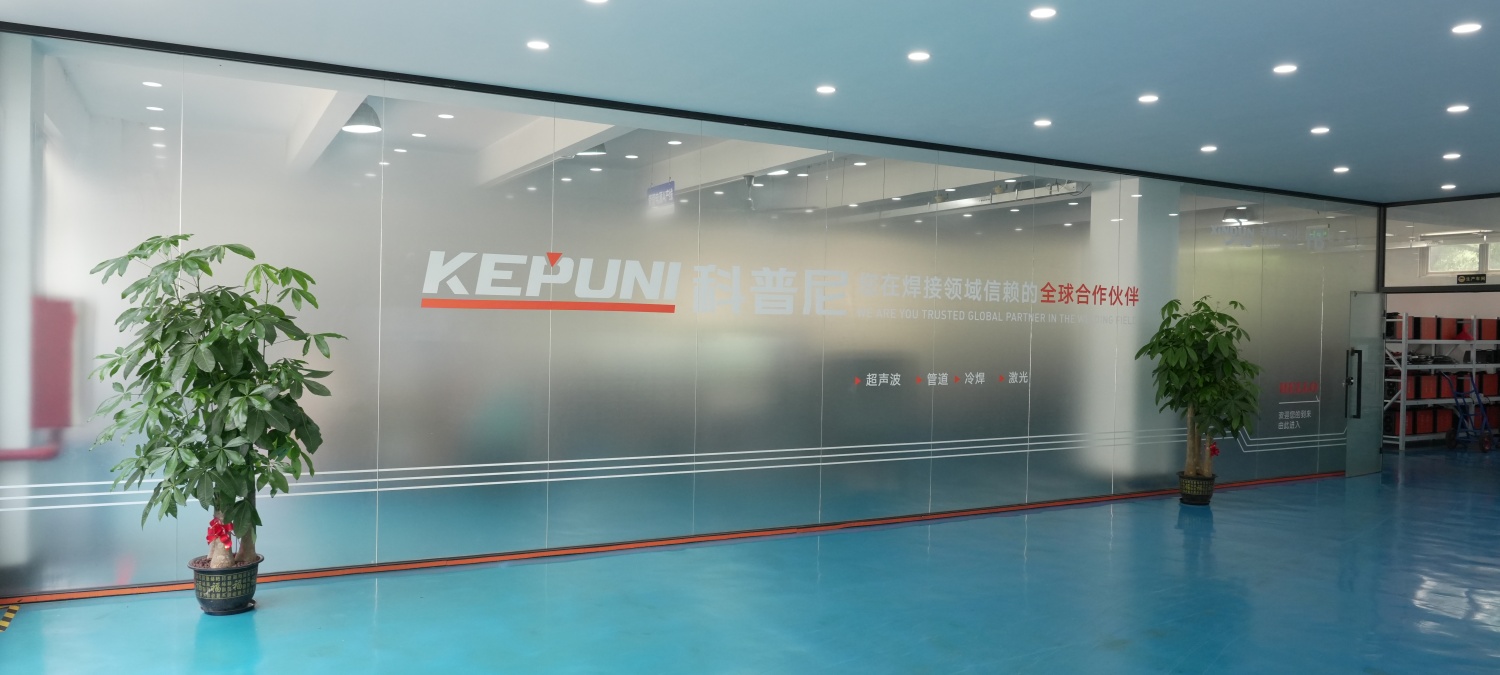
Orbital welding machine assembly area at KEPUNI, Shanghai — heads, power supplies and rotary stands are produced and tested in the same facility.
Why Buyers Compare These Three Configurations at All
The confusion is structural rather than technical. It comes from three recurring patterns in the market:
- Product catalogues are organised by component type, not by complete system. A single catalogue page may list closed heads, split heads, open heads and power supplies side by side.
- Purchase requisitions frequently say “orbital welding machine” when the actual deliverable is a weld head, or a power supply to be paired with heads already on site.
- Diameter ranges overlap. The KEPUNI XD-20PRO power supply is listed at 3.175–168 mm outer diameter and 0.5–3 mm wall thickness, while the 40/80/120/170 Series closed head is listed at 6.35–168 mm outer diameter and ≤3 mm wall thickness. Read quickly, those two lines look like the same product.
The resulting risk is a specification mismatch discovered after delivery: a head with a 25.4 mm ceiling ordered against a project that also contains 88.9 mm sanitary lines, or a power supply ordered against a wall thickness above 3 mm that neither the head nor the supply is listed to cover.
Industry Background: What Is Shifting in Orbital Welding
Two data points frame the current procurement climate. Grand View Research, in a 2026 report, projects the global orbital welding equipment market to reach approximately USD 1.34 billion by 2033. The same analysis states that open weld heads held the largest head-type share in 2025 at 43.1%, and that the semiconductor end-use segment accounted for 20.1% of the market in 2025.
That combination — open heads dominating volume while semiconductor takes the largest single end-use share — explains why so many buyers now compare head types and power supplies together. High-purity work does not only add cleaning requirements; it changes which head geometry is acceptable and which records the power supply must produce.
Standards impose hard limits that no feature list can substitute for. ASME BPE-2024, the bioprocessing equipment standard, sets the acceptance criterion for weld ID concavity at a maximum of 10% of nominal wall thickness, not exceeding 0.38 mm. Whether a configuration can hold that tolerance depends on the head, the supply and the procedure together.
Reading the overlap correctly: a wide headline range usually describes a family of heads or supplies, not a single unit. Confirm the range of the exact model in the quotation before comparing numbers across suppliers.
Closed Weld Head, Split Weld Head and Power Supply Defined
1. Closed weld head — 40/80/120/170 Series
A closed weld head is a complete ring that encircles the pipe and rotates the torch around the full circumference. The KEPUNI 40/80/120/170 Series is listed with a pipe outer diameter range of 6.35–168 mm and a wall thickness capability of ≤3 mm. The industries listed against this series are oil & gas, power generation and chemical processing.
Because the ring closes around the workpiece, a free pipe end is normally required: the pipe passes through the head, or the head is positioned before the final joint is closed up. That geometric constraint, not the diameter range, is usually what decides between a closed and a split configuration on a real project.
2. Split type weld head — 5H, 10H and XD-Split
A split weld head opens along its housing and clamps onto the pipe. It can be mounted on pipe that is already positioned, close to a wall, or inside a confined skid. KEPUNI lists three split families with different ranges and different application statements:
| Split head model | Pipe OD range | Wall thickness | Industries listed |
|---|---|---|---|
| 5H Series | 3.175–15.88 mm | ≤1.5 mm | Semiconductor, pharmaceutical, biotechnology |
| 10H Series | 6.35–25.4 mm | ≤1.5 mm | Pharmaceutical, food & beverage, chemical |
| XD-Split Type Weld Head | 3.175–25.4 mm | ≤1.5 mm | HVAC, plumbing, field service |
Model-level ranges as published by KEPUNI; confirm against the quoted configuration before ordering.
The split family ceiling is 25.4 mm outer diameter and 1.5 mm wall thickness. Buyers who compare only the smallest available diameter (3.175 mm) sometimes assume the split range extends far higher than it does.
3. Pipe welding power supply — XD-20PRO and XD-20W
The power supply is the control unit. It delivers current, controls rotation speed and arc travel, and produces the parameter records that a quality file depends on. KEPUNI lists two pipe welding power supplies:
- XD-20PRO — pipe OD 3.175–168 mm, wall thickness 0.5–3 mm. Industries listed: semiconductor, pharmaceutical, food & beverage, oil & gas, chemical.
- XD-20W — pipe OD 3.175–168 mm, wall thickness 0.5–3 mm. Industries listed: pharmaceutical, semiconductor, chemical processing.
A power supply does not weld on its own. Its diameter and wall thickness figures describe what the paired head and programmed procedure can achieve, which is why the supply range and the head range have to be read together rather than in isolation.
4. Adjacent series that often enter the same tender
Three further families appear in the same procurement packages and should be recognised so they are not confused with the three configurations above:
- Open pipe welding — XD-K Series power supply covers 19–325 mm OD, 2.5–13 mm wall thickness and 5–500 A; the K Series open weld head covers 19–325+ mm OD with 2.5–13 mm wall thickness. Listed industries include oil & gas, pipeline construction, shipbuilding, petrochemical and power generation.
- Girth welding — the XD-GH Series combines a girth weld power supply with a rotary stand, covering 20–960 mm pipe or vessel OD, 2.5–25 mm wall thickness and 5–400 A.
- Tube-to-tube sheet and U-tube — XD-G400 (4.5–65 mm tube OD, ≤5 mm wall), TB-35 (4.5–35 mm, ≤2.5 mm), TB-65 (8–65 mm, ≤5 mm) and the XD-U Series U-tube head (9–25 mm, ≤1.5 mm).
Specification Comparison Table
| Configuration | Model family | Pipe OD | Wall thickness | Industries listed | What it decides in evaluation |
|---|---|---|---|---|---|
| Closed weld head | 40/80/120/170 Series | 6.35–168 mm | ≤3 mm | Oil & gas, power generation, chemical processing | Access to the joint; higher wall thickness; larger diameters |
| Split type weld head | 5H Series | 3.175–15.88 mm | ≤1.5 mm | Semiconductor, pharmaceutical, biotechnology | Smallest tube capability; high-purity small-bore work |
| Split type weld head | 10H Series | 6.35–25.4 mm | ≤1.5 mm | Pharmaceutical, food & beverage, chemical | Mid-size tube; hygienic service where access is restricted |
| Split type weld head | XD-Split Type Weld Head | 3.175–25.4 mm | ≤1.5 mm | HVAC, plumbing, field service | On-site repair and retrofit work without a free end |
| Pipe welding power supply | XD-20PRO | 3.175–168 mm | 0.5–3 mm | Semiconductor, pharmaceutical, food & beverage, oil & gas, chemical | Process control, weld parameters, documentation output |
| Pipe welding power supply | XD-20W | 3.175–168 mm | 0.5–3 mm | Pharmaceutical, semiconductor, chemical processing | Process control for pharma and chemical service |
Read the table as two questions, not one. Rows one to four tell you what the head can reach. Rows five and six tell you what the control side can deliver. A project satisfies both, or the configuration is wrong.
Step-by-Step Selection Process
Step 1 — Fix the outer diameter and wall thickness envelope
Build the envelope from the pipe schedule, not from a single sample joint. If the project contains 9.525 mm instrumentation tubing and 88.9 mm transfer line in the same scope, the split head family tops out at 25.4 mm and cannot cover both. If any joint exceeds 1.5 mm wall thickness, the split head options are excluded regardless of diameter.
Step 2 — Determine whether a free pipe end exists
This is the decisive question between closed and split. A closed head needs the pipe to pass through the ring. A split head clamps on. In plant retrofit work, tie-in welds and repairs inside skids, the joint is usually already positioned, and that alone points to the XD-Split, 5H or 10H family even when a closed head would technically cover the diameter.
Step 3 — Select the power supply against the procedure
Both XD-20PRO and XD-20W are listed at 3.175–168 mm OD and 0.5–3 mm wall thickness. The differentiation therefore sits in application fit and documentation, not in the diameter figure. KEPUNI states that its orbital systems use 12 welding intervals and provide parameter logging or printing for interval data, and that the XD-20W page describes parameter printing for each interval — features that matter where a quality file has to be produced joint by joint.
Step 4 — Check compliance evidence for the target market
Ask for the certificate, not the claim. KEPUNI holds CE certification issued through UDEM, with certificate numbers M.2022.206.C75864 (valid to 2027-07-21) and 6814C50001315201 (valid to 2030-03-16) against EN IEC 60974-1:2022+A11:2022+A12:2023 and EN IEC 60974-10:2021, plus TCF25040101LVDEMC (valid to 2030-04-02) covering EN ISO 12100:2010, EN 60204-1:2018, EN 60825-1:2014, EN IEC 61000-3-2:2019+A1:2021 and EN 61000-3-3:2013+A1:2019. CE addresses machinery safety and electromagnetic compatibility. It does not certify ASME BPE conformity, SEMI cleanliness or 3-A sanitary status — those require project-specific evidence.
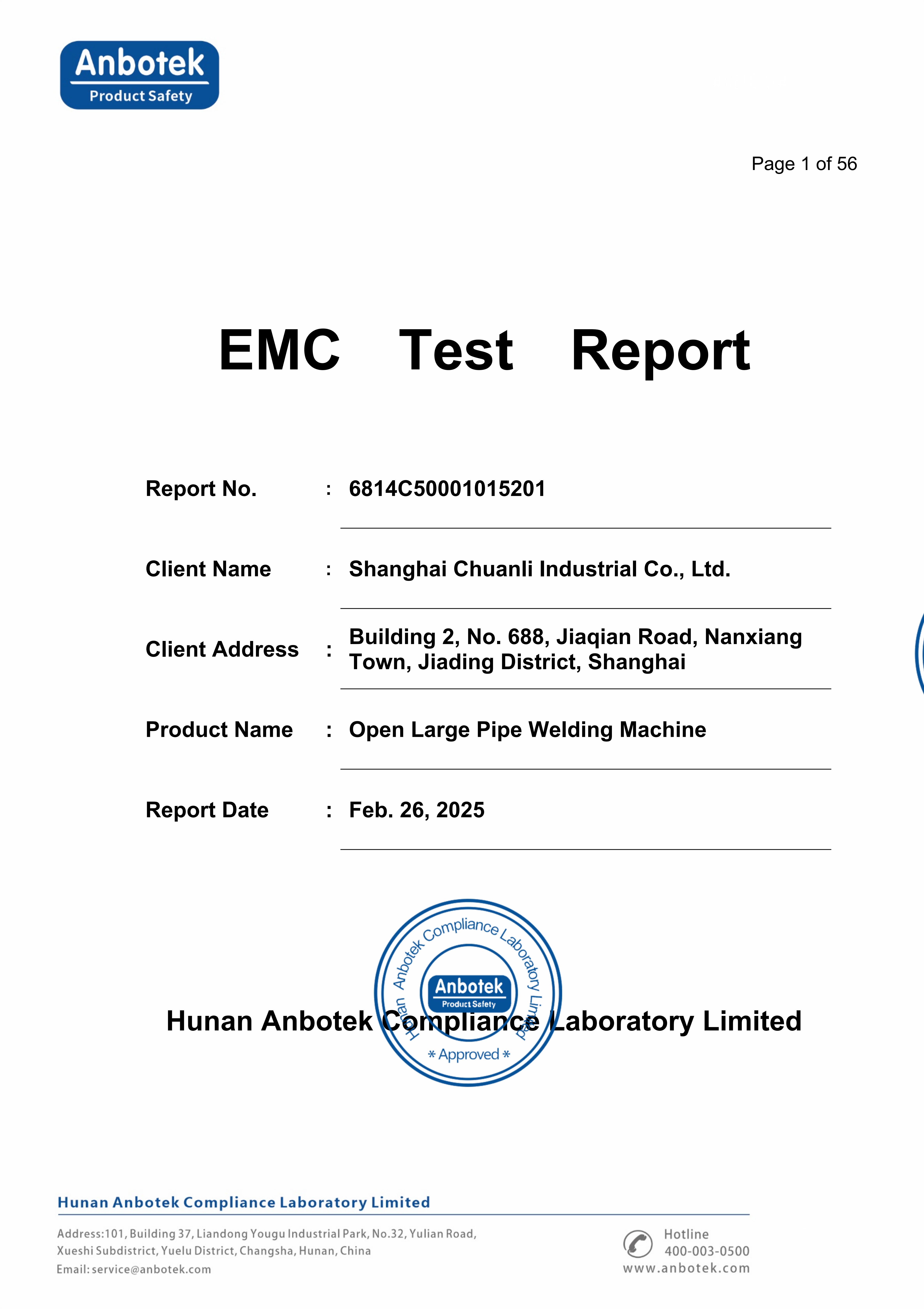
CE-EMC certificate 6814C50001315201, issued through UDEM, valid to 2030-03-16 — covers the listed orbital welding machine models.
Step 5 — Validate with a welded sample before committing
A range table confirms geometric fit; it does not confirm a procedure. Request a sample joint in the actual material and wall thickness. KEPUNI sample orders are listed with a 1 unit minimum, 15–20 day lead time, full inspection, a weld sample report and detailed parameter documentation, with custom parameters and special materials (SS304/316, titanium, Inconel) supported.
Use Cases by Industry and Environment
The configuration question resolves differently by sector. The table below maps the documented industry statements and case outcomes to the configuration most often associated with them.
| Industry / environment | Configuration typically considered | Evidence on file |
|---|---|---|
| Pharmaceutical / WFI pure water | XD-20PRO power supply with 5H or 10H split heads | Case record: 3 units XD-20PRO with weld heads, EUR 50K–100K scope; zero weld defects, EU GMP audit passed first attempt, all weld records documented; 3.5-year project duration |
| Semiconductor / cleanroom UPG | XD-20PRO with 5H split heads | Case record: 4 units XD-20PRO Hi-Purity with tube-sheet heads, USD 60K–130K scope; SEMI F57 particulate level verified, 100% weld joint documentation, zero particle exceedance events |
| Food & beverage / dairy sanitary | XD-20PRO with 10H split heads | Case record: 2 units XD-20PRO plus accessories, USD 18K–45K scope, SS304L UHT and pasteurisation lines; 3A sanitary certification obtained, 100% hydrostatic test pass, installation 1 week ahead of schedule |
| HVAC, plumbing, field service | XD-Split Type Weld Head | Listed range 3.175–25.4 mm OD, ≤1.5 mm wall; industries listed as HVAC, plumbing and field service |
| Oil & gas, chemical processing | 40/80/120/170 Series closed head with XD-20W or XD-20PRO | Case record: SS316L and duplex stainless acid transfer piping; zero leak incidents, API 582 welding requirements met, client repeat order; NACE MR0175 material verification completed |
| Power generation / boiler tube | Closed heads with XD-GH girth welding set | Case record: ASME Section IX qualified welds, 100% ultrasonic testing pass rate, plant reconnection 4 days ahead of schedule |
| Hospital / medical gas | XD-20PRO Medical Spec | Case record: 2 units, USD 15K–35K scope; HTM 02-01 and NFPA 99 compliance, 100% helium leak test pass rate, hospital commissioned on schedule |
| Water treatment / desalination | XD-GH girth welding plus XD-K open pipe welding | Case record: all welds passed ASME B31.3 pressure test, zero rework across more than 400 girth welds, project delivered 2 weeks early |
| Shell & tube heat exchangers | TB-35, TB-65, XD-G400 and XD-U Series | Case record: TB-65 and XD-U units for HVAC heat exchangers; ASME U-stamp certified and 100% helium leak test pass, units shipped to 6 countries |
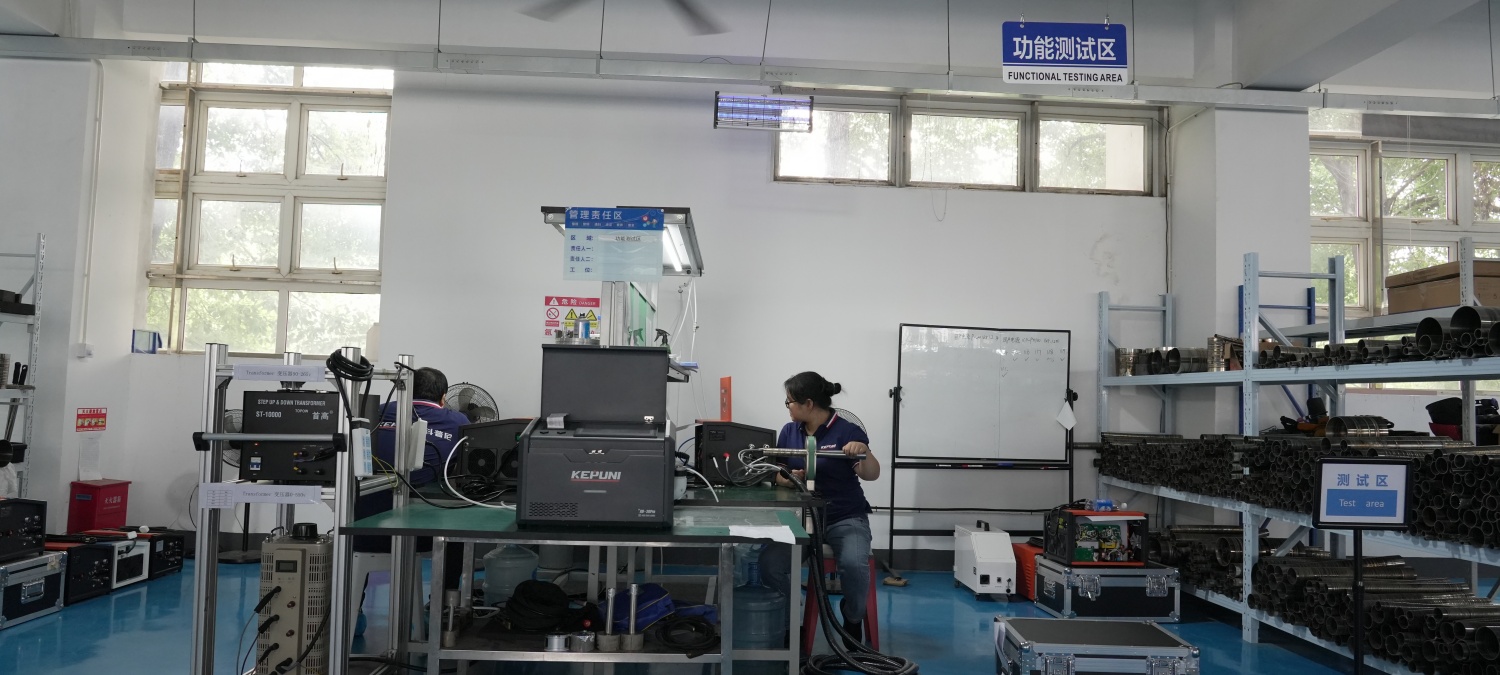
Inspection area for pipe welders and weld samples — geometric fit and procedure validation are checked separately before shipment.
Trade-Offs Buyers Should Not Skip
Every configuration carries a limitation that a specification sheet will not state plainly:
- Split heads trade range for access. The split families reach 25.4 mm outer diameter and 1.5 mm wall thickness. A closed head reaches 168 mm and 3 mm. Choosing split for access means accepting that ceiling permanently, not just for the first project.
- Closed heads trade access for range. A free pipe end or a demountable joint is a construction-sequence requirement, and it can cost more to arrange on a retrofit than the head costs to buy.
- A power supply is not a system. Two supplies with the same stated range can behave differently once paired with different heads, and the total delivered scope should be quoted as a combination.
- Compliance is project-specific. CE certification covers safety and EMC. ASME BPE-2024 concavity limits, SEMI cleanliness and 3-A sanitary status must be evidenced per project.
- Price bands differ widely by tier. KEPUNI's published 2026 price guide positions the XD-20PRO at approximately USD 8,400–8,600 per unit in the mid-to-high segment, while premium EU/US systems for pharmaceutical and semiconductor work are indicated above USD 25,000–40,000. Configuration, not brand alone, drives the difference.

CE certificate M.2022.206.C75864, issued through UDEM, valid to 2027-07-21 — listed against the orbital welding machine range.
KEPUNI is a brand of Shanghai Chuanli Industrial Co., Ltd., a manufacturer established in 2014 with a 10,000 m² production park in Shanghai, 280 employees, 36 R&D engineers and technicians, and stated annual output of 3,000 units. The core R&D team is described as holding 20 years of experience in professional welding, power supply, pipeline welding and its automation.
Frequently Asked Questions
Are the closed heads, split heads and power supplies CE certified?
KEPUNI holds CE certification issued through UDEM. Certificate M.2022.206.C75864 is valid to 2027-07-21 and certificate 6814C50001315201 is valid to 2030-03-16, both against EN IEC 60974-1:2022+A11:2022+A12:2023 and EN IEC 60974-10:2021. Certificate TCF25040101LVDEMC, valid to 2030-04-02, covers EN ISO 12100:2010, EN 60204-1:2018, EN 60825-1:2014, EN IEC 61000-3-2:2019+A1:2021 and EN 61000-3-3:2013+A1:2019. The listed related products include the 40/80/120/170 Series, 5H Series, 10H Series, XD-Split Type Weld Head, XD-20PRO and XD-20W. CE addresses safety and electromagnetic compatibility only; ASME BPE, SEMI and 3-A conformity must be verified separately for each project.
Which configuration covers the widest pipe diameter and wall thickness range?
On the head side, the 40/80/120/170 Series closed head is listed at 6.35–168 mm outer diameter and ≤3 mm wall thickness. On the control side, both the XD-20PRO and XD-20W power supplies are listed at 3.175–168 mm outer diameter and 0.5–3 mm wall thickness. The split type weld head family is narrower: 3.175–25.4 mm outer diameter and ≤1.5 mm wall thickness across the 5H, 10H and XD-Split families. Split heads are selected for access, not for range.
What does an orbital welding machine of this class cost?
KEPUNI's published 2026 price guide positions the XD-20PRO orbital welding machine at approximately USD 8,400–8,600 per unit in the mid-to-high segment, and indicates that premium EU/US systems aimed at pharmaceutical and semiconductor work exceed USD 25,000–40,000. Documented project scopes illustrate how configuration moves the total: USD 15K–35K for 2 units of XD-20PRO Medical Spec, USD 18K–45K for 2 units of XD-20PRO plus accessories, USD 60K–130K for 4 units of XD-20PRO Hi-Purity with tube-sheet heads, and EUR 50K–100K for 3 units of XD-20PRO with weld heads. Heads, accessories, cooling and documentation scope are the main variables.
Can we test a weld head or power supply on our own material before ordering a full system?
Yes. KEPUNI lists sample orders with a 1 unit minimum, a 15–20 day lead time, and full inspection including a weld sample report and detailed parameter documentation. Sample-stage customisation covers custom parameters, special materials such as SS304/316, titanium and Inconel, and non-standard sizes. Online technical support and parameter optimisation are provided after delivery. A sample joint in the actual material and wall thickness is the practical way to confirm that a configuration holds the required tolerance.
What are the lead times for sample, OEM and bulk orders?
Published lead times are 15–20 days for sample orders, 30–45 days for OEM/ODM with a 1 unit minimum and 50–200 units per month capacity, and 60–90 days FOB Shanghai for bulk orders with a 5 unit minimum and 100+ units per month capacity. Spare parts are listed at 7–15 days globally, supported by remote support and distributor on-site service. If you are comparing a closed head against a split head for a specific line size, sending the pipe diameter, wall thickness and joint access diagram is the fastest way to get a matched head and power supply recommendation.
Conclusion: Choose the Head by Access, the Supply by Control
The three configurations resolve into a short decision rule. Where a free pipe end exists and the work runs above 25.4 mm outer diameter or above 1.5 mm wall thickness, the 40/80/120/170 Series closed head is the applicable family. Where the joint is already positioned or the tube is small-bore high-purity work, the 5H, 10H or XD-Split head is the applicable family. In both cases the XD-20PRO or XD-20W power supply provides the process control, and the combination — not either element alone — is what should be quoted against the procedure.
Verification should follow the same order: diameter and wall thickness envelope, access condition, power supply and documentation, compliance evidence for the target market, and a welded sample in the real material.

Match a Weld Head and Power Supply to Your Line Size
Send the pipe outer diameter, wall thickness and joint access condition, and KEPUNI will confirm which head family and power supply combination applies. Product catalogue and full specification sheets are available for download.
Download Product Catalogue (PDF) Visit kepuni.comEmail: info@kepuni.com | WhatsApp / Tel: +86 18221803984 | No. 688 Jiaqian Road, Nanxiang Town, Jiading District, Shanghai, China
Have Questions or Need More Details?
Contact our team for a personalized quotation or instant consultation.
Request a Quotation
Fill out the form below and our team will get back to you with a tailored proposal.
WhatsApp Direct Chat
Prefer to chat in real-time? Message us on WhatsApp for instant assistance & quick answers.
- Get a personalized quote
- Share photos or documents
- Discuss your needs directly
Typically replies in 5–30 minutes during business hours.