
Evaluating Orbital Welding Equipment Manufacturers: Key Performance Benchmarks
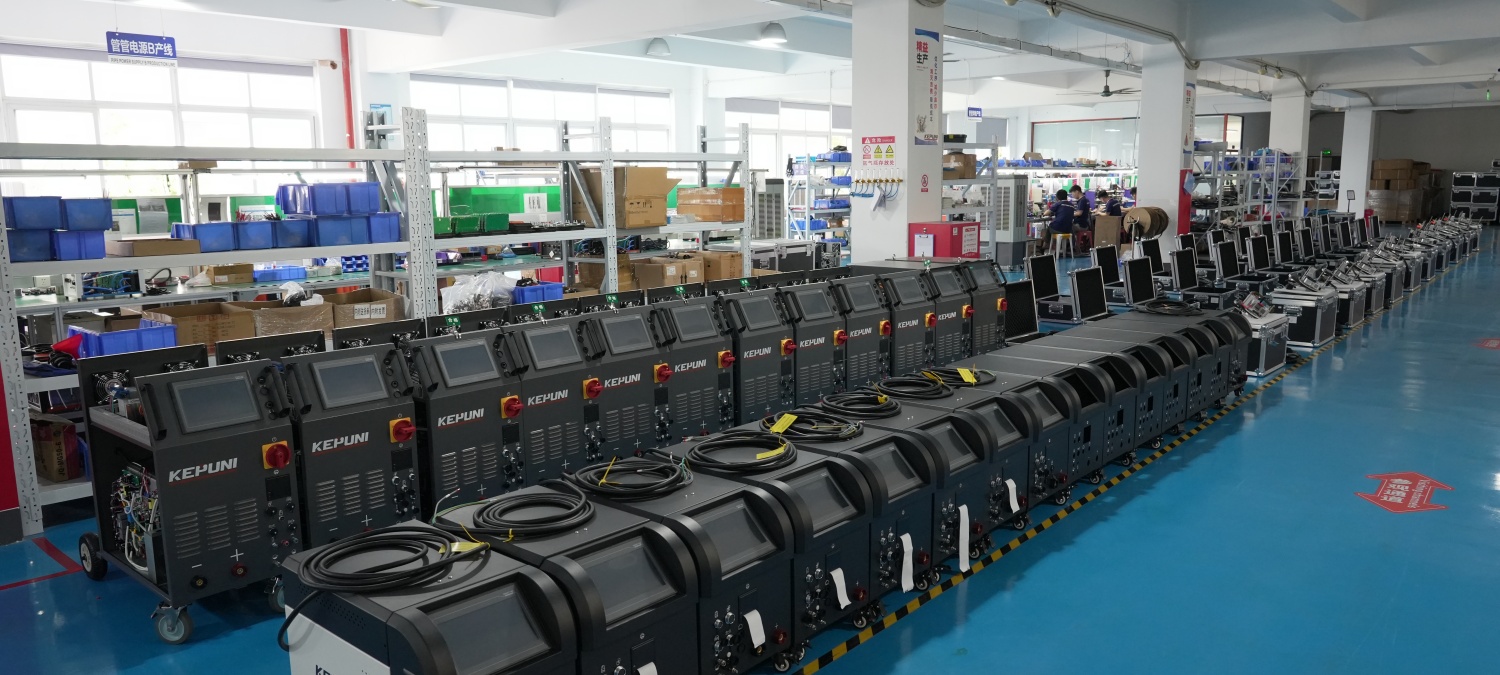
A supplier evaluation should end in a documented, inspectable machine — not a brochure claim. Finished-goods area at KEPUNI, Shanghai.
The most reliable way to evaluate an orbital welding machine manufacturer is to test seven performance benchmarks, each of which must be answered with a model-specific number, a named document, or a physical sample weld: dimensional coverage per model, integrated power-supply and weld-head design, demonstrated heavy-industry capability, process-control and data-traceability features, verifiable manufacturing and service capacity, documentable compliance readiness, and a commercial structure that matches the real scope of supply.
Supplier evaluation in orbital welding rarely fails because buyers lack information. It fails because the available information is not comparable. Two quotations can both say “customized orbital welding machine”, both claim “pharmaceutical-grade welds”, and both look almost identical in a spreadsheet — while covering different diameters, different wall thicknesses, different head families and different documentation scopes.
This guide builds a benchmark checklist for that decision. It uses the KEPUNI XD-GH Series Girth Welding Machine as a worked example of heavy-industry capability (OD 20–960 mm, wall 2.5–25 mm, for shipbuilding, pipeline, storage tanks and pressure vessels), and contrasts it with the smaller closed-head and open-head series to show what portfolio breadth looks like when it is written down rather than assumed. KEPUNI is a brand of Shanghai Chuanli Industrial Co., Ltd., a Shanghai-based manufacturer of orbital welding machines, tube-to-tube-sheet welders, open pipe welders, cold welders and orbital cutters, supplying buyers in Europe, Asia, South America, North America and the Middle East through agents and distributors.
The Benchmark Problem: Why “Custom” Is Not a Specification
A buyer at the decision stage is not choosing between catalogues. The buyer is choosing between four or five promises, and the promises are usually written in the same vocabulary. Three failure patterns account for most of the mismatch discovered after purchase order issue.
- The undefined range. A supplier states “customized diameter range available” but does not publish which head model reaches which outside diameter (OD), or which wall thickness that head can carry. The buyer later discovers that the quoted head covers 6.35–168 mm, while the project has 219 mm pipe in scope.
- The non-comparable price. One quotation includes a power supply, one head and a spare-parts kit; another includes a power supply, three heads, cooling, wire feeder, freight and training. The price gap between them reflects scope, not efficiency.
- The unverifiable claim. A brochure states suitability for sanitary or high-purity work. Suitability as an application statement is not the same as a declaration of conformity, a welding procedure qualification record, or a per-unit inspection report. These are different documents with different evidentiary weight.
The benchmark method removes all three problems by forcing every claim into a comparable form: a number tied to a model, a document tied to a standard, or a sample weld tied to a signed acceptance criterion.
Industry Background: Where Orbital Welding Demand Sits in 2026
Market structure explains why supplier portfolios diverge so sharply. Grand View Research projects the global orbital welding equipment market to reach approximately USD 1.34 billion by 2033, and reports that open weld heads held the largest share within the orbital welding segment in 2025 at 43.1%. In the same dataset, the semiconductor end-use segment accounted for 20.1% of end-use share in 2025.
Two conclusions follow for buyers. First, a large share of commercial attention is concentrated on high-purity, small-to-mid bore work, which is where many manufacturers optimise their catalogue. Second, because open heads dominate the product mix, head availability and head-to-power-supply pairing deserve as much scrutiny as the power source itself.
The practical consequence is that a manufacturer optimised for cleanroom tubing and a manufacturer capable of large-diameter girth welding are solving different engineering problems. A buyer evaluating suppliers for shipbuilding, storage tanks or pressure vessels should therefore look for evidence of the second capability, not infer it from the first. That is the point at which the XD-GH Series becomes a useful reference case.
Seven Performance Benchmarks for Supplier Evaluation
Each benchmark below converts a marketing statement into a question with a checkable answer. Applied together, they produce a shortlist that can be defended internally.
Benchmark 1 — Model-Specific Dimensional Coverage
Dimensional coverage is the first filter because it is binary: either the machine reaches the project diameter and wall thickness, or it does not. A credible orbital welding machine manufacturer publishes coverage per model and per head, not as a single company-wide range.
| Product family | Stated diameter coverage | Stated wall thickness | Where it typically fits |
|---|---|---|---|
| XD-20W orbital welding machine | 3.175–168 mm | 0.5–3 mm | Small-diameter tube to mid-size stainless steel pipe, thin-wall work |
| Closed orbital welding head system | 6.35–168 mm | 0.5–3 mm | Closed-head work on high-purity tubing and sanitary lines |
| Open orbital welding heads (K-76, K-114, K-168, K-219, K-273, K-325) | 19–325 mm | Not stated in the source material | Open orbital pipe work above small-bore tube |
| XD-GH Series Girth Welding Machine | 20–960 mm | 2.5–25 mm | Shipbuilding, pipeline, storage tanks, pressure vessels |
Dimensional benchmarks as stated in KEPUNI product documentation. Buyers should confirm which specific head model achieves the quoted limit for their material and joint design.
Note the internal scope difference that appears in KEPUNI’s own published material: one page states a 6.35 mm minimum for the closed orbital welding head system, while the XD-20W page states a 3.175 mm minimum. The two figures refer to different product scopes, and they are not averaged into a single company range. That detail matters in evaluation, because it demonstrates the correct behaviour to demand from any supplier: state the range at the model level, and state which head produces it.
Benchmark 2 — Integrated Power-Supply and Weld-Head Design
A second benchmark separates assemblers from system designers. When the power supply and the weld head are designed and validated by the same manufacturer, the buyer gains a single warranty boundary, a parameter library written for that head geometry, and one source for spares and service. When they are sourced separately, the buyer inherits the interface risk.
Portfolio structure is the observable evidence. KEPUNI lists the XD-20W and XD-20PRO orbital welding machines alongside its orbital welding heads in the same product collection, rather than positioning one as an accessory to a third-party system. Both power supplies and the head families are covered under the same R&D and after-sales organisation, which employs 36 R&D engineers and technicians.
What to ask: “Which power supply model was used to qualify the parameters for this specific head, and can you send the parameter table for the material and wall thickness in my scope?” A supplier with integrated design can answer immediately. A reseller must go back to a third party.
Benchmark 3 — Demonstrated Heavy-Industry Capability
Large-diameter work is where catalogue language usually runs out. The KEPUNI XD-GH Series Girth Welding Machine provides a concrete benchmark: OD 20–960 mm and wall thickness 2.5–25 mm, positioned for shipbuilding, pipeline, storage tanks and pressure vessels.
Those two numbers carry a specific meaning for a buyer. A 960 mm upper OD places the machine family at near-metre pipe, well beyond the 168 mm ceiling of the XD-20W and the 325 mm ceiling of the largest listed open head (K-325). A 25 mm wall thickness places it in thick-wall, multi-pass territory, where root-pass control, inter-pass management and torch alignment matter far more than travel speed. Shipbuilding, storage tank and pressure vessel work also implies out-of-position welding and site conditions that a laboratory-style tube welder is not designed for.
The contrast is the point. A supplier that can only show 3.175–168 mm thin-wall tube capability is not automatically disqualified — it may be exactly right for a pharmaceutical or HVAC project. But it has not demonstrated heavy-industry capability, and a buyer should not accept a verbal assurance that the same platform “scales up”.
Benchmark 4 — Process Control and Weld Data Traceability
Traceability has moved from a nice-to-have to a qualification requirement, particularly where documented weld records feed a quality file. KEPUNI states that its systems use 12 welding intervals and provide parameter logging or printing for welding-interval data, and the XD-20W documentation describes parameter printing for each interval.
To judge whether such a feature is sufficient, compare it with the acceptance criteria your project will actually be inspected against. For hygienic and bioprocessing work, ASME BPE-2024 sets ID concavity for pharmaceutical welds at a maximum of 10% of nominal wall thickness, and not exceeding 0.38 mm. A logged welding interval is evidence about process settings; it is not evidence that concavity was met. The concrete test is whether the recorded data can be linked to the joint, the procedure and the inspection result.
Evaluation rule: a machine that records parameters is easier to qualify than one that does not, but the feature alone does not create compliance. Ask for the sample of an actual printed or exported interval record before you sign.
Benchmark 5 — Verifiable Manufacturing and Service Capacity
Capacity benchmarks answer a different question from product benchmarks: can this supplier still support the machine in year three? KEPUNI reports a 10,000 m² production park, 280 employees, 36 R&D engineers and technicians, and an annual output of 3,000 pcs. The company also reports supplying more than 100% of output through export channels across Europe, Asia, South America, North America and the Middle East — a distribution footprint that is relevant to whether spares reach a site outside China.
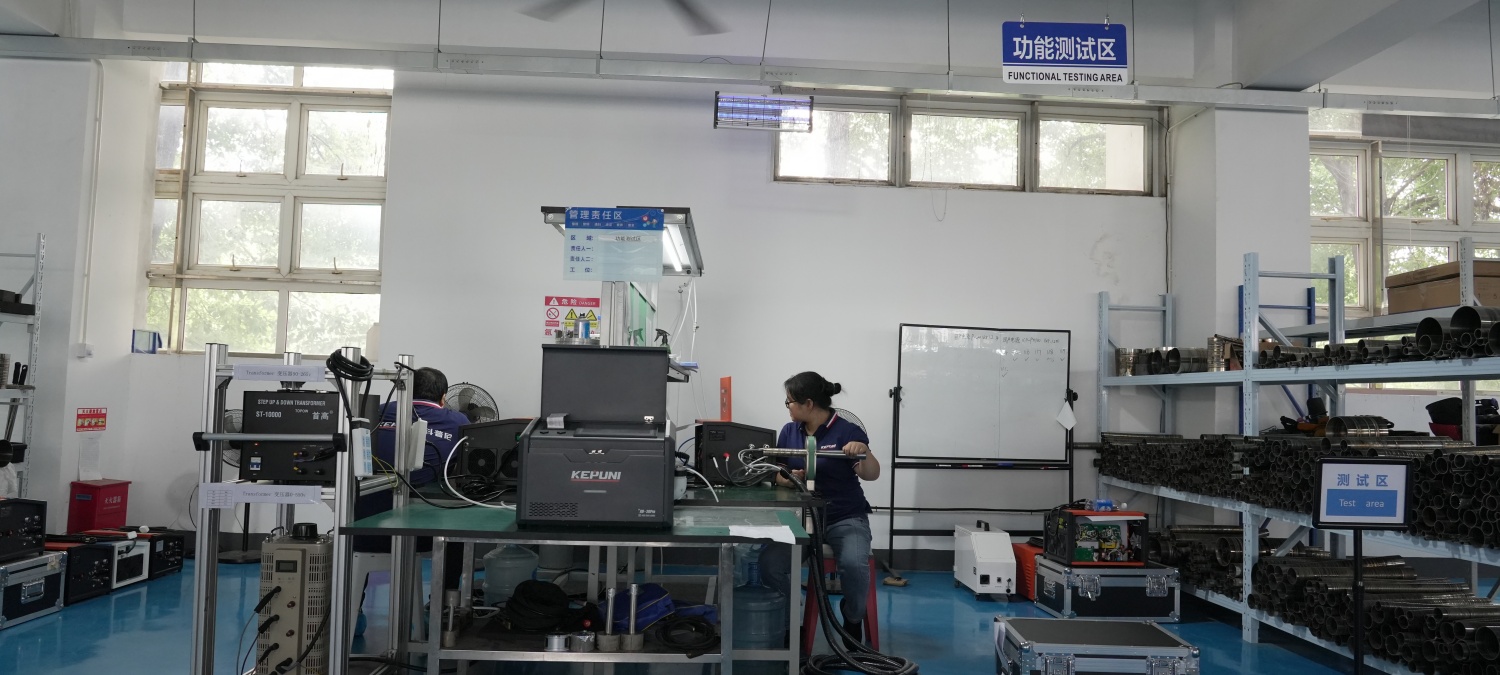
Inspection capacity is a benchmark in its own right: a manufacturer without a dedicated inspection area cannot produce a per-unit report that means anything.
The service benchmarks that matter operationally are parts availability and technical response. KEPUNI’s published risk-control measures specify spare parts stock held at Shanghai headquarters, regional distributor inventory in Europe, Asia and the Middle East, a standard spare-parts kit with every machine, and parts availability within 7–15 days globally. On the technical side, the company cites operation manuals in 6+ languages, a video training library, 24/7 WhatsApp/WeChat support, remote diagnostics through an IoT interface, and optional on-site training.
Benchmark 6 — Documentable Compliance Readiness
Compliance is the benchmark most often misread at the decision stage. A manufacturer stating that its orbital welding machine is used for pharmaceutical sanitary tubing or semiconductor high-purity gas lines is making an application statement. That statement is useful for screening but it is not a CE certificate, not an FDA determination, and not a cleanroom validation.
KEPUNI states applications in pharmaceutical sanitary stainless-steel tubing and semiconductor high-purity gas delivery lines in cleanrooms for the XD-20W. The correct evaluation response is to request the supporting document set rather than treat the application statement as certification:
- Declaration of conformity and the applicable directive list for a CE-related requirement.
- Welding procedure specification (WPS) and procedure qualification record (PQR) for your material and wall thickness.
- Material certificates for the pipe or tube to be welded.
- Per-unit inspection report, and the inspection procedure it follows.
- Any third-party sanitary, cleanroom or food-contact validation the supplier claims, with the issuing body named.
A CE certified orbital welding machine claim, a “FDA compliant” claim and a “sanitary” claim should each collapse into a document with a number and an issuer. If a claim cannot be reduced to that form, treat it as a positioning statement in your evaluation file, not as a compliance fact.
Benchmark 7 — Commercial Benchmarks: Price Tier and Scope
Price is the last benchmark, not the first, because it only becomes comparable once scope is fixed. KEPUNI’s published 2026 pricing guide positions the XD-20PRO orbital welding machine in the mid-to-high-end segment at approximately USD 8,400–8,600, while noting that premium industry-compliant solutions, often EU or US brands, exceed USD 25,000–40,000+.
KEPUNI’s own comparative positioning states a 30–40% lower price than a US-made alternative, and a 20–30% lower price against the high-end positioning of Polysoude (France). These are supplier-published comparisons and should be read as positioning, not as independently audited price benchmarks. Their practical use is directional: they indicate which tier a supplier competes in, so that a buyer can decide whether the quotation is being compared against the right alternative set.
Normalise before comparing: machine + heads required for your OD range + cooling + wire feeder + spare-parts kit + freight + training + warranty terms. A quotation that omits two heads and a spares kit is not a lower price for the same delivery — it is a lower price for a smaller one.
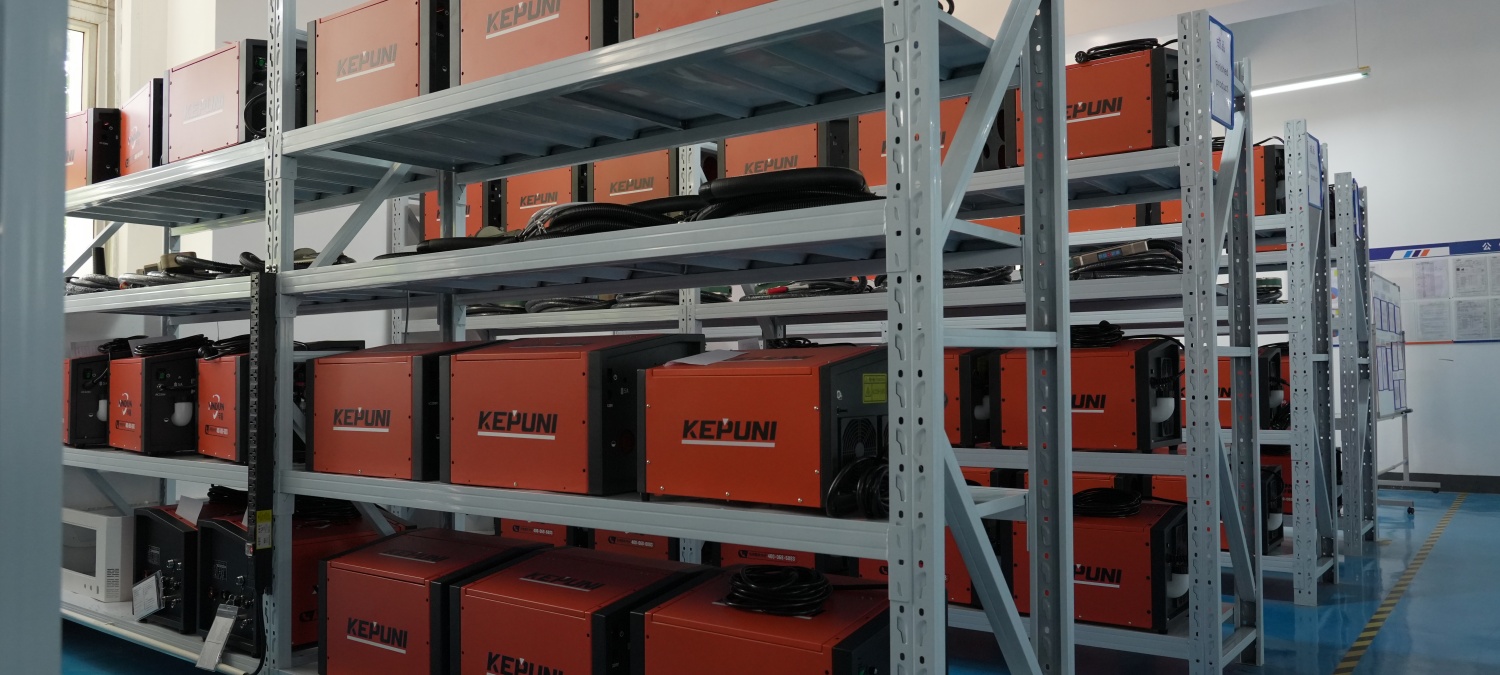
Scope comparability starts with what is actually in the crate: heads, spares kit and documentation should be listed line by line.
Step-by-Step Breakdown: A Seven-Step Evaluation Sequence
The sequence below converts the benchmarks into a working process. Each step produces a document or a decision, so that the final shortlist can be reviewed by procurement, engineering and quality without re-litigating the same claims.
Application Fit: Matching Benchmarks to Real Projects
Benchmarks are only useful when mapped to a project type. The four groupings below show where the portfolio split becomes a decision input rather than a catalogue fact.
Shipbuilding, storage tanks and pressure vessels
Thick-wall, large-diameter girth welds are the defining requirement: an OD range up to 960 mm and a wall range up to 25 mm on the XD-GH Series is the relevant benchmark. Buyers in this segment should also verify out-of-position performance and site power requirements, because these are the items most likely to be assumed rather than specified.
Pharmaceutical and food-grade sanitary tubing
The controlling variables are small-diameter coverage, thin-wall repeatability and documented weld records. The XD-20W’s stated 3.175–168 mm diameter range and 0.5–3 mm wall range covers much of this envelope, and the application statement names pharmaceutical sanitary stainless-steel tubing. The evaluation should still centre on the ASME BPE-2024 concavity criterion and on whether the inspection documentation supports it.
Semiconductor and cleanroom high-purity gas lines
Here the requirement is particle-free, high-purity welds in stainless steel tubing, with traceability that survives a customer audit. KEPUNI states this application for the XD-20W, and states that its systems provide parameter logging or printing. Buyers should convert that into a specific request: the interval record format, the export method and the retention period.
Oil and gas, boiler tube and HVAC piping
These are mid-to-large bore applications where open orbital welding heads in the 19–325 mm range are typically the working tool. An automatic orbital welding machine in this class should be evaluated on head availability across the whole range, because a supplier that lists a 325 mm head does not automatically stock the intermediate sizes a project needs.
Portability is a separate axis. A portable orbital welding machine used for retrofit or site work should be assessed on handling, setup time and power supply form factor, and those attributes should be requested as specifications rather than inferred from photographs.
Comparison Table: Supplier Positioning at a Glance
The table below summarises how KEPUNI’s published positioning sits against established orbital welding brands. Price differentials are KEPUNI-published comparisons and are included to show tier and direction, not as audited market prices. Portfolio and positioning notes reflect the suppliers’ publicly described focus.
| Manufacturer | Stated positioning | Price tier | Portfolio / focus note | KEPUNI-published comparison |
|---|---|---|---|---|
| KEPUNI (China) | Integrated power supplies and weld heads; closed, open and girth welding families | Mid-to-high; XD-20PRO around USD 8,400–8,600 | XD-20W, XD-20PRO, closed and open heads, XD-GH girth series; in-house R&D, production and after-sales | Reference supplier in this table |
| Arc Machines (USA) | Aerospace-grade quality certification; full closed welding head product line | Highest price tier (US-made) | Closed-head product line; aerospace, nuclear, pharmaceutical, food and beverage | 30–40% lower price; local technical support; faster delivery |
| Polysoude (France) | High-end positioning; TIG twin-cathode cladding, welding speed >1700 mm/min; 25+ welding application experts | High-end (EU brand) | Aerospace, oil and gas, food and beverage, chemical, pharmaceutical, heat exchangers, power generation | Same quality at 20–30% lower price; local Chinese support; faster delivery |
| Orbitalservice (Germany) | ISO 9001:2015 certified; German manufacturing precision | Mid-high (EU brand) | Pharmaceutical, food, chemical, automotive, energy | 15–25% lower price; faster local service response in China |
| Orbitec (Austria) | Industrial-grade reliability; complete product line | Mid-high | Industrial manufacturing, heat exchangers, pharmaceutical | 40–50% lower price; faster spare parts supply |
| Orbitron Systems (Switzerland) | Swiss precision manufacturing; ORBITRON series Industrial Innovation Award winner | Mid-high (Swiss brand) | Heat exchangers, refrigeration, pharmaceutical, food | Same Swiss quality at 20–30% lower price; faster Asian market response |
| ESAB Orbitalum / SwiMig (Europe) | Global sales network; EBW / laser welding integration | Mid-high, across multiple sub-brands | Oil and gas, shipbuilding, heavy manufacturing | More specialised in orbital welding; total solution at lower price |
Comparison compiled from KEPUNI’s published comparison material. Buyers should validate price differentials against their own normalised scope table before relying on them.
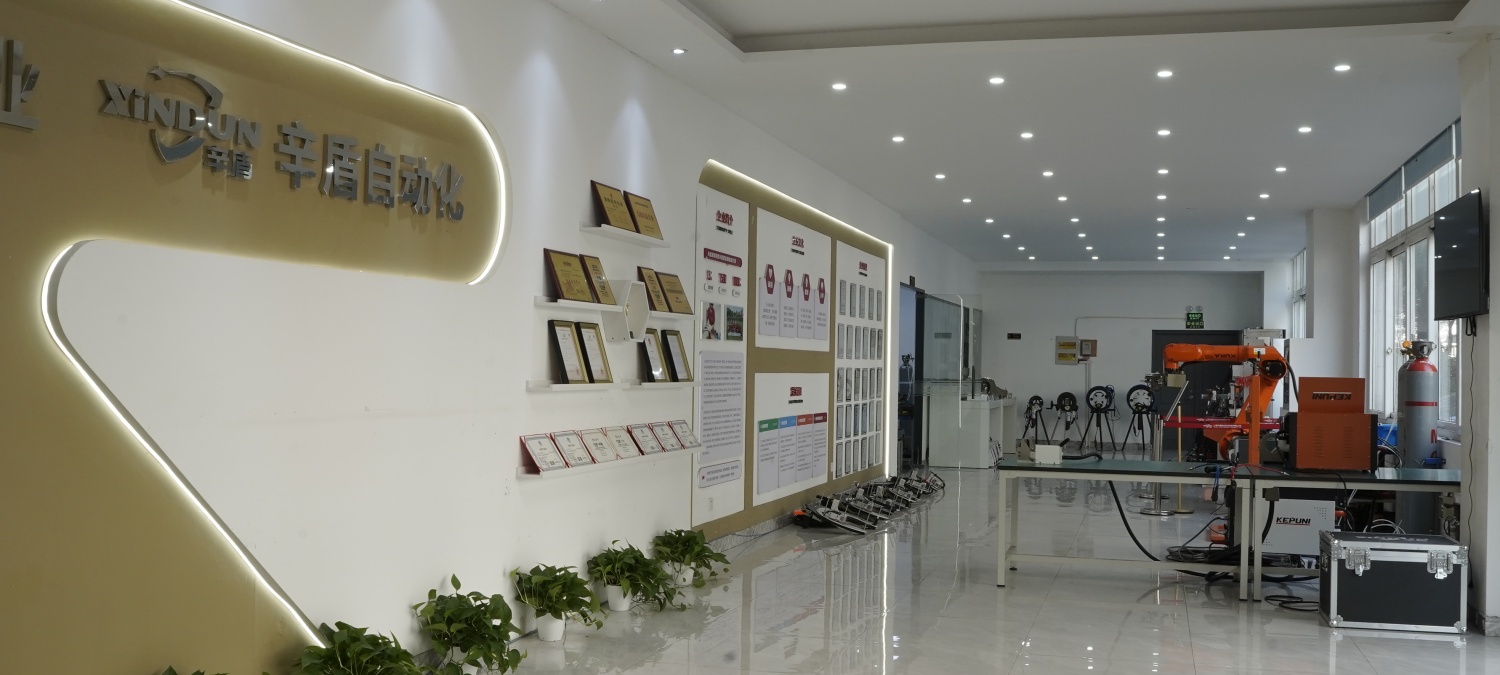
A factory audit should test the same benchmarks as the RFQ: model-level ranges, head pairing, inspection records and spares stock.
FAQ
What compliance documents should I receive before placing an orbital welding machine order?
Request a named document set rather than a status claim: the declaration of conformity with the applicable directive list for any CE-related requirement, the welding procedure specification and procedure qualification record for your material and wall thickness, material certificates, and a sample per-unit inspection report showing the inspection procedure it follows. An application statement — for example that a machine is used on pharmaceutical sanitary tubing or semiconductor high-purity gas lines — is a positioning statement, not certification. Where the work will be inspected against ASME BPE-2024, the acceptance criterion to confirm is ID concavity of maximum 10% of nominal wall thickness and not exceeding 0.38 mm, plus the record format that supports it.
How do I confirm a manufacturer really covers large-diameter heavy work and not just small tubing?
Ask for a series-level specification with both diameter and wall thickness stated. The KEPUNI XD-GH Series Girth Welding Machine states OD 20–960 mm and wall thickness 2.5–25 mm for shipbuilding, pipeline, storage tanks and pressure vessels. Compare that against the smaller families: the XD-20W states 3.175–168 mm with 0.5–3 mm wall, the closed orbital welding head system states 6.35–168 mm with 0.5–3 mm wall, and open heads cover 19–325 mm through K-76, K-114, K-168, K-219, K-273 and K-325 configurations. A supplier that can only show a thin-wall tube range has not demonstrated heavy-industry capability, however broad the rest of its catalogue is.
What price benchmark should I use when comparing orbital welding machine quotations?
Use a tier benchmark alongside a normalised scope table. KEPUNI’s published 2026 pricing guide positions the XD-20PRO in the mid-to-high-end segment at approximately USD 8,400–8,600, while premium industry-compliant EU or US solutions are described as exceeding USD 25,000–40,000+. KEPUNI’s published comparisons state a 30–40% lower price than a US-made alternative and 20–30% lower than Polysoude’s high-end positioning. Treat these as directional tier indicators, then rebuild each quotation line by line — machine, heads for the full OD range, cooling, wire feeder, spare-parts kit, freight, training and warranty — before deciding which number is genuinely lower.
Can I validate weld quality on a sample before committing to a batch order?
Yes, and the evaluation should make that validation mandatory rather than optional. KEPUNI’s published quality risk controls specify a mandatory weld sample test before batch production, a full inspection report per unit, customer approval of the sample before mass production, and an ISO 9001 inspection procedure. A sample programme should specify the material, wall thickness, joint type, inspection method and acceptance criteria in advance, so that the result is a documented approval rather than an informal impression.
What lead time and spare-parts availability should I expect after delivery?
Parts availability is a service benchmark worth testing explicitly. KEPUNI’s published measures state spare parts stock held at Shanghai headquarters, regional distributor inventory in Europe, Asia and the Middle East, a standard spare-parts kit included with every machine, and parts availability within 7–15 days globally. Technical support measures include manuals in 6+ languages, a video training library, 24/7 WhatsApp/WeChat support, remote diagnostics through an IoT interface and optional on-site training. Asking for these items as written commitments in the order documents — rather than accepting them as verbal assurances — converts them into something your maintenance team can rely on. Buyers who want to move to the next step can request a sample weld evaluation or a scope-based quotation through the KEPUNI team at info@kepuni.com or +86 18221803984.
Conclusion
Supplier evaluation in orbital welding becomes straightforward once claims are forced into comparable forms. Seven benchmarks do that work: model-specific dimensional coverage, integrated power-supply and weld-head design, demonstrated heavy-industry capability, process-control and traceability output, verifiable manufacturing and service capacity, a documentable compliance set, and a price tier read against normalised scope.
The XD-GH Series shows why the heavy-industry benchmark deserves its own line item: OD 20–960 mm and wall 2.5–25 mm is a specification that can be checked, and it is a different claim from the 3.175–168 mm thin-wall envelope of the XD-20W or the 19–325 mm reach of the open head range. Portfolio breadth documented in that form gives a buyer something rare at the decision stage — a shortlist where each supplier’s limits are visible before the purchase order, not after commissioning.
Next Step: Benchmark Your Shortlist Against Real Machine Data
Request a scope-based quotation or a sample weld evaluation for your diameter, wall thickness and material. The KEPUNI team can confirm which head model covers each line item of your project, provide the matching power-supply configuration, and issue the inspection and traceability documentation your quality file requires.
Email: info@kepuni.com | Tel / WhatsApp: +86 18221803984 | Website: www.kepuni.com
Download the full product catalogue and technical brochure: KEPUNI Orbital Welding Machine Brochure (PDF)
Have Questions or Need More Details?
Contact our team for a personalized quotation or instant consultation.
Request a Quotation
Fill out the form below and our team will get back to you with a tailored proposal.
WhatsApp Direct Chat
Prefer to chat in real-time? Message us on WhatsApp for instant assistance & quick answers.
- Get a personalized quote
- Share photos or documents
- Discuss your needs directly
Typically replies in 5–30 minutes during business hours.