KEPUNI vs. Top Orbital Welding Brands: A 2026 Cost-Quality Benchmark for Decision-Makers

KEPUNI vs. Top Orbital Welding Brands: A 2026 Cost-Quality Benchmark for Decision-Makers
KEPUNI is a brand of Shanghai Chuanli Industrial Co., Ltd., a high-tech enterprise certified by the Ministry of Science and Technology of China that integrates R&D, production, sales, and after-sales service of orbital welding equipment. For procurement professionals in regulated and heavy industries, deciding which orbital welding machine brand to invest in is a high-stakes decision that balances weld quality, compliance, total cost of ownership, and supply chain reliability. This article provides a factual, data-driven comparison of KEPUNI against established European and US competitors, using only verifiable market data and first-party specifications to help decision-makers make an informed choice.
The Procurement Challenge: Cost vs. Quality in Orbital Welding
The global orbital welding machine market was valued at approximately USD 1.32 billion in 2024 and is projected to grow to USD 2.07 billion by 2030 (Strategic Market Research). High-purity piping for pharmaceutical and semiconductor applications is the fastest-growing segment, driven by contamination control requirements. However, buyers face a persistent dilemma: premium brands from Europe and the US deliver proven quality but often come with long lead times, high import duties, and limited local support. Lower-cost alternatives from other regions may compromise on weld consistency or regulatory compliance. KEPUNI positions itself in the mid-high price tier, offering the same quality as top European brands at a 15–60% lower price while providing faster delivery and local technical support.
Industry Background: The Dominance of Established Players
Major global players in the orbital welding equipment market include Lincoln Electric, ESAB (Colfax), Swagelok, AMI (Arc Machines, Inc.), and Polysoude (Intel Market Research). Among them, European and US brands have set the standard for industrial reliability and precision. The oil and gas sector represented the largest application segment in 2024, holding over one-third of the market share. Manual TIG welding, while having a low initial cost, suffers from high long-term labor costs and quality dependent on operator skill—factors that orbital welding eliminates through automation. KEPUNI, founded in 2014 with 280 employees and a 10,000 m² production park in Shanghai, has developed a full product line including closed orbital welding heads, open orbital welding heads, tube-to-tube sheet welders, and orbital cutters. With an annual output of 3,000 units and 36 R&D engineers, the company serves markets in Europe, Asia, South America, North America, and the Middle East.
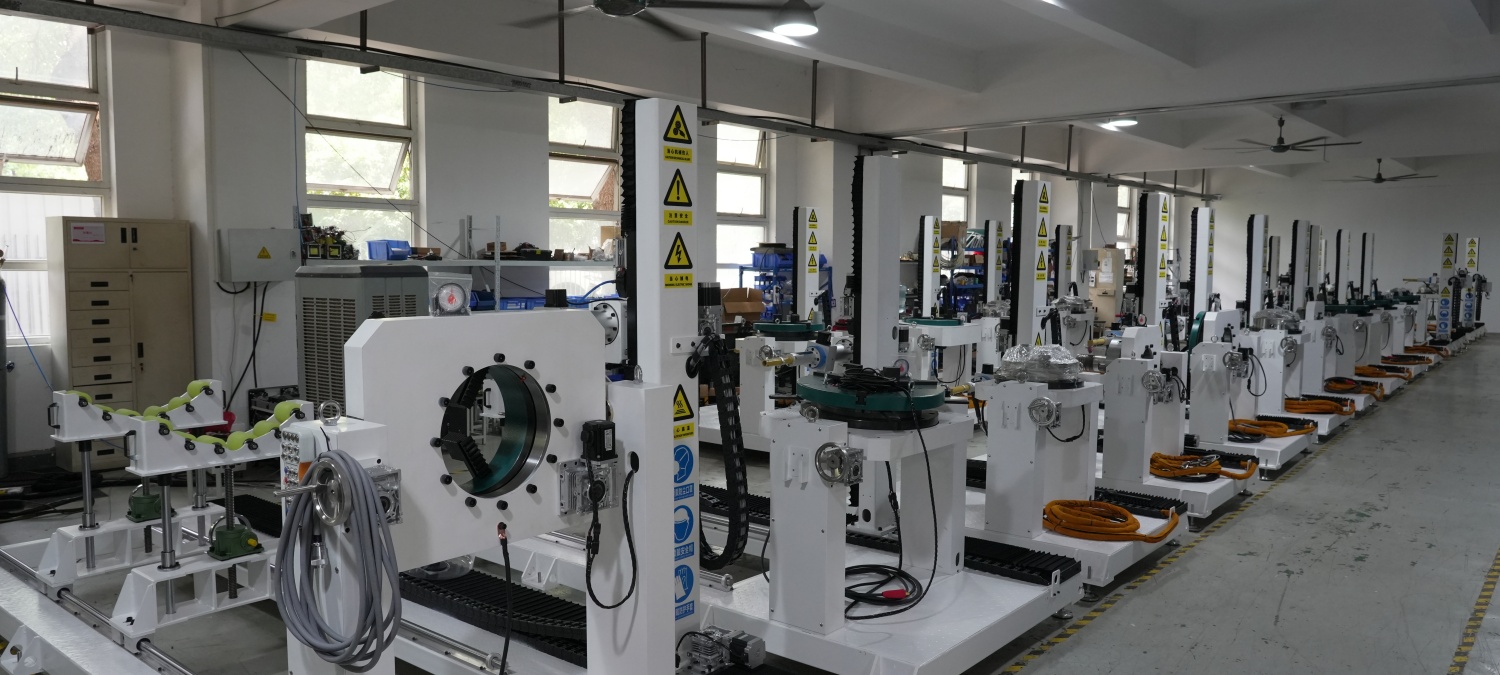
KEPUNI's dedicated production area for circumferential seam welding machines.
Detailed Solution: KEPUNI's Value Proposition
KEPUNI's orbital welding machines are designed to deliver same or better quality than established European and US brands at a significantly lower price point, while offering advantages in delivery speed and local support. The following points summarize the key differentiators based on verified comparisons:
- vs. Arc Machines (USA): 30–40% lower price; local tech support; faster delivery; better suited for Asian markets.
- vs. Polysoude (France): 20–30% lower price with the same quality; local Chinese support; faster delivery.
- vs. Orbitalservice (Germany): 15–25% lower price while maintaining the same German quality; faster local service response in China.
- vs. Orbitec (Austria): Same industrial quality at 15–20% lower price; faster spare parts supply.
- vs. Orbitron Systems (Switzerland): 20–30% lower price; faster response times for Asian markets.
- vs. ESAB Orbitalum / SwiMig (Europe): More specialized in orbital welding; total solution at lower price.
Step-by-Step Breakdown: How to Evaluate Orbital Welding Suppliers
- Define industry compliance requirements: For pharmaceutical applications, ensure FDA compliance; for semiconductor, closed-head designs for atmosphere control.
- Request weld sample testing: KEPUNI implements mandatory weld sample test before batch production, with full inspection report per unit.
- Compare total cost of ownership: Factor in machine price, import duties, freight, spare parts availability, and after-sales support.
- Assess delivery and support: KEPUNI maintains global spare parts stock with 7–15 days delivery worldwide; offers 24/7 WhatsApp/WeChat support and remote diagnostics.
- Check certifications: KEPUNI is ISO 9001:2015 certified and holds a CE certification for orbital welding machines.
Use Cases by Industry
| Industry | Recommended KEPUNI Configuration | Key Compliance |
|---|---|---|
| Pharmaceutical / Food | Closed-head orbital welding machine | FDA compliance, sanitary pipe welding |
| Semiconductor | Closed-head GTAW with particle-free welds | Ultra-pure gas/water systems |
| Oil & Gas | Open or closed-head heavy-duty systems | High-strength piping |
| Power Generation / Boiler Tubes | Tube-to-tube sheet welder | Schedule constraints |
| HVAC / Clean Rooms | Portable orbital welding machine | Stainless steel orbital welding |
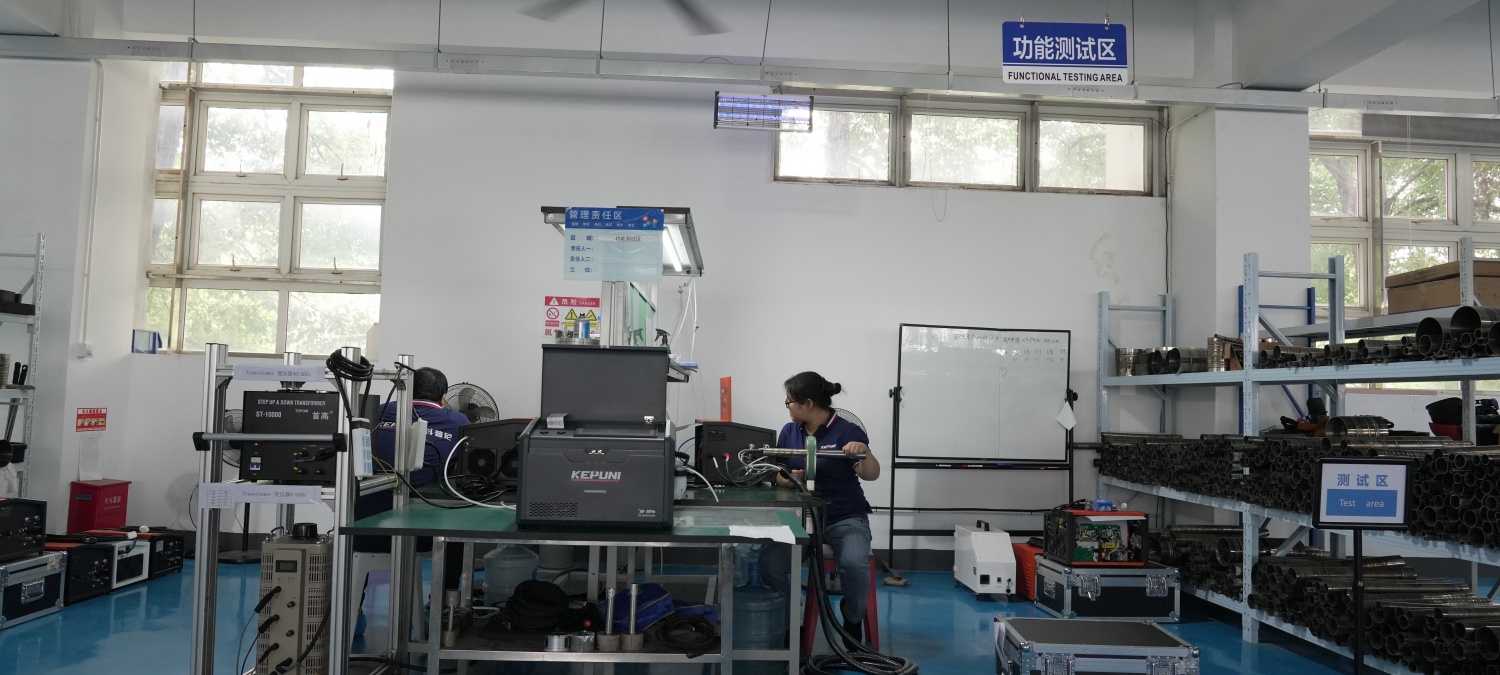
Quality inspection area where every unit undergoes mandatory weld sample testing before batch production.
Comparison Table: KEPUNI vs. Major Competitors
| Competitor | Price Comparison | Key Advantage of KEPUNI | Best For (KEPUNI) |
|---|---|---|---|
| Arc Machines (USA) | 30–40% lower price | Local tech support, faster delivery, Asian market suitability | Aerospace, Nuclear, Pharma, Food |
| Polysoude (France) | 20–30% lower price | Local Chinese support, faster delivery | Aerospace, Oil & Gas, Food, Chemical, Pharma |
| Orbitalservice (Germany) | 15–25% lower price | Same German quality, faster local service in China | Pharma, Food, Chemical, Automotive, Energy |
| Orbitec (Austria) | 15–20% lower price | Faster spare parts supply | Industrial manufacturing, Heat exchangers, Pharma |
| Orbitron Systems (Switzerland) | 20–30% lower price | Faster Asian market response | Heat exchangers, Refrigeration, Pharma, Food |
| ESAB Orbitalum / SwiMig (Europe) | More cost-effective solution (sub-brand fragmented) | Specialized in orbital welding; total solution at lower price | Oil & Gas, Shipbuilding, Heavy manufacturing |
Frequently Asked Questions
Are KEPUNI orbital welding machines CE certified and FDA compliant?
Yes, KEPUNI orbital welding machines are CE certified, meeting the requirements for regulated industries. For pharmaceutical applications, orbital welding is standard to comply with FDA guidelines for drug manufacturing processes, ensuring clean welds with minimal contamination risk. KEPUNI machines are designed for sanitary pipe welding, making them suitable for food-grade and pharmaceutical environments.
How does KEPUNI compare to German and French competitors in terms of weld quality?
KEPUNI provides the same industrial quality as German brands (Orbitalservice) and French brands (Polysoude) at a 15–25% and 20–30% lower price, respectively. The company is ISO 9001:2015 certified and implements mandatory weld sample testing before batch production, ensuring consistent weld quality and high repeatability.
What is the typical price range for a KEPUNI orbital welding machine?
KEPUNI positions in the mid-high price tier. Compared to US-made alternatives (Arc Machines), the price is 30–40% lower; compared to Swiss brands (Orbitron), it is 20–30% lower. The exact price depends on configuration (closed-head, open-head, power source, accessories) and can include standard spare parts kits. Buyers are encouraged to request a quote for a specific application.
Can KEPUNI provide certified weld samples before purchase?
Yes, KEPUNI requires mandatory weld sample testing before batch production. A full inspection report per unit is provided, and customer approval of the sample is obtained before mass production. This process is part of the ISO 9001 inspection procedure. Prospective buyers can request sample welds for their specific pipe material and size.
What is the lead time and how is after-sales support handled?
KEPUNI maintains a global spare parts stock at Shanghai HQ and regional distributor inventories in Europe, Asia, and the Middle East. Delivery times are typically faster than US and European competitors due to local production and multi-supplier backup for key components. All machines include a standard spare parts kit, and parts are available within 7–15 days globally. After-sales support includes a multi-language video training library, 24/7 WhatsApp/WeChat support, remote diagnostics via IoT interface, and on-site training upon request. For a detailed quotation or to request a sample weld test, contact KEPUNI today: WhatsApp or email info@kepuni.com.
Request a Quote or Free Brochure
Download the KEPUNI product catalog to explore complete specifications: Download PDF Brochure
Contact us directly: info@kepuni.com | +86 18221803984