
Large-Diameter Girth Welding: Orbital Welding Machines for Ships and Pressure Vessels
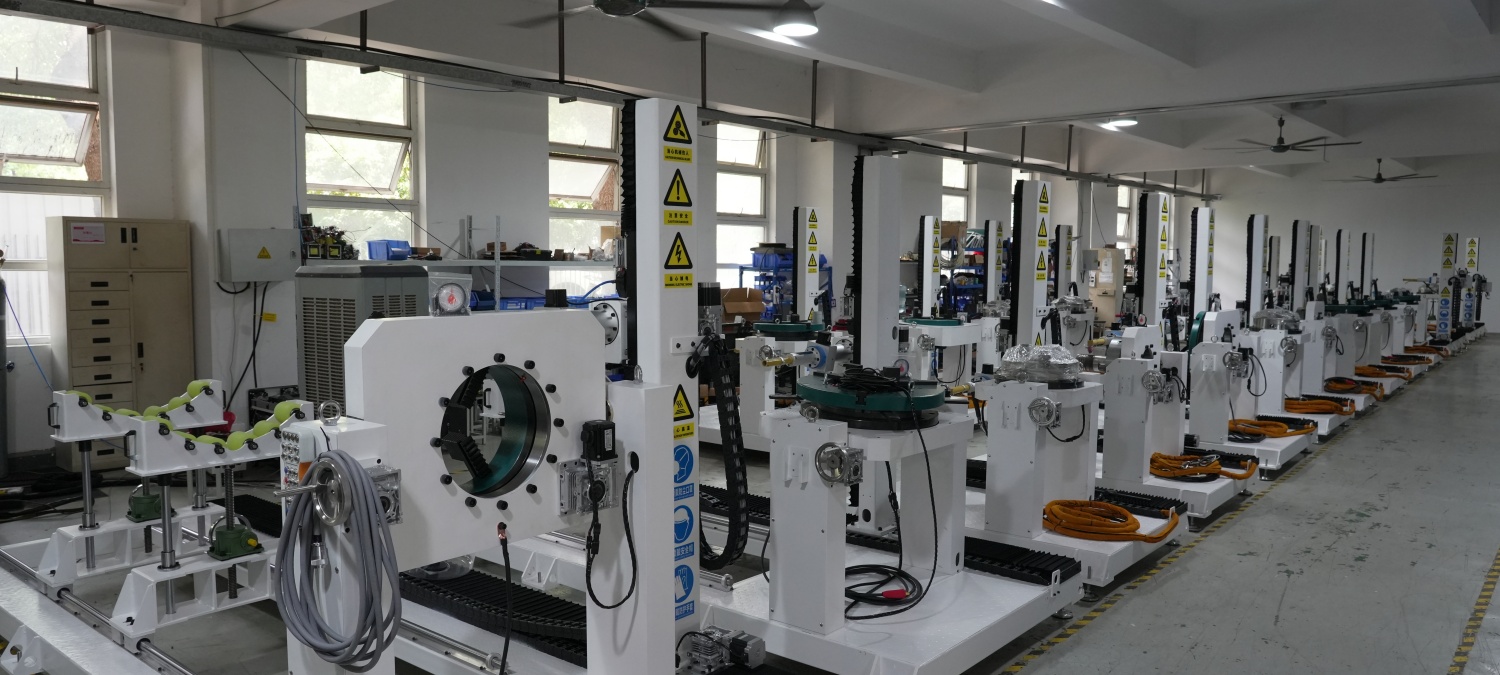 Circumferential seam (girth) welding machine production area — the equipment family behind the XD-GH Series girth weld configuration.
A girth weld is the circumferential seam that joins one pipe section, shell course or vessel course to the next. On small-bore tubing that seam is a bench operation. On a 960 mm outer diameter shell or a shipyard spool it becomes the operation that sets the delivery date — because weld length grows with diameter, access gets harder, heat input has to stay controlled through thick sections, and every joint has to be documented.
This is a problem-solution guide for fabricators in shipbuilding, oil and gas pipeline construction, storage tank erection and pressure vessel manufacturing who intend to automate large-diameter girth welds. It defines the joint envelope that drives equipment selection — pipe and vessel outer diameters from 20 mm to 960 mm and wall thickness from 2.5 mm to 25 mm in steel and alloy materials — then explains how the KEPUNI XD-GH Series Girth Weld Power Supply combined with a rotary stand addresses that envelope, and closes with a practical checklist for matching girth welding equipment to OD, wall thickness and material.
Scope note: high-purity work such as clean-room, pharmaceutical, food-grade and semiconductor piping follows a different equipment logic. Closed-head designs are normally specified there to prevent atmosphere contamination and to keep gas tungsten arc welding (GTAW) pure, and sanitary pipe work is judged on interior surface quality rather than on joint size. Large-diameter girth welding solves a different set of constraints, and that difference runs through this article.
The Problem: Why Large-Diameter Girth Joints Resist Automation
Automating a large-diameter girth weld succeeds or fails on three variables that have little to do with a raw current rating: how the workpiece is supported and rotated, how heat input is managed across the wall thickness, and how consistently parameters repeat from joint to joint.
Geometry works against you
Weld length is proportional to diameter. A circumferential seam on a large vessel shell takes proportionally longer to complete and consumes proportionally more filler and shielding gas than the same seam on a small spool. Manual TIG welding does not compensate for that: it is typically 3–5× slower than orbital welding, and its quality depends on operator skill rather than on a stored, repeatable program.
Access and workpiece handling
Closed heads that wrap the pipe are the normal choice for small-diameter tubing. As diameter climbs toward the top of the 20–960 mm range, wrapping a head around the joint becomes physically harder — the head grows with the diameter, and so does the handling effort around shells, tank courses and spools. In heavy fabrication the practical answer is usually to rotate the workpiece and hold the torch in a controlled position.
Wall thickness and distortion
A 2.5 mm to 25 mm wall thickness band is wide. Thin-wall joints are sensitive to burn-through and to travel-speed consistency. Thick-wall joints need a multi-pass sequence with controlled heat input and interpass management to limit distortion. One power supply and control platform has to cover both ends of that band without changing the machine.
Repeatability and documentation
Pressure vessels, ship piping and pipeline girth welds are inspected. A manual weld documents operator skill; an automated girth weld documents parameters — current, travel speed, wire feed, gas flow and the program that produced the seam. That is the difference between arguing about a defect and preventing one.
Where the money actually sits
Manual TIG welding keeps initial equipment investment low and suits non-standard, low-volume production. Its cost sits in recurring labour, in slow welding speed and in quality variability driven by the human factor. Orbital welding moves cost forward into equipment and qualification, and returns higher productivity, consistent quality, reduced labour cost and better repeatability over the life of the cell.
Industry Background: Where Girth Welding Demand Concentrates
Girth welding demand follows the industries that build long, thick, pressure-retaining joints. Several published data points frame the market.
- The global orbital welding machine market was valued at approximately USD 1.32 billion in 2024 and is projected to reach USD 2.07 billion by 2030 (Strategic Market Research).
- Scope changes the number. A separate 2025 estimate of roughly USD 0.83 billion (Metastat Insights) reflects a narrower definition of the market — heads and power sources rather than complete systems. Buyers should confirm scope before comparing market figures.
- Oil and gas was the largest application segment in 2024, holding more than one-third of total orbital welding machine market share.
- Asia Pacific remained the largest region for welding equipment with a 37.0% revenue share as of 2025, while the U.S. welding equipment market is expected to grow at a CAGR of 4.2% from 2026 to 2033 (Grand View Research).
- High-purity piping for semiconductor and pharmaceutical production is identified as the fastest-growing segment, on the strength of contamination-control requirements. Clean-room systems there typically use closed-head designs for high-purity GTAW, and orbital welding is standard in pharmaceutical manufacturing to comply with FDA guidelines for drug manufacturing processes.
Heavy fabrication occupies a different part of the same market. Shipyards, tank erectors, pressure vessel shops and pipeline contractors weld thick sections at large diameters, often in positions where a head cannot simply travel around the joint. That is the segment the XD-GH Series configuration is built for.
The Solution: XD-GH Series Girth Weld Power Supply + Rotary Stand
The KEPUNI XD-GH Series Girth Weld Power Supply, paired with a rotary stand, is an orbital welding configuration specified for large-diameter girth welds. It covers pipe and vessel outer diameters from 20 mm to 960 mm and wall thickness from 2.5 mm to 25 mm in steel and alloy materials.
Rotating the workpiece instead of the head
The configuration separates two functions that small-bore systems often combine: the weld head positions the torch, and the rotary stand turns the workpiece. On large diameters that division is what makes automation practical. The stand governs rotation speed and stability while the power supply governs arc parameters, so travel speed stays repeatable around the full circumference instead of being fought for by a heavy head assembly. Shops that run small spools and large shells side by side can standardise on one power supply platform and vary the handling equipment and head configuration with the joint.
What the joint envelope covers
- 20 mm to 960 mm outer diameter — from small tie-in spools through large vessel shells.
- 2.5 mm to 25 mm wall thickness — thin-wall shells through heavy-wall pressure components.
- Steel and alloy materials — the material group used in shipbuilding, tank and pressure equipment fabrication.
- Circumferential (girth) seams — the joint type this configuration is specified for.
The manufacturer behind the equipment
KEPUNI is the brand of Shanghai Chuanli Industrial Co., Ltd., a high-tech enterprise certified by the Ministry of Science and Technology of China that integrates R&D, production, sales and after-sales service. The company was founded in 2014 and operates a 10,000 m² production park with 280 employees, including 36 R&D engineers and technicians, reporting an annual output of 3,000 pcs. Its core R&D team carries around 20 years of experience in professional welding, professional power supply and pipeline welding automation.
The manufacturing range includes closed orbital welding heads, open orbital welding heads, tube-to-tube-sheet welding heads, cold welding machines, orbital cutting machines, tube facing machines, handheld laser welding machines and ultrasonic metal welding machines. Products are supplied across five continents through sales agents and distributors, with main markets in Europe, Asia, South America, North America and the Middle East.
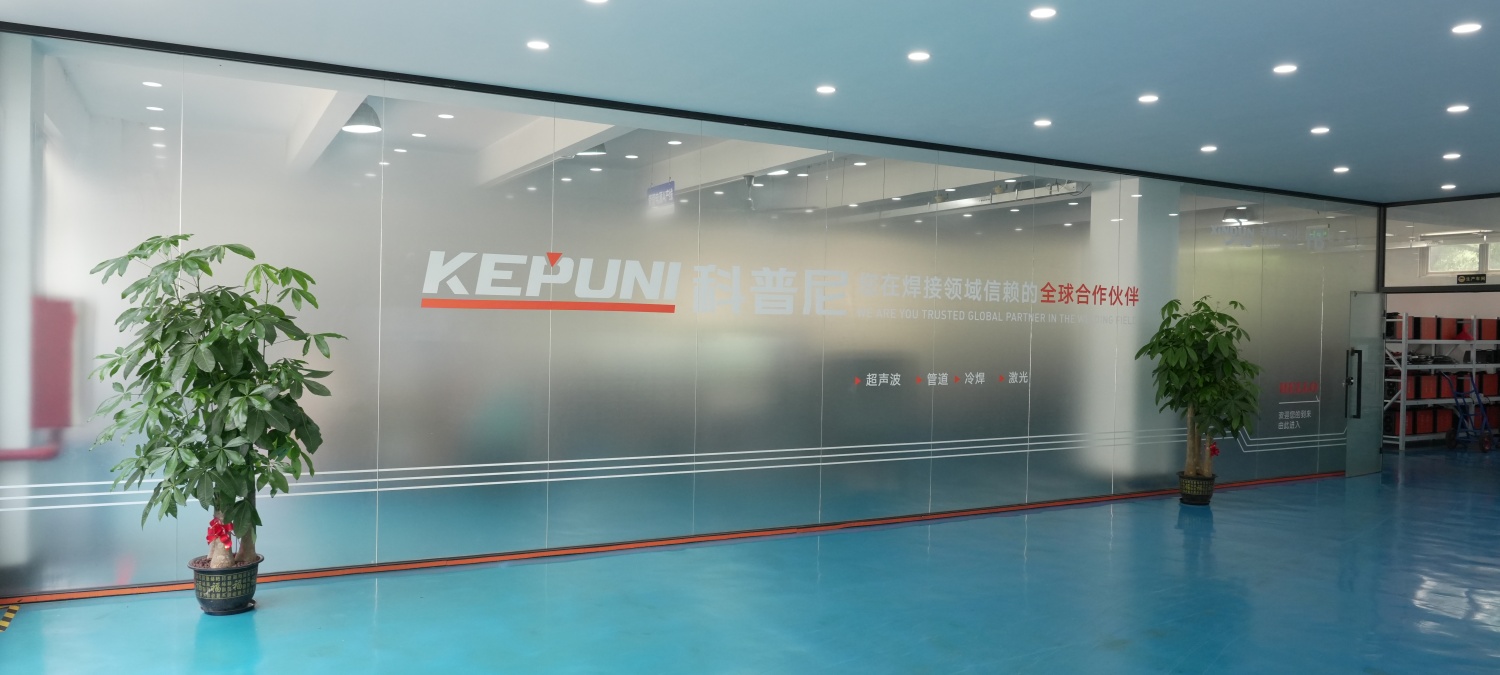 KEPUNI 2nd floor workshop hall, Shanghai — assembly of orbital welding power supplies and pipe welders.
Step-by-Step: Specifying a Girth Welding Setup
Each step below produces a decision or a document that the next step depends on. Skipping the early steps is what turns a girth welding project into a commissioning problem.
- Define the joint envelope before requesting a quotation. Minimum and maximum outer diameter (20 mm to 960 mm), minimum and maximum wall thickness (2.5 mm to 25 mm), and the base material group (steel or alloy).
- Decide how the workpiece will move. Large-diameter girth welds are normally rotated on a rotary stand; smaller joints can use head-based travel. This decision fixes stand capacity and fixture design.
- Match the head and torch configuration to the joint geometry. Confirm clearance around the full circumference and select between the open and closed orbital welding head families accordingly.
- Confirm the pass schedule and heat-input control against your weld procedure. Multi-pass work on thicker sections needs reproducible interpass and travel parameters, not just a maximum current rating.
- Validate on a real production joint. Weld sample testing is mandatory before batch production, and the customer approves the sample before mass production begins.
- Fix the documentation and acceptance route. Each unit ships with a full inspection report, inspection follows an ISO 9001 procedure, and third-party inspection through SGS or BV is optional on order.
- Plan the support chain before you sign. Spare parts stock, training material, remote diagnostics and parts lead times belong in the total cost of ownership, not in the afterthought column.
Checklist: Matching Girth Welding Equipment to OD, Wall Thickness and Material
Use this list as a pre-quotation filter. A configuration that fails any of the first five items will not be rescued later in the process.
- Outer diameter range confirmed — minimum and maximum OD inside the 20 mm to 960 mm envelope.
- Wall thickness range confirmed — minimum and maximum inside the 2.5 mm to 25 mm envelope.
- Base material group confirmed — steel and alloy materials.
- Workpiece rotation confirmed — rotary stand capacity and fixture design for the largest and heaviest joint, not the average one.
- Head clearance confirmed around the full circumference, joint by joint.
- Pass schedule and heat-input control confirmed against the weld procedure.
- Shielding gas and filler supply route confirmed against the shop layout.
- Inspection documentation route agreed — full inspection report per unit, ISO 9001 inspection procedure, optional third-party inspection.
- Sample validation scheduled — weld sample test and customer approval before mass production.
- Spare parts plan agreed — stock held for after-sales service, with a typical global delivery time of 7–15 days.
- Training and language support agreed — operating manual in 6+ languages, video training library, 24/7 WhatsApp/WeChat support, remote diagnostics.
Decision table: joint variable → equipment consequence
| Joint variable | Value to define | What it determines |
|---|---|---|
| Outer diameter | 20 mm – 960 mm | Whether the workpiece rotates on a rotary stand or the head travels the joint |
| Wall thickness | 2.5 mm – 25 mm | Pass schedule, heat-input control and interpass management |
| Base material | Steel and alloy materials | Filler metal, shielding gas and the qualified welding procedure |
| Joint access | Clearance around the full circumference | Open orbital welding head vs. closed orbital welding head configuration |
| Documentation | Full inspection report per unit; ISO 9001 inspection procedure | Acceptance, traceability and client sign-off |
| Sample approval | Mandatory weld sample test before batch production | Confirms the configuration against the real joint before series work |
| Spares and service | Spare parts stocked for after-sales service; 7–15 days typical global delivery | Uptime after commissioning |
Use Cases
Shipbuilding spools and ship piping
Yard work is dominated by large-diameter spools and hull piping, where access is awkward and the joint count per hull is high. Circumferential seams inside the 20–960 mm envelope, with wall thickness up to 25 mm, are the natural target for workpiece-rotation automation: the stand turns the spool, the torch stays put, and the same program repeats across hundreds of similar joints.
Pressure vessels and storage tanks
Shell course seams and circumferential joints on vessels and tank courses are long, thick and inspected. A rotary stand sized for the heaviest course keeps travel speed constant around the circumference, and the power supply records the parameters that the inspection file has to contain.
Oil and gas pipelines
Oil and gas was the largest application segment in 2024, holding more than one-third of the orbital welding machine market. Mainline and tie-in girth welds are the classic case where manual TIG quality depends on the operator and orbital quality depends on the program — and where a 3–5× speed difference per joint compounds across a spread.
Boiler tube and power generation piping
Boiler and power plant piping combines thick-wall joints with fixed outage windows. One KEPUNI power plant project was completed within a two-year period, with the equipment and support model running across the whole schedule rather than only at commissioning.
Chemical processing and transfer piping
Corrosive service raises the cost of a bad seam. In one chemical processing project, reliable orbital welding was delivered for critical acid transfer piping, and the client placed a repeat order afterwards.
High-purity plants — a different configuration
Clean-room, pharmaceutical, food-grade and semiconductor piping is usually welded with closed-head designs for contamination control, and that hardware family is specified differently from large-diameter girth equipment. Where KEPUNI has supported that environment, one sterile pharmaceutical production piping project ran over 3.5 years and a semiconductor project generated repeat orders. The joint logic differs from shipyard and vessel work, but the long-term support requirements are the same.
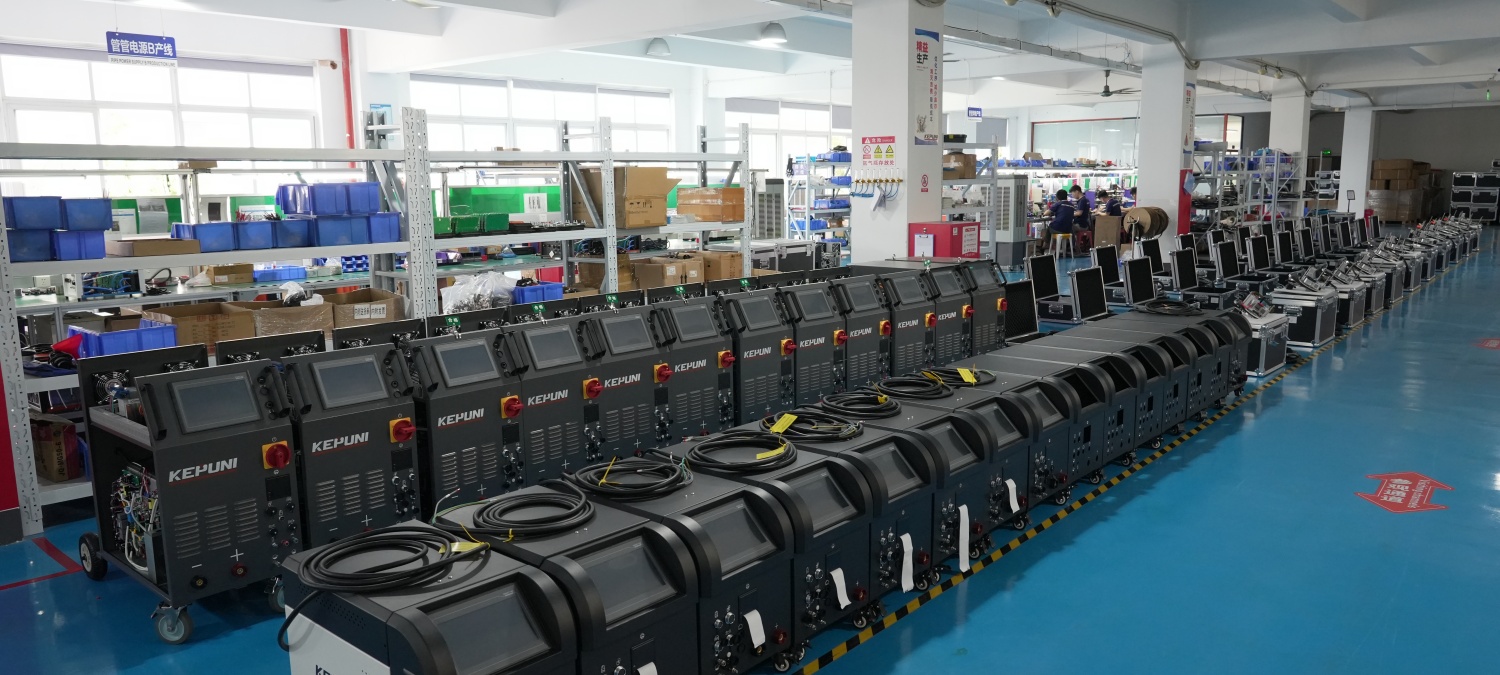 Open-frame pipe welder finished product area — pipe welding equipment awaiting inspection and shipment.
Comparison: Manual TIG vs. Orbital Girth Welding
| Factor | Manual TIG welding | Orbital girth welding |
|---|---|---|
| Initial investment | Low equipment investment | Higher upfront equipment and qualification cost |
| Suited to | Non-standard, low-volume production; all metal welding industries | Repeatable girth joints at volume |
| Welding speed | Typically 3–5× slower than orbital | Higher productivity with repeatable travel speed |
| Quality consistency | Dependent on operator skill (human factor) | Consistent quality with better repeatability |
| Recurring cost | High long-term labour cost | Reduced labour cost per joint |
| Best fit | One-off or non-standard geometry | Long, thick, inspected circumferential seams |
Long-Term Support: What Keeps a Girth Welding Cell Running
For a fabrication shop, the equipment decision is a multi-year commitment. A girth welding cell that stops because of a missing torch body or gas nozzle costs more in schedule than the part costs in money, so the support model deserves the same scrutiny as the specification sheet.
| Support element | KEPUNI arrangement |
|---|---|
| Spare parts stock | Spare parts stocked for after-sales service at Shanghai HQ, with regional distributor inventory in Europe, Asia and the Middle East |
| Spare parts lead time | 7–15 days typical delivery time globally |
| Included with the machine | Standard spare parts kit supplied with every machine |
| Technical support | Operating manual in 6+ languages, video training library, 24/7 WhatsApp/WeChat support, remote diagnostics via IoT interface, on-site training available |
| Supply chain protection | Dual-source backup for key components such as tungsten electrodes, welding wire and gas nozzles, plus six-month safety stock for critical spare parts |
| Production capacity | Monthly production capacity reported at 50–200 units, supporting an annual output of 3,000 pcs |
| Production lead time | 60–90 days (FOB Shanghai) for bulk orders; other production models run in the 15–20 day to 30–45 day range |
| Commercial terms | MOQ from 1 unit for samples; delivery FOB Shanghai or CIF destination port; acceptance through pre-shipment inspection with photos and video; payment terms typically 30% deposit with the balance before shipment |
Repeat business is the clearest evidence that this model holds up. Customer confidence has been demonstrated by the placement of repeat orders in multiple projects, and customer feedback on one project specifically praised the on-site support provided. Delivery windows have held too: one project was completed within a two-year period.
FAQ
Does large-diameter girth welding have to meet specific compliance or documentation requirements?
Documentation is required in every case, and the compliance framework depends on the end product. In pharmaceutical manufacturing, orbital welding is standard to comply with FDA guidelines for drug manufacturing processes, ensuring clean welds with minimal contamination risk — that environment is normally welded with closed-head designs for high-purity GTAW. For heavy fabrication such as shipbuilding, storage tanks and pressure vessels, compliance centres on the weld procedure and the inspection record: KEPUNI ships a full inspection report with each unit, follows an ISO 9001 inspection procedure, and can arrange optional third-party inspection through SGS or BV.
What outer diameter and wall thickness can the XD-GH Series girth weld configuration cover?
The XD-GH Series Girth Weld Power Supply, combined with a rotary stand, is specified for pipe and vessel outer diameters from 20 mm to 960 mm and wall thickness from 2.5 mm to 25 mm in steel and alloy materials. The configuration applies to circumferential (girth) seams, where the workpiece rotates on the stand and the torch is held in a controlled position. Shops that also run smaller joints can keep the same power supply platform and change the handling equipment and head configuration.
What drives the price of an orbital girth welding system?
Price follows configuration rather than a single headline number. The main cost drivers are the joint envelope (diameter and wall thickness range), rotary stand capacity for the heaviest workpiece, the head and torch configuration, the level of control and programming required, and the documentation and inspection scope. The comparison that matters is lifecycle cost: manual TIG keeps initial investment low but carries high recurring labour cost and quality that depends on operator skill, while orbital welding is typically 3–5× faster with consistent, repeatable quality. KEPUNI quotes per project against the actual joint list.
Can we validate the equipment on our own joint before placing a volume order?
Yes. The minimum order quantity starts at 1 unit for a sample, and weld sample testing is mandatory before batch production, with customer approval of the sample required before mass production begins. A typical order runs on delivery terms of FOB Shanghai or CIF destination port, with acceptance through pre-shipment inspection with photos and video, and payment terms typically 30% deposit with the balance before shipment.
What are the production lead time and the spare parts situation after delivery?
Typical production lead time is 60–90 days (FOB Shanghai) for bulk orders, while other production models run in the 15–20 day to 30–45 day range. Spare parts are stocked for after-sales service and typically delivered within 7–15 days globally, supported by regional distributor inventory in Europe, Asia and the Middle East, and a standard spare parts kit is included with every machine. To move from evaluation to execution, send your joint list — outer diameter, wall thickness and material for each joint — to info@kepuni.com or WhatsApp +86 18221803984, and KEPUNI will confirm the matching configuration.
Conclusion
Large-diameter girth welding is a geometry problem before it is a welding problem. Once diameter passes a few hundred millimetres, rotating the workpiece on a stand and holding the torch in a controlled position becomes the only repeatable route, and the purchasing decision shifts from "how much current do I need" to "does this configuration cover my OD, wall thickness and material envelope — and who keeps it running for the next five years".
The XD-GH Series Girth Weld Power Supply with a rotary stand covers the 20 mm to 960 mm outer diameter and 2.5 mm to 25 mm wall thickness range in steel and alloy materials, with sample validation before batch production, inspection documentation per unit, spare parts held for after-sales service with 7–15 day global delivery, and multi-language training and remote diagnostics behind it.
Next Step: Test Your Joint, Then Configure
Send your joint list to KEPUNI and the team will confirm the matching girth welding configuration before you commit capital. Sample orders start at 1 unit, and weld sample testing is mandatory before batch production.
Email: info@kepuni.com | WhatsApp / Tel: +86 18221803984 | Contact: Blues Rao
Address: No. 688 Jiaqian Road, Nanxiang Town, Jiading District, Shanghai, China
Website: www.kepuni.com
Download the full product brochure: KEPUNI Orbital Welding Equipment Catalogue (PDF)
 KEPUNI headquarters, Shanghai — sample testing, remote diagnostics and after-sales support are coordinated from here.
Have Questions or Need More Details?
Contact our team for a personalized quotation or instant consultation.
Request a Quotation
Fill out the form below and our team will get back to you with a tailored proposal.
WhatsApp Direct Chat
Prefer to chat in real-time? Message us on WhatsApp for instant assistance & quick answers.
- Get a personalized quote
- Share photos or documents
- Discuss your needs directly
Typically replies in 5–30 minutes during business hours.