
Matching Orbital Weld Heads to Cleanroom and Sanitary Applications
Orbital weld heads for cleanroom and sanitary service are selected on three hard numbers: tube outer diameter (OD), wall thickness, and the physical access available around the joint. For sanitary and high-purity tubing in the 1.5 mm maximum-wall class, split-type heads define the working range. The 5H Series covers 3.175–15.88 mm OD, the 10H Series covers 6.35–25.4 mm OD, and the XD-Split Type Weld Head covers 3.175–25.4 mm OD — all rated to a maximum wall thickness of 1.5 mm. Where a pipe end is free and a head can be slipped over it, closed heads such as the 40/80/120/170 Series extend orbital welding from 6.35 mm to 168 mm OD at up to 3 mm wall. This guide matches each head family to the environment it is specified for, and explains why a split head is frequently the only design that can close a joint on a line that is already fixed in place.
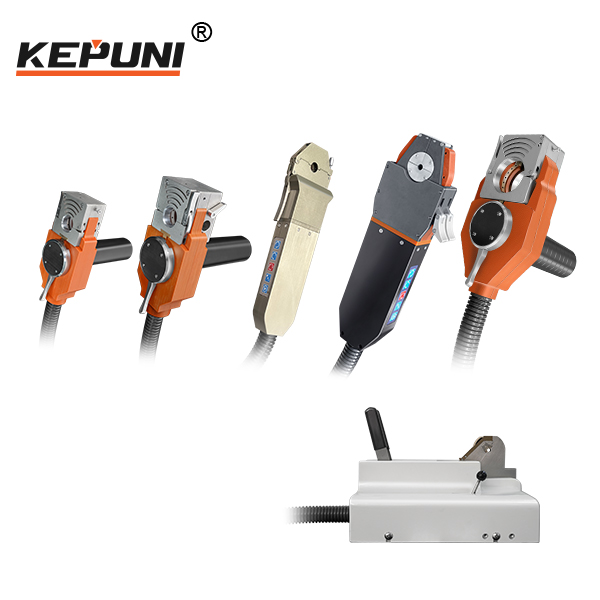
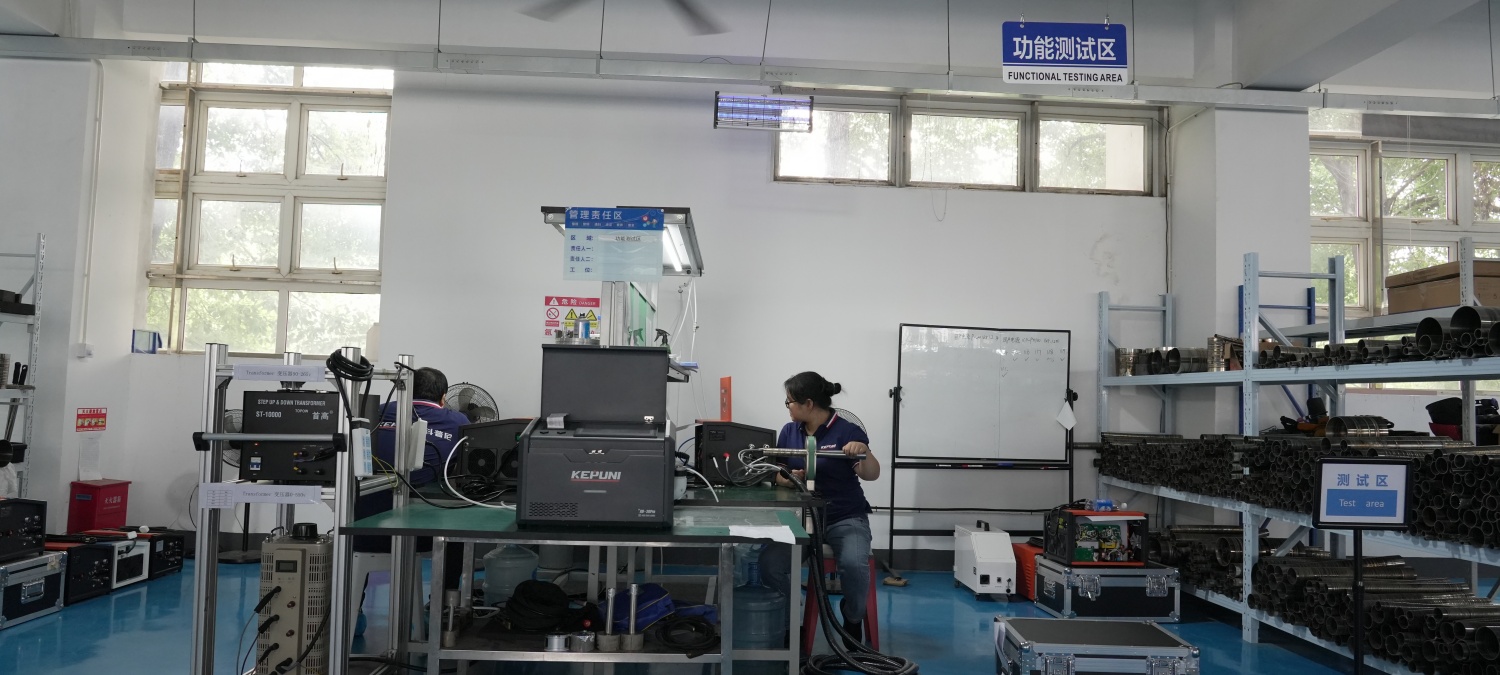
KEPUNI is an orbital welding equipment brand of Shanghai Chuanli Industrial Co., Ltd., a Shanghai-based manufacturer founded in 2014 that designs and builds orbital welding machines, tube-to-tube-sheet welders, open pipe welders, cold welders, and orbital cutters. Its production park covers 10,000 m² and employs approximately 280 people, including 36 R&D engineers and technicians, with an annual production capacity of 3,000 pieces. The business is export-oriented — exports account for more than 100% of sales — and the equipment installed across Europe, Asia, South America, North America, and the Middle East.
The Real Constraint: You Cannot Re-Cut, Rotate, or Contaminate the Line
A cleanroom or sanitary weld is not chosen on a workbench. It is chosen at a joint that already sits inside a classified room, a process skid, a wall penetration, or a ceiling void. That single fact reshapes head selection in three ways.
- Access geometry. A closed head is a full ring. It has to pass over a free pipe end to reach the joint. When the tube is already fixed between two fittings, a valve and a wall, or a rack and a ceiling grid, there is no free end to slide a ring onto. A split head opens into two halves and is clamped around the tube in place.
- Thin-wall heat control. The sanitary and high-purity heads in this equipment class are rated to a maximum wall thickness of 1.5 mm. At that thickness, hand-held TIG becomes a defect-generation exercise: burn-through, sugaring, and uneven penetration are the normal outcomes. An automated orbital arc with controlled rotation speed and current produces a repeatable bead on thin-wall stainless.
- Environment and documentation. The weld must satisfy the contamination rules of the room — particle limits for semiconductor work, hygienic design for food and pharma — and it must produce records that survive an audit. Documentation is part of the specification, not an afterthought.
These three constraints explain why the head, rather than the power supply, is usually the deciding purchase. One power supply can drive several heads. A head that cannot physically be installed on the joint stops the project.
Why Demand Is Concentrating on High-Purity Piping
The global orbital welding machine market was valued at approximately USD 1.32 billion in 2024 and is projected to reach USD 2.07 billion by 2030, according to Strategic Market Research. Scope changes the number — a narrower definition covering primarily heads and power sources puts the 2025 figure closer to USD 0.83 billion — but both readings point in the same direction: expansion, not contraction.
Two structural facts matter more to a buyer than the headline size. First, the oil and gas sector held over one-third of the market in 2024, which means the broad industrial base of orbital welding is still dominated by large-diameter, heavy-wall work. Second, within that market, high-purity piping for the semiconductor and pharmaceutical industries is identified as the fastest-growing application segment, driven by stringent contamination-control requirements. Sanitary and cleanroom welding is the growth edge of a mature category.
The regulatory pull is equally clear. Orbital welding is standard in pharmaceutical manufacturing because it complies with FDA guidelines for drug manufacturing processes, producing clean welds with minimal contamination risk. Meanwhile, closed-head designs are commonly used in cleanroom environments precisely because they shield the weld pool from atmospheric contamination during high-purity Gas Tungsten Arc Welding (GTAW).
On the supply side, the welding equipment base keeps shifting toward Asia Pacific, which accounted for a 37.0% revenue share as of 2025, while the U.S. market is forecast to grow at a CAGR of 4.2% from 2026 to 2033. Buyers specifying cleanroom heads now routinely evaluate Asian manufacturers alongside established names such as Lincoln Electric, ESAB (Colfax), Swagelok, AMI (Arc Machines, Inc.), and Polysoude.
Split Heads and Closed Heads: The Mechanical Difference That Decides the Match
The decision is not about quality tiers. It is about whether the head can physically reach the joint, and whether the tube dimensions fall inside the published envelope. KEPUNI publishes the following ranges for its sanitary and high-purity head families.
5H Series — 3.175–15.88 mm OD for Semiconductor, Pharmaceutical, and Biotechnology
The 5H Series is a split-type weld head covering pipe diameters from 3.175 mm to 15.88 mm with a maximum wall thickness of 1.5 mm, constructed from steel and alloy. It is the smallest-bore head in the split family, and its 3.175 mm lower limit is what makes it the appropriate choice for the sample lines, instrument tubing, and small-bore distribution runs found in ultra-pure gas and water systems. Its specified industries are semiconductor, pharmaceutical, and biotechnology.
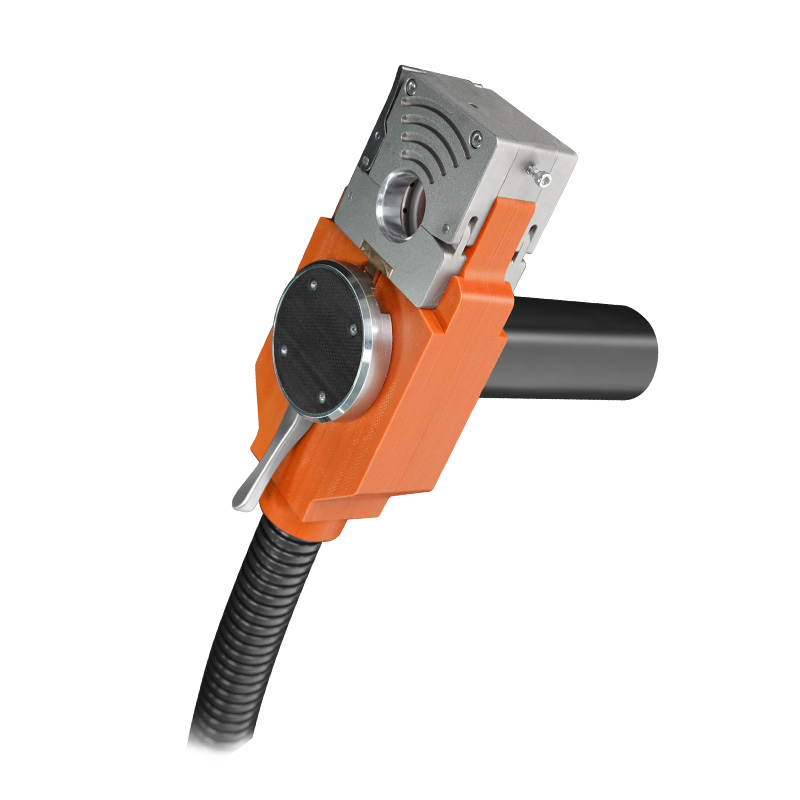
10H Series — 6.35–25.4 mm OD for Pharmaceutical, Food and Beverage, and Chemical
The 10H Series is also a split-type weld head, spanning 6.35–25.4 mm OD at a maximum wall thickness of 1.5 mm. Its specified industries are pharmaceutical, food and beverage, and chemical. It overlaps the 5H between 6.35 mm and 15.88 mm, which means the overlap zone should be decided by environment and documentation requirements rather than by diameter alone — hygienic design and audit readiness for food and pharma service, particle and moisture control for semiconductor service.
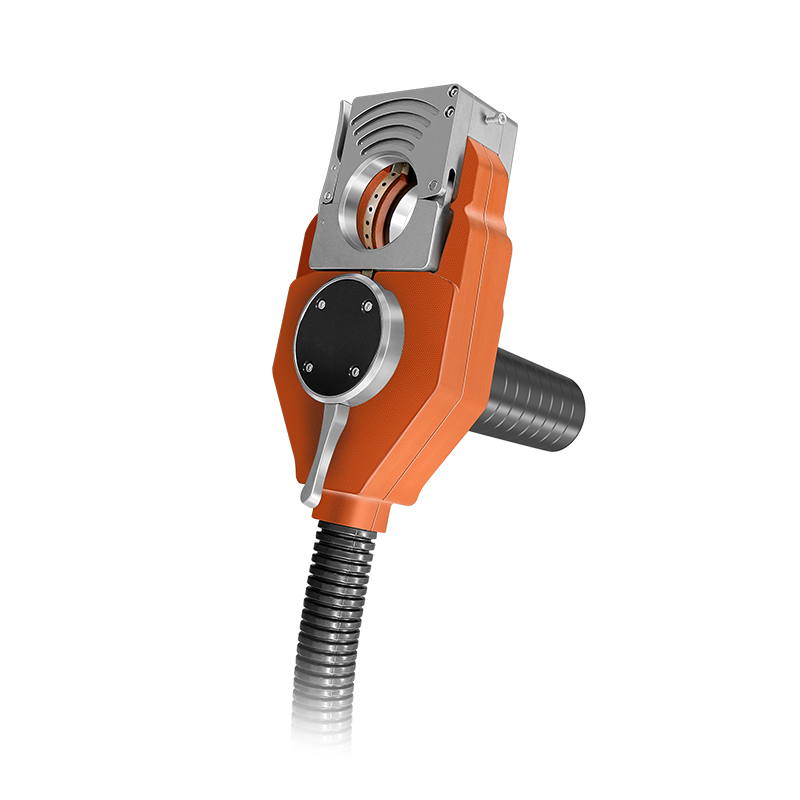
XD-Split Type Weld Head — 3.175–25.4 mm OD for HVAC, Plumbing, and Field Service
The XD-Split Type Weld Head is the widest split head in the range, covering 3.175–25.4 mm OD at ≤1.5 mm wall, and is specified for HVAC, plumbing, and field service work. For contractors who service multiple line sizes on one site, it removes the need to carry several narrow-range heads. Its steel and alloy construction and split geometry suit stainless pipe welding in water treatment environments, where new installation and repair work both occur.
When a Closed Head Is Still the Right Answer — 6.35–168 mm OD
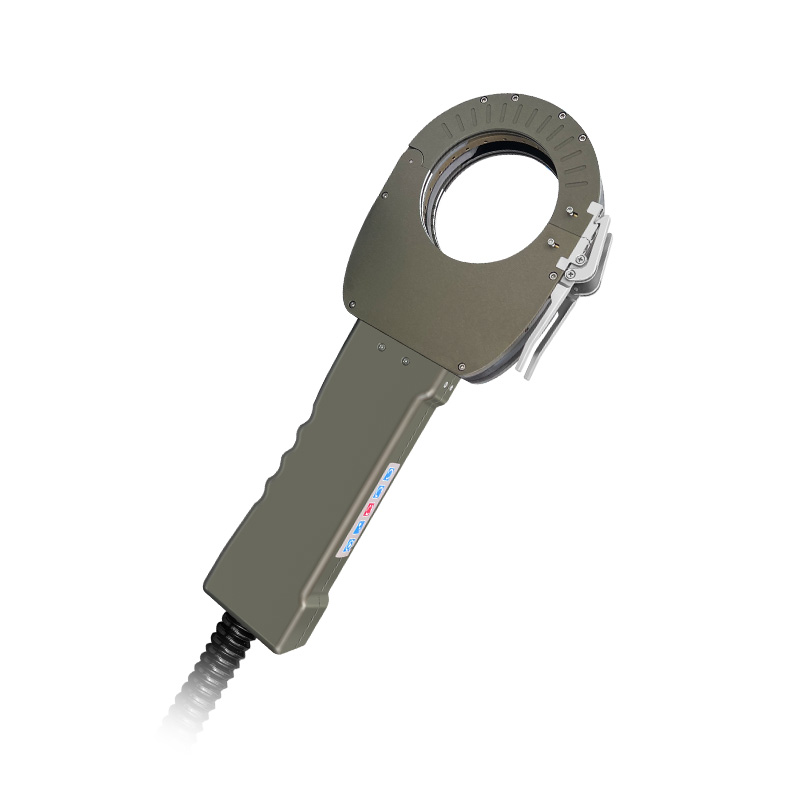
The 40/80/120/170 Series is a closed weld head family covering 6.35–168 mm OD at a maximum wall thickness of 3 mm, specified for oil and gas, power generation, and chemical processing. If the spool can be positioned with a free pipe end, and if atmospheric shielding around the arc is the priority, a closed head remains the conventional and often preferred solution. It also covers diameters far beyond the split head range, so for higher-volume process piping it is simply the only available option.
Power Supply Pairing: XD-20W and XD-20PRO
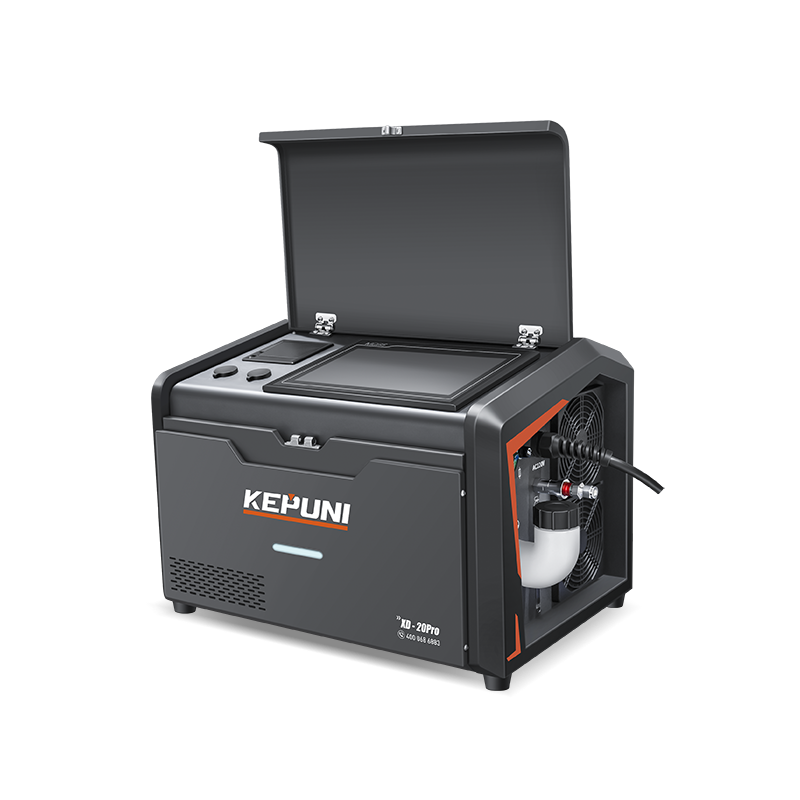
Both the XD-20W and the XD-20PRO are classified as pipe welding power supplies, and both cover 3.175–168 mm OD with a wall thickness range of 0.5–3 mm. The XD-20PRO lists semiconductor, pharmaceutical, food and beverage, oil and gas, and chemical applications; the XD-20W lists pharmaceutical, semiconductor, and chemical processing. Either unit therefore spans the entire split-head range and the closed-head range. Heads are the variable in a sanitary specification; the power supply is the constant.
Heads That Do Not Belong in a Sanitary Specification
Two clarifications prevent mis-specification at the quotation stage. First, the open pipe welding machine range — the K Series and XD-K Series, covering 19–325 mm OD (K Series to 325 mm and above) at 2.5–13 mm wall and up to 500 A — is built for oil and gas, pipeline construction, shipbuilding, and petrochemical work, not for 1.5 mm sanitary tubing. Second, tube-to-tube-sheet welding is a different joint type entirely: the TB-35 Series handles tube OD 4.5–35 mm at ≤2.5 mm wall, and the TB-65 Series handles 8–65 mm at ≤5 mm wall, for heat exchangers, boilers, and condensers. Neither replaces a sanitary butt-weld head.
Step-by-Step: Matching a Weld Head in Five Decisions
- Measure the actual tube, not the nominal size. Take the real OD and the real wall thickness from the installed material. Sanitary tubing schedules do not always match the nominal designation, and every head range in the table above is expressed in millimetres of actual OD.
- Decide whether the head must be split. Ask one question: is there a free pipe end that a closed ring can pass over? If the joint sits between fixed fittings, in a rack, against a wall, or inside a ceiling void, the specification moves to a split-type head. If a free end exists and atmosphere control around the pool is the priority, a closed head remains valid.
- Apply the environment class and its documentation requirements. Each environment carries its own listed requirements — semiconductor: SEMI F57 and Class 1 cleanroom compatibility, with ultra-pure gas piping and DI water systems running 24/7; pharmaceutical: 3A Sanitary Standard, FDA compliance, EU GMP, and full documentation, on WFI piping and CIP/SIP systems in batch production; food and beverage: EHEDG certification, no dead leg design, and readiness for USDA/FDA audits; chemical and petrochemical: ATEX/IECEx where required, API standards, and NACE compliance; water treatment and HVAC: an ISO 9001 quality system, pressure vessel standards, and WRAS approval. The documentation obligation follows the head into the purchase order.
- Shortlist by OD, then confirm the wall. Match the measured OD to the head envelope, then verify that the wall sits inside the rating — 1.5 mm maximum for the 5H, 10H, XD-Split, and XD-U families, 3 mm maximum for the closed 40/80/120/170 Series.
- Pair the head with a power supply that covers the whole envelope. Because the XD-20W and XD-20PRO both span 3.175–168 mm OD and 0.5–3 mm wall, a single power supply can drive the small-bore split heads and larger closed heads on the same site, which simplifies training, spares, and weld programs.
Use Cases by Facility Type
Pharmaceutical — WFI Piping and CIP/SIP Systems
Pharmaceutical service combines the tightest geometry with the heaviest documentation. The application operates on pure water (WFI) piping and CIP/SIP systems in batch production, and the weld must deliver aseptic joining, 100% leak-proof joints, and traceability, against requirements that include the 3A Sanitary Standard, FDA compliance, EU GMP, and full documentation. Supporting equipment typically includes valves, filters, tanks, fittings, and piping. In new-installation work the tube can sometimes be positioned for a closed head; in retrofit work, where lines are cut in place next to existing equipment, the 10H Series at 6.35–25.4 mm OD or the 5H Series at 3.175–15.88 mm OD covers the sanitary range at ≤1.5 mm wall.
Semiconductor — Ultra-Pure Gas and DI Water
Semiconductor facilities run UPG piping and DI water systems in 24/7 mode, with the function of ensuring high-purity joints and preventing particle contamination, and with supporting equipment such as mass flow controllers, VCR fittings, filters, and diaphragm valves. The environment requirement is SEMI F57 cleanliness with Class 1 cleanroom compatibility — a standard that punishes any weld defect with a particle excursion. The 5H Series, starting at 3.175 mm OD, covers the small-bore lines where this risk concentrates.
Food and Beverage — Milk, Juice, and Beer Lines
Food and beverage piping must deliver hygienic pipe connection with a zero contamination guarantee in continuous production. The fluids involved — milk, juice, beer, and other beverages — and the special requirements of EHEDG certification, a no dead leg design, and readiness for USDA/FDA audits, all push toward fully penetrated, crevice-free welds. The 10H Series, specified for pharmaceutical, food and beverage, and chemical service, matches that brief at 6.35–25.4 mm OD and ≤1.5 mm wall.
Chemical and Petrochemical — Process Piping and Aggressive Media
Chemical process piping handles aggressive media in continuous operation, where the joint must be corrosion-resistant and zero-leak, with requirements that include ATEX/IECEx where applicable, API standards, and NACE compliance. Diameters here are usually larger and walls thicker, which moves the specification toward the closed 40/80/120/170 Series using the same 0.5–3 mm wall power supplies.
HVAC, Plumbing, and Field Service
Field service is the environment where the split head proves its value most directly. The XD-Split Type Weld Head covers 3.175–25.4 mm OD at ≤1.5 mm wall for HVAC, plumbing, and field service applications, and the same geometry supports stainless pipe welding in water treatment work on both new installation and repair projects, under requirements that include an ISO 9001 quality system, pressure vessel standards, and WRAS approval.
Weld Head Specification Comparison
The table below reproduces the published specifications. All heads listed are constructed from steel and alloy.
| Model / Series | Head type | Pipe or tube OD | Wall thickness | Specified industries |
|---|---|---|---|---|
| 5H Series | Split type weld head | 3.175–15.88 mm | ≤1.5 mm | Semiconductor, pharmaceutical, biotechnology |
| 10H Series | Split type weld head | 6.35–25.4 mm | ≤1.5 mm | Pharmaceutical, food & beverage, chemical |
| XD-Split Type Weld Head | Split type weld head | 3.175–25.4 mm | ≤1.5 mm | HVAC, plumbing, field service |
| 40/80/120/170 Series | Closed weld head | 6.35–168 mm | ≤3 mm | Oil & gas, power generation, chemical processing |
| XD-U Series | U-tube weld head | 9–25 mm | ≤1.5 mm | Heat exchangers, boilers, condensers |
| XD-20W | Pipe welding power supply | 3.175–168 mm | 0.5–3 mm | Pharmaceutical, semiconductor, chemical processing |
| XD-20PRO | Pipe welding power supply | 3.175–168 mm | 0.5–3 mm | Semiconductor, pharmaceutical, food & beverage, oil & gas, chemical |
Frequently Asked Questions
Which weld head should be specified for FDA- and GMP-regulated pharmaceutical piping?
Pharmaceutical service carries specific compliance requirements — the 3A Sanitary Standard, FDA compliance, EU GMP, and full documentation — with welds made on pure water (WFI) piping and CIP/SIP systems in batch production, where the joint must be aseptic, 100% leak-proof, and traceable. The 10H Series split-type weld head, rated 6.35–25.4 mm OD at ≤1.5 mm wall, is specified for pharmaceutical, food and beverage, and chemical applications. Where the line is smaller than 6.35 mm OD, the 5H Series covers 3.175–15.88 mm OD at ≤1.5 mm wall and is specified for semiconductor, pharmaceutical, and biotechnology service. Both are built from steel and alloy. Orbital welding itself is standard in pharmaceutical manufacturing because it complies with FDA guidelines for drug manufacturing processes and produces clean welds with minimal contamination risk.
Can a split weld head be used on a line that cannot be rotated or disconnected?
Yes — that is precisely the purpose of a split-type head. A closed head is a full ring that must pass over a free pipe end. A split head is clamped around the tube in two halves, so it can be installed at a joint that is already fixed between fittings, inside a rack, or close to a wall. Standard cleanroom practice often favours closed-head designs because they protect the weld pool from atmosphere contamination during high-purity GTAW, so the split head is the answer when access, rather than atmosphere, is the limiting factor. The applicable ranges are 3.175–15.88 mm OD for the 5H Series, 6.35–25.4 mm OD for the 10H Series, and 3.175–25.4 mm OD for the XD-Split Type Weld Head, all at ≤1.5 mm wall.
What drives the cost of a cleanroom or sanitary orbital welding setup?
Three factors dominate: the number of head sizes required to cover the facility's OD envelope, the head design (split, closed, or U-tube), and the power supply plus documentation package. Because the XD-20W and XD-20PRO power supplies both cover 3.175–168 mm OD and 0.5–3 mm wall, one power supply can drive multiple heads, which is generally more cost-efficient than duplicating power sources across departments or sites. As a reference point rather than a price list, one recorded KEPUNI installation of two XD-20PRO units with accessories fell in a project value band of USD 18K–45K. A configuration quoted against a real tube schedule is more meaningful than a comparison of headline machine prices.
How do buyers validate that a specific head fits before ordering?
Compare the measured tube OD and wall thickness against the published specification, not against the nominal pipe size. Confirm three things: the OD falls inside the head envelope (3.175–15.88 mm for the 5H Series, 6.35–25.4 mm for the 10H Series, 3.175–25.4 mm for the XD-Split Type Weld Head, 6.35–168 mm for the closed 40/80/120/170 Series), the wall thickness sits within the rating of the selected family (≤1.5 mm for the sanitary split heads, ≤3 mm for the closed heads), and the paired power supply covers the same envelope (0.5–3 mm for the XD-20W and XD-20PRO). Specification documents are available for download, and the configuration can be confirmed against a customer tube schedule before an order is placed.
How early in a project should the weld head be fixed?
Before piping spool design is frozen. Head geometry determines how much clear space a joint requires, how far a weld can sit from a wall, ceiling grid, or adjacent valve, and whether a spool can be pre-fabricated or must be welded in place — so a head selected after installation drawings are released can force re-work. KEPUNI's business covers research and development, production, sales, and after-sales service, so head selection, power supply configuration, and documentation requirements can be handled against the same project. The catalog and specification material can be downloaded here: KEPUNI orbital welding catalog (PDF). Technical questions and configuration requests: info@kepuni.com.
Conclusion: Three Numbers and One Geometry Question
Matching a weld head to a cleanroom or sanitary application comes down to three numbers — the measured OD, the wall thickness, and the ratings printed in the specification — plus one geometry question: can a closed ring pass over a free pipe end? If it can, the closed 40/80/120/170 Series covers 6.35–168 mm OD at up to 3 mm wall with the atmosphere control that cleanroom practice favours. If it cannot, the split family does the work: the 5H Series from 3.175 mm OD for semiconductor, pharmaceutical, and biotechnology lines, the 10H Series from 6.35 mm OD for pharmaceutical, food and beverage, and chemical piping, and the XD-Split Type Weld Head from 3.175 mm OD across HVAC, plumbing, and field service work — all at a maximum wall thickness of 1.5 mm, all driven by power supplies that span the entire envelope.
Next Step
Send the tube schedule — measured OD, wall thickness, material, and the environment class (Class 1 cleanroom, WFI and CIP/SIP, hygienic food service, or chemical process) — and the head and power supply combination can be confirmed against published specifications before an order is placed.
Catalog download: KEPUNI orbital welding catalog (PDF)
Website: www.kepuni.com
Email: info@kepuni.com
Tel / WhatsApp: +86 18221803984
Address: No. 688 Jiaqian Road, Nanxiang Town, Jiading District, Shanghai, China
Have Questions or Need More Details?
Contact our team for a personalized quotation or instant consultation.
Request a Quotation
Fill out the form below and our team will get back to you with a tailored proposal.
WhatsApp Direct Chat
Prefer to chat in real-time? Message us on WhatsApp for instant assistance & quick answers.
- Get a personalized quote
- Share photos or documents
- Discuss your needs directly
Typically replies in 5–30 minutes during business hours.