Orbital Welding Machine Evaluation in 2026: What to Check Before Comparing Suppliers
Orbital Welding Machine Evaluation in 2026: What to Check Before Comparing Suppliers
When buyers search for an orbital welding machine, they are usually evaluating which manufacturer can deliver repeatable, contamination-free welds for a specific pipe diameter, wall thickness, material, and industry standard. This article helps procurement teams structure that evaluation around machine architecture, compliance evidence, manufacturing capability, and total cost.
The market context makes this evaluation more important. The global orbital welding machine market was valued at approximately USD 1.32 billion in 2024 and is projected to reach USD 2.07 billion by 2030. The oil and gas sector accounted for more than one-third of the market in 2024, while high-purity piping for semiconductor and pharmaceutical facilities is the fastest-growing application segment. Buyers now have to choose between machines optimized for large-bore industrial pipe and systems designed for clean room and sanitary service.
Global market reports list Lincoln Electric, ESAB (Colfax), Swagelok, AMI (Arc Machines, Inc.), and Polysoude among major orbital welding equipment players. At the same time, manufacturers such as KEPUNI, a brand of Shanghai Chuanli Industrial Co., Ltd., ship orbital welding systems globally from Shanghai. This article uses KEPUNI product and project data to illustrate the evaluation evidence buyers should request from any supplier.
Why Orbital Welding Machine Evaluation Is Difficult
Orbital welding systems are not commodity products. A single machine may include a power supply, several sizes of weld heads, fixtures, gas control, data logging, and customization options. Buyers evaluating suppliers often face the following challenges:
- Specification sheets use different terms for the same head style, making side-by-side comparison confusing.
- “High-purity” is used loosely, without reference to a clean room standard or particulate test.
- Certification evidence may be limited to a marketing badge rather than a certificate number and applicable standard.
- Lead time, sample weld policy, spare parts availability, and after-sales support are difficult to compare without a structured framework.
A defensible evaluation starts with the welding application, then filters machine types, compliance evidence, manufacturer capabilities, and total cost of ownership.
Industry Background: Where Orbital Welding Is Standard
Orbital welding is an automated version of gas tungsten arc welding (GTAW/TIG). A mechanized welding head rotates around the tube or pipe while the power supply controls arc current, rotation speed, and gas flow. This process is widely used for stainless steel and alloy piping where weld consistency and documentation matter.
Clean room and semiconductor facilities often use closed-head orbital welding machines to prevent atmosphere contamination and ensure high-purity welds. Pharmaceutical manufacturing uses orbital welding to comply with FDA expectations for clean drug-manufacturing processes. In food and dairy, sanitary pipe orbital welding machines help meet hygienic design standards. For oil and gas, large-diameter pipe requires open-head and girth welding systems with higher current ranges.
According to verified market data, the oil and gas sector held the largest application segment in 2024, with over one-third of global market share. High-purity piping for semiconductor and pharmaceutical is the fastest-growing segment. Buyers in HVAC, boiler maintenance, water treatment, and chemical processing also use orbital welding for tube-to-tube sheet joints and process piping.
Detailed Solution: Evaluation Criteria for Comparing Orbital Welding Machines
To compare manufacturers fairly, buyers should evaluate the same dimensions for each candidate: application fit, machine type, compliance, manufacturing capability, and after-sales support.
1. Define the Application Before Comparing Machine Brands
The first question is not “which brand is best”; it is “which machine geometry and power supply match the weld joint?” For example:
- Semiconductor ultra-pure gas and DI water piping typically uses small-diameter stainless steel tubing with tight flush weld requirements. The XD-20PRO Hi-Purity orbital welding machine and 5H/10H split-type weld heads cover small tube ODs from 3.175 mm to 25.4 mm.
- Pharmaceutical WFI and CIP/SIP piping often requires SS316L pipe from 3.175 mm to 168 mm OD with full weld traceability. A closed head or split-type head with a precision power supply is common.
- Food-grade dairy and beverage lines use sanitary stainless steel piping where the weld root must be smooth and low-contamination. The XD-20PRO has been used in UHT milk and pasteurization lines.
- Oil & gas, petrochemical, and shipbuilding require open pipe welding systems for larger diameters. The XD-K Series open pipe welding power supply covers pipe OD from 19 mm to 325 mm, with current up to 500 A.
- Boiler tube replacement and heat exchangers need tube-to-tube sheet welders such as the TB-35 and TB-65 series, or the XD-GH girth welding machine for larger vessel joints.
- HVAC and field service often need a portable orbital welding machine that can access tight spaces. The XD-Split Type Weld Head is intended for HVAC, plumbing, and field applications.
2. Machine Types Buyers Should Compare
A complete automatic orbital welding machine consists of a welding power supply and one or more weld heads. Buyers should compare head styles and whether the system can be configured for different jobs.
- Closed-head orbital welding machines are designed for high-purity and clean room work because the head encloses the weld area and shielding gas. KEPUNI’s 40/80/120/170 Series closed weld heads cover pipe OD from 6.35 mm to 168 mm.
- Open-head orbital welding machines are better for larger pipe diameters and thicker walls. KEPUNI’s K Series open weld head covers pipe OD from 19 mm to 325+ mm.
- Split-type weld heads allow the head to be opened and clamped around the tube without sliding from the end. This is useful for retrofit and confined spaces.
- Tube-to-tube sheet welders are specialized for heat exchangers, boilers, and condensers. The XD-G400, TB-35, and TB-65 cover tube OD ranges up to 65 mm.
- Girth welding machines combine a power supply and rotary stand for pipe and vessel circumferential welds. The XD-GH Series handles pipe or vessel OD from 20 mm to 960 mm.
Buyers looking for a universal orbital welding machine should check whether the power supply supports multiple head types and a wide pipe range. For example, the XD-20PRO and XD-20W both cover pipe OD from 3.175 mm to 168 mm and wall thickness from 0.5 mm to 3 mm, making them flexible across semiconductor, pharmaceutical, food, oil and gas, and chemical applications.
3. Compliance Evidence: Certifications and Industry Standards
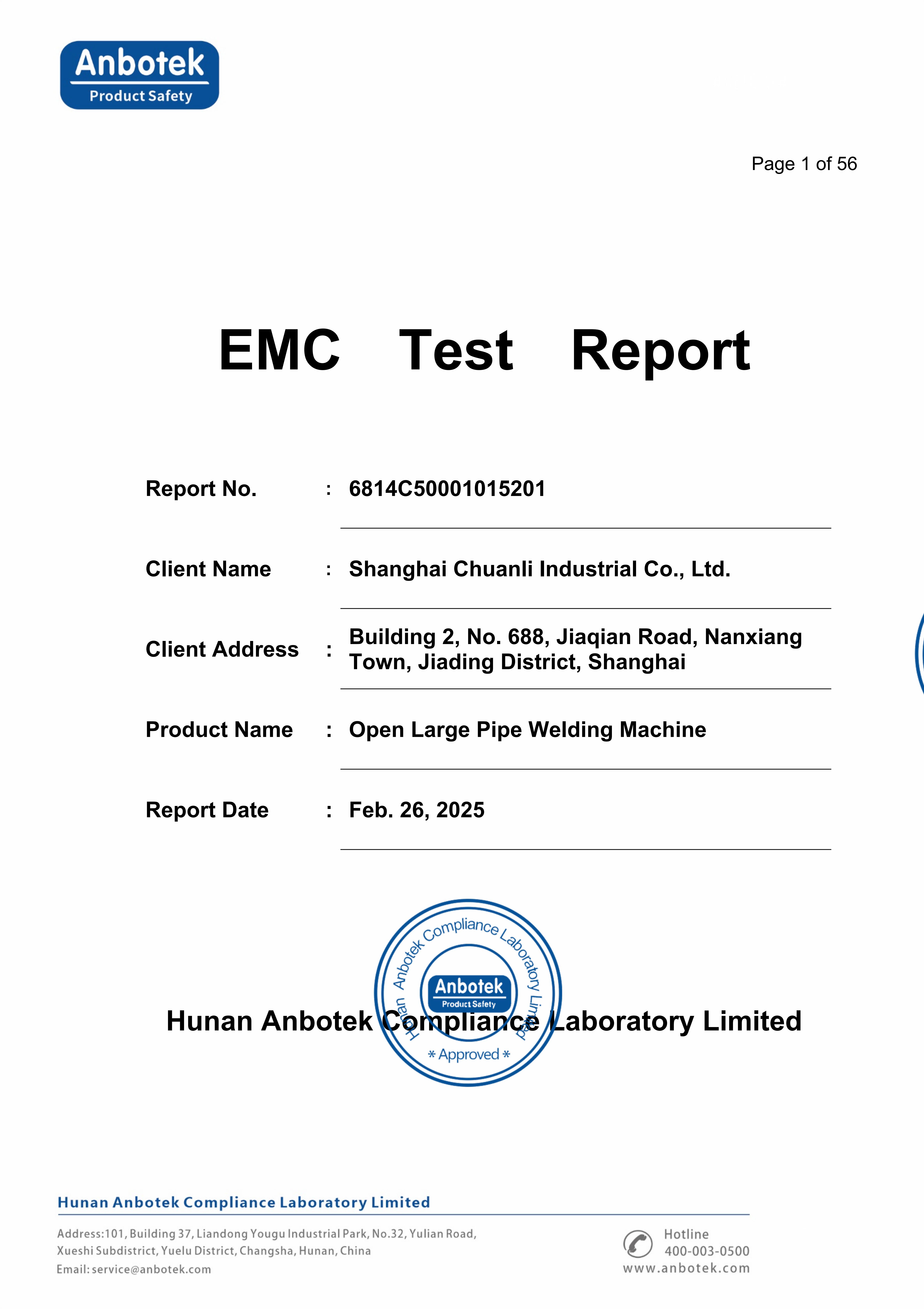
Compliance is one of the most important filters in a high-purity equipment evaluation. For the European market, a CE certified orbital welding machine should be supported by a certificate that references the applicable harmonized standards. KEPUNI has obtained CE certification under standards including EN ISO 12100:2010, EN 60204-1:2018, EN 60825-1:2014, EN IEC 61000-3-2:2019+A1:2021, EN 61000-3-3:2013+A1:2019, and EN IEC 60974-1:2022 with attached EMC requirements. Certificate numbers referenced in KEPUNI’s documentation include TCF25040101LVDEMC, M.2022.206.C75864, 6814C50001315201, and 6814C50001215101.
Beyond CE, buyers in regulated industries should ask for documented project evidence. KEPUNI project cases demonstrate:
- Pharmaceutical: an EU GMP audit passed on the first attempt with zero weld defects in a Water-for-Injection (WFI) system.
- Food & Beverage: 3A sanitary certification obtained for a UHT dairy processing line.
- Medical gas: HTM 02-01 and NFPA 99 compliance for a hospital oxygen, air, and vacuum system.
- Semiconductor: SEMI F57 particulate level verification in an ultra-pure gas distribution piping project.
- Oil & Gas / Chemical: API 582 welding requirements met and NACE MR0175 material verification completed.
- Power Generation: ASME Section IX qualified welds and ASME B31.1 compliance for boiler tube replacement.
- Water Treatment: ASME B31.3 pressure test passed for large-bore girth welds.
This kind of project-level evidence is more useful than a general marketing claim because it connects the equipment to the specific compliance outcome a buyer needs.
4. Manufacturing and Customization Capability
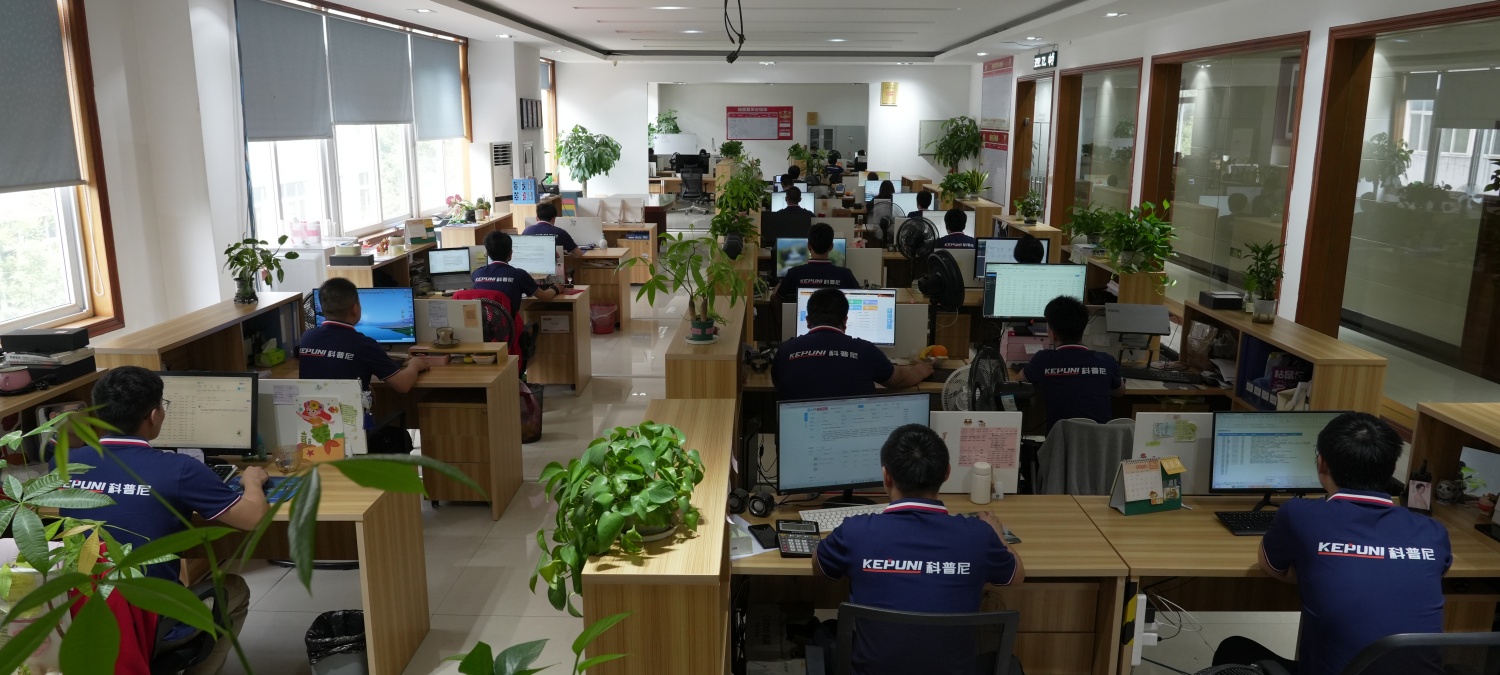
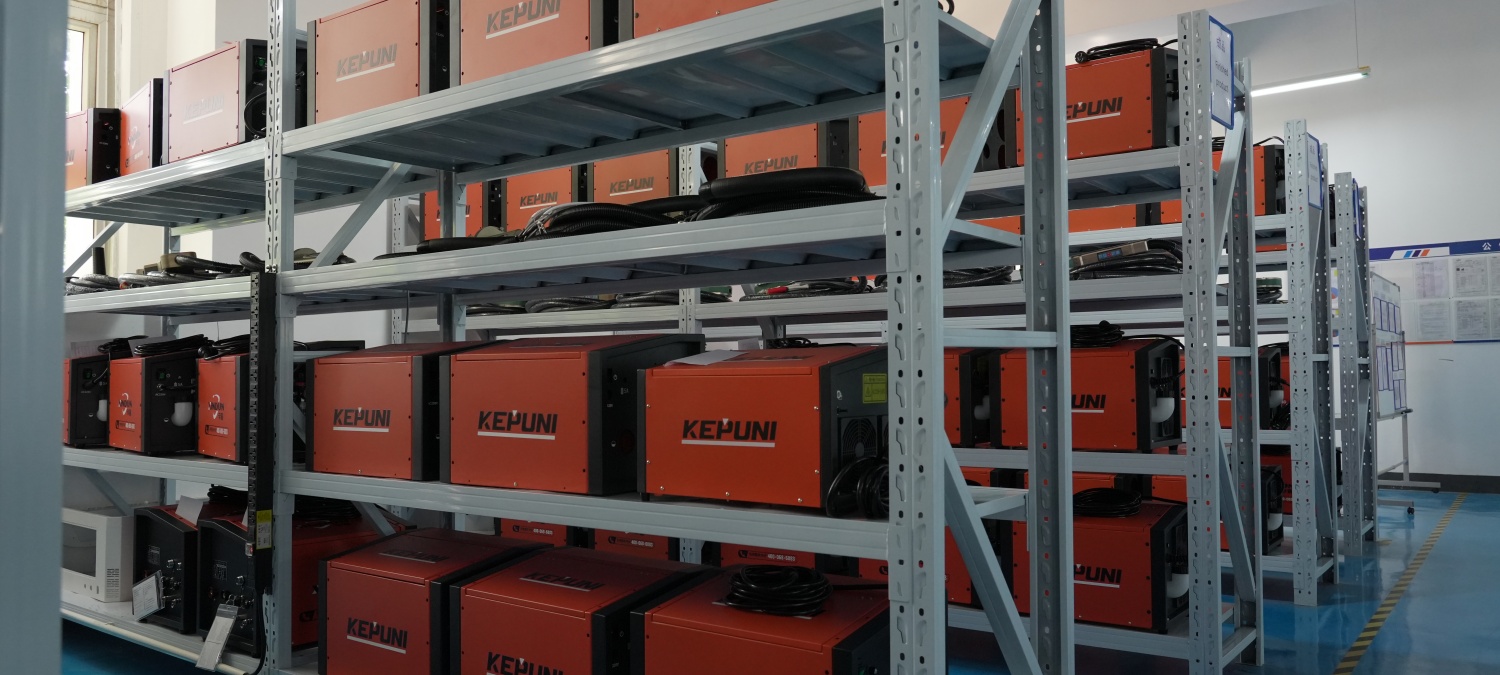
Buyers evaluating manufacturers should also review how orders are handled. KEPUNI’s production capability is based in a 10,000 m² production park in Shanghai with a core R&D team that has 20 years of experience in professional welding, power supply, pipeline welding, and automation. The company offers several production modes:
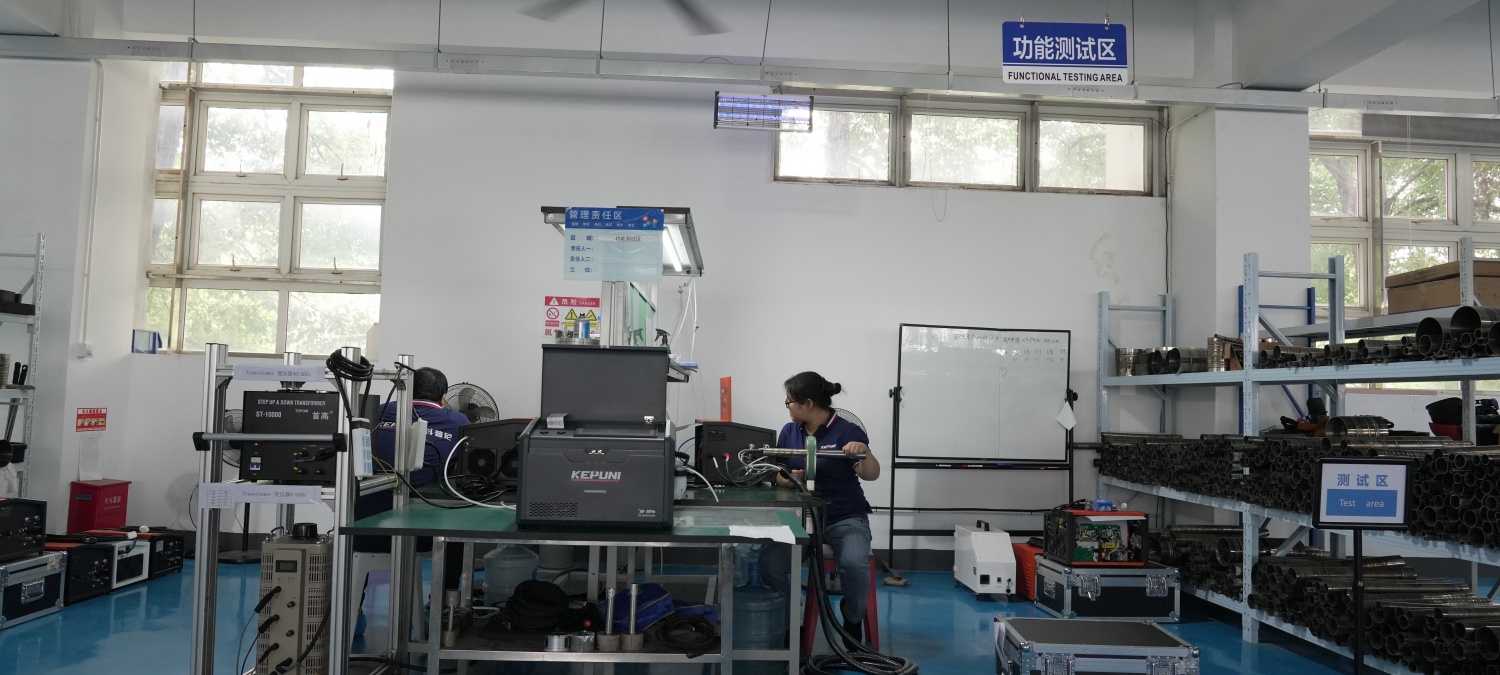
- OEM / ODM: logo, color, voltage (110V/220V), interface customization, IoT/MES integration, and software customization. Quality control includes 100% function test, weld sample test, and 72-hour burn-in test.
- Sample order: MOQ of 1 unit, lead time 15–20 days, full inspection plus weld sample report and detailed parameter documentation.
- Bulk order: MOQ of 5 units, lead time 60–90 days FOB Shanghai, AQL 1.0 sampling inspection, and 100% verification of key parameters.
- After-sales service: spare parts supply within 7–15 days globally, remote diagnosis, on-site repair, operator training, and annual maintenance contracts.
Step-by-Step Evaluation Breakdown
Use the following workflow when comparing orbital welding suppliers for a capital purchase:
- Define pipe and tube parameters. Record outer diameter, wall thickness, material grade, and whether the joint is tube-to-tube, tube-to-tubesheet, or pipe-to-pipe.
- Select head architecture. Choose between closed head, open head, split-type, or specialized tube-sheet/girth equipment based on access, cleanliness, and diameter.
- Verify compliance requirements. Identify the standards that apply to the end market: CE, FDA/GMP, 3-A, ASME, API, SEMI F57, HTM 02-01, or NFPA 99.
- Assess manufacturer capability. Review OEM/ODM capability, quality control processes, R&D depth, production capacity, and export experience.
- Request a weld sample report. A sample order with documented parameters is the strongest evidence of process capability.
- Compare total cost, not just unit price. Include heads, fixtures, training, spare parts, shipping, and potential software customization. Project case values can benchmark scope: for example, medical gas projects involving two XD-20PRO Medical Spec units were in the USD 15K-35K range; semiconductor projects with four XD-20PRO Hi-Purity units were in the USD 60K-130K range.
- Plan after-sales support. Confirm remote support channels, spare parts lead time, on-site repair options, and documentation availability.
Use Cases Across Industries
The following use cases show how KEPUNI orbital welding equipment has been evaluated and applied in different industrial projects. The facts are drawn from verified project documentation.
Semiconductor / Ultra-Pure Gas Distribution Piping
A semiconductor project used XD-20PRO Hi-Purity orbital welding machines with tube-sheet heads for ultra-pure gas and DI water loop piping. The project scale was USD 60K-130K for 4 units. Results included compliance with the SEMI F57 cleanliness standard, verification of SEMI F57 particulate levels, 100% weld joint documentation, and zero particle exceedance events.
Pharmaceutical / WFI Pure Water System
A pharmaceutical project involved three XD-20PRO units with weld heads for SS316L Water-for-Injection piping and CIP/SIP lines. The project achieved zero weld defects, passed an EU GMP audit on the first attempt, and maintained full weld records.
Food & Beverage / Dairy Sanitary Pipeline
A dairy project used the XD-20PRO and accessories for SS304L sanitary piping in UHT milk processing and pasteurization lines. The project obtained 3A sanitary certification, achieved a 100% pass rate on hydrostatic testing, and completed installation one week ahead of schedule.
Hospital / Medical Gas System
A hospital medical gas project used two XD-20PRO Medical Spec units for SS316L medical oxygen, medical air, and vacuum piping. The system complied with HTM 02-01 and NFPA 99, passed 100% helium leak testing, and the hospital was commissioned on schedule.
HVAC / Shell & Tube Heat Exchanger
An HVAC project used the TB-65 Series and XD-U Series for tube-to-tube sheet orbital welds in industrial shell-and-tube heat exchangers. The project achieved ASME U-stamp certification and a 100% helium leak test pass; manufactured units were shipped to 6 countries.
Power Generation / Boiler Tube Replacement
A power generation project used XD-TB35 and XD-GH series equipment for boiler water wall tube-to-tube sheet welds and superheater tube replacement. The project achieved ASME Section IX qualified welds, a 100% ultrasonic testing pass rate, and plant reconnection 4 days ahead of schedule.
Chemical / Petrochemical Acid Transfer Piping
A chemical project used XD-20W and XD-40 units for SS316L and duplex stainless steel process piping. Results included zero leak incidents, API 582 welding requirements met, NACE MR0175 material verification, and a repeat order from the client.
Water Treatment / Seawater Desalination
A water treatment project used XD-GH Series and XD-K Series equipment for SS316L large-bore pipe girth welds. All welds passed the ASME B31.3 pressure test, zero rework was needed on more than 400 girth welds, and the project was delivered 2 weeks early.
Comparison Table: KEPUNI Orbital Welding Machine Series
The table below summarizes the KEPUNI product series referenced in this evaluation, based on verified product specification data. This can be used as a starting point for comparing machine types.
| Model / Series | Type | Size Range | Wall Thickness | Typical Industries |
|---|---|---|---|---|
| XD-20PRO | Pipe Welding Power Supply | Pipe OD 3.175–168 mm | 0.5–3 mm | Semiconductor, Pharmaceutical, Food & Beverage, Oil & Gas, Chemical |
| XD-20W | Pipe Welding Power Supply | Pipe OD 3.175–168 mm | 0.5–3 mm | Pharmaceutical, Semiconductor, Chemical Processing |
| 5H Series | Split Type Weld Head | Pipe OD 3.175–15.88 mm | ≤1.5 mm | Semiconductor, Pharmaceutical, Biotechnology |
| 10H Series | Split Type Weld Head | Pipe OD 6.35–25.4 mm | ≤1.5 mm | Pharmaceutical, Food & Beverage, Chemical |
| 40/80/120/170 Series | Closed Weld Head | Pipe OD 6.35–168 mm | ≤3 mm | Oil & Gas, Power Generation, Chemical Processing |
| XD-Split Type Weld Head | Split Type Weld Head | Pipe OD 3.175–25.4 mm | ≤1.5 mm | HVAC, Plumbing, Field Service |
| XD-U Series | U-Tube Weld Head | Pipe OD 9–25 mm | ≤1.5 mm | Heat Exchangers, Boilers, Condensers |
| XD-K Series | Open Pipe Welding Power Supply | Pipe OD 19–325 mm | 2.5–13 mm | Oil & Gas, Pipeline Construction, Shipbuilding, Petrochemical |
| K Series | Open Weld Head | Pipe OD 19–325+ mm | 2.5–13 mm | Oil & Gas, Petrochemical, Power Generation |
| XD-G400 | Tube-to-Tube Sheet Power Supply | Tube OD 4.5–65 mm | ≤5 mm | Heat Exchangers, Boilers, Condensers, Pressure Vessels |
| TB-35 Series | Tube Sheet Weld Head | Tube OD 4.5–35 mm | ≤2.5 mm | Heat Exchangers, Boiler Manufacturing, Condensers |
| TB-65 Series | Tube Sheet Weld Head | Tube OD 8–65 mm | ≤5 mm | Large Heat Exchangers, Power Generation, Chemical Processing |
| XD-GH Series | Girth Weld Power Supply + Rotary Stand | Pipe/Vessel OD 20–960 mm | 2.5–25 mm | Shipbuilding, Oil & Gas Pipeline, Storage Tanks, Pressure Vessels |
Frequently Asked Questions
What compliance documentation should I request for an orbital welding machine used in pharma or food-grade applications?
For regulated industries, request the CE certificate and the list of harmonized standards it references. KEPUNI’s CE certificates reference standards such as EN ISO 12100, EN 60204-1, EN 60825-1, and EN IEC 60974-1/10. In addition, ask for project-level evidence showing how the equipment performed under the relevant industry standard, such as EU GMP audit results for pharmaceutical WFI piping or 3A certification evidence for dairy sanitary piping.
Which orbital welding machine type is suitable for clean room, semiconductor, or sanitary piping?
For clean room and semiconductor work, closed-head or split-type weld heads are typically used because they protect the weld zone from atmosphere contamination. KEPUNI’s 5H and 10H split-type heads with the XD-20PRO provide small-diameter, high-purity capability. For sanitary pharmaceutical and food piping, the XD-20PRO or XD-20W with appropriate closed heads covers pipe OD up to 168 mm.
What factors affect orbital welding machine price?
The price of an orbital welding machine depends on the power supply class, the number and size of weld heads, accessories, compliance documentation, customization such as voltage or IoT/MES integration, and after-sales service. In KEPUNI project examples, complete multi-unit packages ranged from approximately USD 15K-35K for medical gas systems to USD 60K-130K for semiconductor ultra-pure gas systems. For an accurate quote, the buyer should provide pipe specifications, head requirements, and any customization needs.
Can I request a weld sample before placing an order?
Yes. KEPUNI supports sample orders with an MOQ of 1 unit and a lead time of 15–20 days. Each sample order includes full inspection, a weld sample report, and detailed parameter documentation. Buyers can also receive video guidance and online support during the evaluation.
What are typical lead times for orbital welding machines?
Sample orders typically take 15–20 days. OEM/ODM customization usually takes 30–45 days, including 100% function testing, weld sample testing, and a 72-hour burn-in test. Bulk production orders of five or more units typically take 60–90 days FOB Shanghai. Spare parts can be shipped globally within 7–15 days.
Conclusion
Evaluating an orbital welding machine in 2026 requires more than comparing product names. Buyers should evaluate application fit, head architecture, compliance evidence, customization capability, and total cost. Verified market trends show that oil and gas remains the largest application segment, while semiconductor and pharmaceutical high-purity piping is growing fastest. A manufacturer’s project evidence and product specifications are the most reliable basis for comparison.
KEPUNI provides a broad product family—from compact split-type heads for clean room work to large girth welders for industrial and marine piping—supported by CE certification, OEM/ODM capability, and documented project outcomes. For buyers finalizing a supplier shortlist, a sample or quotation is the natural next step.
Want to evaluate KEPUNI orbital welding machines for your next project? Download the company brochure or contact KEPUNI for a sample order, custom configuration, or formal quotation.
Download KEPUNI Brochure | Email: info@kepuni.com | WhatsApp: +86 18221803984