Orbital Welding Machine Ownership FAQ: Long-Term Partnership, Service, and Acceptance
An orbital welding machine is rarely a single transaction. For regulated manufacturers in pharmaceutical, semiconductor, food and beverage, and power generation, equipment must pass acceptance, stay documented, and remain serviceable long after commissioning. The questions that decide whether a project succeeds or stalls usually arrive after the invoice, not before it.
This FAQ answers the ownership questions buyers raise most often — purchasing terms, acceptance criteria, and after-sales service — using verified specifications and qualification records from KEPUNI, an orbital welding machine manufacturer headquartered in Shanghai. It is written for procurement, engineering, and quality teams who need to judge not only whether a machine can weld their pipe, but whether the supplier can support it across the full lifecycle.
Why Ownership, Not Purchase, Determines Orbital Welding Success
The purchase decision is measured in weeks. The ownership decision is measured in years. Three failure points repeat across orbital welding projects, and each one surfaces only after delivery:
- Acceptance without agreed criteria. If the buyer has not defined what an acceptable weld looks like in advance, an inspector and a supplier can disagree indefinitely. In hygienic and high-purity work, acceptance is often expressed in measurable terms — for example, ASME BPE-2024 criteria for internal (ID) concavity in pharmaceutical welds is a maximum of 10% of nominal wall thickness, not exceeding 0.38 mm. A machine that cannot reliably repeat inside that band creates rework, not just debate.
- Validation on paper only. A datasheet states a diameter range; it does not prove the machine will produce a compliant weld on the buyer's actual material, wall thickness, and joint design. Without sample validation on representative material, qualification risk is transferred entirely to the buyer's first production run.
- Support that stops at the container. When a weld head needs service or a spare part in month eighteen, the practical question is how quickly support can reach the site — not how competitive the original quote was.
This is why the ownership FAQ below is organised around qualification and lifecycle support rather than around a single specification figure.
The Market and Compliance Context Buyers Face
Orbital welding demand is concentrated where weld quality is regulated and hard to inspect after the fact. Independent market research places the global orbital welding equipment market on a path toward approximately USD 1.34 billion by 2033, with open weld heads holding the largest share of the segment in 2025 at 43.1%. The semiconductor end-use segment alone dominated the market in 2025 at 20.1%.
Those figures matter to buyers for a simple reason: the industries driving demand — semiconductor, pharmaceutical, food and beverage — are the same industries where compliance documentation carries as much weight as the weld itself. A machine bought for a regulated line must help satisfy an audit, not complicate it. That is why acceptance criteria, traceable weld records, and certification travel together with the equipment.
Ownership rule of thumb: Judge an orbital welding supplier on the documents it hands over at acceptance and the support path it commits to afterward — not only on the headline price.
How KEPUNI Supports Long-Term Ownership
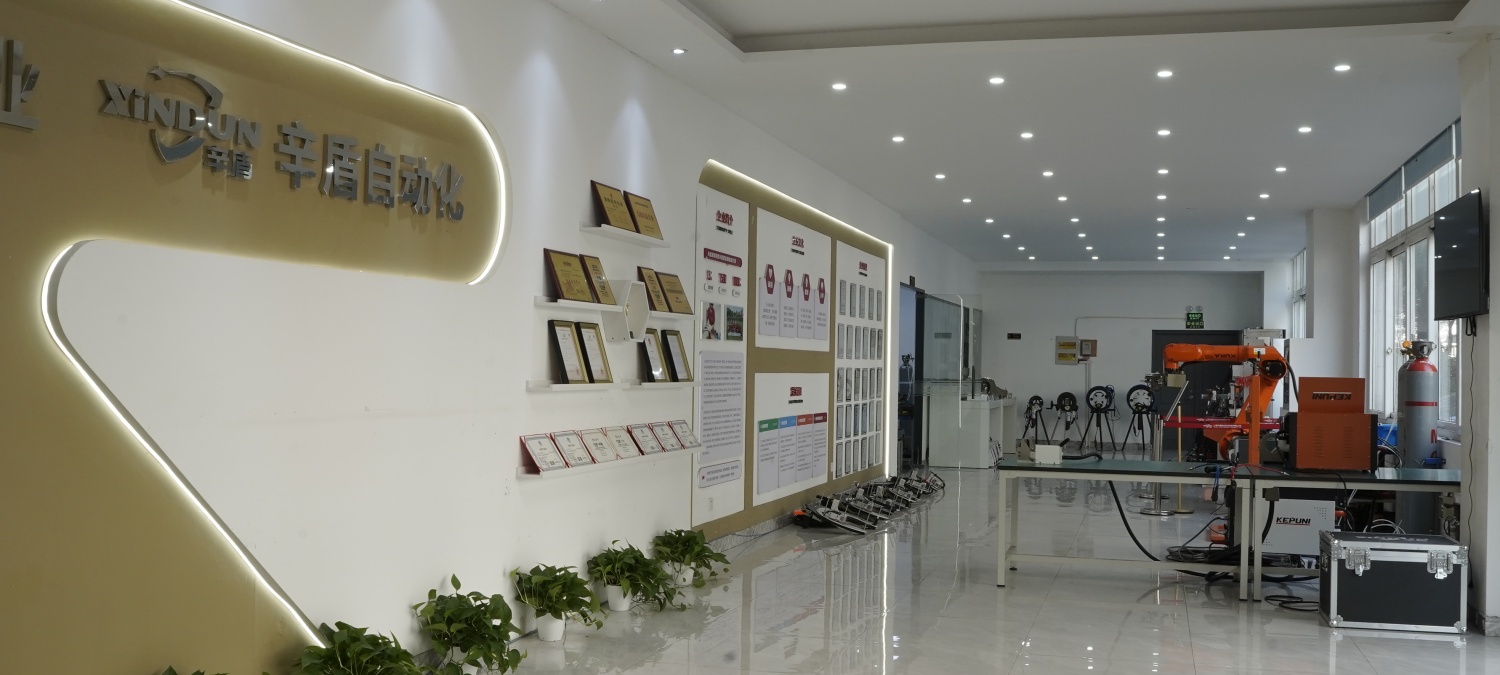
KEPUNI is a brand of Shanghai Chuanli Industrial Co., Ltd., a high-tech enterprise certified by the Ministry of Science and Technology of China. Founded in 2014, the company operates a 10,000 m² production park in Shanghai with 280 employees, including 36 R&D engineers and technicians, and reports a 20-year combined engineering background across its core welding and power-supply team. Production serves export markets in Europe, Asia, South America, North America, and the Middle East.
For ownership purposes, the range is organised into power supplies, weld heads, and application-specific machines, so a single supplier can cover a plant's widening requirements instead of forcing a new vendor relationship for every diameter.
Power supplies
- XD-20PRO — pipe welding power supply covering pipe OD 3.175–168 mm and wall thickness 0.5–3 mm, positioned for semiconductor, pharmaceutical, food and beverage, oil and gas, and chemical applications.
- XD-20W — pipe welding power supply covering pipe OD 3.175–168 mm and wall thickness 0.5–3 mm, positioned for pharmaceutical, semiconductor, and chemical processing.
Weld heads
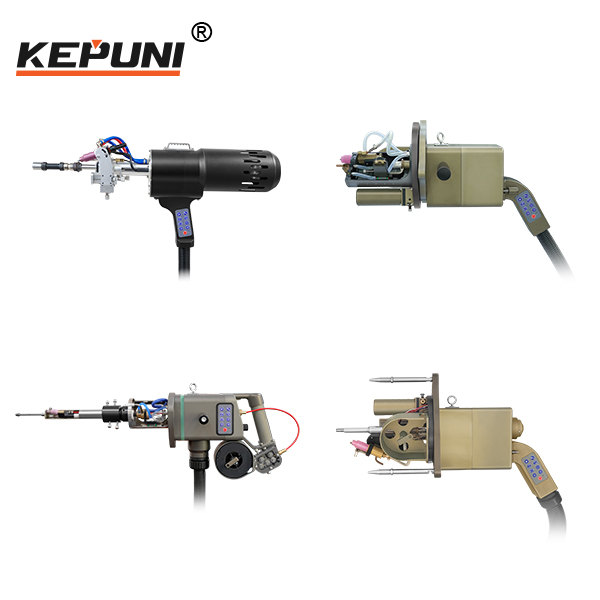
- 5H Series split type weld head — pipe OD 3.175–15.88 mm, wall thickness ≤1.5 mm (semiconductor, pharmaceutical, biotechnology).
- 10H Series split type weld head — pipe OD 6.35–25.4 mm, wall thickness ≤1.5 mm (pharmaceutical, food and beverage, chemical).
- 40/80/120/170 Series closed weld head — pipe OD 6.35–168 mm, wall thickness ≤3 mm (oil and gas, power generation, chemical processing).
- XD-Split Type Weld Head — pipe OD 3.175–25.4 mm, wall thickness ≤1.5 mm (HVAC, plumbing, field service).
- XD-U Series U-tube weld head — pipe OD 9–25 mm, wall thickness ≤1.5 mm (heat exchangers, boilers, condensers).
Application machines
- XD-GH Series girth welding machine — pipe/vessel OD 20–960 mm, wall thickness 2.5–25 mm, welding current 5–400 A (shipbuilding, oil and gas pipeline, storage tanks, pressure vessels).
- XD-K Series open pipe welding power supply — pipe OD 19–325 mm, wall thickness 2.5–13 mm, current 5–500 A.
- K Series open weld head — pipe OD 19–325+ mm, wall thickness 2.5–13 mm.
- TB-35 Series tube-to-tube sheet welder — tube OD 4.5–35 mm, wall thickness ≤2.5 mm.
- TB-65 Series tube-to-tube sheet welder — tube OD 8–65 mm, wall thickness ≤5 mm.
- XD-G400 tube-to-tube sheet power supply — tube OD 4.5–65 mm, wall thickness ≤5 mm, plate thickness varies.
Process control features include 12 programmed welding intervals and parameter logging or printing for welding-interval data — the kind of output that supports traceability during acceptance and audits.
Service capability
After-sales service covers spare parts supply within 7–15 days globally, remote WhatsApp/WeChat diagnosis, distributor on-site support, spare parts stock, on-site repair, operator training, and annual maintenance contracts. Fault handling follows a documented cycle: fault diagnosis report, repair confirmation, and customer sign-off.
Ownership Step by Step: From Qualification to Service
A transparent ownership path reduces surprises at acceptance. The sequence below reflects how KEPUNI's order and support model is structured.
Step 1 — Application qualification
Define the joint: pipe or tube outside diameter, wall thickness, material, and industry standard. This narrows the head type before price is discussed. Small stainless tubing in a cleanroom points toward the 5H or 10H split heads; larger process piping points toward the 40/80/120/170 closed heads or the XD-GH girth machine.
Step 2 — Specification freeze
Lock parameters, materials, and any customization such as logo, colour, voltage (110V/220V), interface, or IoT/MES integration. Recording the frozen specification creates the reference point for later acceptance.
Step 3 — Sample validation
Validate on representative material before committing to volume. KEPUNI's sample-order route carries a minimum order quantity of 1 unit, a 15–20 day lead time, and support for custom parameters, special materials (SS304, SS316, Titanium, Inconel), and non-standard sizes — delivered with full inspection, a weld sample report, and parameter documentation.
Step 4 — Acceptance against defined criteria
Acceptance should be agreed before delivery, referencing the applicable criteria — for example ASME BPE-2024 for hygienic ID concavity, or the pressure and cleanliness requirements relevant to the project. QA steps such as 100% function testing, weld sample testing, and 72-hour burn-in testing on OEM/ODM builds, plus AQL 1.0 sampling for bulk orders, give the buyer defined checkpoints.
Step 5 — Delivery and installation
Bulk-order lead time is 60–90 days (FOB Shanghai) with a minimum order quantity of 5 units, and installations can include supervision, a spare parts kit, and operator training.
Step 6 — Ongoing support
After commissioning, support continues through spare parts logistics, remote diagnosis, on-site repair where applicable, and annual maintenance contracts — the elements that convert a purchase into a maintenance relationship.
Where This Matters: Application Examples
Ownership load varies by industry, and the case records below show how application fit and qualification differ across segments.
Pharmaceutical and medical gas
For a hospital medical gas system using XD-20PRO equipment, the project reached compliance with HTM 02-01 / NFPA 99, achieved a 100% leak test pass, and the hospital was commissioned on schedule. In a separate pharmaceutical / WFI pure water project, results included 3A Sanitary Standard certification, zero contamination incidents, and a 100% pressure test pass rate.
Semiconductor and high-purity
A semiconductor client used orbital welding equipment for ultra-pure gas (UPG) distribution and DI water loop piping in a 28 nm process fab. The project met the SEMI F57 cleanliness standard with zero particle exceedance events and maintained uninterrupted FAB production.
Food and beverage
A dairy sanitary pipeline project using XD-20PRO equipment achieved 3A Sanitary Standard certification, zero contamination incidents, and a 100% pressure test pass — evidence relevant to audits where hygienic joint quality is inspected.
Power generation and boiler tube
In a boiler tube replacement context, orbital welding was applied to boiler water wall tube-to-tube sheet welds and superheater tube work in a thermal plant. Reported results included ASME Section IX qualified welds and a 100% ultrasonic testing (UT) pass rate — the type of acceptance metric that defines a shutdown-window outcome.
Large-diameter and water treatment
A seawater desalination project used XD-GH and XD-K Series equipment for SS316L large-bore girth welds. Reported outcomes included all welds passing ASME B31.3 pressure testing and zero rework across 400+ girth welds.

Cost and Configuration Comparison
Price in orbital welding tracks compliance positioning and configuration, not diameter alone. The table below contrasts the two segments most relevant to regulated buyers.
| Dimension | KEPUNI XD-20PRO (performance tier) | Premium EU/US compliance tier |
|---|---|---|
| Indicative unit price | Around USD 8,400–8,600 | Above USD 25,000–40,000+ |
| Typical positioning | Mid-to-high-end segment | Premium, industry-compliant segment |
| Primary target industries | Semiconductor, pharmaceutical, food and beverage, oil and gas, chemical | Pharmaceutical and semiconductor applications |
| Coverage | Pipe OD 3.175–168 mm; wall 0.5–3 mm | Varies by brand and configuration |
| What to verify | Acceptance criteria, traceability records, service path | Acceptance criteria, traceability records, service path |
Two cautions apply when reading this table. First, final price depends on configuration — power supply, number and type of weld heads, cooling, wire feed, training, warranty, and service. Second, the premium figure is a segment observation, not a fixed quotation, and configuration differences prevent a like-for-like inference without a matched request for quotation.
| Model / Series | Type | Pipe / Tube OD | Wall thickness |
|---|---|---|---|
| 5H Series | Split type weld head | 3.175–15.88 mm | ≤1.5 mm |
| 10H Series | Split type weld head | 6.35–25.4 mm | ≤1.5 mm |
| XD-Split Type | Split type weld head | 3.175–25.4 mm | ≤1.5 mm |
| XD-U Series | U-tube weld head | 9–25 mm | ≤1.5 mm |
| 40/80/120/170 Series | Closed weld head | 6.35–168 mm | ≤3 mm |
| XD-20PRO / XD-20W | Pipe welding power supply | 3.175–168 mm | 0.5–3 mm |
| XD-GH Series | Girth welding machine | 20–960 mm (pipe / vessel) | 2.5–25 mm |
| XD-K Series / K Series | Open pipe welding machine / open head | 19–325 mm | 2.5–13 mm |
| TB-35 Series | Tube-to-tube sheet welder | 4.5–35 mm (tube) | ≤2.5 mm |
| TB-65 Series | Tube-to-tube sheet welder | 8–65 mm (tube) | ≤5 mm |
| XD-G400 | Tube-to-tube sheet power supply | 4.5–65 mm (tube) | ≤5 mm |
Frequently Asked Questions
What certifications apply to KEPUNI orbital welding machines?
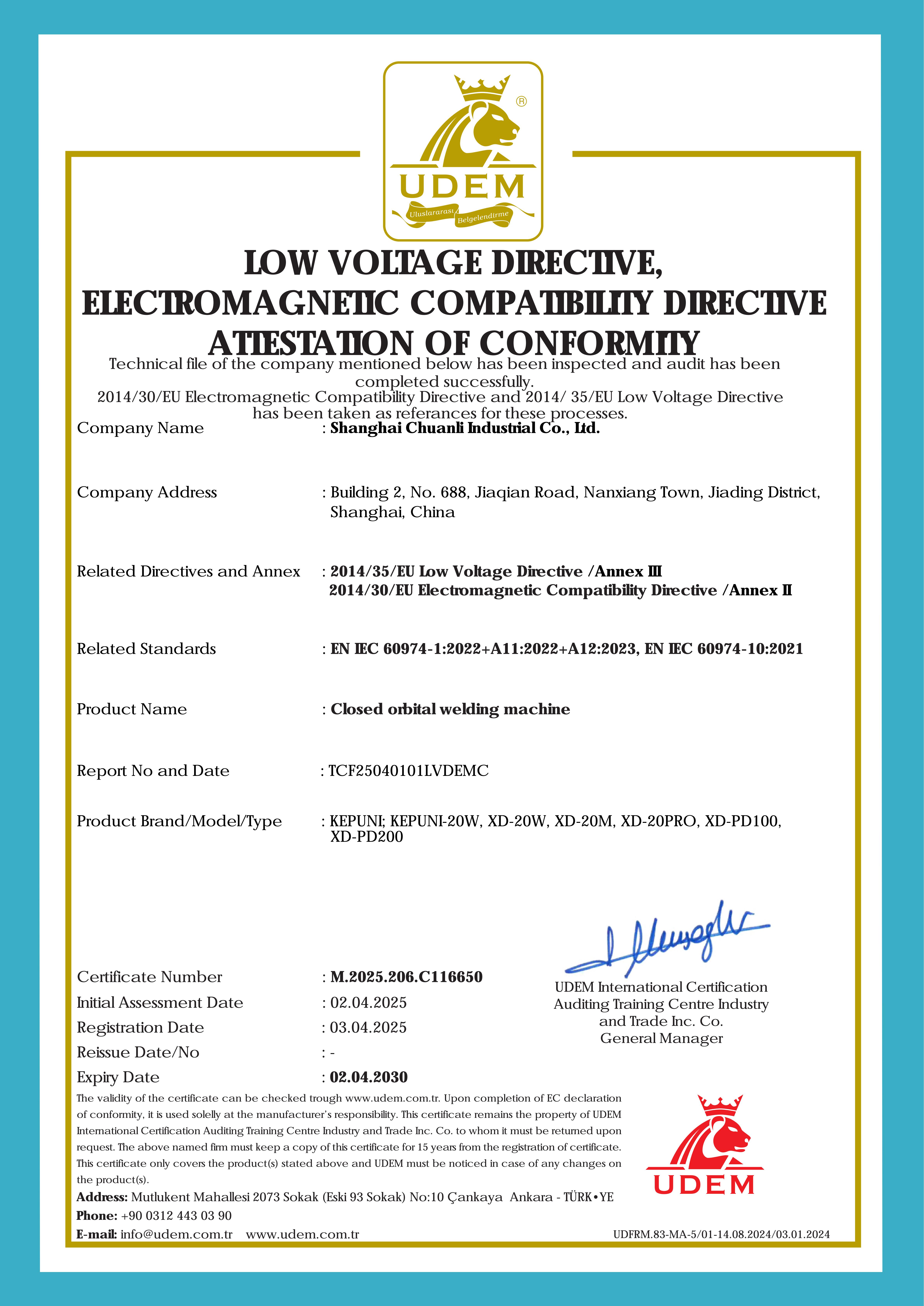
KEPUNI's orbital welding machines and heads hold CE certification for the EU market. The LVD/EMC certificate TCF25040101LVDEMC, issued by UDEM, covers EN ISO 12100:2010, EN 60204-1:2018, EN 60825-1:2014, EN IEC 61000-3-2:2019+A1:2021, and EN 61000-3-3:2013+A1:2019. Additional CE documentation includes M.2022.206.C75864 (UDEM), 6814C50001315201 (UDEM), and 6814C50001215101 (anbotek), covering EN IEC 60974-1:2022+A11:2022+A12:2023 and EN IEC 60974-10:2021. Buyers should confirm which certificate applies to their specific model and configuration before purchase.
How do I match a weld head to my pipe diameter and wall thickness?
Match the head type to the joint, not the other way around. For small stainless tubing, the 5H split head covers 3.175–15.88 mm OD (wall ≤1.5 mm) and the 10H split head covers 6.35–25.4 mm OD (wall ≤1.5 mm). For process piping, the 40/80/120/170 closed heads cover 6.35–168 mm OD (wall ≤3 mm). For larger structures, the XD-GH girth machine covers 20–960 mm OD (wall 2.5–25 mm) and the XD-K open pipe machine covers 19–325 mm OD (wall 2.5–13 mm). For heat exchanger work, the TB-35 covers 4.5–35 mm tube OD and the TB-65 covers 8–65 mm tube OD. Where a range overlaps, choose the head that best matches the dominant wall thickness and industry requirement.
What does an orbital welding machine cost?
KEPUNI positions the XD-20PRO in the mid-to-high-end segment at around USD 8,400 to 8,600. Premium industry-compliant solutions — often EU or US brands used in pharmaceutical and semiconductor work — are commonly positioned above USD 25,000 to 40,000. Final price depends on configuration: power supply, the number and type of weld heads, cooling, wire feed, shipping, training, warranty, and service. Because configuration differences are large, a matched quotation is the only reliable basis for comparison.
Can I validate a machine on my own material before ordering?
Yes. KEPUNI's sample-order route has a minimum order quantity of 1 unit and a 15–20 day lead time, with a monthly capacity of 20 units. Sample orders support custom parameters, special materials including SS304, SS316, Titanium, and Inconel, and non-standard sizes. Each sample order is delivered with full inspection, a weld sample report, and detailed parameter documentation — the reference point buyers use to define acceptance criteria before volume production.
What are typical lead times and after-sales support?
Sample orders ship in 15–20 days, OEM/ODM orders in 30–45 days, and bulk orders in 60–90 days (FOB Shanghai), with bulk minimum order quantity of 5 units. After-sales support includes spare parts supply within 7–15 days globally, remote WhatsApp/WeChat diagnosis, distributor on-site support, spare parts stock, on-site repair, remote diagnosis, operator training, and annual maintenance contracts, with warranty and service terms confirmed in writing at order stage. To review the full range and start a qualification conversation, see KEPUNI's orbital welding machine range or request a sample and quotation directly.
Plan the Whole Ownership Cycle, Not Just the Order
Open the conversation with your joint specification — pipe or tube diameter, wall thickness, material, and industry standard — and KEPUNI can match the power supply and weld head, confirm certification coverage, and outline a sample validation path before you commit.
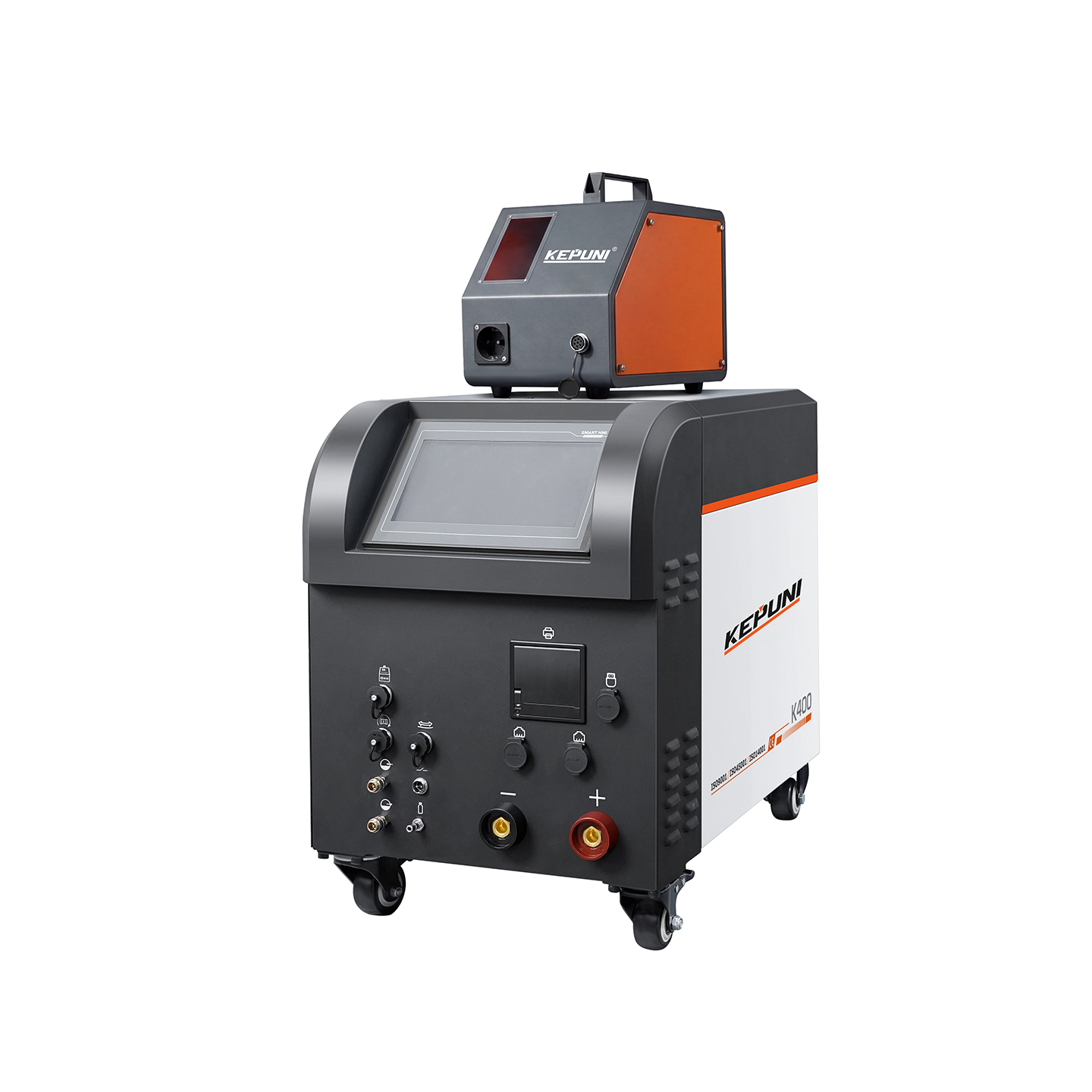
Download the product catalogue: KEPUNI Orbital Welding Machine Brochure (PDF)
Conclusion: Partnership Is Proven After the Sale
Orbital welding machine ownership rewards buyers who treat qualification, acceptance, and service as one connected decision. Diameter and wall thickness determine whether a machine can do the job; certification and traceability determine whether the weld will pass inspection; and spare parts logistics, remote diagnosis, and maintenance contracts determine whether the line keeps running in year three and year five.
KEPUNI's structure — a Shanghai manufacturing base, CE-documented machine range from the 5H split head through the XD-GH girth machine, sample validation with welding sample reports, and a defined after-sales support cycle — is designed around that longer view. Dependable cooperation depends less on a single competitive quote and more on transparent qualification before the order and consistent support after it.
Have Questions or Need More Details?
Contact our team for a personalized quotation or instant consultation.
Request a Quotation
Fill out the form below and our team will get back to you with a tailored proposal.
WhatsApp Direct Chat
Prefer to chat in real-time? Message us on WhatsApp for instant assistance & quick answers.
- Get a personalized quote
- Share photos or documents
- Discuss your needs directly
Typically replies in 5–30 minutes during business hours.