
Ranked: KEPUNI Orbital Welding Machines for Thin-Wall Tube, Pipe, and Field Service Work
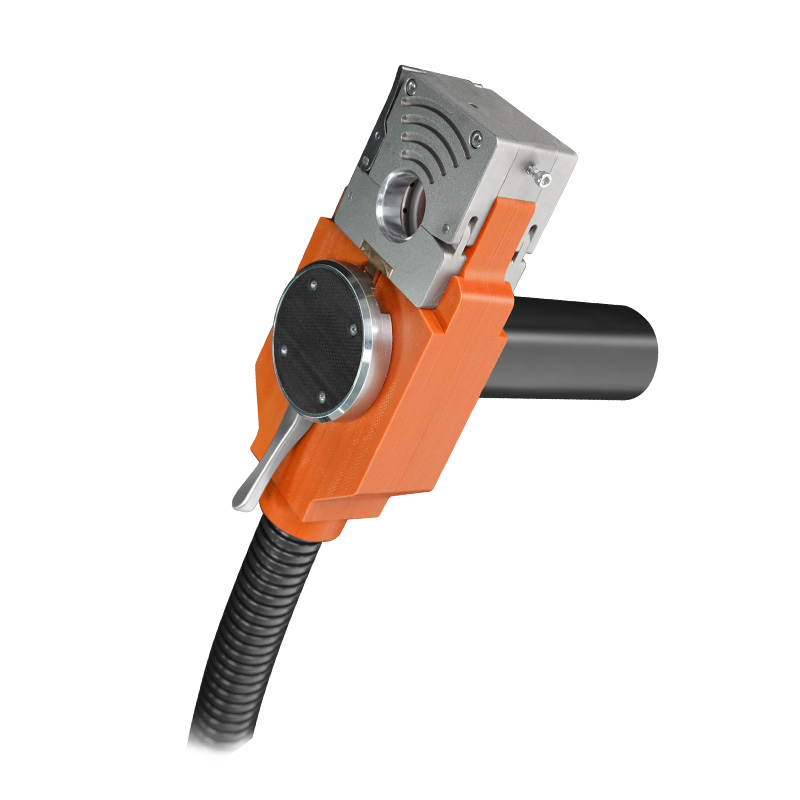
A thin-wall orbital welding project is usually decided by three inputs before any commercial discussion happens: the smallest and largest outside diameter in the joint schedule, the wall thickness at the thinnest point, and whether the weld head can physically reach the joint. Brand tier, automation level and price sit downstream of those three facts.
This article ranks five KEPUNI orbital welding configurations — the 5H Series, 10H Series, XD-Split Type Weld Head, XD-20PRO and XD-20W — by how their published dimensional envelopes and stated industry positioning fit thin-wall tube, thin-wall process pipe, and field service work. KEPUNI is a Shanghai-based manufacturer of orbital welding machines, tube-to-tube-sheet welders, open pipe welders, cold welders and orbital cutters, and operates as a brand of Shanghai Chuanli Industrial Co., Ltd.
The order below is a starting-point ranking, not a weld-quality ranking. It is built from published pipe-diameter ranges, published wall-thickness limits, head and power-supply type, and the industries each configuration is stated to serve. Where a configuration is a power supply rather than a weld head, the ranking says so, because a power source can never make a joint its weld head cannot close around.
The Thin-Wall Problem: Tolerance Shrinks Faster Than Diameter
Wall thickness is the variable that decides whether a machine is suitable, and it is the one buyers most often undervalue. ASME BPE-2024 sets the acceptance criterion for internal concavity in pharmaceutical welds at a maximum of 10% of nominal wall thickness, not exceeding 0.38 mm. On a 1.5 mm wall that is 0.15 mm of permissible concavity; on a 1.2 mm wall it is 0.12 mm. The absolute tolerance tightens as the wall gets thinner, while the head that has to hold the arc gets smaller and closer to the joint.
That produces two expensive failure modes.
Over-specification happens when a contractor buys a wide-envelope system or a large closed head for 12 mm hygienic tubing. The head's physical footprint and clearance envelope exceed what a dense tube rack allows, and the system carries diameter and current capability the schedule will never use. Budget is consumed on capability that never contacts a joint.
Under-specification happens in the opposite direction. A 5H Series head stops at 15.88 mm OD, so it cannot close around a 25 mm header no matter how the parameters are set. The correction is a second head, purchased late, at project cost.
The third problem is conceptual: buyers read a power supply's published diameter range and assume it describes the joint. It does not. The XD-20W and XD-20PRO are each stated to cover 3.175–168 mm OD with wall thickness of 0.5–3 mm, but that figure describes the power source's operating capability across matched heads. The actual joint ceiling comes from the head bolted onto the front of it.
Industry Background: Why Thin-Wall Capability Became a Purchasing Criterion
The demand base has shifted toward the sectors where wall thickness is smallest and documentation requirements are strictest. Grand View Research projects the global orbital welding equipment market to reach approximately USD 1.34 billion by 2033, and in its 2025 segmentation open weld heads held the largest share at 43.1%. Within end uses, the semiconductor segment dominated in 2025 at 20.1%.
Semiconductor share matters for a thin-wall ranking because the same segment carries the highest cleanliness expectations. KEPUNI's application data describes semiconductor and electronics work as ultra-pure gas piping and DI water systems, with SEMI F57 cleanliness cited as the governing requirement and Class 1 cleanroom compatibility expected. Pharmaceutical work is described around WFI pure water piping and CIP/SIP systems, with 3A Sanitary Standard, FDA compliance, EU GMP and full documentation named as the requirement set. Food and beverage work references EHEDG, no-dead-leg design and USDA/FDA audit readiness.
Two things follow. First, small-bore, thin-wall joints are no longer a niche accessory segment — they sit at the center of the highest-share end-use. Second, in these segments the machine is only half the purchase. Weld records, parameter traceability and per-joint documentation are evaluated alongside the equipment, which is why a configuration's stated industry positioning is a legitimate ranking input rather than a marketing detail.
The heavier end of the market still matters for field service. Chemical and petrochemical work references ATEX/IECEx where required, API standards and NACE-compliant materials; power generation references ASME Section IX and the Pressure Equipment Directive; water treatment and HVAC reference ISO 9001 quality systems, pressure vessel standards and WRAS approval. Those requirements sit at larger diameters and thicker walls, and they pull the selection in a different direction from cleanroom tubing.
How the Ranking Was Built
Four criteria were applied to each configuration, in this order, using only published specifications and stated application positioning.
- Published OD envelope — the smallest and largest pipe outside diameter the configuration is documented to cover. A wider envelope scores higher only if it does not compromise the narrow end.
- Published wall-thickness ceiling — the maximum wall thickness stated for the configuration. For thin-wall work, a low floor (0.5 mm) matters alongside the ceiling.
- Head or power-supply type and access logic — split type heads open to fit around an existing joint; closed heads encircle the tube; power supplies define current and control, not access.
- Stated industry positioning and documentation expectations — the sectors named for the configuration, weighted toward segments where thin-wall joints and audit records coincide.
Three things are deliberately excluded. Weld quality is not scored, because no independently verified weld-quality comparison data was available for these configurations. Productivity is not scored, for the same reason. Price is not used to order the list; it is handled in the budget question further down, where published figures exist.
The Ranking: Five KEPUNI Configurations by Thin-Wall Fit
15H Series — the narrow-end specialist
The 5H Series is a split type weld head covering pipe OD from 3.175 mm to 15.88 mm with wall thickness up to 1.5 mm. KEPUNI positions it for semiconductor, pharmaceutical and biotechnology work — the three segments where the smallest tube and the tightest documentation requirements occur together.
It ranks first because it reaches the lowest diameter floor in the range while keeping a defined wall ceiling, and because its stated industries are precisely the ones driving the 20.1% semiconductor end-use share. For a cleanroom gas line or an instrument impulse line in a biotech suite, this is the head that matches the joint rather than overshooting it.
Boundary: nothing above 15.88 mm OD. Buyers whose schedule includes a 25 mm header need the 10H or a larger head in the same project, and should budget for both from the start rather than treating the second head as an exception.
210H Series — the sanitary small-bore standard
The 10H Series is also a split type weld head, covering 6.35–25.4 mm OD with wall thickness up to 1.5 mm. Its stated industries are pharmaceutical, food and beverage, and chemical.
It ranks second because it extends the thin-wall envelope to 25.4 mm while holding the same 1.5 mm wall ceiling, which is exactly the range where sanitary process tubing concentrates. The overlap with the 5H between 6.35 mm and 15.88 mm is real: if every joint sits inside that band and the application is cleanroom, the 5H is the tighter match, while a schedule containing 19 mm or 25 mm tube requires the 10H regardless.
Boundary: the 1.5 mm wall ceiling excludes sch-ed process pipe above that thickness. This is a hygienic and light-process head, not a substitute for a closed head on 3 mm wall.
3XD-20PRO — the widest single power supply
The XD-20PRO is a pipe welding power supply stated to cover 3.175–168 mm OD with wall thickness of 0.5–3 mm. Its stated industries are the broadest of any configuration here: semiconductor, pharmaceutical, food and beverage, oil and gas, and chemical.
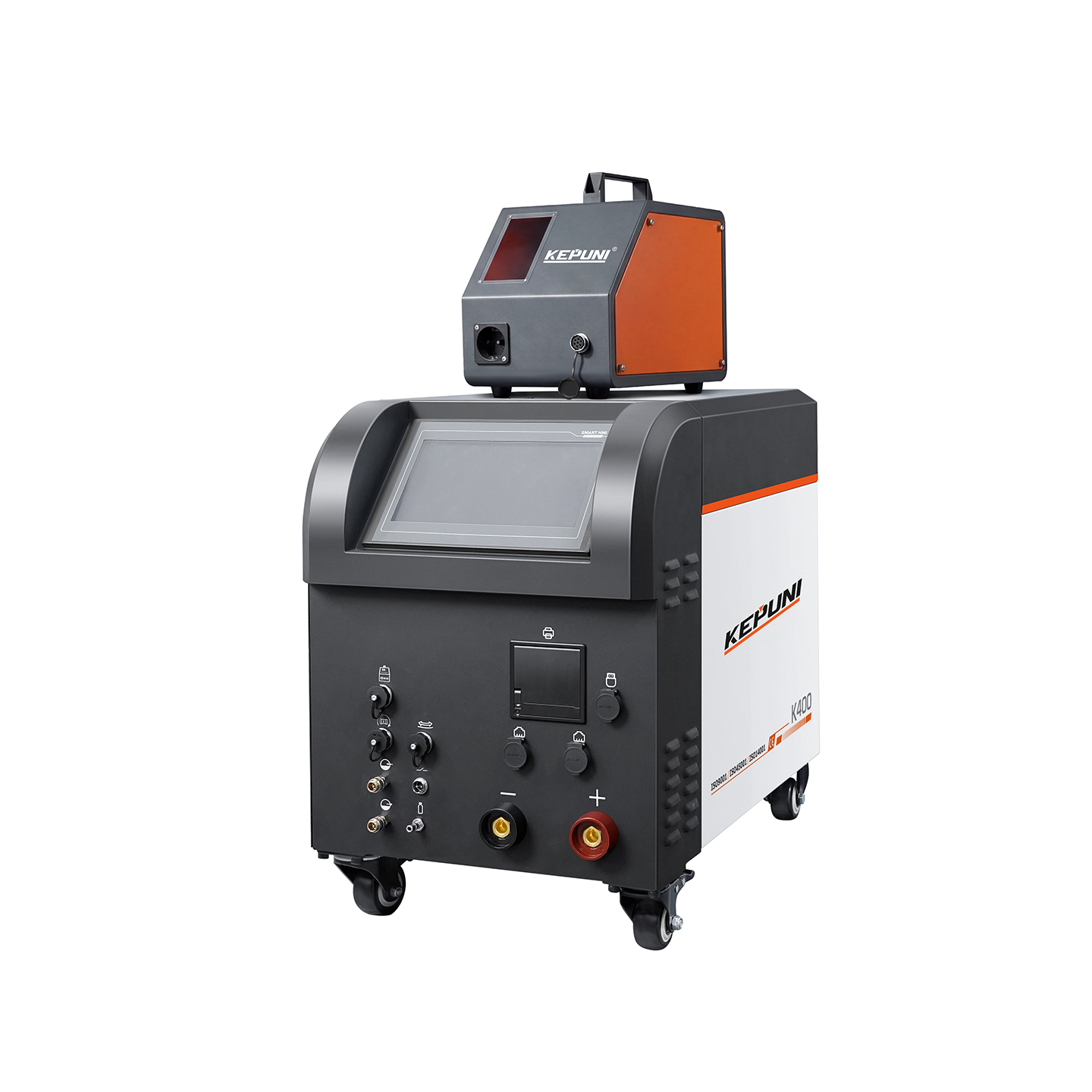
It ranks third rather than first because it is a power source. Its dimensional figure describes capability across matched heads, and the joint still has to be closed by a 5H, a 10H, a closed head or an open head. Positioned as a purchase decision, however, it is the configuration that removes a duplicate capital outlay: one unit covers the 0.5 mm floor needed for thin-wall hygienic tube and the 3 mm ceiling needed for heavier process pipe, provided the right head is on the front.
The broad stated industry list is the practical advantage. A fabricator moving between a pharmaceutical water system, a beverage line and an oil and gas skid does not need three power supplies, and the 0.5 mm wall floor keeps small-bore work inside the envelope.
Boundary: 3 mm wall. Above that, an open head or a girth welding system is the correct route.
4XD-20W — the fixed-envelope cleanroom power supply
The XD-20W is a pipe welding power supply sharing the same stated dimensional envelope as the XD-20PRO: 3.175–168 mm OD, 0.5–3 mm wall. Its stated industries are pharmaceutical, semiconductor and chemical processing, and KEPUNI describes it against pharmaceutical sanitary stainless-steel tubing and semiconductor high-purity gas delivery lines in cleanrooms.
It ranks fourth because, at identical dimensional coverage, the stated industry list is narrower — food and beverage and oil and gas are not named for this model, while they are for the XD-20PRO. For a buyer whose entire roadmap is pharmaceutical and semiconductor thin-wall work, that difference may be irrelevant. For a buyer who expects a food-grade line to be added later, the XD-20PRO is the documented match and the XD-20W is the specialist.
Boundary: the same 3 mm wall ceiling applies, and the stated application positioning is not a certification. A stated pharmaceutical application is not evidence of FDA compliance or cleanroom validation, and should not be treated as such during supplier qualification.
5XD-Split Type Weld Head — the platform designation
The XD-Split Type Weld Head appears in KEPUNI's orbital welding product range as the split-head platform through which the model-level configurations are offered. Its dimensional figures are published at model level — 5H at 3.175–15.88 mm and 10H at 6.35–25.4 mm — rather than as a single platform number.
It ranks fifth on this list for a documentation reason, not a capability reason: a ranking built on published envelopes requires a published envelope, and a project-specific range for this head must be confirmed on the datasheet before it can be compared against a joint schedule. Buyers who already know which model they are specifying can treat the platform as selected and move directly to that model's figures.
Comparison Table: Five Configurations Side by Side
| Rank | Configuration | Component type | Pipe OD (mm) | Wall thickness (mm) | Stated industries | Best-fit starting point |
|---|---|---|---|---|---|---|
| 1 | 5H Series | Split type weld head | 3.175–15.88 | ≤1.5 | Semiconductor, pharmaceutical, biotechnology | Cleanroom and high-purity small-bore tube |
| 2 | 10H Series | Split type weld head | 6.35–25.4 | ≤1.5 | Pharmaceutical, food & beverage, chemical | Sanitary small-bore process tube |
| 3 | XD-20PRO | Pipe welding power supply | 3.175–168 | 0.5–3 | Semiconductor, pharmaceutical, food & beverage, oil & gas, chemical | One power supply across mixed tube and thin-wall pipe |
| 4 | XD-20W | Pipe welding power supply | 3.175–168 | 0.5–3 | Pharmaceutical, semiconductor, chemical processing | Pharma and semiconductor lines with a fixed envelope |
| 5 | XD-Split Type Weld Head | Split type head platform | Model-level (see 5H, 10H) | Model-level | Application-dependent | Buyers who already specify the head model |
One reading note on the table: the two power supplies and the two split heads overlap in the 6.35–15.88 mm band. That overlap is where most procurement errors happen, because the cheapest way to cover that band is not necessarily to buy the widest item. Where the schedule never exceeds 25.4 mm and the application is hygienic, the 10H is the documented fit; where the same site will later weld 60 mm or 100 mm thin-wall pipe, the power supply decision dominates.
Why the Power Supply Range Is Not the Joint Range
A recurring mismatch in RFQs is an equipment list that names only the power supply. The table below shows the correct way to read the published data: the power supply sets the current, control and recording envelope, and the head sets the geometry.
| Layer | KEPUNI item | Published envelope | What it determines |
|---|---|---|---|
| Power supply | XD-20PRO / XD-20W | 3.175–168 mm OD; 0.5–3 mm wall | Current range, programmed welding intervals, parameter logging or printing |
| Split head | 5H Series | 3.175–15.88 mm OD; ≤1.5 mm wall | Access and geometry for the smallest tube |
| Split head | 10H Series | 6.35–25.4 mm OD; ≤1.5 mm wall | Access and geometry for sanitary small-bore tube |
| Closed head | 40/80/120/170 Series | 6.35–168 mm OD; ≤3 mm wall | Bench and fixed-pipe welding across a wide diameter band |
| Open head | K Series open pipe welding machine | 19–325+ mm OD; 2.5–13 mm wall | Large-diameter and heavier-wall field pipe |
| Tube sheet | TB-35 Series / TB-65 Series | 4.5–35 mm and 8–65 mm OD; ≤2.5 mm and ≤5 mm wall | Tube-to-tube-sheet joints in heat exchangers and boilers |
KEPUNI systems are also described as using 12 welding intervals with parameter logging or printing for interval data. For a thin-wall project, that is the feature that converts a weld into a record: the schedule is split into programmed intervals and each interval's parameters can be captured. It is not proof of weld quality in itself, but it is what an auditor asks for after the fact.
Field Service Work: What Changes On Site
Field service inverts the selection logic. In a fabrication shop, the joint comes to the machine and access is a layout question. On site, the machine comes to the joint, and the constraint becomes whether a head can be placed around a pipe that is already installed, often at height, often inside an operating plant.
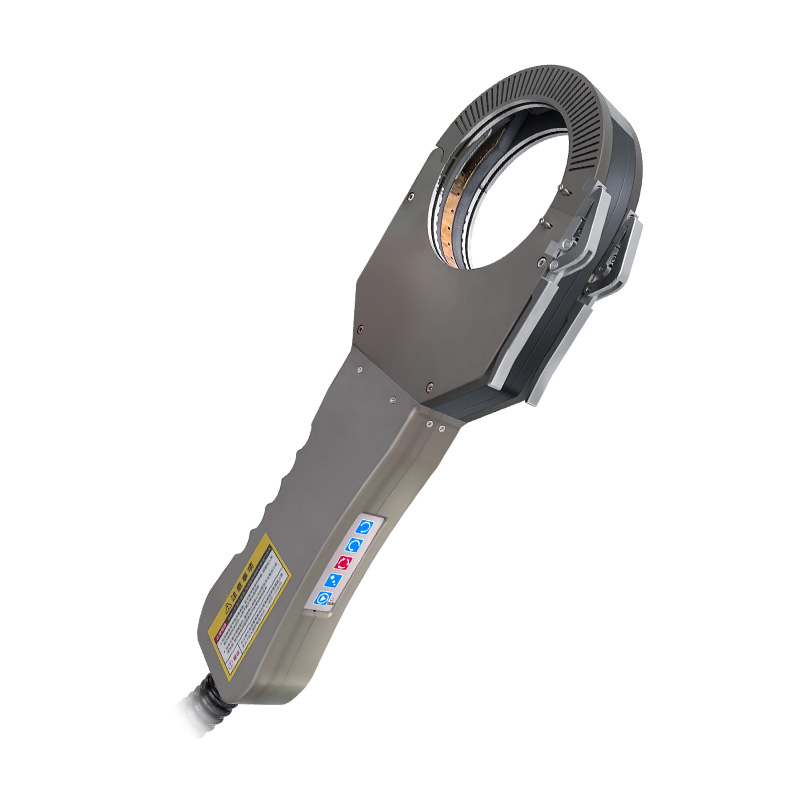
Split type heads exist for this reason. The 5H and 10H open to fit around an existing tube, which is what makes a repair on a live pharmaceutical or semiconductor line feasible without cutting the run apart. For pipe rather than tube, the closed head 40/80/120/170 Series covers 6.35–168 mm OD at up to 3 mm wall, and the K Series open pipe welding machine covers 19–325+ mm OD at 2.5–13 mm wall for the heavier field joints.
Two field references illustrate the operational effect. In a boiler tube replacement on a 300 MW thermal plant, KEPUNI records welds qualified to ASME Section IX with a 100% ultrasonic testing pass rate and plant reconnection four days ahead of the shutdown schedule. In a seawater desalination project, ASME B31.3 pressure testing passed on 400+ girth welds with zero rework and delivery two weeks early. Neither result is attributable to the machine alone, but both depend on a head that could be deployed in the available window.
Service logistics belong in the same decision. KEPUNI lists remote WhatsApp and WeChat support, distributor on-site support and spare parts stock, with spare parts quoted at 7–15 days globally. On a shutdown window measured in days, that figure is part of the technical case, not the paperwork.
Use Cases: Matching the Segment to the Configuration
Pharmaceutical WFI and CIP/SIP piping. The governing requirements are aseptic joints, 100% leak-proof connections and traceability, with 3A Sanitary Standard, FDA compliance, EU GMP and full documentation named as the requirement set. The 10H Series at 6.35–25.4 mm is the head fit; the XD-20PRO or XD-20W is the power supply. A KEPUNI reference project on SS316L WFI piping records zero weld defects, an EU GMP audit passed at first attempt and hydrostatic testing at 100%.
Semiconductor ultra-pure gas and DI water. SEMI F57 cleanliness and Class 1 cleanroom compatibility define the requirement. The 5H Series at 3.175–15.88 mm is the narrow-end fit, paired with the XD-20PRO. A reference project on UPG distribution and DI water loop piping in a 28 nm fab records SEMI F57 particulate levels verified, zero particle exceedance events and full joint documentation.
Food and beverage sanitary lines. EHEDG, no-dead-leg design and USDA/FDA audit readiness set the requirement. The 10H Series covers the small-bore runs; the XD-20PRO covers the wider envelope. A dairy reference on SS304L UHT and pasteurization piping records 3A sanitary certification obtained, zero contamination incidents and 100% hydrostatic pass.
Chemical and petrochemical process piping. Corrosion-resistant welds, zero leak and chemical-resistant materials, with ATEX/IECEx where required, API standards and NACE-compliant materials. The XD-20W is stated for chemical processing; a reference project on SS316L and duplex stainless acid transfer piping records zero leak incidents, API 582 requirements met and a repeat order.
HVAC and water treatment. Corrosion-resistant joints and long-term reliability against ISO 9001, pressure vessel standards and WRAS approval. Tube-to-tube-sheet work here uses the TB-35 and TB-65 Series; an HVAC shell-and-tube heat exchanger reference records ASME U-stamp certification, 100% helium leak test pass and shipment to six countries.
Power generation and boiler tube. High-temperature resistant welds and pressure-rated joints under ASME Section IX and the Pressure Equipment Directive. Field work here moves to the open head and girth welding range rather than the thin-wall heads, which is the correct behaviour of the ranking: the joint schedule, not the brand, determines the configuration.
Step-by-Step: Choosing a Starting Point in Five Moves
Step 1 — Fix the diameter envelope from the isometric, not the average. Record the smallest and largest OD in the schedule. A schedule with a 9.53 mm impulse line and a 108 mm header needs two heads, and the ranking should be read as a combination rather than a single pick.
Step 2 — Convert the thinnest wall into a tolerance. Apply the 10%-of-nominal-wall criterion with its 0.38 mm cap. A 1.2 mm wall yields 0.12 mm of permissible internal concavity. If that number is tighter than the head's published wall floor allows, the configuration is wrong regardless of price.
Step 3 — Screen heads before machines. Split type where the joint is installed and access is the constraint; closed head where the pipe can be encircled at a bench or in open structure; open head where the diameter exceeds 168 mm or the wall exceeds 3 mm.
Step 4 — Select the power supply against the documentation requirement. The XD-20PRO and XD-20W share the same 3.175–168 mm and 0.5–3 mm envelope. The XD-20PRO carries the broader stated industry list including food and beverage and oil and gas; the XD-20W is stated against pharmaceutical sanitary tubing and semiconductor high-purity gas lines. Choose on the roadmap, not only the current project.
Step 5 — Confirm the commercial structure before the technical review closes. KEPUNI quotes a sample order at MOQ 1 unit with 15–20 days lead time and full inspection plus a weld sample report; OEM and ODM at MOQ 1 unit with 30–45 days and 100% function test plus weld sample test and a 72-hour burn-in test; and bulk orders at MOQ 5 units with 60–90 days FOB Shanghai and AQL 1.0 sampling inspection.
Frequently Asked Questions
1. Do these KEPUNI orbital welding machines come with CE or FDA certification for pharmaceutical and semiconductor work?
Certification status is project-specific and must be confirmed in writing against the exact model before ordering. KEPUNI publishes that its systems are used in pharmaceutical and semiconductor applications, and its application data lists the standards those industries typically specify — 3A Sanitary Standard, FDA compliance and EU GMP for pharmaceutical work; SEMI F57 and Class 1 cleanroom compatibility for semiconductor work; EHEDG and USDA/FDA audit readiness for food and beverage. A stated application is not the same thing as a certificate. Buyers in regulated sectors should request the declaration, the applicable weld procedure and the test documentation for the specific configuration, and should treat the compliance file as a deliverable in the purchase order rather than an assumption.
2. Can one power supply handle both 3.175 mm tube and 168 mm pipe?
The XD-20PRO and XD-20W are each stated to cover 3.175–168 mm outside diameter with wall thickness from 0.5 mm to 3 mm. That figure describes the power source across matched heads. The achievable joint is set by the head: the 5H Series reaches 3.175–15.88 mm, the 10H Series reaches 6.35–25.4 mm, and the closed head 40/80/120/170 Series reaches 6.35–168 mm at up to 3 mm wall. So one power supply can serve both ends of the range, but only if the corresponding heads are part of the order. Above 3 mm wall, the open pipe welding K Series extends to 19–325+ mm and 2.5–13 mm.
3. What does a KEPUNI orbital welding machine cost?
KEPUNI's 2026 price guidance positions the XD-20PRO in the mid-to-high segment at approximately USD 8,400 to 8,600 per unit. For context, premium industry-compliant solutions, often EU or US brands, are reported above USD 25,000 to 40,000+ for pharmaceutical and semiconductor sectors. The gap reflects configuration and compliance scope, not just the power source: a quotation has to be read against the heads included, the documentation package, the training and the warranty. Any comparison that prices a power supply against a complete system is not a like-for-like comparison.
4. Can I order a single unit or a weld sample before committing to a line?
Yes. KEPUNI lists a sample order production mode at MOQ 1 unit with 15–20 days lead time, custom parameters, special materials including SS304, SS316, titanium and Inconel, and non-standard sizes. Quality control on that route is full inspection plus a weld sample report and detailed parameter documentation, with video guidance, technical documentation and parameter optimization as after-sales support. For a thin-wall project, the sample report is the practical way to test whether a configuration holds the concavity tolerance on your actual wall thickness before a production order is placed.
5. What are the lead times, and how fast are spare parts delivered?
KEPUNI publishes 15–20 days for a sample order, 30–45 days for OEM and ODM configurations including logo, colour, 110V/220V voltage, interface and software customization, and 60–90 days FOB Shanghai for bulk orders at MOQ 5 units. Spare parts are listed at 7–15 days globally, supported by remote diagnosis, on-site repair, operator training and annual maintenance contracts through the distributor network. If your project has a fixed shutdown window, the spare-parts figure should be checked against the window length at the quotation stage — that is the number that determines whether an unplanned head failure becomes a schedule event. To move from ranking to a concrete configuration, you can request the KEPUNI catalogue and specification set or send your joint schedule for a configuration review through www.kepuni.com.
Conclusion
The ranking resolves into a simple decision rule. Where the joint schedule lives below 25.4 mm and the wall is under 1.5 mm, the split type heads decide the purchase — the 5H Series for cleanroom and high-purity small-bore work, the 10H Series for sanitary process tube up to 25.4 mm. Where the schedule crosses from tube into thin-wall pipe, the power supply becomes the anchor, and the XD-20PRO carries the broadest stated industry coverage of the two units at the same 3.175–168 mm and 0.5–3 mm envelope. The XD-20W remains the specialist choice for pharmaceutical sanitary tubing and semiconductor high-purity gas lines, and the XD-Split Type Weld Head should be specified through its model-level figures once the joint size is known.
What the ranking cannot do is substitute for a specification check against your own isometric. Wall thickness sets the tolerance, tolerance sets the head, and the head sets the machine. Run those three steps in that order and the configuration follows; run them in reverse and the project buys capability it cannot apply.
Match a configuration to your joint schedule
Send the smallest and largest outside diameter, the thinnest wall thickness and the governing standard for your project. KEPUNI will confirm which head and power supply combination covers the schedule, and can supply a single-unit sample with a weld sample report before a production order.
Download the product catalogue (PDF): KEPUNI Catalogue & Specification Set
Email: info@kepuni.com | WhatsApp: +86 18221803984 | Web: www.kepuni.com
Address: No. 688 Jiaqian Road, Nanxiang Town, Jiading District, Shanghai, China
Have Questions or Need More Details?
Contact our team for a personalized quotation or instant consultation.
Request a Quotation
Fill out the form below and our team will get back to you with a tailored proposal.
WhatsApp Direct Chat
Prefer to chat in real-time? Message us on WhatsApp for instant assistance & quick answers.
- Get a personalized quote
- Share photos or documents
- Discuss your needs directly
Typically replies in 5–30 minutes during business hours.