
Selecting Orbital Welding Machine Parameters: Diameter, Wall Thickness, and Weld Head Types
Three measurable inputs decide an orbital welding machine configuration: pipe outside diameter (OD), wall thickness, and the clearance the workspace leaves around the joint. Pipe OD and wall thickness determine which weld head can physically be mounted around the tube. The clearance around the joint determines whether a closed head — which travels a full 360° around the pipe — can be installed at all. KEPUNI organizes its orbital welding head range around those two variables: split-type heads (XD-Split Type Weld Head, 5H Series and 10H Series) cover small-diameter, thin-wall joints up to 25.4 mm OD and 1.5 mm wall, while the closed 40/80/120/170 Series covers pipe from 6.35 mm to 168 mm OD with wall thickness up to 3 mm.
Both head families run from the same drivers. The KEPUNI XD-20PRO and XD-20W pipe welding power supplies are each rated for pipe OD 3.175–168 mm and wall thickness 0.5–3 mm. That means the power supply rarely limits a project — the weld head does. Parameter selection therefore starts with the head, and only then confirms that the power supply covers the same envelope.
Quick selection rule
- OD up to 25.4 mm, wall up to 1.5 mm, restricted access: split-type head — XD-Split Type Weld Head (OD 3.175–25.4 mm), 5H Series (OD 3.175–15.88 mm) or 10H Series (OD 6.35–25.4 mm).
- OD 6.35–168 mm, wall up to 3 mm, full clearance available: closed head — 40/80/120/170 Series.
- Wall above 3 mm or OD above 168 mm: the closed-head family is out of range. Open pipe welding machines (K Series, XD-K Series) cover pipe OD 19–325+ mm at 2.5–13 mm wall, and the XD-GH Series girth welding machine covers pipe and vessel OD 20–960 mm at 2.5–25 mm wall.
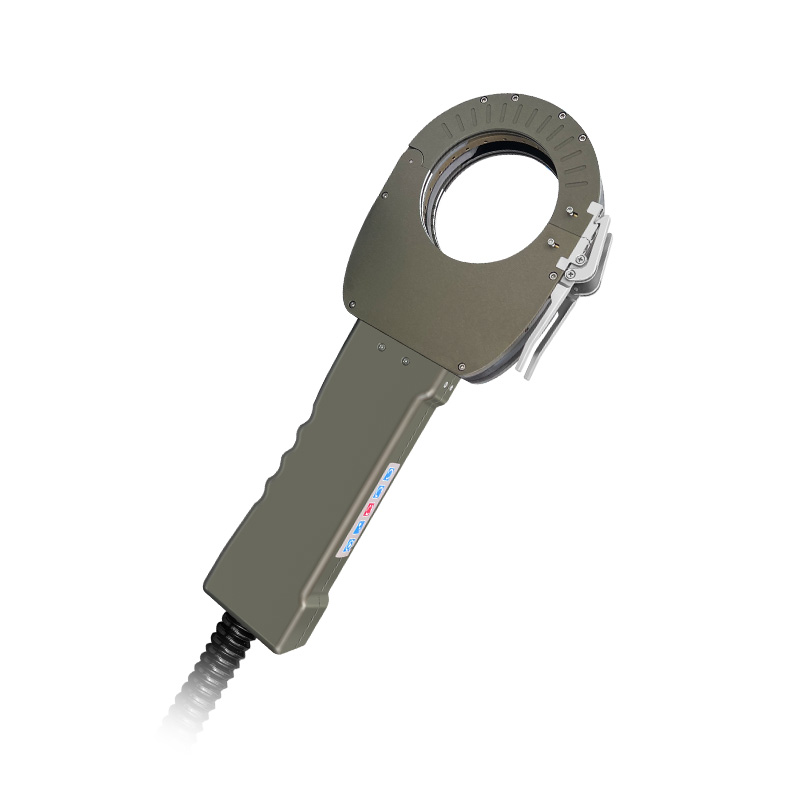
Problem definition: why the weld head, not the power supply, is usually the limiting component
A parameter mismatch rarely appears during quotation. It appears when the first joint is set up on site, and it usually falls into one of four patterns.
- OD outside the head window. A head rated for OD 6.35–25.4 mm cannot be closed around a 32 mm pipe, and a large-bore head has no usable clamping geometry on 8 mm tubing. The pipe has to sit inside the head's stated OD range, not at its midpoint.
- Wall thickness above the head rating. Split-type heads such as the 5H, 10H and XD-Split are rated to 1.5 mm wall; the closed 40/80/120/170 Series is rated to 3 mm. Beyond those limits there is no rated parameter window for the head, and the weld program has to be improvised on site rather than validated before shipment.
- Clearance ignored. A closed head needs rotational room for its full body around the pipe. On racked pipe runs, close to walls, or inside skids, that room often does not exist — which is exactly why split-type and open heads exist.
- Material treated as an afterthought. Heads in this range are specified for steel and alloy. Stainless 304/316, titanium and Inconel normally require custom parameters and a validated weld sample before production welding starts.
Each of these errors is decided by two numbers and one drawing. Measuring them before the head is chosen removes most of the risk from the selection process.
Industry background: why head-to-pipe matching has become a procurement question
Orbital welding demand is concentrated in industries where the joint, not the pipe, carries the compliance burden. Strategic Market Research values the global orbital welding machine market at approximately USD 1.32 billion in 2024 and projects USD 2.07 billion by 2030. In the same analysis, oil and gas is the largest application segment, holding more than one third of total market share in 2024, while high-purity piping for semiconductor and pharmaceutical production is identified as the fastest-growing segment because of contamination-control requirements.
Published market sizes vary with scope. Estimates for orbital welding specifically range from roughly USD 0.83 billion to USD 1.32 billion depending on whether the scope counts complete systems or only weld heads and power sources (Metastat Insights; Strategic Market Research). Buyers comparing market reports should confirm the scope before comparing the numbers, because the same discrepancy appears in equipment quotations: a head-only configuration and a complete system are not comparable line items.
Regional demand is similarly concentrated. Grand View Research reports Asia Pacific as the largest region in the welding equipment market with a 37.0% revenue share as of 2025, and projects the U.S. welding equipment market to grow at a 4.2% CAGR from 2026 to 2033. Named major players in the orbital welding equipment market include Lincoln Electric, ESAB (Colfax), Swagelok, AMI (Arc Machines, Inc.) and Polysoude, according to Intel Market Research.
KEPUNI is a brand of Shanghai Chuanli Industrial Co., Ltd., a Shanghai-based manufacturer founded in 2014 that produces orbital welding machines, tube-to-tube-sheet welders, open pipe welders, cold welders and orbital cutters. The company operates a 10,000 m² production park with 280 employees, 36 of whom work in R&D, and exports to Europe, Asia, South America, North America and the Middle East. For buyers, the practical consequence of the market shift is that more projects now arrive with tight cleanliness or documentation requirements — and the parameter window, not the machine brand, decides whether those requirements can be met at the joint.
Detailed solution: split heads, closed heads and the specifications that separate them
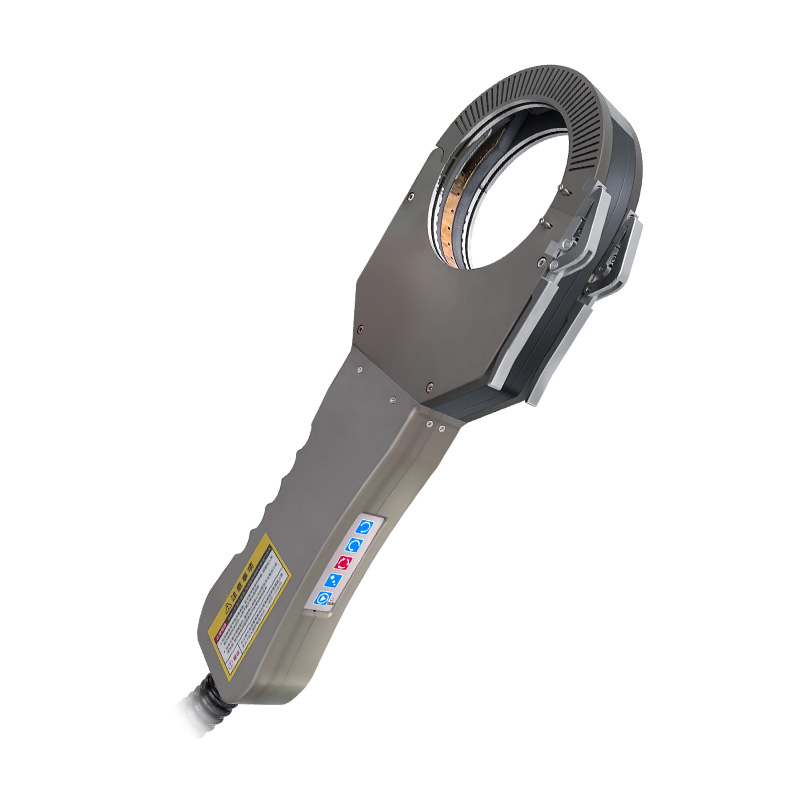
Split-type heads: XD-Split Type Weld Head, 5H Series and 10H Series
Split-type (open) heads mount around the pipe rather than being slid over the pipe end, which makes them usable on installed pipe runs and inside confined spaces. In the KEPUNI range, three split heads cover overlapping windows.
- XD-Split Type Weld Head — pipe OD 3.175–25.4 mm, wall thickness ≤1.5 mm. Specified for HVAC, plumbing and field service, where a portable orbital welding machine has to be fitted onto existing pipework.
- 5H Series — pipe OD 3.175–15.88 mm, wall thickness ≤1.5 mm. Specified for semiconductor, pharmaceutical and biotechnology applications, i.e. small-bore high-purity lines.
- 10H Series — pipe OD 6.35–25.4 mm, wall thickness ≤1.5 mm. Specified for pharmaceutical, food & beverage and chemical applications, where sanitary joints are standard.
All three are rated for steel and alloy material groups. Where a project uses stainless steel 304 or 316, titanium or Inconel, parameters are customized rather than taken from a default program.
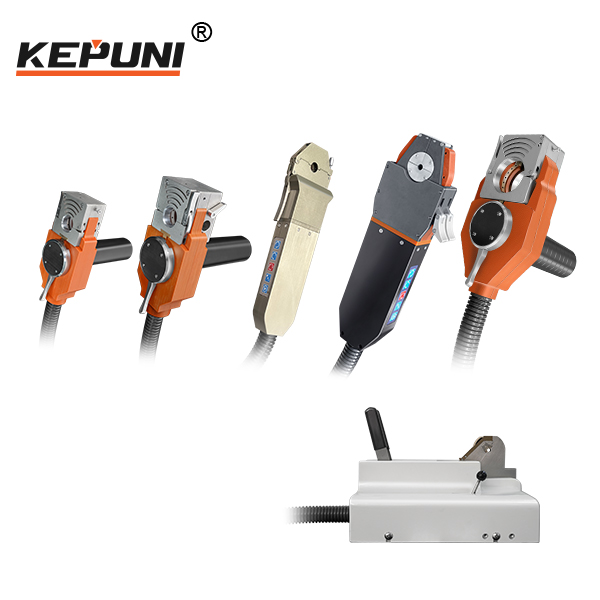
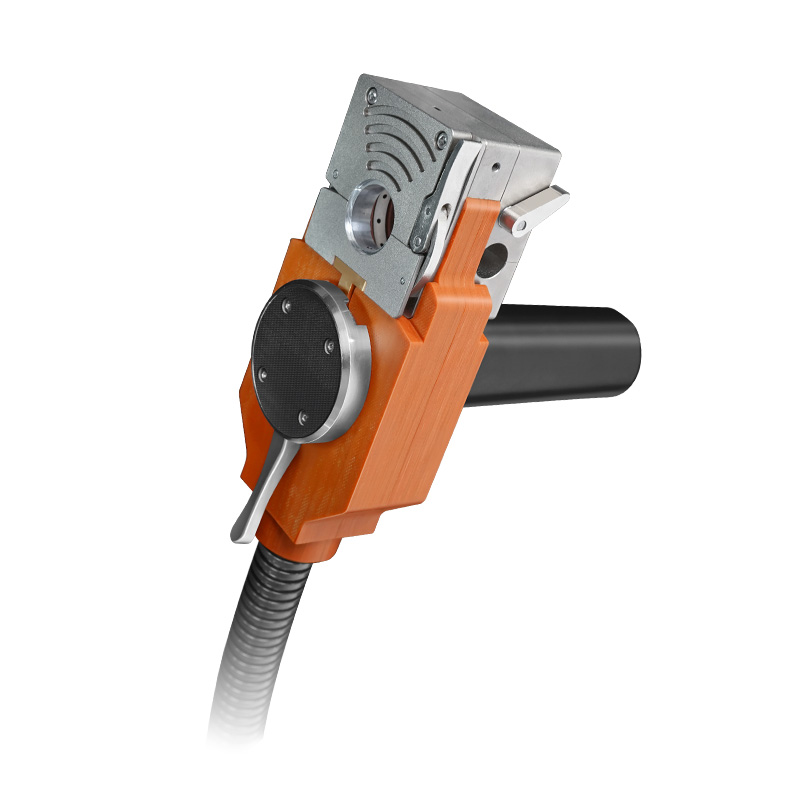
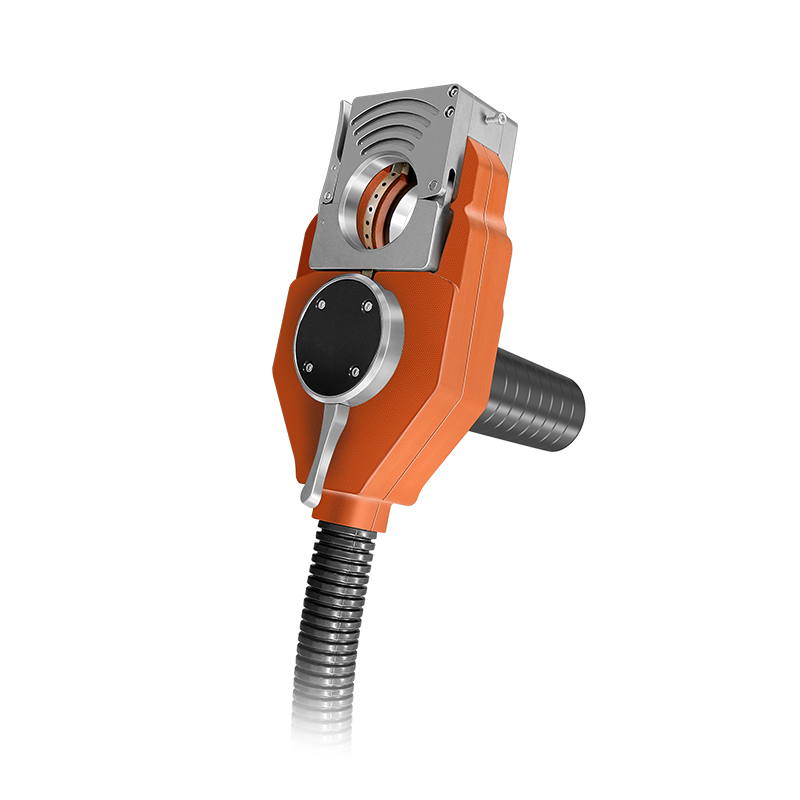
Closed heads: the 40/80/120/170 Series
The closed-head family covers pipe OD 6.35–168 mm with wall thickness up to 3 mm as a single series. A closed head fully encircles the pipe, which produces a stable, fully enclosed arc path on larger diameters and is the standard configuration for oil & gas, power generation and chemical processing piping. The trade-off is clearance: the head needs full rotational room around the joint and cannot be removed laterally once closed, so it is a poor fit for racked or wall-adjacent pipe runs where a split head would still work.
Power supplies: XD-20PRO and XD-20W
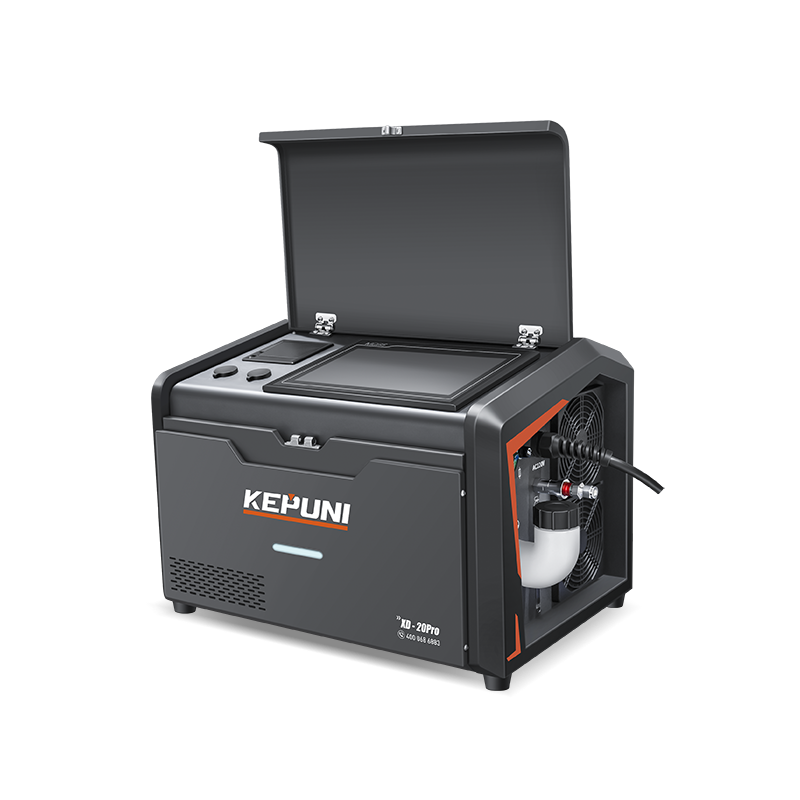
Both units are pipe welding power supplies rated for pipe OD 3.175–168 mm and wall thickness 0.5–3 mm. The XD-20PRO is specified for semiconductor, pharmaceutical, food & beverage, oil & gas and chemical applications; the XD-20W is specified for pharmaceutical, semiconductor and chemical processing. Because the power supply envelope is wider than any individual head, the head remains the limiting component of the configuration: a small split head and a large closed head can both be driven from the same supply, but each stays inside its own OD and wall window.
Material and clearance: the two inputs that override the specification table
Material. Every head in the range is specified for steel and alloy. That covers most industrial pipe welding, but not all of it. Where the line is stainless steel 304/316, titanium or Inconel, the parameter set has to be customized, and the practical control is a validated weld sample rather than a catalogue default.
Clearance. This is the input that most often removes a head from consideration even when its diameter range fits. A closed head needs a 360° envelope around the joint; a split head is mounted laterally and works in tighter locations. Two projects with identical pipe OD and wall can therefore need two different heads.
Step-by-step breakdown: matching a weld head to a job in six steps
- Measure OD and wall thickness on the actual pipe. Use the measured outside diameter and measured wall thickness of the pipe to be welded as the starting point, not the nominal line size.
- Classify the material. Steel and alloy configurations sit inside standard head ratings. Stainless 304/316, titanium and Inconel are handled as custom parameter sets with a validated sample.
- Check the clearance envelope. With full 360° access around the joint, a closed head is available. On racked pipe, near walls, or on already-installed runs, select a split-type head instead.
- Match the head to the OD window. Small-bore high-purity lines point to the 5H Series; general small-diameter work up to 25.4 mm points to the 10H Series or XD-Split Type Weld Head; pipe from 6.35 mm to 168 mm points to the closed 40/80/120/170 Series.
- Confirm the wall thickness rating. Split heads are rated to 1.5 mm and closed 40/80/120/170 heads to 3 mm. Above 3 mm wall, open pipe welding machines cover OD 19–325+ mm at 2.5–13 mm wall, and the XD-GH Series girth welding machine covers pipe and vessel OD 20–960 mm at 2.5–25 mm wall with 5–400 A.
- Confirm the power supply and validate the program. XD-20PRO or XD-20W, both rated OD 3.175–168 mm and wall 0.5–3 mm. Validate the parameter set against a weld sample before production welding begins.
Use cases: how the same parameter logic plays out across industries
Semiconductor and electronics. Ultra-pure gas (UPG) distribution and DI water loop piping is welded under Class 1 cleanroom conditions, with SEMI F57 cleanliness as the governing requirement and 24/7 operation as the norm. The 5H Series split head (OD 3.175–15.88 mm) matched to an XD-20PRO covers most of this scope. In one fab project, four units including XD-20PRO high-purity configuration and tube-sheet heads were supplied in the USD 60K–130K range, with SEMI F57 particulate levels verified and no particle exceedance events recorded.
Pharmaceutical. WFI (Water for Injection) piping and CIP/SIP systems demand aseptic pipe welding, 100% leak-proof joints and traceability, usually under 3A Sanitary Standard, FDA-compliant and EU GMP documentation requirements. A 10H Series head driven by an XD-20PRO is the typical configuration. In a documented project using three XD-20PRO units with weld heads in the EUR 50K–100K range, the EU GMP audit passed on first inspection with zero weld defects and weld quality traceable to each joint.
Food and beverage. Sanitary piping for milk, juice, beer and similar products is welded to EHEDG principles with no dead-leg design and USDA/FDA audit readiness. The 10H Series (OD 6.35–25.4 mm, wall ≤1.5 mm) is the standard match. A dairy project using two XD-20PRO units obtained 3A sanitary certification, achieved a 100% hydrostatic test pass rate and completed installation one week ahead of schedule.
Chemical and petrochemical. Process piping for aggressive media handling carries ATEX/IECEx requirements where applicable, plus API standards and NACE compliance. Larger diameters push the choice toward the closed 40/80/120/170 Series driven by the XD-20W. A five-unit project welding SS316L and Duplex stainless steel process piping for acid transfer and solvent recovery met API 582 welding requirements, completed NACE MR0175 material verification and recorded zero leak incidents.
Power generation and boiler tube. Boiler tube and heat exchanger pipe welding is governed by ASME Section IX, the Pressure Equipment Directive and customer-specified codes, with high-temperature-resistant, pressure-rated welds as the functional requirement. In one project, boiler water wall tube-to-tube sheet welds and superheater tube replacement in a 300 MW thermal plant passed 100% ultrasonic testing and let the plant reconnect four days ahead of the scheduled shutdown window.
Oil & gas, water treatment and heavy industry. Where pipe OD stays within 168 mm and wall within 3 mm, the closed-head family plus an XD-20PRO or XD-20W remains the practical choice. Where the pipe grows beyond that — large-bore SS316L, for example — open pipe welding machines and the XD-GH Series take over. A water treatment project welding SS316L large-bore pipe girth welds to ASME B31.3 recorded zero rework on more than 400 girth welds and delivered two weeks early.
HVAC and heat exchangers. Tube-to-tube sheet orbital welds for industrial shell-and-tube heat exchangers sit at the boundary of this guide: they use a different head family (TB-35 and TB-65 tube sheet weld heads, plus the XD-U Series for U-tube geometry) rather than the pipe welding heads discussed above. In a documented HVAC heat exchanger project, TB-65 and XD-U Series heads delivered ASME U-stamp certified joints with a 100% helium leak test pass.
Comparison tables
Table A compares the four weld head families by parameter window. Table B compares the two compatible power supplies. Table C maps typical applications to a starting configuration.
Table A — KEPUNI orbital welding head parameters
| Weld head | Head type | Pipe OD range | Wall thickness | Material | Typical applications |
|---|---|---|---|---|---|
| XD-Split Type Weld Head | Split | 3.175–25.4 mm | ≤1.5 mm | Steel, Alloy | HVAC, plumbing, field service |
| 5H Series | Split | 3.175–15.88 mm | ≤1.5 mm | Steel, Alloy | Semiconductor, pharmaceutical, biotechnology |
| 10H Series | Split | 6.35–25.4 mm | ≤1.5 mm | Steel, Alloy | Pharmaceutical, food & beverage, chemical |
| 40/80/120/170 Series | Closed | 6.35–168 mm | ≤3 mm | Steel, Alloy | Oil & gas, power generation, chemical processing |
Table B — Compatible power supplies
| Power supply | Type | Pipe OD range | Wall thickness | Applicable industries |
|---|---|---|---|---|
| XD-20PRO | Pipe welding power supply | 3.175–168 mm | 0.5–3 mm | Semiconductor, pharmaceutical, food & beverage, oil & gas, chemical |
| XD-20W | Pipe welding power supply | 3.175–168 mm | 0.5–3 mm | Pharmaceutical, semiconductor, chemical processing |
Table C — Application to starting configuration
| Application | Working condition | Starting head / driver | Key requirement |
|---|---|---|---|
| Semiconductor UPG and DI water | Ultra-pure gas piping, Class 1 cleanroom compatible | 5H Series + XD-20PRO | SEMI F57 cleanliness |
| Pharmaceutical WFI, CIP/SIP | SS316L pure water piping, batch production | 10H Series + XD-20PRO | 3A Sanitary Standard, FDA compliant, EU GMP documentation |
| Food & beverage / dairy | Sanitary piping for dairy and beverage lines | 10H Series + XD-20PRO | EHEDG, no dead leg, USDA/FDA audit ready |
| Chemical / petrochemical | Process piping, aggressive media handling | 40/80/120/170 Series + XD-20W | ATEX/IECEx where required, API standards, NACE compliance |
| Power generation / boiler tube | Boiler tube, heat exchanger pipe welding | 40/80/120/170 Series | ASME Section IX, Pressure Equipment Directive |
| Oil & gas, water treatment | Large-bore pipe girth and orbital welds | Closed heads up to 168 mm; XD-GH Series above | ASME B31.3, zero-rework targets |
| HVAC / heat exchanger | Shell-and-tube heat exchanger tube joints | TB-65 and XD-U Series (separate head family) | ASME U-stamp, helium leak test |
FAQ
1. Which weld head should be used for FDA-compliant, EU GMP or 3A sanitary piping?
Sanitary and high-purity process lines usually fall inside the split-head range. The 10H Series covers pipe OD 6.35–25.4 mm at wall thickness ≤1.5 mm and is specified for pharmaceutical, food & beverage and chemical applications; the 5H Series covers OD 3.175–15.88 mm for semiconductor, pharmaceutical and biotechnology work. Both are driven by an XD-20PRO power supply, rated for pipe OD 3.175–168 mm and wall 0.5–3 mm. Regulatory outcome depends on the welding programme and documentation as well as the head: in documented installations, projects using XD-20PRO configurations have passed EU GMP audit on first inspection and obtained 3A sanitary certification with 100% hydrostatic test pass rates.
2. Can one power supply drive both split-type and closed weld heads?
Yes. Both KEPUNI pipe welding power supplies — XD-20PRO and XD-20W — share the same rated envelope of pipe OD 3.175–168 mm and wall thickness 0.5–3 mm, which is wider than any individual head. The XD-20PRO is specified for semiconductor, pharmaceutical, food & beverage, oil & gas and chemical applications; the XD-20W is specified for pharmaceutical, semiconductor and chemical processing. The head, not the power supply, defines the achievable OD and wall thickness for a given joint.
3. What determines the cost of an orbital welding machine configuration?
Cost follows the number of parameter windows a project needs, not the pipe size alone. Because each head covers a defined OD and wall range, a plant welding 6 mm instrumentation tubing and 100 mm process pipe requires at least two heads, and most require more. The power supply model and the level of customization are the other drivers: OEM/ODM options include logo, colour, 110V/220V voltage, interface customization and IoT/MES integration, with monthly capacity of 50–200 units and a minimum order quantity of one unit. Specific pricing is quoted per configuration.
4. How can a buyer validate head and parameter fit before a full order?
A sample order is the standard route. The sample programme accepts a minimum order quantity of one unit with a 15–20 day lead time, supports custom parameters, special materials including SS304, SS316, titanium and Inconel, and non-standard sizes, and returns full inspection plus a weld sample report with detailed parameter documentation. Monthly sample capacity is 20 units, and sample customers receive video guidance, technical documentation, online support and parameter optimization.
5. What are the typical lead times for orbital welding machine orders?
Sample orders ship in 15–20 days. OEM/ODM production runs 30–45 days at 50–200 units per month. Bulk orders run 60–90 days FOB Shanghai at 100+ units per month with a five-unit minimum, AQL 1.0 sampling inspection and 100% verification of key parameters. Spare parts ship within 7–15 days globally, backed by remote diagnosis, on-site repair, operator training and annual maintenance contracts.
Conclusion: parameters first, then the machine
Weld head selection is a short calculation once the inputs are measured. Pipe OD and wall thickness place the joint inside a specific head window: split heads up to 25.4 mm OD at 1.5 mm wall, closed 40/80/120/170 heads from 6.35 mm to 168 mm OD at up to 3 mm wall, and open-head machines beyond that. Workspace clearance then decides between a closed head and a split head even when both fit the diameter. Material decides whether a standard parameter set applies or a custom, sample-validated one is required. The power supplies at the end of the chain — XD-20PRO and XD-20W — cover the full 3.175–168 mm range, so they rarely constrain the decision.
Buyers who run this sequence before requesting quotations avoid the most expensive orbital welding error: discovering on site that the head cannot be mounted, closed, or used within its rated wall thickness.
Match a head to your pipe schedule
Send KEPUNI your pipe OD, wall thickness, material and joint access conditions, and we will confirm the correct weld head and power supply combination, then support it with a sample weld and parameter documentation.
Website: www.kepuni.com | Email: info@kepuni.com
Download the full product catalogue: KEPUNI orbital welding machine brochure (PDF)
Shanghai Chuanli Industrial Co., Ltd. (KEPUNI) — No. 688 Jiaqian Road, Nanxiang Town, Jiading District, Shanghai, China.
Have Questions or Need More Details?
Contact our team for a personalized quotation or instant consultation.
Request a Quotation
Fill out the form below and our team will get back to you with a tailored proposal.
WhatsApp Direct Chat
Prefer to chat in real-time? Message us on WhatsApp for instant assistance & quick answers.
- Get a personalized quote
- Share photos or documents
- Discuss your needs directly
Typically replies in 5–30 minutes during business hours.