
Split vs. Closed Weld Heads: An Orbital Welding Machine Comparison
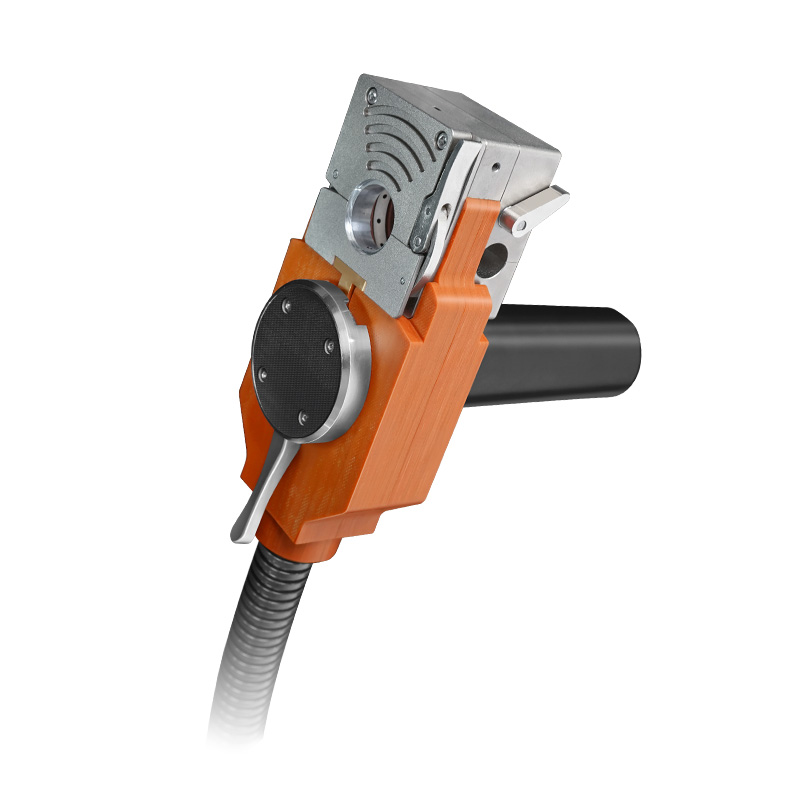
The first decision in this orbital welding machine comparison is dimensional. In the supplied KEPUNI ranges, split-type weld heads cover small tube from 3.175 mm to 25.4 mm outside diameter with a wall thickness limit of 1.5 mm. Closed 40/80/120/170 Series head systems cover 6.35 mm to 168 mm outside diameter with a wall thickness limit of 3 mm. Neither family is universally better. The correct choice is the head family that covers the actual joint envelope and can be supported by the selected power supply, procedure and validation evidence.
KEPUNI is a Shanghai-based orbital welding machine brand of Shanghai Chuanli Industrial Co., Ltd. Its listed product range includes orbital welding machines and weld heads, including the XD-20W and XD-20PRO models. For this article, the relevant question is not which KEPUNI model sounds more advanced. It is which head family fits the buyer's pipe size, wall thickness, application risk and documentation requirements.
Problem definition: the overlap is where buyers get stuck
A buyer with a single pipe size can usually screen quickly. A 12.7 mm tube with a 1.2 mm wall falls inside the 5H Series, 10H Series and XD-Split Type ranges. It also falls inside the closed 40/80/120/170 range. That overlap is the practical problem. A simple diameter check does not decide the head family by itself.
The overlap zone is roughly 6.35 mm to 25.4 mm outside diameter at a wall thickness of 1.5 mm or less. In that zone, both split-type and closed-head systems are dimensionally relevant in the supplied data. Below 6.35 mm outside diameter, the split families are the only supplied head range that covers the work. Above 25.4 mm outside diameter, the closed 40/80/120/170 range is the only supplied family that reaches the joint. Above 1.5 mm wall, the split families fall outside their stated limit, while the closed range continues to 3 mm.
The decision therefore has three layers: the dimensional envelope, the application and material validation, and the power supply and head matching. A buyer who chooses from the model name alone can end up with the wrong head family, an unnecessary second head, or a quotation that does not match the actual weld procedure.
Industry background: why the head type matters in orbital welding
Orbital welding is used where a controlled, repeatable arc travel and recorded parameters matter more than manual torch control. KEPUNI states that its orbital welding products target semiconductor, petrochemical, and food-and-beverage industries. The XD-20W product page also describes applications in pharmaceutical sanitary stainless-steel tubing and semiconductor high-purity gas delivery lines in cleanrooms. These are manufacturer application statements, not independent certification of every project.
That distinction matters. A sanitary pipe orbital welding machine may be selected for a pharmaceutical line, but the head type alone does not prove compliance with a project standard. In hygienic and high-purity work, documented weld quality and inspection criteria often control acceptance. For example, ASME BPE-2024 states a criterion for inside-diameter concavity in pharmaceutical welds of maximum 10% of nominal wall thickness, not exceeding 0.38 mm. A buyer should ask how a proposed head, power supply, procedure and inspection method will be qualified against the applicable requirement. The model name or the phrase cleanroom application does not replace that evidence.
Detailed comparison: split-type vs. closed weld heads
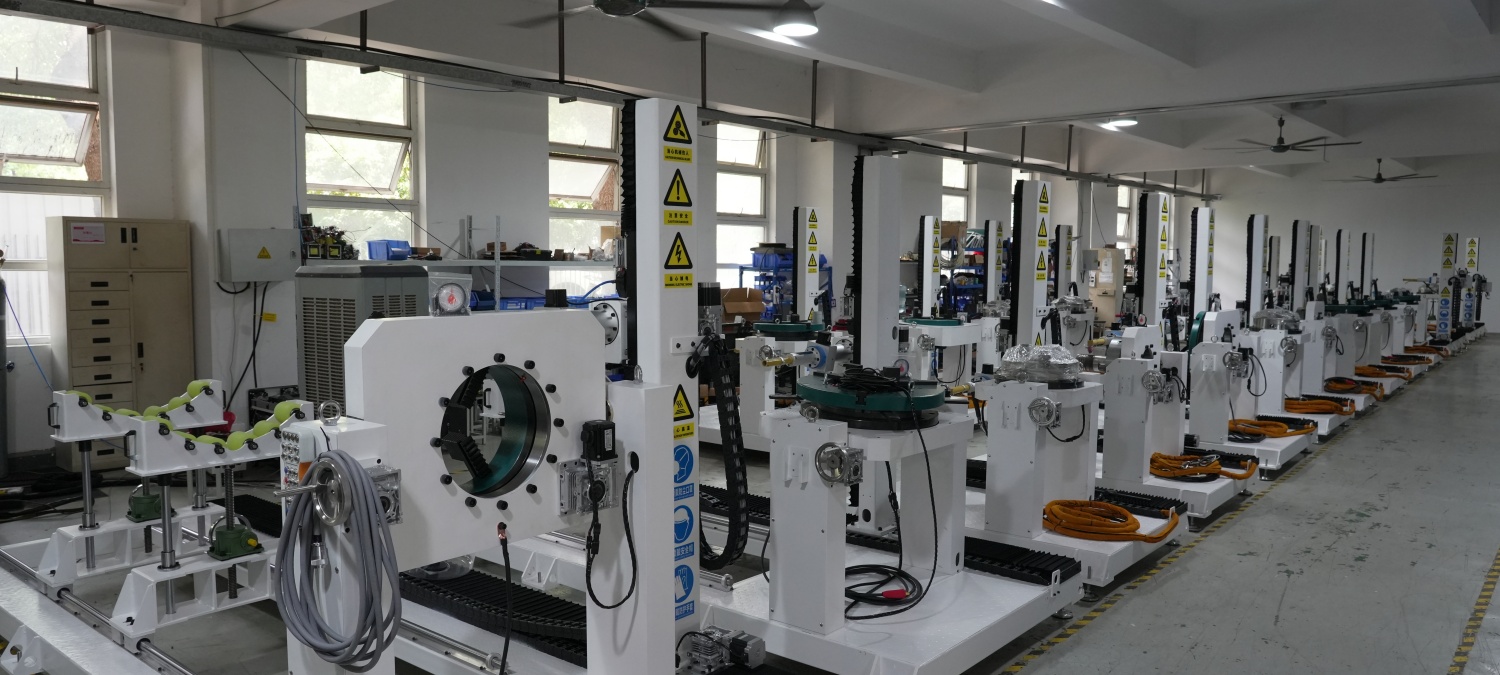
The table below uses only the stated dimensional ranges and product-family names from the supplied KEPUNI information. It compares the dimensional envelope, not clamping force, arc visibility, duty cycle or material qualification, because those details are not established in the supplied head-level data.
| Head family | Type | Stated pipe outside diameter | Stated wall thickness limit | Practical reading for the buyer |
|---|---|---|---|---|
| 5H Series | Split-type | 3.175–15.88 mm | ≤1.5 mm | Smallest split-head envelope in the supplied data. Check this family first when the tube outside diameter is within 15.88 mm and the wall is within 1.5 mm. |
| 10H Series | Split-type | 6.35–25.4 mm | ≤1.5 mm | Covers a larger split-head diameter range than the 5H Series but starts at 6.35 mm, so it does not cover the smallest 5H sizes. |
| XD-Split Type | Split-type | 3.175–25.4 mm | ≤1.5 mm | Broadest split range in the supplied data, from small tube to 25.4 mm outside diameter. The wall limit remains 1.5 mm. |
| 40/80/120/170 Series | Closed head system | 6.35–168 mm | ≤3 mm | Extends beyond the split maximum diameter and allows a heavier wall in the supplied range. Confirm the actual series and configuration for the joint. |
The table shows why a simple split-versus-closed preference is not enough. The XD-Split Type is stated to cover 3.175 mm to 25.4 mm outside diameter, while the 40/80/120/170 Series reaches 168 mm. The dimensional gap is clear at the top end. The overlap remains at the small end. At 20 mm outside diameter and 1.2 mm wall, for example, the XD-Split Type and the closed range are both dimensionally relevant. At 30 mm outside diameter, only the closed range is stated to reach the joint. At 4 mm outside diameter, only the split families are stated to cover it.
Step-by-step selection path
1. Record the real outside diameter and wall thickness
Start with the measured pipe or tube outside diameter and the nominal wall thickness. Do not use the nominal pipe size alone. A nominal size can map to different outside diameters depending on the pipe standard and product form. The supplied head ranges are stated in millimetres, so the buyer should compare like-for-like measurements in millimetres. If the wall thickness is above 1.5 mm, the split-type families fall outside their stated limit. If the outside diameter is above 25.4 mm, the split families fall outside their stated diameter range. If the outside diameter is below 6.35 mm, the closed 40/80/120/170 group does not cover it in the supplied range.
2. Use the overlap zone to compare application fit
When the joint is between 6.35 mm and 25.4 mm outside diameter with a wall of 1.5 mm or less, both head types may be dimensionally relevant. At this point, the buyer should compare the application rather than the catalogue label. For small-bore pharmaceutical sanitary tubing or semiconductor high-purity gas lines, KEPUNI states that the XD-20W is applicable to those environments. That is a useful starting point, but it is not a head-specific qualification. The buyer should ask whether the selected split head or closed head is supported for the actual tube material, surface finish, cleaning requirement and weld procedure.
For larger pipe or heavier wall work, the closed 40/80/120/170 range is the first dimensional check. Applications such as oil and gas, boiler tube, HVAC or other larger-pipe projects should not be matched by industry name alone. The same closed range may be relevant across those sectors, but the actual joint geometry, procedure and inspection requirement still decide whether a particular head is suitable.
3. Confirm material compatibility through procedure qualification
The supplied data does not provide a material-by-material compatibility table for each 5H, 10H, XD-Split or 40/80/120/170 head. It also does not establish that every head is qualified for every stainless steel grade, filler metal, cleanliness class or food-grade application. This is a key limitation. A stainless steel orbital welding machine buyer should not infer material compatibility from the word stainless in the product description. Instead, ask for the qualified procedure, sample weld record and inspection report for the actual material and wall thickness.
4. Match the head to the power supply
A head family is only one part of the system. KEPUNI lists both the XD-20PRO and XD-20W orbital welding machines. The XD-20W page states a pipe diameter range of 3.175 mm to 168 mm and a wall thickness range of 0.5 mm to 3 mm. That is a machine-level range, not proof that every head covers every size. The XD-20PRO is listed as a separate product, but the supplied evidence does not state its head-level dimensional range. A buyer should therefore request the head-to-power-supply compatibility matrix for the exact configuration.
This is where system matching can change the purchase. A machine may be listed for a wide diameter range, but the selected head, cable, cooling arrangement and procedure still need to match. The question to ask is not simply whether an XD-20PRO or XD-20W is available. It is which head, power supply, programme and accessories are approved together for the joint being welded.
5. Validate with a sample weld and documented parameters
KEPUNI states that its systems use 12 welding intervals and provide parameter logging or printing for welding-interval data. Feature presence is useful for traceability, but it does not prove weld quality or compliance by itself. The buyer should request a sample weld on the production material and wall thickness, then review the parameter record, inspection result and any required qualification document. KEPUNI's stated risk-control process includes a mandatory weld sample test before batch production, a full inspection report per unit and customer approval of the sample before mass production. Those steps are more useful than a brochure claim when the application is regulated or high-purity.
6. Plan spare parts and service before comparing price
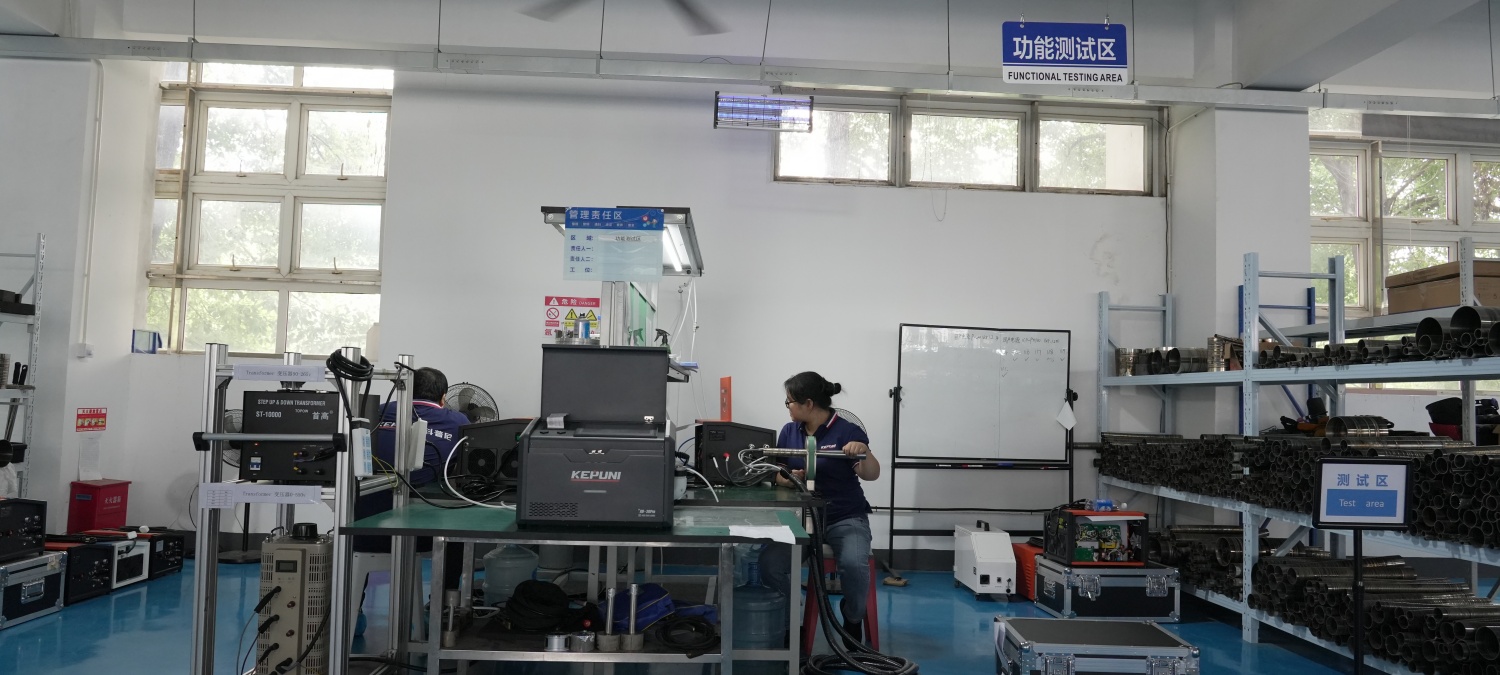
Head choice also affects the spare-parts and service plan. KEPUNI states that spare parts stock is maintained at its Shanghai headquarters, with regional distributor inventory in Europe, Asia and the Middle East. A standard spare-parts kit is stated to be included with every machine, and parts are stated to be available within 7 to 15 days globally. These are company-reported service arrangements. The buyer should confirm the specific consumables and wear parts for the chosen split or closed head, especially when the production line cannot tolerate long stops.
Use cases: how the decision changes by joint type
Small-diameter, thin-wall tube
For tube from 3.175 mm to 25.4 mm outside diameter with a wall of 1.5 mm or less, the split-type families are the direct dimensional fit. The 5H Series covers 3.175 mm to 15.88 mm. The 10H Series covers 6.35 mm to 25.4 mm. The XD-Split Type covers the full 3.175 mm to 25.4 mm split range in the supplied data. A shop that works mainly in small sanitary tube may be able to standardise around a split family, subject to model availability and the required procedure. A shop that also needs to weld above 25.4 mm or above 1.5 mm wall will need a closed-head option or a separate process.
Larger pipe or heavier wall
For pipe from 6.35 mm to 168 mm outside diameter with a wall up to 3 mm, the closed 40/80/120/170 Series is the supplied range to examine. This range is wider than the split families and reaches wall thicknesses that the split heads do not. It does not follow that every closed-head model is suitable for every application in that envelope. The buyer should confirm the specific series, head configuration and procedure for the joint. Projects described as orbital welding machine for oil and gas, orbital welding machine for boiler tube or orbital welding machine for HVAC may begin with the closed range because of pipe size, but the application requirements still control the final selection.
Mixed production with small and large joints
A workshop that welds 6 mm tube one day and 100 mm pipe the next cannot rely on one narrow head family. The supplied data shows a real split between the XD-Split Type at 3.175–25.4 mm and the closed 40/80/120/170 range at 6.35–168 mm. In mixed production, the buyer should map the annual size mix and decide whether the work is concentrated in the split range, the closed range or both. The overlap zone may allow a split head to handle small work while a closed head handles larger pipe, but the final plan should be based on the actual joint list, not on a general claim that one head does everything.
Cleanroom, pharmaceutical, food-grade and semiconductor work
Cleanroom and sanitary work adds validation pressure. KEPUNI states that the XD-20W is applicable to pharmaceutical sanitary stainless-steel tubing and semiconductor high-purity gas delivery lines in cleanrooms. That statement can help a buyer identify a starting system, but it does not establish FDA compliance, cleanroom certification or sanitary qualification for a specific project. A buyer specifying an orbital welding machine for pharmaceutical, an orbital welding machine for food grade, an orbital welding machine for semiconductor or an orbital welding machine for clean room should request the actual material certificates, weld procedure qualification, inspection records and conformity documents required by the project. If a CE-certified orbital welding machine or an FDA compliant orbital welding machine is required, the buyer should ask for the specific declaration or compliance evidence rather than relying on the product description.
Material compatibility: what the supplied specs do and do not establish
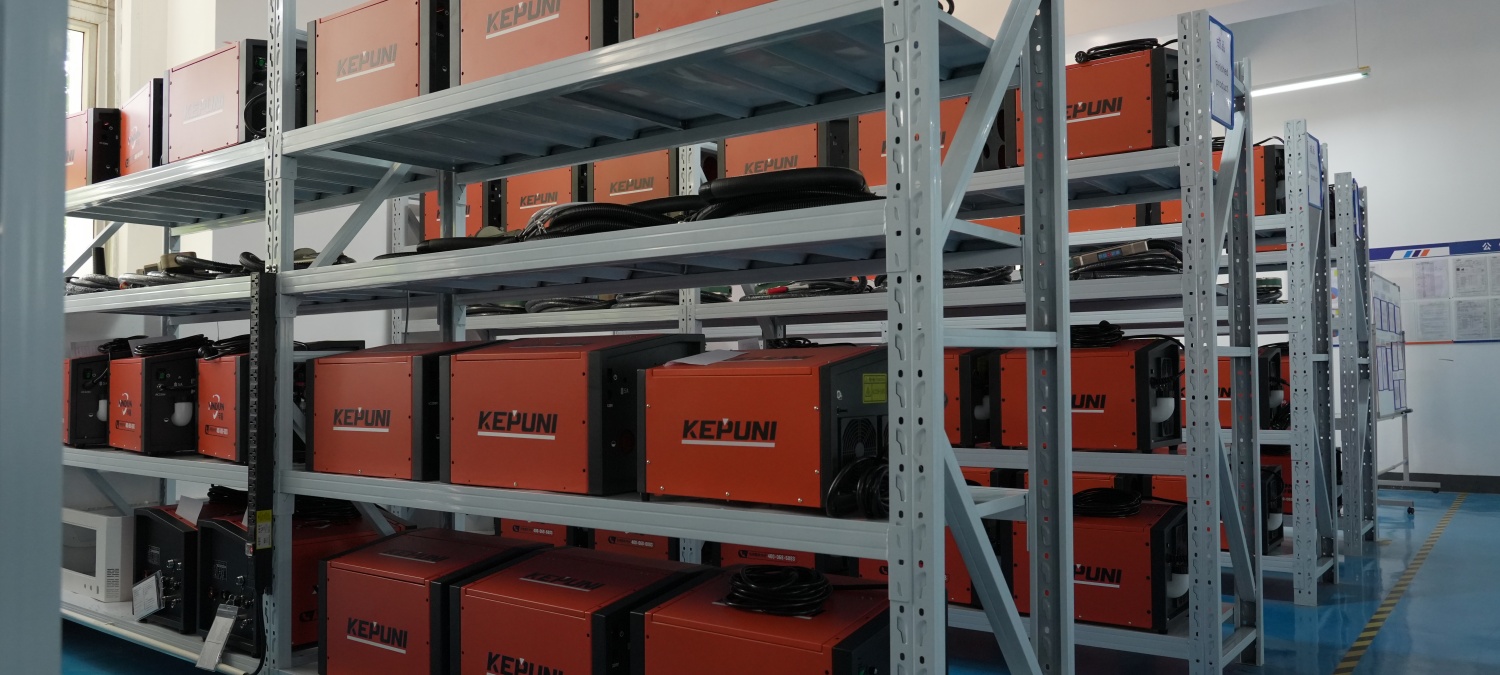
The comparison table is a dimensional comparison. It does not show that the 5H Series, 10H Series, XD-Split Type or 40/80/120/170 Series are qualified for every stainless steel, duplex, carbon steel or high-nickel material. The supplied data also does not give a head-level material compatibility matrix, maximum heat input, purge requirement or cleaning standard. Buyers should treat material compatibility as a qualification item, not as an assumption from the model name.
This is especially important for a stainless steel orbital welding machine used in sanitary or high-purity service. The presence of a closed head or a split head does not prove that the internal weld profile meets a project criterion. ASME BPE-2024 gives one example of a quantitative criterion for pharmaceutical welds: inside-diameter concavity should be a maximum of 10% of nominal wall thickness, not exceeding 0.38 mm. A supplier should explain how the proposed head, power supply and procedure will be tested against the applicable criterion. If the supplier cannot provide that evidence, the buyer should not treat the head type as a compliance shortcut.
Cost and budget signals: separate head choice from system price
Price should follow the configuration, not lead it. The supplied 2026 price evidence places KEPUNI XD-20PRO orbital welding machines around USD 8,400 to 8,600. The same evidence places premium industry-compliant solutions often used in pharmaceutical or semiconductor work above USD 25,000 to 40,000+. These figures are system-level reference points. They are not a split-head versus closed-head price list, and they should not be used to assume that one head family is always cheaper than the other.
A useful orbital welding machine price comparison should include the power supply, selected head or heads, cables, cooling arrangement if required, spare-parts kit, training, shipping and documentation. If the project needs both a small-tube split head and a larger closed head, the budget should include both configurations rather than pretending that one head covers the full size mix. Buyers comparing orbital welding machine manufacturers should request a configured quotation against the actual joint list.
FAQ
Does choosing a split or closed head change the compliance requirement?
No. Compliance depends on the applicable standard, material, weld procedure qualification, inspection results and documentation package. A split head and a closed head are different dimensional tools, not different compliance categories. ASME BPE-2024, for example, sets a criterion for inside-diameter concavity in pharmaceutical welds of maximum 10% of nominal wall thickness, not exceeding 0.38 mm. The buyer should ask how the proposed system will meet the project requirement, and should not accept a head-type claim as proof of compliance.
Which head handles 25.4 mm outside diameter and 2.0 mm wall?
The split-type families are stated with a wall limit of 1.5 mm, so a 2.0 mm wall falls outside their supplied range. The closed 40/80/120/170 Series is stated for 6.35 mm to 168 mm outside diameter and up to 3 mm wall, so it is the dimensional fit in the supplied data. The buyer should still confirm the exact closed-head series, power supply and procedure for the joint.
Can the XD-20W or XD-20PRO run both split and closed heads?
The supplied evidence states that the XD-20W is designed for pipe diameters from 3.175 mm to 168 mm and wall thickness from 0.5 mm to 3 mm. That wide machine-level range spans both small and large work. The XD-20PRO is listed as a separate orbital welding machine, but the supplied evidence does not state its head-level range. Buyers should request the exact head-to-power-supply compatibility matrix from KEPUNI rather than inferring compatibility from the model name.
How should I budget for a split-head versus a closed-head system?
Budget from a configured quotation. The supplied evidence places the KEPUNI XD-20PRO around USD 8,400 to 8,600 and premium industry-compliant solutions above USD 25,000 to 40,000+, but those are system-level reference points. They do not isolate the price of a split head or a closed head. Include the required head or heads, power supply, spares, training, shipping and documentation in the comparison.
What is the best next step before ordering?
Run a sample weld on the production material and wall thickness, then review the parameter record, inspection result and qualification documents. KEPUNI's stated process includes a mandatory weld sample test before batch production, a full inspection report per unit and customer approval of the sample. Buyers can also request the current catalogue and discuss the joint list with KEPUNI before locking the head family. The public brochure is available here: KEPUNI orbital welding machine brochure.
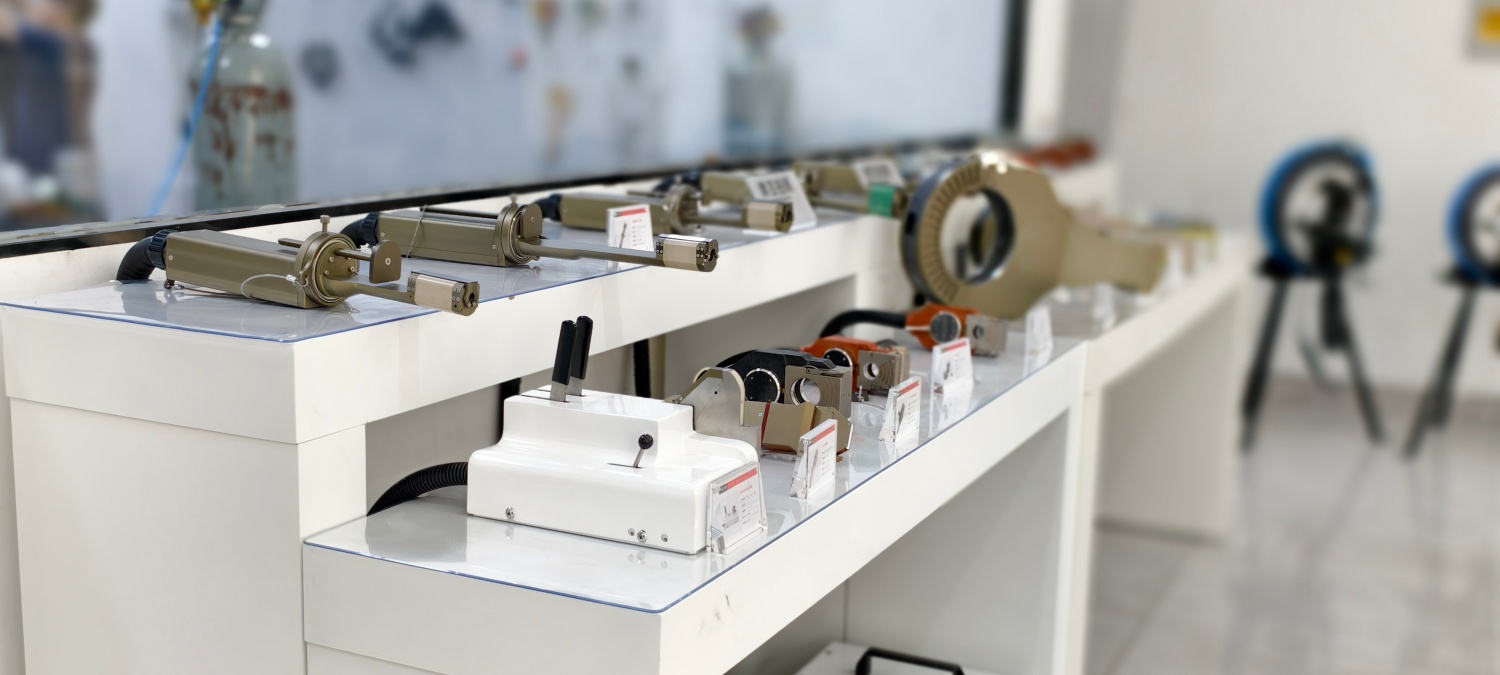
Conclusion: choose by joint envelope, then validate
Split-type and closed weld heads serve different dimensional jobs in the supplied KEPUNI range. The 5H Series, 10H Series and XD-Split Type cover small tube from 3.175 mm to 25.4 mm outside diameter with a wall limit of 1.5 mm. The closed 40/80/120/170 Series covers larger pipe from 6.35 mm to 168 mm outside diameter with a wall limit of 3 mm. For a joint below 6.35 mm, the split families are the direct fit. For a joint above 25.4 mm or above 1.5 mm wall, the closed range is the direct fit. In the overlap zone, the decision should move to application validation, material qualification and power supply matching.
The practical purchase rule is simple: select the head family by measured outside diameter and wall thickness, confirm the exact head-to-power-supply configuration, then approve the system through a sample weld and document review. The XD-20W and XD-20PRO are relevant system references, but they do not replace that selection work. Buyers comparing orbital welding machine manufacturers should ask for the joint list, procedure and inspection evidence before treating any split or closed head as the right answer.
Have Questions or Need More Details?
Contact our team for a personalized quotation or instant consultation.
Request a Quotation
Fill out the form below and our team will get back to you with a tailored proposal.
WhatsApp Direct Chat
Prefer to chat in real-time? Message us on WhatsApp for instant assistance & quick answers.
- Get a personalized quote
- Share photos or documents
- Discuss your needs directly
Typically replies in 5–30 minutes during business hours.