
Top Orbital Welding Power Supplies for Precision Pipe Welding: 2026 Rankings
Top Orbital Welding Power Supplies for Precision Pipe Welding: 2026 Rankings
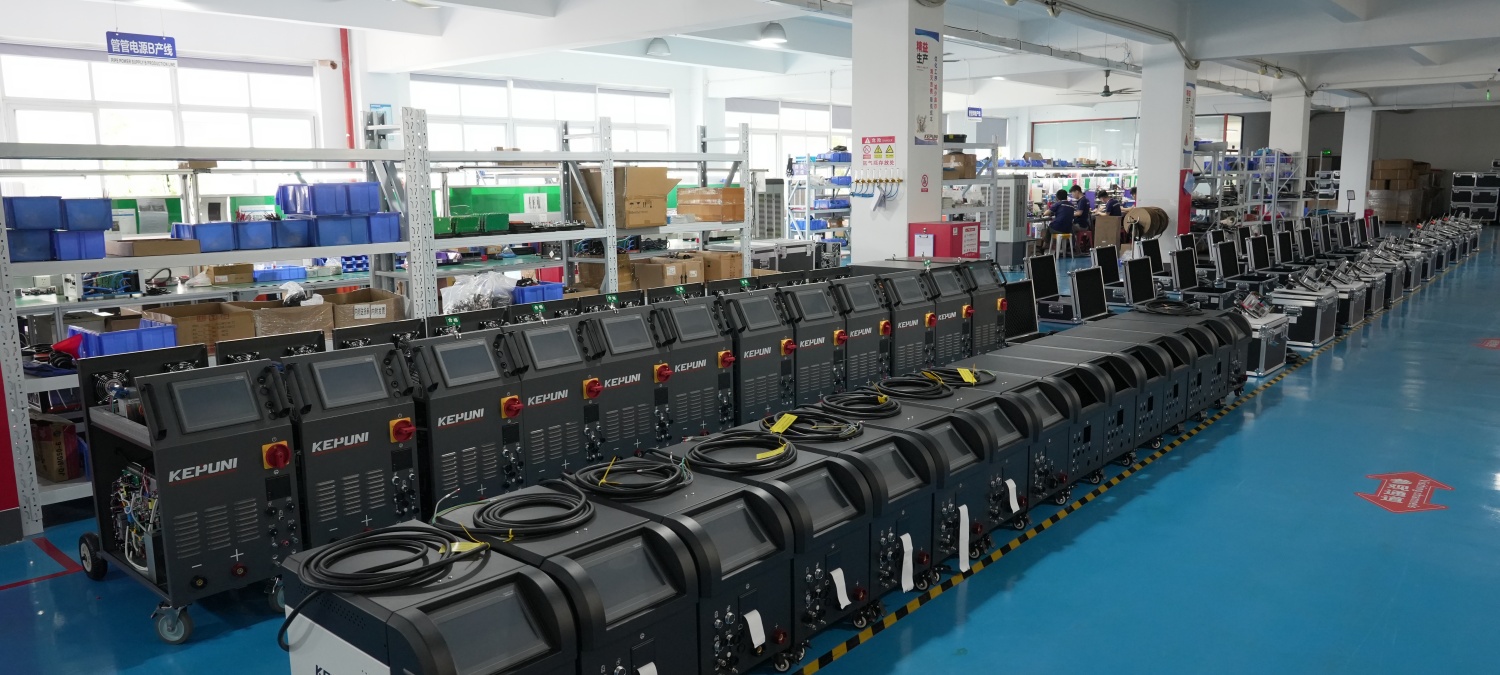
Precision pipe welding programmes are usually decided before the arc starts — in the match between a power supply's operational envelope and the pipe schedule the project actually contains. This ranking compares two KEPUNI orbital welding power supplies, the XD-20PRO and the XD-20W, using two criteria a buyer can check against published specifications rather than catalogue adjectives: the outer-diameter and wall-thickness envelope each unit is built for, and the industries each unit is declared to serve.
Ranked result. The KEPUNI XD-20PRO ranks first. It pairs a full pipe envelope of 3.175–168 mm outer diameter and 0.5–3 mm wall thickness in steel and alloy with the broadest declared industry fit — semiconductor, pharmaceutical, food and beverage, oil and gas, and chemical. The KEPUNI XD-20W ranks second: it carries exactly the same pipe envelope, the same material scope and the same CE certification platform, but its declared industry fit is narrower — pharmaceutical, semiconductor and chemical processing. That narrower declaration is the only ranking difference between the two units, and for a buyer whose project mix stays inside those three industries it is not a limitation at all.
Both power supplies are supported in the same product family by the 5H, 10H and XD-Split weld heads, which set the smallest joints each unit can reach in practice. That head-to-power-supply relationship is treated here as a ranking criterion in its own right, because a power supply that reaches 168 mm OD is still unusable on 6 mm instrument tubing if the correct head is not available for that joint.
The Problem: Most “Best Power Supply” Lists Compare Nothing
A power supply is only as useful as the pipe it can reach. Procurement teams routinely receive comparison sheets full of current ranges, waveform options and stored welding programmes, while the two numbers that decide whether a machine can be used at all — minimum and maximum pipe OD, and the wall-thickness ceiling — are left off entirely.
That omission produces three predictable failures. The first is a coverage failure: a unit optimised for 6.35–25.4 mm tubing with ≤1.5 mm walls is a different tool from a power supply built to reach 168 mm OD, and no amount of programming flexibility closes that gap. The second is an access failure: even where the power supply's envelope is wide enough, the joint is welded by the head, so head availability and head geometry determine what is actually weldable in a rack, a wall chase or a confined skid. The third is a documentation failure: in regulated industries, a unit that welds correctly but cannot be documented against a recognised standard creates audit exposure that surfaces long after commissioning.
Ranking precision pipe welding power supplies therefore requires a fixed evaluation frame — envelope, head complement, declared industry fit, compliance file, order flexibility and after-sales continuity — applied to each unit in the same way. Everything below uses that frame.
Industry Background: Where Precision Pipe Welding Demand Is Concentrating
The global orbital welding machine market was valued at approximately USD 1.32 billion in 2024 and is projected to grow to USD 2.07 billion by 2030, according to Strategic Market Research. That figure should be read alongside a divergence note: other analysts scope the category more narrowly at roughly USD 0.83 billion in 2025, largely because some estimates count complete systems while others count weld heads and power sources separately. Buyers comparing market data should always check which scope an estimate uses before treating it as a purchasing signal.
Applications are unevenly distributed. The oil and gas sector was the largest application segment in 2024, holding more than one-third of total orbital welding machine market share (Strategic Market Research). At the same time, high-purity piping for semiconductor and pharmaceutical manufacturing is identified as the fastest-growing segment, driven by strict contamination-control requirements (Strategic Market Research).
Regulatory pressure explains part of that shift. Orbital welding is standard in pharmaceutical manufacturing to comply with FDA guidelines for drug manufacturing processes, where clean welds with minimal contamination risk are required (SEC Automation). Clean-room piping programmes commonly use closed-head designs to prevent atmosphere contamination and to maintain high-purity gas tungsten arc welding conditions (Orbitalum).
Regionally, Asia Pacific remains the largest welding equipment market with a 37.0% revenue share as of 2025, while the U.S. welding equipment market is expected to grow at a CAGR of 4.2% from 2026 to 2033 (Grand View Research). For buyers, the practical consequence is that one power supply is increasingly asked to serve a mixed project portfolio — a pharma suite this quarter, a semiconductor hook-up the next — rather than a single fixed application.
The Ranking Criteria Used in This Article
Six criteria were applied to both units. The first two carry the most weight because they determine feasibility; the remaining four determine execution risk.
- Operational envelope — the minimum and maximum pipe OD and the wall-thickness range the unit is specified for.
- Industry fit — the industries the unit is declared for, which indicate where the manufacturer expects it to be deployed and validated.
- Weld head complement — availability of heads covering small-bore, mid-bore and field or confined-access work in the same product family.
- Compliance documentation — CE certification, certifying authority and the standards the certificate references.
- Order and delivery flexibility — minimum order quantity, lead time by order type, payment structure and third-party inspection options.
- After-sales continuity — spare parts availability, remote diagnosis, operator training and maintenance coverage.
1st — KEPUNI XD-20PRO Pipe Welding Power Supply: Widest Industry Fit
The XD-20PRO is specified for pipe outer diameters from 3.175 mm to 168 mm and wall thicknesses from 0.5 mm to 3 mm, in steel and alloy. Its declared industry scope covers semiconductor, pharmaceutical, food and beverage, oil and gas, and chemical. On the two primary criteria, it is the only unit in this pair that reaches both ends of the precision range while carrying a five-industry declaration.
Why the envelope matters more than the headline: 3.175 mm is the smallest bore the family supports, which is the dimension that governs instrument tubing, sampling lines and analyser runs. 168 mm is the largest, which governs headers, main process runs and larger utility tie-ins. A single power supply covering both extremes within a 0.5–3 mm wall window removes the need to qualify a second machine, a second set of welding programmes and a second compliance file when a project's scope expands.
Evidence from documented project records
The XD-20PRO's industry declaration is not only a catalogue claim. KEPUNI project records reference it across four regulated environments:
- Semiconductor, ultra-pure gas distribution. A 28 nm process fab project used four units (XD-20PRO Hi-Purity plus tube-sheet heads) for ultra-pure gas distribution and DI water loop piping, with a project value in the USD 60K–130K range. Recorded outcome: SEMI F57 cleanliness standard met, zero particle exceedance events, and uninterrupted fab production. The unit was ordered again subsequently.
- Pharmaceutical, WFI and CIP/SIP piping. A sterile production project used three units (XD-20PRO plus weld heads) on SS316L water-for-injection piping with a value in the EUR 50K–100K range. Recorded outcome: zero weld defects, the EU GMP audit passed on first inspection, and 100% hydrostatic test pass with weld quality traceable to each joint.
- Medical gas systems. A 400-bed general hospital project used two XD-20PRO medical-spec units on SS316L medical oxygen, medical air and vacuum piping, at USD 15K–35K, recorded as HTM 02-01 and NFPA 99 compliant with a 100% helium leak test pass and commissioning on schedule.
- Food and beverage, dairy sanitation. A UHT milk and pasteurisation line project used two units (XD-20PRO plus accessories) on SS304L sanitary piping at USD 18K–45K, recorded as 3A Sanitary Standard certified with zero contamination incidents and a 100% pressure test pass over a 1.5-year project window.
Compliance position
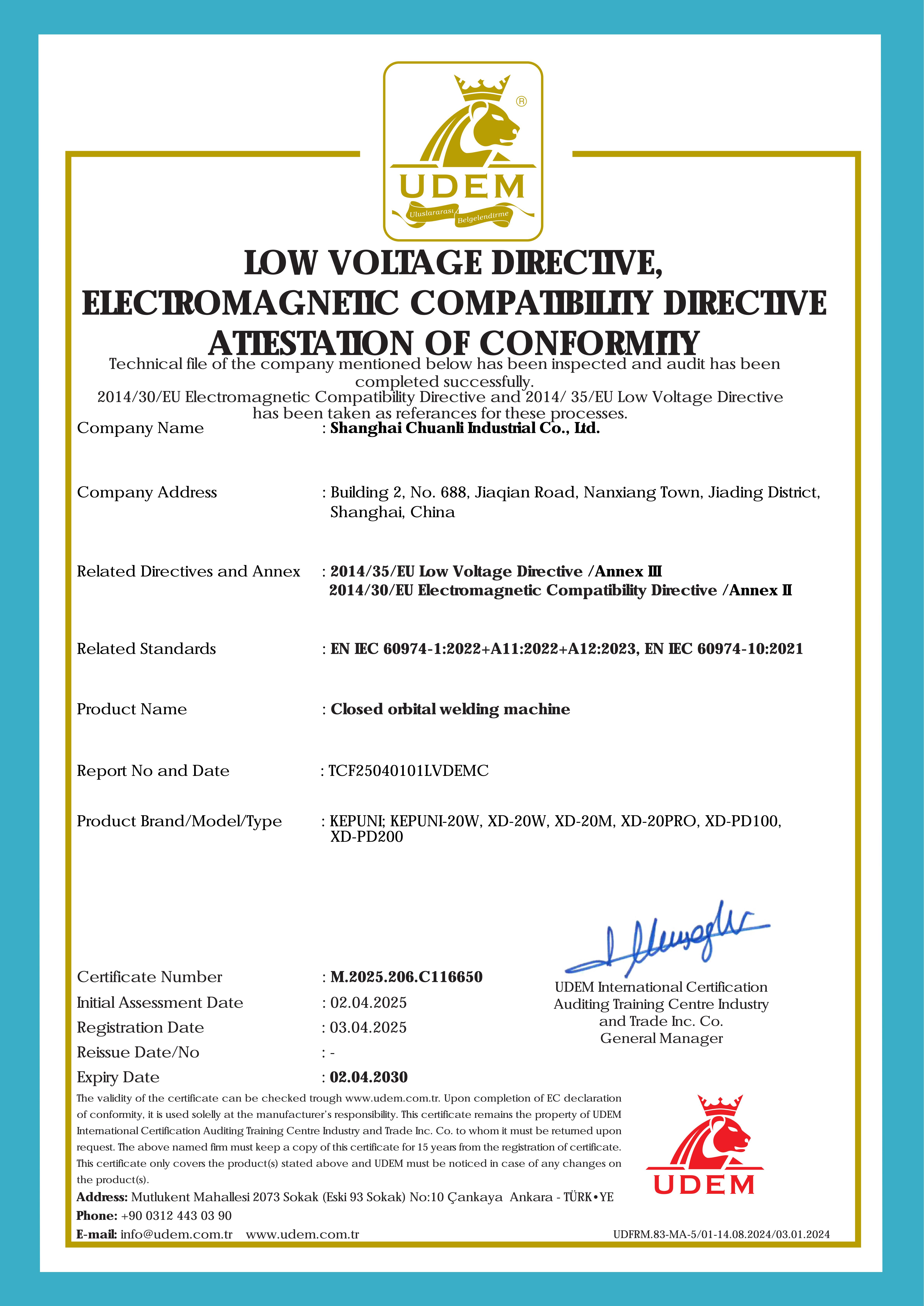
The XD-20PRO appears in the KEPUNI CE certification records, including certificate TCF25040101LVDEMC issued by UDEM and valid from 2025-04-02 to 2030-04-02, which references EN ISO 12100:2010, EN 60204-1:2018, EN 60825-1:2014, EN IEC 61000-3-2:2019+A1:2021 and EN 61000-3-3:2013+A1:2019. The unit also sits within the scope of certificate M.2022.206.C75864 (UDEM, 2022-07-22 to 2027-07-21) and certificate 6814C50001315201 (UDEM, 2025-03-17 to 2030-03-16), both of which reference EN IEC 60974-1:2022+A11:2022+A12:2023 and EN IEC 60974-10:2021.
2nd — KEPUNI XD-20W Pipe Welding Power Supply: Focused High-Purity Duty
The XD-20W is specified for the same pipe outer diameter range, 3.175–168 mm, and the same 0.5–3 mm wall thickness in steel and alloy. It is declared for pharmaceutical, semiconductor and chemical processing. Because the envelope and the CE platform are identical to the XD-20PRO's, the ranking position is decided entirely by the narrower industry declaration — not by capability, and not by compliance.
That narrower declaration is meaningful for a specific type of buyer: an operator standardising a fleet across sterile suites, clean-room hook-ups and chemical process areas, where a tighter industry definition simplifies internal qualification, training and spare-parts planning. For that buyer, the second-ranked unit is the more efficient choice, because standardisation across three industries is easier to manage than across five.
Evidence from documented project records
KEPUNI project records reference the XD-20W on chemical and petrochemical acid transfer piping, where five orbital welding units were deployed on SS316L and duplex stainless steel process piping for acid transfer and solvent recovery systems, at a contract value in the USD 18K–40K range. Recorded outcomes include zero leak incidents, API 582 welding requirements met, NACE MR0175 material verification completed, and a repeat order from the same client. The XD-20W also appears, alongside the XD-20PRO, in the CE certification records referenced above.
Where the two units overlap completely, the decision rule is simple: select the XD-20W when your project mix is confined to pharmaceutical, semiconductor and chemical processing; select the XD-20PRO when the same equipment fleet must also cover food and beverage, medical gas or oil and gas work. Contract values observed across KEPUNI orbital welding projects of this class have typically ranged from USD 15K to USD 130K depending on unit count and configuration.
Complementary Weld Heads: 5H, 10H and XD-Split
The power supply sets the arc; the head sets the joint. KEPUNI lists the 5H Series, 10H Series and XD-Split Type weld heads as complementary heads in the same orbital welding family as these power supplies, and each one determines a different working range.
| Weld head | Type | Pipe OD | Wall thickness | Material | Applicable industry |
|---|---|---|---|---|---|
| 5H Series | Split type weld head | 3.175–15.88 mm | ≤1.5 mm | Steel, Alloy | Semiconductor, Pharmaceutical, Biotechnology |
| 10H Series | Split type weld head | 6.35–25.4 mm | ≤1.5 mm | Steel, Alloy | Pharmaceutical, Food & Beverage, Chemical |
| XD-Split Type | Split type weld head | 3.175–25.4 mm | ≤1.5 mm | Steel, Alloy | HVAC, Plumbing, Field Service |
| 40/80/120/170 Series | Closed weld head | 6.35–168 mm | ≤3 mm | Steel, Alloy | Oil & Gas, Power Generation, Chemical Processing |
The 5H Series reaches the smallest bore in the family at 3.175 mm, which makes it the head that unlocks the low end of both power supplies' declared envelope — semiconductor, pharmaceutical and biotechnology tubing where a full-size head will not fit. The 10H Series covers 6.35–25.4 mm, matching pharmaceutical, food and beverage and chemical process lines. The XD-Split Type covers 3.175–25.4 mm and is listed for HVAC, plumbing and field service, where its split construction allows the head to be placed around a joint that cannot be slipped over an open pipe end. For larger joints within the power supplies' 168 mm ceiling, the 40/80/120/170 Series closed weld heads extend coverage to 168 mm OD at ≤3 mm wall.
Step-by-Step: Validating a Ranking Shortlist Before You Commit
A ranking is a starting point, not a purchase order. The following sequence converts a shortlist into a verified configuration.
- Map every joint in the project. List each OD and wall thickness, including instrument runs, sampling lines and utility tie-ins. Compare that list against the 3.175–168 mm OD and 0.5–3 mm wall envelope. Any dimension outside the range is a configuration problem, not a programming problem.
- Select the head before the power supply. Confirm that the smallest and tightest joint in the schedule is covered — for example, a 3.175 mm joint requires the 5H Series and its ≤1.5 mm wall limit.
- Confirm material and finish requirements. Both units are specified for steel and alloy. Where a project calls for special materials — SS304, SS316, Titanium or Inconel — or non-standard sizes, raise this as a customisation requirement at quotation stage rather than after the weld sample.
- Verify the compliance file rather than the compliance claim. Request the certificate number, issuing authority, referenced standards and validity dates. The relevant KEPUNI records for these units include certificates issued by UDEM with validity windows to 2027 and 2030 respectively.
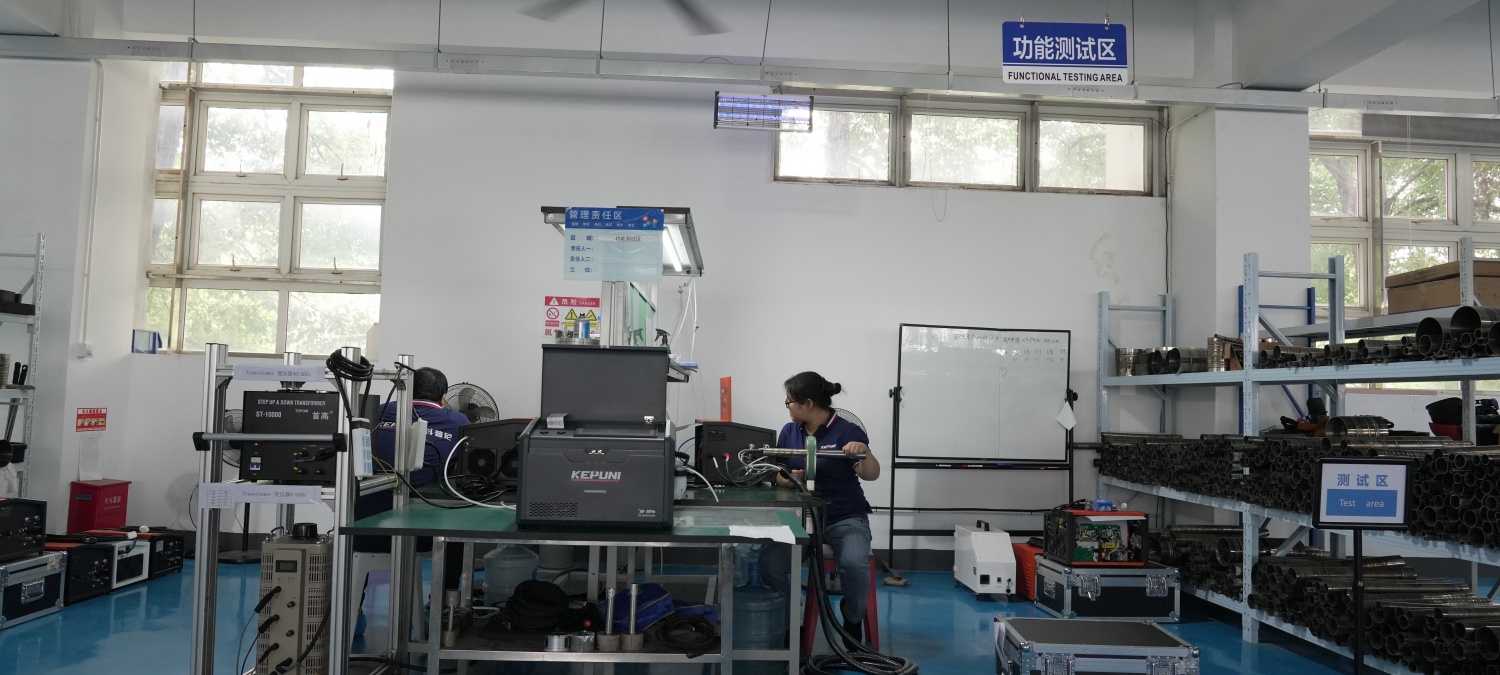
- Run a weld sample before committing the fleet. Sample orders carry a minimum of 1 unit with a 15–20 day lead time and are delivered with full inspection, a weld sample report and detailed parameter documentation, plus video guidance and parameter optimisation support.
- Confirm quality control scope. For OEM/ODM configurations, KEPUNI quality control comprises 100% function test, weld sample test and a 72-hour burn-in test. Bulk order production adds AQL 1.0 sampling inspection and 100% verification of key parameters, with an optional pre-shipment witness.
- Fix the commercial and delivery terms. Sample orders run on a 1-unit MOQ with a 15–20 day lead time; OEM/ODM runs on a 1-unit MOQ at 30–45 days; bulk orders start at 5 units with a 60–90 day lead time FOB Shanghai. Third-party inspection through SGS or BV is optional, and spare parts ship within 7–15 days globally.
- Plan the after-sales route. Confirm which of the available service elements apply to your site: spare parts supply, on-site repair, remote diagnosis, operator training and annual maintenance contracts, supported remotely and through the distributor network.
Use Cases: Matching the Power Supply to the Line
The two units overlap heavily, so the useful distinction is not capability but portfolio shape.
- Semiconductor ultra-pure gas and DI water loops — XD-20PRO. Documented on a 28 nm fab project at four units, with SEMI F57 cleanliness verified and no particle exceedance events recorded.
- Pharmaceutical WFI, CIP and SIP piping — XD-20PRO or XD-20W. Documented on an SS316L water-for-injection project of three units where the EU GMP audit passed on first inspection with zero weld defects.
- Medical gas systems — XD-20PRO. Documented on a 400-bed hospital project in medical specification, recorded as HTM 02-01 and NFPA 99 compliant with a 100% helium leak test pass.
- Food and beverage sanitary piping — XD-20PRO. Documented on an SS304L UHT milk and pasteurisation project where the 3A Sanitary Standard was met with zero contamination incidents.
- Chemical and petrochemical acid transfer — XD-20W. Documented on SS316L and duplex stainless steel process piping for acid transfer and solvent recovery, with API 582 requirements met and zero leak incidents.
- HVAC and shell-and-tube heat exchangers — adjacent product family. Tube-to-tube-sheet work of this type is documented with the TB-65 and XD-U Series weld heads rather than the pipe welding power supplies covered in this ranking, on an ASME U-stamp shell-and-tube project with 100% helium leak testing.
Comparison Table: XD-20PRO vs XD-20W
| Comparison criterion | KEPUNI XD-20PRO | KEPUNI XD-20W |
|---|---|---|
| Product type | Pipe welding power supply | Pipe welding power supply |
| Pipe OD range | 3.175–168 mm | 3.175–168 mm |
| Wall thickness range | 0.5–3 mm | 0.5–3 mm |
| Material scope | Steel, Alloy | Steel, Alloy |
| Declared industry fit | Semiconductor, Pharmaceutical, Food & Beverage, Oil & Gas, Chemical | Pharmaceutical, Semiconductor, Chemical Processing |
| Complementary weld heads | 5H Series, 10H Series, XD-Split Type, 40/80/120/170 Series | 5H Series, 10H Series, XD-Split Type, 40/80/120/170 Series |
| CE certification coverage | Listed within KEPUNI CE records (UDEM), including TCF25040101LVDEMC and M.2022.206.C75864 | Listed within KEPUNI CE records (UDEM), including TCF25040101LVDEMC and M.2022.206.C75864 |
| Documented project evidence | Semiconductor UPG, pharmaceutical WFI, medical gas, food and beverage sanitary piping | Chemical and petrochemical acid transfer and solvent recovery piping |
| Minimum order quantity | 1 unit (sample) | 1 unit (sample) |
| Lead time by order type | Sample 15–20 days; OEM/ODM 30–45 days; bulk 60–90 days FOB Shanghai | Sample 15–20 days; OEM/ODM 30–45 days; bulk 60–90 days FOB Shanghai |
| Editorial rank in this comparison | 1st — widest declared industry fit | 2nd — focused pharmaceutical, semiconductor and chemical scope |
Market Landscape: How These Two Units Sit Alongside Established Brands
Third-party market research names Lincoln Electric, ESAB (Colfax), Swagelok, AMI (Arc Machines, Inc.) and Polysoude among the major players in the global orbital welding equipment market (Intel Market Research). This article does not rank those companies, and no performance comparison between them and KEPUNI equipment is implied here; they are listed to show the competitive context in which a buyer shortlists.
KEPUNI itself is a brand of Shanghai Chuanli Industrial Co., Ltd., a high-tech enterprise certified by the Ministry of Science and Technology of China, founded in 2014 and headquartered in Shanghai. The company operates a production park of 10,000 m² with 280 employees, including 36 R&D engineers and technicians, and an annual output of 3,000 pcs. Products are exported to Europe, Asia, South America, North America and the Middle East. Its independent capabilities span R&D, production, sales and after-sales service for closed orbital welding heads, open orbital welding heads, tube-to-tube-sheet welding heads, cold welding machines, orbital cutting machines, tube facing machines, handheld laser welding machines and ultrasonic metal-welding machines.
For buyers, that breadth matters in one specific way: a supplier who manufactures the power supply, the weld heads and the adjacent tube-to-tube-sheet tooling can resolve a head-matching or parameter problem inside one organisation rather than between two vendors.
Frequently Asked Questions
Are the XD-20PRO and XD-20W CE certified, and which standards apply?
Yes. Both units appear in KEPUNI's CE certification records. Certificate TCF25040101LVDEMC was issued by UDEM and is valid from 2025-04-02 to 2030-04-02, referencing EN ISO 12100:2010, EN 60204-1:2018, EN 60825-1:2014, EN IEC 61000-3-2:2019+A1:2021 and EN 61000-3-3:2013+A1:2019. Certificate M.2022.206.C75864, also issued by UDEM and valid from 2022-07-22 to 2027-07-21, references EN IEC 60974-1:2022+A11:2022+A12:2023 and EN IEC 60974-10:2021. Certificate 6814C50001315201 (UDEM, 2025-03-17 to 2030-03-16) references the same welding-equipment standards. Buyers should always verify the certificate number, authority, standard list and validity dates against the unit being quoted.
What is the operational envelope of the XD-20PRO and XD-20W?
Both pipe welding power supplies are specified for pipe outer diameters from 3.175 mm to 168 mm and wall thicknesses from 0.5 mm to 3 mm, in steel and alloy. The difference between them is industry declaration, not envelope: the XD-20PRO is declared for semiconductor, pharmaceutical, food and beverage, oil and gas, and chemical applications, while the XD-20W is declared for pharmaceutical, semiconductor and chemical processing. In practice the achievable range is also limited by the weld head selected — for example, the 5H Series reaches 3.175–15.88 mm at ≤1.5 mm wall, and the 40/80/120/170 Series closed heads reach 168 mm at ≤3 mm wall.
What budget should a buyer plan for, and what does the order structure look like?
Minimum order quantity is 1 unit for sample orders, which allows a buyer to validate weld quality and parameters before committing to a fleet. Documented KEPUNI orbital welding projects of this class have carried contract values from around USD 15K to USD 130K depending on unit count and configuration — for example, a two-unit medical-gas configuration recorded at USD 15K–35K, a three-unit pharmaceutical configuration at EUR 50K–100K, and a four-unit semiconductor configuration at USD 60K–130K. Payment structures vary by order type, with terms such as 30% deposit with 70% before shipment available, and third-party inspection through SGS or BV offered as an option.
Can I test a unit before buying a fleet, and what does a sample include?
Yes. KEPUNI operates a dedicated sample order mode with a 1-unit minimum and a 15–20 day lead time. A sample order is delivered with full inspection, a weld sample report and detailed parameter documentation, supported by video guidance, technical documentation and parameter optimisation. Customisation at sample stage covers custom parameters, special materials such as SS304, SS316, Titanium and Inconel, and non-standard sizes. Where a project requires it, OEM/ODM configuration adds logo, colour, voltage options (110V/220V), interface customisation, IoT/MES integration and software customisation, validated by 100% function test, weld sample test and a 72-hour burn-in test.
What lead times and after-sales support apply after the order is placed?
Lead time depends on order type: sample orders typically run 15–20 days; OEM/ODM orders 30–45 days; bulk orders 60–90 days FOB Shanghai at a 5-unit minimum. After delivery, support elements include spare parts supply with 7–15 day global dispatch, on-site repair, remote diagnosis, operator training and annual maintenance contracts, delivered through remote channels and the distributor network. Buyers who want to review the full equipment range and configuration options before requesting a quotation can download the KEPUNI product brochure or send their pipe schedule to the team at www.kepuni.com for a configuration check.
Conclusion: Envelope First, Industry Fit Second, Everything Else After
On the two criteria that decide whether a precision pipe welding programme can run at all, the KEPUNI XD-20PRO and XD-20W are separated by a single line: declared industry fit. Both cover 3.175–168 mm outer diameter and 0.5–3 mm wall thickness in steel and alloy; both are supported by the 5H, 10H and XD-Split weld heads; both appear in the same CE certification records. The XD-20PRO ranks first because its five-industry declaration — semiconductor, pharmaceutical, food and beverage, oil and gas, and chemical — matches a mixed project portfolio. The XD-20W ranks second for a narrower but equally valid reason: it is declared for pharmaceutical, semiconductor and chemical processing, and buyers whose work stays inside those three industries gain standardisation without losing any envelope coverage.
Before committing, verify three things against your own schedule: the smallest joint in the project against the selected head's limits, the wall thickness against the 3 mm ceiling, and the certificate numbers and validity dates against the compliance file your auditor will ask for. Envelope and documentation checks made at quotation stage cost a few hours; the same checks made at commissioning cost shutdown windows.
Next step: match a unit to your pipe schedule
Send your pipe OD range, wall thickness, material and industry application, and the KEPUNI team will confirm whether the XD-20PRO or XD-20W covers the full joint list — and which weld head is required for the smallest and largest joints. Sample units start at a 1-unit minimum with a 15–20 day lead time and are supplied with a weld sample report and parameter documentation.
Download the KEPUNI product brochure Request a sample or quotation