
What Is an Orbital Welding Machine? A Buyer-Focused Basics Guide
What Is an Orbital Welding Machine? A Buyer-Focused Basics Guide for 2026
If you are responsible for specifying, purchasing, or installing welded stainless steel piping, you have probably seen the term “orbital welding machine.” It appears in pharmaceutical plant specifications, food processing facility standards, semiconductor fab documents, and oil and gas project tenders. This article explains what an orbital welding machine is, why it is used, how the equipment is structured, what product families exist, and how to think about a first purchase.
What Is an Orbital Welding Machine?
An orbital welding machine is a mechanized welding system that rotates a tungsten electrode around a stationary pipe or tube joint. In almost all cases, the process is TIG welding, also known as GTAW (Gas Tungsten Arc Welding). The power supply controls welding current, arc timing, wire feed if used, gas flow, and the speed of electrode rotation. This automation removes the influence of the operator’s hand speed, torch angle, and arc length from the actual weld.
The word “orbital” describes the circular movement of the welding arc around the pipe axis. Unlike manual welding, where the welder moves around the workpiece, orbital welding keeps the tube fixed and moves the weld head. The result is a highly repeatable, full-circumference weld with controlled penetration and a consistent weld profile when the system has been properly qualified.
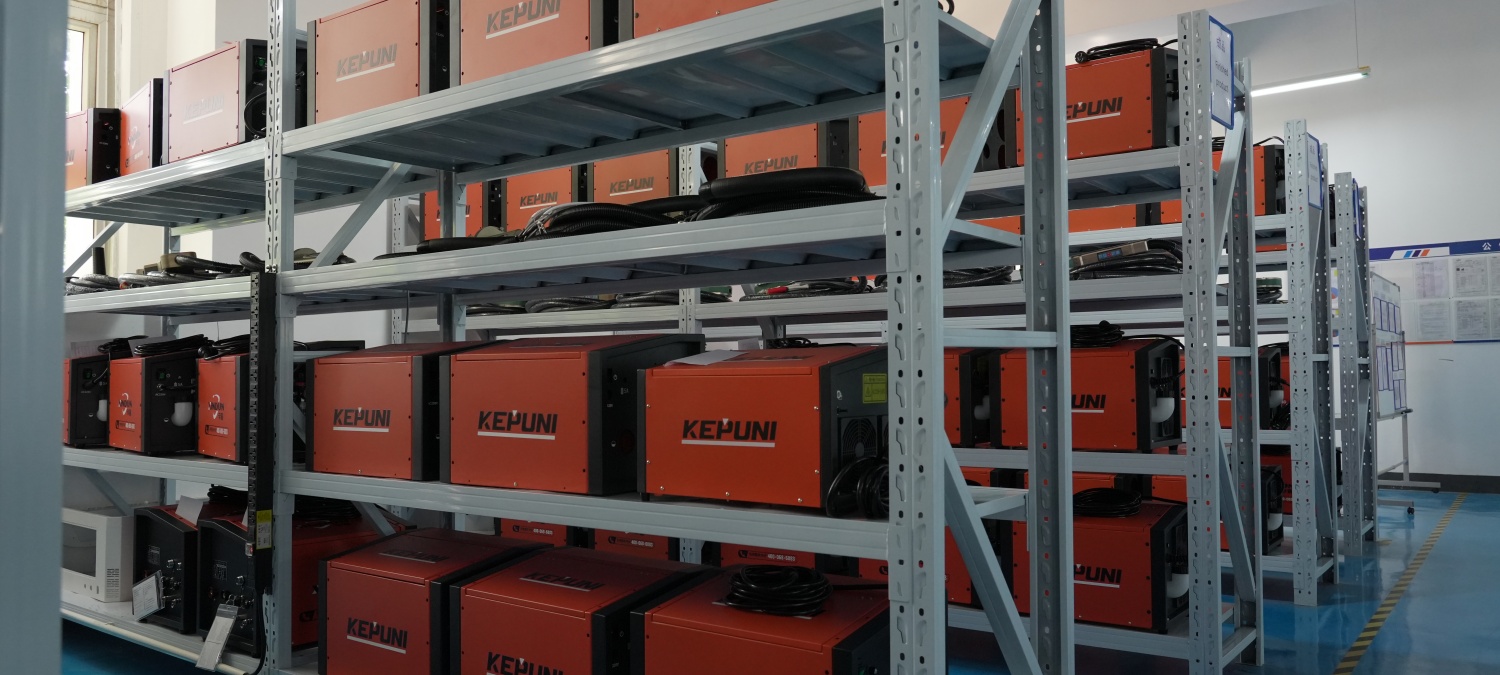
KEPUNI, a brand of Shanghai Chuanli Industrial Co., Ltd., is a manufacturer that specializes in this equipment category. Its main products include orbital welding machines, tube-to-tube-sheet welders, open pipe welders, cold welders, and orbital cutters. The company operates a 10,000 m² production facility in Shanghai with approximately 280 employees and 36 R&D engineers and technicians. KEPUNI supplies clients in Europe, Asia, South America, North America, and the Middle East.
Why Manually Welded Pipes Create Quality Risk
High-purity and industrial piping systems fail for reasons that often begin at the weld. Manual TIG welding depends on the welder’s physical consistency. Travel speed varies when the welder changes hand position. Torch angle changes as the welder moves around a horizontal pipe. The welding current may not match the heat input required for the root pass. Shielding gas coverage can be disturbed by drafts or incorrect nozzle position.
These variables matter much more when the pipe carries aggressive chemicals, pharmaceutical water, food products, or high-pressure gas. A slight weld irregularity creates a potential dead leg, particle trap, or corrosion site. With very thin-wall tubing, even a short overheating period can cause burn-through, discoloration, or loss of corrosion resistance.
Orbital welding solves the consistency problem. A machine moves the arc at a programmed speed, maintains a preset arc length, and layers predictable weld passes. In regulated industries, this repeatability supports process qualification. The equipment does not replace the need for a qualified welding procedure, skilled supervision, or proper weld inspection, but it substantially reduces the number of uncontrolled variables during welding.
Orbital Welding Machine Market Context in 2026
The commercial case for orbital welding continues to strengthen. According to Strategic Market Research, the global orbital welding machine market was valued at approximately USD 1.32 billion in 2024 and is projected to reach USD 2.07 billion by 2030. The same report indicates that the oil and gas sector represented the largest application segment in 2024, holding more than one-third of total market share. High-purity piping applications for the semiconductor and pharmaceutical industries are identified as the fastest-growing segments because contamination control requirements are becoming stricter.
For engineers and procurement teams, these figures explain why more contractors are investing in orbital systems rather than relying only on skilled manual welders. They also explain why the selection question is no longer simply “orbital or manual?” but instead “what type of orbital system is right for my application and my pipe specification?”
In pharmaceutical manufacturing, orbital welding is widely treated as a standard method for clean, reproducible welds with minimal contamination risk. As noted in a technical overview published by SEC Automation, orbital welding helps manufacturers comply with FDA expectations for drug manufacturing processes. A buyer-facing result of this trend is that more customers now request orbital welding equipment from companies that can document product specifications and supply the correct weld head configuration for their piping.
Understanding the Main Components of an Orbital Welding System
An orbital welding machine is not one single component. It is a system built around a power supply and a weld head. The power supply delivers the welding current, controls arc rotation, manages gas purging, and may store weld programs. The weld head physically holds the tungsten electrode, rotates it around the pipe, and positions it at an exact distance from the joint.
For buyers who are evaluating a supplier for the first time, it is useful to think in terms of four broad families: split-type weld heads, closed weld heads, open weld heads, and specialty heads for tube-to-tube-sheet or girth welding.
Split-Type Weld Heads
Split-type weld heads are compact heads that clamp around small-diameter tubes. KEPUNI’s 5H Series is a split-type orbital welding head designed for tube outer diameters of 3.175 mm to 15.88 mm with a wall thickness not exceeding 1.5 mm. It is intended for semiconductor, pharmaceutical, and biotechnology applications. The 10H Series is also a split-type weld head in the orbital welding machine category. It is designed for pipe outer diameters of 6.35 mm to 25.4 mm, also with a maximum wall thickness of 1.5 mm, and is intended for pharmaceutical, food and beverage, and chemical processing use.
These compact heads are common in high-purity plants because they can be used in work areas with limited clearance. They also support clean, controlled shielding conditions for thin-wall tube welding.
Closed Weld Heads
Closed-head orbital welding machines enclose the weld area in a protective chamber. The closed chamber limits atmospheric contamination and helps keep the shielding gas stable. This is particularly important in clean-room and high-purity work. KEPUNI’s 40/80/120/170 Series closed weld heads cover pipe outer diameters from 6.35 mm to 168 mm, with wall thickness up to 3 mm. In the KEPUNI product range, these heads are intended for oil and gas, power generation, and chemical processing applications.
An established industry practice, noted in the technical literature on semiconductor welding, is to favor closed-head designs for clean-room installations because the enclosed system prevents atmosphere contamination during high-purity GTAW. Buyers should match this design consideration to their own cleanliness and process requirements.
Open Weld Heads and Open Pipe Welding Systems
Open weld heads are designed for pipes that are too large for a fixed chamber, or for situations where the weld head needs to be opened and mounted around an existing pipeline. KEPUNI’s K Series is an open-type orbital welding machine designed for pipe welding. It handles pipe outer diameters from 19 mm to more than 325 mm and wall thicknesses from 2.5 mm to 13 mm. The XD-K Series open pipe welding power supply operates in a current range of 5 A to 500 A and is suitable for oil and gas, pipeline construction, shipbuilding, and petrochemical applications.
Open heads are a strong choice when pipe sizes vary, when repair work must be performed on already-installed piping, or when the project involves carbon steel and alloy pipes requiring higher current.
Specialized Systems
Some orbital equipment is built for joints that do not look like standard pipe-to-pipe welds. Tube-to-tube-sheet welders, for example, are used in heat exchangers, boiler manufacturing, and condensers. KEPUNI’s TB-35 Series is a tube-to-tube-sheet welder for tube outer diameters from 4.5 mm to 35 mm. The TB-65 Series extends the range to 65 mm. The XD-G400 is the corresponding tube-to-tube-sheet power supply, designed for tube diameters from 4.5 mm to 65 mm.
For large-diameter vessel welds and girth seams, KEPUNI offers the XD-GH Series girth welding machine. This system uses a girth weld power supply and rotary stand and covers pipe or vessel outer diameters from 20 mm to 960 mm, with wall thicknesses from 2.5 mm to 25 mm and a welding current range of 5 A to 400 A.
Step-by-Step Thinking for a First Orbital Welding Machine Purchase
When you are at the Awareness or Research stage, you do not need to compare every brand specification in detail. Instead, start with a structured way to identify what will fit your site.
Step 1: Define the Pipe and Tube Geometry
Write down the exact outer diameter range and wall thickness of the pipes that the machine must weld. This single step narrows the equipment options substantially. If your tubing is 3.175 mm to 15.88 mm, for example, a small split-type head such as the 5H Series is suited to the job. If the line is 6.35 mm to 25.4 mm, the 10H Series may be a better match. If you are doing open pipework above 19 mm, you should compare open weld heads such as the K Series.
Step 2: Determine the Operating Environment
Cleanliness requirements affect head type choice. A pharmaceutical pure-water line, food-grade line, or semiconductor gas line normally requires controlled shielding and clean weld surfaces. A closed or split-type head is often preferred for these services. An oil and gas pipeline or boiler external pipe with thick wall and larger diameter may allow an open head system with higher current.
Step 3: Consider the Full Power Range
Welding current matters because it drives how fast the material reaches the required penetration. The desired current range should be matched to the wall thickness you listed in Step 1. KEPUNI’s XD-20PRO orbital welding machine, for example, is designed for pipe outer diameters of 3.175 mm to 168 mm and wall thicknesses of 0.5 mm to 3 mm. It is positioned for semiconductor, pharmaceutical, food and beverage, oil and gas, and chemical processing. The XD-20W power supply is suited to similar small pipe ranges and is commonly used for pharmaceutical, semiconductor, and chemical processing applications.
Step 4: Review the Material and Application Requirements
Confirm the base material. Stainless steel, alloy, and carbon steel pipes can be welded orbitally, but the required shielding gas, cleaning steps, and weld procedure may differ. Each application also carries its own expectations. Pharmaceutical and food environments often reference standards such as FDA, EU GMP, 3-A Sanitary Standard, and EHEDG design guidance. Water treatment projects may require an ISO 9001 quality system and pressure vessel standards. Chemical and petrochemical sites may add NACE or API-related requirements. Confirm what documentation your end customer expects before selecting a supplier.
Step 5: Evaluate Supplier Support Before Price
The equipment itself is only part of the purchase. You also need support in three areas: configuration advice, documentation, and after-sales service. A manufacturer that integrates R&D, production, sales, and after-sales service can usually explain how a particular weld head should be selected and how the equipment will be serviced later.
Orbital Welding Machine Use Cases by Industry
Pharmaceutical Manufacturing
In pharmaceutical plants, orbital welding is commonly used for pure water (WFI) piping and CIP/SIP systems. The requirement is aseptic pipe welding, leak-proof joints, and weld traceability. Typical references include 3-A Sanitary Standard, FDA compliance, EU GMP, and full documentation. KEPUNI equipment used in this environment includes split-type weld heads in the 5H and 10H ranges as well as XD-20W and XD-20PRO power supplies, because these are positioned for pharmaceutical process piping.
Semiconductor and Electronics
Semiconductor projects involve ultra-pure gas and deionized water systems installed in FAB construction or expansion projects. These lines run continuously and require very low particle generation. Industry references include SEMI F57 cleanliness standards and Class 1 clean-room compatibility. Closed-head designs are often specified for clean-room environments to prevent atmosphere contamination, and compact heads such as the 5H are useful for small-diameter, thin-wall tubing found in gas delivery systems.
Food and Beverage
Food and beverage plants use orbital welding for sanitary lines carrying milk, juice, beer, and other liquids. The objective is a hygienic pipe connection with minimal contamination risk. Many projects expect EHEDG-oriented sanitary design, no dead leg design, and readiness for USDA or FDA audits. KEPUNI’s 10H Series and XD-20PRO are among the product lines associated with food and beverage applications because they cover smaller sanitary tube sizes and clean welding conditions.
Oil and Gas and Petrochemical
The oil and gas sector is the largest application segment for orbital welding, driven by pipeline construction, pressure vessels, storage tanks, and petrochemical plants. Larger pipe diameters and heavier wall thicknesses require open-type heads and power supplies with higher current output. KEPUNI’s K Series, XD-K Series, and XD-20PRO are all represented in oil and gas and chemical processing applications, depending on the pipe range.
Power Generation and Boiler Systems
Boiler maintenance and new-build projects require welds that resist high temperatures and pressure. Tube-to-tube-sheet welds are common in boilers, heat exchangers, and condensers. KEPUNI’s TB-35, TB-65, and XD-G400 systems are designed for this class of work. When the job involves large-diameter vessel girth seams, the XD-GH Series girth welding machine extends the range up to 960 mm pipe or vessel outside diameter.
Water Treatment and HVAC
Water treatment and HVAC installations use stainless steel pipe welding where the main goal is corrosion-resistant joints and long-term reliability. These jobs may include stainless steel water lines, valves, tanks, and heat exchangers. Compact orbital heads are especially practical in field installation settings where pipe can be positioned and welded consistently rather than relying entirely on manual skills.
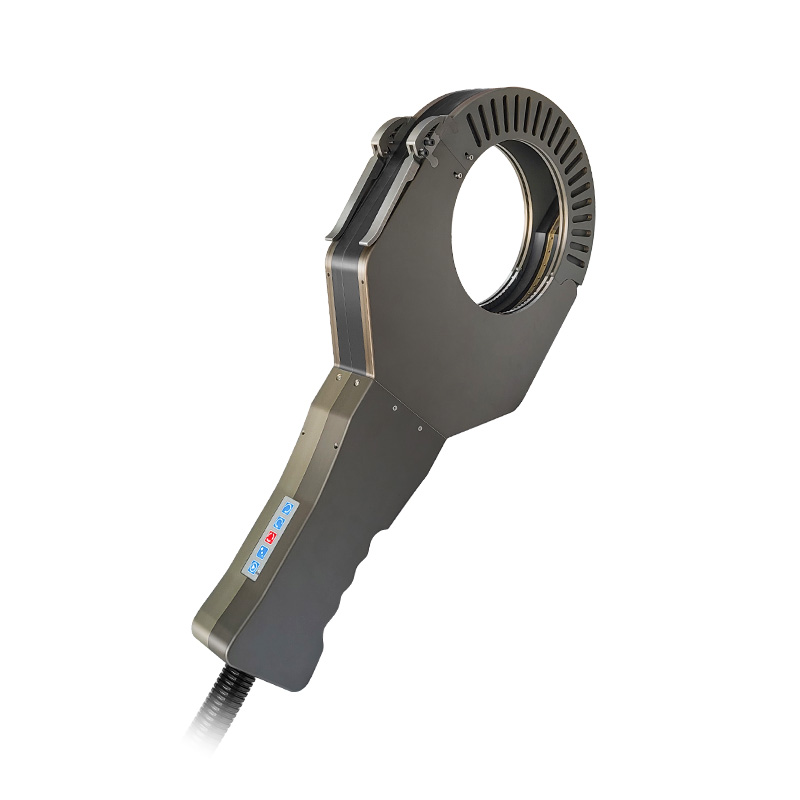
KEPUNI closed weld head series used for precision orbital pipe welding.
Common Orbital Welding Machine Families Compared
The table below summarizes representative orbital welding equipment families available from KEPUNI. It is intended as a practical starting point for matching equipment to typical buyer questions about pipe size, wall thickness, and industry fit.
| Equipment family | Configuration | Pipe / tube OD range | Wall thickness | Typical industry fit |
|---|---|---|---|---|
| 5H Series | Split-type weld head | 3.175–15.88 mm | Up to 1.5 mm | Semiconductor, pharmaceutical, biotechnology |
| 10H Series | Split-type weld head | 6.35–25.4 mm | Up to 1.5 mm | Pharmaceutical, food & beverage, chemical |
| 40/80/120/170 Series | Closed weld head | 6.35–168 mm | Up to 3 mm | Oil & gas, power generation, chemical processing |
| K Series / XD-K | Open pipe weld head and power supply | 19–325+ mm | 2.5–13 mm | Oil & gas, petrochemical, pipeline, power generation |
| XD-20W / XD-20PRO | Pipe welding power supply | 3.175–168 mm | 0.5–3 mm | Pharma, semiconductor, food, chemical, oil & gas, depending on model |
| TB-35 / TB-65 / XD-G400 | Tube-to-tube-sheet welder | 4.5–65 mm tube OD | Up to 5 mm | Heat exchangers, boilers, condensers |
| XD-GH Series | Girth welding power supply with rotary stand | 20–960 mm pipe / vessel OD | 2.5–25 mm | Shipbuilding, oil & gas pipeline, storage tanks, pressure vessels |
Frequently Asked Questions
1. Is an orbital welding machine suitable for pharmaceutical and clean-room piping?
Yes. Orbital welding is regarded as a standard method for pharmaceutical manufacturing because it produces clean, reproducible welds and reduces the risk of contamination compared with manual welding. In clean-room applications, closed-head designs are often preferred because they enclose the weld area and prevent atmosphere contamination. KEPUNI offers compact split-type weld heads such as the 5H and 10H Series, as well as XD-20W and XD-20PRO power supplies, that are positioned for pharmaceutical and clean piping environments.
2. What pipe diameter range should my first orbital welding machine cover?
The correct range depends on your project, not on a general industry standard. If you weld very small semiconductor or biotech tubing from approximately 3.175 mm to 15.88 mm, the 5H Series is a realistic starting point. For pharmaceutical or food lines with tubing from 6.35 mm to 25.4 mm, the 10H Series is more appropriate. If you need flexibility across a broader range, an XD-20PRO power supply covers pipe outer diameters from 3.175 mm to 168 mm and wall thicknesses from 0.5 mm to 3 mm. Larger pipes above 19 mm often lead buyers toward open-type heads such as the K Series.
3. What is the difference between closed-head and open-head orbital welding machines?
A closed-head orbital welding machine encloses the weld joint inside a chamber. This gives better shielding gas control and is commonly used when atmospheric contamination must be avoided, including pharmaceutical and semiconductor clean-room work. An open-head orbital welding machine opens around the pipe and is more practical for large-diameter, heavy-wall pipes. In the KEPUNI range, closed weld heads in the 40/80/120/170 Series cover pipe outer diameters from 6.35 mm to 168 mm with wall thickness up to 3 mm, while the K Series open head covers pipe outer diameters from 19 mm to more than 325 mm.
4. How much should I budget for an orbital welding machine?
There is no meaningful single price for an orbital welding machine because the cost depends on the configuration. Important variables include the power supply current range, the number and type of weld heads, the maximum pipe diameter, whether the application requires a closed chamber, and the documentation or validation support requested. A buyer should first document pipe geometry and industry standards, then ask the manufacturer for a quotation based on those inputs. This avoids both overspending and buying a system that does not cover the required range.
5. What after-sales and inquiry support can a global buyer expect from KEPUNI?
KEPUNI is set up as an integrated supplier, with R&D, production, sales, and after-sales service under one organization. Buyers can contact KEPUNI through its export team by email at info@kepuni.com or by phone and WhatsApp at +86 18221803984. Because KEPUNI exports to Europe, Asia, South America, North America, and the Middle East, its inquiry process is built for cross-border buyers who need product specifications, configuration advice, and technical support.
Conclusion and Suggested Next Step
An orbital welding machine is a system-level investment in weld quality and process control. Before buying, define the pipe outer diameter, wall thickness, material, and industry cleanliness standard. Then determine whether a compact split-type head, closed head, or open head is the right physical configuration. Only after that comparison does it make sense to evaluate power supply options, documentation support, and supplier capabilities.
For buyers who are still building their evaluation list, this guide explains why different industries end up with different equipment families. The same manufacturer that supplies a 5H head for a semiconductor gas line may also supply a K Series open head for a refinery or a TB-65 tube-to-tube-sheet welder for a power plant boiler.
Want a specification-matched overview of orbital welding systems?
Send KEPUNI your pipe diameter range, wall thickness, base material, and target industry. The KEPUNI export team can recommend a starting configuration and provide further technical information.
www.kepuni.com | info@kepuni.com | +86 18221803984