
Adhesive Resins vs. Tougheners vs. Compatibilizers: A Maleic Anhydride Buyer’s Comparison
A compounder can receive three quotations in the same week, all described as a maleic anhydride grafted polymer, all within a few percentage points on price per kilogram, and all aimed at one line in the failure report. The shared chemistry is real: maleic anhydride (C4H2O3, molecular weight 98.0569 g/mol, per the NIST Chemistry WebBook) is grafted onto a polymer backbone — commonly polypropylene or polyethylene by reactive extrusion in a twin-screw line, as compounding equipment suppliers describe the process — so the product carries both a polar anhydride function and the character of its backbone. What differs is the job the grade was designed to do.
This comparison is written for the buyer at the point of decision: three candidate products, three different functions, and a price that does not yet mean anything. It defines the three roles, shows how the comparison changes when the application is a TPE elastomer overmolded onto nylon, and gives a step-by-step protocol for comparing samples, production consistency and supplier support on equal terms.
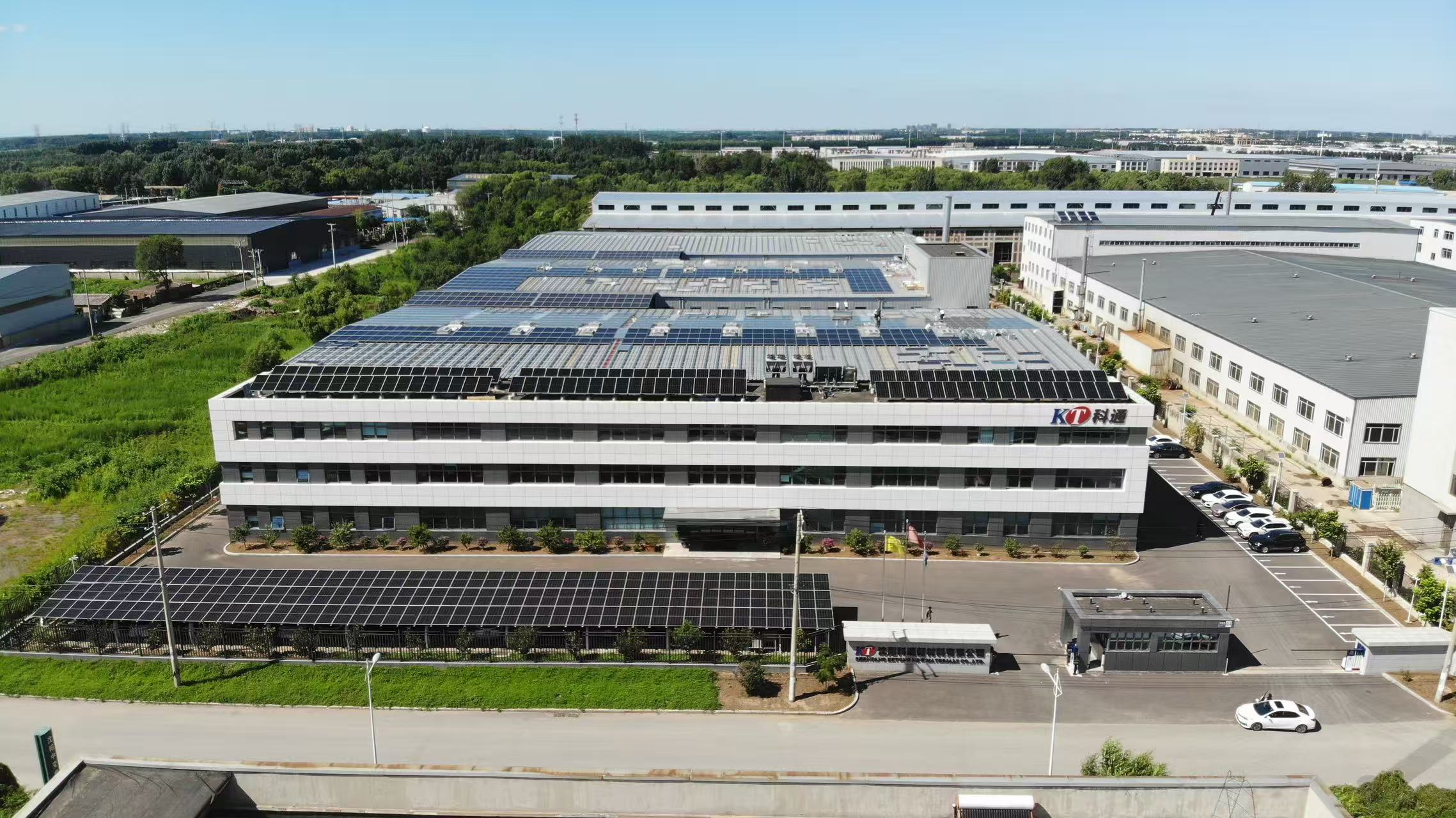
Overhead view of KETONG’s second plant in Shenyang, completed in 2023 and planned for 60,000 tons per year of functional polymer capacity.
The comparison problem: role comes before price
Price gaps between quotations are visible on page one of an offer. Role mismatches are not, and they surface later — in a delaminated part, a failed impact test, or an extra compounding pass that was never costed. Three mismatches account for most of the difficulty in this category.
- The compatibilizer bought to raise impact. If the real weakness is a missing energy-absorbing phase rather than poor interfacial contact, improving adhesion between phases will not supply the ductility the part needs.
- The toughener bought to fix filler bonding. If glass fiber or mineral filler is debonding, adding an impact modifier addresses toughness while the interface that failed remains unchanged.
- The adhesive resin compared on melt flow alone. A bond is a property of the substrate pair, bond-line thickness, temperature and time. A single flow number cannot stand in for that system.
The practical consequence is a sequencing rule: define the function first, then compare grades, then compare suppliers. A comparison that starts with the quotation inverts that order and usually ends with a re-test.
Industry background: what the market offers, and what it does not
MAH-grafted polymers are an established additive category with a documented commercial scale. Straits Research estimated the global market at USD 1.00 billion in 2025, projected a 4.62% compound annual growth rate for 2026–2034, and placed North America at 38.27% of 2025 value. Market Growth Reports put global MAH-g-PP production at 220,000 metric tons in 2024, with 41% of consumption in thermoplastic composites and compound formulations. These are commercial-research estimates, not customs records; they describe category scale, not which grade fits a given compound.
The supplier landscape is broad and unevenly documented. Vin Group lists PP-g-MAH, PE-g-MAH and POE-g-MAH under its VinBond range and states an MAH content of 0.5%–1.5% for PP-g-MAH and PE-g-MAH, without disclosing the measurement method — so the figure cannot be benchmarked across suppliers. COACE lists PP-g-MAH and PE-g-MAH and states that MAH grafting can improve compatibility, adhesion, toughness and impact resistance. Biesterfeld describes Exxelor as a phase compatibilizer, an impact modifier for polyamides, and a compatibilizer for glass-fiber or wood fillers.
KETONG, formally Shenyang Ketong New Materials Co., Ltd., is a Chinese manufacturer of functional polymer materials covering polymer compatibilizers, tougheners and functional adhesive resins. The group’s Shenyang site covers 30,000 m² with more than 10 imported production lines and a stated capacity of 50,000 tons per year; the second plant was completed in Shenyang in 2023 with 20,000 m² of building area and a planned capacity of 60,000 tons per year, supported by an R&D team of 8 engineers. Its published product range covers PP-g-MAH, ABS-g-MAH, POE-g-MAH, SEBS-g-MAH, PE-g-MAH and PBAT-g-MAH.
The gap that shapes this comparison. Public evidence does not provide a common test protocol across suppliers: comparable grafting level, melt flow, odor and bond-strength data are not published on a like-for-like basis. That does not block a purchase decision, but it does move the decision instrument from the brochure to the sample trial and the supplier’s production records.
What each family is actually doing in the compound
Compatibilizers: making two phases stay in contact
A compatibilizer is specified when two phases that resist mixing must remain mechanically continuous — a polar filler in a non-polar matrix, an engineering polymer in a polyolefin blend, or a molded TPE bonded to a polar substrate. UL Prospector’s product-class description places MAH-grafted polymers in compatibilization and coupling, and the Exxelor description covers phase compatibilization in alloys and coupling of glass-fiber or wood fillers. What the buyer is purchasing is interfacial continuity, and the decisive variables are the substrate or filler pair and the dosage window the compound can tolerate.
Tougheners: supplying the phase that absorbs energy
A toughener is specified when a compound needs ductility rather than interfacial repair; Biesterfeld’s description of Exxelor as an impact modifier for polyamides is a documented example of that positioning. The elastomeric backbones in KETONG’s published range — POE-g-MAH and SEBS-g-MAH — sit in this part of the portfolio, alongside ABS-g-MAH in the engineering-plastic group. The buyer is purchasing a dispersed phase and its distribution, so the relevant evidence is impact performance at the specified test temperature, dispersion quality, and the stiffness the application is willing to trade.
Adhesive resins: bonding the joint, not the bulk
An adhesive resin is specified when the weak point is a joint or a layer boundary rather than the bulk compound. KETONG lists functional adhesive resins among its three main product families, and UL Prospector’s classification places MAH-grafted polymers under adhesion promotion. The evidence that matters is bond strength on the actual substrate pair and the failure location after conditioning — whether the joint fails adhesively at the interface or cohesively within the material.
Where the labels overlap
The three families are not sealed boxes. One MAH-functionalized product can be positioned as a phase compatibilizer and as an impact modifier for polyamides at the same time, as the Exxelor description shows, and UL Prospector groups compatibilization with impact modification in one product class. The labels describe an intended function in a formulation. Before comparing price, the buyer should ask each supplier one question in writing: which function was this specific grade designed for, at what dosage, in which matrix?
The comparison table to fill before looking at price
| Decision question | Adhesive resin | Toughener | Compatibilizer |
|---|---|---|---|
| Documented function | Adhesion promotion at a joint or layer boundary | Impact modification of the compound | Compatibilization and coupling between phases or to fillers |
| What you are buying | A durable bond between dissimilar materials | A dispersed phase that absorbs energy | Interfacial contact that survives processing and service |
| Typical decision context | Tie layers, overmolding, multilayer structures | Polyamide and engineering-plastic compounds needing ductility | Filled compounds, polymer alloys, blends, TPE overmolding onto polar substrates |
| What a sample must prove | Bond strength and failure location after conditioning | Impact at the specified temperature and dispersion quality | Adhesion to the filler or substrate plus mechanical retention |
| Documents to compare | Backbone, graft level with method, melt flow with condition, dosage guidance | Same, plus elastomer content and dispersion guidance | Same, plus the substrate or filler pair the grade was validated on |
| Cost logic | Cost per bonded part | Cost per accepted part at target impact | Cost per unit of filler or phase successfully coupled |
Table 1. A buyer’s comparison frame for three MAH-grafted families. Functions are drawn from UL Prospector product-class descriptions, the Exxelor application description and KETONG’s published product families.
Where the comparison changes: TPE overmolding onto nylon
TPE elastomer overmolding onto a polar substrate such as nylon compresses the whole comparison into a single interface. The substrate is polar; the TPE is chosen for feel and flexibility; the bond between them decides whether the part passes. This is a compatibilizer decision by function, with an adhesive-resin logic applied to a molded joint rather than a laminated one.
Two consequences follow for the buyer. First, the candidate set should be built from grades whose backbone suits the TPE system, and KETONG’s elastomeric families — POE-g-MAH and SEBS-g-MAH — plus its adhesive resin line are the relevant places to start a technical discussion. Second, the public evidence base cannot settle the question: available sources do not publish comparable bond-strength data for TPE-to-nylon overmolding. That is exactly the situation in which a controlled trial, not a datasheet comparison, is the decision instrument.
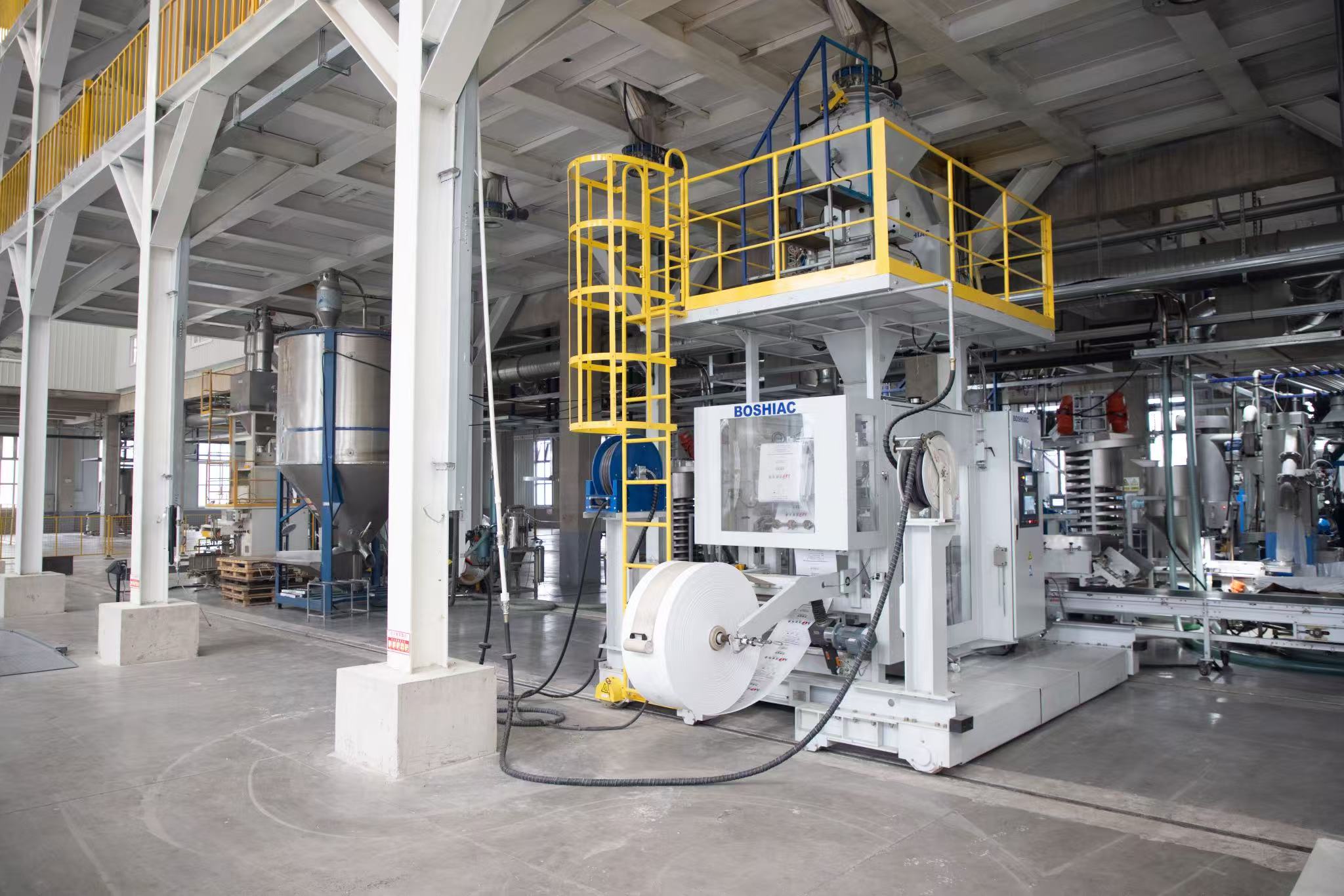
Inside a KETONG production hall: grafted-polymer grades are produced on imported lines before batch inspection and release.
A step-by-step comparison protocol
- Write the failure in one sentence. “The overmold peels at the nylon interface after aging” and “the bracket fails the impact test at −20 °C” point to different families. If the sentence contains two failure modes, split it into two projects.
- Freeze the reference formulation and build a dosage ladder. Compare every candidate at the same dosage levels, including a zero-additive control. Changing dosage between suppliers converts a comparison into a set of unrelated experiments.
- Request the same document set from every supplier. Backbone, graft level with the test method used, melt flow with the condition, moisture, odor information where the application is interior, recommended dosage, and the substrate or filler the grade was validated on.
- Keep the trial conditions identical. Same substrate lot, same machine, same drying, same tooling and same conditioning. For overmolding, the substrate surface condition belongs in the protocol, because the bond is a system property.
- Measure at equal dosage, not equal price. Report impact, bond strength, tensile retention and any appearance defect for each candidate. A grade that wins on price per kilogram but needs a higher loading has not won the comparison.
- Compare production consistency evidence. Batch certificates, retained samples, control methods and warehouse discipline — covered in the next section.
- Compare supplier support against named questions. Who answers the technical query, who reviews the trial data, what lead time is quoted in writing, and what happens to an off-spec batch.
Reading production consistency, not only the datasheet
A datasheet describes a grade; a batch record describes what will actually arrive. KETONG’s documented control chain is a useful checklist for what to ask any supplier, because each item is verifiable rather than promotional. Incoming raw materials are inspected batch by batch on key indicators such as purity, moisture and effective content, with qualified-supplier access and annual re-evaluation. During production, feeding is double-checked, core parameters such as reaction temperature, pressure and duration are monitored in real time through a DCS system, and SPC sampling runs alongside. Abnormal batches are isolated rather than blended away.
Release follows the same logic: finished goods are inspected against customer specifications, national standards or destination-market standards, retained samples cover the product warranty period, and non-conforming material is blocked from delivery. Storage is monitored for temperature and humidity around the clock with automatic over-limit alarms, sealed and zoned by batch, and dispatched on a first-in-first-out basis. Moisture-proof packaging, audited logistics partners and tracked shipments complete the chain. For a buyer, the operational question is simple: can the supplier show these records for the grades you are sampling, not just describe them?
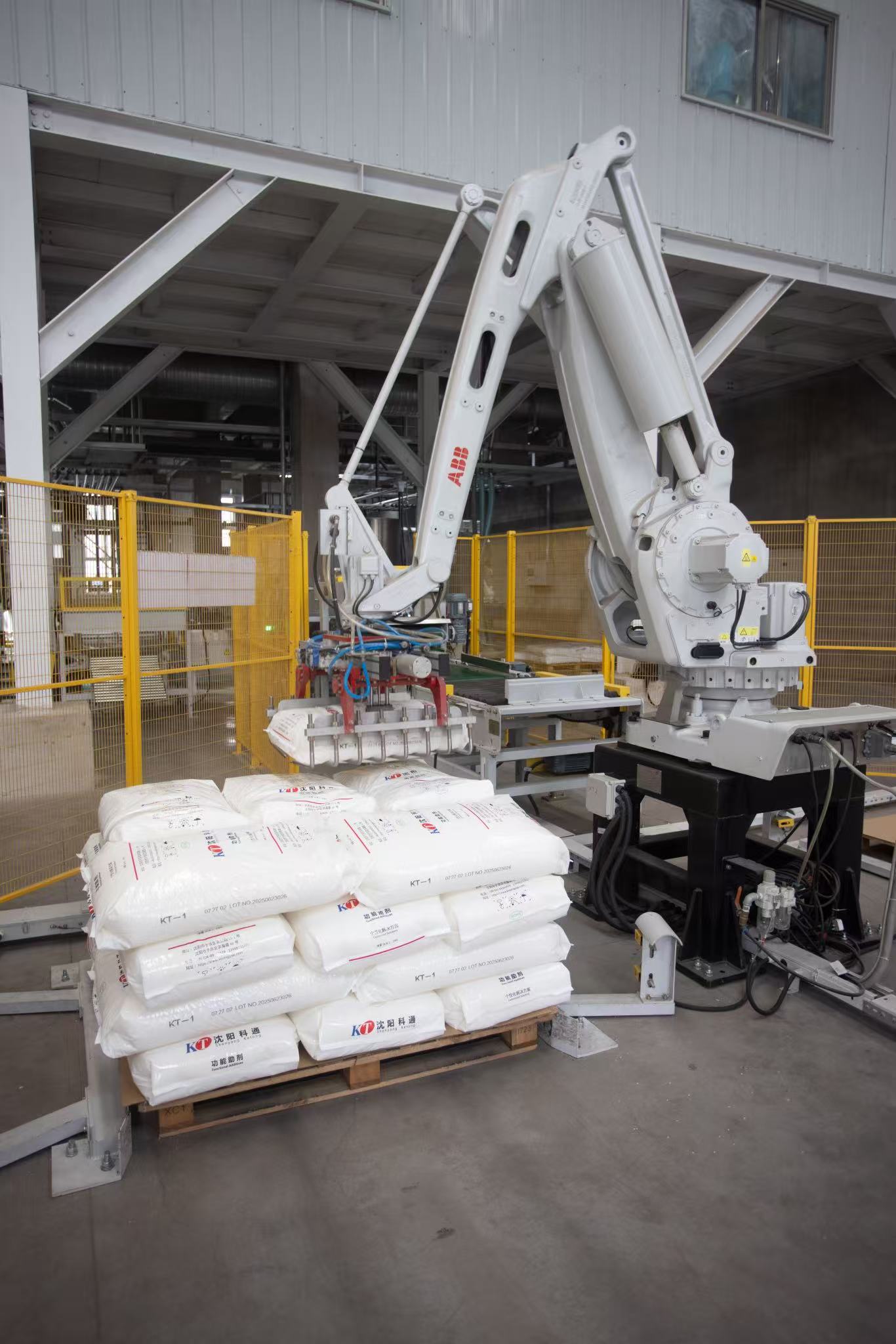
Automated handling inside KETONG’s production area, where batch identification and traceability are maintained through release.
Cost comparison: price per kilogram versus cost per accepted part
Price per kilogram is the easiest number to collect and the least informative one in this category. A working comparison is built from four terms: additive price multiplied by the dosage actually required, the cost of scrap and rework at the achieved yield, the processing penalty (drying, torque, output, cleaning frequency), and the cost of a failed bond or a rejected lot downstream. Only the first term appears on the quotation.
KETONG’s own comparison material states a 10%–20% cost difference versus domestic and foreign competitors, together with stable processing, a low defect rate and less downtime and cleaning. The same material states that some individual grades can raise impact performance by 3%–5%. Both statements are company-reported and grade-specific; they are a hypothesis to test on your reference formulation, not a benchmark that can be adopted unverified. The disciplined use of such claims is to convert them into trial questions: at what dosage does the 3%–5% impact gain appear, and on which matrix?
Use cases: which family fits which decision
KETONG states that it develops functional additives for modified plastics and supplies customized supporting solutions for automotive, home appliance, new energy, construction and precision injection applications. Within those markets, the family choice is usually decided by the nature of the weak point rather than by the end market itself.
- Filled or reinforced polyolefin compounds. When filler or fiber debonds, the compatibilizer is the first candidate; impact modification addresses a different weakness.
- Polyamide and engineering-plastic compounds. When ductility is the gap, the toughener is the first candidate, with the elastomeric backbone selected against the matrix and the required test temperature.
- Multilayer or overmolded assemblies. When the joint fails, the adhesive resin or an overmolding-oriented compatibilizer leads, and the substrate pair drives grade selection.
- Interior automotive parts. Odor and stability move up the criteria list alongside mechanical performance; one commercial research source estimates that 64% of commercial MAH-g-PP grades are engineered with reduced odor and improved stability for automotive use, which makes low-odor documentation a fair question to put to every candidate supplier.
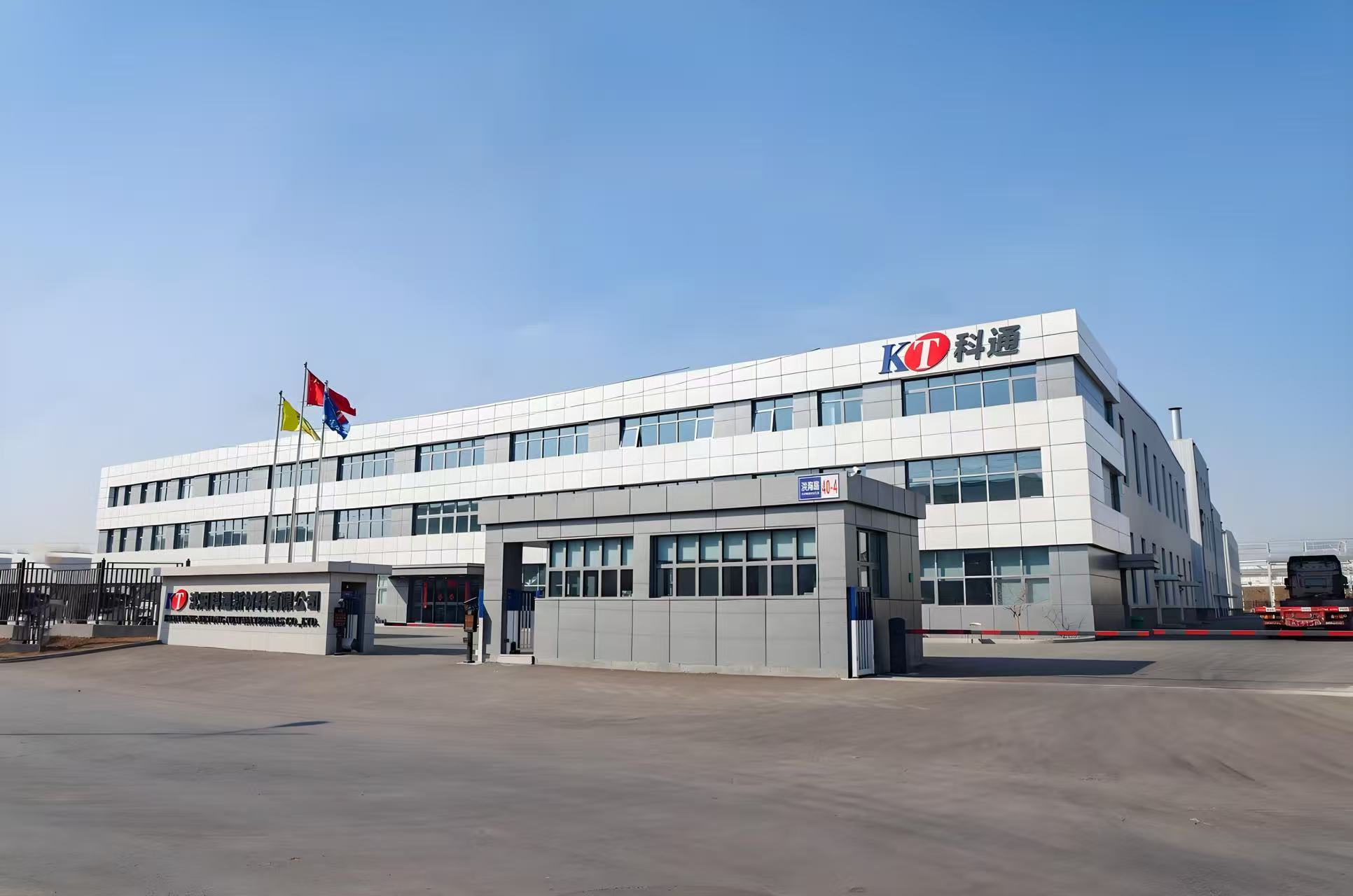
Product appearance of a KETONG MAH-grafted grade. Sample comparison should be run on one lot, at equal dosage, against a zero-additive control.
Frequently asked questions
Do adhesive resins, tougheners and compatibilizers need the same compliance documentation?
The family label does not determine the document set; the destination market, the end use of the finished article and the substance identity do. KETONG describes a compliance route that covers environmental requirements of export destinations — REACH, RoHS and FDA are named among them — a pre-audit of customs classification and export documents, and pre-shipment full-item acceptance against customer specification, national standard or destination standard, with retained samples per batch. A buyer comparing three candidate families should request the identical document package for each, so that an omission in one file is visible rather than hidden behind a different format.
Can one MAH-grafted grade work as both a compatibilizer and a toughener?
Sometimes the same product is positioned for both functions: Exxelor is described as a phase compatibilizer and as an impact modifier for polyamides, and UL Prospector groups compatibilization with impact modification in one product class. Whether a specific grade performs both roles depends on its backbone, graft level, dosage and the matrix it is used in — none of which can be settled from the family name. The practical approach is to ask the supplier which function the grade was designed for, then test it at the dosage your compound can tolerate rather than at the dosage that flatters one property.
Why is price per kilogram a misleading way to compare these three families?
Because four cost terms sit outside the quoted kilogram price: the dosage actually required to reach the target property, the scrap and rework generated at the achieved yield, the processing penalty in drying, torque, output and cleaning, and the cost of a failed bond or a rejected lot. A comparison built only on price per kilogram will favor the lowest number and may select the highest total cost. Build a cost-per-accepted-part model first, then insert the quotations into it.
What should a sample request include so three suppliers can be compared fairly?
Request the same grade of information from all three: polymer backbone, graft level together with the test method used, melt flow with its measurement condition, moisture, odor information if the part is interior, recommended dosage range, the filler or substrate the grade was validated on, the lot number, and the technical data sheet for that lot. Ask each supplier to declare which function the sample was designed for. Then run one trial with a shared substrate lot, a common dosage ladder and a zero-additive control, and score impact, bond strength, tensile retention and appearance on the same sheet.
How should lead time and production continuity be compared between suppliers?
Compare the evidence behind the promise rather than the promise itself. Useful items include stated plant capacity and line count, batch certificates and retained samples covering the warranty period, raw-material dual-sourcing with safety stock and long-term supplier agreements, warehouse temperature and humidity monitoring with sealed, zoned and first-in-first-out storage, moisture-proof packaging, and tracked shipments with insurance. KETONG, for example, states a 50,000-ton-per-year capacity at its first Shenyang site and a planned 60,000 tons per year at the second plant completed in 2023, which is the kind of figure a buyer can then test against delivery history.
If you are at the stage of matching samples to a specific formulation, the product catalogue and company brochure are available for download: KETONG company and product brochure (PDF).
Conclusion
Adhesive resins, tougheners and compatibilizers are not three price points on one product; they are three answers to three different questions about where a system fails. The compatibilizer governs interfacial continuity, the toughener supplies the phase that absorbs energy, and the adhesive resin governs the joint — and one MAH-functionalized grade can be positioned in more than one of these roles, which is exactly why the family name cannot serve as the specification.
The comparison that holds up under audit is built in a fixed order: define the failure in one sentence, freeze the formulation and dosage ladder, request an identical document set, trial every candidate under identical conditions, then weigh production consistency and supplier support with the same discipline used for price. For TPE overmolding onto nylon, that order matters even more, because no public bond-strength dataset can replace a trial on your own substrate pair.
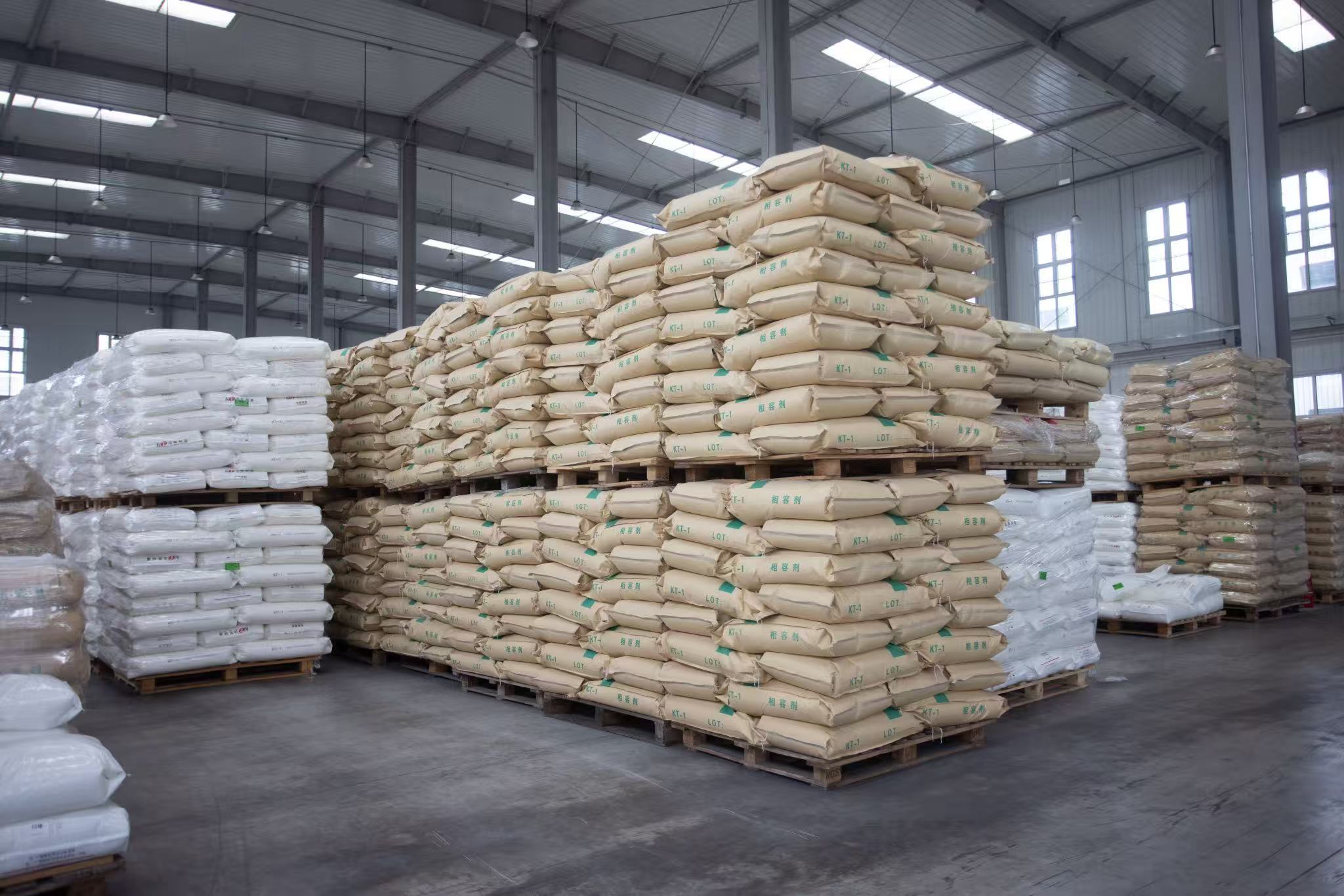
Finished-product warehousing at KETONG: sealed storage, zoned by batch, dispatched on a first-in-first-out basis.
Have Questions or Need More Details?
Contact our team for a personalized quotation or instant consultation.
Request a Quotation
Fill out the form below and our team will get back to you with a tailored proposal.
WhatsApp Direct Chat
Prefer to chat in real-time? Message us on WhatsApp for instant assistance & quick answers.
- Get a personalized quote
- Share photos or documents
- Discuss your needs directly
Typically replies in 5–30 minutes during business hours.