Grafting Level vs. Melt Flow Index: Choosing an MA-g-PP Compatibilizer
Most decisions between two candidate MA-g-PP compatibilizers come down to a pair of datasheet values: the maleic anhydride grafting level and the melt flow index (MFI, also written MFR). Buyers routinely try to maximize the first and minimize the second - the highest graft content available, at the lowest flow. In reactive-extrusion grafting, those two goals pull against each other, and the grade that wins a blend trial is rarely the grade with the single most impressive number.
This guide is written for compounders, materials engineers and procurement teams that are already comparing specific grades and need a defensible way to read a datasheet, set a specification band and qualify a sample. It explains what each parameter actually controls, why they trade off, how to interpret supplier data without assuming that two similar-looking values describe the same product, and where KETONG's compatibilizer and toughener portfolio fits into that evaluation.
Problem Definition: Why Grafting Level and Melt Flow Index Cannot Both Be Maximized
An MA-g-PP compatibilizer is a polypropylene backbone carrying grafted maleic anhydride functional groups. Its role in a PP-based blend is dual. The MAH groups provide the polar, reactive anchor that couples to polyamide, glass-fibre sizing, mineral fillers, EVOH or other polar phases. The PP backbone provides the non-polar anchor that keeps the molecule compatible with the polypropylene matrix. A compatibilizer only works when both anchors are functioning at the interface at the same time.
Grafting level describes how many MAH groups are attached along the chain. It sets the number of reactive anchors per molecule and, at a given addition level, the total number of coupling sites available at the interface. Too few anchors and the interface stays weak: fillers debond, the dispersed phase coarsens, and impact or tensile properties plateau early. Beyond a certain point, additional anchors do not keep improving adhesion, but they do keep affecting odour, colour and cost.
Melt flow index describes how the same molecule flows under a defined temperature and load. Because MFR is inversely related to molecular weight, it is an indirect measure of chain length. High-MFR grades contain shorter chains: they wet a filler or dispersed phase quickly, but build less entanglement and less cohesive strength. Low-MFR grades contain longer chains: they contribute melt strength and cohesion, but disperse more slowly and are more prone to unmelted gels and surface defects if the process window is narrow.
The tension between the two parameters comes from process chemistry. MAH grafting onto polypropylene is normally carried out by reactive extrusion with peroxide initiators. The same radicals that initiate grafting also drive beta-scission of the PP backbone, which shortens chains and raises MFR. In plain terms: pushing grafting level up usually pushes MFR up as well. A grade advertised with very high graft content at very low MFR therefore deserves closer questioning - the base resin, the process route or the definition of the reported value is likely different from a standard melt-grafted product.
The practical conclusion for a decision-stage buyer is that grafting level and MFR are not two independent dials. They are one coupled specification, and the selection question is not 'how high' or 'how low' but 'which achievable combination fits this blend, this process window and this failure mode'.
Industry Background: A Growing Market With Unharmonized Datasheets
Demand for MAH-grafted polymers continues to expand with polypropylene compound consumption. Grand View Research places the global maleic anhydride market at USD 4.39B in 2023, projected to reach USD 5.86B by 2030, with Asia Pacific holding a 52.1% revenue share in 2023 and China expected to grow at a CAGR of 5.4% through 2030. Business Research Insights projects the global maleic anhydride graft polymer market at USD 1.42B in 2026, reaching USD 2.16B by 2035 at a CAGR of 4.7%. Dataintelo estimates the grafted polyethylene segment alone at USD 1.24B in 2024, targeting USD 2.08B by 2033, while ChemAnalyst reports that automotive applications account for 42% of polyolefin elastomer demand - a segment frequently grafted with MAH for toughening.
On the supply side, Mordor Intelligence lists Huntsman, Dow, LyondellBasell, Mitsui Chemicals and SK Functional Polymer among the key global competitors in the MAH-grafted market, alongside Chinese producers such as KETONG. On the regulatory side, MAH grafted polymers are subject to EU REACH (EC 1907/2006) registration, and compliance with ASTM D1248 is standard for PE extrusion materials.
What has not kept pace with market growth is datasheet harmonization. Graft content may be reported as an acid value obtained by titration or as bound MAH content by weight; the two are related but not interchangeable, and they are not measured the same way by every supplier. MFR values are only comparable when the test conditions match, and the value after a grafted grade has passed through a customer's extrusion line can differ from the value reported at the reactor. For a buyer comparing three or four suppliers, this means a datasheet comparison is really a question about definitions before it is a question about performance.
Detailed Solution: Reading the Two Numbers - and the Four Around Them
Grafting level: one word, several different measurements
When a supplier states a grafting level, establish which quantity is being reported. Titration-based acid value, bound MAH content expressed as a weight percentage, and spectroscopic indices derived from infrared analysis are all used in the market, and they do not convert simply into one another. Ask two questions before comparing any two grades: which method is used, and whether the figure describes bound MAH or total MAH including residual, unreacted monomer. Two grades that look identical on a comparison sheet can differ once the measurement basis is aligned.
Melt flow index: a number without test conditions is not a specification
MFR is meaningful only together with the test standard, the test temperature and load, and the conditioning and drying procedure applied to the sample. A value quoted under one set of conditions cannot be read against a value quoted under another. There is a second layer as well: MFR is a single-point proxy for the whole molecular weight distribution. Two grades with the same nominal MFR can still behave differently in dispersion if their distributions differ, which is one reason a trial in the actual matrix remains necessary even when the numbers appear to match.
The four adjacent fields that decide whether a grade is production-ready
- Residual free MAH and odour. Reactive extrusion rarely converts all monomer. Residual content drives smell and volatile emissions, which matters in automotive interiors, home appliances and any application with an indoor or food-contact exposure path. Low-odour grades exist as a distinct product family for this reason.
- Volatiles and moisture. Both affect extrusion stability, bubble formation and the risk of hydrolytic side reactions during processing, and both are sensitive to packaging and storage.
- Colour and yellowness. Grafting and multiple heat histories shift colour. In natural or light-coloured compounds, colour drift is a qualification criterion, not a cosmetic detail.
- Lot-to-lot variance. A nominal value without a stated tolerance band tells the buyer nothing about how much re-qualification each incoming lot will require.
How a supplier keeps the pair stable in production
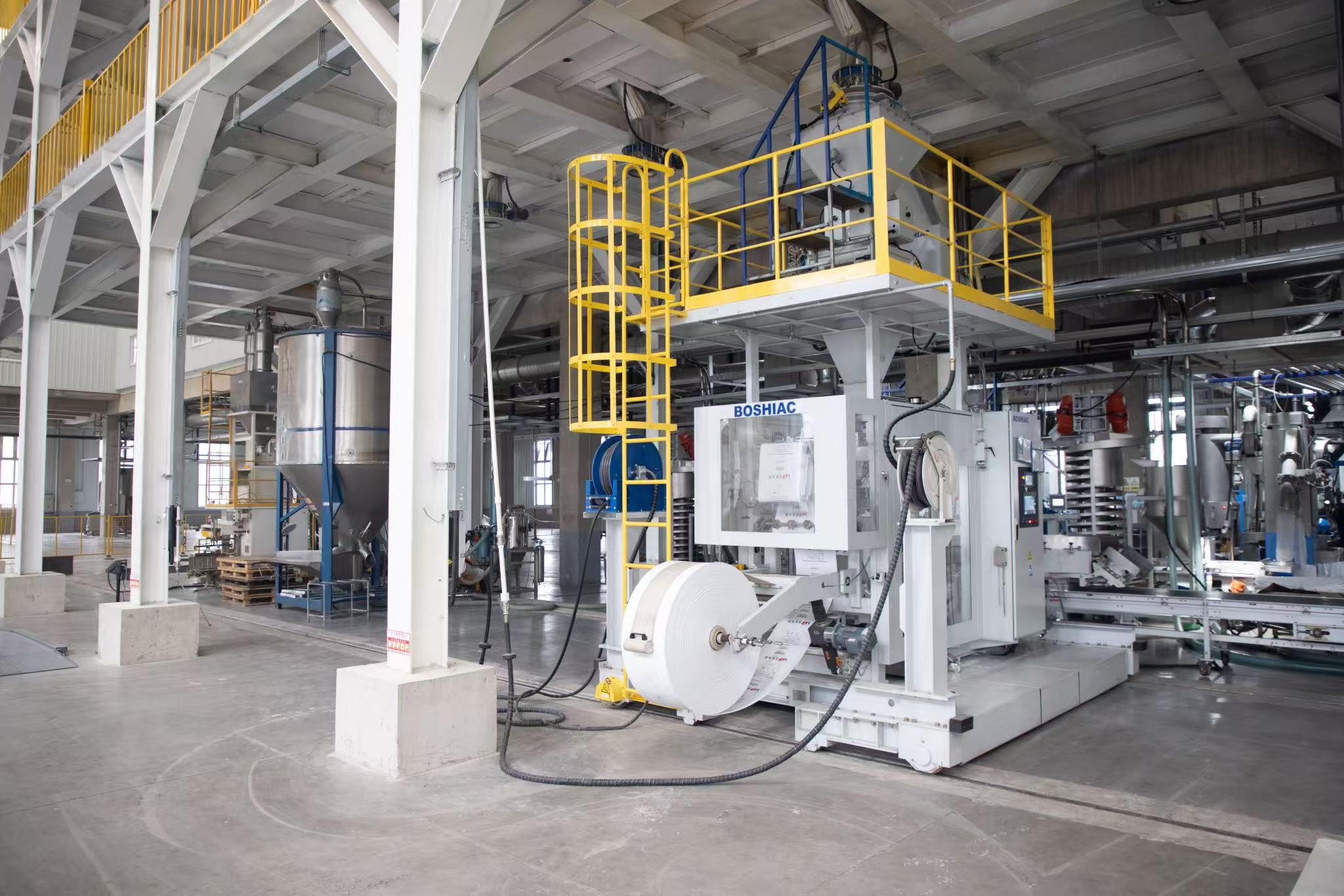
Because graft level and MFR sit on the same reaction pathway, consistency between lots depends on process control rather than on final testing alone. Shenyang Ketong Plastics Co., Ltd. is a high-tech enterprise specialising in the research, development and production of functional polymer materials covering polymer compatibilizers, tougheners and functional adhesive resins, with two manufacturing sites in Shenyang. Incoming raw materials are inspected in full for key indicators such as purity, moisture and effective content, with rejection and traceability for abnormal batches. Feeding is double-checked, and core reaction parameters including temperature, pressure and duration are monitored in real time through a DCS system, supported by online sampling inspection and statistical process control. Abnormal batches are isolated and handled immediately, finished products undergo full-item acceptance before shipment, and a retained sample is kept for each batch with a retention period that covers the product warranty.
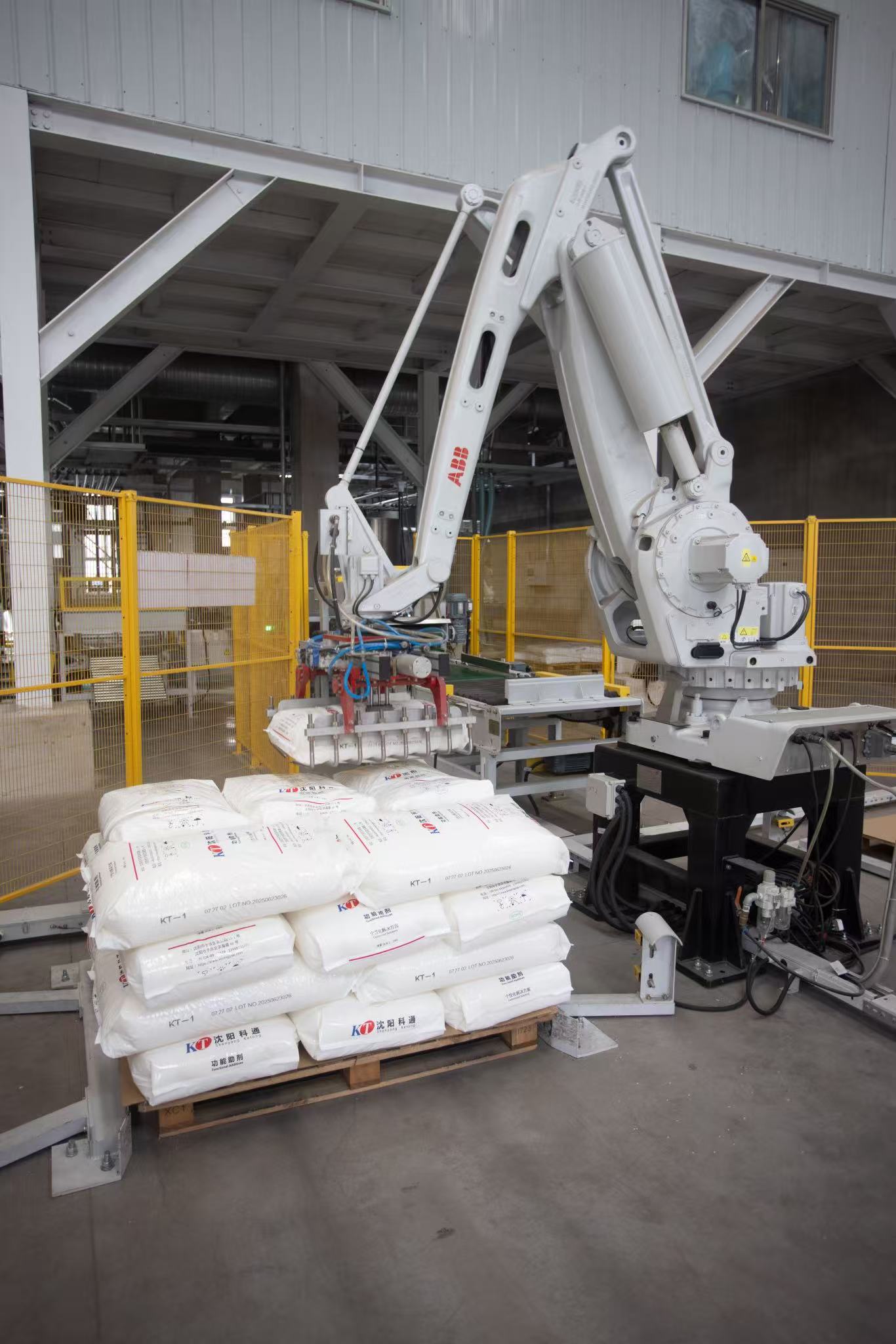
The practical takeaway is that a lot-specific certificate of analysis is worth more than a nominal specification sheet. If a supplier can show how the graft value and MFR are measured on each batch, and how the tolerance band is enforced, the two headline numbers become decision inputs rather than marketing claims.
Step-by-Step Breakdown: A Seven-Step Selection Workflow
- Define the blend and the failure mode. Identify the matrix, the dispersed or reinforcing phase, and the property that is failing today - interfacial debonding, impact, weld-line strength, odour, or process stability. Every later parameter decision should be traceable to this failure mode.
- Fix the process window before reading datasheets. Record the extrusion temperature profile, screw configuration, residence time, shear level and downstream drying. A compatibilizer that performs well in a laboratory internal mixer may behave differently under production shear history.
- Set a graft-level band, not a target value. Express the requirement as a range that the supplier can hold across lots. A single target value cannot be verified reproducibly and creates avoidable rejections.
- Match MFR to the matrix rather than to a preference. A low-viscosity matrix disperses a high-MFR compatibilizer easily; a high-viscosity or highly filled matrix more often needs a lower-MFR grade to build cohesion and avoid unmelted gels.
- Screen datasheets for method transparency. If the test method, test conditions or tolerance band is missing, the comparison is not yet valid. Request this information before running trials.
- Run a dose ladder under production-like conditions. Start at the low end of the supplier's recommended addition range and step up until the target property plateaus. Continuing past the plateau adds cost without performance.
- Lock the specification with the properties that define the failure mode. Combine the graft band, MFR band, residual MAH or odour criterion, moisture limit and the mechanical result that matters. Add a batch-variance clause so that qualification is not silently lost at lot three.
Use Cases: Where the Balance Shifts
Glass-fibre reinforced PP compounds
In short-glass-fibre PP, the compatibilizer must couple the PP matrix to the fibre sizing rather than to a bulk second phase. Because the interface area is very large and the sizing chemistry is already polar, moderate grafting levels often reach the plateau quickly, and processability - dispersion quality and surface finish - becomes the more sensitive variable. In these compounds, a grade with an extreme graft value is frequently outperformed by a balanced grade that disperses cleanly.
PP/polyamide blends and TPE overmolding onto nylon
When a polyamide phase is present, the MAH groups react with amine end groups, so the number of available anchors matters more directly. Grades with higher grafting levels are the natural starting point, but the MFR must still match the polyamide's viscosity at processing temperature; a mismatch shows up as coarse dispersed-phase domains and poor weld-line performance. The same logic governs TPE overmolding onto nylon substrates, where the compatibilizer or toughener influences adhesion across a thin interface rather than throughout a bulk blend. For these systems, KETONG supplies PP-g-MAH compatibilizers and adhesive resins, POE-g-MAH, EPDM-g-MAH and SEBS-g-MAH toughening agents for TPE overmolding onto nylon, and low-odour PP-g-MAH grades where emission limits apply.
Filled and recycled PP streams
Talc, calcium carbonate and glass-bead filled PP require far fewer anchors than a reactive polyamide interface, so a moderate graft level is usually sufficient and cost is better controlled. Recycled PP adds a different constraint: contamination, prior heat history and odour potential. Here low-odour grades and stable MFR between lots typically matter more than a marginal gain in graft content.
Multilayer structures and tie layers
In films and multilayer structures, functional adhesive resins such as PP-g-MAH and PE-g-MAH act as tie layers between polyolefin and polar barrier layers. In this geometry, flow behaviour is decisive: the tie layer must be thin, continuous and free of gels, so MFR matching frequently outweighs graft level in the final specification.
Across these cases, KETONG's portfolio is organised as three functional families - Toughening Agents, Compatibilizers and Adhesive Resins - with grades distributed across PP-g-MAH, PE-g-MAH, POE-g-MAH, EPDM-g-MAH, ABS-g-MAH, SEBS-g-MAH, PPO-g-MAH, EVA-g-MAH and PBAT-g-MAH chemistries for modified plastics applications in automotive, home appliance, new energy, construction and precision injection industries.
Comparison Table: Matching Graft Level and MFR to the Blend
The four archetypes below are not product recommendations but decision positions. Use them to describe the trade-off you are buying into before shortlisting grades.
| Archetype | Interface effect | Processability effect | Typical fit | Main risk to verify |
|---|---|---|---|---|
| Higher grafting level, higher MFR | More reactive anchors per chain, but shorter chains build less cohesive strength | Flows and wets easily; disperses quickly in low-viscosity matrices | Highly filled systems where coupling dominates and smell/colour tolerance allows | Residual free MAH, odour, colour drift |
| Higher grafting level, lower MFR | Strong anchors plus longer chains and higher melt strength | Disperses more slowly; needs a wider processing window | Demanding structural compounds, thick sections, high filler loads | Gels and unfused spots; whether the combination is genuinely achievable |
| Moderate grafting level, moderate MFR | Balanced anchoring across the interface | Predictable flow; least sensitive to line-to-line variation | General PP/polyamide, glass-fibre and mineral-filled compounds | Dose optimisation - the benefit plateaus quickly |
| Lower grafting level, higher MFR | Light coupling, sufficient for low polarity contrast | Good flow; suitable for thin layers and fast cycles | Tie layers, adhesive resins, thin-section overmolding | Insufficient adhesion in demanding mechanical loads |
Once an archetype is chosen, the next step is checking whether the datasheet actually describes what you think it describes. The field-by-field review below is the fastest way to find that out.
| Datasheet field | What it really controls | Question to ask the supplier |
|---|---|---|
| Graft content / acid value | Number of reactive anchors available at the interface | Is this measured by titration or spectroscopy, and is it bound MAH or total MAH? |
| Melt flow index | Molecular weight proxy and flow behaviour in the matrix | Which test standard, temperature and load; and how is the sample conditioned? |
| Residual free MAH / odour | Volatile emissions and suitability for interior or food-adjacent use | Is the value reported per lot, and after drying? |
| Volatiles and moisture | Extrusion stability, bubbles, hydrolysis risk | What packaging and drying recommendation applies? |
| Colour data | Appearance and downstream colour matching | How much does the value shift after a second heat history? |
| Tolerance band | Batch-to-batch consistency and re-qualification workload | What is the shipped tolerance, and is a COA issued per lot? |
FAQ
What regulatory documentation should accompany an MA-g-PP compatibilizer?
MAH grafted polymers are subject to EU REACH (EC 1907/2006) registration, and compliance with ASTM D1248 is standard for PE extrusion materials. In practice, request the current safety data sheet and the applicable declarations - REACH, RoHS, and FDA where food contact is involved - for the exact grade rather than the product family, and confirm they cover your destination market. KETONG states that its products comply with the environmental regulations of export destinations including REACH, RoHS and FDA, that required product certifications and customs code classifications are audited in advance, and that the full set of export documents is compliance-checked to avoid clearance problems.
Can grafting level and melt flow index be adjusted to a target specification?
Because the two parameters are coupled by the grafting reaction, customisation is normally about selecting the achievable combination closest to your target rather than demanding both extremes at once. KETONG's product families are Toughening Agents, Compatibilizers and Adhesive Resins, and the company develops customised supporting solutions for automotive, home appliance, new energy, construction and precision injection industries. Its R&D team of 8 engineers and more than 10 imported production lines support grade development, with process control through DCS monitoring of reaction temperature, pressure and duration, double-checked feeding, online sampling and statistical process control. A custom target still has to be confirmed on an actual sample, because agreement at datasheet level is not the same as verified performance in your blend.
Does a higher grafting level automatically mean a higher total cost?
Not necessarily. KETONG reports a cost reduction of 10% to 20% compared to alternatives, together with lower maintenance requirements and stable processing with a low defective rate - a combination that matters more than unit price alone. In evaluation terms, graft level determines how much compatibilizer the blend actually needs, and part of that addition is often wasted above the point where the target property plateaus. The meaningful comparison is therefore cost per tonne of conforming compound, which includes downtime, cleaning frequency and scrap rate rather than the price on the quotation alone. KETONG also reports a 3% to 5% improvement in impact performance for some individual products relative to alternatives; results of this kind are product-specific and should be verified on your own blend rather than assumed across the range.
How should a sample be validated before committing to production volume?
Measure grafting level and MFR on the sample lot itself instead of relying on nominal datasheet values, then run a dose ladder in the real matrix under production-like shear, temperature and residence time. Evaluate the property that defines your failure mode, check odour and volatile behaviour after processing, and retain a reference sample from the qualification lot. KETONG performs full performance inspection of finished products against customer specifications, national standards or destination standards before shipment, retains a sample of each batch for a period covering the product warranty period, and prohibits delivery of non-conforming product, with rework or scrap handled through a defined process.
What determines lead time and supply continuity for these grades?
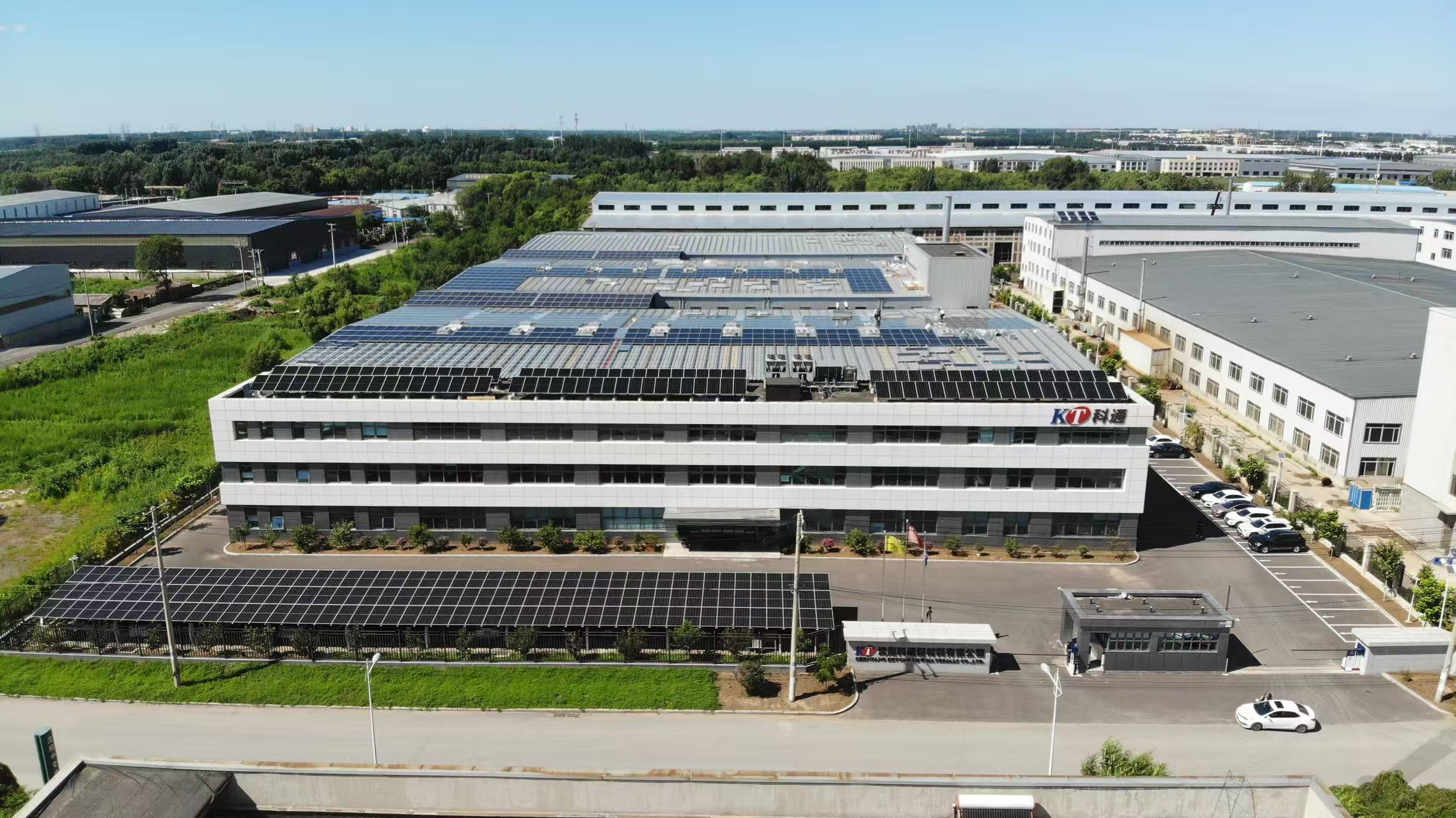
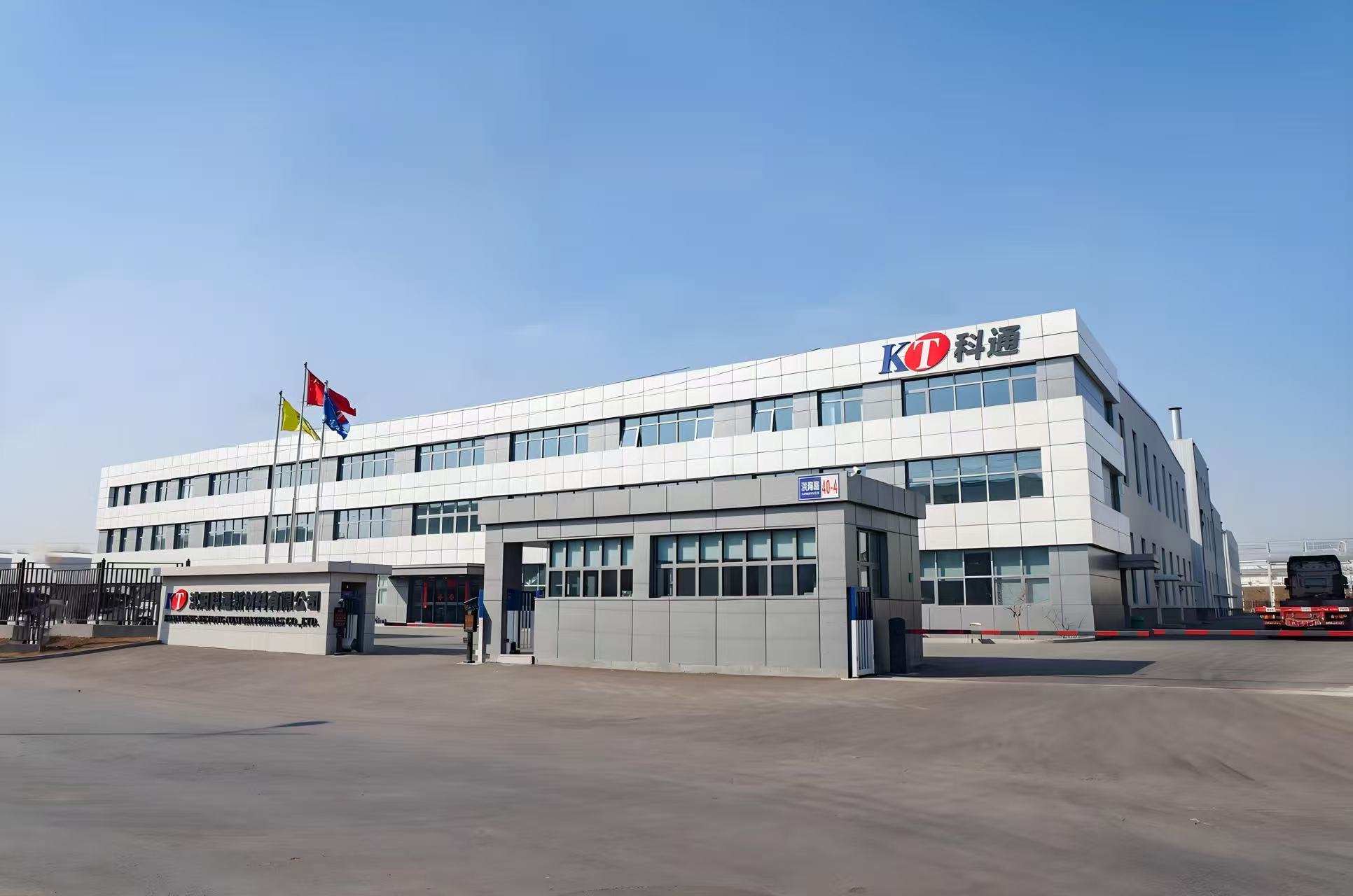
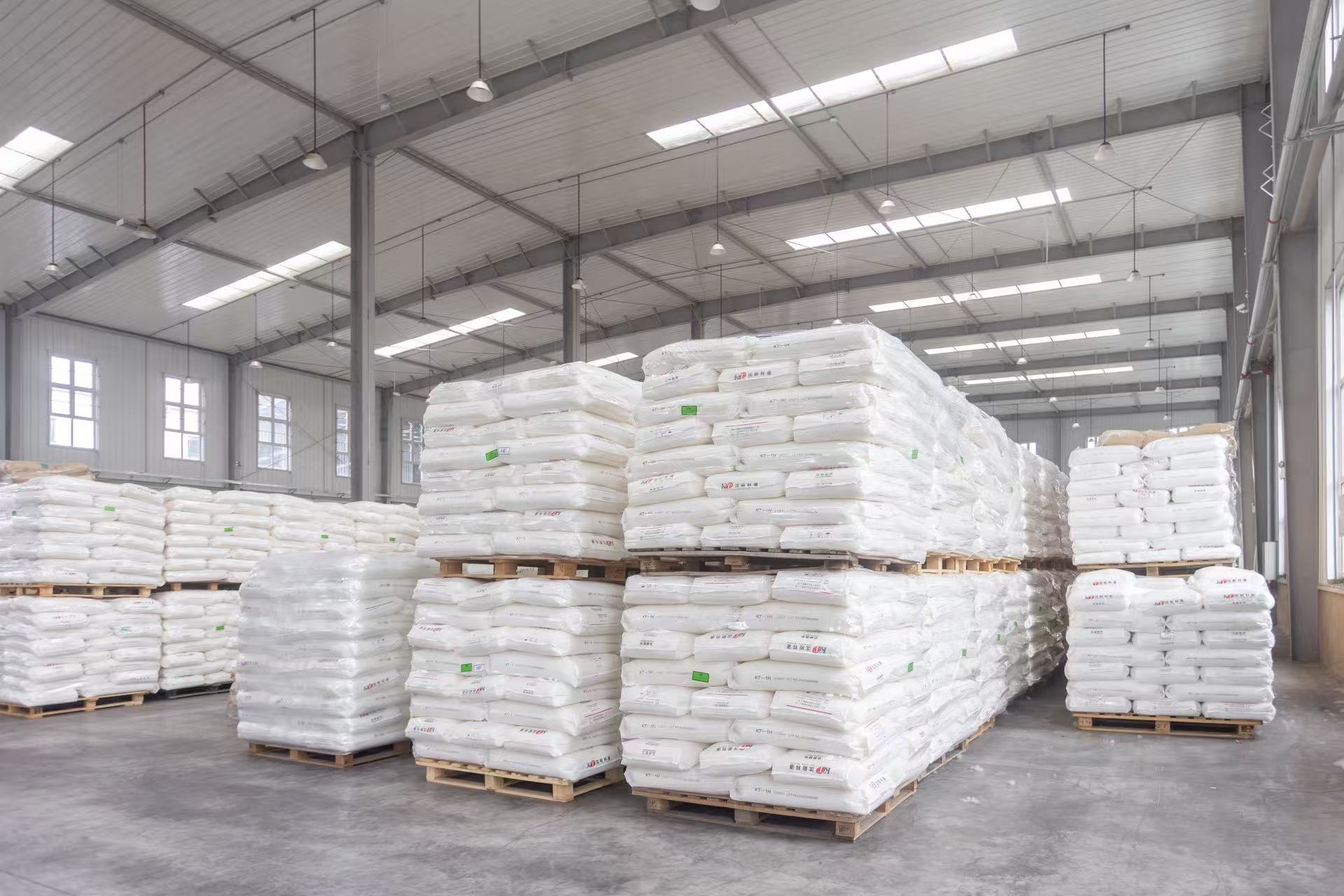
Lead time depends mainly on whether the grade is standard or custom, on core raw material availability and on packaging requirements. KETONG's supply controls include at least two qualified alternative suppliers for core materials, long-term agreements with core suppliers that lock price and quantity, and safety stock to protect production continuity. Warehouse storage is managed with temperature and humidity sensors plus continuous monitoring and automatic alarm on limit deviation, sealed storage under FIFO, and zoned stacking with batch identification. On capacity, Shenyang Ketong Plastics covers 30,000 square metres with more than 10 imported production lines and an annual production capacity of 50,000 tons, while the second site, Shenyang Ketong New Materials Co., Ltd., was completed in Shenyang, Liaoning in 2023 with a planned capacity of 60,000 tons per year. To move from evaluation to a decision, send your matrix, dispersed phase, process window and target properties to request a sample and quotation, or download the product brochure at KETONG product brochure (PDF).
Conclusion
Grafting level and melt flow index are not two independent specifications to be maximised and minimised. They are two readings of one coupled molecule, and the achievable combinations are constrained by the reactive-extrusion chemistry that produces them. Treating them as a pair - and pairing them again with your matrix viscosity, process window and failure mode - is what turns a datasheet comparison into a selection decision.
The workflow is straightforward once the framing is right: define the failure mode, set a graft band rather than a value, match MFR to the matrix, screen datasheets for method transparency and tolerance bands, validate with a dose ladder under production-like conditions, and lock a specification that also covers residual MAH, moisture and colour. Grades that survive that process are qualified on evidence rather than on headline numbers.
Next step
Send your blend details - matrix, dispersed phase, processing window and the property you need to fix - and KETONG will recommend a starting grade and supply a sample for evaluation. Compatibilizers, toughening agents and functional adhesive resins are manufactured at the Shenyang sites.
Website: compatibilizer.com | Brochure: Download PDF
Email: wangyanqiu@syketong.com | Tel / WhatsApp: +86 13998121502
Address: No. 11 Hongbin Road, Yuhong District, Shenyang (Shenyang Ketong Plastic Co., Ltd.); No. 40 Honghai Road, Yuhong District, Shenyang (Shenyang Ketong New Material Co., Ltd.)