
Maleic Anhydride Grafted Polymers in 2026: Supplier Evaluation Criteria Beyond Price Lists
Maleic Anhydride Grafted Polymers in 2026: Supplier Evaluation Criteria Beyond Price Lists
Selecting a maleic anhydride (MAH) grafted polymer supplier is rarely a price-driven decision. The polymer matrix, the required function — compatibilization, toughening, or adhesion — and the end-use environment all influence which grade and which supplier will deliver consistent results. In 2026, procurement teams evaluating MAH grafted polymer suppliers need a structured approach that goes beyond quoted prices and into product portfolio depth, process control, certification integrity, customization capability, and verified application evidence.
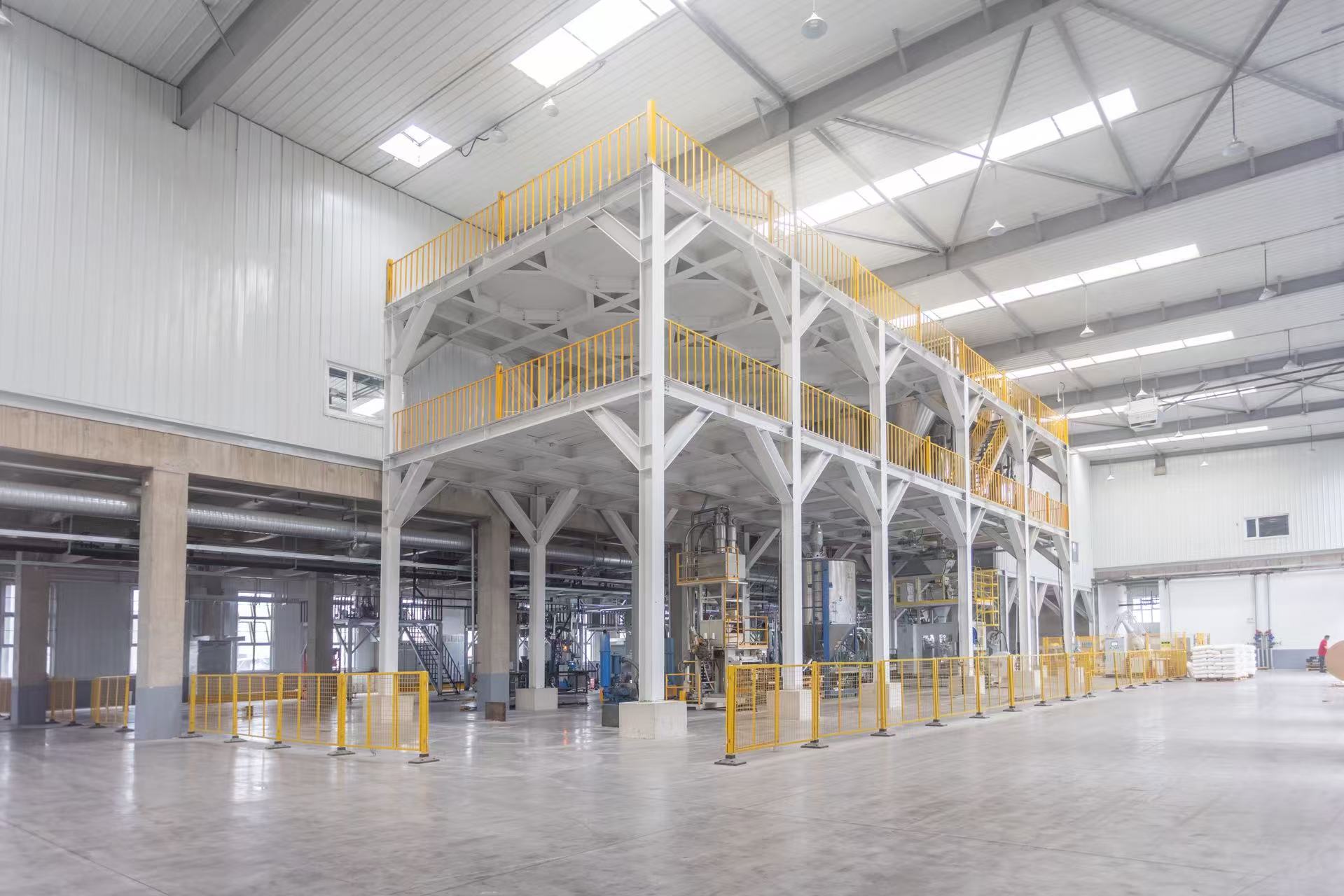
Factory floor of KETONG — manufacturing capability is a core factor in supplier evaluation.
Why Supplier Evaluation for MAH Grafted Polymers Is Difficult
MAH grafted polymers are a technically diverse category. A single umbrella term covers polypropylene-grafted-maleic anhydride (PP-g-MAH), polyethylene-grafted-maleic anhydride (PE-g-MAH), POE-g-MAH used for nylon toughening, EPDM-g-MAH, SEBS-g-MAH, ABS-g-MAH, PPO-g-MAH, EVA-g-MAH, PBAT-g-MAH and others. Each grade carries its own specification — MAH grafting level, melt flow rate, density, and carrier polymer — and the same generic name from different suppliers can behave very differently in a customer's compound.
For a procurement professional in the evaluation stage, the difficulty is not finding suppliers. It is distinguishing between a supplier that can ship a bag of powder and a supplier that can support a demanding application over multiple production runs. Price lists do not reveal MAH content accuracy, batch-to-batch consistency, residual odor, gel formation during extrusion, or whether the supplier has validated the product in real applications.
This guide provides an evaluation framework based on five verifiable dimensions: product portfolio, quality and compliance, production and customization capacity, application evidence, and supply chain reliability. We apply this framework to KETONG (Shenyang Ketong New Materials Co., Ltd.) to illustrate what a qualified supplier should be able to show a buyer during evaluation.
Industry Context: The 2026 MAH Grafted Polymer Landscape
The market context matters because it shapes supplier strategies and buyer expectations. According to Grand View Research, the global maleic anhydride market reached USD 4.39 billion in 2023 and is projected to grow to USD 5.86 billion by 2030. The same source reports that Asia Pacific accounted for a 52.1% revenue share in 2023, with China expected to grow at a CAGR of 5.4% through 2030.
For grafted polymer buyers specifically, Business Research Insights projects the global maleic anhydride graft polymer market at USD 1.42 billion in 2026, reaching USD 2.16 billion by 2035 with a CAGR of 4.7%. Dataintelo estimates the grafted polyethylene (MAH-g-PE) segment alone at USD 1.24 billion in 2024, targeting USD 2.08 billion by 2033.
End-use industries are also shifting. ChemAnalyst reports that automotive applications represent 42% of total demand for polyolefin elastomers (POE), a class frequently grafted with MAH for toughening. High-performing, low-odor, and recyclable-friendly solutions are increasingly requested by compounders serving interior automotive parts, food packaging, and consumer goods.
In this environment, procurement teams face a rising number of suppliers claiming “MAH grafted” capability. The credible players are those that can document not only what they make, but how they verify it works. The verified market landscape includes global names such as Huntsman, Dow, LyondellBasell, Mitsui Chemicals, and SK Functional Polymer, according to Mordor Intelligence. These companies are recognized participants in the broader MAH value chain. But buyers evaluating regional suppliers should apply the same evidence-based scrutiny to both global and local sources — and in some applications, a specialized Chinese manufacturer with a focused product line may offer a stronger match.
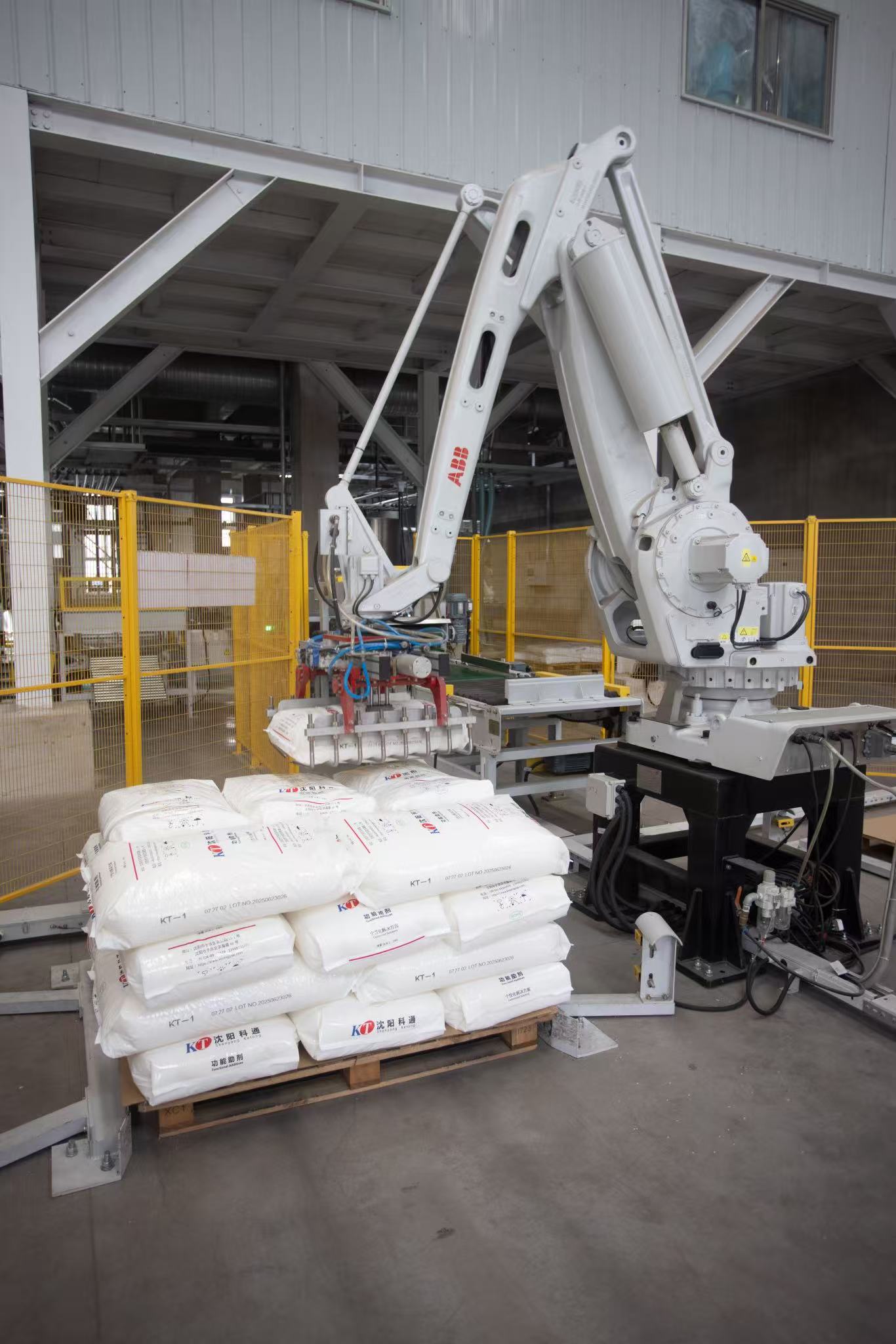
Automation in production helps maintain batch consistency — a key evaluation point for MAH grafted polymer buyers.
Detailed Solution: A Five-Dimension Supplier Evaluation Framework
1. Product Portfolio and Technical Parameters
No single MAH grafted product can cover every application. A serious supplier should offer a broad matrix-based portfolio, with clear technical datasheets showing MAH content, melt flow rate, and density.
KETONG, a high-tech enterprise founded in 2003 and based in Shenyang, China, specializes in functional polymer materials and lists three product categories: toughening agents, compatibilizers, and adhesive resins. Its current portfolio includes polypropylene series compatibilizers (e.g., KT-1, KT-1D, KT-1H), low-odor polypropylene series compatibilizers (LEP-1B, LEP-1K), ABS series compatibilizers (KT-2, KT-2H, KT-3), low-odor ABS compatibilizers (LEP-2), PE series compatibilizers (KT-12, KT-12A, KT-12D, KT-12B), PPO series compatibilizers (KT-24, KT-24B, KT-24F), EVA series compatibilizers (KT-26, KT-2628 series), biodegradable compatibilizers (KT-36), nylon tougheners (KT-913 series, KT-915 series, KT-916K, KT-7, KT-8), polyester tougheners (KT-22, KT-33, KT-35, etc.), PC tougheners (KT-17, KT-1701, KT-1702), POM tougheners (KT-28, KT-28A), and adhesive resin grades such as KT-NJ001, KT-NJE2202, KT-NJM2203, KT-NJG3304, and KT-NJP2201.
This range matters for evaluation because a buyer often needs multiple MAH grafted grades across different formulations. Working with one supplier who covers PP-g-MAH, PE-g-MAH, POE-g-MAH, and ABS-g-MAH reduces qualification time and supply-chain complexity.
2. Quality and Compliance Systems
Product parameters are only useful if the supplier can control them consistently. Buyers should request active certificates and verify that management systems cover the entire R&D, production, and marketing process.
KETONG holds several current management system certificates. The ISO 9001:2015 quality management certificate (No. 03825Q03155R1M, issued by World Standards for Certification Center Inc., valid until 2028-05-04) covers “the whole process of research, development, production and marketing of modified plastic masterbatches, toughened plastic masterbatches and compatible plastic masterbatches.” The company also holds ISO 14001:2015 environmental management certification (No. 03825E03153R1M) and ISO 45001:2018 occupational health and safety certification (No. 03825S03154R1M).
In addition to system certifications, regulatory compliance is a growing criterion. As noted in verified third-party data, MAH grafted polymers sold into the EU are subject to REACH (EC 1907/2006) registration, and ASTM D1248 is a recognized standard for PE extrusion materials. A supplier should be able to explain how its products fit into these frameworks, not simply assert compliance.
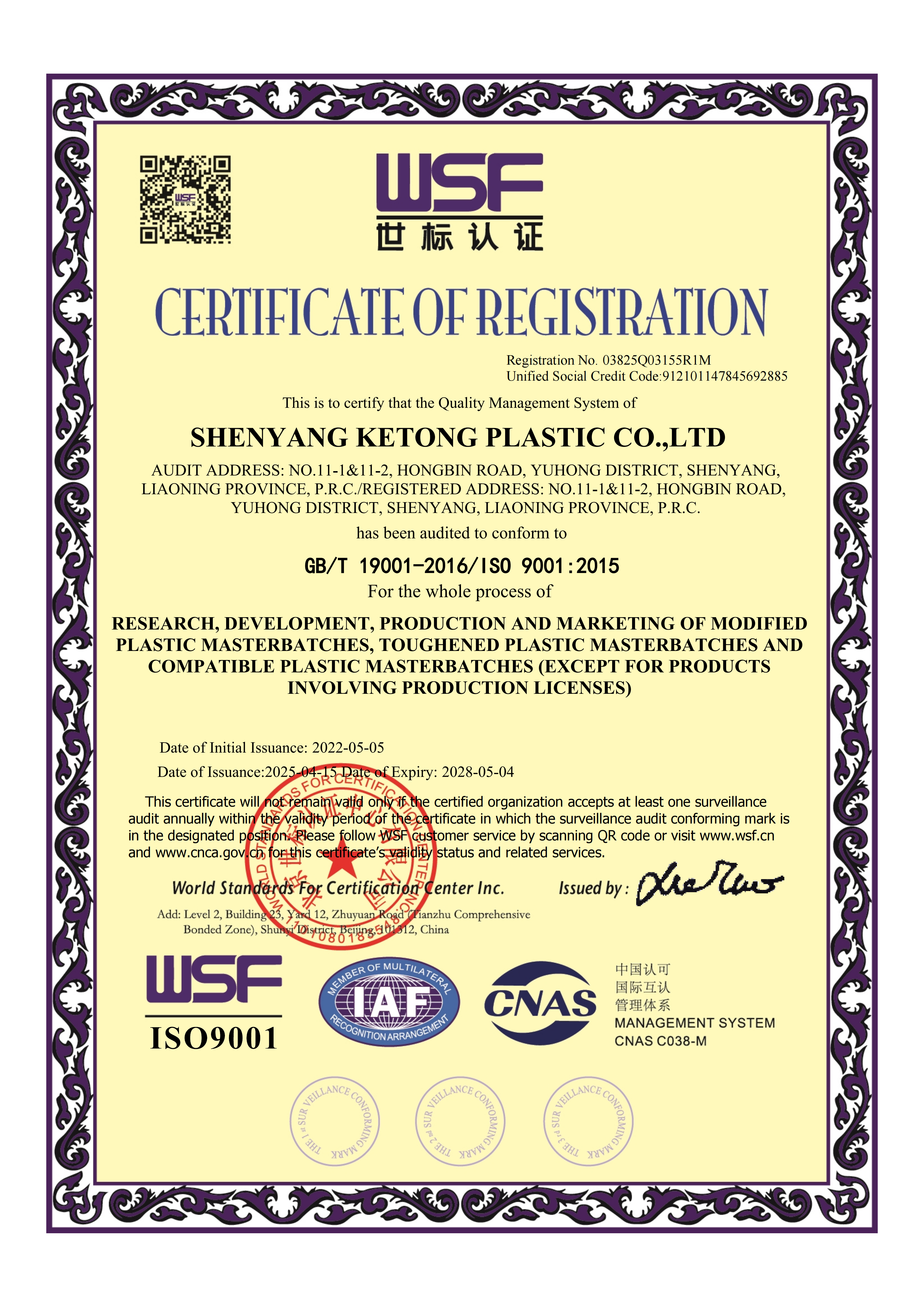
KETONG’s ISO 9001:2015 certificate is one example of verifiable evidence buyers should request from any MAH grafted polymer supplier.
3. Production Capacity and Customization Capability
Capacity is not just about volume. It is about the ability to scale with your demand, adjust formulations, and maintain lead times. During evaluation, a buyer should ask about monthly output, line count, R&D staffing, and whether the supplier offers OEM/ODM services.
KETONG’s corporate profile describes a factory area of 30,000 square meters and more than 10 imported production lines, with an annual production capacity of 50,000 tons across its first plant. Its second facility, Shenyang Ketong New Materials Co., Ltd., was completed in 2023, covers more than 30 acres with a building area of 20,000 square meters, and is planned to invest 10 production lines with a planned capacity of 60,000 tons per year. The company employs 130 people, including 8 R&D engineers.
From a capability standpoint, KETONG lists production modes including OEM, ODM, OBM, EMS, CMT, and JDM, which gives buyers flexibility. The company states monthly production capacity of 5,000–6,000 tons, and MOQ is customizable on demand. Lead time is demand-driven, meaning production scheduling aligns with order requirements. For a buyer in evaluation, these details indicate that the supplier can accommodate both trial quantities and commercial volumes without forcing a rigid minimum.
4. Application Evidence and Case Performance
Technical datasheets describe what a product is supposed to do. Application cases show what it has actually achieved. Buyers in the evaluation stage should request real project references, including the application, the product grade, the quantity supplied, and the measured outcome.
KETONG provides several documented application examples from modified polymer material manufacturers:
- Multi-layer co-extrusion barrier films: 21 tons of KT-NJP2201 adhesive resin were used for the adhesive layer. Results included stable adhesion performance in the multi-layer co-extrusion process and meeting food packaging barrier and safety requirements. The product demonstrated excellent adhesion to EVOH and PA, with fewer gel spots and good transparency.
- Reinforced and toughened nylon: 20 tons of KT-916K nylon toughening agent were supplied to a modified polymer material manufacturer. The result was a significantly improved toughening effect, with stable and reliable performance and low-temperature resistance down to -50°C.
- Glass fiber reinforced polypropylene and mineral filled polypropylene: 22 tons of LEP-1B and LEP-1K low-odor PP compatibilizers were used. The project achieved remarkably enhanced impact resistance, with low VOC emission and enhanced aging resistance of the modified materials.
- Glass fiber reinforced PP: 20 tons of KT-1, KT-1D, and KT-1H PP compatibilizers delivered excellent material impact strength retention, good processability, and greatly improved compatibility between materials.
These cases cover different matrices and different functions — adhesion to EVOH/PA, low-temperature nylon toughening, low-odor PP reinforcement. That diversity is itself a signal: the supplier’s products are being tested in real compounding environments, not just in theoretical specifications.
5. Supply Chain Reliability and After-Sales Support
A supplier that cannot respond to quality complaints or cannot adapt to changing order schedules is a risk regardless of product quality. Evaluation should include after-sales policies, export experience, and communication responsiveness.
KETONG states that it provides return, replacement, and refund for quality issues, which is a practical commitment for buyers. The company operates offices in East China, South China, and Southwest China, and exports to Vietnam as a primary market, with product reaching customers in Asia, America, Europe, and other regions. Its export ratio is currently 1.84%, suggesting a growing but still domestically anchored operation — a point buyers should consider when assessing global supply chain maturity.
Step-by-Step Breakdown: How to Evaluate a MAH Grafted Polymer Supplier
- Define the base polymer and application. Identify whether you need PP-g-MAH, PE-g-MAH, POE-g-MAH, ABS-g-MAH, EPDM-g-MAH, SEBS-g-MAH, or another graft variant. Write down the target function: compatibilization, toughening, or adhesive bonding.
- Map required technical parameters. Determine the acceptable melting flow rate and MAH content range. Use product datasheets from shortlisted suppliers as a first filter.
- Verify certifications and regulations. Request current ISO certificates and any REACH, ASTM, or other compliance documents that matter for your market.
- Assess production capacity and customization. Ask about monthly output, number of production lines, R&D staff, MOQ flexibility, OEM/ODM capabilities, and lead time scheduling.
- Ask for application references. Require documented examples using the same product type in a similar matrix. Look for quantity, duration, outcome, and specific performance highlights.
- Request samples and run trials. A serious supplier will supply samples for a compounding trial. Evaluate adhesion, impact, odor, gel spots, and consistency.
- Check after-sales and quality policies. Confirm the supplier’s policy on returns, replacement, and refund for quality issues, and see how responsive their technical support is during the evaluation.
- Compare total cost of ownership. Price per kilogram is only part of the picture. Include rejection rate, trial time, logistics, and the cost of switching suppliers if performance does not hold.
Comparison Table: What to Check and What KETONG Provides
| Evaluation Dimension | Why It Matters | Evidence from KETONG (from public corporate data and verified cases) |
|---|---|---|
| Product portfolio | Different polymer matrices require different MAH grafted grades | PP, PE, ABS, PPO, EVA, biodegradable, PA, polyester, PC, POM series; compatibilizers, tougheners, adhesive resins |
| Quality management | Ensures batch-to-batch consistency and process control | ISO 9001:2015 (No. 03825Q03155R1M); ISO 14001:2015; ISO 45001:2018 |
| Production capacity | Determines ability to scale and meet lead times | 30,000 m² factory area; multiple imported production lines; annual capacity up to 50,000 tons first plant; new plant planned 60,000 tons/year |
| Customization | Allows formulation adjustments for specific requirements | OEM/ODM/OBM/EMS/CMT/JDM; product formula and additive performance customization; MOQ customizable |
| Application evidence | Proves real-world performance beyond the datasheet | Documented cases in multi-layer films (KT-NJP2201), nylon toughening (KT-916K, -50°C), low-odor PP (LEP-1B/LEP-1K), glass fiber PP (KT-1/1D/1H) |
| After-sales support | Reduces procurement risk | Return, replacement, and refund for quality issues |
In parallel, buyers should note that the wider global market includes established names such as Huntsman, Dow, LyondellBasell, Mitsui Chemicals, and SK Functional Polymer (as identified by Mordor Intelligence). For applications requiring regional supply, faster responsiveness, or a deeper single-focus portfolio, a specialized Chinese manufacturer like KETONG can be evaluated with the same rigor.
Use Cases: What Verified Outcomes Look Like in MAH Grafted Polymer Procurement
Adhesive Resin for Food-Packaging Barrier Films
A modified polymer material manufacturer supplied 21 tons of KT-NJP2201 (MAH-g-PE adhesive resin) over one year. The application was an adhesive layer in multi-layer co-extrusion barrier films. The reported result: stable adhesion performance, excellent adhesion to EVOH and PA, fewer gel spots, good transparency, and compliance with food packaging barrier and safety requirements. For a buyer evaluating adhesive resins, this is a concrete example of how a PE-based MAH grafted product performs in a demanding process.
Low-Temperature Toughening for Nylon Compounds
KT-916K, a nylon toughening agent with high MAH content (>0.8%), was supplied to a compounder in a 20-ton annual volume. The reported highlight: significantly improved toughening effect, with stable and reliable performance down to -50°C. This matters for buyers in automotive or cold-climate applications where standard impact modifiers fail.
Low-Odor Compatibilization for Glass-Fiber-Reinforced PP
LEP-1B and LEP-1K low-odor PP compatibilizers were used in a 22-ton annual project for glass-fiber-reinforced polypropylene and mineral-filled polypropylene. The project achieved enhanced impact resistance, low VOC emission, and enhanced aging resistance. Interior automotive parts and consumer goods increasingly demand this low-odor profile.
Standard PP-g-MAH for Glass-Fiber-Reinforced PP
KT-1, KT-1D, and KT-1H (PP-g-MAH with medium or high MAH and MFR options) were supplied in a 20-ton annual program. The key outcomes: excellent material impact strength retention, good processability, and greatly improved compatibility between materials. This supports the decision that a single PP-g-MAH family can serve multiple formulation targets if the grade is selected correctly.
FAQ
Q1: What certifications should a MAH grafted polymer supplier hold?
A qualified supplier should be able to provide current ISO 9001:2015 quality management certification covering the research, development, production, and marketing of modified plastic masterbatches. Environmental (ISO 14001:2015) and occupational health and safety (ISO 45001:2018) certifications add confidence in process control. KETONG holds all three, with numbers 03825Q03155R1M, 03825E03153R1M, and 03825S03154R1M respectively, issued by World Standards for Certification Center Inc. and valid through 2028. Depending on destination market, also ask about REACH registration and ASTM standards.
Q2: Does KETONG offer low-odor PP-g-MAH and ABS-g-MAH compatibilizers?
Yes. KETONG’s product list includes low-odor polypropylene series compatibilizers (LEP-1B with MFR ≥80 g/10 min and LEP-1K with MFR ≥60 g/10 min, both with MAH content >0.8%) and a low-odor ABS series compatibilizer (LEP-2). These products are designed for applications where volatile organic compounds and odor are a concern, such as interior automotive parts. Application cases using LEP-1B and LEP-1K in glass-fiber-reinforced PP report low VOC emission and enhanced aging resistance.
Q3: What is KETONG’s MOQ and typical lead time for MAH grafted polymer orders?
KETONG states that MOQ is customizable on demand and lead time is demand-driven. This means buyers should contact the company with their target volume and delivery window to receive a specific schedule. Monthly production capacity is reported at 5,000–6,000 tons, which provides flexibility for both trial and commercial orders.
Q4: Can I request samples before committing to a KETONG purchase?
Yes. Buyers in the evaluation stage should request samples and conduct compounding trials. KETONG’s documented application cases — such as KT-NJP2201 for co-extrusion films, KT-916K for nylon toughening, and LEP-1B/LEP-1K for low-odor PP compounds — provide a starting point for trial design. Contact KETONG directly or download the corporate brochure to begin a sample request.
Q5: What after-sales support does KETONG provide?
KETONG’s stated policy is “Return, Replacement & Refund for Quality Issues.” That gives buyers a defined path if a delivered batch does not meet agreed specifications. The company also supports customization and qualified feedback throughout the project, which is particularly important when adapting MAH grafted polymer products to a new formulation.
Conclusion
Evaluating MAH grafted polymer suppliers in 2026 requires more than matching a product name. Buyers need to examine the product portfolio, verify certifications, assess manufacturing and customization capacity, ask for application evidence, and understand the supplier’s after-sales commitment. These steps filter out suppliers who merely trade in generic pellets from those who can deliver consistent performance in complex compounds.
KETONG provides a useful reference point: two manufacturing bases in Shenyang, a product range spanning PP-g-MAH, PE-g-MAH, POE-g-MAH, ABS-g-MAH, PPO-g-MAH, EVA-g-MAH, PBAT-g-MAH, nylon tougheners, polyester tougheners, PC tougheners, and POM tougheners, along with ISO system certifications and documented application cases. The next step is to test that evidence against your own formulation.
Ready to evaluate KETONG for your MAH grafted polymer needs?
Request technical datasheets, discuss custom formulations, or obtain samples.
Visit KETONG’s website or download the company brochure (PDF).