
PP-g-MAH vs POE-g-MAH Compatibilizers for TPE Overmolding: A Head-to-Head Decision Guide
PP-g-MAH vs POE-g-MAH Compatibilizers for TPE Overmolding: A Head-to-Head Decision Guide
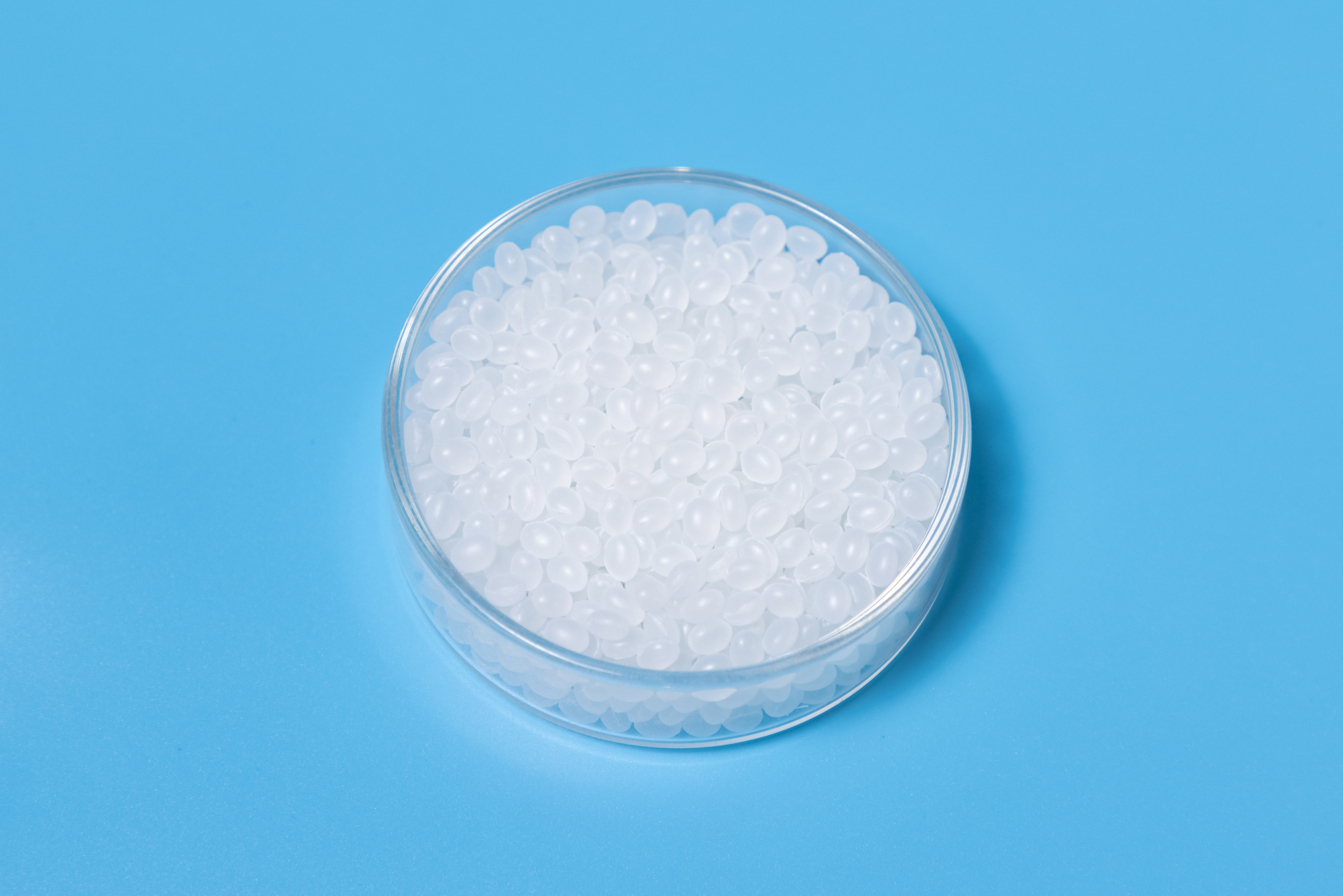
Choosing between PP-g-MAH and POE-g-MAH for TPE overmolding is a substrate question before it is a price question. PP-g-MAH (maleic anhydride grafted polypropylene) is the right starting point when the rigid part is polypropylene, a PP-based TPE/TPV system, or a glass-fiber or mineral-filled PP compound. POE-g-MAH (maleic anhydride grafted polyolefin elastomer) is the right starting point when the rigid part is polyamide (PA6/PA66), or when the elastomer phase has to deliver low-temperature flexibility and impact modification at the same time as adhesion. Both are maleic anhydride grafted polymers. They do not bond the same interface.
This head-to-head guide is written for product engineers and compounders who have to make that call on a live project, not in theory. It walks through the failure the choice is meant to prevent, the market and compliance context, the KETONG PP-g-MAH and POE-g-MAH grade families, the five criteria that actually separate them, a comparison table, a step-by-step decision sequence, real application cases, and a cost-per-part framework that does not depend on a price list. The framing throughout is system-level: the compatibilizer is one element of a bond line that also includes the rigid substrate, the TPE carrier, the tool, and the process window.
The Failure You Are Actually Solving
In TPE overmolding, a bond failure rarely announces itself as a compatibilizer problem. It shows up as peel or delamination at the TPE/rigid interface, as a joint that passes first-article peel testing and then fails after heat aging or conditioning, or as inconsistent adhesion across cavities in the same tool. The compatibilizer is usually one of several contributing variables, but it is the variable that decides whether the interface can hold at all.
The mechanism is straightforward. Maleic anhydride grafted polymers carry a polar, reactive anhydride group on a non-polar polyolefin backbone. The anhydride group provides the chemical anchor to a polar or dissimilar surface; the backbone provides compatibility with the bulk polyolefin phase. If the backbone does not match the substrate chemistry or the TPE carrier polymer, the reactive groups are present but poorly positioned, and no practical increase in loading fixes the interface. That is the most common and most expensive misdiagnosis in overmolding projects: adding more of the wrong graft family, which raises compound cost, can disturb dispersion, and may increase odor and color risk without moving peel strength.
Before changing chemistry, it is worth confirming the other variables, because they are cheaper to fix: the exact rigid substrate grade and its additives, mold-release or handling contamination on the insert, melt temperature and residence time at the interface, and tool design at the bond line. Once those are controlled, the decision reduces to four specification questions — which backbone, which graft (MAH) content, which melt flow rate, and which documentation set — plus one commercial question, the cost per accepted part.
Industry Background: Why This Is Now a Procurement-Level Decision
Maleic anhydride grafted polymers sit inside a large and still expanding chemistry base. The global maleic anhydride market reached USD 4.39 billion in 2023 and is projected to grow to USD 5.86 billion by 2030, according to Grand View Research. The same source places Asia Pacific at a 52.1% revenue share in 2023, with China expected to grow at a CAGR of 5.4% through 2030. Within that base, the graft polymer segment itself is projected at USD 1.42 billion in 2026, reaching USD 2.16 billion by 2035 at a CAGR of 4.7%, per Business Research Insights. The grafted polyethylene (MAH-g-PE) segment alone reached USD 1.24 billion in 2024 and is targeted at USD 2.08 billion by 2033, according to Dataintelo.
Demand is concentrated where adhesion and toughness have to coexist. ChemAnalyst reports that automotive applications represent 42% of total demand for polyolefin elastomers, the family that is frequently grafted with maleic anhydride for toughening. Automotive interiors, appliance housings, power tools, and consumer goods are exactly the programs where an overmolded TPE has to survive both peel loading and thermal aging.
Two supply-side shifts make the choice more consequential than it used to be. First, regulation: maleic anhydride grafted polymers are subject to EU REACH (EC 1907/2006) registration, and ASTM D1248 is the standard commonly referenced for PE extrusion materials — so documentation travels with the material, not just the invoice. Second, specification depth: recognised global players in this chemistry include Huntsman, Dow, LyondellBasell, Mitsui Chemicals, and SK Functional Polymer, and the competitive gap between suppliers increasingly sits in grade design — graft level, melt flow, odor control — rather than in the base chemistry itself.
The practical consequence for a buyer is that a generic "compatibilizer" line item on a bill of materials is no longer adequate. The decision requires a specified graft family, a specified graft level, a specified melt flow rate, and a verifiable documentation set.
The KETONG Portfolio: Two Graft Backbones, One Supplier
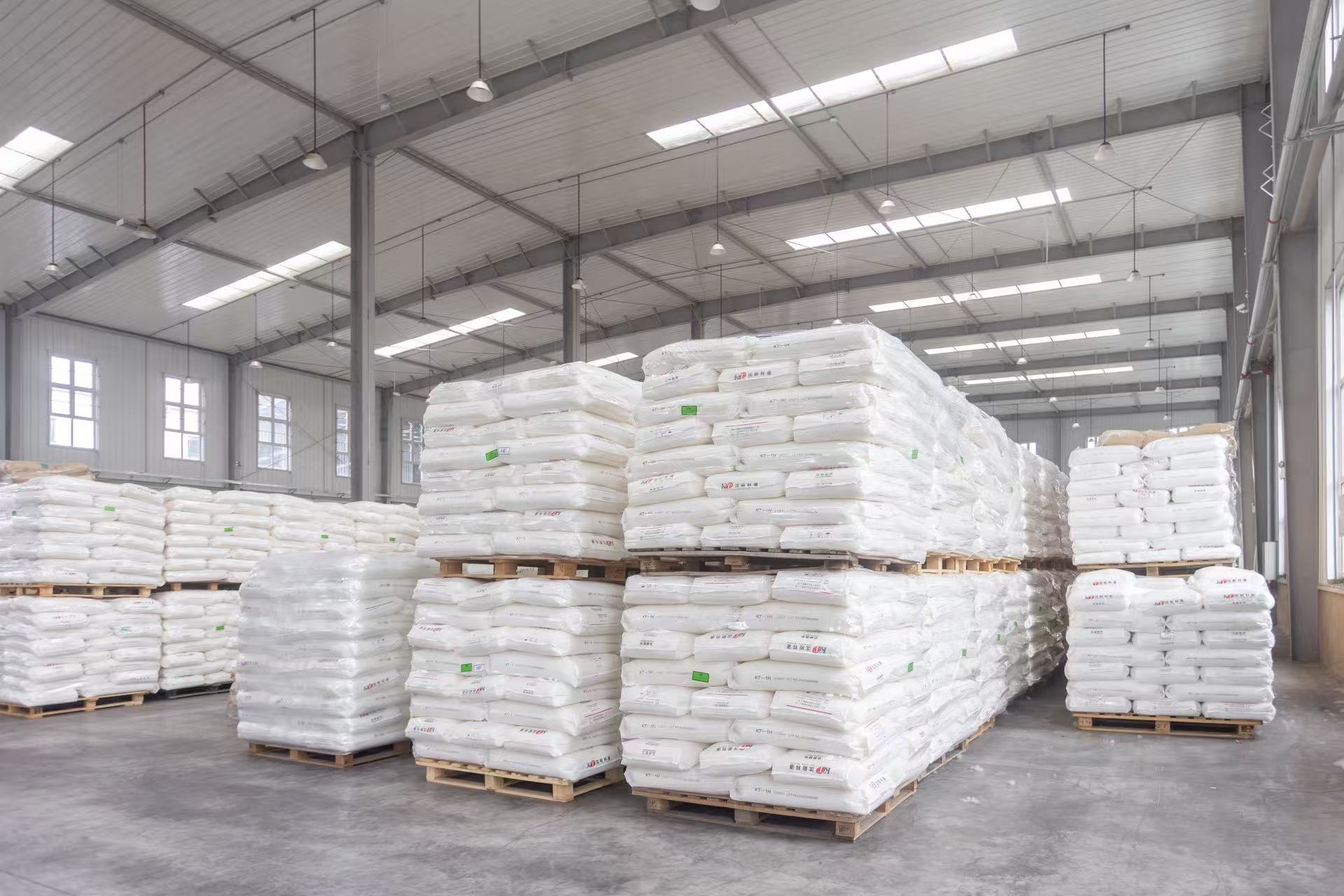
KETONG refers to Shenyang Ketong Plastics Co., Ltd. and its second plant, Shenyang Ketong New Materials Co., Ltd. — a Chinese developer and manufacturer of functional polymer materials founded in 2003 in Shenyang, Liaoning, producing polymer compatibilizers, tougheners, and functional adhesive resins. The original facility covers 30,000 square meters, operates more than 10 imported production lines, and states an annual production capacity of 50,000 tons. The second Shenyang plant was completed in 2023 with a building area of 20,000 square meters and a planned capacity of 60,000 tons per year. Research and development is carried out by an 8-engineer team, and the portfolio spans PP-g-MAH, PE-g-MAH, POE-g-MAH, EPDM-g-MAH, SEBS-g-MAH, ABS-g-MAH, PPO-g-MAH, EVA-g-MAH, and biodegradable MAH-grafted grades.
For an overmolding project, two of those families matter most, and KETONG lists them as separate series with separate specifications.
PP-g-MAH grades (Polypropylene Series Compatibilizers)
- KT-1 — MAH Medium (0.4%–0.8%), Melt Flow Rate 90–120 g/10min (190°C/2.16kg), density 0.91–0.95 g/cm³, material MAH-g-PP.
- KT-1D — MAH High (>0.8%), Melt Flow Rate 90–120 g/10min (190°C/2.16kg), density 0.91–0.95 g/cm³.
- KT-1H — MAH High (>0.8%), Melt Flow Rate 60–100 g/10min (190°C/2.16kg), density 0.90–0.92 g/cm³.
- LEP-1B — Low-Odor Polypropylene Series, MAH High (>0.8%), Melt Flow Rate ≥80 g/10min (190°C/2.16kg), density 0.90–0.92 g/cm³.
- LEP-1K — Low-Odor Polypropylene Series, MAH High (>0.8%), Melt Flow Rate ≥60 g/10min (190°C/2.16kg), density 0.90–0.92 g/cm³.
POE-g-MAH grades (Nylon/PA Series Tougheners and elastomeric grafts)
- KT-9 — material POEMAH-g-POE, MAH Medium (0.4%–0.8%), Melt Flow Rate ≥0.8 g/10min (190°C/2.16kg), density 0.87–0.90 g/cm³, recommended addition 3%–20%.
- KT-9C — same POEMAH-g-POE backbone, MAH Medium (0.4%–0.8%), Melt Flow Rate ≥0.2 g/10min, density 0.87–0.90 g/cm³, recommended addition 3%–20%.
- KT-915B — MAH Medium (0.4%–0.8%), Melt Flow Rate 0.5–1.5 g/10min, density 0.86–0.89 g/cm³, recommended addition 3%–25%.
- KT-915E — MAH High (>0.8%), Melt Flow Rate ≥0.2 g/10min, density 0.86–0.88 g/cm³, recommended addition 3%–25%.
- KT-915 / KT-915A — MAH High (>0.8%), Melt Flow Rate 0.5–1.5 g/10min, density 0.86–0.89 g/cm³, recommended addition 3%–25%.
- KT-915F — MAH High (>0.8%), Melt Flow Rate 1.5–4.5 g/10min, density 0.86–0.88 g/cm³.
- KT-9015 — MAH High (>0.8%), Melt Flow Rate 4.0–9.0 g/10min, density 0.89–0.92 g/cm³, recommended addition 3%–25%.
- KT-903 / KT-906 — MAH Medium (0.4%–0.8%), density 0.90–0.92 g/cm³ and 0.87–0.89 g/cm³ respectively, recommended addition 3%–20%.
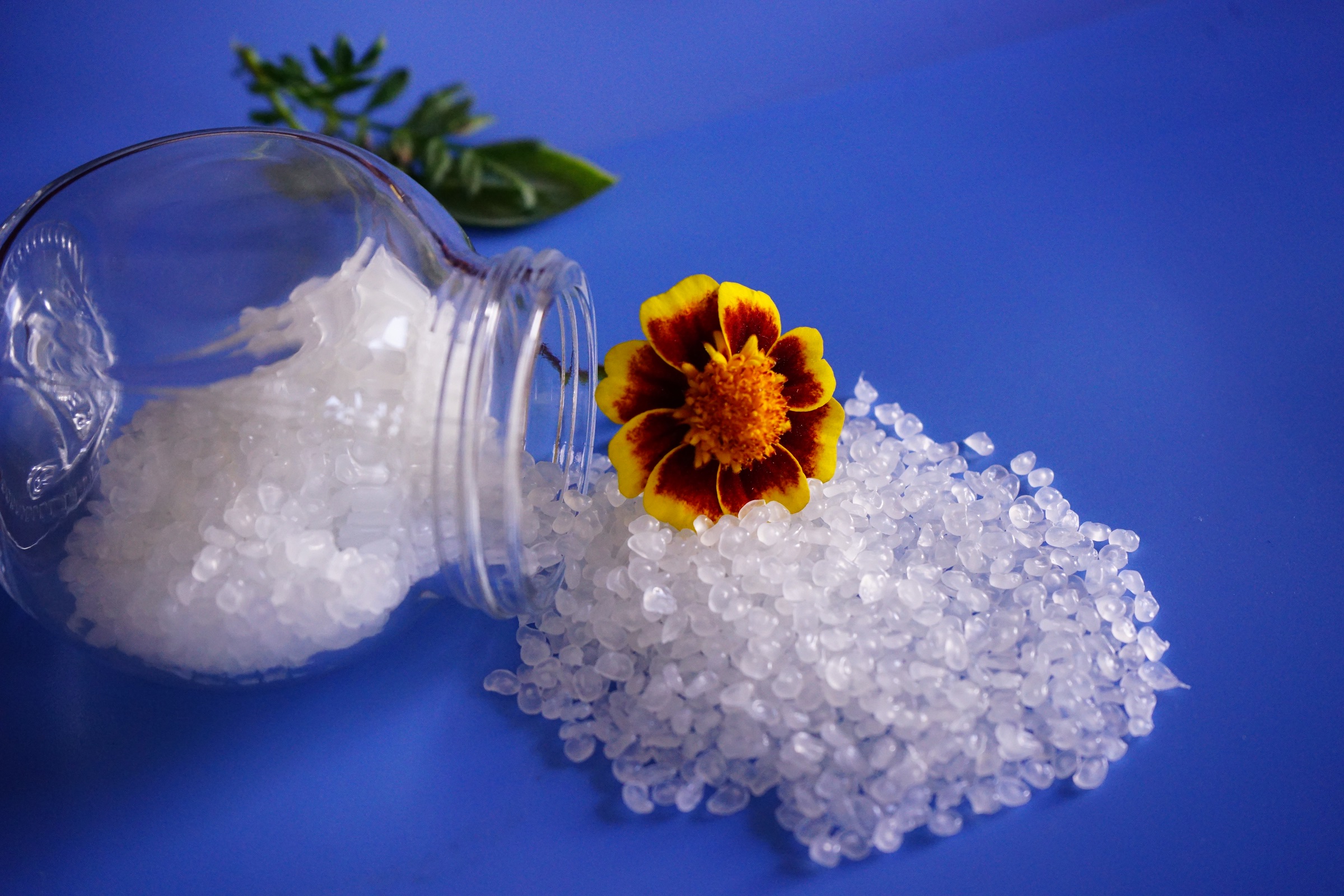
Two adjacent families are worth knowing when the two main options do not fit the requirement. EPDM-g-MAH grades KT-7 and KT-8 offer MAH Medium (0.4%–0.8%) with a Melt Flow Rate of 0.2–2.0 g/10min and density of 0.86–0.88 g/cm³ at a 3%–25% addition scope, and SEBS-g-MAH grade KT-25 carries MAH High (>0.8%) with a Melt Flow Rate ≥1.0 g/10min (190°C/5kg), density 0.91–0.93 g/cm³, and a 3%–15% addition scope.
PP-g-MAH vs POE-g-MAH: Five Criteria That Decide the Project
1. Backbone chemistry and the rigid substrate
The backbone decides where the compatibilizer prefers to sit. A PP backbone makes a PP-g-MAH grade thermodynamically comfortable in a polypropylene matrix, so in a PP-based TPE or TPV system, or in a glass-fiber or mineral-filled PP part, the graft disperses readily and the interface sees chemically similar chains on both sides. The anhydride group then supplies the polar anchor. A POE backbone introduces a soft, ethylene-octene elastomeric chain instead — lower modulus, better low-temperature behaviour, and a stronger practical affinity for polar engineering surfaces such as polyamide. In practice: if the rigid part is PP and the TPE is a PP/SEBS-based compound, evaluate KT-1, KT-1D, or KT-1H first. If the rigid part is PA, or the compound itself is a toughened nylon, the POE-g-MAH family (KT-9, KT-9C, KT-915 series) is the family to test.
2. Graft (MAH) content and dosage efficiency
KETONG publishes graft content in bands that map to different jobs. Medium graft (0.4%–0.8%) covers KT-1, KT-9, KT-9C, KT-915B, KT-903, and KT-906, along with KT-7 and KT-8 in the EPDM family. High graft (>0.8%) covers KT-1D, KT-1H, LEP-1B, LEP-1K, and the KT-915/KT-9015 POE series. The concept is consistent: higher graft content places more reactive anhydride sites in every kilogram, which normally allows a lower addition level to reach a target bond strength. The trade-off is real, not theoretical — high-graft grades are generally lower in flow, which affects dispersion, and they carry more odour and colour risk. That is exactly why the low-odour PP grades LEP-1B and LEP-1K are specified as high-graft, and why PP-g-MAH grades such as KT-1 are commonly used at their published adjustment latitude rather than at a fixed percentage.
3. Melt flow rate and the processing window
This is the criterion that most often separates the two families in a real line trial. The PP-g-MAH grades are high-flow: KT-1 runs at 90–120 g/10min (190°C/2.16kg), KT-1H at 60–100, LEP-1B at ≥80, and LEP-1K at ≥60. That flow supports fast let-down, uniform dispersion, and easier feeding in a compounding or injection overmolding context. The POE-g-MAH grades are deliberately low-flow elastomeric grafts: KT-9C and KT-915E are listed at ≥0.2 g/10min, KT-9 at ≥0.8, KT-915B and KT-915 at 0.5–1.5, KT-915F at 1.5–4.5, and KT-9015 at 4.0–9.0. Grade design can trade graft content against flow — KT-916K, in the nylon toughening family, is specified at 9.0–13.0 g/10min (235°C/5kg) with MAH High (>0.8%). If the line runs a low-shear mixing profile, a very low-MFR elastomer graft may not disperse fully, and that will look like a compatibilizer failure when it is actually a dispersion problem.
4. Density, odour, and part-level consequences
Density differs in a way that affects formulation economics: the PP-g-MAH family sits at roughly 0.90–0.95 g/cm³, while the POE-g-MAH family sits at roughly 0.86–0.90 g/cm³. At the same weight-based loading, the lower-density elastomer graft occupies more volume in the compound, so weight-percentage and volume-percentage comparisons do not behave identically. Odour and volatiles are the second part-level factor. KETONG addresses it directly with the Low-Odor series — LEP-1B and LEP-1K for polypropylene, and LEP-2 for ABS, which is specified as MAH High (>0.8%) with a Melt Flow Rate of 1.0–4.0 g/10min (200°C/5kg) and density 1.03–1.08 g/cm³. For automotive interior, appliance, and packaging-adjacent programs, odour-controlled grades should be requested at the sampling stage rather than after a failed panel review.
5. Documentation and compliance
Both families sit inside the same certification envelope at KETONG, because the certificates cover the process rather than a single grade. The manufacturer holds ISO 9001:2015 (certificate 03825Q03155R1M), ISO 14001:2015 (certificate 03825E03153R1M), and ISO 45001:2018 (certificate 03825S03154R1M), all issued by World Standards for Certification Center Inc. The quality management certificate is valid to 2028-05-04 and the environmental certificate to 2028-06-01, and the scope covers the whole process of research, development, production and marketing of modified plastic masterbatches, toughened plastic masterbatches and compatible plastic masterbatches. On the regulatory side, maleic anhydride grafted polymers are subject to EU REACH (EC 1907/2006) registration, and ASTM D1248 is the standard commonly referenced for PE extrusion materials. Buyers with food-contact or automotive-interior requirements should confirm grade-level documentation against the specific end application before qualification, because that depends on formulation and use, not on the certificate alone.
Head-to-Head Comparison Table
| Decision criterion | PP-g-MAH (KETONG PP series) | POE-g-MAH (KETONG PA/elastomer series) |
|---|---|---|
| Carrier backbone | MAH-g-PP (KT-1, KT-1D, KT-1H); low-odour MAH-g-PP (LEP-1B, LEP-1K) | POEMAH-g-POE (KT-9, KT-9C, KT-915B, KT-915E, KT-915, KT-915A, KT-915F, KT-9015, KT-903, KT-906) |
| Graft (MAH) content options | Medium 0.4%–0.8% (KT-1); High >0.8% (KT-1D, KT-1H, LEP-1B, LEP-1K) | Medium 0.4%–0.8% (KT-9, KT-9C, KT-915B, KT-903, KT-906); High >0.8% (KT-915, KT-915A, KT-915E, KT-915F, KT-9015) |
| Melt Flow Rate (190°C/2.16kg unless noted) | KT-1: 90–120 g/10min; KT-1D: 90–120; KT-1H: 60–100; LEP-1B: ≥80; LEP-1K: ≥60 | KT-9: ≥0.8; KT-9C: ≥0.2; KT-915B: 0.5–1.5; KT-915E: ≥0.2; KT-915: 0.5–1.5; KT-915F: 1.5–4.5; KT-9015: 4.0–9.0 |
| Density | 0.90–0.95 g/cm³ | 0.86–0.90 g/cm³ |
| Typical family application | PP compatibility and PP-side bonding; glass-fibre reinforced PP and mineral-filled PP compounds | Nylon (PA) toughening and PA-side bonding; elastomer-phase impact modification |
| Recommended addition scope | Adjust appropriately (KT-1 series and LEP series) | 3%–25% (KT-9, KT-9C, KT-915 series, KT-9015); 3%–20% (KT-903, KT-906) |
| Odour-controlled option | Yes — LEP-1B and LEP-1K, Low-Odor Polypropylene Series | Grade-specific; verify odour and volatiles with the supplier at sampling |
| Documentation coverage | ISO 9001:2015 (03825Q03155R1M), ISO 14001:2015 (03825E03153R1M), ISO 45001:2018 (03825S03154R1M), issued by World Standards for Certification Center Inc., covering research, development, production and marketing of modified plastic masterbatches; REACH (EC 1907/2006) registration applies to MAH grafted polymers; ASTM D1248 referenced for PE extrusion materials | |
| Main trade-off to manage | High flow and easy dispersion, but PP backbone limits affinity to polar substrates such as PA | Strong elastomeric character and PA affinity, but low flow demands attention to dispersion and feeding |
Step-by-Step Decision Breakdown
The sequence below is written so it can be run as a project checklist. Each step produces a record that the next step depends on.
- Identify the rigid substrate and the TPE carrier polymer. Record the exact substrate grade (homopolymer PP, copolymer PP, glass-fibre reinforced PP, PA6, PA66) and the TPE type (PP/SEBS-based compound, TPV, or another elastomer system). This single record eliminates roughly half of the possible graft choices.
- Match the graft backbone to that pair. PP-side interfaces point to the PP-g-MAH series (KT-1, KT-1D, KT-1H). PA-side interfaces and toughened-nylon compounds point to the POE-g-MAH series (KT-9, KT-9C, KT-915B, KT-915E, KT-9015). Consider KT-7/KT-8 (EPDM-g-MAH) or KT-25 (SEBS-g-MAH) only when their specific elastomeric or weathering characteristics are the deciding requirement.
- Set the graft level from the target bond strength and your dosage tolerance. Start from a medium-graft grade (0.4%–0.8%) where the formulation can accept a higher addition level, and move to a high-graft grade (>0.8%) where the formulation has a tight dosage ceiling or where peel targets are demanding.
- Match melt flow to the process. Compounding and injection overmolding generally tolerate higher flow; low-shear lines and elastomer-rich formulations need a grade whose MFR supports dispersion. Compare the published MFR values (all at 190°C/2.16kg unless otherwise stated) before committing to a trial quantity.
- Check odour, volatiles, and colour requirements. If the program has an interior, appliance, or packaging-adjacent specification, request the low-odour options (LEP-1B, LEP-1K on the PP side; LEP-2 in the ABS family) and evaluate them in the same trial as the standard grades.
- Confirm documentation before the trial, not after. Collect ISO 9001:2015, ISO 14001:2015, and ISO 45001:2018 evidence and confirm REACH applicability for the specific grade, so that a successful technical trial is not blocked later by a documentation gap.
- Run a dosage ladder and then validate at production scale. Test at least three addition levels with a fixed process window, record peel results and the failure mode (cohesive in the TPE, cohesive in the substrate, or interfacial), then re-run the winning formulation on the production tool. Shelf life should be managed from day one: the stated shelf life is one year unopened with intact packaging, and three months after opening, provided no contamination or moisture absorption occurs.
Where Each Choice Wins: Application Cases
The clearest evidence for backbone-first selection comes from the applications KETONG has documented, because each one maps a graft family to a specific compound problem.
- Glass-fibre reinforced and mineral-filled PP. This is the classic PP-g-MAH assignment. A modified polymer material manufacturer took delivery of 20 tons of KT-1 / KT-1D / KT-1H for glass-fibre reinforced PP over a one-year program, reporting remarkably enhanced impact resistance together with good impact-strength retention and processability, and a clear improvement in compatibility between the materials (case reference 614).
- Low-VOC PP compounds. A second compounder used 22 tons of LEP-1K and LEP-1B across glass-fibre reinforced PP and mineral-filled PP, reporting low VOC emission and enhanced aging resistance alongside improved impact resistance (case reference 615). This is the case where the low-odour, high-graft combination is doing double duty.
- Toughened nylon and PA-side bonding. A manufacturer ordered 20 tons of KT-916K for reinforced and toughened nylon and reported a significantly improved toughening effect, with stable and reliable performance and low-temperature resistance down to −50°C (case reference 616). That combination — PA affinity plus low-temperature flexibility — is the reason the POE-g-MAH family exists in an overmolding context.
- Adjacent constructions using the same logic. In multi-layer co-extrusion barrier films, a manufacturer took 21 tons of KT-NJP2201 adhesive resin and reported stable adhesion in the multi-layer co-extrusion process with strong adhesion to EVOH and PA, fewer gel spots, and good transparency (case reference 617). Different end product, same principle: choose the graft backbone for the surface it has to bond and the matrix it has to sit in.
Cost-Per-Part: A Framework Instead of a Price Comparison
Comparing PP-g-MAH and POE-g-MAH by price per kilogram is misleading, because they are used at different addition levels, at different densities, and with different consequences when they fail. A defensible comparison is built per accepted part, from four cost blocks.
- Compatibilizer cost per part. Part weight × addition percentage × landed cost per kilogram, adjusted for density, since the two families sit at 0.90–0.95 g/cm³ and 0.86–0.90 g/cm³ respectively. Ask for landed cost quoted at your target addition level rather than at the drum price.
- Scrap and rework. An interfacial bond failure destroys the entire overmolded assembly, not just the additive. Any model that ignores first-pass yield will understate the cost difference between a working and a non-working graft choice.
- Cycle time and yield effects. High-flow PP-g-MAH grades disperse quickly; low-flow POE-g-MAH grades deliver elastomeric performance but may require process adjustments. Both effects belong in the model.
- Qualification cost. Samples, peel testing, heat aging, and documentation are one-time costs that should be compared against the volume they protect, not against a per-kilogram delta.
Decision rule: request trial quantities and a landed cost quotation at your target addition level, and compare the two options on cost per accepted part after the dosage ladder. KETONG states that MOQ is customizable on demand and that monthly capacity is 5,000–6,000 tons with demand-driven scheduling, so a trial does not have to be structured around container-scale volumes.
Frequently Asked Questions
Are PP-g-MAH and POE-g-MAH compatibilizers covered by REACH and by ISO management system certification?
Maleic anhydride grafted polymers are subject to EU REACH (EC 1907/2006) registration, and ASTM D1248 is the standard commonly referenced for PE extrusion materials. On the supplier side, KETONG holds ISO 9001:2015 (certificate 03825Q03155R1M), ISO 14001:2015 (certificate 03825E03153R1M), and ISO 45001:2018 (certificate 03825S03154R1M), all issued by World Standards for Certification Center Inc. and valid to 2028, covering the research, development, production, and marketing of modified plastic masterbatches, toughened plastic masterbatches and compatible plastic masterbatches. Both graft families fall inside that certificate scope. Grade-level documents for food-contact or automotive-interior programs should still be confirmed with the supplier before qualification, because those depend on the specific formulation and the end application.
What graft levels and melt flow rates can I select between the two families?
On the PP-g-MAH side, KT-1 offers MAH Medium (0.4%–0.8%) with a Melt Flow Rate of 90–120 g/10min (190°C/2.16kg); KT-1H offers MAH High (>0.8%) at 60–100 g/10min; and the low-odour LEP-1B and LEP-1K offer MAH High (>0.8%) at ≥80 and ≥60 g/10min respectively, with densities between 0.90 and 0.95 g/cm³. On the POE-g-MAH side, KT-9 (medium graft, MFR ≥0.8), KT-9C (medium graft, MFR ≥0.2), KT-915B (medium graft, MFR 0.5–1.5), KT-915E (high graft, MFR ≥0.2), and KT-9015 (high graft, MFR 4.0–9.0) cover densities of 0.86–0.90 g/cm³, with a recommended addition scope of 3%–25% for the KT-9 and KT-915 series and 3%–20% for KT-903 and KT-906. Higher graft content generally means more reactive sites per kilogram and the possibility of a lower addition level; lower melt flow generally means more elastomeric character and greater attention to dispersion.
How should we calculate cost-per-part instead of comparing price per kilogram?
Model the compatibilizer as part weight × addition percentage × landed cost per kilogram, corrected for density, then add first-pass scrap and rework, cycle-time effects, and one-time qualification cost. The density difference between the families — roughly 0.90–0.95 g/cm³ for PP-g-MAH grades versus 0.86–0.90 g/cm³ for POE-g-MAH grades — means the same weight-based loading occupies different volumes, so weight percentage and volume percentage are not interchangeable. Because a bond failure scrapes the whole molded assembly, the deciding number is usually cost per accepted part, not the per-kilogram delta between two drums.
Can we obtain samples and run an overmolding trial before committing to volume?
Yes. KETONG supports OEM, ODM, OBM, EMS, CMT, and JDM production modes, with product formula customization and additive performance customization covering toughening, flame retardancy, anti-oxidation, reinforcement, and weather resistance. For an overmolding evaluation, the practical request is a sample set across the candidate graft levels in the chosen family — for example KT-1, KT-1H, and LEP-1K on the PP side, or KT-9C and KT-915E on the POE side — together with the technical data needed to set a dosage ladder. Quality control is performed by random sampling inspection, and MOQ is customizable on demand, so the trial quantity can be matched to the number of cavities you actually need to validate.
What are the MOQ and lead time, and how do we start?
MOQ is customizable on demand and lead time follows demand-driven scheduling against a monthly capacity of 5,000–6,000 tons, so the sequence normally runs from sample evaluation and a dosage ladder to a defined grade and then a scheduled volume commitment. After-sales support covers return, replacement, and refund for quality issues. To open a technical discussion, contact Alice Wang, General Manager, at wangyanqiu@syketong.com or +86 13998121502 (also available on WhatsApp), or review the full KETONG product brochure before specifying a grade.
Conclusion: Decide on the Bond Line, Then Optimise the Price
The head-to-head result is a decision rule rather than a winner. PP-g-MAH and POE-g-MAH are both maleic anhydride grafted polymers, but the PP backbone and the POE backbone position the reactive anhydride group differently in a real bond line. Match the backbone to the rigid substrate and the TPE carrier first; set graft content from the target bond strength and the dosage ceiling; match melt flow to the mixing and moulding profile; then handle odour, density, and documentation as specification items rather than afterthoughts. Cost-per-part comes last, calculated per accepted part, because the failure mode in overmolding destroys the assembly, not the additive.
On that basis, a PP-substrate overmolding project starts with KT-1, KT-1D, or KT-1H, and a PA-substrate or toughened-nylon project starts with KT-9, KT-9C, KT-915B, or KT-915E. Both families sit inside the same ISO 9001:2015, ISO 14001:2015, and ISO 45001:2018 certificate envelope at KETONG, so the qualification conversation can focus on the specification that actually controls adhesion.
Next Step: Put the Decision on a Real Bond Line
Send your rigid substrate, TPE carrier, and target addition level, and request a PP-g-MAH and POE-g-MAH sample pair for a dosage-ladder trial. KETONG supports formula customization, customizable MOQ, and demand-driven scheduling from a 5,000–6,000 ton monthly capacity.
Email wangyanqiu@syketong.com · WhatsApp/Tel +86 13998121502 · compatibilizer.com · Download the KETONG product brochure.
Contact and facilities
Shenyang Ketong New Materials Co., Ltd. / Shenyang Ketong Plastics Co., Ltd.
No. 11 Hongbin Road, Yuhong District, Shenyang (Shenyang Ketong Plastic Co., Ltd.)
No. 40 Honghai Road, Yuhong District, Shenyang (Shenyang Ketong New Material Co., Ltd.)
Email: wangyanqiu@syketong.com · Tel / WhatsApp: +86 13998121502 · Web: compatibilizer.com