TPE Overmolding Compatibilizer: MA-g-POE vs MA-g-EPDM vs MA-g-SEBS
Compatibilizer Selection Guide
TPE Overmolding Compatibilizer: MA-g-POE vs MA-g-EPDM vs MA-g-SEBS
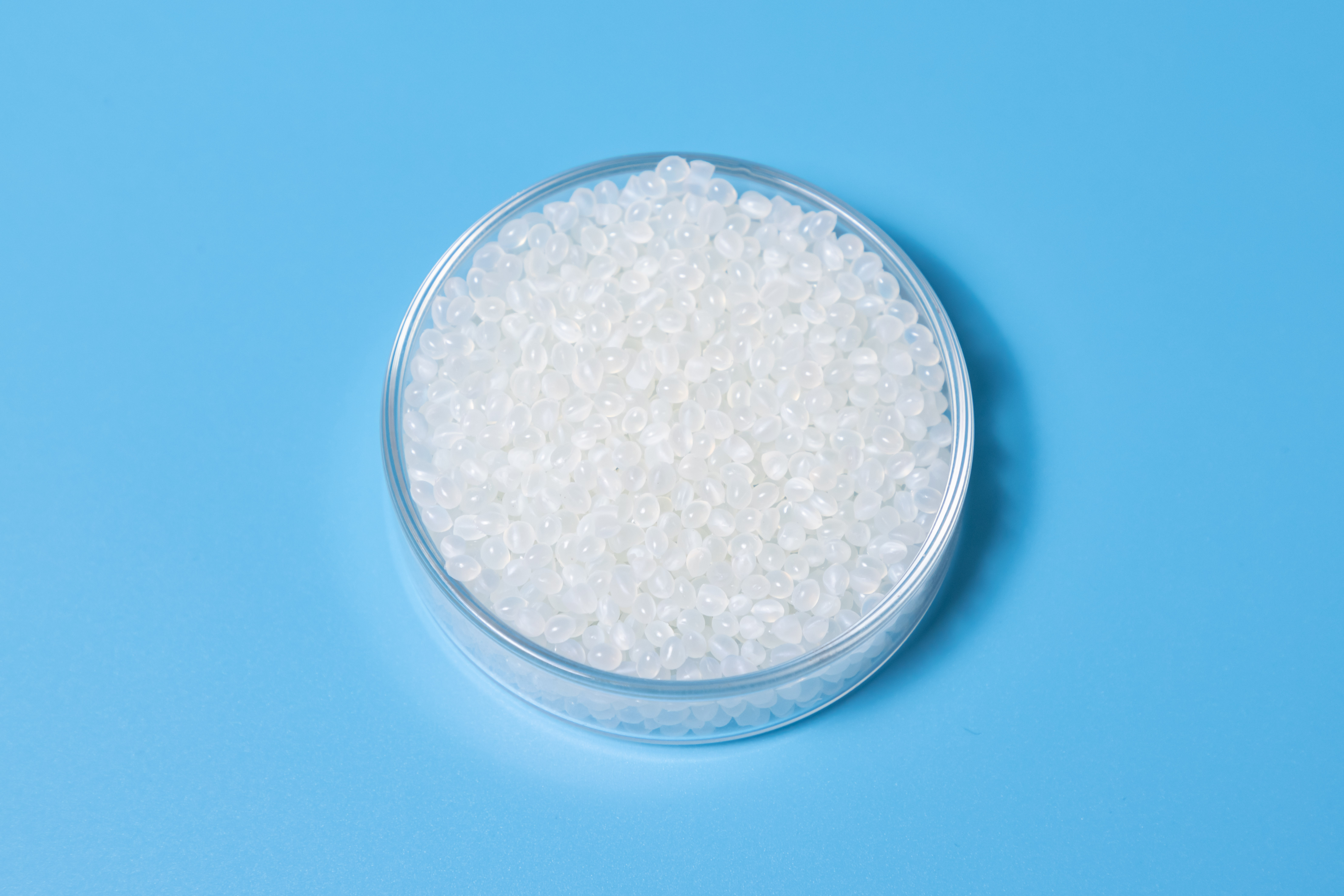
A molder or compounder choosing a compatibilizer for TPE elastomer overmolding is not buying a generic additive. The decision fixes the interfacial chemistry that decides whether a soft elastomer stays bonded to a polar substrate through flexing, heat exposure and weathering. Three maleic anhydride grafted backbones dominate that decision: MA-g-POE, MA-g-EPDM and MA-g-SEBS. All three carry the same reactive anhydride group, but on very different elastomer chains, and it is the chain that governs flexibility retention, weathering behaviour and how the grade flows.
The short answer, before any of the detail below:
- MA-g-SEBS is the usual starting point when the overmolded TPE must stay soft, elastic and weather-resistant while bonding to nylon or another polar substrate. KETONG's KT-2512 is documented as a MAH-g-SEBS compatibilizer for TPE elastomer overmolding and for the modification of TPE elastomers.
- MA-g-POE fits TPE compounds whose elastomer phase is olefinic, and compounding routes where an olefinic carrier disperses more easily.
- MA-g-EPDM fits EPDM-based elastomer phases and applications where ozone and weathering durability plus low-temperature flexibility dominate the specification.
This guide compares the three backbones against the criteria that actually decide the outcome - adhesion strength, flexibility retention and processing window - and grounds each statement in documented KETONG grade data rather than in headline numbers.
What a TPE Overmolding Compatibilizer Has to Do
Overmolding bonds a soft TPE onto a substrate that is usually more rigid and chemically different. A polyamide (nylon) substrate is polar and carries reactive amide and amine groups; a styrenic or olefinic TPE compound is largely non-polar. Pressed together, the two materials meet but do not bond, and the overmolded skin can delaminate under flexing, heat cycling or impact.
A maleic anhydride grafted compatibilizer closes that gap. The anhydride group reacts with functional groups on the substrate surface, while the grafted elastomer chain remains compatible with the TPE phase. The result is a bridge that holds the two materials together instead of merely letting them touch.
That description implies three requirements that must be satisfied simultaneously:
- Interfacial adhesion - enough grafted species delivered to the bond line to build a durable joint.
- Flexibility retention - the carrier chain must not push the hardness of the overmolded skin beyond specification.
- Processing window - the grade must disperse and flow under both the compounding conditions (typically a twin-screw extruder) and the injection overmolding step.
The trade-off between these three is structural rather than commercial. Adhesion improves with more reactive groups at the interface; flexibility retention depends on how soft the chain carrying those groups is; flow depends on molecular architecture. Choosing a backbone is therefore choosing which of the three is easiest to hold while the other two are constrained.
Why the Backbone Question Is Growing
The maleic anhydride value chain behind these grades is large and still expanding. Grand View Research sizes the global maleic anhydride market at USD 4.39 billion in 2023, projected to reach USD 5.86 billion by 2030, with Asia Pacific holding a 52.1% revenue share in 2023 and China expected to grow at a CAGR of 5.4% through 2030. At the grafted-polymer level, Business Research Insights projects the global maleic anhydride graft polymer market at USD 1.42 billion in 2026, reaching USD 2.16 billion by 2035 at a CAGR of 4.7%.
Two practical caveats come with those figures. First, market sizing for maleic anhydride varies by roughly 15% between major research firms - Grand View Research and Fortune Business Insights differ partly on which downstream derivatives they include - so any single number should be treated as directional. Second, on the demand side, polyolefin elastomers are heavily driven by automotive applications, which ChemAnalyst reports as 42% of total POE demand, and POE is frequently grafted with MAH for toughening. That is one reason automotive specifications tend to reach overmolding projects first.
Compliance runs in parallel with demand. MAH grafted polymers fall under EU REACH (EC 1907/2006) registration, and ASTM D1248 is a standard reference for PE extrusion materials. For an overmolding project the document set matters as much as the grade: a buyer evaluating a supplier should be able to obtain the grade data sheet, the safety documentation and the product brochure before committing to a trial.
The Three Backbones: MA-g-POE, MA-g-EPDM and MA-g-SEBS
MA-g-POE: the olefinic backbone
POE is an ethylene-octene copolymer with low crystallinity and a narrow molecular weight distribution. Of the three backbones it is the most olefinic, which makes it the most naturally compatible with polyolefin-rich TPE phases and with polyolefin-side bonding strategies. Its grafted form is widely used in two roles at once: as a toughening agent for engineering plastics such as polyamide, and as a compatibilizer where an olefinic carrier is preferred.
KETONG's documented POE-g-MAH grades sit mainly in the Nylon (PA) series toughener line. KT-913 and KT-913A are based on POEMAH-g-POE with a medium MAH content of 0.4-0.8%, a density of 0.86-0.88 g/cm3, a melt flow rate of 0.5-2.0 g/10min (190 C/2.16 kg) and a 3-25% addition scope. KT-915 and KT-915A carry a high MAH content above 0.8% at a density of 0.86-0.89 g/cm3 and an MFR of 0.5-1.5 g/10min. KT-915K is documented at a medium MAH level of 0.4-0.8%, a density of 0.86-0.88 g/cm3 and an MFR of at least 0.2 g/10min. KT-903 is a POE-g-MAH PA toughener with a medium MAH content, a density of 0.90-0.92 g/cm3, an MFR of 0.5-2.0 g/10min and a 3-20% addition scope, while KT-916K is documented with an MAH content above 0.8%, a density of 0.86-0.88 g/cm3 and a melt flow rate of 9.0-13.0 g/10min at 235 C/5 kg.
MA-g-EPDM: the weathering backbone
EPDM is an ethylene-propylene-diene terpolymer whose main chain is saturated, with unsaturation confined to the diene side groups. That structure is why EPDM is selected where ozone, UV and weathering resistance matter, and why it retains flexibility across a wide temperature range. As a grafted compatibilizer it brings a very rubbery chain to the interface, which helps when flexibility retention and long-term outdoor durability outrank other considerations.
KETONG documents EPDM-g-MAH grades as KT-7 and KT-8, both classified under Nylon (PA) series tougheners. Both are documented with a density of 0.86-0.88 g/cm3, a melt flow rate of 0.2-2.0 g/10min (190 C/2.16 kg), a medium MAH content of 0.4-0.8%, and an addition scope of 3-25% that can be adjusted as appropriate.
MA-g-SEBS: the overmolding backbone
SEBS is a styrenic block copolymer with polystyrene end-blocks and a saturated ethylene-butylene mid-block. The saturated mid-block gives it resistance to UV, ozone and heat ageing, while the block structure provides a wide, tunable softness range - which is precisely what an overmolded TPE skin needs. In SEBS, the same properties that make it a preferred TPE base polymer also make it the most natural carrier for the grafted compatibilizer that bonds that TPE to a polar substrate.
KETONG's overmolding-focused grade is KT-2512, a maleic anhydride grafted SEBS (MAH-g-SEBS) compatibilizer for TPE elastomer overmolding, documented with a high MAH content, a melt index of 10-25 and a density of 0.90-0.92 g/cm3. A second MAH-g-SEBS grade in the portfolio, KT-25, is documented as a Nylon (PA) series toughener with MAH above 0.8%, a density of 0.91-0.93 g/cm3, a melt flow rate of at least 1.0 g/10min (190 C/5 kg) and a 3-15% addition scope.
Selection Criteria: Adhesion, Flexibility Retention, Processing Window
1. Adhesion strength
Adhesion in MAH-based overmolding comes from the anhydride group reacting with functional groups on the substrate. That means the two variables a buyer can actually specify are the graft level and the concentration delivered to the bond line, which is set by the addition rate. KETONG's portfolio shows how wide the graft window can be: medium (0.4-0.8%) and high (above 0.8%) MAH grades are standard across the compatibilizer and toughener lines, and KT-3, an ABS series compatibilizer, is documented with an extra-high MAH content of at least 4.0%.
Graft level should therefore be treated as a design variable rather than a quality ranking. The correct level depends on the substrate, on the addition rate the formulation can tolerate, and on the flexibility target - not on which grade carries the largest number.
2. Flexibility retention
The backbone sets the floor on softness. SEBS and EPDM bring saturated, rubbery chains that contribute relatively little stiffness of their own; POE, being semi-crystalline, contributes more of its own modulus to the compound. Flexibility retention also depends on how much compatibilizer the formulation needs, because every percent of carrier polymer reshapes the final hardness.
Documented addition scopes in the KETONG portfolio illustrate the range: 3-15% for KT-25 (MAH-g-SEBS, PA series toughener), 3-25% for the POE-g-MAH and EPDM-g-MAH grades KT-913, KT-913A, KT-915, KT-7 and KT-8, 3-20% for KT-903, and 5-10% for the EVA series compatibilizers KT-2628, KT-2628A and KT-2628B. Where flexibility retention is tight, a higher graft level combined with a lower use level is usually the more efficient route than accepting a high loading of a low-graft grade.
3. Processing window
Flow data is the criterion most often misused, because melt flow rate and melt index values are only comparable when the test conditions match. KETONG's published data includes measurements at 190 C/2.16 kg, 190 C/5 kg, 200 C/5 kg, 235 C/5 kg, 265 C/10 kg, 280 C/2.16 kg and 300 C/5 kg. A figure of 150-220 g/10min recorded at 190 C/2.16 kg for KT-2628B cannot be compared directly with a figure of at least 1.0 g/10min recorded at 190 C/5 kg for KT-25.
Rule of thumb: before comparing any two grades on flow, confirm that the MFR or MI values were measured under identical temperature and load. If they were not, ask the supplier for a matched-condition figure or plan a trial instead of comparing numbers on a data sheet.
Within the overmolding context, KT-2512 is documented with a melt index of 10-25, which indicates a considerably freer-flowing grade than the PA toughener grades KT-7 and KT-8 at 0.2-2.0 g/10min (190 C/2.16 kg). That difference in flow character is one reason the overmolding grade and the toughening grades are not interchangeable, even when the reactive chemistry is similar.
Step-by-Step: How to Choose and Validate a Grade
- Define the substrate. Identify whether the overmolded TPE is bonding to a polar substrate such as polyamide, or to a polyolefin. The substrate decides how much reactive anhydride functionality must be delivered to the interface.
- Match the backbone to the elastomer phase. A SEBS-based TPE compound, an EPDM/TPV-type compound and a POE-based compound do not call for the same carrier chain. Start from the phase that already exists in your formulation.
- Set the graft level against the addition rate. Decide whether a medium (0.4-0.8%) or high (above 0.8%) MAH grade fits your loading budget, using the documented grades as reference points.
- Compare flow only under matched conditions. Normalise MFR or MI values to the same temperature and load before drawing any conclusion about processability.
- Run a coupon trial on real materials. Compound on a twin-screw extruder and overmold on an injection molding machine, using the actual substrate and the actual TPE compound, not a laboratory substitute.
- Check handling and shelf life. These products are documented with a shelf life of one year when unopened with intact packaging, and three months after opening provided no contamination or moisture absorption occurs. Moisture uptake before processing is a common and avoidable cause of surface defects.
- Confirm documentation and continuity. Request the grade data sheet, compliance documentation and the product brochure, and confirm that the supplier's manufacturing footprint can support the annual volume you are qualifying.
Application Fit: Where Each Backbone Earns Its Place
Overmolded soft-touch parts - grips on power tools and hand tools, seals and gaskets, appliance touch surfaces, industrial handles and cable-to-housing transitions - are the classic territory for grafted compatibilizers, because they combine a soft skin with a structural substrate and are flexed repeatedly in service.
Automotive is the largest single demand pool behind polyolefin elastomers, at 42% of total POE demand according to ChemAnalyst, and automotive interior and exterior touch points are usually where weathering, heat ageing and abrasion requirements are written first. That specification pressure tends to push the selection towards saturated backbones - EPDM or SEBS - where UV and ozone exposure is part of the service environment.
Where the TPE compound is olefinic and the substrate strategy is polyolefin-oriented, POE-based grades remain the practical default, and KETONG's POE-g-MAH grades are documented for polyamide modification across a 3-25% addition range. In all three cases, the honest position is the same: the backbone narrows the field, and a trial on the real substrate settles it.
Comparison Tables
| Grade | Chemistry | Documented MAH level | Density (g/cm3) | Flow | Addition scope | Documented role |
|---|---|---|---|---|---|---|
| KT-2512 | MAH-g-SEBS | High | 0.90-0.92 | MI 10-25 | Not documented in the source data | Compatibilizer for TPE elastomer overmolding |
| KT-25 | MAH-g-SEBS | Above 0.8% | 0.91-0.93 | At least 1.0 g/10min (190 C/5 kg) | 3-15% | Nylon (PA) series toughener |
| KT-913 / KT-913A | POEMAH-g-POE | 0.4-0.8% (medium) | 0.86-0.88 | 0.5-2.0 g/10min (190 C/2.16 kg) | 3-25% | Nylon (PA) series toughener |
| KT-915 / KT-915A | POEMAH-g-POE | Above 0.8% (high) | 0.86-0.89 | 0.5-1.5 g/10min (190 C/2.16 kg) | 3-25% | Nylon (PA) series toughener |
| KT-915K | POEMAH-g-POE | 0.4-0.8% (medium) | 0.86-0.88 | At least 0.2 g/10min (190 C/2.16 kg) | 3-25% | Nylon (PA) series toughener |
| KT-903 | POE-g-MAH | 0.4-0.8% (medium) | 0.90-0.92 | 0.5-2.0 g/10min (190 C/2.16 kg) | 3-20% | Nylon (PA) series toughener |
| KT-7 / KT-8 | EPDM-g-MAH | 0.4-0.8% (medium) | 0.86-0.88 | 0.2-2.0 g/10min (190 C/2.16 kg) | 3-25% | Nylon (PA) series toughener |
| Selection criterion | MA-g-POE | MA-g-EPDM | MA-g-SEBS |
|---|---|---|---|
| Typical elastomer phase match | POE-based, olefinic TPE phases | EPDM and TPV-type phases | SEBS and other styrenic TPE phases |
| What the backbone contributes | Olefinic compatibility and toughness, with semi-crystalline character | Saturated rubber chain; weathering and ozone resistance, low-temperature flexibility | Saturated mid-block; elasticity, soft-touch feel, UV and heat-ageing resistance |
| Adhesion route | Anhydride reaction with polar groups on the substrate | Same anhydride reaction route | Same anhydride reaction route |
| Dispersion in polyolefin-rich compounds | Usually the easiest of the three | Generally good | Requires the styrenic phase to be considered in the formulation |
| Main watch-out | Backbone contributes its own modulus at higher loadings | Documented grades show low flow (0.2-2.0 g/10min at 190 C/2.16 kg) | Confirm graft level and use level together, since the grade carries the overmolding duty |
| Documented addition scope in KETONG grades | 3-25% (KT-913, KT-913A, KT-915) | 3-25% (KT-7, KT-8) | 3-15% (KT-25) |
FAQ: TPE Overmolding Compatibilizers
Do MAH-grafted compatibilizers require REACH registration, and which documents should a buyer request?
Maleic anhydride grafted polymers are subject to EU REACH (EC 1907/2006) registration, and ASTM D1248 is a recognised standard reference for PE extrusion materials (ECHA / ASTM International). For a TPE overmolding project the practical document set is the grade data sheet showing the MAH level, melt index or MFR and density; the safety data sheet; and confirmation of the supplier's registration status for the market you import into. KETONG publishes a product brochure covering its compatibilizer, toughening agent and adhesive resin lines, and grades such as KT-2512 are documented as intended for the manufacturing industry.
Can one MAH-grafted grade cover both overmolding and compounding?
Usually not. In KETONG's portfolio the overmolding-focused grade is KT-2512, a MAH-g-SEBS compatibilizer documented for TPE elastomer overmolding and for the modification of TPE elastomers, with a high MAH content, a melt index of 10-25 and a density of 0.90-0.92 g/cm3. The related MAH-g-SEBS grade KT-25 is documented instead as a Nylon (PA) series toughener with MAH above 0.8%, a melt flow rate of at least 1.0 g/10min (190 C/5 kg) and a 3-15% addition scope. Matching the grade to its intended function is the first decision; the backbone comparison only becomes useful after that.
How does the backbone choice affect cost per part?
Cost per part in this family is driven mainly by use level, and by whether a higher graft level allows that use level to be reduced. Documented addition scopes in KETONG's portfolio run from 3-15% for KT-25, through 3-25% for the POE-g-MAH and EPDM-g-MAH polyamide toughener grades (KT-913, KT-913A, KT-915, KT-7, KT-8), to 5-10% for the EVA series compatibilizers KT-2628, KT-2628A and KT-2628B. Treat these ranges as formulation starting points and confirm the economic optimum with a trial rather than by comparing list prices across backbones.
What should be verified in a sample trial before scale-up?
Run the trial on the real substrate and the real TPE compound, using the equipment the production line uses - a twin-screw extruder for compounding and an injection molding machine for overmolding. Check the bond after flexing and heat exposure, and confirm that the hardness and elasticity of the overmolded skin still meet specification. Also confirm the shelf-life conditions documented for these products: one year when unopened with intact packaging, and three months after opening provided no contamination or moisture absorption occurs.
How do I assess supply continuity for a grafted compatibilizer?
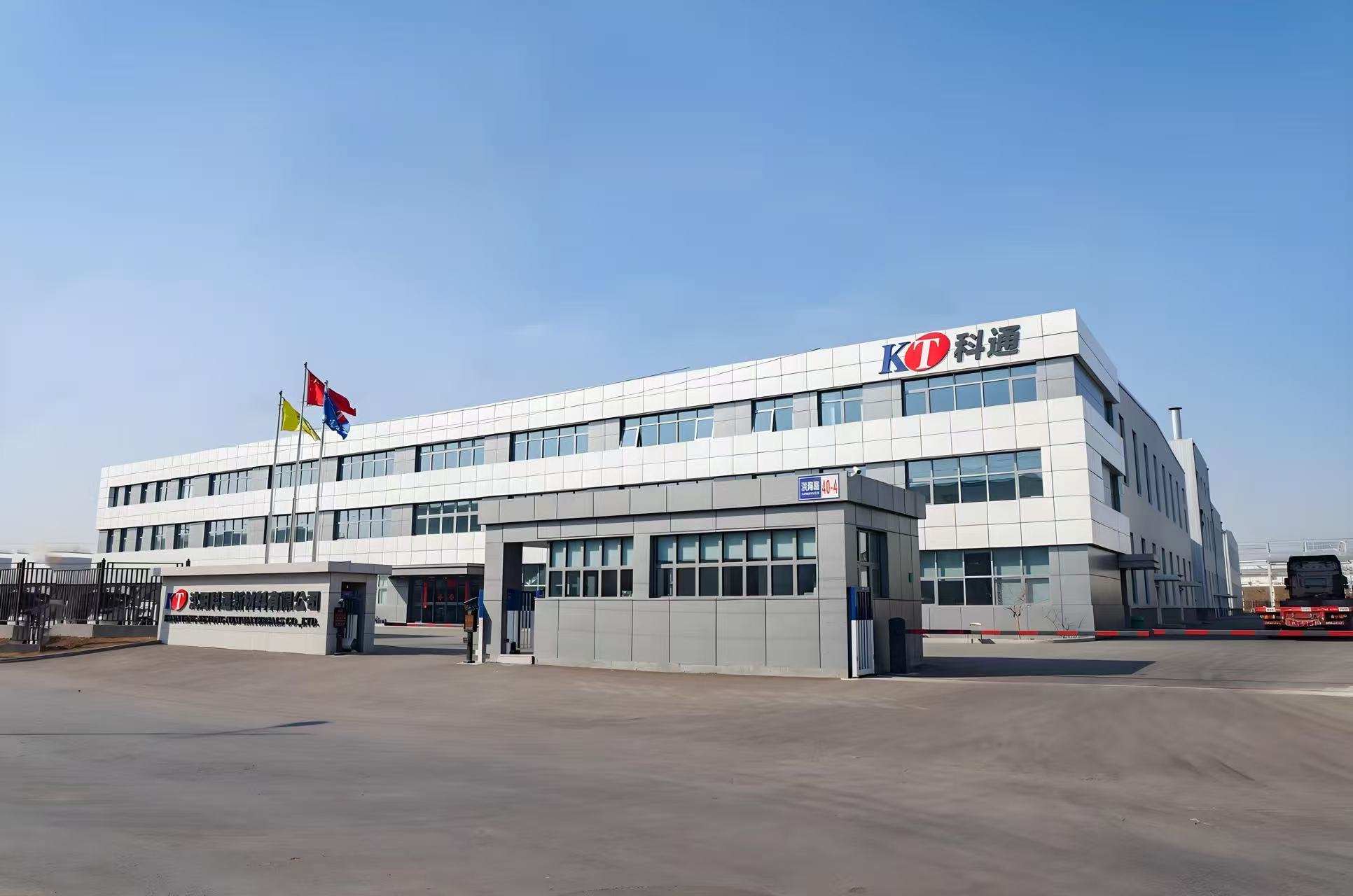
Look at the manufacturing footprint rather than a single order confirmation. Shenyang Ketong Plastics Co., Ltd. operates a 30,000 square metre site with more than ten imported production lines and approximately 50,000 tons of annual capacity, while the second plant, Shenyang Ketong New Materials Co., Ltd., was completed in Shenyang, Liaoning in 2023 with a planned capacity of 60,000 tons per year. The company employs about 130 staff, works with eight R&D engineers, and exports to markets in Asia, America and Europe, with Vietnam identified as a major market. Buyers who want to move from evaluation into validation can request the brochure and a sample through the company website, compatibilizer.com.
Conclusion
For TPE elastomer overmolding, the compatibilizer decision starts with the backbone, because the backbone fixes flexibility retention and weathering behaviour while the graft level fixes how much adhesion you can buy at a given addition rate. MA-g-SEBS is the natural starting point for soft, elastic, weather-exposed overmolding, and KETONG documents KT-2512 specifically for that duty. MA-g-EPDM fits EPDM-based phases where ozone resistance and low-temperature flexibility lead the specification. MA-g-POE fits olefinic TPE compounds and remains the workhorse backbone of KETONG's polyamide toughener range.
Whichever backbone you shortlist, compare flow data only under matched test conditions, treat published addition scopes as starting points, and settle the final choice with a trial on your own substrate.
Next Step: Sample, Data Sheet and Brochure
If you are narrowing the choice for a specific overmolding project, KETONG can supply the grade data sheet and a sample of KT-2512 (MAH-g-SEBS, for TPE elastomer overmolding) or of the POE-g-MAH and EPDM-g-MAH toughener grades, so you can run a coupon trial on your own substrate.
Download the product brochure: KETONG product brochure (PDF)
Contact: Alice Wang, General Manager - Email: wangyanqiu@syketong.com | Tel / WhatsApp: +86 13998121502 | Website: compatibilizer.com