
AI Intelligent Sorting: How KEYETECH's Vision Systems Improve Quality Control Across Industries
AI Intelligent Sorting: How KEYETECH's Vision Systems Improve Quality Control Across Industries
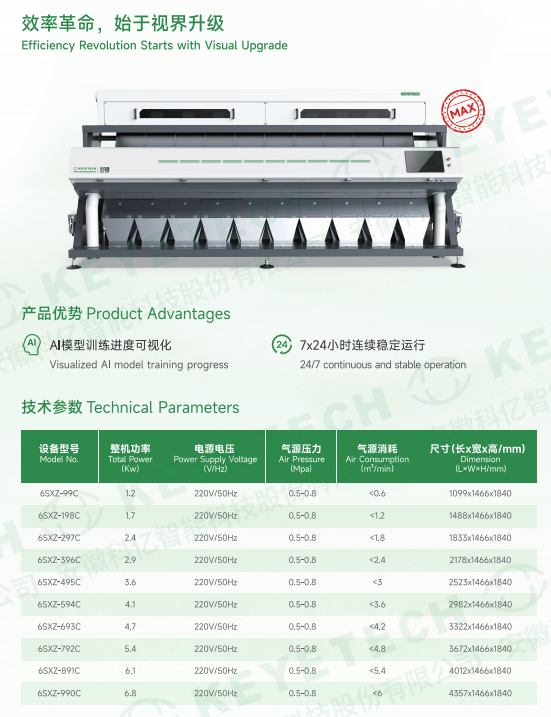
AI intelligent sorting is transforming the way industries handle quality control. From food processing to recycling, automated vision systems now detect defects and contaminants with speed and accuracy that manual inspection cannot match. Anhui Keye Intelligent Technology Co., Ltd. (KEYETECH), founded in 2011, is a national high-tech enterprise specializing in AI-driven vision inspection and intelligent sorting equipment. With a 29,000 m² facility and a 56-engineer R&D team including three PhDs from the University of Science and Technology of China, KEYETECH develops fully in-house optics, cameras, AI algorithms, and control software. This article explores the problem of inefficient manual sorting, the growing industry landscape, and how KEYETECH's AI intelligent sorting solutions deliver reliable, scalable quality control.
The Problem: Inefficient Manual Sorting
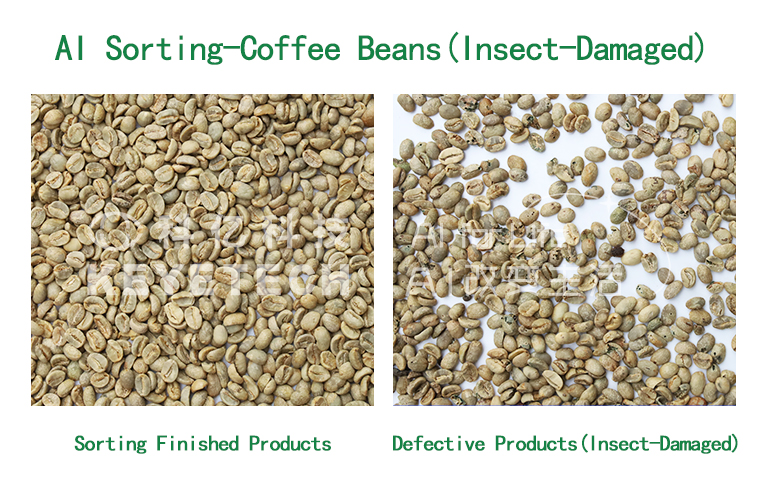
Manual sorting relies on human vision, which is prone to fatigue, inconsistency, and slow throughput. In high-volume production lines, even a small percentage of defective products can lead to costly recalls, brand damage, and compliance failures. Industries such as food, pharmaceuticals, and recycling require sorting systems that can operate 24/7 with high accuracy. Traditional color sorters based on simple color thresholds often fail when defects are subtle—such as insect damage, partial discoloration, or foreign materials with similar colors. This is where AI-driven intelligent sorting becomes critical.
Industry Background
According to MarketsandMarkets, the global optical sorter market is projected to reach USD 5.79 billion by 2032, growing at a CAGR of 9.5% from 2025. The food processing segment accounted for the largest application share, with revenue of USD 2,523.1 million in 2024 (Grand View Research). Asia Pacific is the largest regional market, reaching USD 1.03 billion in 2025 (Fortune Business Insights), driven by industrialization in China and India. KEYETECH is recognized as a top player in the AI-powered packaging and defect inspection machine market (Future Market Insights). The company has served over 2,000 clients across food, pharmaceuticals, daily chemicals, textiles, liquor, new energy, electronics, and tobacco, including Fortune Global 500 companies such as Mengniu, Yili, Unilever, P&G, Moutai, CATL, and more.
Detailed Solution: KEYETECH AI Intelligent Sorting Machines
KEYETECH offers a comprehensive line of AI intelligent sorting machines—color sorters in both belt-type and channel-type configurations. These machines use deep learning algorithms trained on tens of thousands of images to classify materials based on color, texture, shape, and defects. All core technologies are fully self-developed: optical solutions, industrial cameras, AI algorithms, and software architecture. The company’s AI edge computing unit accelerates model inference, enabling real-time sorting at production speeds.
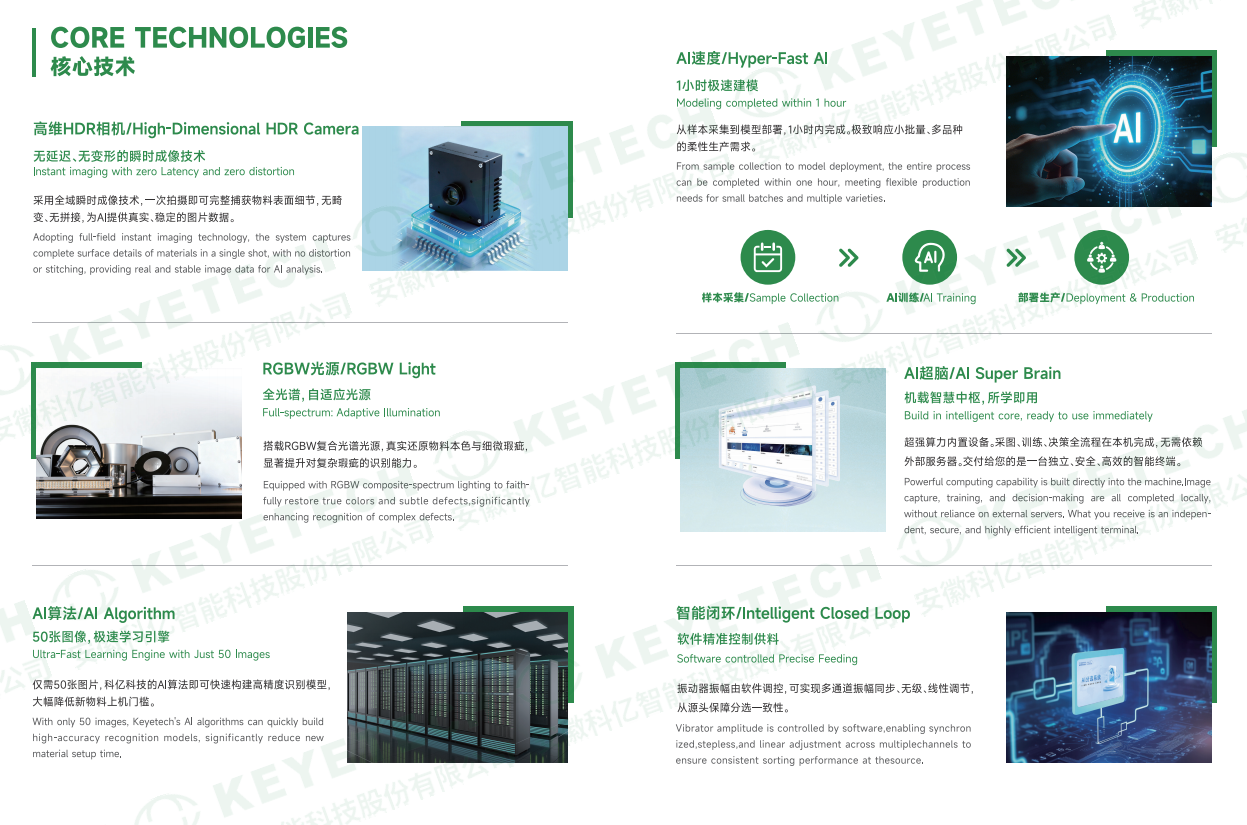
The product line covers a wide range of materials:
- Grain: Model 6SXZ-693C – Grain AI Color Sorter
- Rice: Model 6SXZ-990C – Rice AI Color Sorter
- Nuts: Model 6SXZ-63LFI – Nut AI Color Sorter
- Pet Food: Model 6SXZ-126LFI – Pet Food AI Color Sorter
- Traditional Chinese Medicinal Materials: Model 6SXZ-378LFI
- Seasonings: Model 6SXZ-756LFI – Seasoning AI Color Sorter
- Ore: Model 6SXZ-252LFI – Ore AI Color Sorter
- Metals: Model 6SXZ-378LFI – Metal AI Color Sorter
- Plastics: Model 6SXZ-99C – Plastic AI Color Sorter
- Salt: Model 6SXZ-198C – Salt AI Color Sorter
- Flower Tea: Model 6SXZ-504LFI – Flower Tea AI Color Sorter
- Fresh Flowers: Model 6SXZ-378LFI – Fresh Flower AI Color Sorter
- French Fries: Model 6SXZ-378LFI – French Fry AI Color Sorter
- Vegetables: Model 6SXZ-252LFI – Vegetable AI Color Sorter
- Chicken Nuggets: Model 6SXZ-126LFI – Chicken Nugget AI Color Sorter
- Candy: Model 6SXZ-63LFI – Candy AI Color Sorter
- Lemon Slices: Model KQA – Lemon Slice AI Color Sorter
- Coffee Cherries: Model 6SXZ-99C – Coffee Cherry AI Color Sorter
All models are made of carbon steel or stainless steel, operate in temperatures from -20°C to 60°C, require air pressure of 0.5–0.8 MPa, and have total power of 1.2–6.8 kW.
How It Works: Step-by-Step
- Material Feeding: Products are evenly distributed across a conveyor belt or through a chute for single-layer presentation.
- Image Acquisition: High-resolution in-house cameras capture images from multiple angles under consistent lighting.
- AI Analysis: The AI edge computing unit runs deep learning models trained on tens of thousands of images, detecting defects such as insect damage, discoloration, cracks, and foreign objects.
- Ejection: High-speed pneumatic ejectors (air consumption 0.6–6 m³/h) precisely remove defective items without damaging good products.
- Output: Sorted materials exit through separate outlets for further processing or packaging.
Use Cases
- Agriculture: Sorting grains, beans, and lentils to remove insect damage, white spots, and foreign seeds. The AI can also sort coffee beans by color and density, removing defective cherries.
- Food Processing: French fry sorting ensures uniform color and removes green/burnt pieces. Chicken nugget sorting detects discoloration or misshapen product.
- Pet Food: Removing burnt kibble and impurities for product safety.
- Recycling: AI plastic sorting separates polymers by type and color; metal sorting recovers valuable non-ferrous metals from scrap.
- Traditional Chinese Medicine: Sorting medicinal herbs and slices for purity and grading.
Comparison: Manual vs. Traditional Color Sorter vs. KEYETECH AI Sorter
| Feature | Manual Sorting | Traditional Color Sorter | KEYETECH AI Intelligent Sorter |
|---|---|---|---|
| Detection method | Human eye | Fixed color thresholds | Deep learning AI models |
| Accuracy | Inconsistent, prone to fatigue | Limited to color differences | Handles subtle defects (insect damage, texture) |
| Adaptability | Low | Requires recalibration | Learns from new materials via AI model updates |
| Operation | 24/7 limited by human | 24/7 possible | 24/7 with in-house AI edge computing |
| Consistency | Low | Medium | High |
Why Choose KEYETECH?
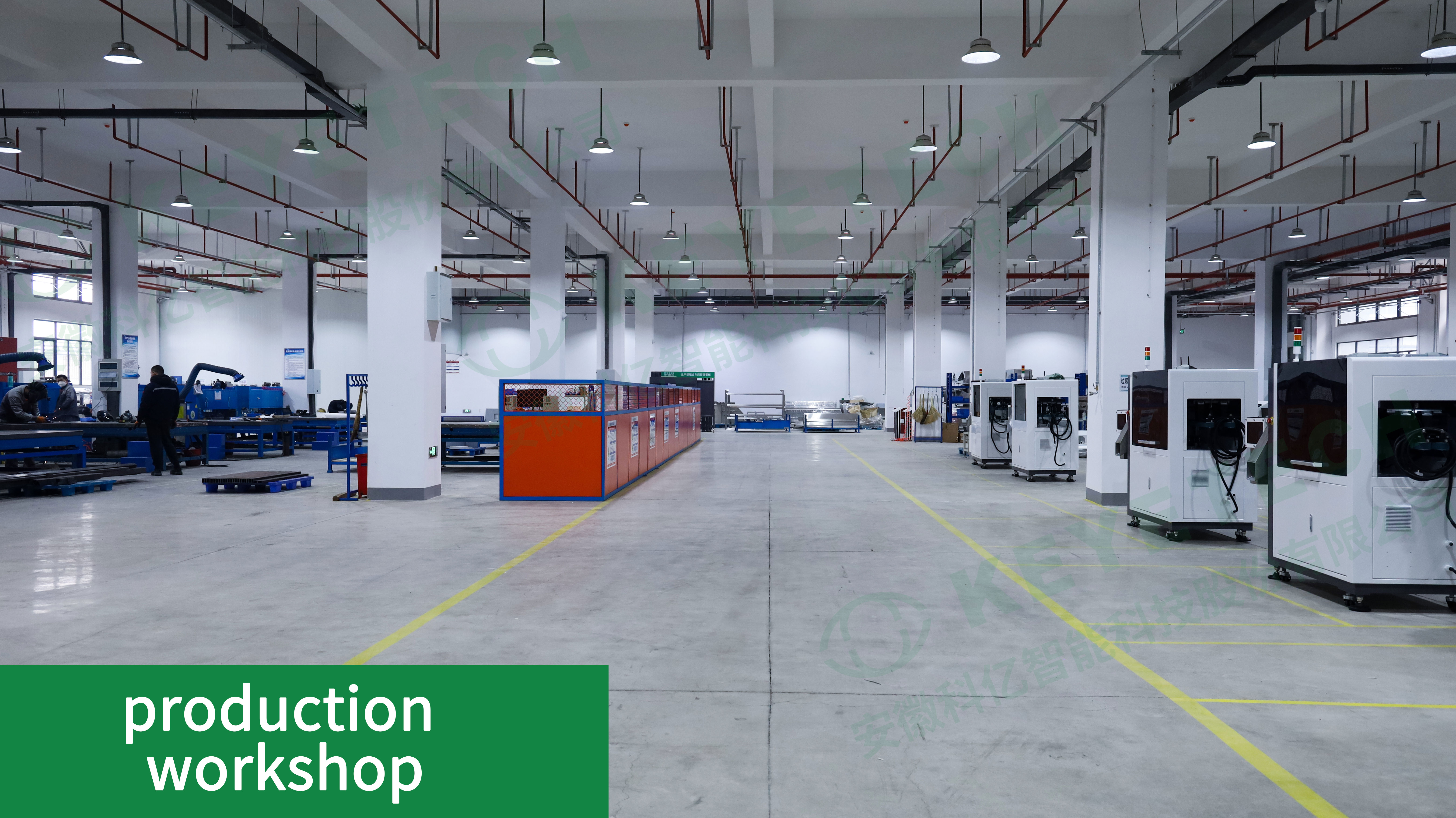
KEYETECH’s AI intelligent sorters are designed with fully self-developed technology across optics, mechanics, electronics, computing, and software. The company owns a 29,000 m² manufacturing base and a dedicated R&D team of 56 engineers, including three PhDs from USTC’s Pattern Recognition Laboratory. With over 2,000 clients worldwide and products exported to 50+ countries, KEYETECH provides reliable, scalable sorting solutions for industries ranging from food to recycling. The company also offers AI quality analyzers and grading machines for comprehensive quality control.
Frequently Asked Questions (FAQ)
1. What compliance standards do AI intelligent sorting machines need to meet?
Sorting equipment used in the food sector must comply with international safety benchmarks such as the FDA’s Food Safety Modernization Act (FSMA) and EU Regulation EC1935/2004. KEYETECH designs its machines with food-grade materials and build quality to meet these standards.
2. What materials can KEYETECH AI sorters handle?
KEYETECH offers dedicated models for grains, rice, nuts, pet food, traditional Chinese medicinal materials, seasonings, ore, metals, plastics, salt, flower tea, fresh flowers, French fries, vegetables, chicken nuggets, candy, lemon slices, and coffee cherries. The AI algorithms can be retrained for new materials.
3. How does KEYETECH ensure the accuracy of its AI sorting?
The AI models are trained on tens of thousands of annotated images from real production lines. In-house developed cameras and optical systems provide high-quality input, and the proprietary AI edge computing unit enables real-time inference. The system can detect defects such as insect damage, discoloration, cracks, and foreign objects with high precision.
4. Can I get a sample test before purchasing?
Yes. KEYETECH encourages customers to send material samples for testing. Contact the team to arrange a trial run and see the sorting performance on your specific product.
5. What is the typical lead time for a KEYETECH sorting machine?
Lead time depends on the model and configuration. On average, standard machines can be delivered within 30–45 days after order confirmation. For custom configurations, please contact KEYETECH for a precise schedule. For a quotation or to discuss your sorting needs, reach out to market-axq@keyetech.com or call +86 191-4244-2827 (WhatsApp available).
Conclusion
AI intelligent sorting is no longer a future concept—it is a proven technology that delivers real quality improvements across food, recycling, and industrial applications. KEYETECH’s in-house developed AI vision systems offer the accuracy, flexibility, and reliability that modern production lines demand. Whether you need to sort grain, nuts, coffee, metals, or plastic, KEYETECH has a solution tailored to your material. Download the company brochure for a complete overview of our products and capabilities.