AI Label Inspection vs. Post-Filling Inspection: Where Should You Prioritize Investment?
Every capital cycle on a bottling line produces the same question: with one budget line open, do you buy the label inspector or the post-filling inspector? Both are AI vision systems. Both sit inside the same production hall. Both are quoted by the same group of suppliers. Yet they protect against failure modes that barely overlap — which means the decision is not about which machine is technically superior, but about which defects are currently leaving your plant undetected.
Direct answer: If your rejects are liquid level, missing cap, cap sealing, broken ring, crooked cap or spray code, invest in the post-filling inspection machine first — those checks only become physically possible after the container is filled and closed. If your rejects are label geometry — trapping label, labeling position, in-mold labeling — invest in the dedicated AI label inspection machine first, because that is the defect class it is specified around, at a rated speed of up to 1,500 pieces per minute.
The two units are not substitutes. They are two different quality gates, and the order in which you fund them should follow the reject log, not the specification sheet.
What Each Machine Actually Inspects
The clearest way to separate the two investments is to compare their stated inspection scope rather than their marketing category. The AI Label Inspection Machine (model KVIS-T) is a label-focused unit classified for label skew detection, rated at up to 1,500 pieces per minute. The Post Filling Inspection Machine (model KVIS-B-CC) is classified as visual inspection after canning, rated at up to 36,000 bottles per hour, and it checks several container and closure parameters in one pass. The two ratings are even expressed in different units, which is itself a signal that they serve different positions on the line.
KVIS-T: the label-focused gate
KEYETECH specifies the KVIS-T as an AI Label Inspection Machine for labels on bottles in production lines. Its inspection scope is trapping label, labeling and in-mold labeling, and its detection area is described as the various labels on the bottle. The unit is built in carbon steel or stainless steel and is intended for food, pharmaceutical, seasoning and alcoholic beverage applications. Maximum rated speed is 1,500 pieces per minute.
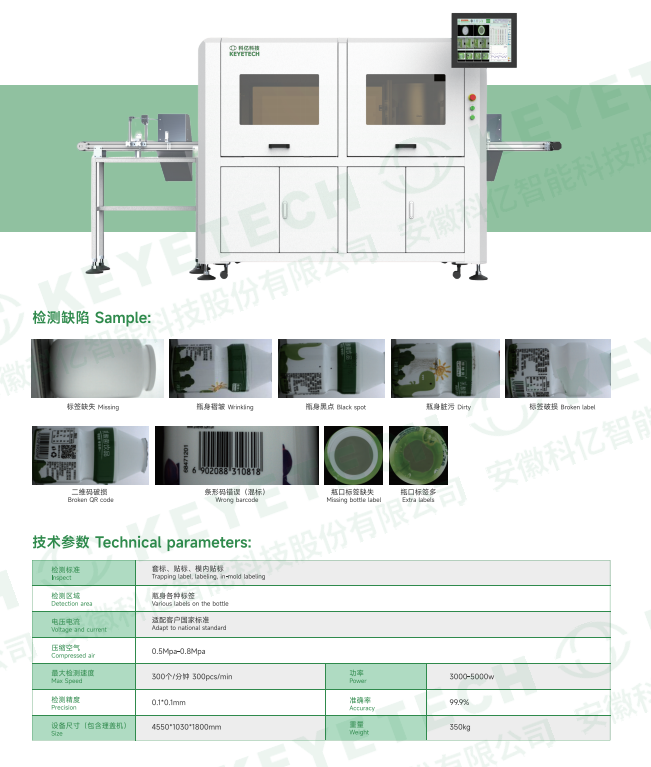
The AI Label Inspection Machine (KVIS-T) is specified around label geometry: trapping label, labeling and in-mold labeling, at up to 1,500 pcs/min.
Read that scope carefully. Every item on it is a property of the label itself — whether it is trapped or folded, whether it sits where it should, whether an in-mold label is correctly registered on the container. This is the vocabulary of a label applicator problem, and it is a problem that is usually created earlier in the process than the filling valve.
KVIS-B-CC: the after-filling gate
The KVIS-B-CC Post Filling Inspection Machine inspects after filling: bottle body, missing cap, cap sealing, liquid level, label and spray code. Its stated defect list covers empty cap, improper sealing, high or low liquid level, damaged or offset label, broken ring, high or crooked cap, and damaged outer surface of the cap. Maximum rated speed is 36,000 bottles per hour, the construction is carbon steel or stainless steel, and the unit is intended for food production, pharmaceutical packaging, seasoning filling and alcoholic beverage bottling.
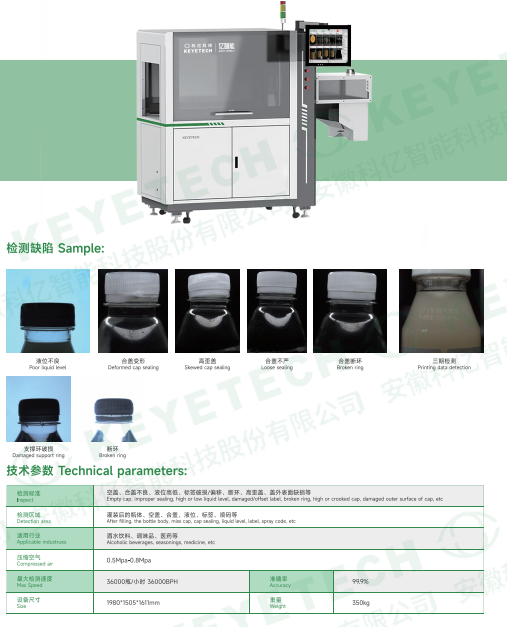
The Post Filling Inspection Machine (KVIS-B-CC) combines level, closure, label and spray code checks in a single after-filling pass, at up to 36,000 BPH.
Notice one detail that decides most of this debate: label appears inside the post-filling detection area, and “damaged or offset label” appears on its defect list. A buyer who invests only in post-filling inspection is therefore not leaving labels completely unprotected — but is protecting them at a different level of granularity than a unit whose entire specification is built around label geometry.
Why This Decision Is Not Symmetrical
Capital is moving into this category quickly. Precedence Research estimates the global AI vision inspection market at USD 39.38 billion in 2026 and projects a compound annual growth rate of 22.83% from 2026 to 2035. That growth tells you the technology is being adopted broadly; it says nothing about which of your two candidate units comes first.
What actually shapes the decision is the nature of the consequence. In plastic packaging lines that typically run in continuous 24/7 operation, the two defect families fail differently:
- Fill and closure defects (level, missing cap, seal integrity, broken ring) are product-integrity events. They travel with the goods and surface later, which makes them expensive to reverse.
- Label defects (trapping, skew, misregistration) are usually commercial and appearance events. They affect whether a batch is accepted, how a shelf looks, and how consistent a brand appears across a pallet.
Both matter. But a plant rarely suffers equally from both at the same moment, and the one currently generating the most rejects is the one that should be funded this cycle. The commercial case for a label unit built around trapping and in-mold labeling is weakest in a plant whose rejects are dominated by under-filled bottles — and the reverse is equally true.
The question most buyers should ask first: is my label problem best described as “damaged or offset”, or as “trapped, skewed or in-mold misregistered”? The first phrasing sits inside the post-filling scope; the second is the wording the dedicated label unit is specified around.
Where Each Machine Wins — and Where Its Coverage Stops
When the label unit is the higher-value purchase
The KVIS-T earns its budget when the dominant escape is geometric and label-specific. If your reject stream contains trapped labels, labels applied out of position, or in-mold labels that do not register correctly, this is the unit whose published scope matches that vocabulary directly. Its 1,500 pcs/min rating also matters on high-output labelling stages, where the inspection point has less time per container than an end-of-line gate.
The honest boundary: the KVIS-T scope is labels. It is not specified for liquid level, cap presence, cap sealing, ring integrity or spray code. Buying it alone leaves those parameters exactly as unprotected as they are today.
When the post-filling unit is the higher-value purchase
The KVIS-B-CC earns its budget when the escapes are closure and fill related, because it is the only one of the two that can see them. Level, cap presence, sealing, ring condition, cap position and spray code are all after-filling phenomena by definition, and the unit covers them in one pass at up to 36,000 bottles per hour. For a high-speed filling line, that single-gate consolidation is the practical argument: one inspection point, several parameters, no additional handling stage.
The boundary here is granularity, not capability. Its label coverage is stated as part of a multi-parameter detection area, at the “damaged or offset label” level. If your label defects are trapping or in-mold registration failures, that is a different question — and it is the question the KVIS-T exists to answer.
Where these two units sit in a wider inspection line
Both machines belong to a broader family of AI vision inspection equipment, and understanding the family helps with sequencing. KEYETECH's published specifications include a cap visual inspection machine (KVIS-C) at up to 2,500 pcs/min, a preform visual inspection system (KVIS-C) at up to 600 pcs/min, a bottle camera inspection machine (KVIS-B-CC06S) at up to 300 pcs/min, a plastic parts visual inspection machine (KVIS-SU) with 360° inspection at up to 600 pcs/min, and cup and IML units (KVIS-T) at up to 300 pcs/min. A plant that inspects preforms, caps and bottles upstream often finds the label and post-filling gates become the last two open decisions rather than the first two.
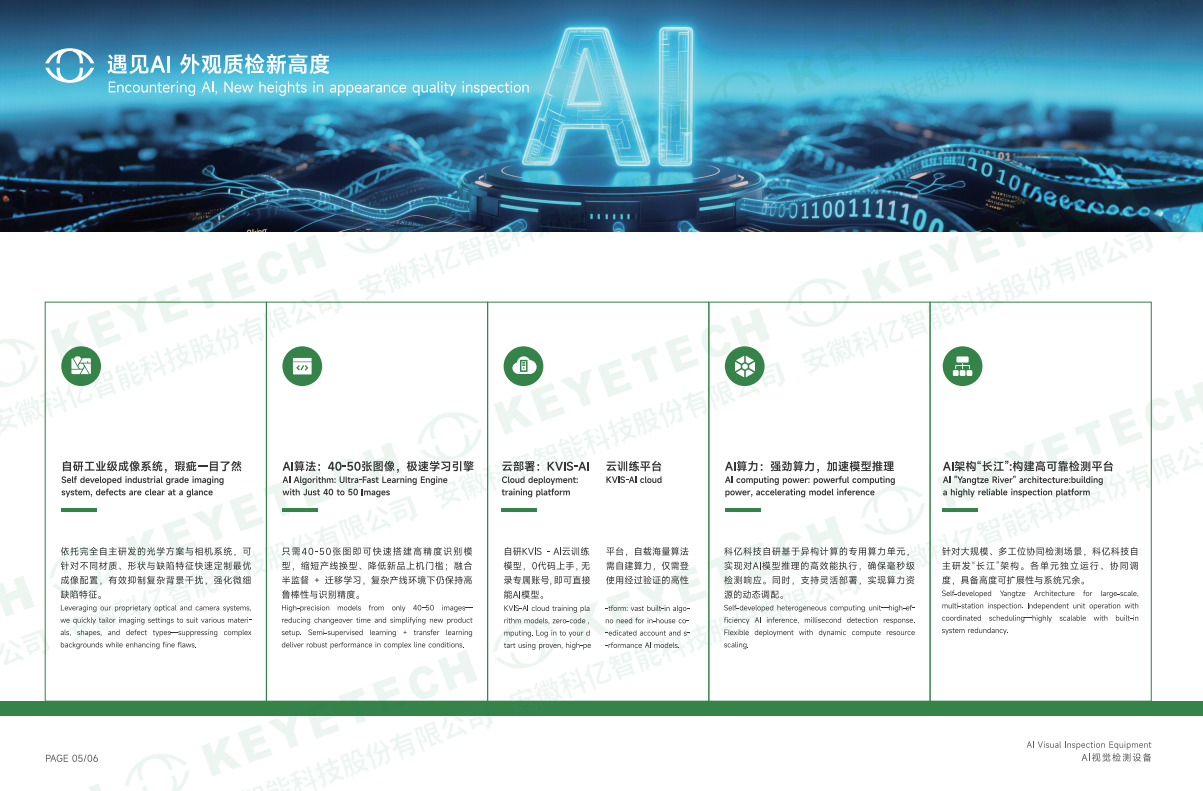
Label and post-filling inspection both run on the same underlying AI algorithm stack; the difference is the optics, the inspection position and the defect set.
Step-by-Step: Allocating the Budget With Your Own Line Data
- Split your reject and complaint records into two buckets. Bucket A: fill and closure — level, missing cap, sealing, ring, cap position, spray code. Bucket B: label geometry — trapping, position, in-mold registration. Do not evaluate the two machines until this list exists, because it is the only input that separates them cleanly.
- Let the dominant bucket make the decision. If Bucket A dominates, the post-filling unit is the higher-value purchase this cycle. If Bucket B dominates, the label unit is.
- Check whether your label defect is already inside the post-filling scope. If your escapes are described internally as “damaged” or “offset”, the post-filling detection area already includes label; the marginal value of adding a second label gate is smaller than in a plant fighting trapping and in-mold registration.
- Normalise the speed figures before you compare them. One rating is stated in pieces per minute (1,500 pcs/min for KVIS-T) and the other in bottles per hour (36,000 BPH for KVIS-B-CC). Convert your own line speed into the same unit as each rating and confirm the margin, rather than comparing the two numbers to each other.
- Sequence the second gate, do not cancel it. The two units are complementary: the label gate addresses label geometry, the post-filling gate addresses fill, closure and code. Whichever is funded first, plan the other as the next gate rather than as an alternative.
- Validate on your own containers. Before committing, put your actual bottle format, label type and line speed in front of the supplier and confirm which defect classes the unit will be configured to judge.
Use Cases: Which Plant Buys Which Unit First
High-speed beverage bottling with heavy label variation
When the recurring complaint is that labels are trapped, skewed or visibly out of position on shelf, the label unit is the direct answer: KVIS-T inspects trapping label, labeling and in-mold labeling on bottles in production lines, at up to 1,500 pcs/min, for food and beverage applications.
Dairy, pharmaceutical or seasoning filling with closure risk
When the risk is a bottle leaving the line under-filled or with a compromised seal, the after-filling gate is the only one of the two that can see it. KVIS-B-CC inspects liquid level, missing cap, cap sealing, broken ring, crooked cap and spray code after filling, at up to 36,000 BPH, across food production, pharmaceutical packaging, seasoning filling and alcoholic beverage bottling.
A plant that already runs post-filling inspection but still sees label escapes
This is the most common second-purchase scenario. The post-filling gate is catching damaged or offset labels, but trapping and in-mold registration problems continue to pass. Adding a dedicated label unit at the labelling stage closes that specific gap without rebuilding the end-of-line gate.
Cup and in-mold label converters
For cup formats, label discipline is handled by the same KVIS-T designation: the IML camera detection system and cup visual inspection system inspect labels on the cup body, cup mouth, cup inner wall and cup outer bottom, at up to 300 pcs/min, covering poor labelling, black spots, impurities, gaps, flash, holes and deformation.
Side-by-Side Comparison
| Comparison point | AI Label Inspection Machine (KVIS-T) | Post Filling Inspection Machine (KVIS-B-CC) |
|---|---|---|
| Stated classification | Label skew detection | Visual inspection after canning |
| Inspection scope | Trapping label, labeling, in-mold labeling | Empty cap, improper sealing, high or low liquid level, damaged or offset label, broken ring, high or crooked cap, damaged outer surface of cap |
| Detection area | Various labels on the bottle | After filling: bottle body, missing cap, cap sealing, liquid level, label, spray code |
| Maximum rated speed | 1,500 pcs/min | 36,000 bottles per hour |
| Label coverage | Core purpose of the unit | One parameter inside a multi-parameter gate |
| Fill and closure coverage | Not in the stated scope | Core purpose of the unit |
| Construction | Carbon steel or stainless steel | Carbon steel or stainless steel |
| Intended industries | Food, pharmaceuticals, seasonings, alcoholic beverages | Food production, pharmaceutical packaging, seasoning filling, alcoholic beverage bottling |
Read across the label row and the fill/closure row together. The table does not produce a winner; it produces a sequence. A line that funds the label gate and not the post-filling gate has an unprotected closure; a line that funds the post-filling gate and not the label gate has protected closure with label judgement at a coarser level.
Who Builds These Units
KEYETECH is the brand of Anhui Keye Intelligent Technology Co., Ltd., an AI visual inspection equipment manufacturer established in 2011 and based at No. 56 Chang'an Road, High-Tech Zone, Hefei, Anhui, China. The company operates a 29,000 m² manufacturing facility with approximately 300 staff and an annual production capacity of 3,000 units, supported by an R&D team of 56 engineers, including doctors from the University of Science and Technology of China, and 15 years of visual inspection experience in plastic packaging appearance defect detection.
Its equipment serves more than 2,000 clients across food, pharmaceuticals, daily chemicals, textiles, liquor, new energy, electronic components and tobacco, with named cooperation including Mengniu, Yili, Moutai, Wuliangye, Procter & Gamble, Unilever and China Tobacco. Products are exported to more than 50 countries, with major markets in the EU, USA and Southeast Asia, and export business accounting for 10% of total sales.
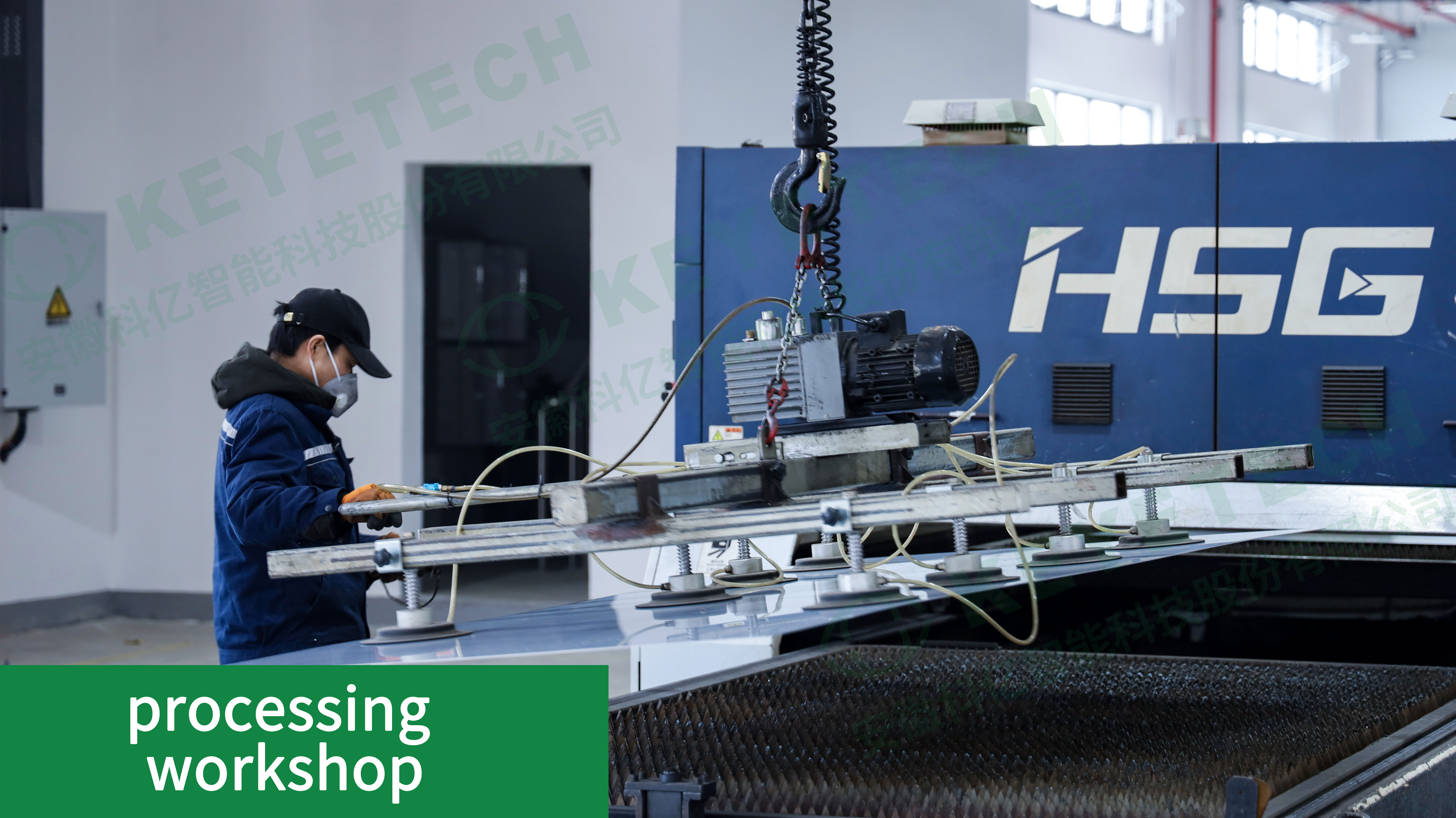
Label and post-filling inspection units are manufactured in-house across KEYETECH's production and machining workshops in Hefei, Anhui.
Product overview: https://en.keyetech.com
FAQ
How do I shortlist AI Vision Inspection Equipment suppliers for a label or post-filling project?
Start from the defect list, not the brand list. Ask every supplier to state in writing which defects the unit inspects, where on the container it inspects them, the rated speed and the unit that speed is expressed in. For reference, KEYETECH's published specifications state KVIS-T label inspection at up to 1,500 pcs/min and KVIS-B-CC post-filling inspection at up to 36,000 bottles per hour, both built in carbon steel or stainless steel for food, pharmaceutical, seasoning and alcoholic beverage applications. A supplier that answers in the same vocabulary as your reject log is far easier to qualify than one that answers in adjectives.
Is label inspection or post-filling inspection the higher-priority investment?
It depends on which defects are currently escaping. The post-filling unit covers liquid level, missing cap, cap sealing, broken ring, cap position and spray code, plus label at a damaged or offset level; the label unit covers trapping label, labeling and in-mold labeling. If your losses are product-integrity losses, fund post-filling first. If your losses are commercial and appearance-related, fund label inspection first. Buying both in the same cycle is a valid answer only when both buckets are genuinely active.
Do the two machines overlap on label inspection?
Partially. The KVIS-B-CC detection area includes label and its defect list includes damaged or offset label, so label presence and gross position are covered by the post-filling gate. The KVIS-T is specified around trapping label, labeling and in-mold labeling at up to 1,500 pcs/min. The practical question is therefore granularity: whether the label judgement you need is containment-level or label-geometry-level.
What should we prepare before requesting a quotation or a sample evaluation?
Prepare five items: container format and material, label type (wrap-around, sleeve or in-mold), line speed in bottles per hour or pieces per minute, the defect classes you reject today, and the physical position where the unit would sit. With those, a supplier can tell you whether the label unit, the post-filling unit or both are required, rather than quoting a generic configuration. Requests and sample evaluations can be sent to market-axq@keyetech.com or +86 191-4244-2827.
Conclusion: Fund the Gate That Matches Your Reject Log
The comparison resolves into a single rule. Post-filling inspection is the only one of the two units that can see liquid level, cap presence, cap sealing, broken rings and spray code, because those conditions only exist after filling — and at up to 36,000 bottles per hour it consolidates them into one gate. The dedicated label unit is the only one specified around trapping label, labeling and in-mold labeling, at up to 1,500 pcs/min. Where the two overlap, they overlap at containment level, not at label-geometry level.
So the investment order should be written by your reject data, not by the specification sheet: closure and fill escapes point to KVIS-B-CC first, label-geometry escapes point to KVIS-T first, and the second gate becomes next year's line item rather than this year's alternative.
Next Step
Send your container format, label type and line speed, and KEYETECH will confirm which gate addresses your current bottleneck. Sample evaluation, quotation and the 2026 company brochure are all available on request.
Email: market-axq@keyetech.com | Tel / WhatsApp: +86 191-4244-2827 | Web: en.keyetech.com
Download the 2026 company brochure: KEYETECH Company Brochure 2026 (PDF)
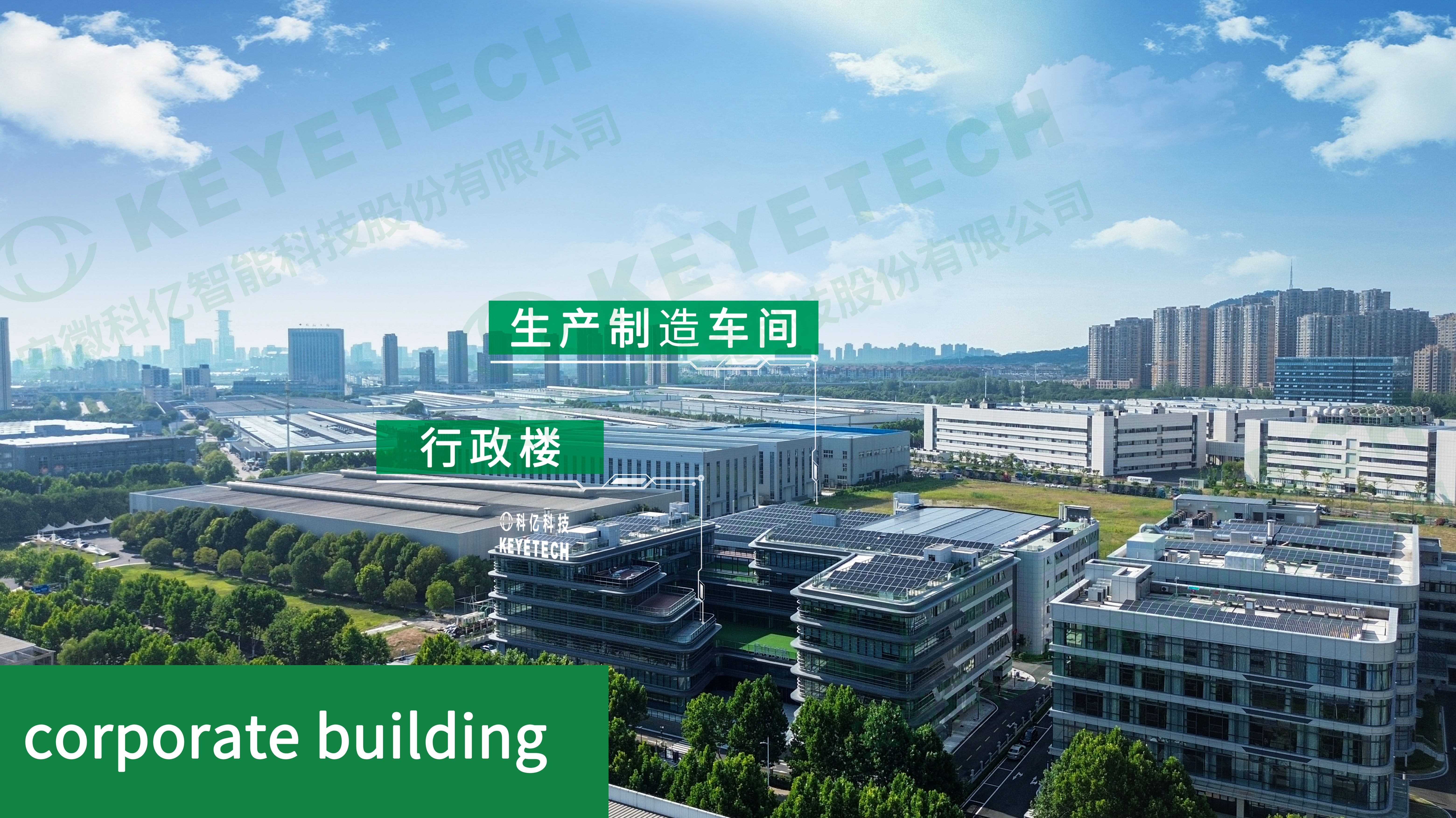
The 2026 KEYETECH brochure covers the full inspection family, including label and post-filling inspection units.
Have Questions or Need More Details?
Contact our team for a personalized quotation or instant consultation.
Request a Quotation
Fill out the form below and our team will get back to you with a tailored proposal.
WhatsApp Direct Chat
Prefer to chat in real-time? Message us on WhatsApp for instant assistance & quick answers.
- Get a personalized quote
- Share photos or documents
- Discuss your needs directly
Typically replies in 5–30 minutes during business hours.