AI Pet Food Sorting vs. Traditional Sieving: An Equipment Buyer's Decision Guide
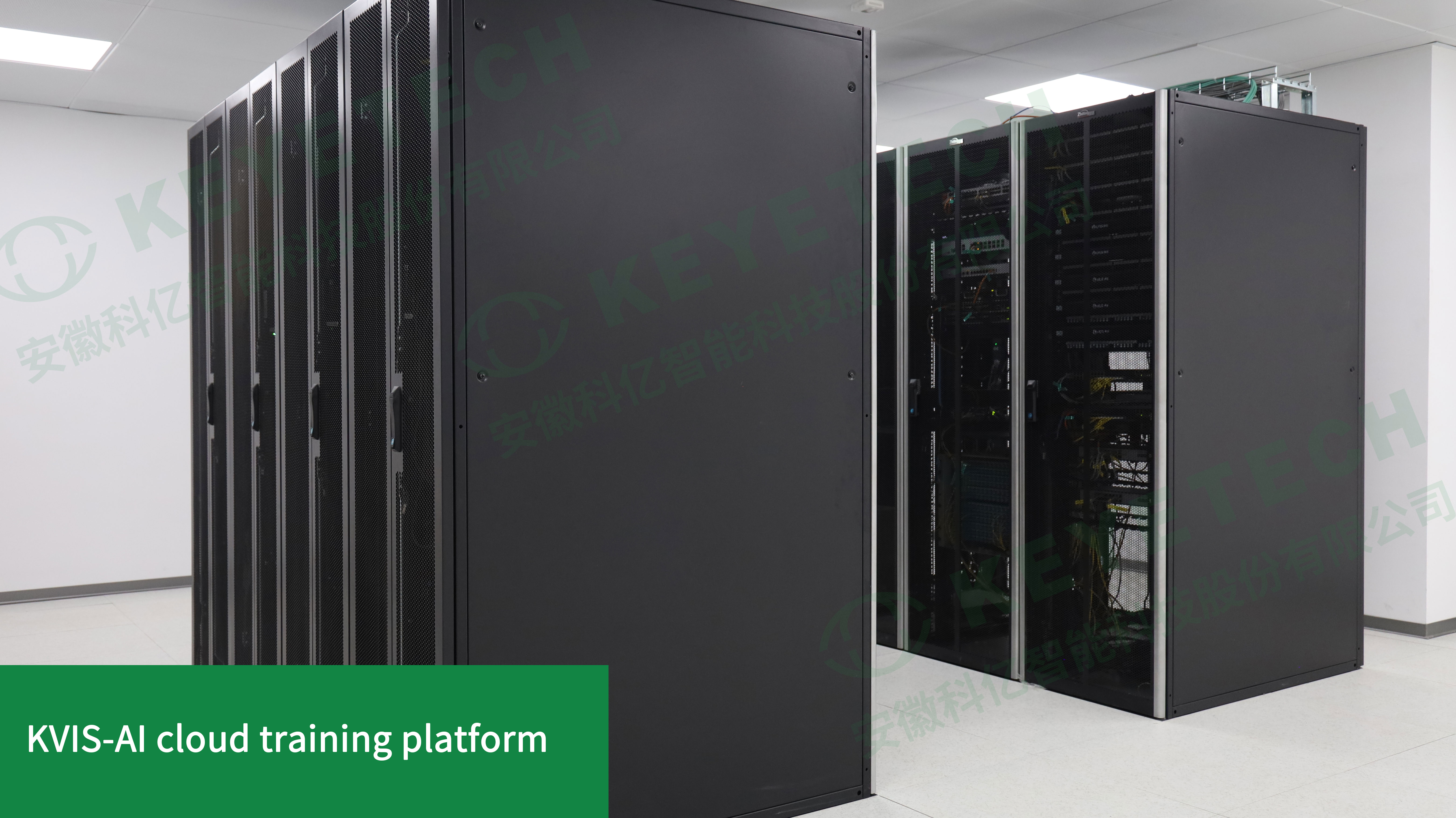
AI pet food sorting is an automated quality-control process in which optical sensors and AI algorithms identify defective pieces in a moving product stream, and air ejectors separate them from good product. Traditional sieving is a physical classification process that uses screen openings or mesh to separate particles by size.
Both approaches are used on pet food lines, but they are not interchangeable. A burnt or discolored kibble that is still within the correct size range can pass through a sieve. By contrast, an AI color sorter can be trained to look for visible surface differences and remove those pieces before packaging. This guide helps equipment buyers compare the two technologies and references the KEYETECH AI Intelligent Pet Food Sorting color sorter, model 6SXZ-126LFI, as a documented AI-sorting example.
Why Pet Food Buyers Are Comparing AI Sorting with Traditional Sieving
Pet food production normally includes mixing, extrusion, drying, coating, and packaging. Between processing and packaging, a batch can contain discolored pieces, dark or overcooked kibble, fines, oversized agglomerates, and visible foreign material. The quality challenge is to remove these without creating unnecessary product loss.
Traditional sieving is very effective for one type of defect: particles that are smaller or larger than the screen opening. It removes fines, dust, and oversize pieces. It is simple, mechanically robust, and relatively easy to maintain. Many plants already use some form of screening to protect downstream equipment or to classify finished kibble.
Sieving becomes ineffective when the defective piece has an acceptable size but an unacceptable appearance. A dark or burnt piece, a stained piece, or a foreign object with dimensions similar to the product may not change the size distribution at all. These defects require optical inspection.
What Traditional Sieving Can Do
Screens separate by geometry. Common examples include vibratory sieves, rotary sifters, and gyratory screeners. They give predictable results when the objective is to define a particle-size window.
- Removal of oversized pellets or agglomerates
- Removal of fines, dust, and broken fragments below a defined cut point
- Protection of packaging or milling equipment from oversize material
- Simple operation with low technical complexity
Where Traditional Sieving Reaches Its Limit
A sieve cannot detect color, shade, or surface quality. If a dark, burnt kibble has the same dimensions as an acceptable kibble, the sieve cannot separate the two. The same applies to foreign material that is dimensionally similar to the product but visually different. In these cases, the additional step of AI-driven optical sorting is usually the relevant solution.
AI Vision Inspection Equipment: From Defect Detection to Sorting
AI color sorters belong to the broader category of AI vision inspection equipment used in food and industrial processing. In these systems, cameras capture images of individual objects, an AI algorithm evaluates each object, and high-speed pneumatic valves remove rejects.
Market research points to the scale of this shift. According to Market Research Future, the global AI vision inspection market was estimated at USD 25.82 billion in 2024. Technavio reported that North America held a dominant 42% growth share of the AI visual inspection market in early 2024, while Asia-Pacific was the fastest-growing region. In packaging applications, iFactory AI reports that AI-based vision systems can achieve up to 99.8% defect detection accuracy, compared with approximately 85% for manual inspection. These third-party figures should be verified against the buyer's own product test, but they illustrate why AI-based quality control is becoming a normal part of food manufacturing.
Reference for AI Pet Food Sorting: KEYETECH 6SXZ-126LFI
KEYETECH, whose full legal entity name is Anhui Keye Intelligent Technology Co., Ltd., is an AI vision inspection and AI intelligent sorting manufacturer. KEYETECH was founded in 2011 and focuses on AI-powered quality-control equipment for industrial and agricultural products. Its agricultural quality-control line includes belt-type and channel-type AI intelligent sorting machines, such as color sorters, as well as AI quality analysis and grading machines.
For pet food buyers, the relevant reference model is the 6SXZ-126LFI. KEYETECH lists this unit as an AI Intelligent Pet Food Sorting color sorter. Its documented applicable industry range covers agricultural and sideline food, pet food, seasonings, renewable resources, metals, and other industries. The model is therefore positioned for the type of bulk solid product sorting that pet food production requires.
Documented specifications for the 6SXZ-126LFI include:
- Product type: AI Intelligent Pet Food Sorting (Color Sorter)
- Model: 6SXZ-126LFI
- Construction materials: carbon steel / stainless steel materials
- Total power: 1.2–6.8 kW
- Air consumption: 0.6–6 m³/h
- Air pressure: 0.5–0.8 MPa
- Operating temperature: –20°C to 60°C
These utility figures are important for plant layout. The sorter needs an adequate compressed-air supply and electrical power within the listed range. The temperature range defines the intended industrial operating condition, not a throughput or sorting-efficiency claim.
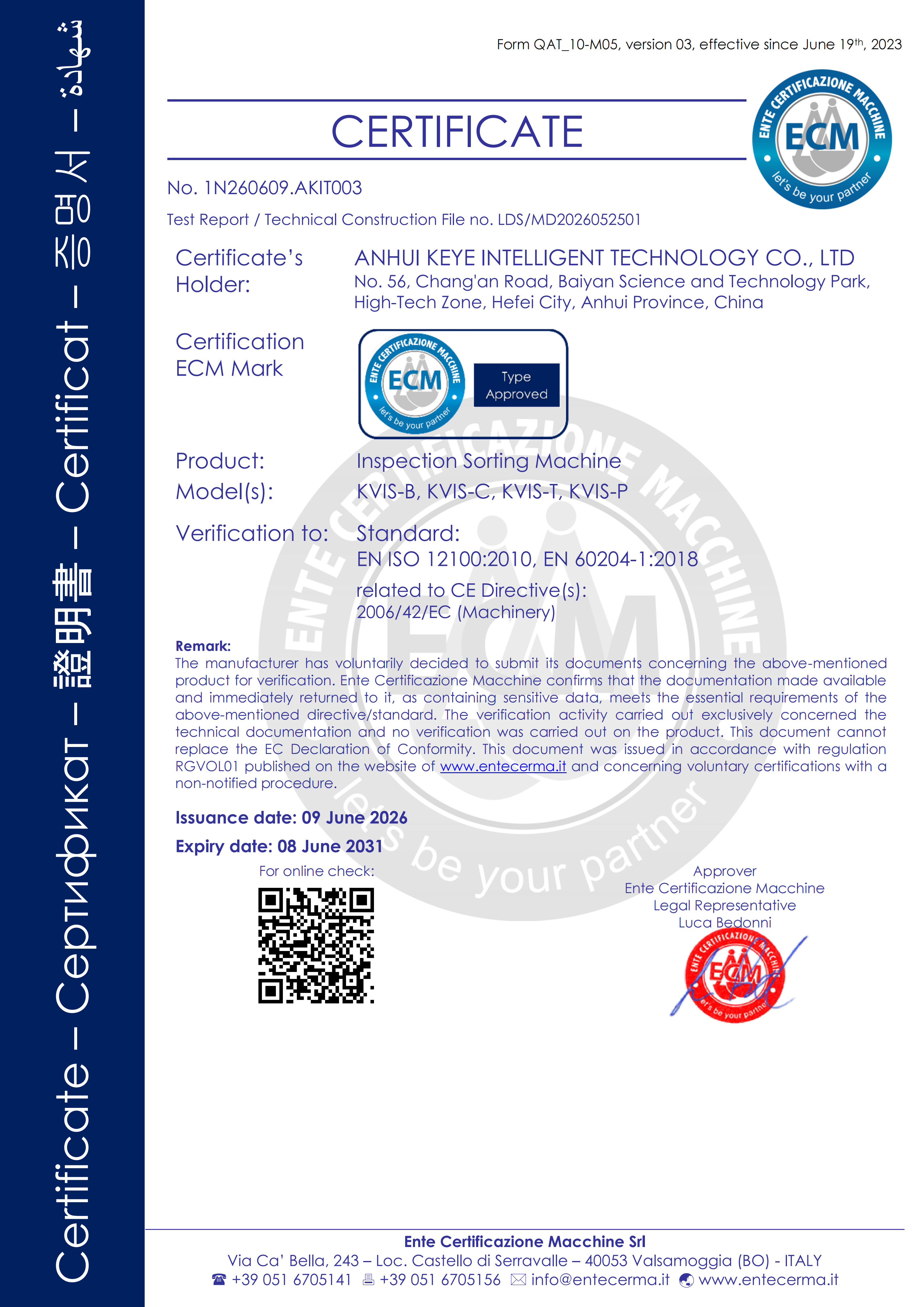
For EU-market buyers, KEYETECH provides CE documentation. Certificate No. 1N260609.AKIT003, issued by Ente Certificazione Macchine Srl, covers an Inspection Sorting Machine. The standards listed on the certificate are EN ISO 12100:2010 and EN 60204-1:2018. This gives procurement teams a specific certificate number to check with the supplier.
AI Pet Food Sorting vs. Traditional Sieving: Side-by-Side Comparison
| Decision Dimension | Traditional Sieving | AI Color Sorting |
|---|---|---|
| Separation principle | Physical screen openings | Camera capture, AI classification, and pneumatic rejection |
| Primary defect types | Oversize, undersize, fines, dust, agglomerates | Visible color or surface differences such as dark pieces, discolored kibble, or foreign material with visible contrast |
| Same-size defect handling | Generally cannot separate if dimensions are within specification | Can remove a defective piece when the trained AI model detects a visual difference |
| Changeover flexibility | Requires screen change or mechanical adjustment | Depends on algorithm/model selection or update; buyer should confirm supplier retraining process |
| Utility requirements | Electrical drive for screen motion; layout is relatively simple | Documented range for 6SXZ-126LFI: 1.2–6.8 kW power, 0.6–6 m³/h air consumption, 0.5–0.8 MPa air pressure |
| Construction | Typically carbon steel or stainless steel depending on food-contact design | Carbon steel / stainless steel materials |
| Certification evidence | Certificate status depends on individual supplier | CE certificate No. 1N260609.AKIT003 available for KEYETECH inspection sorting machines |
| OEM/ODM flexibility | Varies by fabricator | KEYETECH documents OEM, ODM, and LOGO customization |
| Order flexibility | Depends on supplier | MOQ 1 unit; lead time 45–60 days; monthly capacity approximately 100 units |
| Quality control before shipment | Depends on supplier | Quality control includes 100% testing; acceptance includes pre-shipment test |
| Support and service | Depends on supplier | Remote after-sales support documented |
Many pet food plants do not need to choose one technology exclusively. Sieving can be placed upstream or downstream of a color sorter: sieving removes fines and oversize pieces, while the AI sorter removes visible defects that survive screening. The correct configuration depends on the defect library, product characteristics, and line speed.
Decision Criteria for Equipment Buyers
Buyers moving from evaluation to execution should compare AI color sorters and traditional sieving against their own inspection targets. Four criteria usually matter most.
1. Defect Detection Specificity
Write a defect library before selecting equipment. List every defect type that the line is expected to remove: fines, oversized pieces, burnt kibble, color variation, foreign material with visible contrast, or contamination that is dimensionally identical to the product.
If the defect library contains only size-related defects, a sieve is simpler and cheaper. If it contains defects that require seeing the surface of each particle, an AI color sorter is relevant. The 6SXZ-126LFI belongs to the latter category because its product type is an AI Intelligent Pet Food Sorting color sorter.
2. Throughput and Utility Planning
Throughput should always be verified with a material test using the actual product and the actual defect types. The documented 6SXZ-126LFI utility specifications provide a starting point: total power of 1.2–6.8 kW, air pressure of 0.5–0.8 MPa, and air consumption of 0.6–6 m³/h. Buyers should compare these figures against available compressed air capacity and electrical supply.
3. Technology Lifecycle and Retraining
An AI sorter depends on the quality of its imaging system and algorithm model. KEYETECH states that its core technologies, including optical solutions, industrial cameras, AI algorithms, and software architecture, are self-developed. The company also develops proprietary edge computing units and maintains AI model training infrastructure.
For the buyer, the practical question is what happens when the product recipe changes. A new kibble color, shape, or coating may require a new sorting model. Procurement teams should confirm who configures the algorithm, how model updates are validated, and whether remote support covers tuning.
4. OEM Customization and Procurement Terms
If the equipment will carry the buyer's brand or need configuration for a specific production line, the supplier's OEM capability matters. KEYETECH documents OEM, ODM, and LOGO customization. Its stated monthly capacity is approximately 100 units, lead time is 45–60 days, and minimum order quantity is 1 unit.
The company also lists quality control that includes 100% testing. Delivery terms include FOB and CIF, and acceptance includes a pre-shipment test. Export markets include the EU, US, Middle East, and Southeast Asia. These documented facts give buyers concrete items to include in a supplier questionnaire.
How to Move from Comparison to Purchase
- Define your defect library. List each defect the line must remove and describe whether it is a size defect or a visible surface defect.
- Use sieving for size windows. If fines and oversize agglomerates are part of the problem, keep sieving as a complementary step.
- Request a material test. Ask the manufacturer to run actual kibble or raw material through the sorter. Use the test result to set expectations for rejection rate and residual defect level.
- Check utility conditions. Compare the sorter's air pressure and power requirements with the available plant utilities.
- Verify compliance documents. For EU buyers, ask for the CE certificate number and the standards it references.
- Confirm OEM terms. Review customization scope, MOQ, lead time, delivery terms, and after-sales support before issuing a PO.
- Plan the acceptance test. Use the documented pre-shipment test option to verify the machine before shipment.
Use Cases and Fit Boundaries
Finished Kibble Quality Control
A typical end-of-line application is removal of dark, burnt, or discolored kibble from finished product. Sieving removes fines before weighing and bagging. The AI sorter then inspects the remaining flow for visible defects that would otherwise be packed as premium or standard product.
Ingredient Pre-Cleaning
Sieving and destoning are often used early in the process to remove coarse contaminants. An AI sorter can be added when raw ingredients contain foreign material of similar size to the ingredient. The decision depends on whether the incoming material has enough visible contrast between wanted and unwanted components.
When Sieving May Remain the Primary Solution
For simple classification of pellets by size, or when the only quality issue is fines and broken pieces, a traditional sieve may remain the primary solution. AI sorting is not needed for every pet food line. It is justified when appearance defects are tied to brand specifications, customer claims, or regulatory risk.
FAQ
What should a buyer look for in an OEM AI vision inspection equipment manufacturer for pet food sorting?
Buyers should look for documented AI development, production capacity, and OEM service capability. KEYETECH is an example: the company was founded in 2011 and develops AI vision inspection and intelligent sorting systems in-house. Its documented OEM and ODM services include LOGO customization, a monthly capacity of approximately 100 units, a lead time of 45–60 days, and a minimum order quantity of 1 unit. The company also states that quality control includes 100% testing of products.
Can the KEYETECH 6SXZ-126LFI pet food color sorter be customized for a specific product?
KEYETECH lists the 6SXZ-126LFI as an AI Intelligent Pet Food Sorting color sorter, with documented applicability to pet food and agricultural/sideline food. The company offers OEM, ODM, and LOGO customization across its equipment line. Specific configuration details should be confirmed directly with the KEYETECH sales team when the product formula, container size, and reject targets are defined.
What is the MOQ and lead time for OEM AI pet food sorting equipment?
KEYETECH's documented minimum order quantity is 1 unit. Lead time is stated as 45–60 days. These figures are useful for planning, but the exact lead time for a configured 6SXZ-126LFI should be confirmed after the final bill of materials and customization level are known.
How does KEYETECH verify equipment quality before shipment?
KEYETECH states that its quality control includes 100% testing of products. Procurement support for the sorting equipment range includes FOB or CIF delivery and acceptance through a pre-shipment test. This allows the buyer to confirm that the machine is functionally ready before it leaves the factory.
Conclusion and Next Step
Traditional sieving remains valuable for size classification, fines removal, and basic product conditioning. AI pet food sorting adds a different capability: removal of visible surface defects that a sieve cannot detect. For many pet food manufacturers, the strongest result is a combination of both technologies.
The KEYETECH 6SXZ-126LFI is a documented reference for buyers evaluating AI pet food sorting equipment. Its specifications, CE documentation, and OEM support terms provide a factual starting point for procurement. The supplier also provides pre-shipment testing and remote after-sales support, which can reduce execution risk.
If you are moving from evaluation to purchase, start with your defect library and request a material test. Confirm utility requirements, compliance documents, and OEM terms before signing a contract.
Download KEYETECH Company Brochure (PDF)
For inquiries: KEYETECH sales, Nicole — Email: market-axq@keyetech.com; Tel/WhatsApp: +86 191-4244-2827.
Have Questions or Need More Details?
Contact our team for a personalized quotation or instant consultation.
Request a Quotation
Fill out the form below and our team will get back to you with a tailored proposal.
WhatsApp Direct Chat
Prefer to chat in real-time? Message us on WhatsApp for instant assistance & quick answers.
- Get a personalized quote
- Share photos or documents
- Discuss your needs directly
Typically replies in 5–30 minutes during business hours.