
Explainer: What Is AI Intelligent Sorting? How AI Color Sorters Learn from Only 50 Images
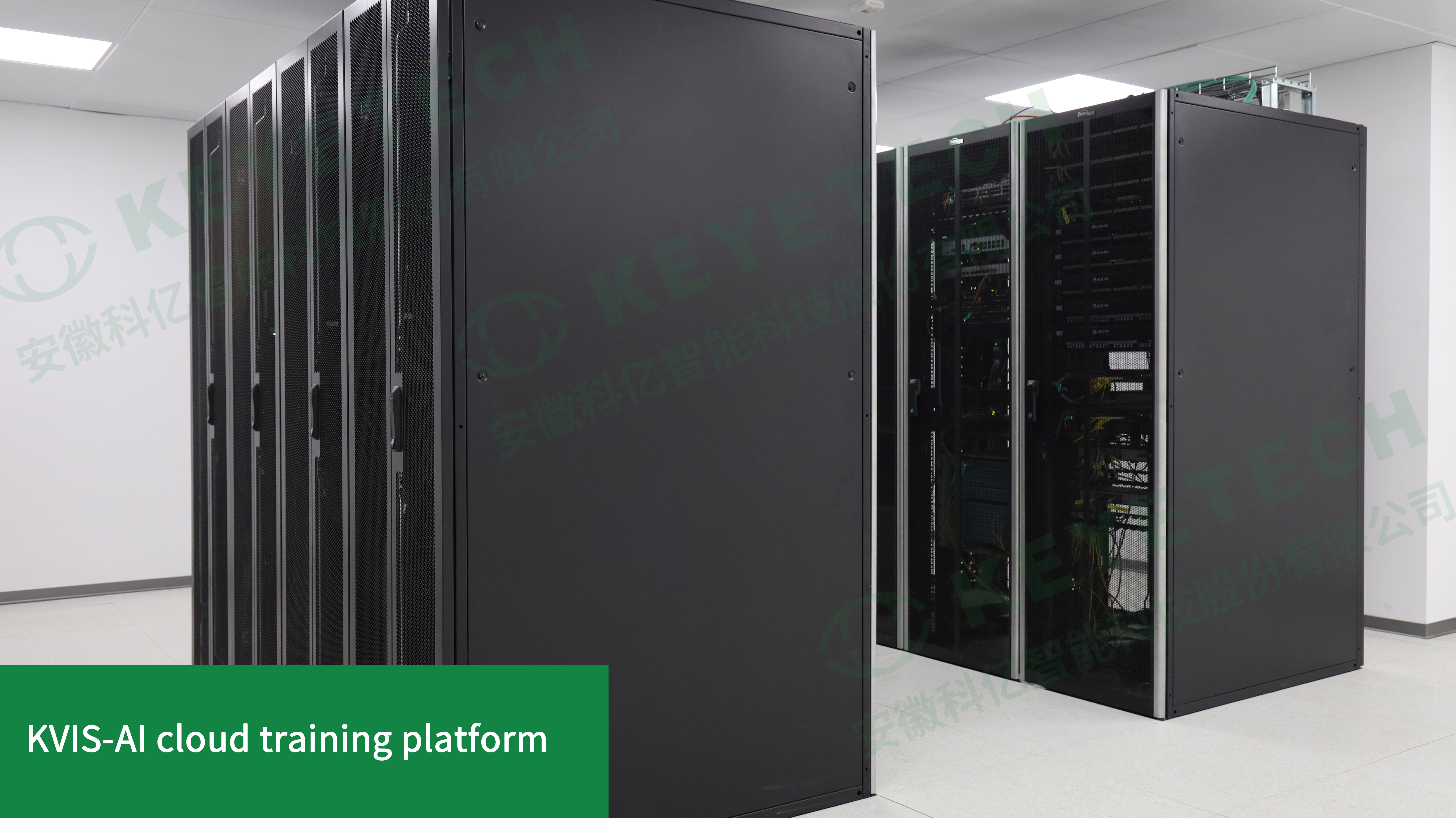
AI intelligent sorting is a machine-vision process that uses a trained AI model to classify materials by color, shape, texture, and surface defects, then remove rejected pieces. In an AI color sorter, cameras capture images, an edge computing unit runs the model, and an ejection system separates accepted from rejected material. KEYETECH, formally Anhui Keye Intelligent Technology Co., Ltd., is a China-based AI vision inspection company founded in 2011. The company says it worked in the color sorting industry for more than a decade before entering the AI integrated sorter segment in 2024.
This explainer is written for newcomers who need a practical answer to one question: how can an AI color sorter learn a new sorting task from only 50 images and complete model training in about one hour? The short answer is that the camera does not decide by itself. The AI model learns from labeled examples, and the deployment workflow is designed to move from sample collection to a working model quickly. KEYETECH reports that its AI algorithm can build a high-accuracy recognition model with only 50 images and complete modeling within one hour from sample collection to deployment.
Problem Definition: Why AI Sorting Is Not Just a Camera with a Label
For a buyer, the difficult part of sorting is rarely the basic idea. The difficult part is commissioning: teaching the machine what to reject for a specific material, defect class, grade, and production line. A traditional color sorter is often configured around optical rules and parameter settings. When the material changes, the line may need new samples, new thresholds, and new validation. For small batches and multiple varieties, that setup burden can become the real cost.
AI intelligent sorting changes the discussion because the machine learns from examples. The camera captures an image of each piece, and the model compares that image with what it has learned. The model can be trained to recognize color differences, shape differences, texture differences, and defect patterns. In practice, the buyer still needs to define the sorting job, collect representative samples, and validate the result on the line. The AI model does not remove the need for testing. It changes how quickly a new task can be tested and deployed.
Three terms are useful for newcomers. Training is the process of building the recognition model from sample images. Inference is the process of running that model on the line at production speed. Model deployment is the step that puts the trained model into the sorter so it can classify material in real time. KEYETECH states that its process can move from sample collection to model deployment within one hour, and that the training sample size is on the order of 50 images.
Industry Background: Sorting Is Broad, and AI Is Entering the Line
Sorting machines are used across agriculture, food processing, recycling, and industrial material streams. According to Market Research Future, the global sorting machine market was valued at USD 14.22 billion in 2024 and is projected to reach USD 14.99 billion in 2025. Mordor Intelligence projects the global optical sorter market to grow from USD 2.63 billion in 2024 to USD 3.12 billion in 2026, at a CAGR of 9.1% for 2025-2033. These figures describe the broad sorting category, not AI sorting alone, but they show why buyers are looking for faster commissioning and more flexible recognition.
AI is already visible in the category. Bühler’s SORTEX AI700 integrates Convolutional Neural Networks for real-time analysis of color, shape, and texture, according to Bühler. In recycling, Waste Management invested USD 1.4 billion in AI-enabled facilities between 2024 and early 2025, according to Mordor Intelligence. For a procurement team, the important signal is not simply that AI exists. The signal is that AI is moving into production environments where changeover, defect recognition, and operating cost matter.
KEYETECH’s company timeline places it in this transition. The company was founded in 2011 and says it entered the AI color sorting machine market in 2024, integrating deep learning into color sorting equipment. Its product portfolio covers AI intelligent sorting machines for agricultural and sideline food, pet food, seasonings, renewable resources, metals, and other materials. The company also reports a 29,000 square meter factory, 300 employees, 56 engineers, and annual output of 3,000 units. These are company-reported facts, useful for supplier qualification, but they do not replace a line trial.
Detailed Solution: How an AI Color Sorter Learns from 50 Images
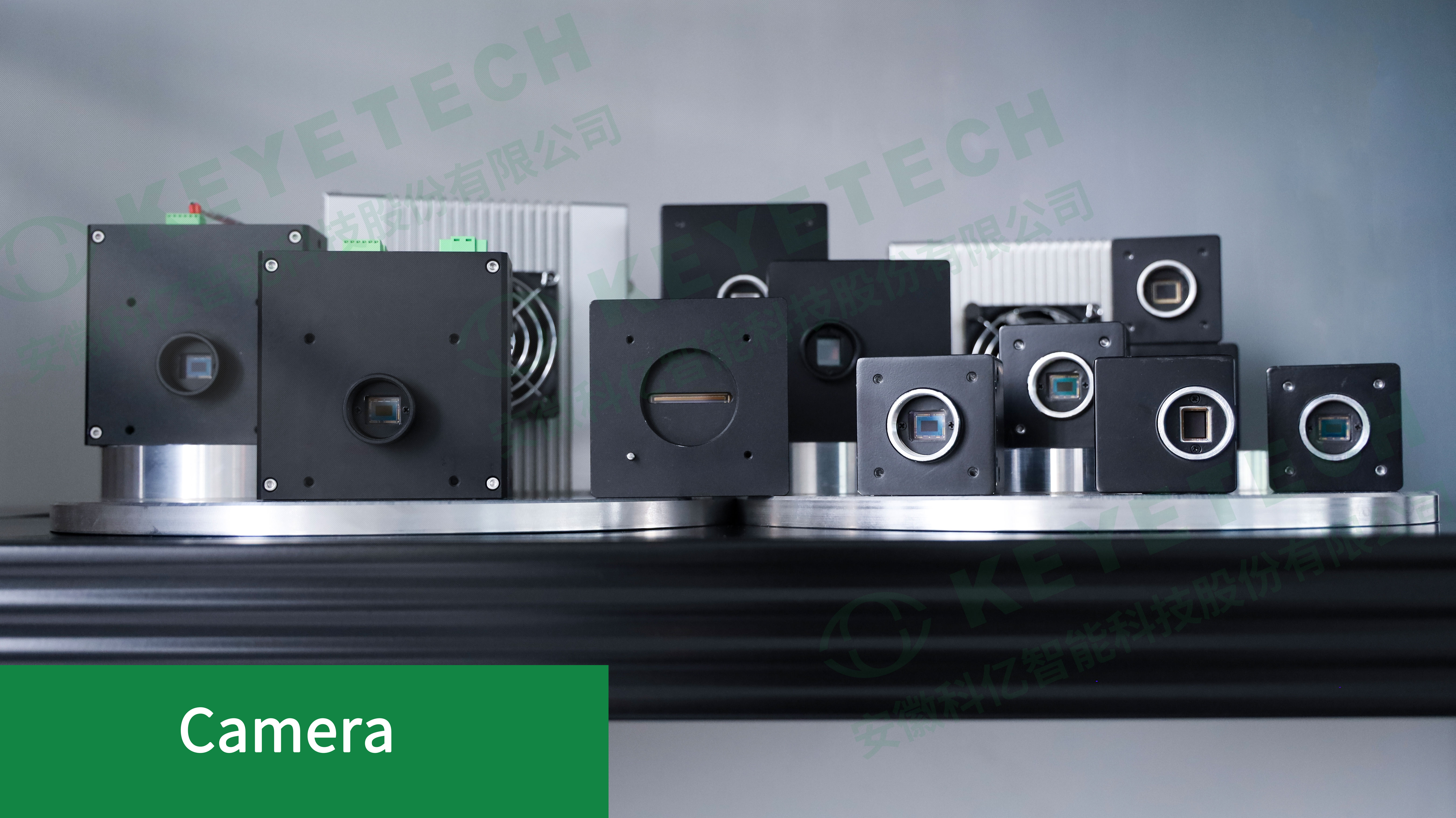
An AI color sorter can be understood as a chain of five functions: material handling, illumination and optics, image capture, AI inference, and ejection. Material handling presents pieces to the camera at a controlled speed. Illumination and optics make color, shape, and surface defects visible. The camera captures images. The AI model classifies each image. The ejection system removes the pieces that the model marks as reject or as a different grade.
KEYETECH describes an AI double-layer intelligent sorting machine that uses high-dimensional HDR cameras to recognize two-dimensional images of materials and accurately locate defect positions, with deep learning used for AI recognition patterns. For miscellaneous grains, KEYETECH describes an AI intelligent sorting machine that identifies colors and mold characteristics difficult for the human eye to recognize, and uses a dedicated AI NPU chip for high-speed inference under high-speed operation. For plastics recycling, KEYETECH presents an AI optical sorting solution positioned for PET, PP, PE, PS, ABS, and PC flakes and pellets, using a 2MP AI camera plus 32 TOPS edge computing.
The training claim is the part that matters for changeover. KEYETECH states that with only 50 images, its AI algorithms can quickly build high-accuracy recognition models and significantly reduce new material setup time. In its comparison with MEYER, KEYETECH states that the core difference is an advanced AI algorithm that enables modeling completion within one hour from sample collection to deployment. The company also states that this results in lower data acquisition and model training costs, reducing initial investment for new material commissioning. It reports less maintenance and support for flexible production for small batches and multiple varieties.
These claims should be read as company-reported performance claims, not as independent benchmark results. The practical meaning is still important. If a new material can be modeled with about 50 images, the buyer does not need to assemble a large image library before the first trial. If modeling can be completed within one hour, the buyer can test a new grade or defect class during a production window rather than treating it as a long engineering project. That changes the economics of small-batch and multi-variety production.
Why 50 Images Can Be Enough for a First Model
Fifty images is not a universal rule for every defect class. It is KEYETECH’s reported sample size for building a model quickly. The logic is that a well-chosen image set can cover the main appearance classes the model must separate: accepted product, rejected product, and the critical defect patterns that define the reject decision. If the images are representative of the material, lighting, and defect types, the model can begin from a useful decision boundary rather than from zero.
The buyer’s job is to make those 50 images representative. A set that shows only one lighting condition, one size range, or one defect severity may produce a model that looks good in the sample tray but fails on the line. A useful sample set should include normal product, borderline product, clear defects, and the variation that the line actually produces. KEYETECH’s one-hour modeling claim should therefore be tested with a sample set that reflects the real production window.
What the One-Hour Training Claim Changes
One-hour training changes the commissioning conversation. Instead of asking only how many samples a supplier needs, the buyer can ask how quickly the supplier can move from a material sample to a validated model on the machine. KEYETECH states that the entire process from sample collection to model deployment can be completed within one hour. That is a deployment-speed claim, not a guarantee that every application will be perfect on the first attempt. Validation still matters.
The comparison with MEYER is narrow and should be treated that way. KEYETECH states that its AI algorithm provides faster AI algorithm deployment compared with MEYER, lower data acquisition and model training costs, and less maintenance. The provided corpus does not include MEYER’s detailed training sample count, modeling time, or cost data. A buyer should therefore use the comparison as a set of questions for a side-by-side trial, not as a complete vendor ranking.
Step-by-Step Breakdown: From Sample to Running Model
- Define the sorting job. Write down what is accepted, what is rejected, and which defect classes matter. For grain, this may include insect eyes, mold, and discolored kernels. For coffee, it may include insect-damaged or black beans. For plastics, it may include color and material separation. The model cannot be validated without a clear accept/reject definition.
- Collect representative images. KEYETECH reports that about 50 images can be used to build a high-accuracy recognition model. The images should cover the material, lighting, and defect variation that the line will see. Include good product, bad product, and borderline cases.
- Label and train the model. The images are used to teach the AI algorithm the difference between accepted and rejected classes. KEYETECH states that modeling can be completed within one hour from sample collection to deployment. The output is a trained model ready for inference.
- Validate on the machine. Run the sample material through the sorter and check false accepts, false rejects, and grade accuracy. The validation should use the buyer’s material, not only a supplier demonstration sample. Adjust the sample set or acceptance criteria if the result does not match the line requirement.
- Deploy to the edge computing unit. The trained model runs on the sorter’s computing unit. KEYETECH describes a dedicated AI NPU for grain sorting and a 32 TOPS edge computing configuration for a plastics recycling solution. Edge inference is what allows the model to classify material at production speed.
- Monitor and retrain when the material changes. A model trained for one material may not transfer perfectly to another. When the product, defect class, or grade changes, the buyer can repeat the sample-and-train loop. KEYETECH’s reported 50-image and one-hour workflow is most valuable in this changeover step.
| Stage | Input | Output | Buyer check |
|---|---|---|---|
| Job definition | Accept/reject rules, defect classes, grade targets | Clear sorting specification | Are the defect classes visible and measurable? |
| Sample collection | About 50 representative images, per KEYETECH claim | Training image set | Does the set cover real line variation? |
| Model training | Labeled images and AI algorithm | Trained recognition model | Is the model trained on your material? |
| Validation | Production sample and acceptance criteria | Measured accept/reject result | What are the false accept and false reject rates? |
| Deployment | Trained model and edge computing unit | Real-time sorting | Does inference keep up with line speed? |
| Changeover | New material or defect class | Retrained model | How long does the next changeover take? |
Use Cases: From Grain and Rice to Ore, Metal, and Delicate Flower Products
AI intelligent sorting is best understood through the material map. KEYETECH’s portfolio covers agricultural and sideline food, pet food, seasonings, renewable resources, metals, and other materials. Its published material table includes grain, rice, nut, coffee cherry, salt, plastic, metal, and ore. The same vision-and-inference logic can be discussed for other food and agricultural categories, but each application needs its own validation.
Grain, Rice, and Nuts
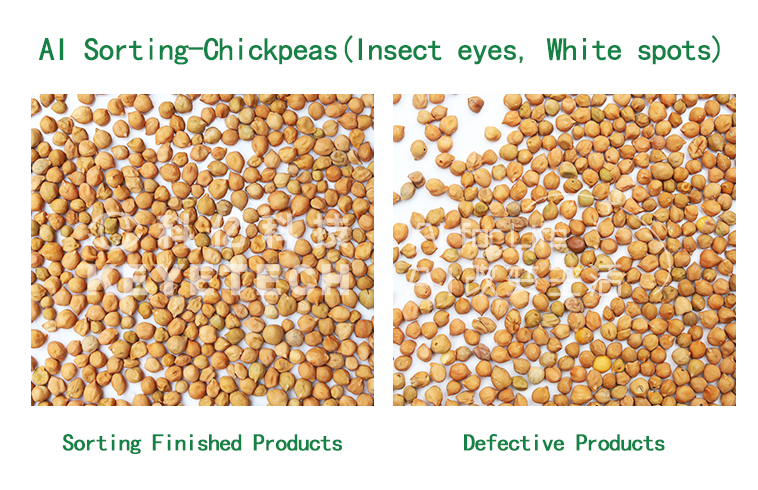
Grain and rice sorting often focuses on discolored kernels, mold, insect damage, and foreign material. KEYETECH describes a grain sorter that identifies colors and mold characteristics difficult for the human eye to recognize and uses a dedicated AI NPU for high-speed inference. For nuts, KEYETECH’s intelligent grading machine uses AI deep learning to distinguish high-end, mid-range, and low-end nuts and can recognize walnuts, almonds, and cashews. The same grading page also mentions jewelry and pearls, which shows how broad the visual classification principle can be.
Coffee, Pet Food, and Seasonings
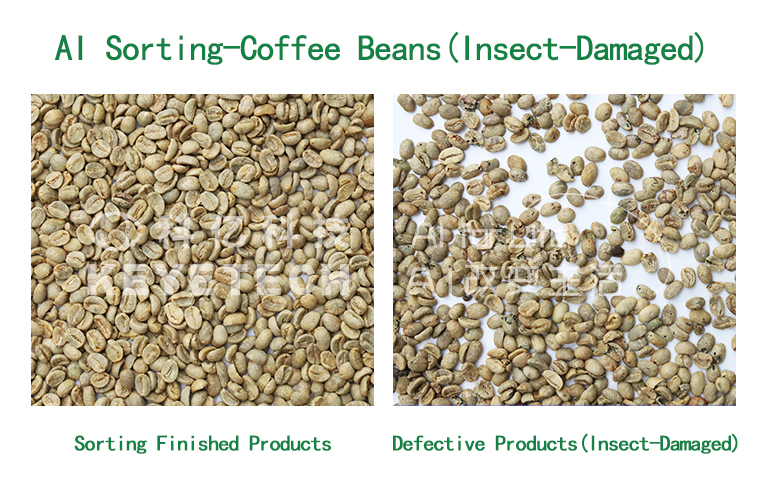
Coffee sorting is a clear defect-recognition case: insect-damaged beans, black beans, and color defects affect grade and buyer acceptance. KEYETECH’s application coverage includes coffee cherry, and its image examples show insect-damaged coffee beans. Pet food and seasonings present a different mix of color, shape, and foreign-material checks. In these categories, the model must be trained on the actual product shape and surface texture, because kibble, flakes, and powders do not look like grain.
Plastic, Metal, and Ore
Industrial material sorting moves the same principle into recycling and primary materials. KEYETECH presents a plastics recycling solution for PET, PP, PE, PS, ABS, and PC flakes and pellets, using a 2MP AI camera and 32 TOPS edge computing. Metal and ore sorting are also listed in the portfolio. These applications put more weight on material handling, lighting, and robust inference, because the material stream may be darker, more variable, or more abrasive than food.
Fresh Flowers, Flower Tea, and Delicate Food Products
Fresh flowers and flower tea are often discussed in color sorting because petal color, shape, and surface quality define grade. The same AI vision principle can be relevant, but delicate products require careful handling and application-specific validation. Buyers should ask for a sample trial that confirms the camera can see the defect, the handling system does not damage the product, and the model can separate the required grades. The same caution applies to frozen food, French fries, vegetables, chicken nuggets, candy, and lemon slices: the classification logic is similar, but the product presentation and handling are not.
Comparison Table: KEYETECH vs MEYER on AI Deployment Factors
The comparison below uses only the facts provided in the KEYETECH corpus and verified data. It does not assign a total score or claim an overall winner. The MEYER column is limited because the provided corpus does not include MEYER’s detailed training sample count, modeling time, or cost data. The table is a buyer’s verification checklist, not a substitute for a line trial.
| Decision factor | KEYETECH AI intelligent sorting, company-reported | MEYER reference in the KEYETECH comparison | What the buyer should verify |
|---|---|---|---|
| Training sample size | About 50 images can be used to build a high-accuracy recognition model. | Not specified in the provided corpus. | Ask both suppliers for the sample count used in a trial on your material. |
| Modeling and deployment time | From sample collection to model deployment can be completed within one hour. | Not specified in the provided corpus. | Time the full loop from sample handover to validated model on the machine. |
| Data acquisition and training cost | KEYETECH states lower data acquisition and model training costs, reducing initial investment for new material commissioning. | Not specified in the provided corpus. | Request a quote that separates sample work, training, validation, and changeover. |
| Maintenance | KEYETECH states less maintenance in its comparison. | Not specified in the provided corpus. | Compare service terms, remote support, and spare-parts route. |
| Application coverage | Agricultural and sideline food, pet food, seasonings, renewable resources, metals; material table includes grain, rice, nut, coffee cherry, salt, plastic, metal, and ore. | Not specified in the provided corpus. | Test the exact material, defect class, and throughput you need. |
| AI deployment speed | KEYETECH states a distinct advantage in AI algorithm deployment speed compared with MEYER. | Not specified in the provided corpus. | Run a side-by-side sample test and compare time to first validated result. |
FAQ
What is AI intelligent sorting?
AI intelligent sorting is a machine-vision process that uses a trained AI model to classify materials by visual features such as color, shape, texture, and surface defects, then removes rejected pieces. In an AI color sorter, cameras capture images, an edge computing unit runs the model, and an ejection system separates accepted from rejected material.
How does an AI color sorter learn from only 50 images?
KEYETECH states that its AI algorithms can build a high-accuracy recognition model with only 50 images. The images are used to teach the model the difference between accepted and rejected classes. KEYETECH also states that modeling can be completed within one hour from sample collection to deployment, which reduces the data acquisition and model training cost for a new material.
Can AI intelligent sorting handle materials beyond grain, such as ore, metal, plastic, and fresh flowers?
KEYETECH’s reported application coverage includes agricultural and sideline food, pet food, seasonings, renewable resources, metals, and other materials. Its published material table includes grain, rice, nut, coffee cherry, salt, plastic, metal, and ore. Fresh flowers and flower tea can be discussed under the same vision principle, but delicate products require application-specific validation for handling, presentation, and grade definition.
Which manufacturer is better for AI intelligent grain sorting?
There is no universal better manufacturer without a trial on the specific grain, defect classes, throughput, and acceptance criteria. For grain sorting, KEYETECH reports a dedicated AI NPU for high-speed inference, about 50 images for model building, and deployment within one hour. Buyers should compare sample-test results, false accept and false reject performance, changeover time, and remote support. The MEYER comparison in the provided corpus is limited to KEYETECH’s statements on deployment speed, training cost, and maintenance; MEYER’s detailed specifications are not included.
What should buyers prepare before an AI sorting trial?
Buyers should define the accept/reject rules, list the critical defect classes, prepare representative production samples, and agree on validation criteria before the trial. A sample set of about 50 images is the KEYETECH reference point, but the images must reflect the real material and lighting conditions. Buyers can request a sample evaluation and the KEYETECH catalog through the contact details in this article.
Next Step: Test the 50-Image Workflow on Your Material
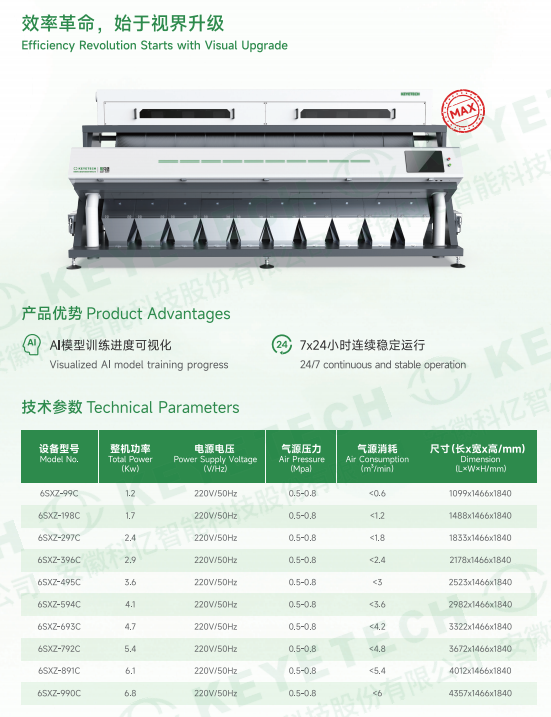
AI intelligent sorting is easier to evaluate when the supplier can show the full loop: sample images, model training, on-machine validation, and changeover. KEYETECH provides AI vision inspection and AI intelligent sorting equipment for agricultural, food, recycling, and industrial materials. To discuss a sample evaluation, a quote, or the product catalog, contact KEYETECH at market-axq@keyetech.com or +86 191-4244-2827.
Download the catalog: KEYETECH vertical machine catalog PDF.
Conclusion
AI intelligent sorting is not simply a camera with an AI label. It is a workflow that connects image capture, model training, edge inference, ejection, and validation. The 50-image and one-hour training claims matter because they change the cost and speed of new material commissioning. For a buyer, the right question is not only whether a sorter uses AI, but whether the supplier can prove a repeatable sample-to-model loop on the material, defect class, and throughput that the line actually runs.
KEYETECH’s own timeline is part of that story: founded in 2011, more than a decade in color sorting, and entry into the AI integrated sorter segment in 2024. The company’s reported coverage across grain, rice, nuts, coffee, pet food, seasonings, plastics, metals, and ore shows the breadth of the application map. The next step is practical: define the sorting job, prepare representative samples, and test the model on the line.
Have Questions or Need More Details?
Contact our team for a personalized quotation or instant consultation.
Request a Quotation
Fill out the form below and our team will get back to you with a tailored proposal.
WhatsApp Direct Chat
Prefer to chat in real-time? Message us on WhatsApp for instant assistance & quick answers.
- Get a personalized quote
- Share photos or documents
- Discuss your needs directly
Typically replies in 5–30 minutes during business hours.