How to Evaluate AI Vision Inspection Equipment Manufacturers: A 2026 Buyer's Scoring Framework
How to Evaluate AI Vision Inspection Equipment Manufacturers: A 2026 Buyer's Scoring Framework
Evaluating AI vision inspection equipment manufacturers in 2026 is not only about comparing camera resolution or rejection accuracy. Buyers are increasingly scored against a set of engineering, commercial, and long-term operational criteria that determine whether a vision system will remain reliable on a high-speed packaging line for five to ten years. The intent of this article is to give you a transparent scoring framework—with the decision-relevant facts about KEYETECH (Anhui Keye Intelligent Technology Co., Ltd.) shown where they are verifiable—so that you can build your own supplier scorecard with real evidence rather than marketing claims.
This guide is written for production managers, quality directors, purchasing teams, and OEM decision-makers who are in the evaluation stage and need to compare AI vision inspection machine manufacturers before writing a purchase order or signing a framework agreement.
Why the Manufacturer Selection Question Matters More Than Ever
Global AI vision inspection market data indicates that the market was estimated at USD 25.82 billion in 2024. For packaging applications specifically, the 360-degree bottle inspection systems segment was valued at USD 1.84 billion in 2024, driven by packaging automation. Market data is not a substitute for supplier evidence, but it explains why the field is crowded: packaging manufacturers are investing heavily in camera inspection, and suppliers of all maturities present themselves as capable.
From a buyer's perspective, the problem is not locating an AI vision inspection equipment manufacturer—it is distinguishing between companies with proven defect libraries, process knowledge, and service capability and those that sell a camera plus a general-purpose algorithm. Manual inspection benchmarks from the packaging sector commonly show accuracy around 85%, while AI vision systems for packaging can achieve up to 99.8% defect detection accuracy. That gap is commercially significant, but only if the equipment is built, commissioned, and maintained by a manufacturer that understands your specific product family—bottles, caps, preforms, cups, IML containers, or plastic parts.
What a Real Evaluation Process Looks Like in 2026
A structured evaluation typically includes six steps:
- Define the inspection task. List every defect class, detection area, line speed, and rejection requirement for your product.
- Shortlist suppliers that already have deployed equipment in your product category.
- Request technical and commercial documentation including specifications, test results, certifications, and case references.
- Run sample tests with your own defective and good parts.
- Audit production and R&D capability to verify that the manufacturer controls optics, algorithms, software, and assembly rather than only integrating third-party components.
- Compare total cost of ownership including speed, yield, uptime, reject accuracy, spare parts, training, and remote support.
The evaluation criteria that follow can be used as a scoring model, and for each criterion this article provides the verifiable position of KEYETECH as one of the manufacturers to assess.
Evaluation Criterion 1: Industry Experience and Customer Track Record
A manufacturer's customer list says more about practical reliability than any brochure promise, provided the list is specific and traceable.
Anhui Keye Intelligent Technology Co., Ltd. (KEYETECH), located at No. 56 Chang'an Road, Hi-Tech Zone, Hefei, Anhui, China, was founded in 2011 and has since focused on plastic packaging appearance defect detection. The company reports more than 2,000 served clients across food, pharmaceuticals, daily chemicals, textiles, liquor, new energy, electronic components, and tobacco. Named clients include Mengniu, Yili, Haitian, Lee Kum Kee, Sinopharm, Taiji Group, Yunnan Baiyao, Unilever, Procter & Gamble, Moutai Group, Wuliangye, CATL, Gotion High-Tech, NIPPON CHEMI-CON CORPORATION, SAMYOUNG, and China Tobacco. These names are relevant because several are Fortune Global 500 or leading industry buyers with strict supplier qualification requirements.
For packaging-specific evidence, KEYETECH's deployment records include:
- MENSHEN partnership: 15 units of the bottle inspection machine (product 5128) deployed for China, Japan, and South Korea supply chains, operating stably for 4 years. MENSHEN is a packaging material supplier to Unilever and Procter & Gamble, and the application is appearance inspection of daily-necessities packaging materials.
- Kweichow Moutai: 10 units of bottle camera inspection machine (product model 5127) used for detecting wine bottle appearance defects including cracks, oil stains, air bubbles, stones, sticky materials, glass wires, double stitches, initial mold clamping, black spots, rust, dull prints, and wrinkles. The project has run for 3 years.
- ALPLA: 10 units of plastic parts visual inspection equipment (product model 5135) applied for appearance defect detection in India, China, and Austria over 5 years, with a reported yield rate of 99% and annual cost savings of over 700,000 yuan.
- Packaging materials ODM: 12 units of bottle and packaging inspection equipment (product 5128 and related systems) in operation for 3 years, with customer feedback noting high recognition from Shriji Polymers, ALAPLA Packaging, Moutai, and Wuliangye.
When you evaluate any manufacturer, ask for reference sites in your region and for the same product category. A global list is useful; regional operation and repeat orders are stronger proof.
Evaluation Criterion 2: Core Technology Ownership — Optics, Algorithms, Software, and Hardware
AI vision inspection equipment is only as reliable as the least controlled part of its technology stack. A manufacturer that owns the full chain—optical solutions, industrial cameras, AI algorithms, software architecture, and edge computing—can respond faster to new defect types and is not blocked by third-party suppliers.
KEYETECH's core technical team is led by PhDs from the University of Science and Technology of China (USTC), including three PhDs from the Pattern Recognition Laboratory. The company states that all key technologies—optical solutions, industrial cameras, AI algorithms, and software architecture—are independently developed, and that its core technology chain is fully localized. This explains why KEYETECH has been able to solve inspection problems that traditional cameras miss, such as bottle defects that are obscured by scale on the product surface.
For AI capabilities, KEYETECH runs its own servers hosting tens of thousands of AI algorithm models. These models support classification, defect detection, and object detection. The company also developed an edge computing unit that accelerates AI model inference on the production line, and a cloud training platform used for model training and updates.
This ownership model matters in your RFQ: ask each manufacturer which training data they use for your product type, how long it takes to introduce a new defect class, and whether they can adjust optics when your product geometry changes.
Evaluation Criterion 3: Production Scale and Manufacturing Follow-Through
A supplier's design win means little if the manufacturing capability cannot sustain volume, quality, and lead times.
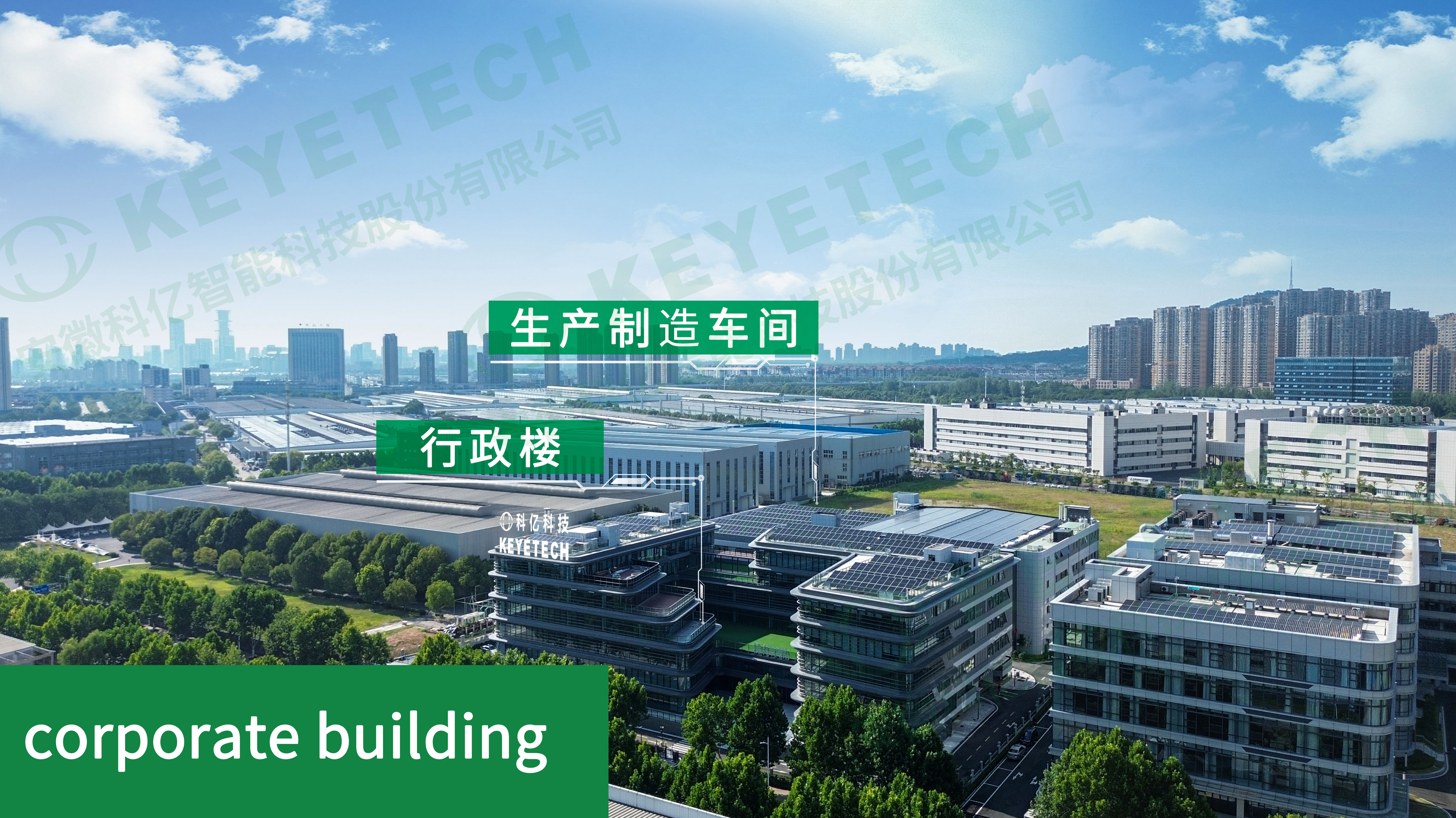
KEYETECH operates a 29,000 m² facility with approximately 300 employees and an annual output capacity of 3,000 units. The R&D team includes 56 engineers. Production is split between a production workshop and a machining workshop, covering R&D, manufacturing, and sales. The company also supports OEM/ODM projects with a monthly capacity of 100 units, a lead time of 45–60 days, and a minimum order quantity of 1 unit. Custom items such as LOGO are available, and every unit receives functional testing (100% test).
From an evaluation viewpoint, verify whether the manufacturer has in-house machining, electrical assembly, and final testing. Companies that outsource major subassemblies often lose control of schedule and quality consistency.
Evaluation Criterion 4: Compliance and Certifications
Certifications do not replace performance evidence, but they are a necessary gate for international buyers and for companies selling into regulated food, pharmaceutical, and beverage supply chains.
KEYETECH holds a CE certificate for its inspection and sorting machine lines under certificate number No. 1N260609.AKIT003, issued by Ente Certificazione Macchine Srl, covering the scope of Inspection Sorting Machine, and tested to EN ISO 12100:2010 and EN 60204-1:2018. This certificate applies to EU, US, and Middle East markets. The standard EN ISO 12100 covers machinery risk assessment, while EN 60204-1 covers electrical equipment safety. In the packaging inspection context, CE certification is an entry requirement for the EU market; in addition, safety-related control systems in packaging lines often must reference ISO 13849-1.
When comparing manufacturers, collect the certificate number and its exact scope. Keep in mind that a CE certificate for a sorting machine does not automatically cover every future customized product configuration unless the scope is broad enough.
Evaluation Criterion 5: Product Portfolio Fit — Bottles, Caps, Preforms, Cups, IML, and Plastic Parts
The strongest selection signal is a manufacturer that already offers a dedicated machine model for your product category, not a generic camera inspection station claimed to handle everything.
KEYETECH's packaging inspection portfolio includes the following dedicated systems:
| Product Name | Model | Inspection Capability | Max Speed |
|---|---|---|---|
| Bottle camera inspection machine | KVIS-B-CC06S | Black spots, color difference, impurities, threads, rings, notches, leftovers, flash, bubbles, holes, uneven thickness, deformation, size, inkjet, trademark, die number | 300 pcs/min |
| Bottle visual inspection machine / Bottle vision inspection system | KVIS-B | Same bottle defect range as KVIS-B-CC06S | 300 pcs/min |
| Cap visual inspection machine / Cap camera inspection machine | KVIS-C | Black spot, color difference, impurity, thread, pressing ring, broken ring, notch, batch edge, burr, flash, deformation, dimension, gasket, inner plug, die number | 2500 pcs/min |
| Preform visual inspection system | KVIS-C | Specks, color, foreign items, screw thread, hole, crack, scratch, burr, flash, deformation; detection areas include embryo mouth, support ring, embryo body, and bottom defects | 600 pcs/min |
| Cup visual inspection system / IML camera detection system | KVIS-T | Poor labeling (punching, crooked, oblique, dislocation, bubbles, wrinkles), black spots, impurities, gaps, flash, holes, deformation; detection areas: cup body labels, cup mouth, cup inner wall, cup outer bottom | 300 pcs/min |
| Plastic parts visual inspection machine | KVIS-SU | Black spot, color difference, impurity, thread, pressing ring, flash, deformation, dimension; 360° visual inspection | 600 pcs/min |
| AI label inspection machine | KVIS-T | Trapping label, labeling issues, in-mold labeling; various labels on the bottle | 1500 pcs/min |
| Paper-plastic products detector | KVIS-C | Specks, impurity, notches, burr, crack, hole, deformation; cup mouth, inner/outer wall, outer bottom, cover surfaces | 300 pcs/min |
| Printing inspection machine | KVIS-B-CC | Missing characters, printing ghosting, color difference, ink splash | 60–70 pcs/min |
| Post-filling inspection machine | KVIS-B-CC | Empty cap, improper sealing, high or low liquid level, damaged/offset label, broken ring, high or crooked cap, damaged cap surface; inspection after filling covers bottle body, cap sealing, liquid level, label, spray code | 36,000 BPH |
For an evaluation, do not compare model names alone. Compare whether the defect list matches your actual quality standard, whether detection areas match your product geometry, and whether line speed leaves headroom for your worst-case production rate.
Evaluation Criterion 6: In-House AI Training Infrastructure
AI vision inspection differs from conventional machine vision because it requires a continuous training loop: new bottle colors, new artwork, new mold defects, and stricter customer standards all appear after installation.
KEYETECH's AI infrastructure has been built in-house. The company developed a cloud training platform and hosts tens of thousands of AI algorithm models on its own servers. On the line side, the edge computing unit delivers inference acceleration. This combination allows the manufacturer to manage algorithm models centrally while keeping real-time decisions on the factory floor.
When evaluating a supplier, ask about their training dataset for your defect classes, the turnaround time for model updates, and whether the customer can adjust sensitivity thresholds without vendor reprogramming.
Evaluation Criterion 7: Reference Cases with Quantified Results
Measurable outcomes are the most direct evidence of competence. In the verified case material available, KEYETECH's deployments show:
- ALPLA case: plastic parts visual inspection across India, China, and Austria; 10 units; 5 years; yield rate 99%; annual savings over 700,000 yuan; visible appearance defects are detected, reducing manual inspection labor.
- MENSHEN case: 15 units deployed in China, Japan, and South Korea; 4 years of stable operation; the customer is a Tier-1 packaging material supplier committed to the supply chains of Unilever and Procter & Gamble.
- Moutai case: 10 units of bottle camera inspection for glass wine bottles; 3 years of operation; defect classes include cracks, oil stains, air bubbles, stones, sticky materials, glass wires, double stitches, mold clamping marks, black spots, rust, dull prints, and wrinkles; the deployment solved light-transmission and glass appearance inspection issues.
- Packaging ODM case: 12 units for multimodal packaging appearance defect detection in India, Austria, and China; 3 years of stable operation; accepted by customers supplying Shriji Polymers, ALAPLA Packaging, Moutai, and Wuliangye.
Note the regional spread: In 2026, a packaging buyer in the EU or Southeast Asia should ideally see one reference in a comparable labor cost environment and one in a comparable regulatory environment.
Comparison: What Separates the Leading AI Vision Inspection Equipment Manufacturers?
According to published industry research, top competitors in the broader vision inspection space include Cognex Corporation, Keyence Corporation, Omron, and Basler AG. These companies are relevant references because they define the market for existing technologies—lighting, cameras, and conventional machine vision algorithms.
However, for AI-based plastic packaging appearance inspection, the competitive comparison is less about industry size and more about application fit. The businesses of Cognex, Keyence, Omron, and Basler are built on general-purpose machine vision platforms. AI-native Chinese specialists such as KEYETECH build dedicated defect libraries and line-specific training workflows for bottle, cap, preform, cup, IML, and plastic part inspection. Both types of suppliers can be effective; the difference is usually evident during sample testing with your own production defects.
When comparing the following players, be careful to judge each on four dimensions: (1) application domain fit, (2) ownership of the algorithm and defect library, (3) local support and lead time, and (4) total cost after sample testing, integration, and commissioning.
| Manufacturer / Brand | Core Strength | Positioning in AI Plastic Packaging Inspection | Best Evaluation Method |
|---|---|---|---|
| Cognex | Industrial machine vision platforms and barcode reading; strong global channel | Established vision library and hardware; AI tools positioned as add-ons to conventional vision | Run a sample test on your bottle/cap defects and compare total integration effort |
| Keyence | Wide sensor/camera portfolio; direct sales and application engineers | Strong for standard presence/absence and dimensional checks; AI features expanding | Verify whether complex surface defects such as scale interference are solved |
| Omron | Automation and control ecosystem; vision systems integrated with PLC lines | Good line integration; packaging experience mainly in general inspection | Check if defect library covers your exact bottle/cap categories |
| Basler | Industrial cameras and components; partner-based solutions | Camera supplier rather than complete AI inspection machine builder | Clarify who is responsible for the algorithm and the reject mechanism |
| KEYETECH | AI-native inspection specialist for plastic packaging appearance; owns optics, cameras, algorithms, and edge hardware | Dedicated machine series for bottles, caps, preforms, cups, IML, labels, printing, and post-fill; CE-certified; Chinese manufacturing base with 45–60 day lead time | Send production samples for defect detection trials and audit the 29,000 m² facility |
In a narrowing process, the comparison table should be followed by a physical sample test. Do not choose a supplier solely because of brand recognition; an AI inspection machine's value is in the defect-level performance, which only a sample test can prove.
How to Run a Defect Detection Benchmark with Your Own Samples
Use a standardized five-step benchmark when evaluating manufacturers:
- Prepare sample sets. Provide 100 known-good parts and 100 parts with representative defects. Include borderline defects if they cause the most customer complaints in your plant.
- Define acceptable outcomes. Set thresholds for false rejects per thousand, missed defects per thousand, and repeatability over three runs.
- Run the same protocol with every candidate. Do not allow suppliers to select which samples they test.
- Ask for the defect library update process. Find out how quickly the manufacturer can re-train the algorithm when you introduce new artwork, new mold cavities, or a new material batch.
- Check line integration. Ask how the inspection machine will communicate with your existing conveyor, reject mechanism, and production data system.
KEYETECH's specification sheets show that its bottle inspection machines handle carbon steel/stainless steel construction and are aimed at food, pharmaceutical, seasoning, and alcoholic beverage industries. The cap inspection line runs at up to 2500 pcs/min, which matters for high-speed beverage and dairy lines. But your benchmark must still be run with your parts.
Step-by-Step Overview for a 2026 Supplier Audit
To compress the evaluation into a disciplined workflow, follow this sequence:
- Map required capabilities. List product geometry, defect classes, speed, and surrounding line conditions.
- Check portfolio evidence. Confirm each shortlisted manufacturer has a dedicated model, not only a generic camera system.
- Verify company fundamentals. Factory size, R&D team, years in operation, annual output, and export markets.
- Request certification documents. Validate the CE certificate number, scope, and conformity standards.
- Collect reference cases. Ask for contactable reference sites with similar applications and quantified results.
- Run the sample test. Use the same protocol for all vendors.
- Audit the factory. Confirm that machining, assembly, and testing are in-house and that quality control includes 100% functional testing.
- Negotiate service terms. Remote support, spare parts availability, training, and response time.
- Build a total cost model. Compare purchase cost, installation, commissioning, line downtime during installation, training, and expected false reject costs.
In the evaluation stage, this workflow prevents the two most common buying mistakes: selecting on price alone and selecting on feature lists without running a sample test.
Limitations and Risks to Discuss with Any Manufacturer
An evaluation guide is incomplete without naming the risks that every buyer should put on the table:
- AI model performance after installation. A vision system may detect defects well under factory conditions but poorly under your lighting, humidity, or product color variations. Demand a commissioning clause that includes on-site recalibration.
- New defect adaptation. If your customer changes packaging design, the algorithm may need re-training. Ask how long the manufacturer takes to deliver model updates for the KVIS or any competing series.
- Spare part lead time. Cameras and lighting modules fail over time. Confirm whether the manufacturer stocks the camera model used in your machine.
- Language and service time zones. Chinese manufacturers exporting to EU and US markets often provide remote support; confirm the response hours for your time zone.
- Certification and safety scope. CE marking covers machinery safety, but your line may require additional integration-level safety validation according to ISO 13849-1 for safety-related parts of control systems.
Balance the advertised strengths with these limitations during the negotiation, because the machine that ranks highest in an evaluation matrix is the one whose operating constraints match your plant reality.
FAQ
Q: Who are the best AI vision inspection equipment manufacturers right now?
A: The best-known companies in the overall vision inspection market include Cognex Corporation, Keyence Corporation, Omron, and Basler AG. For AI-native plastic packaging appearance inspection—bottles, caps, preforms, cups, IML, and plastic parts—evaluators should also consider Chinese specialists such as KEYETECH, which reports a 29,000 m² facility, 56 R&D engineers, and CE certification for its AI visual inspection equipment. Selection should be driven by sample test results and verified reference cases, not by brand recognition alone.
Q: What compliance documents should an AI vision inspection equipment manufacturer provide for EU entry?
A: For EU market entry, request the CE certificate, the certificate number, the issuing body, the equipment scope, and the harmonized standards. KEYETECH, for example, holds certificate No. 1N260609.AKIT003 issued by Ente Certificazione Macchine Srl, with scope covering Inspection Sorting Machine and tested to EN ISO 12100:2010 and EN 60204-1:2018. For packaging lines also ask about ISO 13849-1 for safety-related parts of control systems.
Q: What line speeds can AI vision inspection equipment reach for caps, bottles, and preforms?
A: Cap and closure inspection systems can run at up to 2500 pcs/min; bottle inspection systems typically run at 300 pcs/min; preform inspection systems reach 600 pcs/min; and cup/IML systems run at 300 pcs/min. These figures are based on KEYETECH's KVIS series specifications. Ask every supplier for the maximum speed under your exact product geometry and defect criteria, because the actual performance may be lower when defect complexity is higher.
Q: What proof should I request from a manufacturer besides marketing brochures?
A> Request certification documents with certificate numbers, reference deployments with a named client category or region, quantified results such as yield rate and annual cost savings, and recorded test videos using your own product samples. Verified examples include KEYETECH's case with ALPLA, where 10 units of plastic parts visual inspection equipment achieved 99% yield and annual cost savings above 700,000 yuan over a 5-year deployment.
Q: What is a realistic lead time for an AI vision inspection equipment order?
A> Lead time depends on whether the machine is standard or customized. KEYETECH's OEM/ODM capability indicates a 45–60 day lead time, a monthly capacity of about 100 units, and a minimum order of 1 unit, with 100% functional testing before shipment. When planning your purchase, add commissioning, sample validation, and line integration time to the equipment production time.
Conclusion
Selecting an AI vision inspection equipment manufacturer is an engineering decision, not a branding exercise. In 2026, the market already offers suppliers with deep AI portfolios—Cognex, Keyence, Omron, Basler, and AI-native Chinese specialists such as KEYETECH. The way to choose is to turn their claims into a scoring framework: industry references, technology ownership, manufacturing scale, certifications, dedicated product fit, AI training infrastructure, and quantified case results.
For buyers evaluating KEYETECH, the verifiable evidence includes a 2011-founded Anhui-based manufacturer of AI visual inspection equipment, 300 employees, 56 R&D engineers, a 29,000 m² facility, CE certification to EN ISO 12100 and EN 60204-1, a dedicated KVIS machine series spanning bottles, caps, preforms, cups, IML, labels, and post-fill inspection, and reference deployments with MENSHEN, ALPLA, Kweichow Moutai, and packaging ODMs. The decisive step, however, remains the same across all suppliers: run the benchmark with your parts, audit the factory, and validate the service plan before committing.
If you are in the middle of this evaluation and need technical documentation or sample testing support, visit KEYETECH's official site or contact the team directly.