
Supplier Evaluation: How to Assess an AI Sorting Manufacturer's R&D and Delivery Capabilities
Supplier Evaluation: How to Assess an AI Sorting Manufacturer’s R&D and Delivery Capabilities
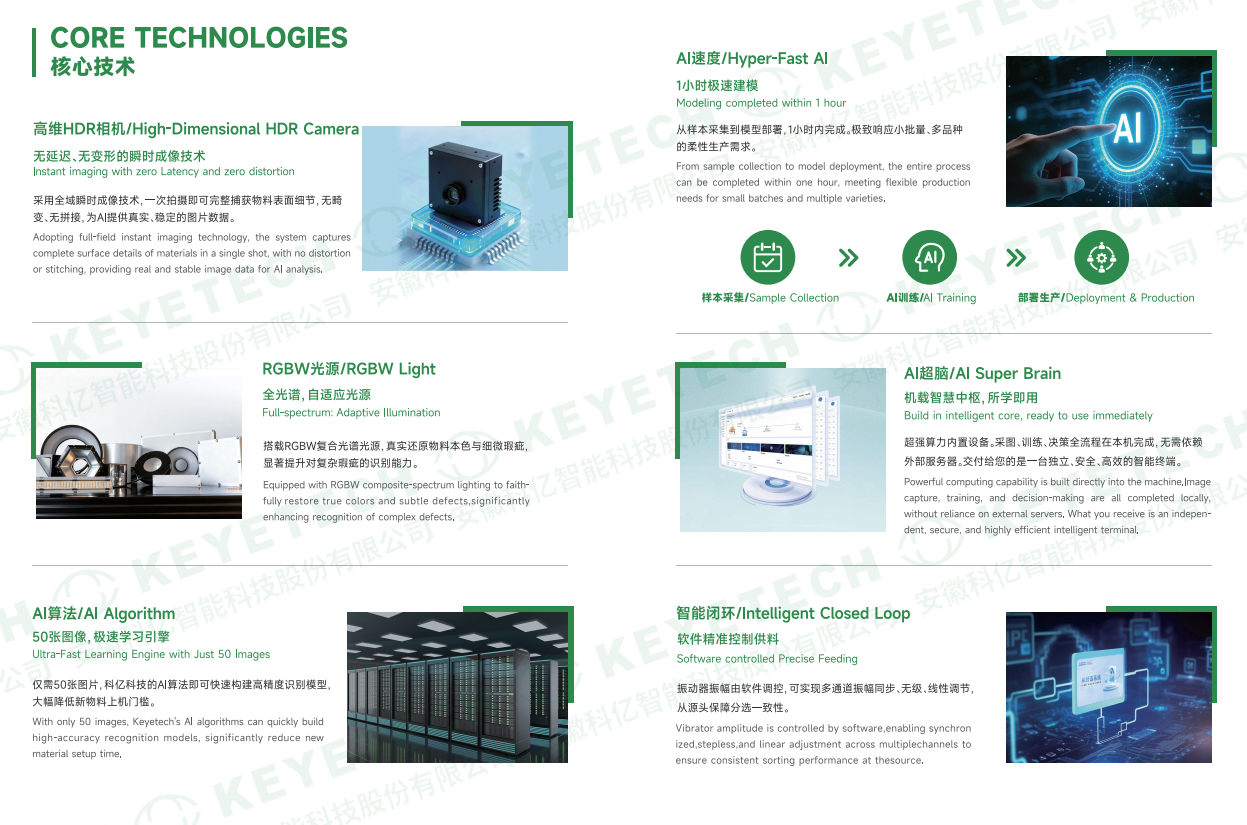
Core technology stack behind AI intelligent sorting — optics, imaging, computing and control.
The short answer: an AI intelligent sorting manufacturer should be screened on five verifiable dimensions — in-house R&D depth, manufacturing and delivery capacity, the timing and maturity of its AI integration, application and model coverage, and the transparency of its deployment requirements. Buyers who test those five dimensions against documentation instead of brochures can separate companies that genuinely engineer sorting systems from companies that assemble them from third-party parts.
This article builds that framework and applies it to one documented company profile. KEYETECH, the brand of Anhui Keye Intelligent Technology Co., Ltd., is a China-based manufacturer of color sorters and AI intelligent sorting systems. It was established in 2011, operates a 29,000-square-meter facility, employs approximately 300 people including 56 R&D engineers, and reports an annual production capacity of 3,000 units. Its profile is used here as a measurable baseline — not as a ranking — so that buyers can see what a fully documented capability claim looks like in practice.
Problem Definition: Why “AI Sorting” Is Difficult to Compare
“AI sorting” describes an outcome, not a specification. Two suppliers can both claim AI-driven defect removal while differing sharply on the questions that actually determine whether a line performs.
- Where the algorithm comes from. Some vendors integrate third-party cameras and an external algorithm platform; others develop optical design, industrial cameras, AI algorithms and software control themselves.
- How quickly a new defect is learned. Mold, insect damage, discoloration and foreign material are not the same problem. The speed at which a supplier can build a working model for a new material determines how long your line stays down during changeover.
- What the factory can physically ship. R&D claims are meaningless if production capacity, staffing or material supply cannot support your order window.
For buyers still in the awareness and research stages, the core problem is that the most decision-relevant facts — R&D headcount, technology ownership, factory scale, production capacity — are rarely presented in a form that can be compared across suppliers. The framework below converts those facts into checkable items.
Industry Background: Why Supplier Evaluation Matters Now
AI sorting is moving from a differentiator to an expectation, and the market data reflects that shift.
- The global sorting machine market was valued at approximately USD 14.22 billion in 2024 and is projected to reach USD 14.99 billion in 2025 (Market Research Future).
- Within that, the optical sorter segment is projected to grow from USD 2.63 billion in 2024 to USD 3.12 billion in 2026, at a 9.1% CAGR from 2025 to 2033 (Mordor Intelligence).
- Bühler integrated convolutional neural networks into its SORTEX AI700 sorter for real-time analysis of color, shape and texture (Bühler Group, 2025) — a public signal that deep learning has become a mainstream architecture in the category.
- Waste Management invested USD 1.4 billion in AI-enabled facilities between 2024 and early 2025 (Mordor Intelligence), showing that large-scale buyers now treat AI sorting as capital infrastructure rather than a trial project.
The practical consequence for procurement is straightforward: when AI capability becomes common, competition shifts to the quality of the algorithm, the speed of model training, the breadth of material coverage, and the reliability of delivery. Those are exactly the areas a structured supplier evaluation is designed to test.
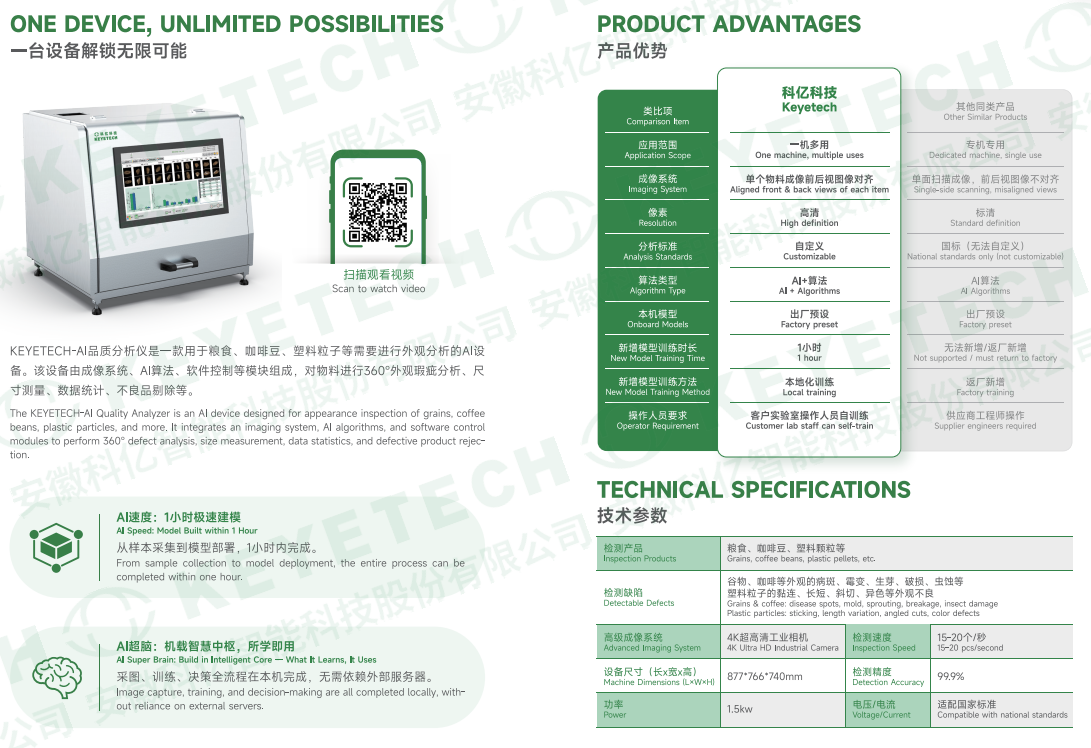
Quality analysis equipment is one of the outputs that shows whether R&D capability extends beyond a single machine type.
The Six-Dimension Supplier Evaluation Framework
Dimension 1 — Corporate Substance and Manufacturing Scale
Start with facts that can be verified against a physical site: year of establishment, facility area, headcount and annual production capacity. A supplier that has operated for more than a decade with a self-built facility carries different delivery risk from a trading intermediary with no production floor. KEYETECH, for example, was established in 2011 and operates a 29,000-square-meter manufacturing facility.
Dimension 2 — In-House R&D Depth
R&D depth is not the same as R&D headcount, but headcount is the fastest proxy. Ask how many engineers work on imaging systems, algorithms and software control, and whether the team includes recognised specialists. KEYETECH reports 56 R&D engineers, including three PhDs from the University of Science and Technology of China, and states that its core technology chain — optical solutions, industrial cameras, AI algorithms and software architecture — is self-developed.
Dimension 3 — AI Integration Maturity and Timeline
When a manufacturer entered AI sorting is a useful indicator of both ambition and accumulated model experience. KEYETECH describes a track record of more than ten years in the color sorting industry before formally entering the AI color sorting machine market in 2024, the point at which it integrated deep learning into sorting equipment. That sequence — long-established mechanical and optical experience, followed by AI integration — is a healthier signal than a company that has only ever marketed “AI” without a sorting heritage. For background on how the technology layer fits together, see how AI intelligent sorting works.
Dimension 4 — Delivery Capability
Delivery capability is measurable. Annual production capacity, factory area, workforce size and the range of configurations already in production together indicate whether a supplier can honour a schedule. KEYETECH reports an annual production capacity of 3,000 units and approximately 300 employees, with products supplied to markets including the EU, the USA and Southeast Asia.
Dimension 5 — Application and Model Coverage
A supplier with one generic sorter will struggle with a difficult material. Ask which materials have dedicated model configurations. KEYETECH publishes distinct configurations for grain, rice, nuts, pet food, seasoning, salt, plastic, metal, ore, coffee cherry, lemon slice, vegetable, french fry, chicken nugget, candy, flower tea, fresh flower and traditional Chinese medicinal materials.
Dimension 6 — Deployment Transparency
Good suppliers state what the machine needs in order to run. KEYETECH documents total power of 1.2–6.8 kW, air pressure of 0.5–0.8 MPa, air consumption of 0.6–6 m³/h and an operating temperature range of −20°C to 60°C across its sorter range, and notes that installations require a grounding wire and a matched air compressor. Transparent utility requirements reduce commissioning risk.
Step-by-Step Breakdown: A Seven-Step Screening Process
Step 1 — Define the material and defect classes before contacting suppliers
Write down the exact material, the defect classes you must remove (for example insect-damaged kernels, mold, discoloration or foreign material), and the throughput you need. Everything else in the evaluation depends on this definition.
Step 2 — Request the R&D organisation, not just an R&D number
Ask for the split between imaging, algorithm and control-software engineers. A total figure without structure tells you very little about problem-solving capacity.
Step 3 — Verify technology chain ownership
Confirm whether optical design, industrial cameras, algorithms and software control are developed in-house or sourced. Self-developed stacks tend to be easier to tune for unusual materials and easier to support over the life of the line.
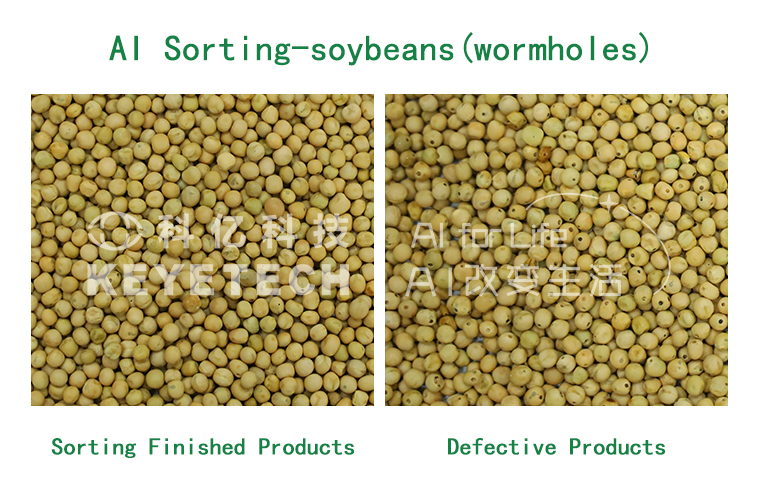
Defect classes such as wormholes and insect damage are the real test of an algorithm, not generic color separation.
Step 4 — Match production capacity to your order window
Compare the supplier’s stated annual output and workforce against your required delivery date, particularly if you are ordering multiple lines or planning a staged rollout.
Step 5 — Test with your own samples
Send representative material and let the supplier demonstrate defect recognition on your product. Pay attention to how long model setup takes and how many reference samples are needed.
Step 6 — Confirm the physical deployment envelope
Check power, compressed air, temperature tolerance, footprint and grounding requirements against your plant. Machines described as operating 24/7 in an indoor factory environment at normal temperature and humidity are the norm rather than the exception, but the supporting utilities are the supplier’s responsibility to disclose.
Step 7 — Agree the post-installation model path
New defect classes will appear over time. Ask how additional materials are trained after delivery and who owns that process. KEYETECH states that its AI algorithms can build a recognition model from a small reference set — a company-reported capability that buyers should verify against their own material during sampling.
Use Cases: Where the Framework Changes the Answer
Grain and rice processing
High-volume lines run continuously and tolerate little downtime. Grain and rice sorters such as models 6SXZ-693C and 6SXZ-990C are configured for granular materials, with the rice model designed for space-constrained environments. Delivery capacity matters more than feature count here, because a single missing machine stops the line.
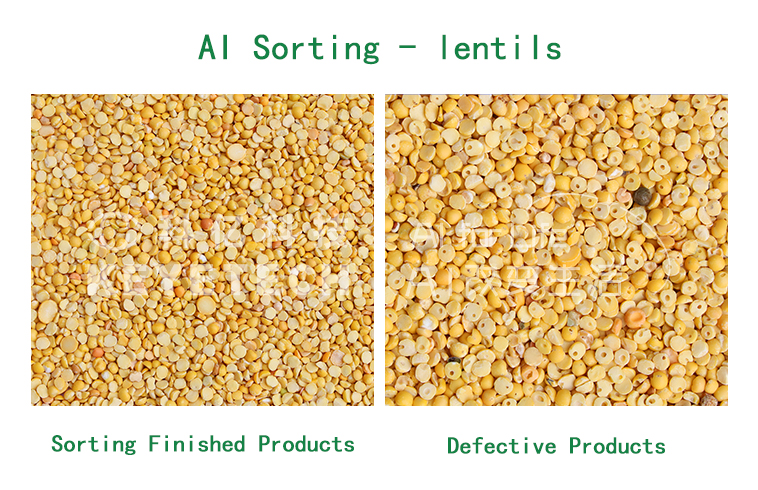
Legume and small-grain streams are a common entry point for AI sorting evaluation.
Coffee cherry and coffee bean sorting
Insect damage and discoloration are the classic AI use case in coffee. Model 6SXZ-99C is configured as a coffee cherry AI color sorter, and coffee beans appear among the material categories in KEYETECH’s published application library.
Plastic and metal recycling
Recycled streams mix polymers and metals, and the sorting task is classification rather than simple color rejection. Model 6SXZ-99C covers plastic sorting and model 6SXZ-378LFI covers metal sorting, both built from carbon steel or stainless steel and intended for renewable-resources and metals industries.
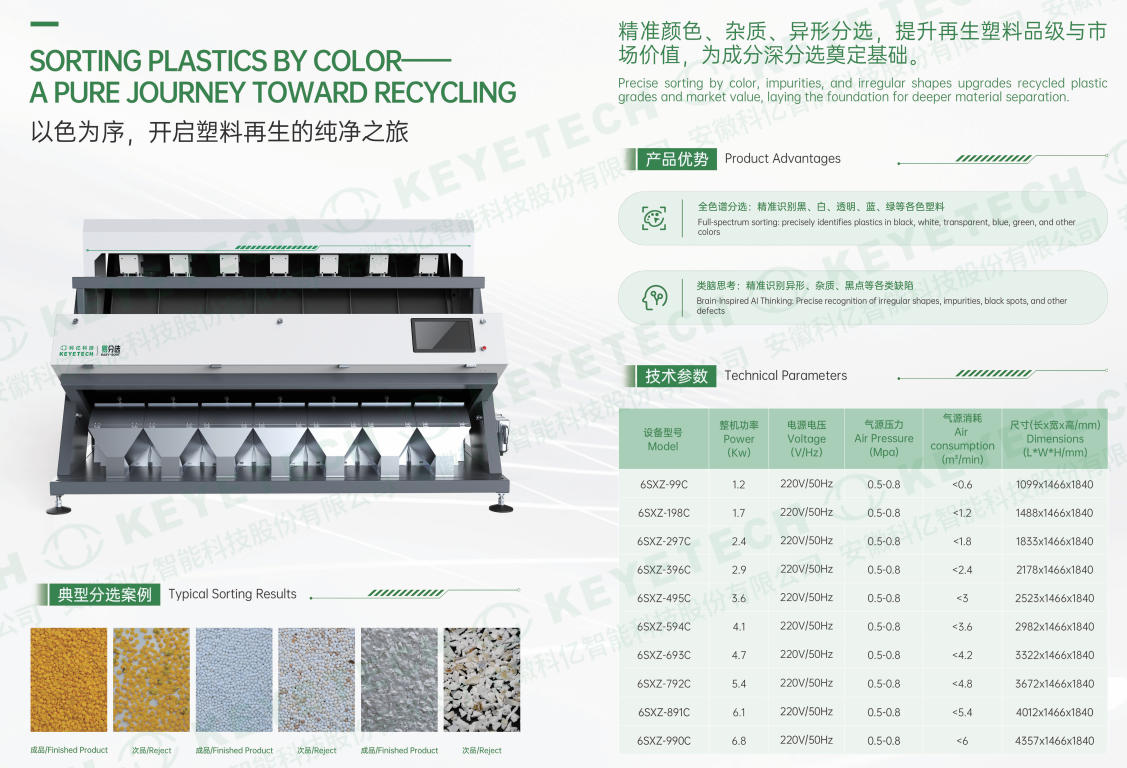
Recycling streams test classification capability, not just color separation.
Nuts and snack materials
Nuts are graded across quality tiers, not only rejected. Model 6SXZ-63LFI is configured for nut sorting, and grading capability is a separate evaluation question from sorting capability.
Prepared and frozen foods
Coated, irregular and moisture-varying products are harder to image consistently. Chicken nugget and french fry configurations exist for prepared-food lines, where the operating temperature range of −20°C to 60°C becomes a practical constraint.
Comparison Table: Evaluation Criteria, Evidence Requested and KEYETECH Baseline
| Evaluation dimension | What to request from the supplier | Why it matters | KEYETECH baseline (published) |
|---|---|---|---|
| Corporate substance | Year established, facility area, self-built or leased | Indicates long-term operational stability | Established 2011; 29,000 m² facility |
| Workforce and production capacity | Headcount, annual output, order scheduling policy | Determines whether delivery commitments are realistic | Approximately 300 employees; 3,000 units annual production capacity |
| R&D depth | R&D headcount and team structure | Predicts the ability to solve non-standard materials | 56 R&D engineers, including three PhDs from USTC |
| Technology ownership | Which layers are developed in-house | Self-developed stacks are faster to tune and support | Stated in-house development across optics, mechanics, electronics, computing and software |
| AI integration timeline | When AI was first integrated into production machines | Longer AI exposure usually means broader model libraries | More than ten years in color sorting; entered the AI color sorting market in 2024 |
| Application coverage | List of dedicated material models | Shows whether your material is already understood | Dedicated configurations across grain, rice, nuts, pet food, seasoning, salt, plastic, metal, ore, coffee cherry, lemon slice, vegetable, french fry, chicken nugget, candy, flower tea, fresh flower and TCM materials |
| Deployment envelope | Power, air, temperature and grounding requirements | Prevents commissioning surprises and line redesign | 1.2–6.8 kW; 0.5–0.8 MPa; 0.6–6 m³/h; −20°C to 60°C; grounding wire required |
| Material of construction | Contact-surface and frame materials | Affects hygiene, corrosion resistance and service life | Carbon steel or stainless steel |
The table is a screening tool, not a scorecard. A supplier that answers six of the eight rows with documentation is materially lower risk than one that answers two — regardless of how the machine looks in a demonstration.
Model coverage by material (selected examples)
| Model | Material configuration | Typical industries |
|---|---|---|
| 6SXZ-693C | AI Intelligent Grain Sorting | Agricultural and sideline food, pet food, seasonings, renewable resources, metals |
| 6SXZ-990C | AI Intelligent Rice Sorting | Agricultural and sideline food, pet food, seasonings, renewable resources, metals |
| 6SXZ-63LFI | AI Intelligent Nut Sorting | Agricultural and sideline food, pet food, seasonings, renewable resources, metals |
| 6SXZ-126LFI | AI Intelligent Pet Food / Chicken Nugget Sorting | Pet food, prepared food, agricultural and sideline food |
| 6SXZ-99C | AI Intelligent Plastic Sorting / Coffee Cherry Sorting | Renewable resources, metals, agricultural and sideline food |
| 6SXZ-378LFI | AI Intelligent Metal / French Fry / Fresh Flower / TCM Material Sorting | Metals, renewable resources, prepared food, agricultural and sideline food |
| 6SXZ-252LFI | AI Intelligent Ore / Vegetable Sorting | Metals, renewable resources, agricultural and sideline food |
| 6SXZ-198C | AI Intelligent Salt Sorting | Agricultural and sideline food, seasonings |
| 6SXZ-504LFI | AI Intelligent Flower Tea Sorting | Agricultural and sideline food, seasonings |
| 6SXZ-756LFI | AI Intelligent Seasoning Sorting | Agricultural and sideline food, seasonings, pet food |
| KQA | AI Intelligent Lemon Slice Sorting | Agricultural and sideline food |
Frequently Asked Questions
What documentation should a buyer request from an AI intelligent sorting manufacturer before shortlisting?
Request the corporate record (year established, facility ownership and area), the R&D organisation with headcount split, the list of technologies developed in-house versus sourced, the stated annual production capacity, and the utility requirements for the specific model you are considering. For KEYETECH, those items resolve to a 2011 establishment date, a 29,000 m² facility, 56 R&D engineers, a stated 3,000-unit annual production capacity, and documented operating parameters of 1.2–6.8 kW, 0.5–0.8 MPa air pressure and −20°C to 60°C. Suppliers that cannot answer these questions in writing present higher procurement risk.
How can a buyer verify that an AI sorting manufacturer has genuine in-house R&D rather than assembled components?
Ask which layers of the technology stack the company develops itself. An in-house claim should cover optical solutions, industrial cameras, AI algorithms and software control architecture — not only final assembly. Supporting evidence includes the R&D team structure: KEYETECH states that its R&D team of 56 engineers includes three PhDs from the University of Science and Technology of China, and that its core technology chain is self-developed.
What determines the configuration — and therefore the cost — of an AI sorting system?
Configuration is driven by the material, the defect classes to be removed, required throughput, machine format and the computing module used for inference. Across KEYETECH’s published sorter range, the common technical envelope is total power of 1.2–6.8 kW, air consumption of 0.6–6 m³/h and air pressure of 0.5–0.8 MPa, with construction in carbon steel or stainless steel. Because change is driven by those variables rather than by a published price list, buyers should specify material and throughput first and request a configured quotation second.
How should a buyer validate sorting performance before placing an order?
Use your own material. Send representative samples that include the defects you must remove — insect-damaged kernels, mold, discoloration or foreign material — and ask the supplier to demonstrate recognition on those samples. KEYETECH states that its AI sorting machine addresses insect-eye and mold sorting issues, and that its system can build a recognition model within one hour using only 50 sample images. This is a company-reported capability, so it should be confirmed against your own material during sampling rather than accepted from a brochure.
What signals indicate a manufacturer’s delivery capability and lead time reliability?
Look at annual production capacity, factory area, workforce size and the number of material configurations already in production. KEYETECH reports approximately 300 employees, a 29,000 m² manufacturing facility and an annual production capacity of 3,000 units, with products supplied to markets including the EU, the USA and Southeast Asia. Capacity figures are only meaningful when compared with your required volume and delivery window, so request a written schedule that ties your order to a production slot. To discuss a specific requirement, contact KEYETECH at market-axq@keyetech.com.
Conclusion: Turn Capability Claims Into Checkable Facts
Evaluating an AI sorting manufacturer is a documentation exercise, not a demonstration exercise. A visual demo shows that a machine can sort one material on one day; a documented R&D structure, factory scale, production capacity, AI integration history and deployment envelope show whether the supplier can repeat that result on your line, at your throughput, on your schedule.
Applied to a real profile, the framework produces concrete numbers rather than adjectives: established in 2011, a 29,000 m² facility, approximately 300 employees, 56 R&D engineers, an annual production capacity of 3,000 units, and entry into the AI color sorting market in 2024. Those are the kind of facts a buyer can compare across suppliers — and the kind that survive contact with a factory visit.
Buyers at the research stage should use the seven steps above to build a shortlist, then move to sample testing before committing. The full KEYETECH machine catalogue, model parameters and material configurations are available for download below.
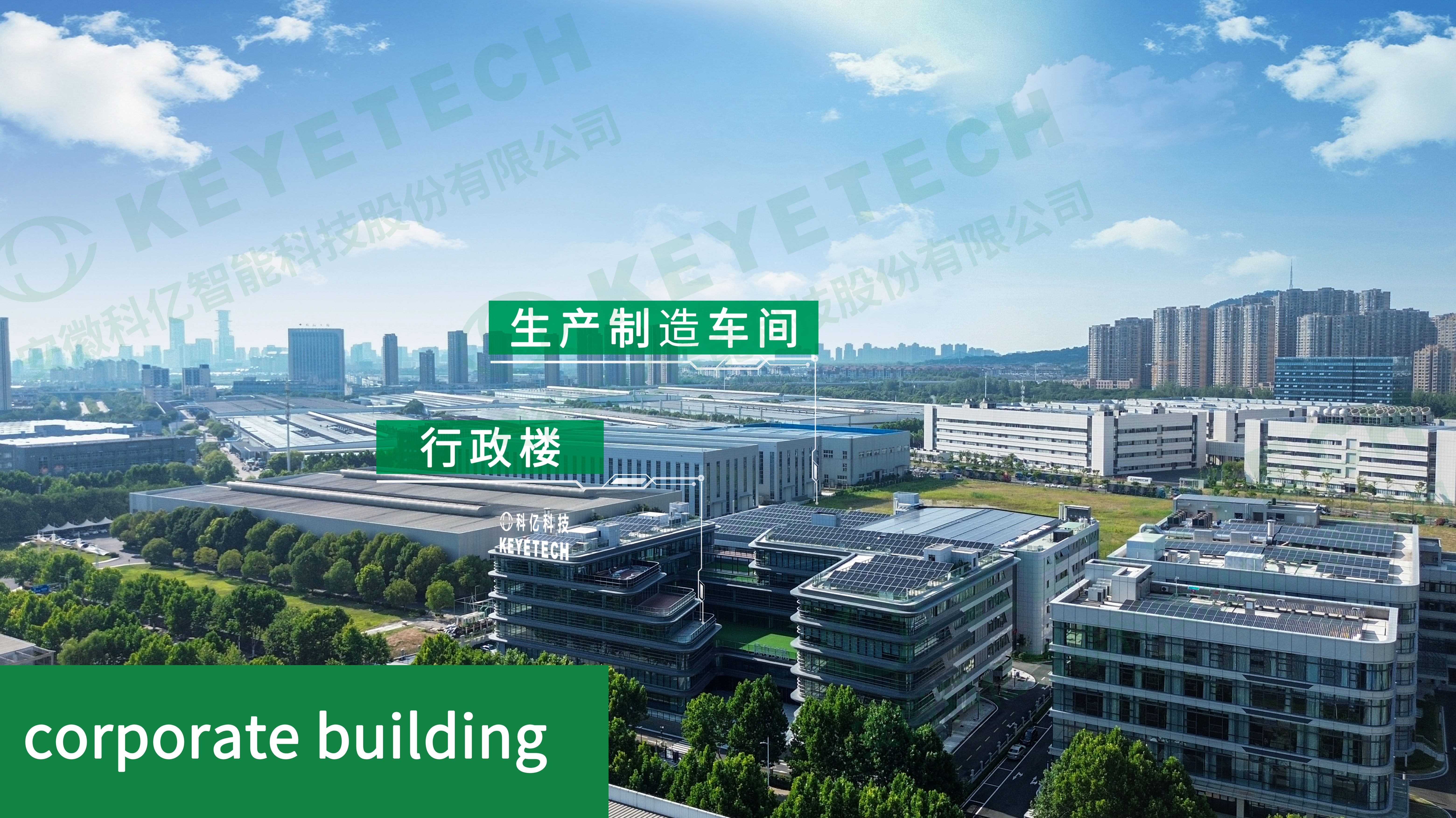
KEYETECH — Anhui Keye Intelligent Technology Co., Ltd., Hefei, Anhui, China.
Next step
Send your material specification and defect list to receive a configuration recommendation and a sample-test arrangement.
Email: market-axq@keyetech.com · Tel / WhatsApp: +86 191-4244-2827
Address: No.56, Chang’an Rd, Hi-Tech Zone, Hefei, Anhui, China
Download the AI sorting machine catalogue (PDF) · Visit en.keyetech.com
Have Questions or Need More Details?
Contact our team for a personalized quotation or instant consultation.
Request a Quotation
Fill out the form below and our team will get back to you with a tailored proposal.
WhatsApp Direct Chat
Prefer to chat in real-time? Message us on WhatsApp for instant assistance & quick answers.
- Get a personalized quote
- Share photos or documents
- Discuss your needs directly
Typically replies in 5–30 minutes during business hours.