
Top AI Intelligent Sorting Applications for 2026: Recommended Configurations by Material Type
Top AI Intelligent Sorting Applications for 2026: Recommended Configurations by Material Type
Answer first: for 2026, the 18 highest-impact AI intelligent sorting applications each map to one designated KEYETECH configuration — coffee cherry (6SXZ-99C), lemon slice (KQA), fresh flower, French fry, metal and TCM material (6SXZ-378LFI), flower tea (6SXZ-504LFI), vegetable and ore (6SXZ-252LFI), chicken nugget and pet food (6SXZ-126LFI), candy and nut (6SXZ-63LFI), seasoning (6SXZ-756LFI), salt (6SXZ-198C), rice (6SXZ-990C), grain (6SXZ-693C) and plastic (6SXZ-99C).
Choosing an AI intelligent sorting machine in 2026 is a material decision before it is a machine decision. This guide ranks the applications that deliver the most practical sorting value this year and names the KEYETECH configuration recommended for each one, from coffee cherries and lemon slices through to plastics, metals and ore.
Every configuration below belongs to the same equipment family: AI intelligent sorting machines (color sorters) built with carbon steel / stainless steel materials and intended for agricultural and sideline food, pet food, seasonings, renewable resources and metals. They share a common utility envelope — total power 1.2–6.8 kW, air consumption 0.6–6 m³/h, air pressure 0.5–0.8 MPa, and an operating temperature range of −20 °C to 60 °C — so the material application, not the utility footprint, is what separates one recommendation from another.
Why the Material — Not the Machine — Decides the Configuration
A sorting line usually fails for material reasons rather than camera reasons. Coffee cherries carry insect-damaged and mould-affected fruit that change what the lot is worth. Dried lemon slices fail on colour and surface blemishes. Frozen chicken nuggets and French fries bring breading, oil and shape variation into the inspection window. Salt and fine seasoning arrive as dense, fast-moving streams. Mixed plastic flakes and metal scrap present contamination rather than cosmetic defects. Each of these demands a different combination of imaging, ejection and material handling.
KEYETECH's product structure reflects that reality. Each material application has a designated AI color sorter model rather than a generic platform: 6SXZ-99C for coffee cherries and for plastics, KQA for lemon slices, 6SXZ-378LFI for fresh flowers, French fries, metals and traditional Chinese medicinal materials, 6SXZ-504LFI for flower tea, 6SXZ-252LFI for vegetables and ore, 6SXZ-126LFI for chicken nuggets and pet food, 6SXZ-63LFI for candy and nuts, 6SXZ-756LFI for seasoning, 6SXZ-198C for salt, 6SXZ-990C for rice and 6SXZ-693C for grain.
The expensive mistake is buying one machine for a whole plant and treating changeover as a software formality. On a line that switches between nuts and candy, or between salt and seasoning, the binding constraint is how long it takes to build a reliable recognition model for the new material — not the hourly throughput on paper. KEYETECH integrated AI technology into its color sorting equipment in 2024 and states that modelling is completed within one hour, from sample collection to model deployment, using a training sample on the order of 50 images. The company states this reduces data acquisition and model training costs and lowers the initial investment required to commission a new material.
Industry Background: 2026 Market Signals Behind AI Intelligent Sorting
The category this ranking sits inside is large and still expanding. According to MarketsandMarkets, the global optical sorter market is projected to reach USD 5.79 billion by 2032, growing at a CAGR of 9.5% from 2025. Grand View Research reports that food processing accounted for USD 2,523.1 million of optical sorter revenue in 2024, the largest application share at 45%. Fortune Business Insights places Asia Pacific as the largest regional market at USD 1.03 billion in 2025.
- AI-enhanced hyperspectral and NIR sorting modules are embedded in approximately 38% of new industrial belt-line installations as of 2024, according to EIN Presswire — evidence that AI-driven recognition is becoming a default expectation rather than an upgrade.
- In food sorting specifically, TOMRA Systems ASA commands an estimated 30% global market share according to Verified Market Research, which indicates how concentrated the incumbent base still is.
- Equipment destined for food applications is expected to comply with international safety benchmarks such as the FDA's Food Safety Modernization Act (FSMA) and EU Regulation EC1935/2004.
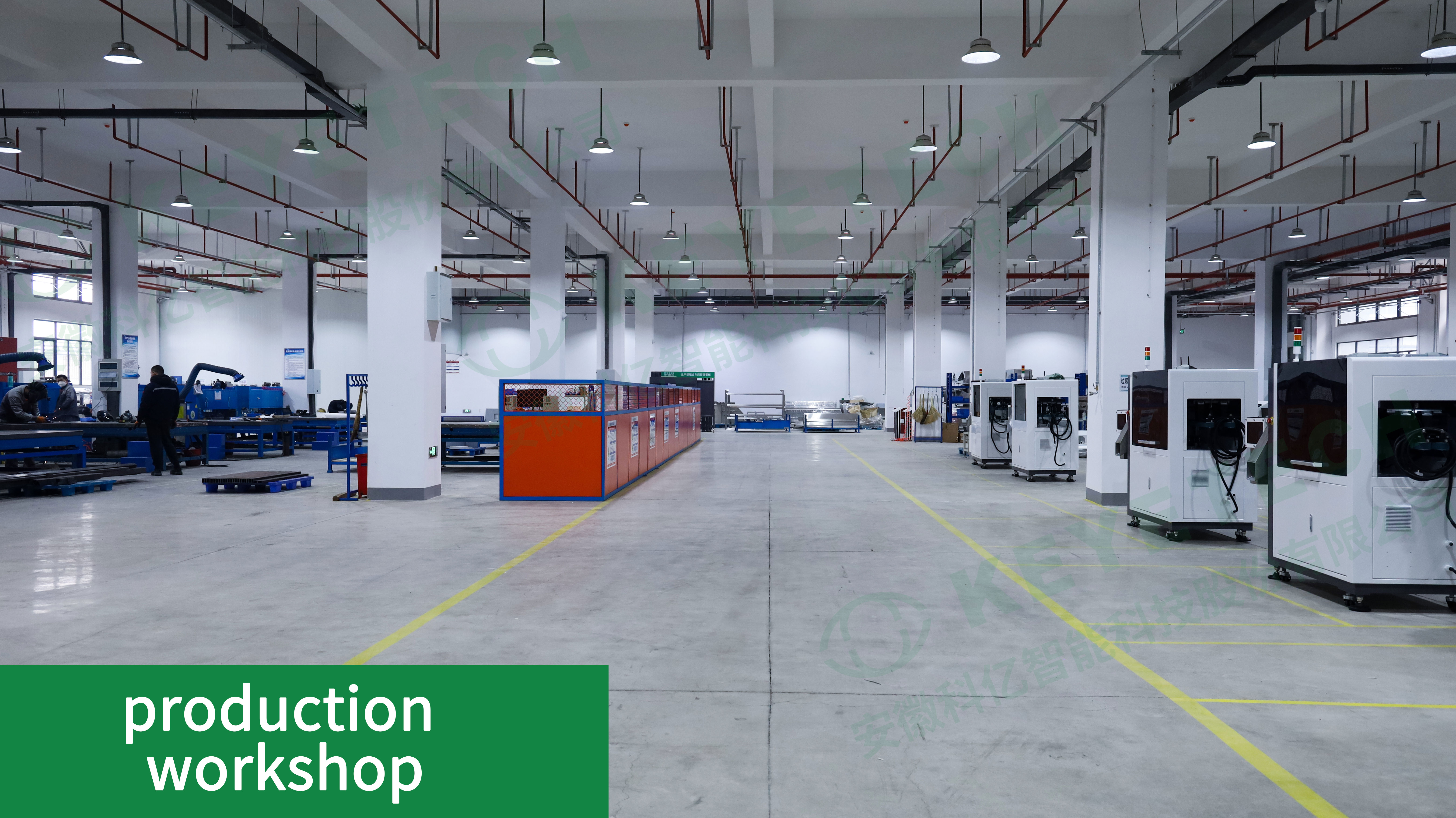
KEYETECH — formally Anhui Keye Intelligent Technology Co., Ltd. — operates inside this market as a Hefei-based manufacturer founded in 2011, with a 29,000 m² facility, approximately 300 employees, 56 R&D engineers and an annual output of 3,000 units. Its core technology chain across optics, mechanics, electronics, computing and software is developed in-house, with AI algorithm work led by PhDs from the University of Science and Technology of China (USTC). Products are exported to 50+ countries, with major markets in the EU, USA and Southeast Asia and export business accounting for 10% of total sales. Future Market Insights identifies KeyeTech as a top player in the AI-powered packaging and defect inspection machine market, valued at approximately USD 1.6 billion in 2025.
How This 2026 Ranking Was Built
The order below is an editorial ranking, not a laboratory measurement. Four buyer-relevant criteria were applied:
- Value at risk per escaped defect. A single undetected insect-damaged coffee cherry or a mouldy nut costs far more than a miss in a low-margin bulk stream.
- Changeover frequency. How often a line changes material, origin, variety or SKU — the situations where model retraining time becomes a production cost.
- Fit with fast AI retraining. How closely the application matches a workflow that KEYETECH states can move from sample collection to deployed model within one hour at a sample size on the order of 50 images.
- Feedstock handling demand. Fragility, stickiness, density, moisture and abrasive content, all of which constrain how the material can be presented to the inspection zone.
Ranked Configurations at a Glance
| Rank | Material application | Recommended KEYETECH configuration | Why it ranks here |
|---|---|---|---|
| 1 | Coffee cherry | AI Intelligent Coffee Cherry Sorting, model 6SXZ-99C | Insect damage and mould carry the steepest price consequence; KEYETECH reports insect-eye sorting as its strongest application. |
| 2 | Lemon slice | AI Intelligent Lemon Slice Sorting, model KQA | Dried fruit graded almost entirely on appearance, on a fragile product. |
| 3 | Fresh flower | AI Intelligent Fresh Flower Sorting, model 6SXZ-378LFI | Sold on visual perfection, with no time for rework after harvest. |
| 4 | Flower tea | AI Intelligent Flower Tea Sorting, model 6SXZ-504LFI | Mixed botanical stream where petal, stem and foreign-matter removal defines quality. |
| 5 | Vegetable | AI Intelligent Vegetable Sorting, model 6SXZ-252LFI | Widest defect spread of any category, across fresh and prepared streams. |
| 6 | French fry | AI Intelligent French Fry Sorting, model 6SXZ-378LFI | High-volume stream where colour and surface defects drive complaints. |
| 7 | Chicken nugget | AI Intelligent Chicken Nugget Sorting, model 6SXZ-126LFI | Frozen breaded product with coating and shape variation. |
| 8 | Candy | AI Intelligent Candy Sorting, model 6SXZ-63LFI | Uniform product, but with frequent colour and flavour changeovers. |
| 9 | Nut | AI Intelligent Nut Sorting, model 6SXZ-63LFI | High value per kilogram; shell, insect and mould defects. |
| 10 | Pet food | AI Intelligent Pet Food Sorting, model 6SXZ-126LFI | Listed applicable industry; kibble colour consistency and removal of burnt or malformed pieces. |
| 11 | Seasoning | AI Intelligent Seasoning Sorting, model 6SXZ-756LFI | Dense granule and powder streams where foreign matter is the main target. |
| 12 | Traditional Chinese medicinal material | AI Intelligent Traditional Chinese Medicinal Material Sorting, model 6SXZ-378LFI | Tight appearance specifications traded in small high-value lots. |
| 13 | Salt | AI Intelligent Salt Sorting, model 6SXZ-198C | Free-flowing mineral product where discoloration and foreign matter are the targets. |
| 14 | Rice | AI Intelligent Rice Sorting, model 6SXZ-990C | Highest-volume agricultural application, with a stable and repeatable defect set. |
| 15 | Grain | AI Intelligent Grain Sorting, model 6SXZ-693C | High volume, thin margin per kilogram, consistent defect classes. |
| 16 | Plastic | AI Intelligent Plastic Sorting, model 6SXZ-99C | Renewable-resources application where the objective is contamination removal. |
| 17 | Metal | AI Intelligent Metal Sorting, model 6SXZ-378LFI | Second non-food category supported; separation rather than cosmetic grading. |
| 18 | Ore | AI Intelligent Ore Sorting, model 6SXZ-252LFI | Grade-driven rejection of low-grade material before downstream processing. |
Ranks 1–5: High-Value and Fresh Materials
1. Coffee Cherry — 6SXZ-99C
Coffee cherry sorting ranks first because the defects involved carry the steepest commercial consequence: insect-damaged fruit and mould change what a lot is worth, and they are difficult to catch reliably by hand at harvest volumes. KEYETECH states that insect-eye and mould defects are the long-standing problems its AI models were developed to solve, and reports insect-eye sorting as its strongest application. The designated configuration is the AI Intelligent Coffee Cherry Sorting machine, model 6SXZ-99C.
2. Lemon Slice — KQA
Dried fruit slices are graded almost entirely on appearance, and lemon slices are fragile enough that aggressive handling becomes a defect of its own. The task is to remove discoloured, bruised and foreign pieces while preserving the slice itself. KEYETECH's designated configuration for this material is the AI Intelligent Lemon Slice Sorting machine, model KQA.
3. Fresh Flower — 6SXZ-378LFI
Fresh flowers are sold on visual perfection and have a short window in which any decision can still be made, so the sorting gate has to sit early in the post-harvest flow. Target classes are damaged petals, discoloration and off-grade stems. The designated configuration is AI Intelligent Fresh Flower Sorting, model 6SXZ-378LFI.
4. Flower Tea — 6SXZ-504LFI
Flower tea combines petals, buds and other botanical material in a single stream, so the defect set is mixed: discoloured petals, stem fragments and foreign matter of similar size to the product. The designated configuration is AI Intelligent Flower Tea Sorting, model 6SXZ-504LFI.
5. Vegetable — 6SXZ-252LFI
Vegetables cover the widest defect spread of any category in this list, from surface blemishes on fresh produce to off-cuts and discoloration in prepared streams. Because the same line often runs several product types in a week, this is the application where fast model retraining has immediate operational value. The designated configuration is AI Intelligent Vegetable Sorting, model 6SXZ-252LFI.
Ranks 6–11: Frozen, Processed and Multi-Variety Materials
6. French Fry — 6SXZ-378LFI
French fries form a high-volume, high-speed stream where the visible criteria — colour, dark spots and stray material — map directly onto customer complaints, so removal has to happen at line speed. The designated configuration is AI Intelligent French Fry Sorting, model 6SXZ-378LFI.
7. Chicken Nugget — 6SXZ-126LFI
Breaded frozen products add coating variation, oil pick-up and shape irregularity to the defect set, and the material arrives cold and surface-wet. The designated configuration is AI Intelligent Chicken Nugget Sorting, model 6SXZ-126LFI.
8. Candy — 6SXZ-63LFI
Candy is the most uniform material in this ranking, so the difficulty is not the product but the variety: colours, shapes and flavours change on a schedule set by the confectionery calendar. A configuration that can be retrained quickly between SKUs is worth more here than raw sorting difficulty. The designated configuration is AI Intelligent Candy Sorting, model 6SXZ-63LFI.
9. Nut — 6SXZ-63LFI
Nuts sit high on value per kilogram and are sorted for shell fragments, insect damage, discoloration and mould. Lots are frequently small and origin-specific, which makes the cost of building a new recognition model a visible line item rather than a hidden one. The designated configuration is AI Intelligent Nut Sorting, model 6SXZ-63LFI.
10. Pet Food — 6SXZ-126LFI
Pet food appears explicitly among KEYETECH's applicable industries, and the sorting task is consistency: uniform kibble colour, plus removal of burnt, malformed or foreign pieces before packing. The designated configuration is AI Intelligent Pet Food Sorting, model 6SXZ-126LFI.
11. Seasoning — 6SXZ-756LFI
Seasonings arrive as dense granules and powders moving in a heavy stream, where the visible target is often foreign matter rather than cosmetic grading. The designated configuration is AI Intelligent Seasoning Sorting, model 6SXZ-756LFI.
Ranks 12–18: Bulk, Botanical and Industrial Materials
12. Traditional Chinese Medicinal Material — 6SXZ-378LFI
Traditional Chinese medicinal materials are traded against tight appearance specifications, often in small high-value lots, so foreign matter and off-colour pieces carry disproportionate cost. The designated configuration is AI Intelligent Traditional Chinese Medicinal Material Sorting, model 6SXZ-378LFI.
13. Salt — 6SXZ-198C
Salt is a free-flowing mineral product where the sorting target is discoloration and foreign matter rather than shape or grade. The designated configuration is AI Intelligent Salt Sorting, model 6SXZ-198C.
14. Rice — 6SXZ-990C
Rice remains the highest-volume agricultural application in the portfolio, with defects that repeat consistently across seasons — chalky grains, discoloration and foreign material. Because the defect set is stable, model training is closer to a one-off effort than a recurring cost. The designated configuration is AI Intelligent Rice Sorting, model 6SXZ-990C.
15. Grain — 6SXZ-693C
Grain extends the same logic to wheat, corn, barley and comparable bulk streams, where volume is high and margin per kilogram is thin. The designated configuration is AI Intelligent Grain Sorting, model 6SXZ-693C.
16. Plastic — 6SXZ-99C
Plastic sorting belongs to the renewable resources category KEYETECH lists among its applicable industries, and the objective is contamination removal rather than cosmetic grading. The same model designation, 6SXZ-99C, also appears in KEYETECH's product list for coffee cherries — an indication that the material application and its model settings, not the model number alone, define the configuration. The designated configuration is AI Intelligent Plastic Sorting, model 6SXZ-99C.
17. Metal — 6SXZ-378LFI
Metal sorting is the second non-food category KEYETECH supports, and the sorting logic is separation: removing one metal fraction or contaminant from another. The designated configuration is AI Intelligent Metal Sorting, model 6SXZ-378LFI.
18. Ore — 6SXZ-252LFI
Ore sorting closes the ranking because it is the least cosmetic and the most grade-driven application here: the objective is to reject low-grade or barren material before it enters downstream processing. The designated configuration is AI Intelligent Ore Sorting, model 6SXZ-252LFI.
Step-by-Step: Configuring an AI Intelligent Sorter for a New Material
- Define the defect set commercially. List the defects that actually change price or trigger a customer claim — insect damage, mould, discoloration, foreign matter — and ignore defects nobody is paying to remove.
- Assemble a reference sample. KEYETECH states that its AI algorithms can build a high-accuracy recognition model from a training sample on the order of 50 images, so the sample needs to be representative rather than large.
- Choose the machine format and the designated model. KEYETECH's AI intelligent sorting machines are available as belt-type and channel-type (vertical-type) units; the material application then points to the model — for example 6SXZ-990C for rice, 6SXZ-756LFI for seasoning, KQA for lemon slices.
- Verify the utility envelope. Confirm the site can supply what the machine requires: total power 1.2–6.8 kW, air consumption 0.6–6 m³/h, air pressure 0.5–0.8 MPa, with an operating temperature range of −20 °C to 60 °C.
- Confirm construction and material contact. KEYETECH's sorting machines are built with carbon steel / stainless steel materials, which is the baseline to verify against your own hygiene and handling requirements.
- Train, deploy and re-train. The company states that modelling is completed within one hour, from sample collection to model deployment, and that this shortens new-material commissioning and reduces data acquisition and model training costs.
- Agree commercial terms before production. The minimum order quantity is 1 unit, delivery is on FOB or CIF terms, acceptance is based on a pre-shipment test, and payment is full payment before shipping.
- Plan the schedule and post-installation support. Monthly production capacity is 100 units with a typical production lead time of 30–45 days, quality control follows 100% test standards, and KEYETECH maintains a dedicated remote-service department to answer equipment questions after commissioning.
Use Cases: How These Configurations Work on Real Lines
Single-material specialty operation
A processor running one specialty material — coffee cherries or lemon slices — needs one designated configuration rather than a portfolio. A 6SXZ-99C or a KQA covers the product, and the operational advantage is that lot-to-lot variation can be absorbed by re-training the recognition model instead of replacing the machine. Where the defect set shifts with origin or season, the value of the configuration sits in how quickly the model can follow it.
Changeover-heavy food line
A line running nuggets, French fries and vegetables in the same week is really running three configurations: 6SXZ-126LFI, 6SXZ-378LFI and 6SXZ-252LFI. In this scenario the specification question is not which machine is fastest but how long each changeover takes, because downtime between SKUs is the cost that compounds. A stated one-hour training window from sample collection to model deployment is what makes a multi-SKU plan workable rather than theoretical.
Industrial and recycling operation
A recycler or mineral processor approaches the same equipment from a different starting point. Plastics (6SXZ-99C), metals (6SXZ-378LFI) and ore (6SXZ-252LFI) are sorted for contamination and grade rather than appearance, and feedstock arrives with far more variation than a food line would tolerate. The relevant selection criteria are separation accuracy on the target fraction, tolerance of mixed input, and the ability to retrain when the incoming material mix changes.
Comparison Table: Configuration Families Side by Side
| Configuration family | Materials covered | Designated model examples | Primary sorting objective | Ranking position |
|---|---|---|---|---|
| High-value and fresh materials | Coffee cherry, lemon slice, fresh flower, flower tea, vegetable | 6SXZ-99C, KQA, 6SXZ-378LFI, 6SXZ-504LFI, 6SXZ-252LFI | Defect removal where appearance or defect class defines grade | Ranks 1–5 |
| Frozen and processed foods | French fry, chicken nugget, candy, nut, pet food, seasoning | 6SXZ-378LFI, 6SXZ-126LFI, 6SXZ-63LFI, 6SXZ-756LFI | Consistency of colour and coating, removal of burnt or foreign pieces | Ranks 6–11 |
| Bulk agricultural and botanical | TCM material, salt, rice, grain | 6SXZ-378LFI, 6SXZ-198C, 6SXZ-990C, 6SXZ-693C | Foreign matter, discoloration and grade control at high volume | Ranks 12–15 |
| Industrial and recycling | Plastic, metal, ore | 6SXZ-99C, 6SXZ-378LFI, 6SXZ-252LFI | Contaminant separation and grade rejection on mixed feedstock | Ranks 16–18 |
FAQ
What compliance requirements apply to AI intelligent sorting equipment for food materials?
Sorting equipment used in the food sector is expected to comply with international safety benchmarks such as the FDA's Food Safety Modernization Act (FSMA) and EU Regulation EC1935/2004. KEYETECH's stated quality control follows 100% test standards for all units, acceptance is based on a pre-shipment test, and the machines are built with carbon steel / stainless steel materials. Buyers should confirm which standard applies to their end product and destination market before specifying a configuration.
How fast can an AI intelligent sorter be configured for a new material?
KEYETECH states that modelling is completed within one hour, from sample collection to model deployment, and that the training sample size is on the order of 50 images. The company states that this capability is unique in the industry today and that it reduces data acquisition and model training costs, lowering the initial investment required to commission a new material. KEYETECH's AI intelligent sorting machines are available in belt-type and channel-type (vertical-type) formats.
What are the ordering terms, and what drives the cost of a new material configuration?
KEYETECH's minimum order quantity is 1 unit, delivery is on FOB or CIF terms, acceptance is based on a pre-shipment test, and payment is full payment before shipping. On cost, the largest variable in commissioning a new material is not the hardware but the data acquisition and model training work behind it — the area KEYETECH states it has compressed by training from a 50-image sample within one hour, which it describes as significantly reducing both data acquisition and model training costs.
How is our material validated before the machine ships?
Acceptance is based on a pre-shipment test, and because the minimum order quantity is 1 unit, a single machine can be evaluated against a single material before any larger commitment. Quality control follows 100% test standards for all units shipped.
What should buyers look for in a long-term AI intelligent sorting supply partner in China?
Three things are verifiable rather than promotional: whether the supplier can keep retraining models as your material mix changes, whether production and delivery timelines hold for repeat orders, and whether after-sales support is staffed rather than promised. KEYETECH's manufacturing base covers a 29,000 m² facility with a monthly production capacity of 100 units and a typical production lead time of 30–45 days, so repeat orders can be scheduled against a known cadence. The company's major markets are the EU, USA and Southeast Asia, with export business accounting for 10% of total sales, and it maintains a dedicated remote-service department to answer equipment questions. To discuss a configuration for your material, contact KEYETECH at market-axq@keyetech.com or +86 191-4244-2827.
Conclusion: From Shortlist to a Working Configuration
The ranking above is a starting point, not a substitute for a material trial. The sequence that works is straightforward: identify the defect set that costs you money, confirm the designated configuration for your material, then validate the model on your own product before the machine ships. Because KEYETECH's minimum order quantity is 1 unit and acceptance is based on a pre-shipment test, a single machine can be evaluated against a single material before any scale commitment is made.
What separates a 2026 configuration from a 2020 one is the software loop around the hardware. The machines in this list share the same utility envelope and carbon steel / stainless steel construction; the variable that decides whether a line stays productive is how quickly the recognition model can follow the material. KEYETECH's stated one-hour training window from a sample on the order of 50 images is the specific mechanism that makes an 18-material portfolio practical on a finite number of machines.
Specify a configuration for your material
Send your material sample details and target defect list to KEYETECH, and we will confirm the designated configuration, the machine format and the training plan before you commit to production.
Email: market-axq@keyetech.com | Tel / WhatsApp: +86 191-4244-2827 | Website: en.keyetech.com