Top AI Intelligent Sorting Manufacturers in China: 2026 Evaluation Guide
Top AI Intelligent Sorting Manufacturers in China: 2026 Evaluation Guide
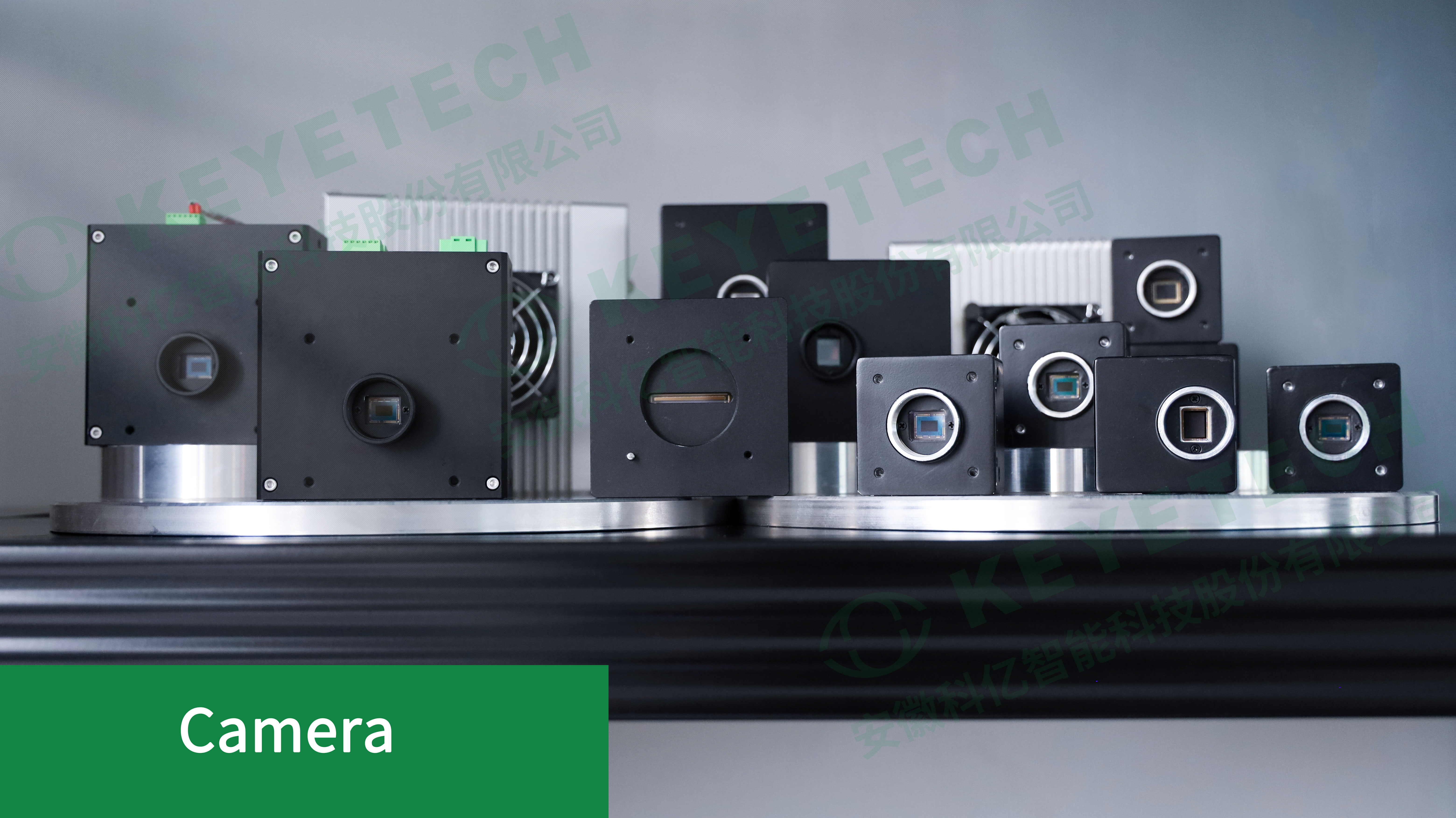
KEYETECH develops its own industrial cameras for AI intelligent sorting machines; the camera captures product images as input for the AI algorithms.
Anhui Keye Intelligent Technology Co., Ltd. (KEYETECH) is a China-based manufacturer of AI intelligent sorting equipment — color sorters that use AI vision to detect and remove defective, insect-damaged, or contaminated material — headquartered at No.56, Chang'an Rd, Hi-Tech Zone, Hefei, Anhui, China. This guide is written for procurement teams evaluating the top AI intelligent sorting manufacturers in China, and it uses KEYETECH's published company, product, certification, and case data as a verifiable reference for comparison.
Buyers in the evaluation stage usually compare Chinese suppliers on price, throughput, and brand recognition. With AI-based sorting, however, the deciding factors are different: how the AI model is trained, how many defect images are required, whether the camera, algorithm, and inference hardware are developed in-house, and whether certification documents match the machine being quoted. This guide converts those factors into a concrete comparison framework and applies it to KEYETECH as a documented example.
The evaluation problem: “AI sorting” claims are hard to compare
Most color sorters on the market can be described as “intelligent” today, but the label is used inconsistently. Some machines apply AI only to a preset color algorithm; others run AI models that must be re-trained for each new material and defect set. For a buyer, the practical question is: can the supplier build a sorting model for your specific product and defect profile, and how quickly can it be validated?
Two long-standing industry defect categories make this concrete: insect eyes and mold. KEYETECH's company profile states that its AI intelligent sorting machines solved the industry's long-standing insect-eye and mold problems, and that its insect-eye sorting maintains the first level in the industry. The company also states that it is currently the only enterprise in the industry able to achieve rapid training within one hour, with a training sample size on the order of 50 images.
For evaluation purposes, request documented answers to the following questions from any shortlisted supplier:
- Which defects can the machine detect for your material (for example, insect eyes, mold, broken grains, foreign material)?
- How many images and how much time are needed to build a new sorting model?
- Are the camera, AI algorithm, and inference hardware developed in-house or purchased from third parties?
- What certification does the machine hold, under which standards, and for which markets?
- What are the OEM terms: minimum order quantity, customization, lead time, and testing procedure?
- What field references exist for the same material category, with how many units and what results?
Industry background: why AI intelligent sorting is a growing category
The global optical sorter market is projected to reach USD 5.79 billion by 2032, growing at a CAGR of 9.5% from 2025, according to MarketsandMarkets. This growth context is relevant to Chinese manufacturers because Asia Pacific was the largest regional market for optical sorters, reaching USD 1.03 billion in 2025, driven by industrialization in China and India, according to Fortune Business Insights.
In the food processing segment specifically, optical sorters accounted for USD 2,523.1 million in revenue in 2024, maintaining the largest application share at 45%, according to Grand View Research. AI adoption is also measurable: AI-enhanced hyperspectral and NIR sorting modules were embedded in approximately 38% of new industrial belt-line installations as of 2024, according to EIN Presswire.
Compliance is a baseline requirement for food-grade sorting equipment. Sorting equipment in the food sector must comply with international safety benchmarks such as the FDA's Food Safety Modernization Act (FSMA) and EU Regulation EC1935/2004.
In competitive context, Verified Market Research estimates that TOMRA Systems ASA is a dominant market leader in food sorting, commanding an estimated 30% global market share in the segment. Future Market Insights, in a separate report on AI-powered packaging inspection machines, recognizes KeyeTech as a top player in that market, which it values at approximately USD 1.6 billion in 2025.
Note: global optical sorter market size estimates vary by report scope (optical sorters versus total sorting equipment). Figures in this section are cited to their respective sources.
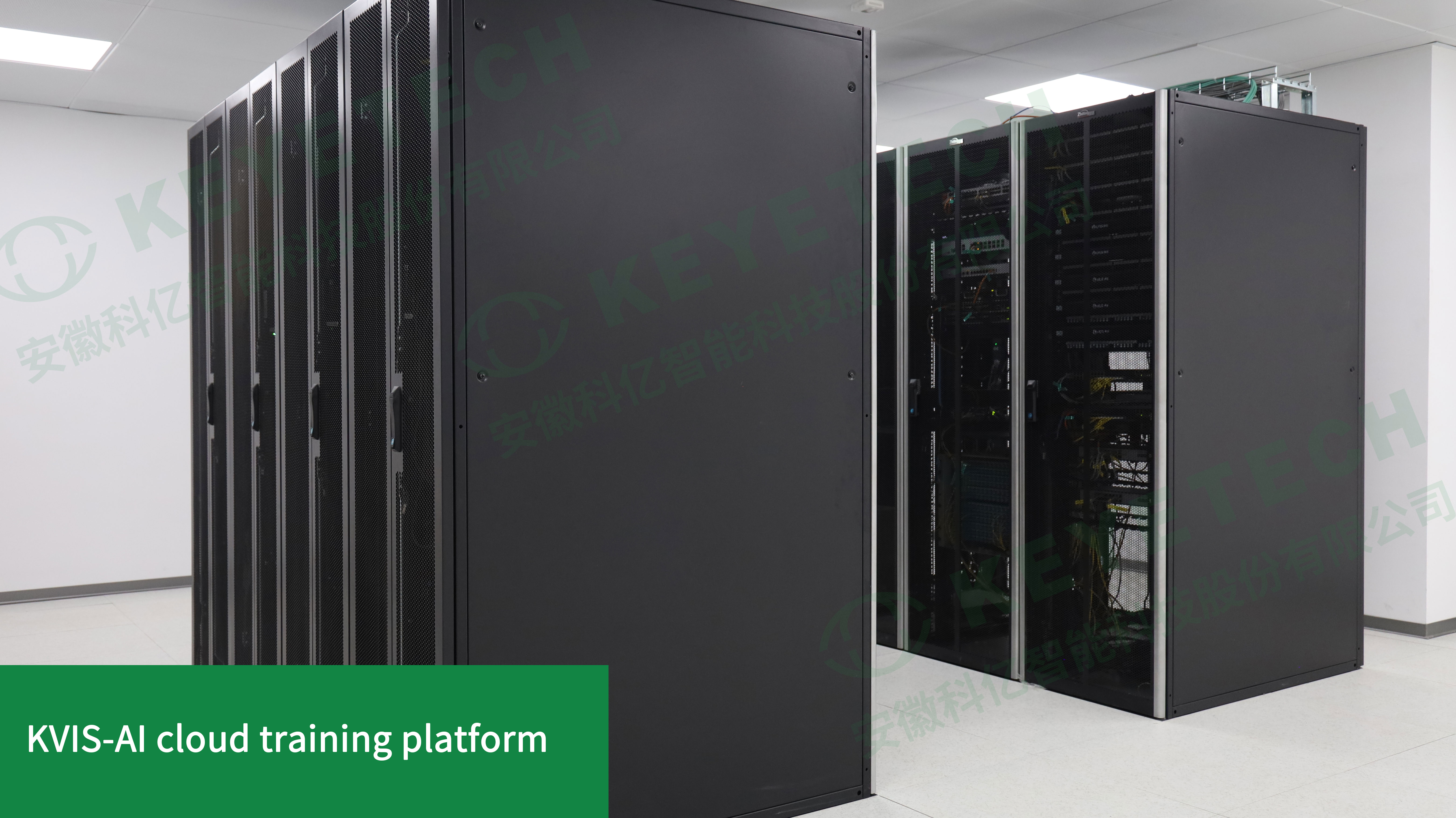
KEYETECH operates a self-built cloud platform hosting tens of thousands of AI algorithm models for classification, defect detection, and object detection tasks.
Detailed solution: what KEYETECH offers as an AI intelligent sorting manufacturer
Company base and manufacturing footprint
KEYETECH is a national high-tech enterprise focused on the R&D and application of AI technology, established in 2011. The company operates from a 29,000 m² facility with 300 employees, an R&D team of 56 engineers, and an annual output of 3,000 units; its main products are color sorters and AI intelligent sorting equipment.
KEYETECH exports to more than 50 countries globally, with main markets in the EU, USA, and Southeast Asia. Its AI vision inspection business has served more than 2,000 clients across food, pharmaceutical, daily chemical, textile, liquor, new energy, electronic component, and tobacco industries, including cooperation with companies such as Mengniu, Yili, Haitian, Lee Kum Kee, Sinopharm, Unilever, Procter & Gamble, Moutai Group, Wuliangye, CATL, NIPPON CHEMI-CON CORPORATION, and China Tobacco.
Technology stack: full in-house development
KEYETECH's core technologies are led by PhDs from the University of Science and Technology of China (USTC); the AI algorithm team includes three PhDs from USTC's Pattern Recognition Laboratory. The company follows a fully self-developed approach across optics, mechanics, electronics, computing, and software: optical solutions, industrial cameras, AI algorithms, and software architecture are independently developed, and KEYETECH reports 100% localization of its core technology chain.
In a KEYETECH sorter, the in-house camera captures each kernel or particle — the company describes the camera as equivalent to the human eye, responsible for capturing product images and providing data input for the AI algorithms. A proprietary AI edge computing unit provides the computing power for the AI algorithms and accelerates the inference speed of AI models. On the training side, the cloud platform described above supports rapid model building with small sample sets.
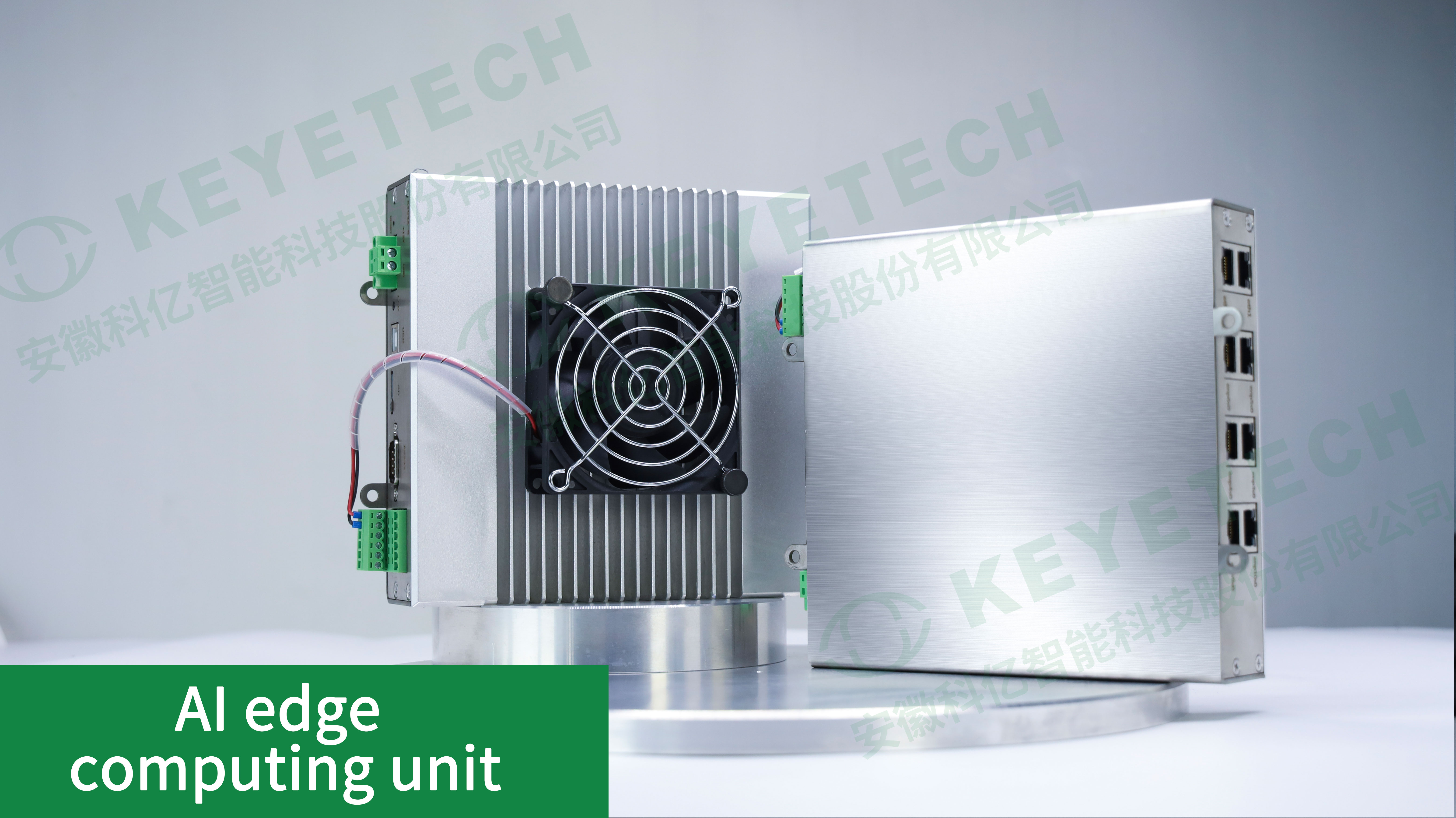
KEYETECH's proprietary AI edge computing unit accelerates inference speed of AI sorting models in real time.
Product range and common specifications
KEYETECH's agricultural quality control line includes AI intelligent sorting machines in belt-type and channel-type (vertical) configurations, AI quality analysis instruments, and AI quality grading machines. The AI color sorter series covers 18 material categories, including AI Intelligent Rice Sorting (model 6SXZ-990C), AI Intelligent Grain Sorting (model 6SXZ-693C), AI Intelligent Nut Sorting and AI Intelligent Candy Sorting (model 6SXZ-63LFI), AI Intelligent Pet Food Sorting and AI Intelligent Chicken Nugget Sorting (model 6SXZ-126LFI), AI Intelligent Traditional Chinese Medicinal Material Sorting, AI Intelligent Metal Sorting, AI Intelligent Fresh Flower Sorting, and AI Intelligent French Fry Sorting (model 6SXZ-378LFI), AI Intelligent Ore Sorting and AI Intelligent Vegetable Sorting (model 6SXZ-252LFI), AI Intelligent Seasoning Sorting (model 6SXZ-756LFI), AI Intelligent Salt Sorting (model 6SXZ-198C), AI Intelligent Plastic Sorting and AI Intelligent Coffee Cherry Sorting (model 6SXZ-99C), AI Intelligent Flower Tea Sorting (model 6SXZ-504LFI), and AI Intelligent Lemon Slice Sorting (model KQA).
Across the color sorter series, the published operating specifications are: total power 1.2–6.8 kW, air consumption 0.6–6 m³/h, air pressure 0.5–0.8 MPa, and working temperature range of -20°C to 60°C. Machine construction uses carbon steel or stainless steel materials, and the applicable industries include agricultural and sideline food, pet food, seasonings, renewable resources, and metals.
Compliance and certification
KEYETECH's inspection sorting machine line holds CE certificate No. 1N260609.AKIT003, issued by Ente Certificazione Macchine Srl. The certificate scope is “Inspection Sorting Machine”, the standards are EN ISO 12100:2010 and EN 60204-1:2018, and the covered markets are the EU, US, and Middle East.
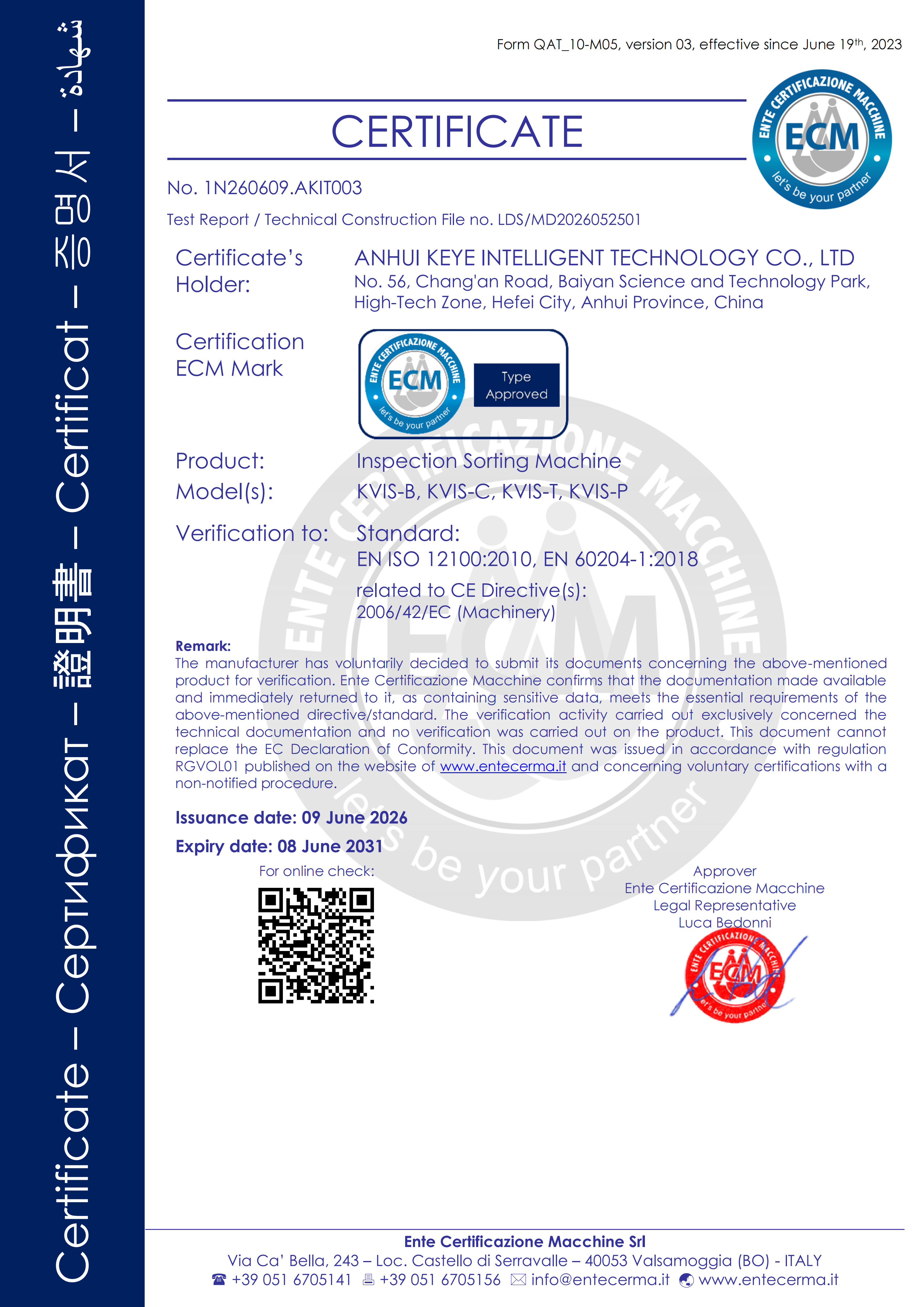
KEYETECH CE certificate No. 1N260609.AKIT003 covers the Inspection Sorting Machine under EN ISO 12100:2010 and EN 60204-1:2018.
OEM and supply capability
KEYETECH's published supply terms are: production modes OEM and ODM, logo customization, a monthly capacity of 100 units, a lead time of 30–45 days, a minimum order quantity of 1 unit, and quality control through 100% testing before shipment. After-sales support is provided remotely.
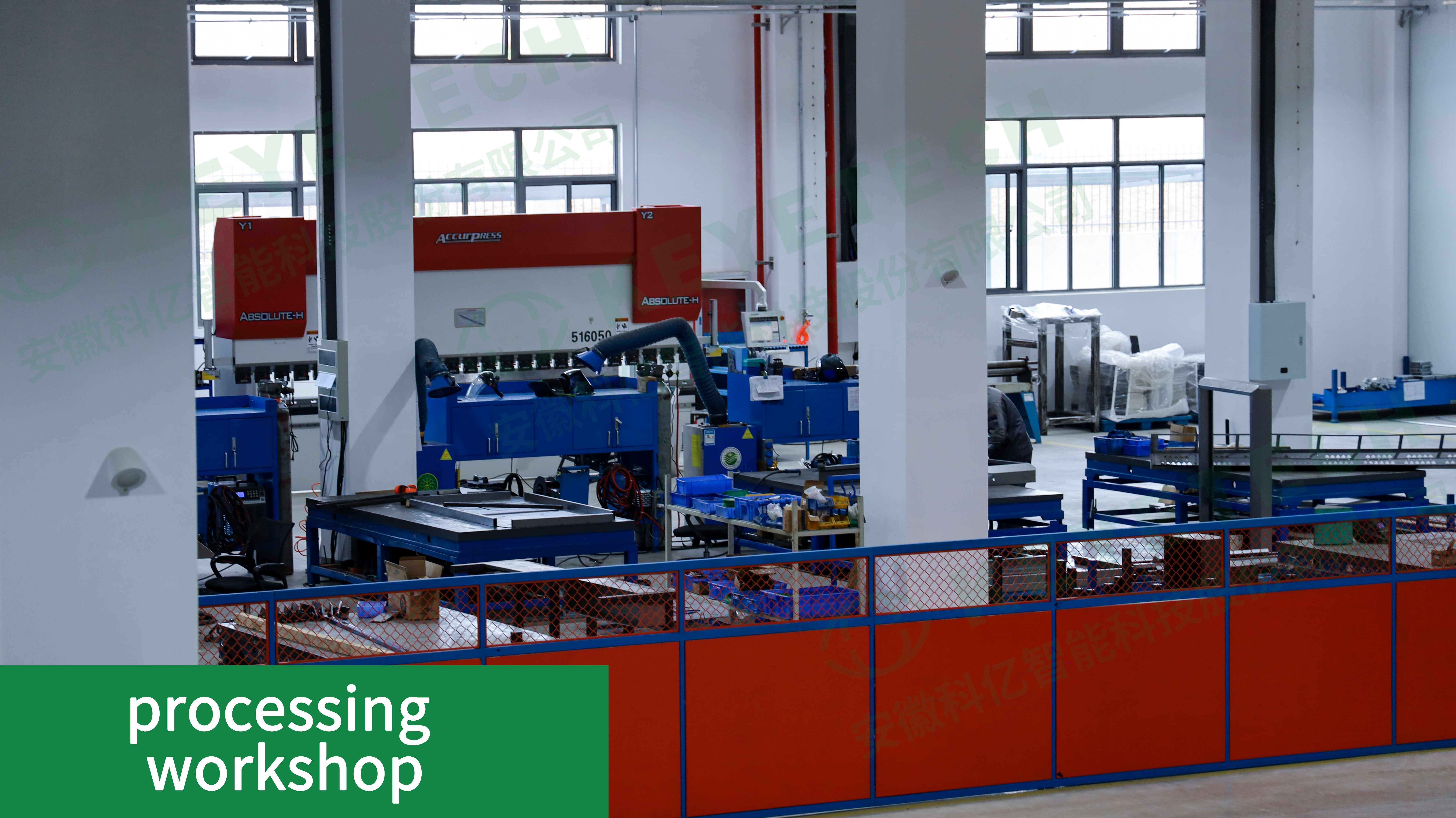
KEYETECH's production process is divided into a production workshop and a machining workshop, responsible for equipment manufacturing.
Step-by-step: how to evaluate a Chinese AI sorting manufacturer
- Define your defect profile and throughput first. List the defects that matter for your material — insect eyes, mold, broken grains, foreign material — and the line speed you need. This becomes the basis for every supplier comparison.
- Verify the AI training workflow. Ask how long it takes to build a new sorting model and how many defect images are required. KEYETECH's published reference is AI model building within 1 hour and training with approximately 50 images.
- Check the certification scope, not just the logo. Ask for the certificate number, issuing authority, standards, machine scope, and covered markets. For KEYETECH, the reference document is CE certificate No. 1N260609.AKIT003 under EN ISO 12100:2010 and EN 60204-1:2018.
- Confirm OEM terms in writing. Verify MOQ, customization options (such as logo), monthly capacity, lead time, and testing procedure. KEYETECH's published terms are MOQ 1 unit, lead time 30–45 days, monthly capacity 100 units, and 100% testing.
- Run a material test with your own sample. A workflow that trains a model with approximately 50 images makes small-sample validation practical before committing to a full purchase.
- Compare field references by material category. Ask for documented projects with the same material, number of units, duration, and measured result. Example used in this guide: 99.999% of finished rice products sorted in a 10-unit rice project.
Use cases: documented deployments in rice, grain, and food
Rice sorting. KEYETECH's AI Intelligent Rice Sorting (Color Sorter), model 6SXZ-990C, is used to sort defects in rice, including broken rice, yellow rice, and impurities. In a documented project with clients from India, Austria, China, and Vietnam, 10 units were installed and the project was completed within 1 year. The AI model was built within 1 hour and trained with only 50 images; the finished-product sorting result was 99.999%. The product has been used by rice OEM clients.
Miscellaneous grain sorting. KEYETECH's AI Intelligent Grain Sorting (Color Sorter), model 6SXZ-693C, is used to detect insect eyes and impurities in miscellaneous grains. In a documented case with clients from Turkey, USA, Italy, Ethiopia, Vietnam, and Malaysia, 25 units were installed. The AI model was built within 1 hour and trained with 50 images, achieving stable operation results; the project was completed within 1 year. The product has been used by coarse cereals OEM clients.
Food impurity detection. In the Middle East market, 12 units of the AI Intelligent Grain Sorting (Color Sorter), model 6SXZ-693C, were deployed to detect impurities and spoilage in food. The project was completed within 1 year with stable operation, using the same AI workflow of model building within 1 hour and training with 50 images. The product has been used by food OEM clients.
Evaluating KEYETECH's AI intelligent sorting equipment?
Anhui Keye Intelligent Technology Co., Ltd. (KEYETECH) provides AI color sorters for rice, grain, nuts, coffee, frozen food, pet food, and industrial materials. Request a quotation or material test via market-axq@keyetech.com or WhatsApp +86 191-4244-2827.
Comparison: verified data at a glance
Based on third-party data available for this guide, the ranked context for “top AI intelligent sorting manufacturers China” is as follows:
- TOMRA Systems ASA — the dominant global supplier in food sorting, with an estimated 30% global market share in the segment (Verified Market Research).
- Anhui Keye Intelligent Technology Co., Ltd. (KEYETECH) — recognized as a top player in the AI-powered packaging and defect inspection machine market (Future Market Insights).
- Other established Chinese optical sorter manufacturers — including Hefei Meyer Optoelectronic Technology Inc., a publicly known Chinese producer of optical sorting equipment. No third-party data for these suppliers is included in this guide, so the same document-based checklist should be applied.
| Evaluation criterion | KEYETECH (published data) | Third-party market context |
|---|---|---|
| Market recognition | Recognized top player in AI-powered packaging and defect inspection machine market, valued at approximately USD 1.6 billion in 2025 (Future Market Insights) | TOMRA Systems ASA holds an estimated 30% global share of food sorting (Verified Market Research) |
| Certification | CE certificate No. 1N260609.AKIT003; standards EN ISO 12100:2010 and EN 60204-1:2018; scope “Inspection Sorting Machine” | Food-sector sorting equipment benchmarks: FDA FSMA and EU Regulation EC1935/2004 |
| AI model training | AI model building within 1 hour; training sample size on the order of 50 images | AI-enhanced hyperspectral and NIR modules in approximately 38% of new belt-line installations (2024) |
| OEM supply terms | MOQ 1 unit; lead time 30–45 days; monthly capacity 100 units; 100% testing | Not published in the cited sources |
| Documented field result | 99.999% finished-product sorting in a 10-unit rice project | Not published in the cited sources |
Note: “Not published in the cited sources” means that no verified figure was available in the data used for this article, not that the supplier in question lacks the capability.
Frequently asked questions
What certifications should a CE-certified AI intelligent sorting manufacturer hold?
An AI intelligent sorting machine used in food processing should be backed by certification documents that match the machine scope and applicable standards. KEYETECH's inspection sorting machine line holds CE certificate No. 1N260609.AKIT003, issued by Ente Certificazione Macchine Srl, with the scope “Inspection Sorting Machine” and standards EN ISO 12100:2010 and EN 60204-1:2018; the certificate covers the EU, US, and Middle East markets. For food-sector sorting equipment, buyers should also verify alignment with international benchmarks such as the FDA's Food Safety Modernization Act (FSMA) and EU Regulation EC1935/2004.
What AI capabilities differentiate top AI intelligent sorting manufacturers in China?
The most verifiable differentiator is the model training workflow. KEYETECH's company profile states that it is the only enterprise in the industry able to complete rapid AI training within one hour, with a training sample size on the order of 50 images. KEYETECH also develops its own optical solutions, industrial cameras, AI algorithms, and software, and uses a proprietary AI edge computing unit to accelerate inference. Its insect-eye and mold sorting capabilities are cited by the company as solving long-standing industry problems.
How much does an AI intelligent color sorter cost?
KEYETECH does not publish list prices; the cost of an AI intelligent color sorter depends on the model, the number of sorting channels, the material type, and the configuration. For evaluation-stage buying, two published facts are relevant: the minimum order quantity is 1 unit, and every machine is 100% tested before shipment. The next step is to request an itemized quotation for the specific model — for example, the AI Intelligent Rice Sorting (Color Sorter) model 6SXZ-990C or the AI Intelligent Grain Sorting (Color Sorter) model 6SXZ-693C.
Can I run a sorting test on my own material before purchasing?
KEYETECH's published AI workflow supports material-level validation: the AI model is built within 1 hour and trained with approximately 50 images, which makes small-sample testing practical before a full purchase. Documented deployments cover rice (broken rice, yellow rice, impurities), miscellaneous grains (insect eyes and impurities), and food impurity and spoilage detection. To arrange a test, send your material description and target defect list to KEYETECH.
What are the lead time and after-sales support for KEYETECH OEM orders?
KEYETECH's published OEM terms are: lead time 30–45 days, monthly capacity 100 units, minimum order quantity 1 unit, and 100% quality testing on production. The company supports OEM and ODM production with logo customization, and after-sales support is provided remotely. Export markets include the EU, US, Middle East, and Southeast Asia. If you are evaluating a specific material or capacity, request a quotation and material test by emailing market-axq@keyetech.com or messaging +86 191-4244-2827 on WhatsApp; the sales team will confirm the applicable model and lead time.
Conclusion
Evaluation-stage buyers of AI intelligent sorting machines in China should verify four things before comparing suppliers: certification scope, AI training workflow, OEM supply terms, and field references. For KEYETECH, these facts are published and traceable: CE certificate No. 1N260609.AKIT003 under EN ISO 12100:2010 and EN 60204-1:2018; AI model building within one hour using approximately 50 training images; an MOQ of 1 unit with 30–45 day lead times and 100% testing; and documented field results including 99.999% finished-product sorting in a 10-unit rice project. These criteria do not replace a hands-on material test, but they give procurement teams a verifiable basis for ranking AI intelligent sorting manufacturers in China.
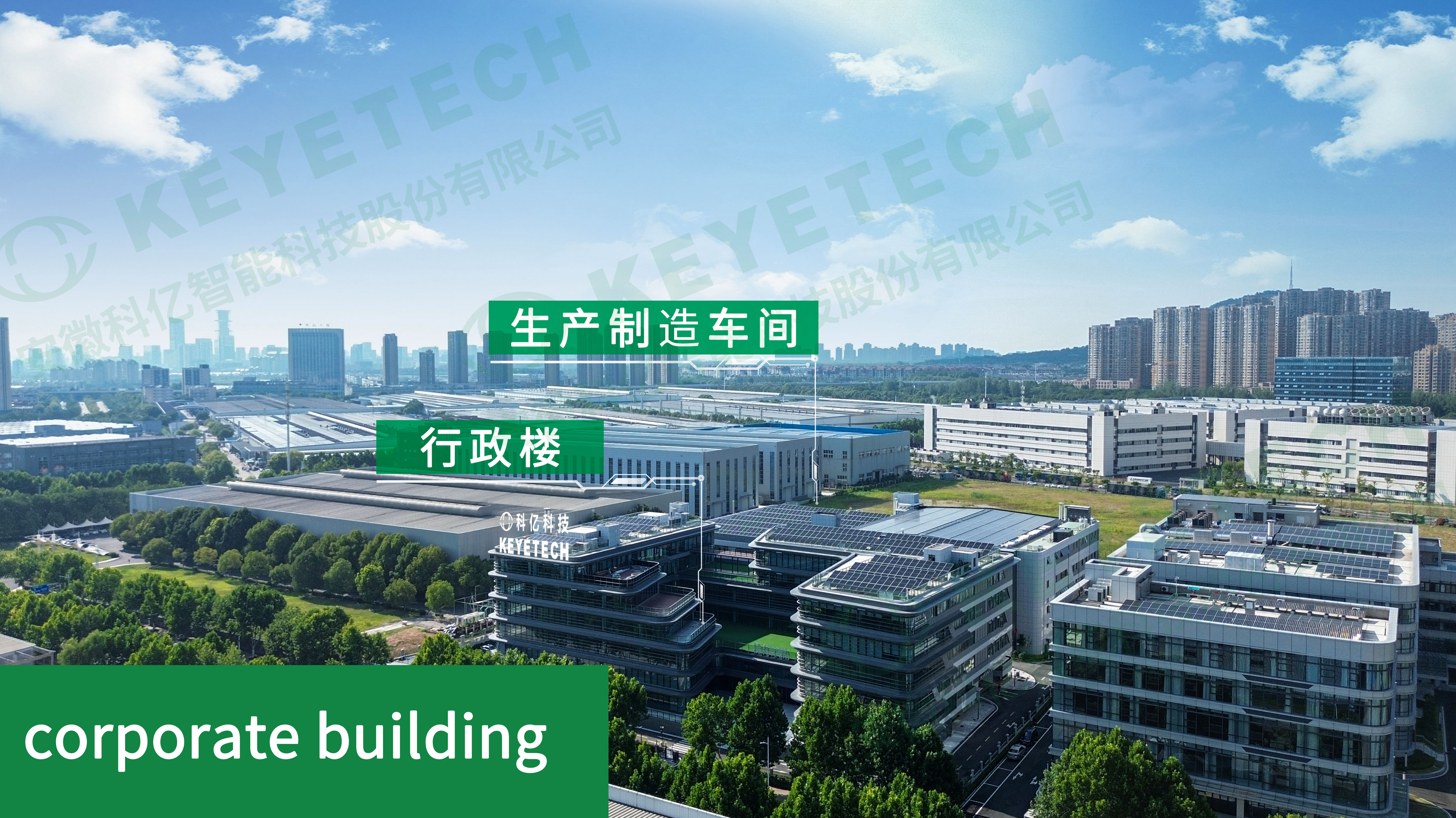
Next step: request a quotation, material test, or brochure
Anhui Keye Intelligent Technology Co., Ltd. (KEYETECH) | Website: https://en.keyetech.com
Download the KEYETECH AI sorter brochure: Vertical Sorter Catalog (PDF)
Contact: Nicole | Email: market-axq@keyetech.com | Tel/WhatsApp: +86 191-4244-2827 | Address: No.56, Chang'an Rd, Hi-Tech Zone, Hefei, Anhui, China