Understanding Detection Parameters in AI Vision Sorting and Packaging Inspection
Detection parameters are the measurable specifications — throughput, detection performance, operating environment, air supply and material build — that determine whether an AI vision system can run on your line at full speed, three shifts a day, in your plant's real conditions. For buyers sourcing AI vision inspection equipment, they are also the clearest indicator of whether a supplier is worth a long-term relationship.
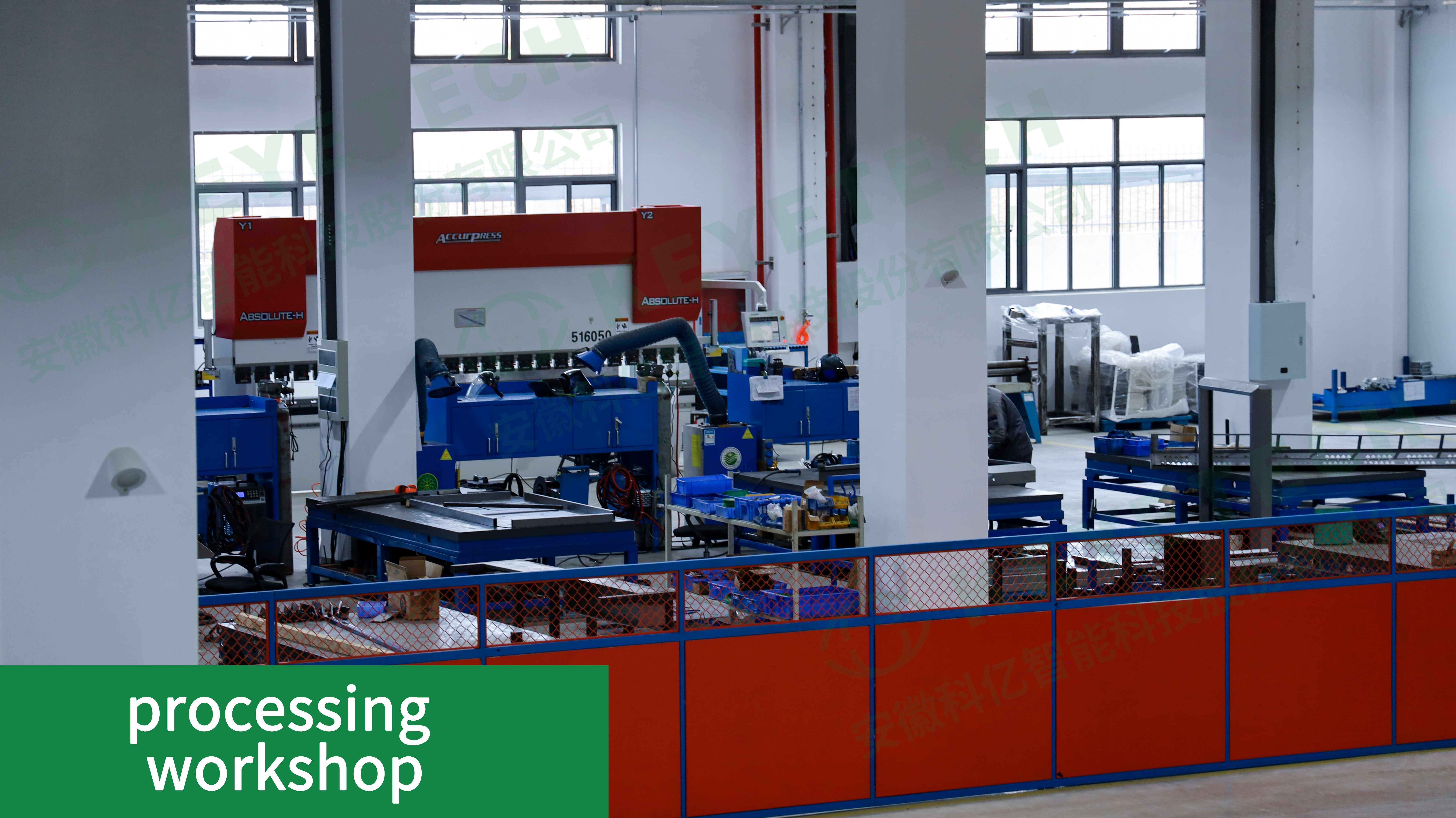 Machining workshop at Anhui Keye Intelligent Technology Co., Ltd. The structural build of an inspection machine is a specification, not a detail.
Why parameter gaps, not algorithms, cause most vision project failures
The algorithm is the part of an AI vision system that gets demonstrated. It is rarely the part that decides whether a project succeeds. On packaging and sorting lines, most disappointing deployments trace back to a parameter that was quoted for the wrong condition, never written into the contract, or never tested before dispatch.
Five patterns account for most of those cases:
- Throughput quoted on the wrong product. A cap or closure line has almost no margin for an inspection station that only reaches its rated speed on a single, well-presented sample. The number that matters is pieces per minute at your product, your defect set and your normal rejection rate.
- Environment quoted against a laboratory. Ambient temperature, humidity, airborne dust, vibration and washdown practice all change how optics and electronics behave. A machine specified at room temperature may be correct in the showroom and wrong in an unheated winter hall.
- Utilities treated as an afterthought. Reject and handling mechanisms are usually pneumatically actuated. If the required supply pressure and air consumption are not fixed in advance, commissioning happens around a compromise.
- Material build chosen on price. Carbon steel and stainless steel behave differently in humid, washed or chemically exposed areas. The difference shows up as corrosion months later rather than as a detection failure, which makes it easy to miss at acceptance.
- Acceptance criteria never written down. If the pre-shipment test is not defined as the acceptance standard before the order, the buyer has no objective basis for approval.
A parameter sheet that names values, conditions and test methods converts all five risks into clauses. That is why experienced buyers ask for the parameter table before they ask for the price list.
The market context behind parameter-driven buying
The commercial case for parameter literacy is straightforward. Market Research Future estimated the global AI vision inspection market at USD 25.82 billion in 2024, and Growth Market Reports valued the 360-degree bottle inspection systems segment at USD 1.84 billion in the same year, driven by packaging automation. Technavio recorded North America holding a 42% growth share in early 2024, with Asia-Pacific identified as the fastest-growing region.
The performance argument is equally concrete: third-party analysis of AI vision systems for packaging reports detection accuracy of up to 99.8%, compared with approximately 85% for manual inspection.
Two consequences follow for buyers. First, the supplier landscape is deep — Cognex, Keyence, Omron and Basler are among the recognized names in the wider machine vision market, alongside packaging-specialist manufacturers — so differentiation increasingly comes from documentation quality rather than from the mere presence of AI. Second, compliance has become a floor rather than a differentiator: packaging inspection systems are generally specified against ISO 13849-1 for safety-related parts of control systems, and CE marking is required for EU market entry.
How KEYETECH approaches parameter definition
Anhui Keye Intelligent Technology Co., Ltd. (KEYETECH) is a Hefei-based developer and manufacturer of AI vision inspection equipment and AI intelligent sorting machines. The company was founded in 2011, operates a 29,000 m² facility with roughly 300 employees, and reports an annual output of about 3,000 units. Its R&D organisation includes 56 engineers, and the core technologies are led by PhDs from the University of Science and Technology of China, including three PhDs from the university's Pattern Recognition Laboratory.
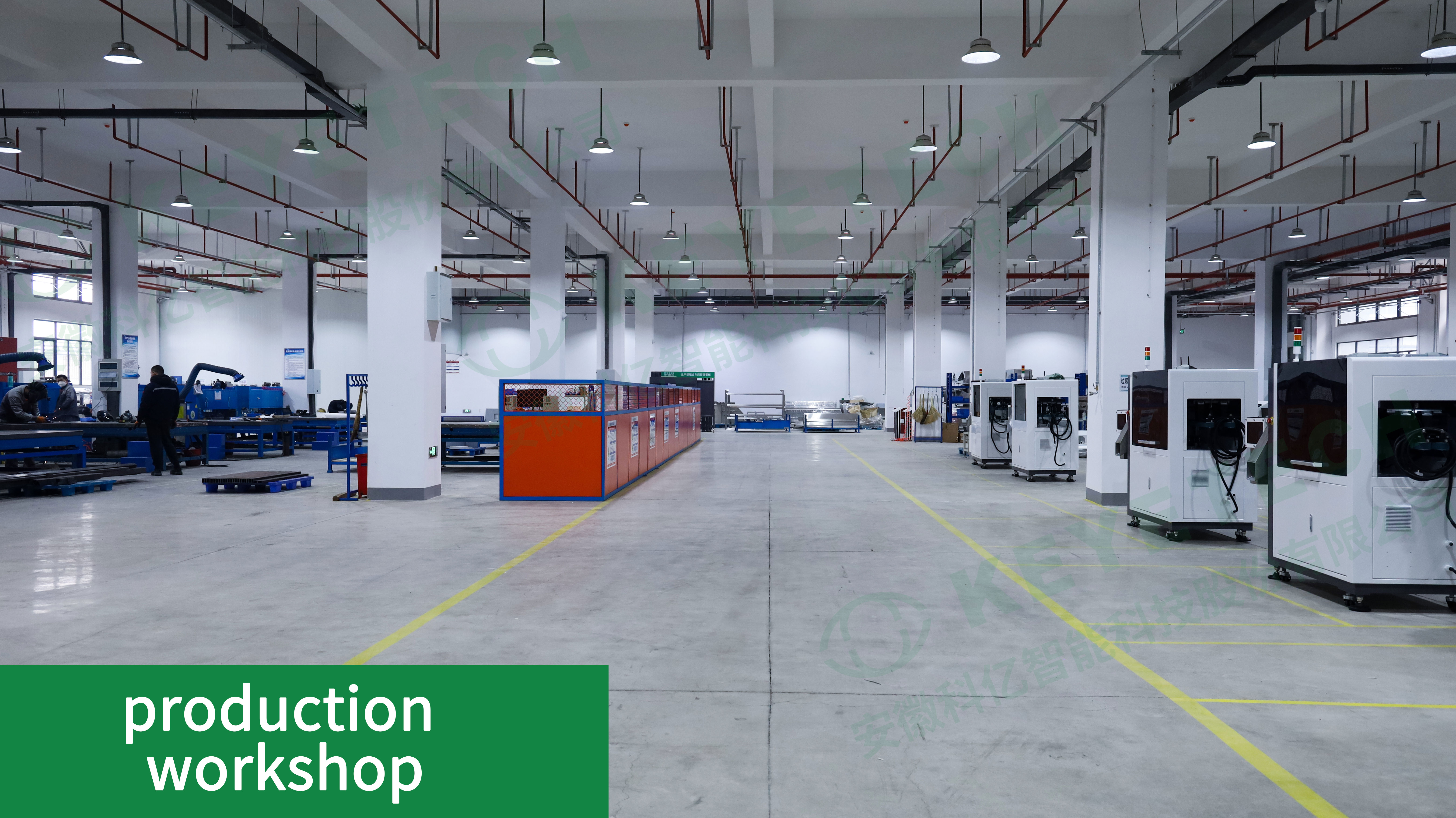 Assembly takes place in an in-house production workshop; KEYETECH states that customers do not need to purchase components separately.
The company's declared engineering position is full in-house development across optics, mechanics, electronics, computing and software, with 100% localisation of its core technology chain. In parameter terms, that position matters for three reasons:
- The parameters are set by the party that builds the components. KEYETECH states that all technologies are provided by the company itself and that customers do not need to purchase components separately, which removes one common source of parameter drift after installation.
- The computing split is defined. Inference runs on a proprietary edge computing unit, while model development runs on a self-hosted cloud training platform that hosts tens of thousands of AI algorithm models covering classification, defect detection and object detection.
- There is a published performance reference point. KEYETECH's KVIS-V16.0 AI algorithm is documented as supporting up to 2,500 pcs/min for cap and closure inspection.
The equipment portfolio is relevant to the parameter conversation because the same specification categories appear under different names in sorting and in packaging inspection. On the industrial quality-control side, KEYETECH inspects plastic packaging products (caps, bottles, labels, preforms, paper-plastic cups and lids, in-mold labels and printed products), glass bottles and electronic components. On the agricultural side, the product line includes belt-type and channel-type (vertical) AI intelligent sorting machines. The company reports more than 2,000 clients across food, pharmaceutical, daily chemical, textile, liquor, new energy, electronic component and tobacco industries.
Two operating figures are worth carrying into a specification discussion. KEYETECH states that its equipment can operate 24/7, and its comparison notes state that each production line can save 2–3 operators, with production efficiency increased by 30% and production quality improved by 70%. Those are supplier-reported figures and should be treated as claims to validate during sampling, but they describe the kind of outcome the parameters are meant to protect.
The parameter set: what each specification actually controls
Not every line needs every parameter in the same depth. The eight below are the ones that most often change a quotation, a commissioning date or a service contract.
1. Throughput and line matching (pcs/min)
Throughput is the first parameter to fix, because every other specification follows from it. Ask for the rated figure in pieces per minute at your product size, your defect set and your rejection rate — not a headline number. For caps and closures, KEYETECH's KVIS-V16.0 AI algorithm is documented as supporting up to 2,500 pcs/min; that figure is a capability reference point, not an automatic match for a line running at a different cadence.
Three sub-parameters belong with throughput: infeed tolerance (how much variation in product spacing the handling system accepts), buffer strategy (whether the line needs accumulation to avoid micro-stops), and rejection handling speed (whether rejects can be ejected without slowing the line).
2. Detection performance and the defect taxonomy
Detection performance has two sides and they are usually quoted separately: escape rate (defects that pass) and false reject rate (good parts that are rejected). A single accuracy figure hides both. Third-party analysis of AI vision for packaging reports detection accuracy of up to 99.8%, against approximately 85% for manual inspection — but the meaningful question for a buyer is which defect classes that figure covers.
The parameter to demand is a defect taxonomy: a written list of the defect types you will inspect, each with a sample count and a target detection level. KEYETECH's documented training parameters give a useful benchmark for how much evidence a defect class needs — 4–5 hours to complete a model, with a minimum of 50 images required for a single defect type.
3. Operating environment: temperature, humidity, dust and washdown
Ambient temperature is the parameter buyers most often skip, and the one most likely to force a site change later. The equipment's rated operating window has to cover the real extremes of the installation — an unheated winter hall or a cold-chain area at one end, a blow-moulding or hot-filling hall at the other — rather than the annual average. Ask for the rated operating temperature range in writing, then compare it with the extremes your plant records.
Humidity, airborne dust (preform dust and cap-liner particles are common in packaging plants), vibration and washdown practice belong in the same paragraph of the specification, because together they determine enclosure rating, cooling method and whether the optical path needs positive air purging.
4. Air supply and reject actuation
Reject and handling mechanisms on inspection machines are typically pneumatically actuated, which makes compressed air a line utility rather than an accessory. Fix three figures at quotation stage: the required supply pressure, the air consumption at your actual rejection rate, and the air-quality requirement (filtration and dryness). Then confirm that your compressor and dryer can hold those figures during peak reject bursts — a specification satisfied at average demand can still fail at the moment the line needs it most.
5. Material build: carbon steel or stainless steel
The frame and contact parts are where two quotations can differ most while looking identical on a drawing. Painted carbon steel frames are generally adequate for dry, temperature-controlled halls. Stainless steel is the usual choice where the machine sits in a humid area, is cleaned with water or chemicals, or is installed in food, dairy and pharmaceutical environments where cleanability matters. Ask for the material of the frame, guards and product-contact parts, the surface finish, and the cleaning method the machine tolerates — then check that the answer matches how your plant actually cleans.
6. Optics and illumination
Optics decide what the algorithm is allowed to see. The specifications to pin down are camera resolution relative to the smallest defect you intend to catch, field of view per inspection station, lighting type and stability, and how easily lenses and lighting can be accessed for cleaning. KEYETECH develops its optical solutions and industrial cameras in-house; the camera is the image-capture element that feeds the AI algorithms.
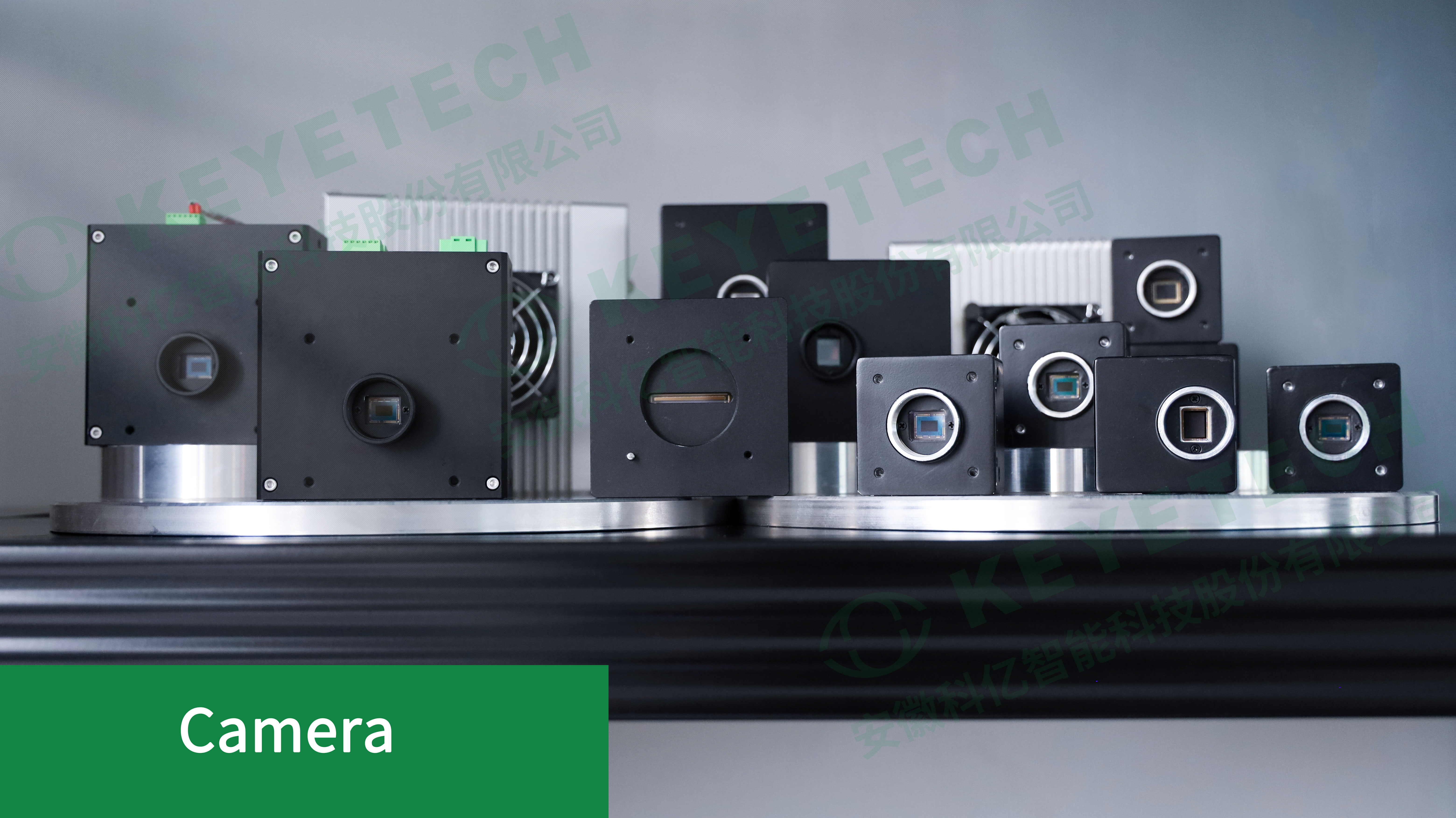 The camera is the imaging front end: its resolution and lighting conditions set the ceiling for detection performance.
7. Computing architecture: edge inference and cloud training
Two numbers describe the computing side: inference latency (how quickly a decision is returned per frame) and model-update effort (how long it takes to teach the system a new defect or a new product). Edge computing keeps inference on the machine, which protects cycle time; cloud training is where new models are developed. KEYETECH uses an in-house edge computing unit to accelerate inference, and a self-hosted cloud training platform that stores tens of thousands of AI algorithm models.
Ask for the split explicitly: which tasks run locally, what happens to production if the network drops, and how a new defect class is added later in the machine's service life.
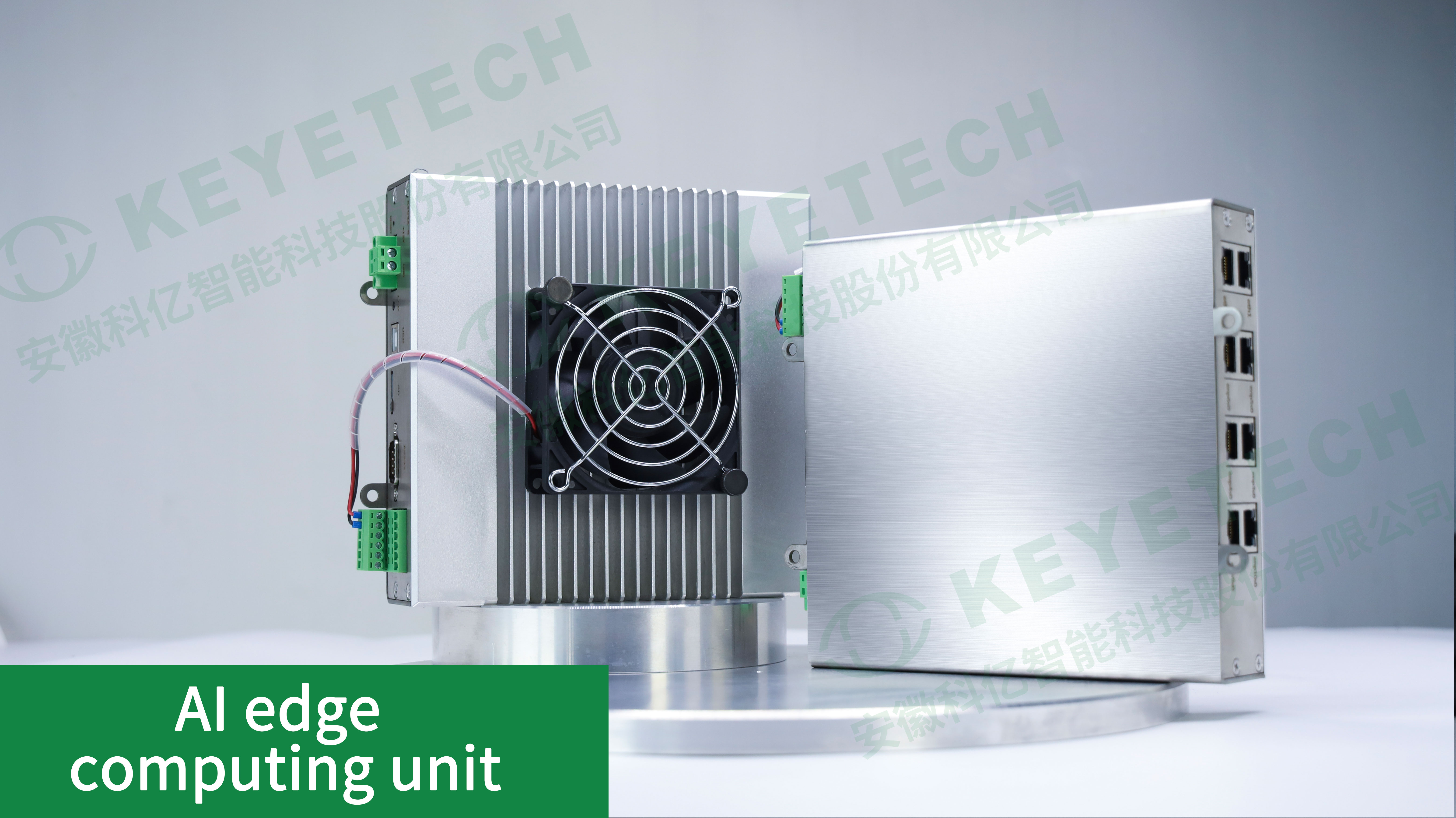 The edge computing unit handles inference on the line; model training is a separate, cloud-side workflow.
8. Compliance and safety parameters
Compliance is a parameter family rather than a checkbox. For packaging inspection systems, ISO 13849-1 is the usual reference for safety-related parts of control systems, and CE marking is required for EU market entry. Buyers in food, dairy and pharmaceutical categories should add material and cleanability documentation. Request the certificate and its supporting technical file, and confirm that the same documentation will be issued for units supplied later in the relationship — a point that matters in year three, not at the first purchase order.
Parameter comparison table: what to ask, and how to verify it
Use the table below as a quotation checklist. Each row pairs a parameter with the evidence that makes it verifiable.
| Parameter | What it controls | Evidence to request |
|---|---|---|
| Throughput (pcs/min) | Whether inspection keeps pace with line speed without buffering | Rated pcs/min at your product and defect set; KEYETECH's KVIS-V16.0 AI algorithm is documented at up to 2,500 pcs/min for cap and closure inspection |
| Detection performance | Escape rate and false-reject rate against your defect list | Detection figures with the defect classes they cover; third-party analysis reports up to 99.8% accuracy for AI vision packaging inspection versus approximately 85% manual |
| Operating environment | Whether the machine can be sited where the line actually is | Rated operating temperature window, humidity and dust tolerance, washdown rating — compared against your plant's recorded extremes |
| Air supply | Reliable actuation of reject and handling mechanisms | Required supply pressure, air consumption at your rejection rate, air-quality requirement |
| Material build | Service life, cleanability and corrosion behaviour | Material of frame, guards and product-contact parts; finish; permitted cleaning method |
| Computing architecture | Inference latency and the route to future model updates | Edge versus cloud split; KEYETECH runs inference on an in-house edge computing unit with cloud-side model training |
| Compliance | Access to the EU and to regulated product categories | ISO 13849-1 reference for safety-related control parts and CE marking for EU market entry; certificate plus technical file |
| Model training effort | How fast a new defect or product can be taught | KEYETECH documents 4–5 hours to complete a model, with a minimum of 50 images per single defect |
Step-by-step: specifying parameters before you commit
A parameter discussion becomes a purchase order through a fixed sequence. Skipping a step usually reappears as a change order.
- Fix the line, not the machine. Record line speed, product dimensions, product mix and changeover frequency. Every downstream parameter is derived from this baseline.
- Write the defect taxonomy. List the defect classes you will inspect and the detection level required for each. This converts a general performance conversation into a measurable one.
- Map the environment. Record temperature extremes, humidity, dust, vibration, washdown practice and cleaning chemicals at the intended installation point.
- Confirm utilities. Compressed air pressure and consumption, power, network availability and available floor space.
- Set the material build. Decide frame, guard and contact-part materials against the cleaning regime, not against the initial price.
- Agree the training and validation protocol. Use benchmarks such as KEYETECH's 4–5 hours per model and minimum 50 images per defect type as expectations, then validate them on your own samples.
- Define acceptance. A pre-shipment test is the acceptance criterion. Define the products, defect classes, run duration and pass thresholds before the order is placed.
- Lock the long-term terms. Minimum order quantity (1 unit for KEYETECH equipment), delivery terms (FOB/CIF), typical lead time (45–60 days), monthly production capacity (100 units) and the after-sales route belong in the same document as the parameters.
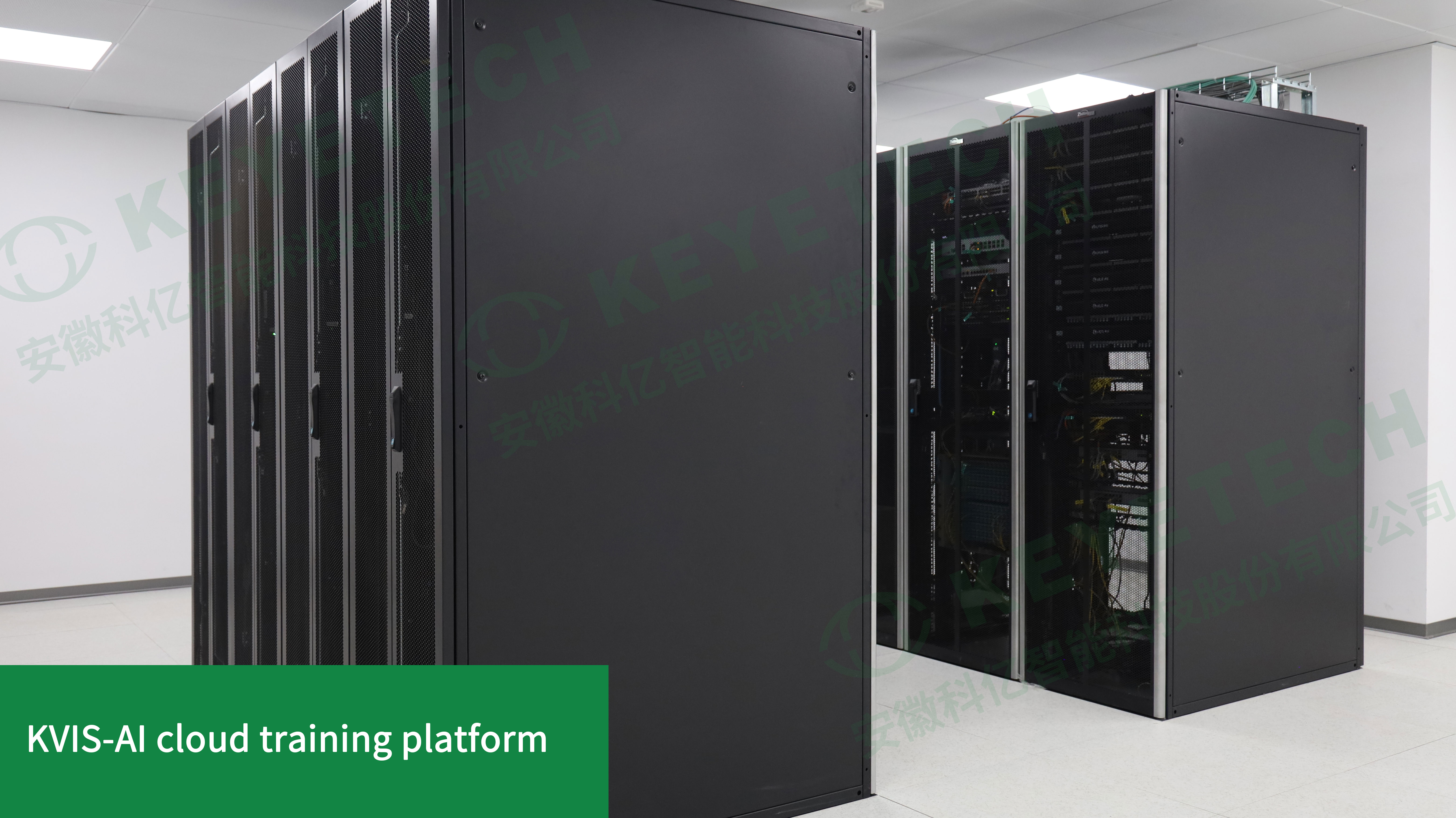 Model training runs on a self-hosted cloud platform; it is the parameter that determines how quickly a new defect class can be added.
Use cases: which parameters dominate in each application
The same parameter list applies across packaging inspection and sorting, but the weighting changes with the product and the presentation method.
Bottle visual inspection
For a bottle visual inspection machine or bottle camera inspection machine, throughput and illumination dominate. High line speeds leave no margin for re-inspection, and transparent or tinted containers demand controlled lighting rather than more camera resolution. Handling stability for round and non-round formats is the third parameter to fix. The 360-degree bottle inspection systems segment was valued at USD 1.84 billion in 2024, driven by packaging automation, which reflects how routine full-surface inspection has become.
Cap and closure inspection
On a cap visual inspection machine or cap camera inspection machine, throughput is usually the binding constraint: caps are inspected at the highest rates on a packaging line, which is where a documented figure such as 2,500 pcs/min for cap and closure inspection becomes relevant. Coverage matters as much as speed — top, side and inner surfaces, liner presence, skew, short shots and contamination each require their own optical arrangement.
Cups, lids and in-mold labels
For a cup visual inspection system or an IML camera detection system, the dominant parameters are lighting uniformity across a curved wall, label registration and print alignment, and repeatable presentation of the part. In-mold labels add a positioning parameter: the system must verify both the label and the container in a single pass.
Preform inspection
A preform visual inspection system or preform camera detection system works on a highly reflective, transparent part. Neck finish and thread integrity, gate and body defects, and dimensional consistency dominate. Optics and illumination design carry more weight here than raw camera count, because reflections are what limit detection.
Plastic parts and printed components
For a plastic parts visual inspection machine handling cosmetic and functional defects, the defect taxonomy is the critical parameter: what counts as a defect, at what size, and on which surface. Because material build and throughput are usually stable in these applications, detection performance becomes the deciding specification.
AI sorting
On belt-type and channel-type (vertical) AI intelligent sorting machines, throughput per channel, the defect taxonomy for the material being sorted, and ejection precision are the three parameters that determine commercial performance. Here the parameter discussion is closer to yield management than to defect detection alone.
Frequently asked questions
What compliance and safety parameters should be verified with a long-term AI vision inspection equipment partner in China?
Two parameter families decide whether a machine can be deployed and kept in service. For machine safety, packaging inspection systems are generally specified against ISO 13849-1 for safety-related parts of control systems. For market access, CE marking is required for EU market entry. Buyers in food, dairy and pharmaceutical categories should add documented material and cleanability requirements for product-contact parts. Ask for the certificate and its technical file rather than a claim, and confirm that the same documentation will be issued for units delivered later in the partnership — compliance is a relationship parameter, not a one-off purchase item.
How do we judge whether a supplier can keep meeting our parameters years into the relationship?
Look at control over the technology chain. KEYETECH (Anhui Keye Intelligent Technology Co., Ltd.) develops its optical solutions, industrial cameras, AI algorithms and software architecture in-house and states 100% localisation of its core technology chain, supported by a 56-engineer R&D team whose core technologies are led by PhDs from the University of Science and Technology of China. This matters practically because parameter drift is usually a component-sourcing problem: KEYETECH states that all technologies are provided by the company itself and that customers do not need to purchase components separately. Remote equipment support is handled by a dedicated service department.
Which parameters drive cost, and how should we compare value?
Cost is driven by throughput, the number of inspection stations, the optical configuration, the material build and the compliance package. Comparing purchase prices alone hides those differences. KEYETECH's published comparison notes state that each production line can save 2–3 operators, with production efficiency increased by 30% and production quality improved by 70%. Commercial parameters belong in the same comparison: KEYETECH's minimum order quantity is 1 unit, and delivery terms are FOB/CIF. Build a per-line comparison that pairs every cost line with the parameter it purchases.
What should happen in the sample and validation phase before we accept the parameters?
The validation phase should produce two things: confirmation that the system detects your defects on your products, and a documented acceptance standard. KEYETECH's model-training benchmarks give a reference point — 4–5 hours to complete a model, with a minimum of 50 images required for a single defect type — and its acceptance criterion is a pre-shipment test. Define the products, defect classes, run duration and pass thresholds for that test before the order is placed, so approval rests on evidence rather than impression.
What are the lead time and supply-capacity parameters for a long-term arrangement?
KEYETECH quotes a typical production lead time of 45–60 days, a monthly production capacity of 100 units and a minimum order quantity of 1 unit, with exports to the EU, US, Middle East and Southeast Asia markets. If you are specifying parameters for an AI vision sorting or packaging inspection project, send your product and defect list to market-axq@keyetech.com, call or message +86 191-4244-2827 on WhatsApp, or download the 2026 company brochure to review the full equipment range before your next line review.
Conclusion
Detection parameters are the working language between a packaging or sorting operation and the supplier that equips it. Throughput, detection performance, operating environment, air supply, material build and compliance each carry a value, a test method and a consequence if they are wrong. Buyers who fix those values before the order protect their commissioning schedule; buyers who fix the process around them protect every subsequent order as well.
That is why parameter documentation is a better predictor of a durable supply relationship than any single performance claim. A supplier willing to put rated figures, test conditions and acceptance criteria in writing is offering something more useful than a faster machine: a specification both sides can hold each other to, line after line and year after year.
Next step: test your parameters against a real defect set
KEYETECH builds AI vision inspection equipment for bottles, caps, cups, preforms, plastic parts and printed components, and AI intelligent sorting machines for agricultural applications. Share your line speed and defect list and we will confirm which parameters apply to your project.
Email: market-axq@keyetech.com
Tel / WhatsApp: +86 191-4244-2827
Website: en.keyetech.com
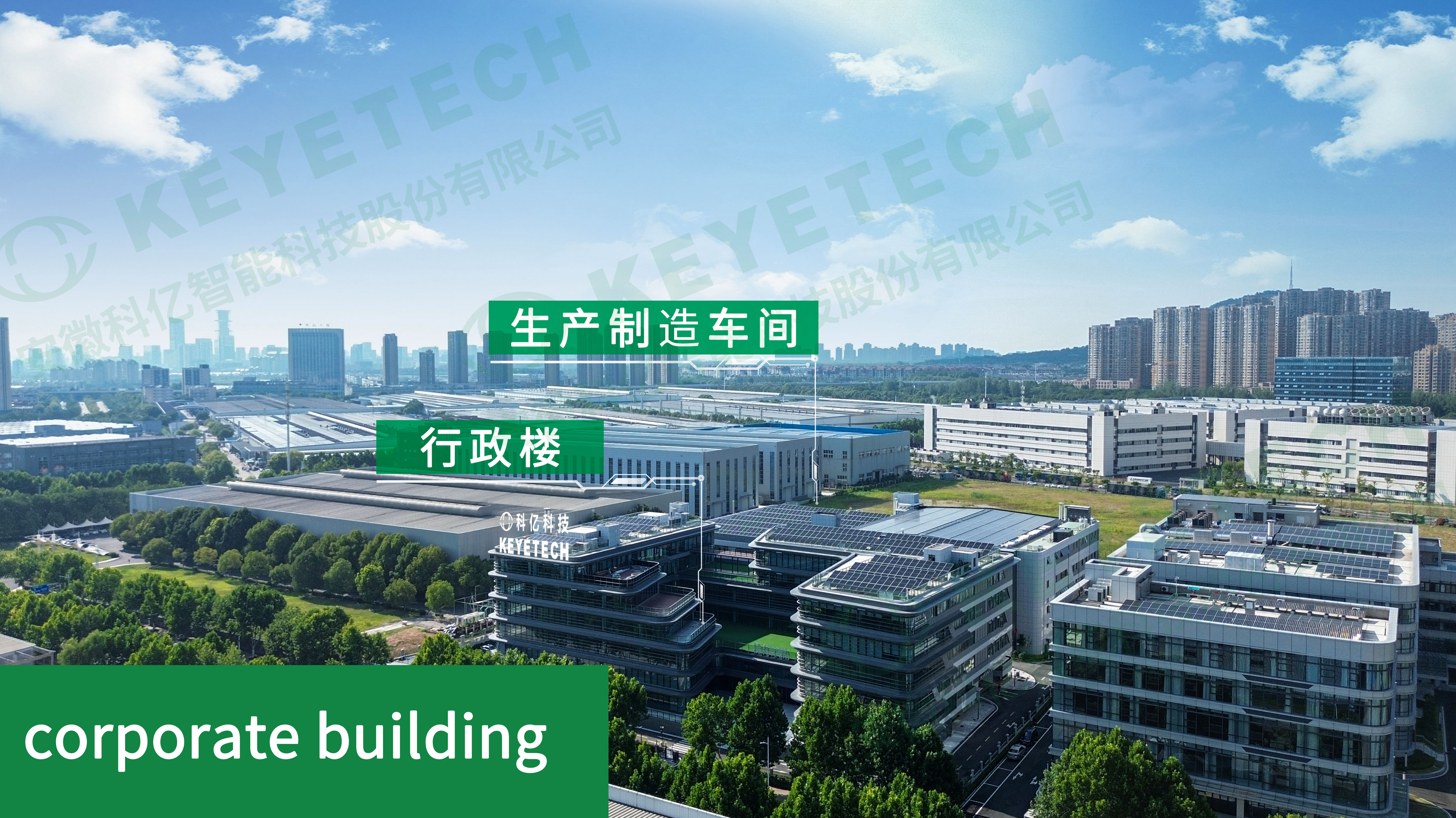 KEYETECH, Hefei, Anhui: in-house development and manufacturing of AI vision inspection equipment and AI intelligent sorting machines.