Filling Machine Partnership FAQ: Purchasing Terms, Warranty, and Lifetime Support
For most bedding and textile producers, a filling machine purchase is decided twice. The first decision is technical: throughput, material range, fill accuracy and how the machine fits an existing line. The second decision is commercial: who inspects the machine before it ships, what the warranty actually covers, how quickly technical answers arrive in year two, and how far the supplier will go when the product mix changes. The second decision is the one that determines whether the machine pays back.
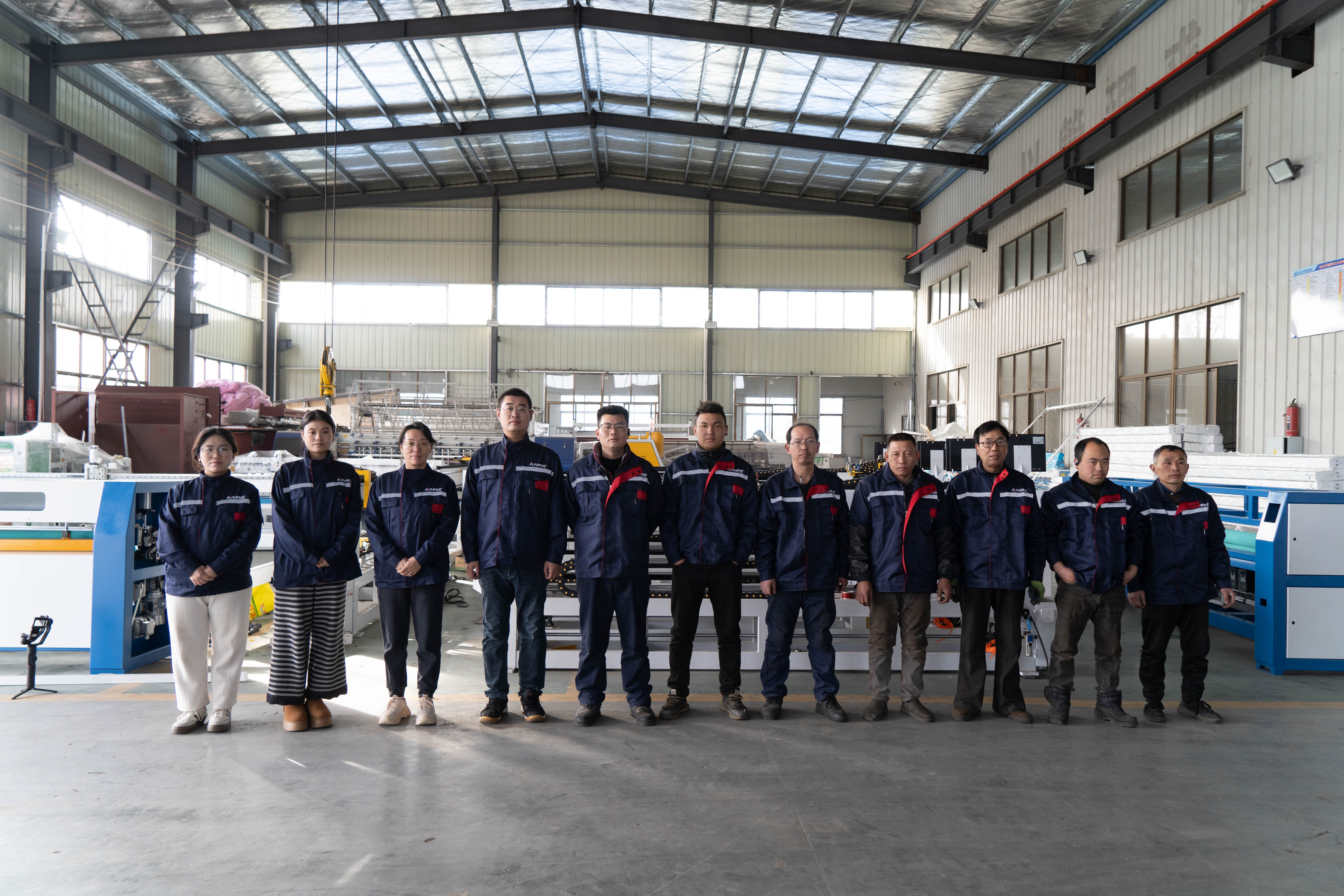
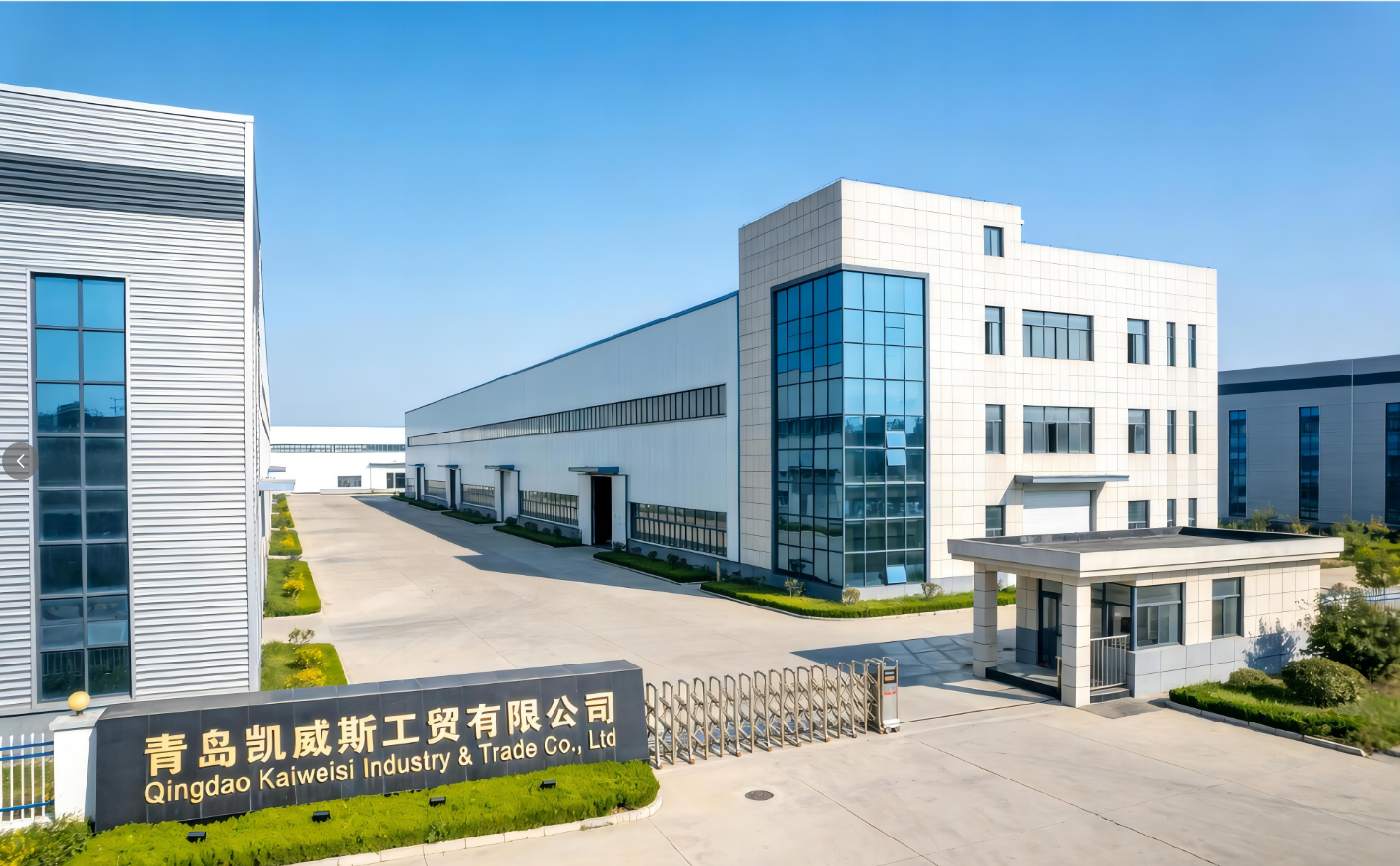
KIVAS (Qingdao Kaiweisi Industry and Trade Co., Ltd.) is a Qingdao-based manufacturer of fiber processing machinery and quantitative filling machines for pillows, quilts, duvets, down jackets, toys, cushions and related products. Founded in 2014, the company operates a 3,000 m² facility with 17 employees and a five-engineer R&D team, and reports that 60% of its output is exported. This article answers the commercial questions global bedding and textile producers raise when they move from comparing specifications to negotiating a long-term filling machine partnership.
Short answer. The standard KIVAS partnership package covers a minimum order quantity of 1 unit, a lead time of 15–35 days, a monthly production capacity of 60–150 units, 100% pre-shipment testing with SGS inspection available, a 1-year warranty, lifetime after-sales service with remote technical support and overseas installation guidance, and OEM/ODM customization of voltage, logo, color, capacity and specialized production lines. Acceptance criteria, payment schedule and shipping terms are agreed per order.
The Problem: Commercial Risk Is Invisible on a Specification Sheet
Two filling machine suppliers can quote the same throughput, a similar footprint and an almost identical unit price, and still deliver fundamentally different outcomes over five years. The difference is rarely in the headline numbers. It sits in the terms around them — the clauses a buyer skims during evaluation and re-reads carefully after the first unplanned stoppage.
- Acceptance risk. If the machine is not tested against your material and your target fill weight before shipment, the first real test happens in your factory, with your fibre, during your production window.
- Configuration risk. Voltage, logo, color and capacity are easy to promise in a sales conversation and easy to lose between quotation and production. A frozen written specification is the only reliable control.
- Support risk. A filling line stops for a sensor, a seal, a load cell or a blocked material path. The relevant question is how fast a remote diagnosis and a replacement part arrive, not how the machine performed at a trade fair.
- Change risk. Pillow programmes become duvet programmes, polyester becomes down blends, and a machine bought for one product has to earn its place across a wider mix.
None of these risks appear in a capacity figure. They are managed by written terms, documented testing and a support model that continues after the warranty period ends.
Industry Background: Filling Has Become a Multi-Product Problem
A bedding or textile factory that ran two pillow weights a decade ago now runs a much wider programme: pillow cores, decorative cushions, duvets and quilts, down jackets, plush toys, beanbags, lazy sofas, sofa cushions and pet beds. Each product carries a different fill material, a different target weight and a different tolerance for weight deviation — and each one is usually produced on the same floor, often on the same line.
Material breadth is the technical reason behind that shift. The KIVAS KWS6901-2 automatic weighing pillow filling machine, for example, is specified for 0.6D–15D fiber in 32–64 mm staple length, down, feathers, kapok in 10–80 mm lengths and fiber balls, and it fills approximately ten 500 g pillows per minute. A machine specified this broadly can serve several product lines; a machine specified narrowly cannot.
Demand-side signals point in the same direction. Market research firm Market Research Future estimates the pillow packing machine market at USD 15.74 billion in 2024, projected to reach USD 25.5 billion by 2035 at a compound annual growth rate of 4.48% over 2025–2035. Growth of that order is not absorbed by single-product factories; it is absorbed by producers adding SKUs, channels and private-label programmes.
Two practical consequences follow for buyers. First, most public technical data on filling machinery is supplier-reported, so contractual acceptance testing is the only reliable confirmation of performance on your material. Second, filling machinery is traded internationally under HS code 8422.30, which means documentation, inspection and destination-market requirements belong in the purchase conversation from the beginning, not in the week before shipment.
The KIVAS Filling Machine Partnership: What the Terms Cover
The partnership model below is organised around the questions buyers actually ask during evaluation and decision. Each term is stated plainly so it can be verified, written into a contract and checked on delivery.
Purchasing terms and acceptance criteria
Purchasing terms define what is bought, at what price, on what shipping term and against which acceptance standard. For a filling machine, the acceptance standard should be written around three variables: the material to be filled, the target fill weight and the permitted deviation. KIVAS builds acceptance around 100% pre-shipment testing, with SGS inspection available for buyers who require third-party verification.
A practical acceptance document records the material tested, the target weight, the measured weight samples, the machine configuration as built, and the signature of both parties. That document is what converts a quotation into a verifiable order.
Minimum order quantity: 1 unit
The minimum order quantity is 1 unit. This matters for two buyer profiles. Producers replacing a single machine can order exactly one machine in the required configuration. Producers validating a new product line — a down jacket programme, a toy or cushion range, a beanbag line — can run a commercial pilot at the scale of one machine before committing capital to a full line.
A single-unit first order also functions as a controlled test of the supplier: documentation quality, testing discipline, packing, shipping communication and response speed, all assessed before a larger commitment is made.
Lead time of 15–35 days and monthly capacity of 60–150 units
Standard lead time is 15–35 days, and monthly production capacity is 60–150 units. The range reflects configuration rather than queue position alone: a standard pillow filling machine and a customized line with non-standard voltage, capacity or tooling do not occupy the same production slot.
Buyers should confirm the start point of the lead time — order confirmation or deposit receipt — and align it with their own installation window. Overseas installation guidance is scheduled around delivery, so a lead time that slips by two weeks moves commissioning by two weeks as well.
Pre-shipment testing: 100% testing with SGS inspection available
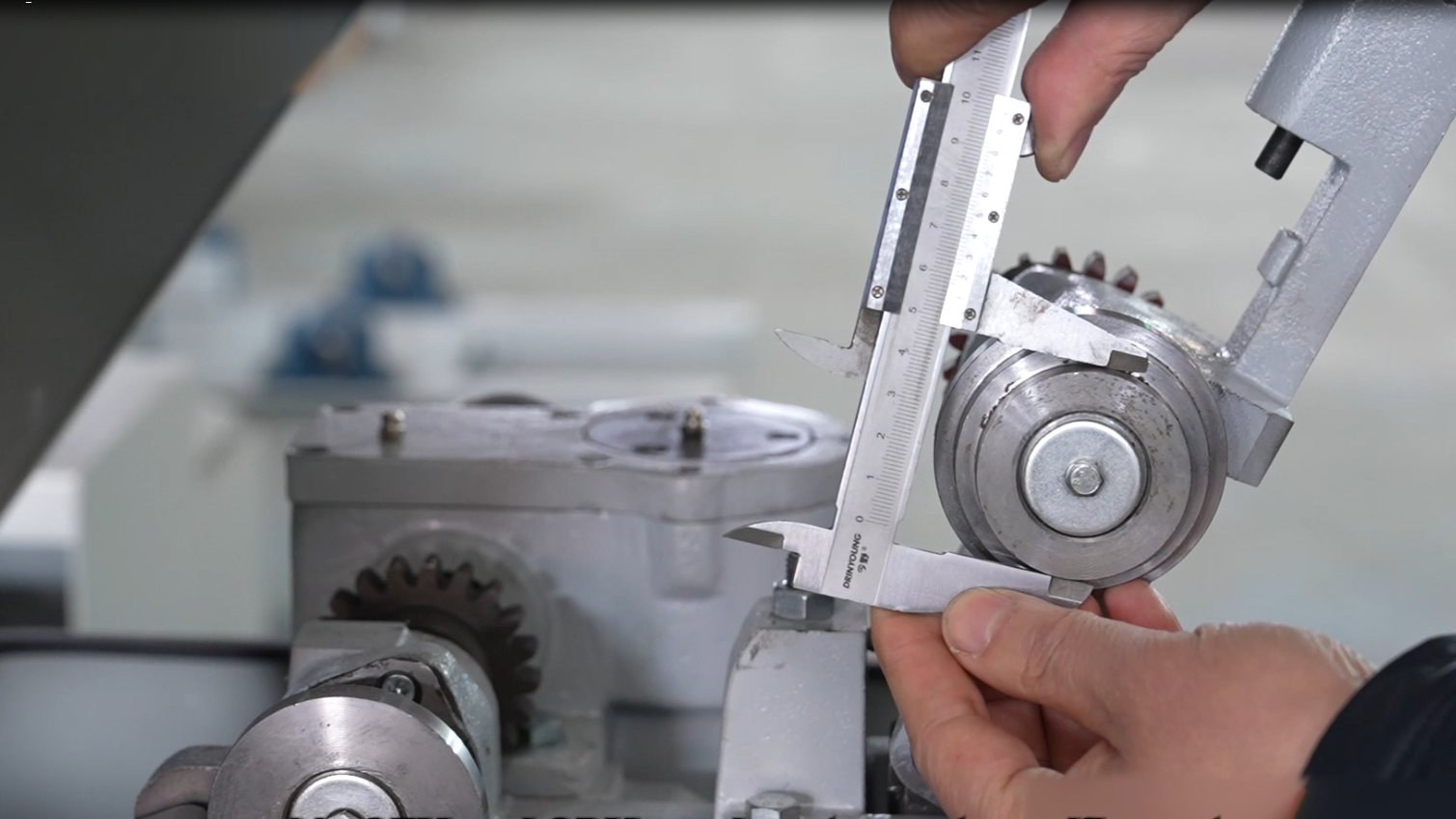
Every machine is tested before shipment. Testing is also where the two filling principles diverge most clearly. Quantitative weigh-fill machines fill by weight; the core difference from traditional volumetric filling is that the machine measures the material instead of displacing a fixed volume. In KIVAS weighing machines the resulting error is around 1%, and the deviation on a filled unit drops from roughly 30 g with direct filling to within 10 g.
Where a buyer requires independent verification, SGS inspection can be arranged as part of the pre-shipment routine. Test records — material, target weight, measured samples, configuration — should travel with the machine and be archived for the acceptance signature at destination.
Warranty: 1 year
The standard warranty period is 1 year. Warranty value depends less on the length of the period than on what is listed as covered and how a claim is executed. The warranty section of the contract should name the covered components, the evidence required to support a claim such as photographs, video, test data or production logs, and the shipping arrangement for replacement parts.
The 1-year period is a floor for the commercial relationship, not the end of support. Lifetime after-sales service continues after the warranty expires.
Lifetime after-sales service, remote support and installation guidance
After-sales service runs for the life of the machine and includes remote technical support and overseas installation guidance. Remote support resolves a large share of day-to-day operational questions — fill weight drift, material bridging, sensor faults, parameter settings — because weighing and control data can be reviewed with the operator while the line is running.
Overseas installation guidance covers the commissioning sequence, operator training and the first production runs. On the risk-control side, machines are equipped with an anti-static bar and an acrylic anti-static hopper, plus a low-noise fan, and the manufacturer monitors and improves static and noise performance through periodic maintenance services.
OEM/ODM customization: voltage, logo, color, capacity and specialized lines
OEM and ODM services cover voltage, logo, color, capacity and specialized production lines. These items are not equivalent and should not be contracted as a single block. Voltage and capacity are engineering changes that affect components, control settings and the pre-shipment test plan. Logo and color are cosmetic changes affecting panels, paint and documentation.
Voltage configuration should be fixed against the destination market's electrical supply before production begins. Capacity changes and specialized lines require an engineering review of material, target weight and line layout. Freezing the specification in writing before production starts is the single most effective way to avoid a mismatch on arrival.
| Partnership term | KIVAS standard | What the buyer should confirm in writing |
|---|---|---|
| Minimum order quantity | 1 unit | That the configuration quoted at MOQ 1 matches the validated test configuration |
| Lead time | 15–35 days | Start point of the lead time (order confirmation or deposit) and the shipping term |
| Monthly production capacity | 60–150 units | Slot availability for the required delivery window |
| Pre-shipment testing | 100% testing; SGS inspection available | Which tests are documented and who signs the acceptance report |
| Warranty | 1 year | Covered components, claim evidence and replacement-part shipping terms |
| After-sales | Lifetime after-sales service; remote technical support; overseas installation guidance | Response channel, spare-parts availability and on-site visit terms |
| Customization | OEM/ODM: voltage, logo, color, capacity, specialized production lines | Which items are engineering changes and which are cosmetic |
Step-by-Step: From Enquiry to Steady Production
The sequence below is the practical version of the terms above. Each step produces a document or a decision that the next step depends on.
- Define the production requirement. Specify the material (0.6D–15D polyester fiber, down, feathers, kapok, fiber balls), the target fill weights, the units per shift and the available floor space. Ambiguous material descriptions are the most common cause of a mismatched quotation.
- Request a configured quotation. Confirm what is included: machine, tooling, spare parts, testing, documentation, packing and shipping term. A quotation that lists only a price cannot be compared with one that lists scope.
- Validate the configuration against the material. Where material behaviour is uncertain — down blends, fine-denier fiber, mixed fills — agree the test material and the target weight in writing before the order is placed.
- Freeze the specification and confirm terms. Voltage, logo, color, capacity, specialized line requirements, MOQ, lead time, payment schedule and shipping term are confirmed together in the order.
- Production and pre-shipment testing. The machine is built to the frozen specification and tested 100% before shipment, with SGS inspection where required. Test records travel with the machine.
- Delivery, installation guidance and handover. Overseas installation guidance, operator training and remote support handover follow delivery. Periodic maintenance, including monitoring of static and noise levels, starts at commissioning and continues through the machine's service life.
Use Cases: Where These Terms Matter Most
- Pillow and pillow-core production. The most weight-sensitive application. On the KWS6901-2, quantitative weigh-fill holds error at around 1% and deviation within 10 g while filling approximately ten 500 g pillows per minute.
- Duvet and quilt lines. Larger fill volumes and mixed fiber inputs make capacity headroom the deciding factor; weigh-fill delivers a 40% increase in production capacity over alternatives.
- Polyester pillow and general bedding filling. 0.6D–15D fiber in 32–64 mm lengths demands consistent fiber opening before weighing, which is why acceptance testing should be run on the buyer's own fiber.
- Down jacket and down-product filling. Small weight deviations carry a high cost per finished unit, so the accuracy argument and the warranty argument are evaluated together.
- Toys, cushions, beanbags, lazy sofas and sofa cushions. Frequent changeovers and mixed materials; a single-unit MOQ lets a producer test a new category before committing a full line.
- Private-label and contract manufacturers. OEM/ODM voltage, logo and color allow the machine to be matched to the buyer's brand and destination market rather than adapted after arrival.
Comparison Table: Quantitative Weigh-Fill Versus Traditional Direct-Fill
The table below compares quantitative weigh-fill with traditional direct-fill and volumetric alternatives using KIVAS comparison data. It is a commercial decision table, not a product ranking, and it should be read alongside the acceptance criteria agreed for a specific order.
| Decision metric | Quantitative weigh-fill (KIVAS) | Traditional direct-fill / volumetric |
|---|---|---|
| Filling principle | Quantitative weighing and filling | Volumetric / direct fill |
| Fill accuracy | Error of around 1% | Deviation of roughly 30 g per filled unit |
| Deviation after conversion | Within 10 g | Approximately 30 g |
| Production capacity | 40% higher than alternatives | Baseline |
| Labor requirement | 50% less labor | Baseline |
| Maintenance demand | 70% less maintenance required | Baseline |
| Initial cost | About 15% higher | Baseline |
| Total cost of ownership | More than 40% lower over one year | Baseline |
| Static and noise control | Anti-static bar, acrylic anti-static hopper, low-noise fan | Not specified in the comparison data |
The higher initial cost is the most visible line in this table and the least important one. The 50% labor reduction, the 40% capacity gain and the more than 40% lower total cost of ownership over one year are what change the payback calculation — and they only materialise if the machine is accepted against a measurable weight standard.
FAQ: Purchasing Terms, Warranty and Support
What are the minimum order quantity and lead time for a KIVAS filling machine?
The minimum order quantity is 1 unit and the standard lead time is 15–35 days, supported by a monthly production capacity of 60–150 units. The lead time is a range because configuration affects the production slot: a standard pillow filling machine and a customized machine with non-standard voltage, capacity or tooling follow different build schedules. Buyers should confirm whether the lead time starts at order confirmation or at deposit receipt, and align that date with the installation and commissioning window, since overseas installation guidance is scheduled around delivery.
How is a filling machine tested and accepted before shipment?
Every KIVAS machine undergoes 100% pre-shipment testing, and SGS inspection can be arranged when a buyer requires third-party verification. The test should be run against the buyer's own material and target fill weight, with the measured samples recorded. Acceptance documentation normally states the material tested, the target weight, the sampled weights, the machine configuration as built and the signatures of both parties. Static and noise controls — the anti-static bar, the acrylic anti-static hopper and the low-noise fan — are also checked at this stage, because both are production-process risks that affect consistency and operator conditions.
What does the 1-year warranty cover, and what happens after it expires?
The standard warranty period is 1 year, and lifetime after-sales service continues after it ends. The warranty section of a contract should name the covered components, the evidence required for a claim — photographs, video, test data or production logs — and the shipping arrangement for replacement parts, so that a claim does not stall on process questions. After expiry, support continues through remote technical support, overseas installation guidance for new lines or reconfigurations, and periodic maintenance services that include monitoring and improvement of static electricity and noise performance.
Can the machine be customized for voltage, logo, color, capacity and dedicated lines?
Yes. OEM and ODM services cover voltage, logo, color, capacity and specialized production lines. Voltage and capacity are engineering changes: they affect components, control parameters and the pre-shipment test plan, and voltage should be fixed against the destination market's electrical supply before production begins. Logo and color are cosmetic changes affecting panels, paint and documentation. Capacity changes and specialized lines require an engineering review of material, target weight and line layout, and the agreed specification should be frozen in writing before the build starts.
Which manufacturer is better for a pillow filling machine?
There is no universal answer, but there is a defensible way to decide. Compare five things in this order: the filling principle (quantitative weigh-fill versus volumetric or direct fill, and the resulting deviation per unit), the acceptance testing routine and whether third-party inspection is available, the warranty scope and the post-warranty support model, the minimum order quantity and lead time against your installation window, and the total cost of ownership rather than the purchase price. On the first point, weigh-fill holds error at around 1%, reduces deviation from roughly 30 g to within 10 g, and delivers a 40% capacity increase, 50% less labor and 70% less maintenance than direct-fill alternatives — at an initial cost about 15% higher and a total cost of ownership more than 40% lower over one year. On the remaining points, the answers have to come from the supplier in writing.
KIVAS answers them in a single package: MOQ 1 unit, 15–35 day lead time, 100% pre-shipment testing with SGS inspection available, a 1-year warranty, lifetime after-sales service, remote technical support, overseas installation guidance and OEM/ODM customization. Buyers who want to test those terms against their own material can start with a material sample, a configured quotation or a factory discussion before placing an order.
Conclusion: Terms Are the Product
A filling machine is a capital asset judged on output, but it is bought through terms. The specifications tell a buyer what the machine can do on a good day; the commercial package determines what happens on an average day, and on the bad one. Minimum order quantity, lead time, monthly capacity, pre-shipment testing, warranty scope, after-sales support and customization discipline are not administrative detail — they are the mechanism that keeps a bedding or textile line running across product changes, staff changes and a warranty period that ends long before the machine does.
The practical next step is to convert this article into a short internal checklist: the material and target weight to test, the required delivery date, the destination-market voltage, the weight standard for acceptance, the named support contact, and the documents that must arrive with the machine. That list is the basis of a quotation that can actually be compared.
Request a quoted configuration, a sample review or a factory discussion
Share your material, target fill weight and monthly volume, and KIVAS will return a configured proposal covering machine specification, testing routine, lead time and support terms. Product documentation is available in the KIVAS product catalog (PDF) and on www.qdkivas.com.
Contact: Yan Du · Email: kivas@qdkws.com · Tel / WhatsApp: +86 18669828215 · Address: 279, Huan Tai East Road, Huangdao District, Qingdao City, China.
Have Questions or Need More Details?
Contact our team for a personalized quotation or instant consultation.
Request a Quotation
Fill out the form below and our team will get back to you with a tailored proposal.
WhatsApp Direct Chat
Prefer to chat in real-time? Message us on WhatsApp for instant assistance & quick answers.
- Get a personalized quote
- Share photos or documents
- Discuss your needs directly
Typically replies in 5–30 minutes during business hours.