How to Vet a Filling Machine Supplier: Capacity Checks, Certifications, and Delivery Guarantees
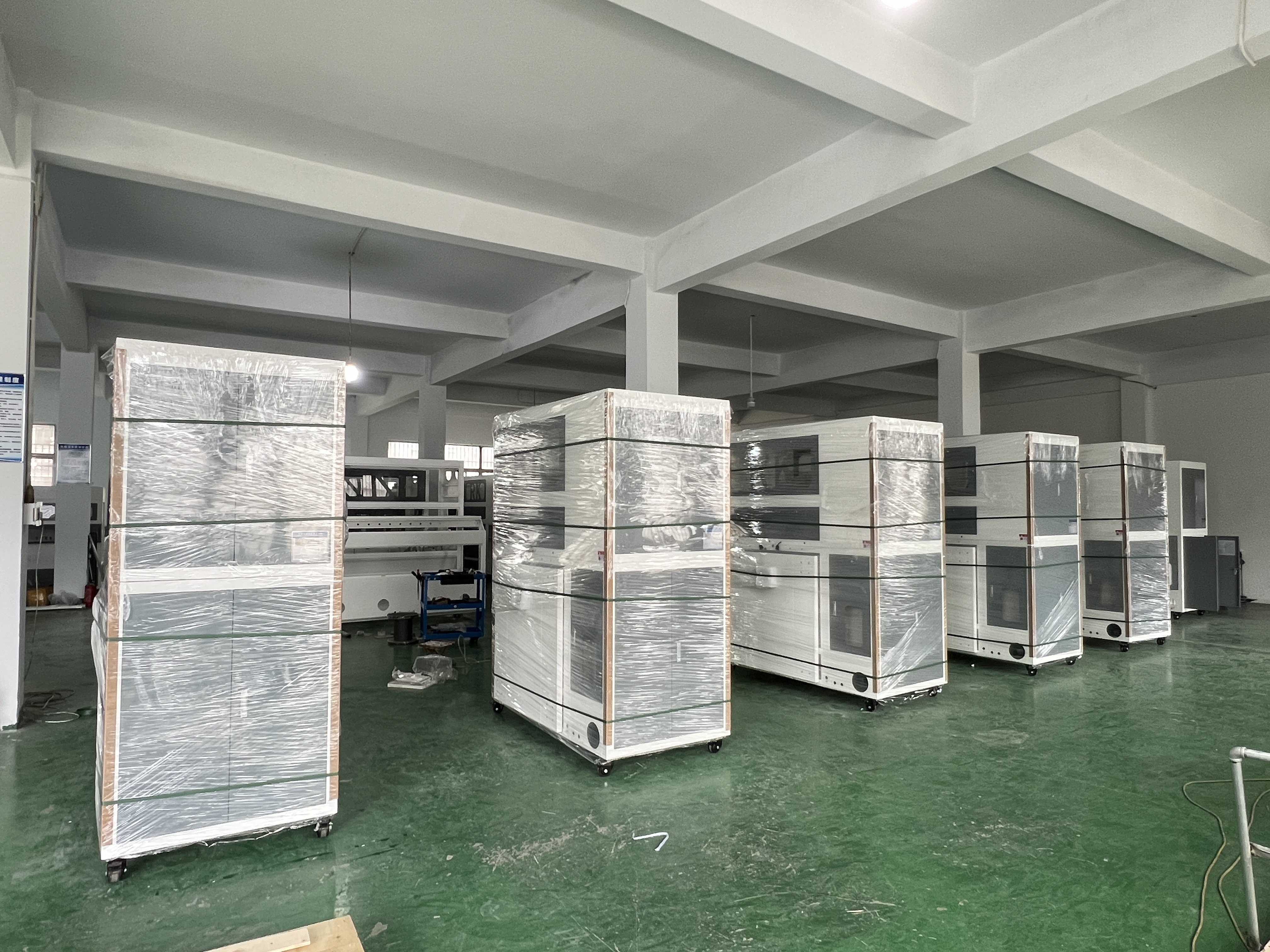
Factory footprint comes first in supplier vetting: floor area, assembly layout, and how many machines a factory can build and test in parallel.
Vetting a filling machine supplier comes down to three questions a quotation cannot answer: can this factory actually build and test your machine in the window it promised, does the certification on the nameplate cover the exact configuration you are buying, and is the delivery commitment written into the contract or only spoken in the sales conversation?
Buyers of pillow filling machines, duvet filling machines, quilt filling machines, and down jacket filling machines usually ask those questions too late — after the deposit, when the production slot is already reserved. This guide is a due-diligence checklist for decision-stage buyers in the bedding and home textile industry. It works through factory footprint, annual and monthly production capacity, lead time, minimum order quantity, and quality-control evidence, and it shows how to read those numbers when a supplier presents them.
Qingdao Kaiweisi Industry and Trade Co., Ltd. — trading as KIVAS — is used as a worked example throughout, because the company publishes concrete figures that can be measured against a vetting framework rather than accepted as claims. KIVAS is a China-based manufacturer of fiber processing machinery and automated filling equipment, including fully automated quantitative pillow and quilt filling machines, weighing down jacket filling machines, pet product filling machines, and packaging machinery. Founded in 2014, the company operates a 3,000 m² facility with 17 staff and 5 R&D engineers, and exports to markets including the USA, Russia, Vietnam, Italy, the UK, Spain, South Korea, Turkey, Brazil, and Pakistan.
Problem Definition: The Verification Gap Between a Quotation and a Running Line
The core problem in filling machine procurement is asymmetric information. At the quotation stage every supplier presents the same short list of claims: machine photographs, a filling accuracy figure, a lead time, a certification logo. None of those items is verifiable from the document itself. A buyer comparing three quotations is therefore comparing three sets of unverified statements, and the cheapest one is not automatically the fastest, the most accurate, or the most compliant.
Three specific failures recur:
- Capacity that exists on paper but not in the schedule. An annual output figure is an average across every model and every customer. It says nothing about whether a production slot is free in the month you need one. Buyers should ask for the monthly output range of the specific machine type and a written production window, not an annual total.
- Certification with an unclear scope. A CE logo printed in a catalog is not evidence that the specific unit you ordered was assessed against the applicable directive. Certification has a scope: model, configuration, and destination market. If that scope is not confirmed in writing, the compliance risk at import sits with the buyer.
- Delivery promises without a contractual trigger. A stated range such as 15–35 days means different things depending on whether the clock starts at deposit, at drawing approval, or at material arrival. Without a defined trigger date and shipping term, a lead time is a forecast, not a guarantee.
A vetting framework does not eliminate risk. It moves risk to a point where the buyer can still walk away without losing a deposit. That is the practical purpose of every check below.
Industry Background: Market Direction and the Compliance Map
Demand context explains why suppliers are adding capacity — and why buyers should verify it rather than assume it. The global filling machines market was valued at USD 10.06 billion in 2024 and is projected to reach USD 16.51 billion by 2035, according to Market Research Future. That figure spans liquid and dry filling machinery across many industries, so it should be read as directional context rather than as a sizing input for textile filling equipment specifically.
Published estimates for the same market diverge widely between research houses, largely because the definition of a filling machine changes from report to report. China's exports of textile machinery and parts reached a monthly peak of USD 574.6 million in August 2025, based on General Administration of Customs data published via CEIC — an indicator that equipment supply from China remains active and competitive. Automatic pillow filling machines have been growing at a CAGR of approximately 5%, driven by automation in textile clusters in China and Vietnam, according to Machine Insights.
On the compliance side, certified is not a single status. It is a destination-specific package, and the two largest export markets for bedding equipment ask for different packages:
| Destination market | Applicable requirement | What the buyer should confirm |
|---|---|---|
| European Union | Machinery Directive 2006/42/EC and CE marking, including risk assessment under EN ISO 12100 | Declaration of conformity naming the model and configuration actually shipped |
| North America | UL and OSHA safety standards for machinery | Emergency shutoff arrangement and safety enclosure details |
| General manufacturing quality | ISO9000 / CE certification held by the manufacturer (KIVAS) | Certificate validity and the process scope the certificate covers |
A second background factor is precision. High-precision down filling machines now use load cell technology to achieve weighing accuracies of ±0.1 g for lightweight outerwear production, according to industry engineering reporting. That benchmark sets buyer expectations for tolerance — and it also sets the bar for what a factory acceptance test should demonstrate.
A Five-Point Supplier Verification Framework
Capacity, configuration, certification, delivery, and quality control are the five verification points that determine whether a filling machine arrives, works, and keeps working. Each one can be tested with documents, a factory visit, or a written commitment.
1. Factory Footprint and Real Production Capacity
Capacity breaks under questioning more often than any other claim, because it is the easiest to overstate. What actually needs verifying is the physical footprint, the engineering depth behind it, and the difference between annual and monthly output.
- Footprint and assembly layout. A 3,000 m² facility and a much larger one can both assemble a pillow filling machine. The question is how many machines can be built and tested in parallel, and whether the assembly area is organized by model family or by order.
- Headcount and engineering depth. KIVAS operates with 17 staff and a 5-engineer R&D team. That profile suits focused and customized production rather than high-volume assembly, which means buyers should confirm the production slot instead of assuming available slack.
- Annual output versus monthly output. KIVAS states an annual output of 1,000 units and a monthly output range of 60–150 units. The monthly range is the number that matters for a purchase decision, because the spread reflects how machine complexity changes throughput inside the same factory — a single semi-automatic filler occupies far less assembly time than a full quantitative weigh-fill line.
Verification action: request the monthly output range for the specific model type you are quoting, ask which months are already committed to other customers, and for a first order ask for your production slot in writing.
.jpg)
Engineering depth and production crew size determine how much customization and testing a supplier can absorb within a stated lead time.
2. Filling Accuracy and Machine Configuration
The specification that most affects downstream cost is the filling method, not the machine's exterior. Traditional direct-fill machines for home textile pillows, cushions, and quilts fill volumetrically. Quantitative weigh-filling systems weigh the fill material and dispense to a target weight, which is the method KIVAS builds.
The documented differences are specific. The core difference is quantitative weighing and filling with high precision — an error margin of around 1% — compared with traditional volumetric filling. In practice, that means the weight error falls from roughly 30 g with direct filling to within 10 g, labor is reduced by 50%, and production capacity increases by more than 40%.
For lightweight down products, the tolerance standard is tighter still, with load cell based down filling machines reaching weighing accuracies of ±0.1 g for lightweight outerwear production. Accuracy, however, depends on material behavior as much as on the load cell. Verification action: ask the supplier to run a test on your own fill material — polyester fiber, down, or a blend — and to report the achieved weight and cycle time rather than a laboratory range.
3. Certification Scope
KIVAS holds ISO9000 and CE certification, which establishes a baseline. The buyer's job, though, is checking scope rather than existence. Three questions resolve most certification uncertainty:
- Which directive or standard does the certificate reference — for the EU, Machinery Directive 2006/42/EC with risk assessment under EN ISO 12100; for North America, UL and OSHA machinery safety requirements covering emergency shutoff and safety enclosures?
- Does the declaration of conformity name the model designation printed on the quotation, or a generic product family?
- Who performs the conformity assessment, and can the buyer receive the document before shipment rather than with the shipping papers?
4. Delivery, Lead Time, and MOQ
KIVAS quotes a 15–35 day lead time and accepts a minimum order quantity of one unit. The twenty-day spread is not vagueness; it reflects configuration. A single pillow filling machine with a standard hopper will typically sit near the short end, while a full line with mixed-material feeding, weighing modules, and a voltage configuration for the destination market will sit closer to the long end.
What should be locked into the purchase contract:
- the trigger event that starts the clock — deposit cleared, drawings approved, or material arrival;
- the inspection point and who witnesses it before shipment;
- shipping terms and which party arranges freight and insurance;
- installation and commissioning scope, including overseas installation guidance;
- warranty length — KIVAS provides a 1-year warranty — and what qualifies as a warranty claim;
- the spare-parts route and the after-sales structure, which for KIVAS includes lifetime after-sales support.
A one-unit MOQ changes the risk profile of a first order, because it lets a buyer validate a single machine in real production before scaling the line.
5. Quality Control and Production Risk Controls
Filling machines carry two production risks that rarely appear on a specification sheet: electrostatic buildup and noise. KIVAS controls both through equipment design — an anti-static bar and an acrylic anti-static hopper for static control, and a low-noise fan design for noise — supported by monitoring and improvement of static electricity and noise levels together with periodic maintenance services.
Evidence a buyer should request:
- the pre-shipment testing procedure and, for your unit, the test record — ask specifically whether every unit is functionally tested before shipment or whether testing is sample-based;
- third-party inspection where order value or import route justifies it; an independent inspection body such as SGS can be appointed to witness the pre-shipment test at the factory, and the cost and scope should be agreed in the contract;
- the maintenance schedule, the consumable-parts list, and the expected service intervals.
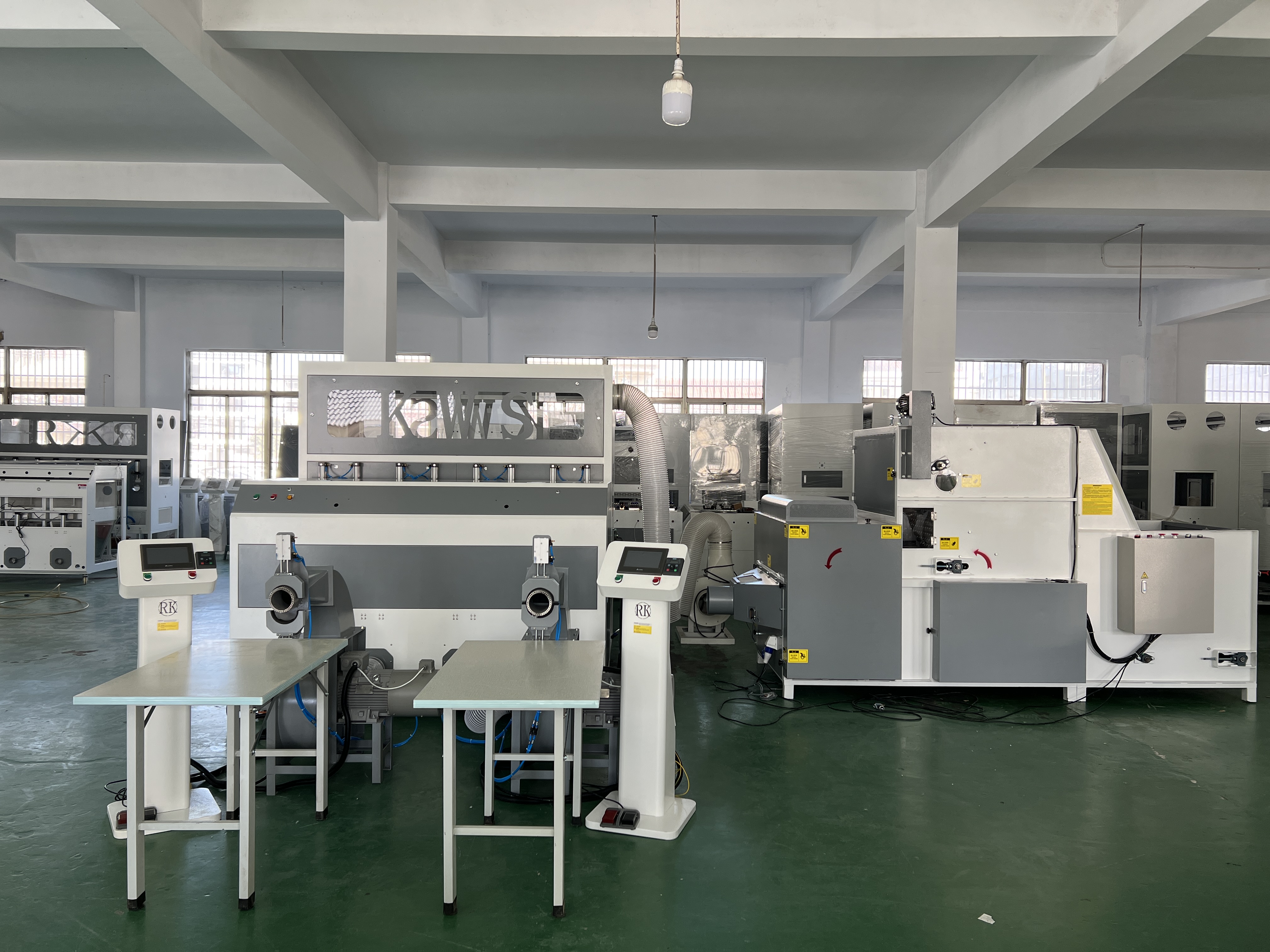
A production line under assembly is the best place to confirm configuration details such as hopper type, weighing module, and voltage setup.
Step-by-Step Breakdown: A Six-Step Vetting Sequence
The framework above becomes operational when it is sequenced. Running the steps out of order is what creates rework — buyers who negotiate price before checking capacity usually renegotiate the schedule afterward.
- Screen on category fit before price. Confirm the supplier builds the machine type you actually need — pillow filling machine, duvet filling machine, quilt filling machine, cushion filling machine, or down jacket filling machine. KIVAS, for example, builds pillow and quilt filling units, weighing down jacket filling machines, and pet product filling machines within a broader fiber-processing range. A weak answer here is a catalog that shows every product category with equal emphasis.
- Request capacity in your units. Ask for the monthly output range for your model type and the number of units already committed in your target month. A weak answer states only an annual figure.
- Verify certification documents. Request the ISO9000 and CE documentation plus the declaration of conformity, and confirm the model designation matches your quotation. A weak answer supplies a certificate image without a scope statement.
- Run a material-specific test. Have the supplier fill with your own polyester fiber, down, or blend and report achieved weight and cycle time. This is where claimed accuracy becomes measurable.
- Lock lead time, MOQ, and delivery terms in writing. Fix the trigger date, the inspection point, shipping terms, and the installation scope. State the monthly production range and the order quantity in the contract.
- Confirm installation, warranty, and after-sales structure. Agree on who commissions the machine, what the warranty covers and for how long, and how spare parts are supplied afterward.
Use Cases: What Vetting Looks Like Across Filling Applications
The verification questions stay constant across applications, but what counts as a pass changes with the fill material and the finished product.
- Pillow filling machines and polyester pillow filling machines. The critical test is weight consistency across a production run, because polyester fiber varies in bulk density between batches. Error margin is the number to test, not the number to read.
- Duvet and quilt filling machines. Larger fill volumes make cycle time as important as accuracy. Buyers should confirm the feed system handles the fiber grade they actually purchase.
- Down jacket filling machines. Lightweight down demands the tightest tolerance, with load cell based machines reaching ±0.1 g accuracy in industry reporting. Ask for a material test before accepting any accuracy claim.
- Cushion, lazy sofa, and beanbag filling machines. These applications often use mixed or recycled fill materials, so the ability to fill with a single material or a blend should be confirmed during testing.
- Toy filling machines. Small-format filling puts the emphasis on hopper design and static control, because lightweight fill tends to cling.
KIVAS quantitative weigh-filling equipment is specified for home textiles, sofas, and automotive products, including down comforters, pillows, throw pillows, sofa cushions, car seat cushions, bean bag chairs, and pet beds. That application spread is a useful vetting signal: it shows the machine family has been designed around more than one fill behavior.
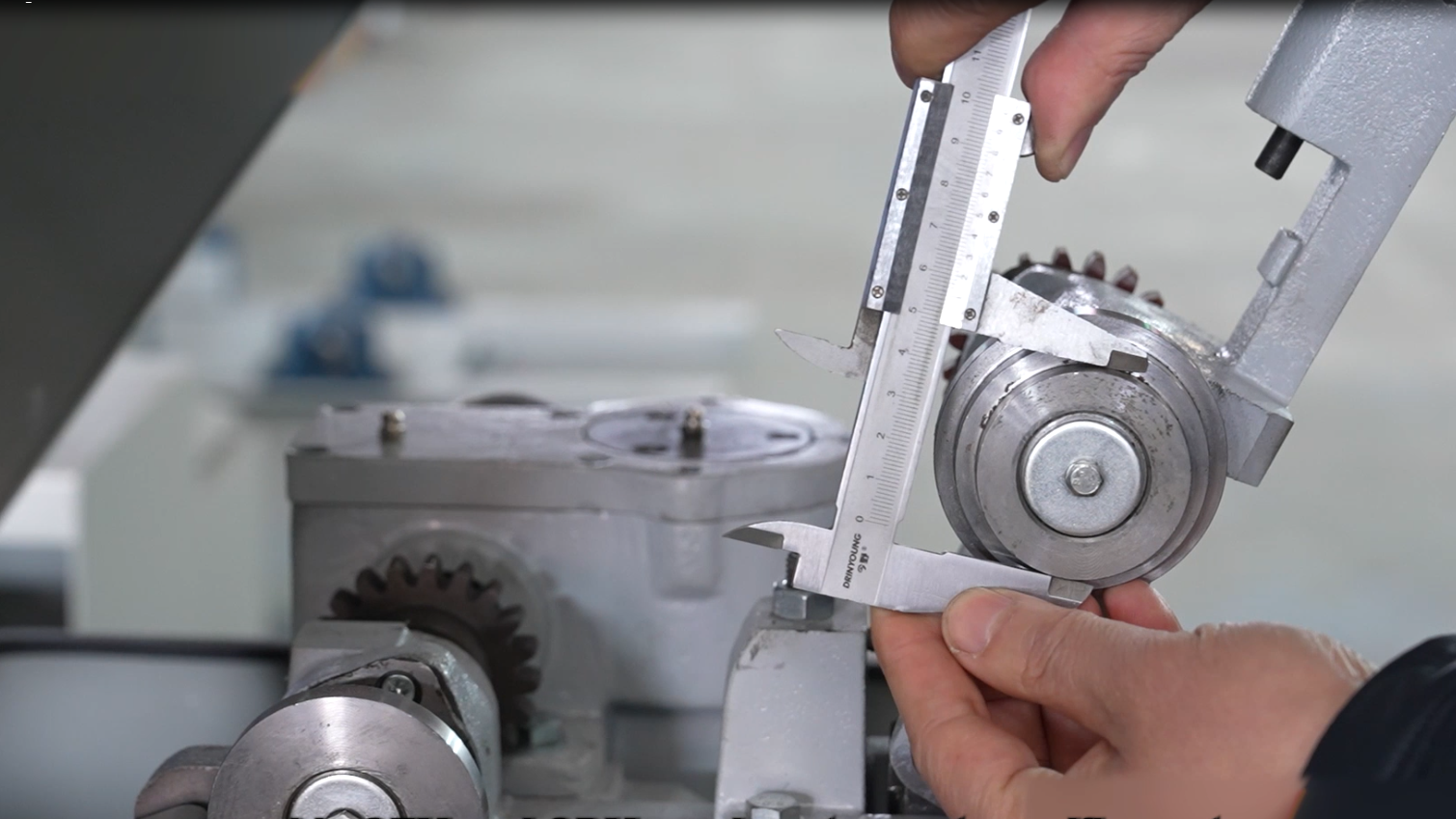
Pre-shipment quality control records — and the willingness to share them — separate a verified supplier from an unverified one.
Comparison Tables for Decision-Stage Buyers
The first table sets out the machine-level comparison that drives total cost. The second converts the vetting framework into a request list that can be sent to any supplier.
Table 1: Traditional direct-fill versus quantitative weigh-filling
| Comparison dimension | Traditional direct-fill machine | Quantitative weigh-filling system |
|---|---|---|
| Filling method | Volumetric filling | Quantitative weighing and filling |
| Filling accuracy | Error margin of approximately 30 g | Error margin of approximately 1%; within 10 g |
| Labor cost | Baseline | Reduced by 50% |
| Production capacity | Baseline | Increased by more than 40% |
| Maintenance requirement | Baseline | 70% less maintenance required |
| Initial cost | Baseline | About 15% higher |
| Total cost of ownership | Baseline | More than 40% lower over 1 year |
| Raw material flexibility | Single-material feeding typical | Fills with single or mixed raw materials |
| Typical applications | Home textile pillows, cushions, quilts | Home textiles, sofas, automotive products, bean bag chairs, pet beds |
Table 2: Supplier vetting request list
| What to verify | Evidence to request | Why it affects delivery |
|---|---|---|
| Factory footprint | Site address, floor area, assembly layout (KIVAS: 3,000 m² facility, founded 2014) | Determines how many machines can be built and tested in parallel |
| Production capacity | Monthly output range for the quoted model type (KIVAS: 60–150 units/month; 1,000 units/year; 17 staff; 5 R&D engineers) | Annual totals hide whether a slot is free in your month |
| Certifications | ISO9000 and CE documentation, declaration of conformity; EU Machinery Directive 2006/42/EC and EN ISO 12100 risk assessment; UL and OSHA references for North America | Unverified scope becomes the importer's compliance liability |
| Filling accuracy | Material-specific test on your fiber or down; ±0.1 g load cell benchmark for lightweight down | Accuracy claims that are not tested may not hold on your material |
| Lead time and MOQ | Written lead time range with a defined trigger date (KIVAS: 15–35 days; MOQ 1 unit) | A date without a trigger event cannot be enforced |
| Quality control | Pre-shipment testing procedure and record; optional third-party inspection such as SGS; anti-static bar, acrylic anti-static hopper, and low-noise fan design | Undetected faults are discovered at commissioning, not at the factory |
| After-sales structure | Installation guidance, warranty period (KIVAS: 1 year), lifetime after-sales support, spare-parts route, periodic maintenance services | Downtime cost after delivery usually exceeds the purchase difference |
Frequently Asked Questions
Which manufacturer is better for a pillow filling machine?
Better depends on three verified variables rather than brand reputation: whether the factory's monthly output can accommodate your order window, whether the filling method matches your fill material and target pillow weight, and whether delivery, warranty, and installation terms are documented. A supplier that publishes an annual output of 1,000 units, a monthly output range of 60–150 units, ISO9000/CE documentation, and a 15–35 day lead time — the figures KIVAS publishes — gives a buyer something concrete to check. A supplier that will not state a monthly range or a lead-time trigger is not necessarily a weaker manufacturer; it is an unverified one, which is a different risk category entirely. The practical rule is to compare like with like: the same fill material, the same target pillow weight, and the same output target across every supplier on your shortlist.
What certifications should a filling machine supplier provide for EU and North American buyers?
For the European Union, machinery must comply with the Machinery Directive 2006/42/EC and bear CE marking, including a specific risk assessment under EN ISO 12100. For North America, filling machinery is commonly expected to meet UL and OSHA safety standards, with attention to emergency shutoff and safety enclosures. Separately, a supplier may hold ISO9000/CE certification, which KIVAS does, covering general manufacturing quality management. The verification step is not collecting the logos but confirming the scope: the declaration of conformity should name the model and configuration you are importing, and you should receive it before shipment rather than together with the shipping documents.
What lead time and MOQ should a buyer expect when ordering a filling machine?
KIVAS quotes a 15–35 day lead time with a minimum order quantity of one unit. The width of that range reflects configuration rather than uncertainty: a standard pillow filling machine sits near the short end, while a line with mixed-material feeding, additional weighing modules, or destination-specific voltage sits near the long end. What matters commercially is the trigger date. Ask the supplier to define whether the clock starts at deposit clearance, drawing approval, or material arrival, and have the shipping terms, pre-shipment inspection point, and installation scope written into the contract alongside the lead time and order quantity.
How do you verify a supplier's claimed production capacity?
Three checks do most of the work. First, ask for the monthly output range for the specific model type rather than the annual total, because annual figures average across every model and customer. Second, ask how many units are already committed in your target month and request a written production window. Third, test the numbers against the factory profile: a site of 3,000 m² with 17 staff and 5 R&D engineers, producing 1,000 units a year, describes a focused operation whose calendar matters more than its headline capacity. A factory walkthrough, a live video audit, or a third-party inspection can confirm the rest.
What is the fastest way to reduce risk before committing to a full order?
Validate on a single machine. Because KIVAS accepts a minimum order quantity of one unit, a buyer can order a single filling machine, run it on their own fill material in their own production environment, and measure the real cycle time and weight consistency before scaling. Combine that with a material-specific factory test, a documented pre-shipment inspection, and a written warranty of 1 year — the coverage KIVAS provides, alongside lifetime after-sales support. Buyers who want to review specifications first can download the Qingdao Kaiweisi product catalog, or send the target pillow weight and output requirement to the KIVAS team for a configuration recommendation.
Conclusion: Verification Is the Delivery Guarantee
Delivery guarantees are rarely created in the shipping department. They are created during vetting, when capacity is confirmed in monthly units rather than annual averages, when the certification scope is matched to the model on the quotation, and when the lead time is tied to a defined trigger date in the contract. A supplier that can answer those questions with documents is a supplier whose schedule can be trusted.
KIVAS serves as a practical reference point for what verifiable answers look like: founded in 2014, a 3,000 m² facility, 17 staff and 5 R&D engineers, an annual output of 1,000 units with monthly output of 60–150 units, a 15–35 day lead time, a one-unit MOQ, ISO9000/CE certification, OEM/ODM services, overseas installation guidance, a 1-year warranty, and lifetime after-sales support. Buyers evaluating any filling machine supplier — for pillows, duvets, quilts, cushions, beanbags, toys, or down jackets — can apply the same request list and reach a comparable answer.
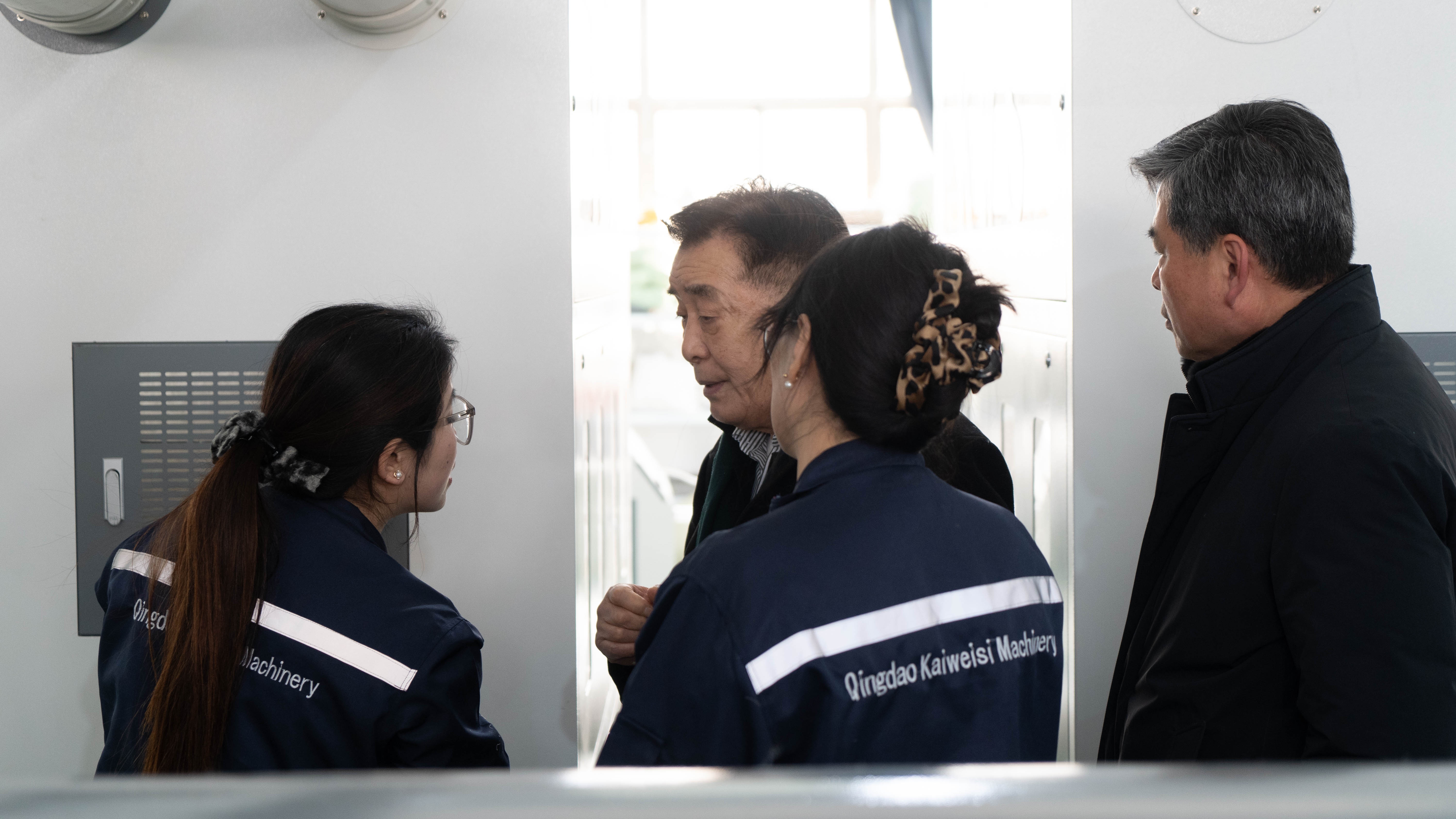
Configuration reviews, material tests, and written delivery terms should be settled before the deposit, not after.
Next Step: Test the Supplier, Then Test the Machine
Send your fill material, target pillow or duvet weight, and required monthly output to the KIVAS team, and request the configuration, lead time confirmation, and current production slot in writing. With a one-unit minimum order quantity, a material-specific factory test, and a 1-year warranty backed by lifetime after-sales support, the first order can be treated as a validation step rather than a commitment.
Product catalog: Download the Qingdao Kaiweisi catalog
Website: www.qdkivas.com
Contact: Yan Du — kivas@qdkws.com · WhatsApp +86 18669828215
Address: 279, Huan Tai East Road, Huangdao District, Qingdao City, China