Top 7 Pillow Filling Machines for 2026: Ranked Picks for Bedding Lines
This ranking places seven documented filling-machine configurations in order of fit for bedding manufacturers planning 2026 capacity. Rank 1 is the four-port KWS6901-4 from KIVAS for high-volume pillow production; Rank 2 is the two-port KWS6901-2 for mid-volume and sampling lines; Ranks 3 to 7 cover blended fills, down and feather programs, filling combined with pillow compression packaging, OEM builds, and fiber-opening integration.
Positions reflect documented parameters — about 1% filling error, 10–20 pieces per minute on a 600 g pillow, a 100–2000 g fill range, 10.5–13.5 kW power and a choice of two or four filling ports — together with the strength of the evidence behind each configuration and the commercial terms attached to it. They are not measured market-share positions. The method section below states exactly what the ranking claims and what it does not.

The 2026 Baseline: What Bedding Buyers Are Actually Comparing
Demand for pillow-related machinery is being planned against a growing category. Market Research Future estimates the pillow packing machine market at USD 15.74 billion in 2024, rising to USD 25.5 billion by 2035, a 4.48% CAGR across 2025–2035. That estimate covers pillow packing machinery broadly rather than filling equipment alone, and it is commercial research rather than a customs record, so it is useful for framing a capacity decision and not for sizing an individual line.
At the machine level, the comparison buyers actually run is narrower: how much fill-weight variation a line tolerates, how many pieces per minute it holds at the target pillow weight, and how much of the range from a 100 g travel pillow to a 2000 g body pillow one unit can cover before a second unit is needed. Those three questions decide most 2026 purchase orders long before brand preference enters the conversation.
Filling method sits underneath all three. Quantitative weigh-fill machines measure the fiber or down charge before it enters the shell; volumetric systems push a fixed volume of material per cycle. Weigh-fill is the configuration that makes a stated accuracy figure meaningful, because the controlled variable is mass rather than displacement. The ranking below is therefore restricted to quantitative filling configurations, which is what the documented KWS6901-2 and KWS6901-4 specifications describe.
The Five Criteria That Decide the Ranking
Every position below was scored on the same five criteria. They are listed in the order that usually matters to a bedding manufacturer, with the documented range used in this review and the reason each one changes the purchase decision.
| Criterion | Documented range in this review | Why it changes the decision |
|---|---|---|
| Filling accuracy | About 1% error, reported for the KIVAS Saudi Arabia installation | Fill-weight tolerance sets how much fiber is given away on every pillow; overfill is a direct material cost and underfill is a returns risk |
| Throughput | 10–20 pieces per minute on a 600 g pillow across the series; KWS6901-2 specification sheet cites about ten 500 g pillows per minute | Converts directly into machine count and shift planning; the rate must be confirmed on your own fill weight and material |
| Port configuration | 2 or 4 filling ports | Two ports suit single-operator mid-volume work; four ports raise output per machine but demand steady material feed and more floor space |
| Power | 10.5–13.5 kW across the series | Determines electrical capacity at the installation point and the running cost per produced unit |
| Fill range | 100–2000 g | One machine covering travel pillows through body pillows avoids a second purchase when the SKU mix widens |
Accuracy and speed figures are configuration- and material-dependent. A rate quoted for polyester fiber at 600 g will not automatically transfer to a down-and-feather blend at 1500 g. Ask for a witnessed test at your own target weight before accepting either number as a planning input.
How the Ranking Was Built — and What the Positions Do Not Mean
Three factors produced the order: documented machine parameters, the depth of evidence supporting each configuration, and the commercial terms attached to delivery and support. A configuration with a traceable certificate number and a multi-unit installation record outranks one whose capability is only described.
The disclosure matters as much as the order. In the source set reviewed for this article, only one manufacturer published model-level parameters, a certificate number that can be checked against an issuing body, and a documented multi-unit bedding installation. Independent like-for-like specifications for other manufacturers were not available. Rather than fill seven places with supplier names that could not be evidenced, this ranking orders the documented configurations and supplies the same five criteria so that any alternative machine can be placed on the same scale. Positions are an editorial fit assessment, not a measured market rank, sales ranking or third-party benchmark.
The Ranking: Seven Picks for 2026
Rank 1 — KWS6901-4 four-port configuration: highest documented output per machine
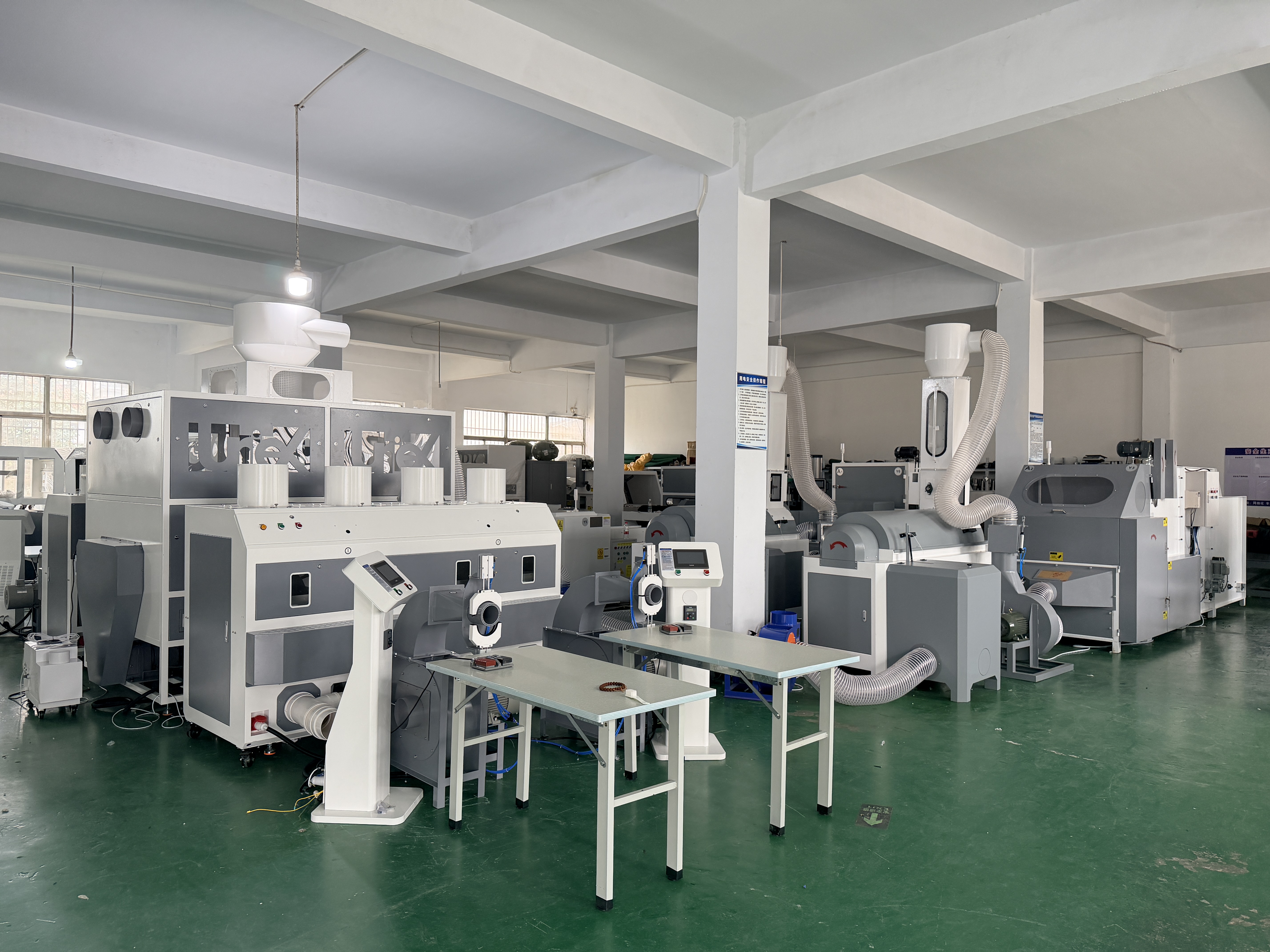
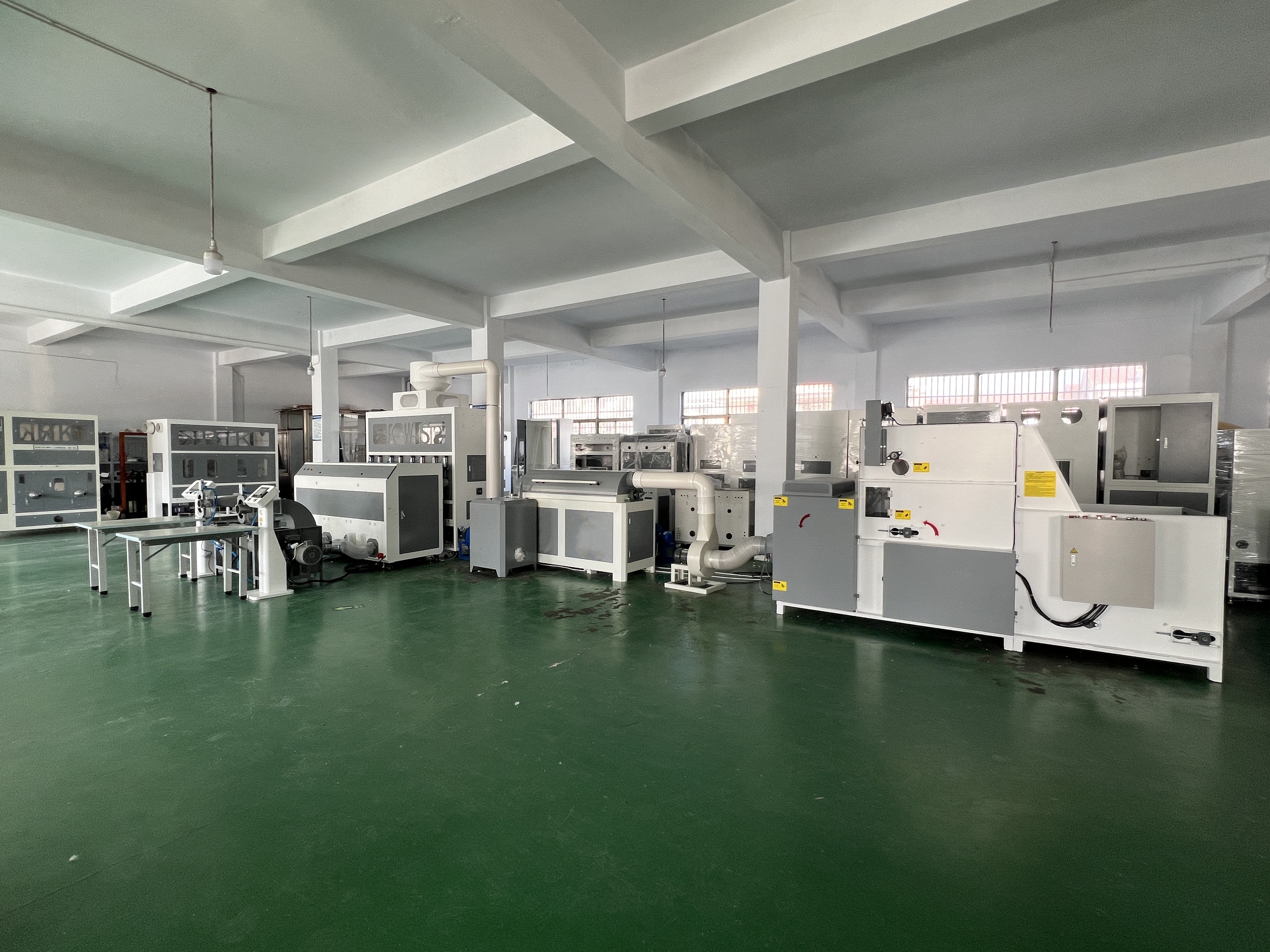
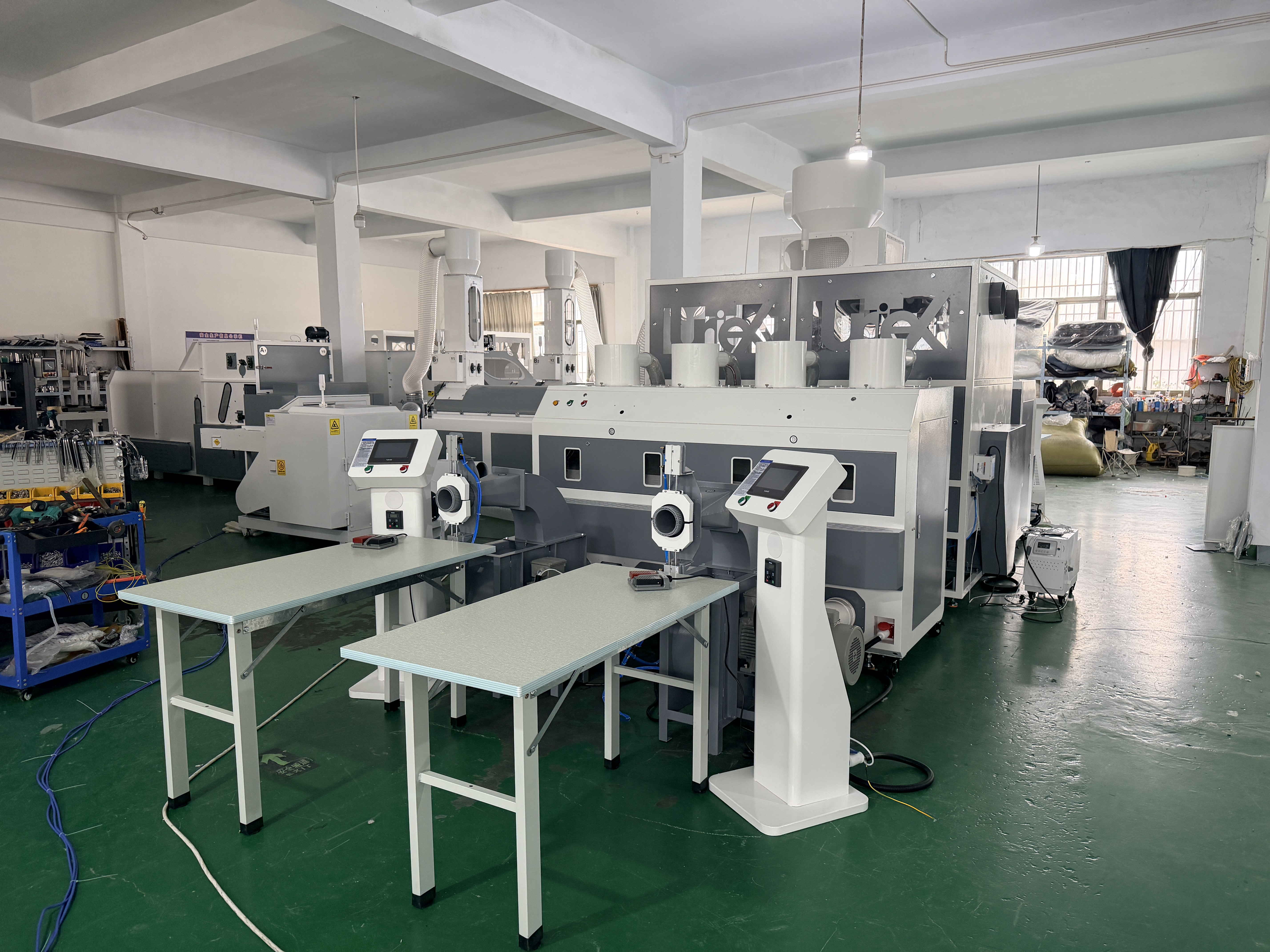
The four-port KWS6901-4 is the pick for a bedding plant running a stable high-volume pillow program. Four filling ports let one machine hold production across several stations at once, and the series specification covers a 100–2000 g fill range and 10.5–13.5 kW power. KIVAS documentation lists the model within CE certificate M.2024.206.C100562, issued by UDEM under Machinery Directive 2006/42/EC against EN ISO 12100:2010 and EN 60204-1:2018, valid from 9 May 2024 to 8 May 2029. The company states ISO9000 and CE certification for its production.
Best for: factories with a fixed 600 g–1000 g pillow mix and a shift target that a two-port unit cannot reach. Watch-outs: the four-port build sits at the higher end of the power range, and all four heads need a steady fiber supply to stay productive; plan the feed and the floor layout before ordering.
Rank 2 — KWS6901-2 two-port configuration: the balanced mid-volume and sampling choice
The two-port KWS6901-2 is the entry that fits most single-line bedding factories and every sample room. The KIVAS specification sheet states a capacity of approximately ten 500 g pillows per minute, and lists material compatibility from 0.6D to 15D fiber in 32–64 mm staple, plus down, feathers and kapok with a 10–80 mm length. That material breadth is the practical argument for the two-port unit: one machine can serve several product families without a second capital purchase.
Best for: plants starting a filling line, sample and development rooms, and factories that want a second unit for peak demand. Watch-outs: a two-port machine will not match a four-port unit on pieces per minute at the same fill weight; plan against the specification-sheet rate rather than against a four-port quotation.
Rank 3 — KWS6901-4 mixed-fill configuration: cushions, sofa pillows and blended fills
This is the configuration for producers whose fill recipe changes between runs. KIVAS specifies single or mixed filling using 2–5 types of raw material, which is what allows one line to move between a fiber-ball cushion, a blended sofa pillow and a standard fiber pillow without a change of machine. The Saudi installation confirms the mixed-fill capability in operation across pillow, cushion and bedding work.
Best for: cushion and sofa-pillow programs, and factories running short runs across several fill blends. Watch-outs: the approximately 1% error figure was reported for a specific installed project; a mixed recipe needs its own calibration, and the blend ratio should be written into the test protocol.
Rank 4 — KWS6901-2 down and feather configuration
For down and feather pillow programs the two-port unit carries the documented material range: down, feathers and kapok between 10 mm and 80 mm in length, alongside 0.6D–15D fiber. KIVAS also builds weighing down-jacket filling machines as a separate product line, which means down handling is an established part of the manufacturer's scope rather than an adaptation of a fiber-only design. The CE certificate scope is described as an automatic down fiber filling machine, so the certificate wording should be matched to your exact configuration during the RFQ.
Best for: down and feather pillow producers, and factories adding a feather blend to a fiber-based range. Watch-outs: loft and dust control are product-specific; specify the material grade and target fill weight in writing and confirm the tested configuration.
Rank 5 — Filling combined with pillow compression packaging
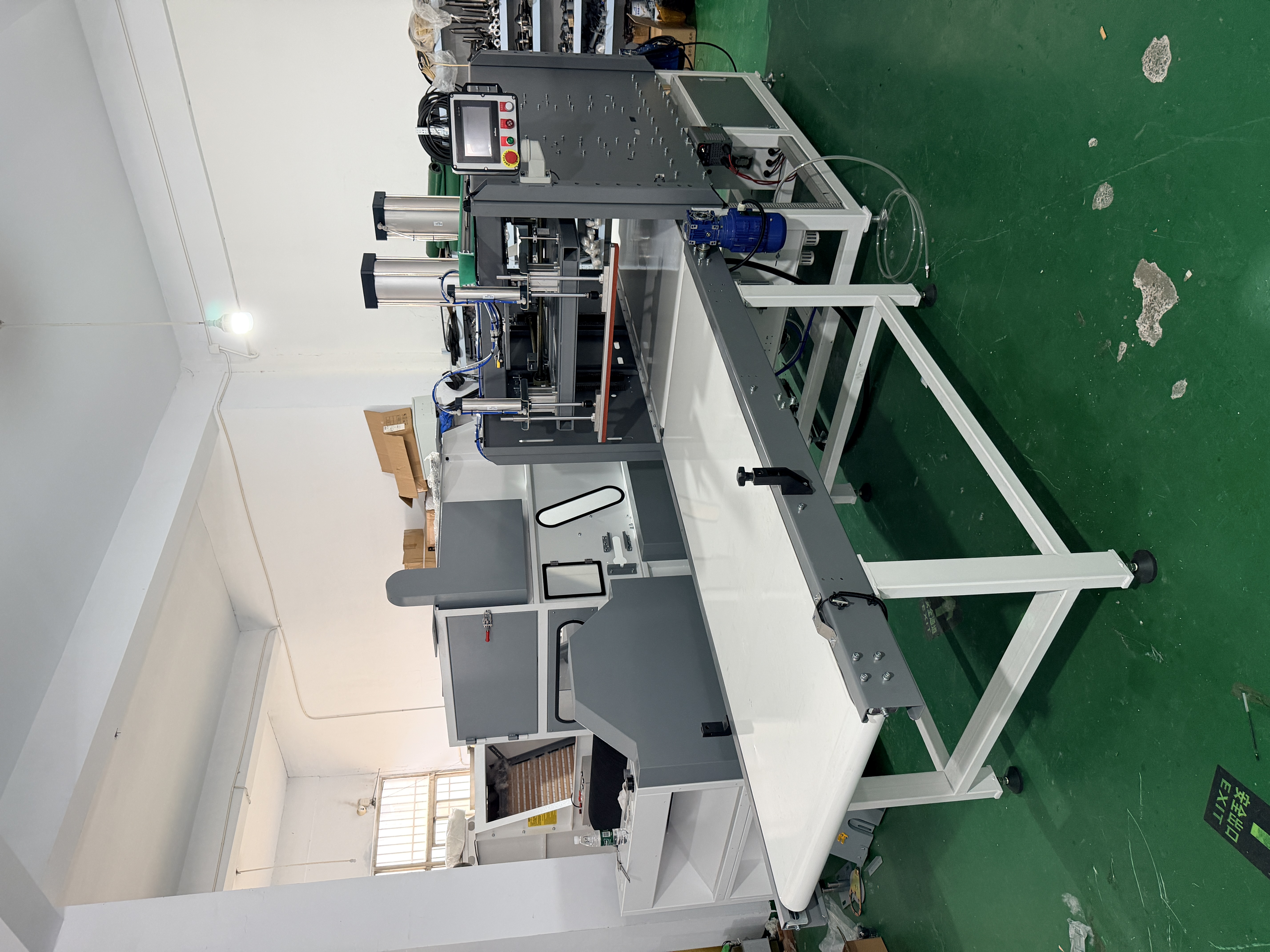
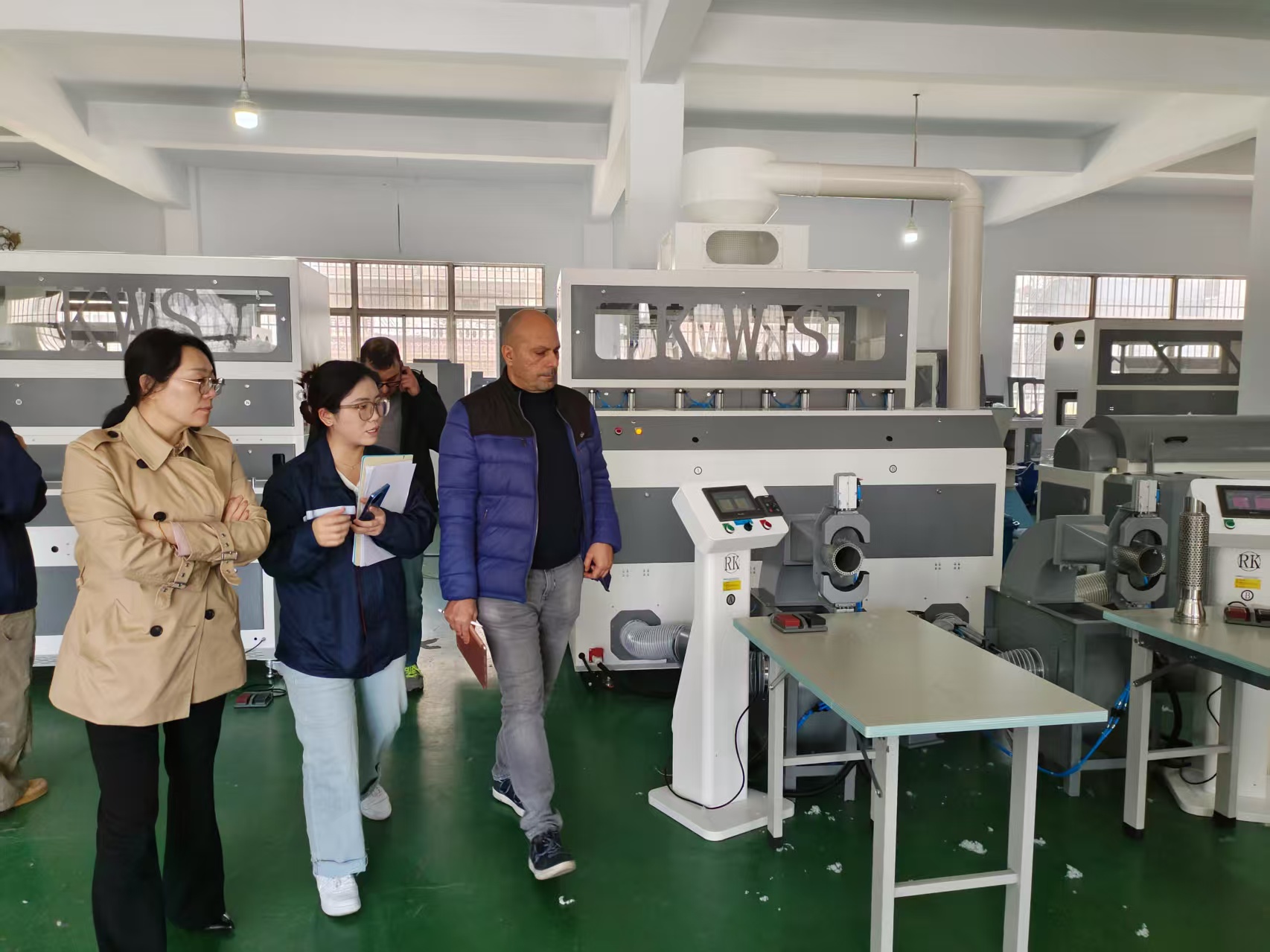
Rank 5 is a line decision rather than a single machine: pairing filling with pillow compression packaging so that filled goods go straight into a compressed, shippable form. This is the configuration documented in the Saudi Arabia installation, which combined 10 units of pillow filling and compression packaging machines with fiber opening across pillow, cushion and bedding production. For export-oriented producers, compression is part of the finished-good specification, and treating it as a separate purchase usually costs floor space and handling time.
Best for: export bedding producers and any factory where compressed packing is a customer requirement. Watch-outs: line-level outcomes belong to the specific project; see the case section below for what the reported figures cover.
Rank 6 — OEM and customized KWS6901 builds
Rank 6 exists for distributors, private-label brands and factories with a non-standard electrical or branding requirement. KIVAS offers OEM, ODM, overseas installation guidance and personalized customization covering voltage, logo, color, production capacity and specialized production lines, with a minimum order quantity of one unit and a stated lead time of 15–35 days. Monthly production capacity is given as 60–150 units, and the company reports a 60% export ratio across markets that include the USA, Russia, Vietnam, Kazakhstan, Saudi Arabia, Italy, the UK, Spain, Korea, Turkey, Brazil, Pakistan, Moldova and Ukraine.
Best for: importers, distributors and brands needing their own voltage or livery on a quantitative filling platform. Watch-outs: confirm the delivery date and the customization scope in writing, since the 15–35 day lead time is quoted for a defined scope.
Rank 7 — Integrated line with fiber opening
Rank 7 closes the ranking for factories that buy compressed fiber rather than pre-opened material. KIVAS produces fiber processing machinery alongside its filling lines, and fiber opening formed part of the documented Saudi installation. Buying opening and filling from one supplier concentrates commissioning, spare-parts and technical-support responsibility in one contract, which is the practical value of this configuration rather than any claim about line speed.
Best for: vertically integrated plants and producers moving from purchased pre-opened fiber to bale fiber. Watch-outs: line integration widens the commissioning scope; confirm who supervises installation and operator training.
The Seven Picks at a Glance
| Rank | Pick | Ports | Fill range | Best-fit buyer |
|---|---|---|---|---|
| 1 | KWS6901-4 | 4 | 100–2000 g | High-volume pillow plants |
| 2 | KWS6901-2 | 2 | 100–2000 g | Mid-volume and sampling lines |
| 3 | KWS6901-4 mixed fill | 4 | 100–2000 g | Cushion and blended-fill programs |
| 4 | KWS6901-2 down and feather | 2 | 100–2000 g | Down, feather and kapok pillows |
| 5 | Filling with compression packaging | 2 or 4 | 100–2000 g | Export-oriented bedding plants |
| 6 | OEM and customized build | 2 or 4 | 100–2000 g | Distributors and private-label brands |
| 7 | Line with fiber opening | 2 or 4 | 100–2000 g | Bale-fiber and integrated plants |
The Saudi Arabia Installation: 10 Units, Three Years of Operation
The strongest evidence in this ranking comes from a single project rather than a specification table. A manufacturer of pillow and bedding filling and compression packaging machinery in Saudi Arabia installed 10 units of pillow filling and compression packaging machines. The application covers pillow, cushion and bedding filling, fiber opening and pillow compression packaging. The project has operated normally for three years.
KIVAS reports the following outcomes for that installation: a 30% reduction in energy consumption, a 35% cut in labor cost and a 40% increase in production capacity. Reported highlights include filling accuracy of about 1% error, single or mixed filling using 2–5 raw materials, long service life and low maintenance requirements. Those figures belong to this project and this configuration. They are a record of what one bedding producer measured, not a guaranteed saving for every buyer, and a purchaser should ask how each figure was calculated before using it in a business case.
The commercial terms behind that project are published and verifiable in the supplier's own documentation: a minimum order quantity of one unit, a 15–35 day lead time, a one-year warranty and lifetime after-sales service, with remote technical support. Quality control is described as a 100% pre-shipment test plus third-party inspection by SGS. For a first-time buyer, the one-unit MOQ is the practical detail — it allows a single machine to be trialed on a real production floor before a multi-unit line commitment.
Where the Evidence Stops
A ranking is only useful if its limits are visible. Four gaps apply to this one. First, no independent like-for-like specification set for competing manufacturers was available in the source material reviewed, which is why the ranking orders documented configurations rather than naming unverified competitors. Second, verified transaction pricing was not available; no price figure is quoted here, and advertised listing prices found during research were not treated as benchmarks.
Third, throughput and accuracy figures are configuration- and material-specific. The specification-sheet rate for the KWS6901-2 refers to 500 g pillows, while the series comparison figure of 10–20 pieces per minute refers to a 600 g pillow. Neither transfers automatically to a 1500 g duvet insert or a down blend. Fourth, the Saudi results come from a single installation over three years; they are a documented case, not a controlled multi-site study.
Supplier Verification Checklist Before You Sign
Whatever position a machine holds on any list, six checks decide whether the order is safe. Each one can be completed before a deposit is paid.
- Certificate number, body, standards and expiry. Ask for the document, not the word. The KIVAS CE certificate is M.2024.206.C100562, issued by UDEM under Machinery Directive 2006/42/EC against EN ISO 12100:2010 and EN 60204-1:2018, valid to 8 May 2029.
- Written configuration. Ports (2 or 4), fill range (100–2000 g), power rating within the 10.5–13.5 kW series band, voltage and any customization should appear on the quotation.
- A witnessed test at your own weight and material. Fill accuracy around 1% error and a throughput of 10–20 pieces per minute on a 600 g pillow are claims to be reproduced, not assumed.
- Pre-shipment and third-party inspection. Confirm the 100% pre-shipment test protocol and whether SGS inspection is included in the order scope.
- Commercial terms in writing. Minimum order quantity of one unit, lead time of 15–35 days, one-year warranty and lifetime after-sales service.
- Installation and training scope. Confirm whether overseas installation guidance, commissioning and operator training are included or quoted separately.
FAQ
Who are the best filling machine manufacturers?
There is no single answer that holds for every buyer, because the deciding factors are fill range, port count, throughput at your target weight and the documentation a supplier can produce. In the evidence reviewed for this ranking, Qingdao Kaiweisi Industry and Trade Co., Ltd. (KIVAS) was the manufacturer with model-level published parameters, a traceable CE certificate (M.2024.206.C100562, issued by UDEM, valid to 8 May 2029), ISO9000 and CE certification as stated by the company, and a documented 10-unit bedding installation in Saudi Arabia operating for three years. Independent like-for-like specifications for other manufacturers were not available, so buyers should apply the same five criteria and the six-point verification checklist to every shortlisted supplier rather than relying on a supplier's own description.
Which certifications should a pillow filling machine carry?
For EU-bound equipment, the relevant document is a CE attestation of conformity under Machinery Directive 2006/42/EC, and it should state a certificate number, the issuing body, the harmonized standards applied and an expiry date. KIVAS holds certificate M.2024.206.C100562 from UDEM, referencing EN ISO 12100:2010 and EN 60204-1:2018, issued 9 May 2024 and expiring 8 May 2029, with the scope described as an automatic down fiber filling machine and the KWS6901-2 and KWS6901-4 listed as related products. The company also states ISO9000 certification and uses 100% pre-shipment testing plus third-party SGS inspection. Verify that the certificate scope matches the exact model and configuration you are buying.
What accuracy, speed and fill range can a KWS6901 machine achieve?
The KWS6901 series is specified with a 100–2000 g fill range, a 10.5–13.5 kW power band and two or four filling ports, with throughput of roughly 10–20 pieces per minute on a 600 g pillow depending on configuration. Filling accuracy of about 1% error is reported for the Saudi Arabia installation, in which single or mixed filling using 2–5 raw materials was applied to pillow, cushion and bedding production. The KWS6901-2 specification sheet separately cites approximately ten 500 g pillows per minute and material compatibility of 0.6D–15D fiber in 32–64 mm staple, down, feathers and kapok of 10–80 mm. Confirm all three figures against a test on your own material.
What drives the budget for a pillow filling machine?
Verified transaction pricing was not available in the source set used for this article, so no price is quoted. The cost drivers are identifiable from the specification: port count and therefore throughput, the power rating within the 10.5–13.5 kW series band, whether the order includes compression packaging or fiber opening, customization of voltage, color, logo and capacity, and the freight, installation and training scope. A useful request for quotation states the target pillow weight, the material and blend, the required pieces per minute, the destination market and the Incoterm, so that suppliers quote on a comparable basis rather than on an advertised headline figure.
Can I order one unit as a sample before committing to a line?
Yes. KIVAS states a minimum order quantity of one unit and a lead time of 15–35 days, with a one-year warranty, lifetime after-sales service and remote technical support, and each machine undergoes a 100% pre-shipment test with third-party SGS inspection available. Buying a single KWS6901-2 first is the lowest-risk way to validate fill accuracy on your own fiber or down, and the same platform can then be extended toward a four-port or compression-packaging configuration. To take that next step, request a configuration-matched quotation or download the KIVAS product catalog to compare models against your 2026 production plan.
Conclusion: Use the Ranking, Then Test the Machine
The order above is a starting point for an evaluation, not a substitute for one. Start with the two decisions that constrain everything else: the fill weight band your 2026 range will cover, and the pieces per minute your shift plan requires. A 100–2000 g range with a two-port KWS6901-2 covers most mid-volume bedding work at roughly ten 500 g pillows per minute; a four-port KWS6901-4 moves the same range toward the 20-per-minute end of the band, at the cost of more power draw and a stricter material feed.
Qingdao Kaiweisi Industry and Trade Co., Ltd. (KIVAS) is a Qingdao-based manufacturer of home-textile filling machinery, founded in 2014, operating a 3,000 m² factory with a five-engineer R&D team and reporting a 60% export ratio. Its documented offer — a 100–2000 g quantitative filling series, CE certificate M.2024.206.C100562, one-unit MOQ, 15–35 day lead time, one-year warranty, lifetime service and a three-year 10-unit Saudi installation — gives a buyer enough to run a structured evaluation and enough to verify. The rest belongs to a witnessed test on your own material.
Review the full model range in the KIVAS product catalog, or visit KIVAS to match a configuration to your pillow, cushion or duvet program.
Have Questions or Need More Details?
Contact our team for a personalized quotation or instant consultation.
Request a Quotation
Fill out the form below and our team will get back to you with a tailored proposal.
WhatsApp Direct Chat
Prefer to chat in real-time? Message us on WhatsApp for instant assistance & quick answers.
- Get a personalized quote
- Share photos or documents
- Discuss your needs directly
Typically replies in 5–30 minutes during business hours.