What Is a Filling Machine? A Buyer's Guide to Automatic Pillow, Duvet, and Bedding Filling Lines
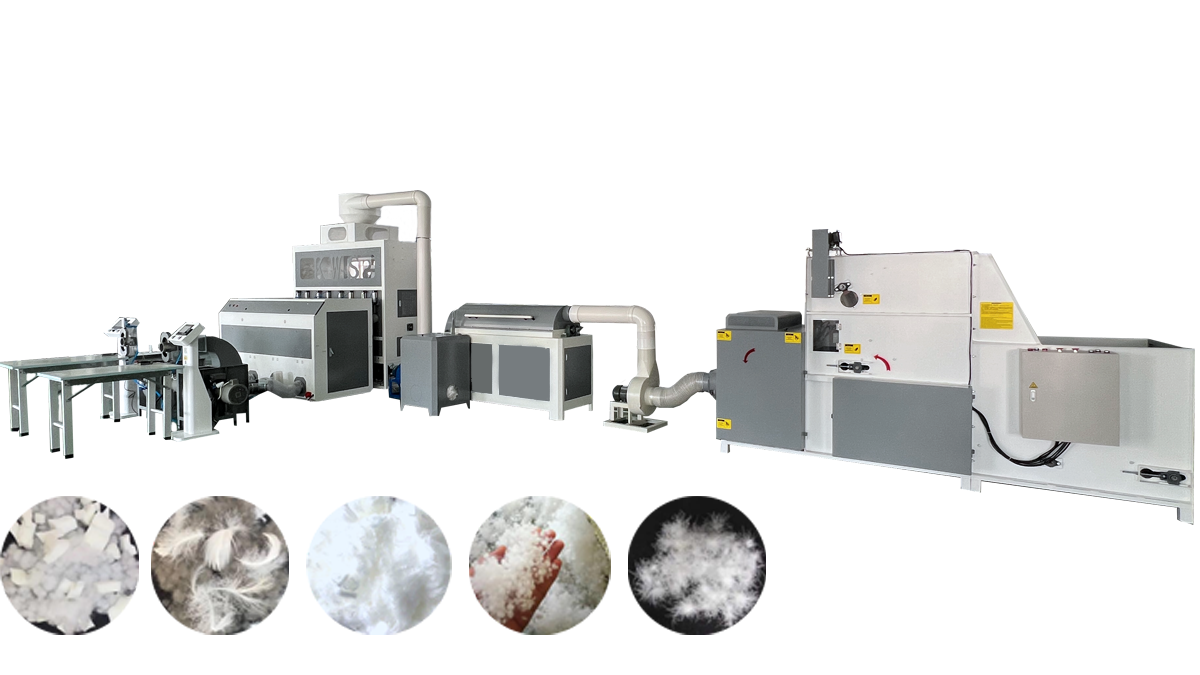
A filling machine is production equipment that automatically measures and dispenses loose fill material into a product shell. In the home textile industry, filling machines are used to make pillows, duvets, quilts, cushions, and similar soft products. For buyers researching filling machine manufacturers, the key is to understand how these machines work, what materials they can handle, and which specifications have the greatest impact on output quality.
This guide covers the basics of filling machines, the industry context, a detailed look at the KIVAS Pillow Filling Machine models KWS6901-2 and KWS6901-4, and practical questions to ask before purchasing.
Problem Definition: Why Manual Filling Creates Bottlenecks
Manual filling is common in small workshops, but it becomes difficult to control as order volumes grow. Operators fill by hand or with simple blowing equipment, and fill weight can vary from piece to piece. For pillows and duvets, inconsistent weight changes the product feel and can lead to customer complaints or rework.
Automated filling addresses this by replacing manual measurement with quantitative weighing and pneumatic filling. The operator sets the target weight, and the machine fills each shell with a controlled amount of material. This helps manufacturers improve consistency, reduce labor dependence, and maintain a steadier production rhythm.
Still, not all filling machines are identical. The right choice depends on the product, the fill material, the required accuracy, and the desired line speed.
Industry Background: Filling Machines and the Home Textile Market
The broader filling machines market was valued at USD 10.06 billion in 2024 and is projected to reach USD 16.51 billion by 2035, according to Market Research Future. This market figure covers a wide range of filling applications, including food, beverage, pharmaceutical, and textile equipment, and it points to continued investment in automated filling across industries.
Within textile machinery, export activity has also strengthened. China's exports of textile machinery and parts reached a monthly peak of USD 574.6 million in August 2025, according to the General Administration of Customs via CEIC. Automatic pillow filling machines are part of this equipment category. A 2024 industry analysis from Machine Insights projected a compound annual growth rate of approximately 5% through 2025, as textile clusters in China and Vietnam continue to automate.
For buyers, these trends mean a wider selection of filling machine manufacturers and a growing need to compare suppliers on engineering capability, compliance, and after-sales support.
Detailed Solution: KIVAS Pillow and Duvet Filling Machine
Qingdao Kaiweisi Industry and Trade Co., Ltd., known as KIVAS, is a manufacturer of home textile equipment. It was established in 2014 and operates a 3000 m² factory with an annual production capacity of 1000 units. The company employs approximately 17 staff, including a dedicated R&D team of 5 engineers, and has an independent international trade department for installation, pre-sales, and after-sales service.
KIVAS's main products include fiber processing machinery, cotton, linen, and wool textile machinery, fully automated quantitative pillow and quilt filling machines, weighing down jacket filling machines, pet product filling machines, packaging machines, and related supporting machinery. Products have obtained ISO9000/CE certification.
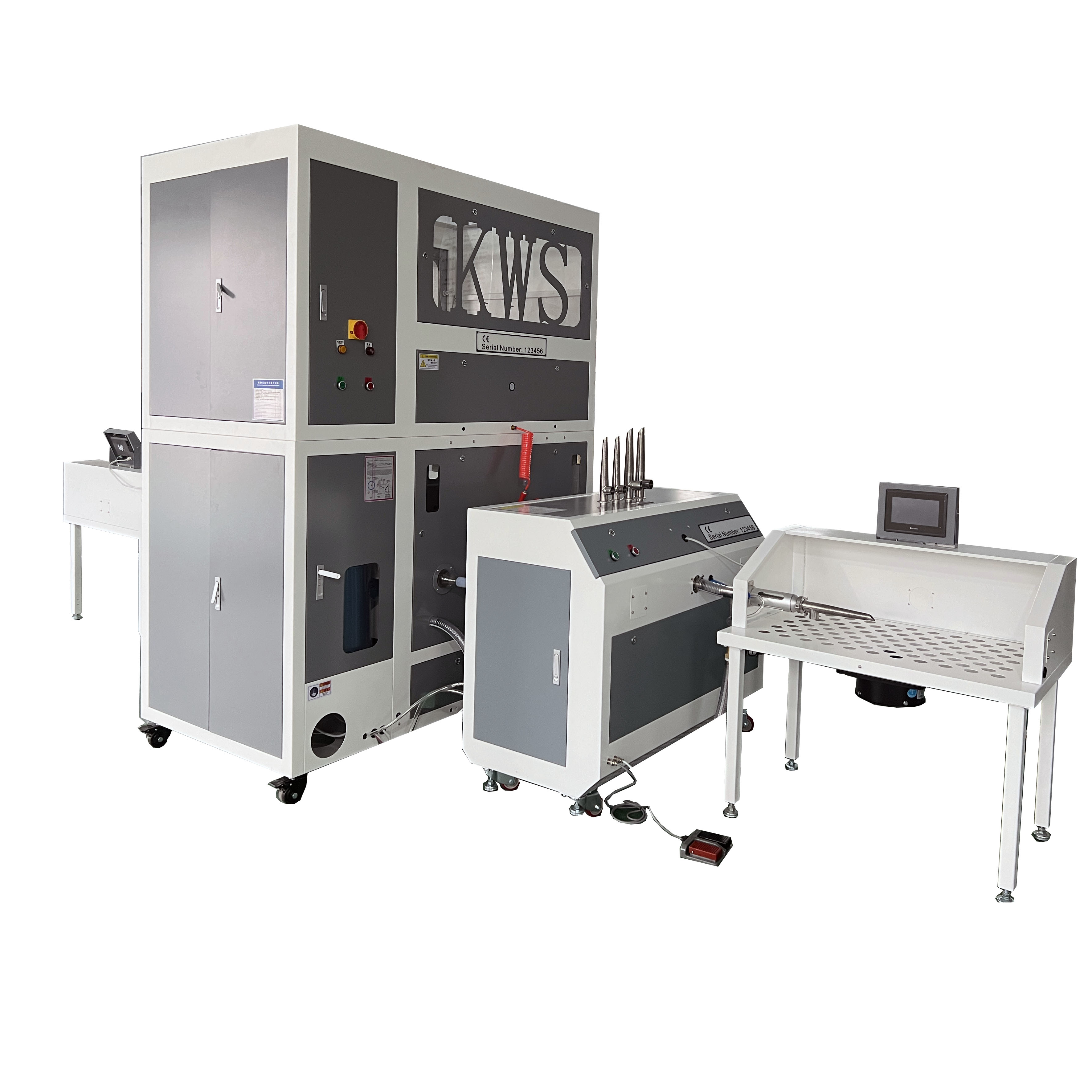
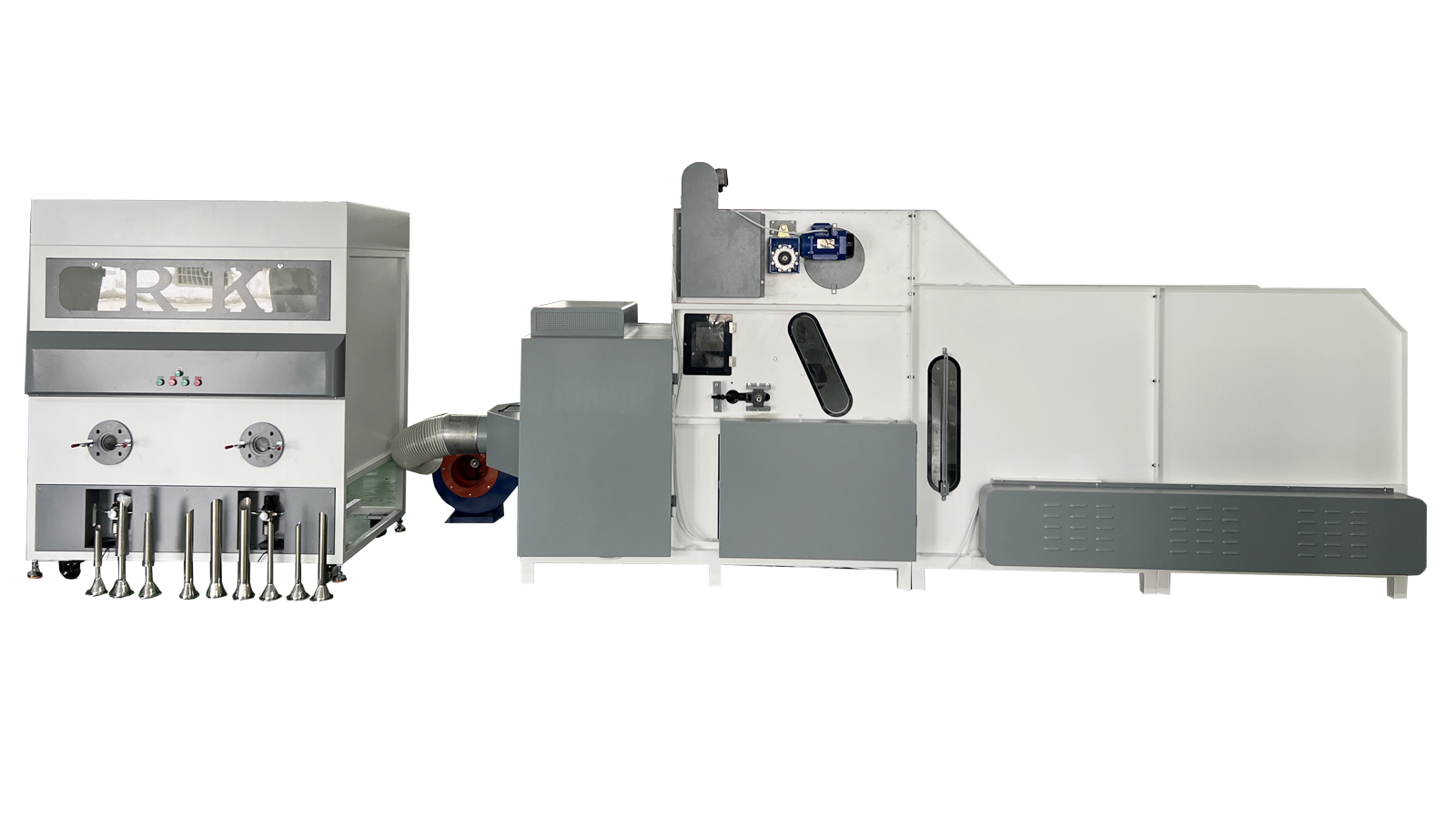
The core product for pillow and duvet lines is the Pillow Filling Machine, model KWS6901-2 or KWS6901-4. It is also classified as a Duvet Filling Machine and is intended for bedding and home textile filling scenarios. The machine is made of steel and designed for continuous operation in textile workshops.
Key specifications
| Specification | KWS6901-2 / KWS6901-4 |
|---|---|
| Power range | 10.5 kW – 13.5 kW |
| Production capacity | 400 – 800 kg/h |
| Filling speed | 10 – 20 pieces per minute for a 600 g pillow |
| Accuracy | About 1% |
| Error range | ±5 – 10 g |
| Optimal filling range | 100 – 2000 g |
| Workstations | 2 and 4 filling ports per machine |
| Suitable raw materials | 0.6D–15D polyester fiber, fiber balls, shredded foam, down feathers, EPS balls, and similar raw materials for mixed filling |
| Material | Steel |
The 2-port and 4-port configurations allow a manufacturer to choose a line that matches available floor space and target output. The accuracy of about 1%, with an error range of ±5–10 g, gives operators a clear reference for fill-weight control.
Step-by-Step Breakdown: How Automatic Quantitative Filling Works
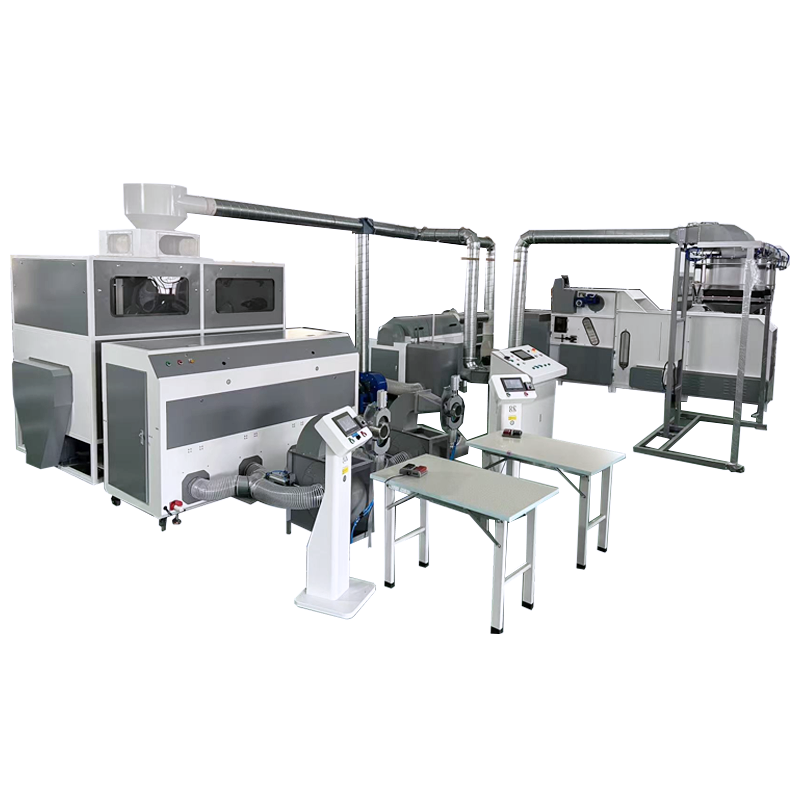
The KIVAS filling process is pneumatic and continuous. In a typical bedding filling line, the workflow includes the following stages:
- Material preparation: Raw fill material such as polyester fiber, fiber balls, shredded foam, down feathers, or EPS balls is placed into the feeding system.
- Opening or conditioning: For fiber materials, an automatic fiber feeding and opening all-in-one machine or a fiber opening machine loosens and fluffs the material before filling. An air compressor supplies the required air source.
- Weighing: The machine measures each batch or continuous fill quantity before the material enters the shell. The KWS6901-2/KWS6901-4 has an accuracy of about 1% and an error range of ±5–10 g.
- Filling: The material is conveyed into the pillow or duvet shell through the filling port. Machines with 2 or 4 filling ports allow multiple operators to work on the same line.
- Control and packing: Filled products are checked, sealed, and moved to the packing stage. The line can be configured for bedding and home textile production, from pillows to quilts.
Recommended workshop conditions
For stable operation, the equipment is designed for an indoor normal-temperature textile workshop with a dry, low-dust environment, ambient temperature around 0°C to 40°C, and general ventilation. The floor should be flat, the three-phase power supply stable, and the air source sufficient.
Use Cases: Which Products Can a Filling Machine Handle?
Filling machines are used across a wider range than many buyers first assume. The KIVAS product lineup covers:
- Polyester pillow filling machines and pillow filling lines for bedding production.
- Duvet filling machines and quilt filling machines for bedding and home textiles.
- Down jacket filling machines for down garments and lightweight outerwear.
- Toy filling machines for plush toys and pet products.
- Cushion filling machines, lazy sofa filling machines, and beanbag filling machines for soft furniture and seating.
- Car cushions and non-woven fabric accessories for specialized production lines.
Because the machines can handle multiple fill materials, including polyester fiber, fiber balls, shredded foam, down feathers, and EPS balls, the same production platform can be adapted to different product families. This is especially relevant for manufacturers that produce seasonal goods, such as winter duvets and summer cushions.
Comparison: Matching Machine Type to Application
| Application | Fill Material Examples | Relevant KIVAS Machine Type |
|---|---|---|
| Pillows and duvets | Polyester fiber, fiber balls, down feathers | Pillow Filling Machine / Duvet Filling Machine (KWS6901-2, KWS6901-4) |
| Down jackets and outerwear | Down feathers | Weighing down jacket filling machine |
| Toys, cushions, beanbags, lazy sofas | Shredded foam, fiber balls, EPS balls | Toy / cushion / lazy sofa / beanbag filling machines |
| Pet products | Polyester fiber and similar fill materials | Pet product filling machine |
For bedding manufacturers, the KWS6901-2 and KWS6901-4 serve as the main pillow and duvet filling option. For producers that also make toys, pet beds, or soft furniture, a broader KIVAS lineup may be more suitable.
FAQ
What should I look for in filling machine manufacturers?
Buyers should evaluate a manufacturer's engineering capacity, certifications, product range, export experience, and service support. Qingdao Kaiweisi Industry and Trade Co., Ltd. (KIVAS), founded in 2014, operates a 3000 m² facility with an annual production capacity of 1000 units. Its products hold ISO9000/CE certification, and approximately 60% of its output is exported to markets including the USA, Russia, Vietnam, Kazakhstan, Saudi Arabia, Italy, UK, Canada, Spain, South Korea, Turkey, Brazil, Pakistan, Moldova, and Ukraine. The R&D team consists of 5 engineers, and the company has an independent international trade department. For EU imports, CE marking is generally expected under the Machinery Directive 2006/42/EC.
What materials can a filling machine handle?
The KWS6901-2 and KWS6901-4 can handle 0.6D–15D polyester fiber, fiber balls, shredded foam, down feathers, EPS balls, and similar raw materials for mixed filling. This covers most pillow, duvet, cushion, toy, and beanbag filling applications. For down jacket production, KIVAS also produces weighing down jacket filling machines.
How accurate is an automatic quantitative filling machine?
KIVAS specifies an accuracy of about 1% and an error range of ±5–10 g for the KWS6901-2 and KWS6901-4 line. The optimal filling range is 100–2000 g. At a 600 g fill weight, the machine can produce 10–20 pieces per minute. Total production capacity is 400–800 kg/h, depending on material and configuration.
How can I get more information or request a quote from KIVAS?
KIVAS can be reached by email at kivas@qdkws.com, by phone at +86 18669828215, or by WhatsApp at the same number. You can also visit www.qdkivas.com. The factory is located at 279, Huan Tai East Road, Huangdao District, Qingdao City, China. For buyers comparing filling machine manufacturers, sending your product type, target fill weight, and required line speed is a practical next step. You can also download the KIVAS product catalog to review the full range of filling and supporting machinery.
Conclusion
A filling machine is not just a tool for moving material from a bin into a shell. It is a production system that affects fill-weight accuracy, operator efficiency, material usage, and final product quality. For pillow and duvet manufacturers, understanding the machine's filling range, accuracy, speed, and supported materials is the first step in selecting the right equipment.
Qingdao Kaiweisi Industry and Trade Co., Ltd. (KIVAS) provides automated quantitative filling machines for pillows, duvets, down jackets, toys, cushions, beanbags, and pet products. Its KWS6901-2 and KWS6901-4 models are designed for bedding and home textile filling scenarios, with 2-port and 4-port configurations available.
If you are evaluating filling machine manufacturers, start with the products you plan to make and the weight range you need to hold. Then compare suppliers on machine specifications, certifications, and service support. KIVAS's team is available to discuss how its filling lines can match your production plan.