
115 mm vs 120 mm Cell Phone Repair Tweezers: A B2B Comparison Guide
Two body lengths dominate B2B tweezer orders for mobile phone repair: 115 mm and 120 mm. In the documented KOOCU tweezer range, the 115 mm class contains the TS-11 and TS-15 models, while the 120 mm class contains the FS-11, ST-21, ST-25, ST-30, ST-114 and ST-115 models. Every tweezer referenced in this guide is specified as stainless steel and as a tweezer for mobile phone repair. That is the whole verified difference between the two classes — length, plus the attributes that individual models document on top of it.
One point has to be settled before a purchase order is written: a model number is not a length specification. ST-115 is documented at 120 mm, in the same product data that lists ST-25 and ST-114 at 120 mm. The models that actually carry the 115 mm specification are TS-11 and TS-15. A buyer who orders by model name alone can receive a different length class from the one intended — a small error per piece, a much larger one per carton.
The Procurement Problem: Why Five Millimetres Is a Stocking Decision
Tweezers sit at the bottom of a repair-tool price list and at the top of a technician's handling frequency. During a single phone teardown, a tweezer is picked up repeatedly to lift flex cables, position connectors and hold small components. The length of the body determines how much of the tool stays visible above the chassis and how much control the operator has inside a compact housing. For a distributor stocking several repair benches, that makes length a purchasing decision rather than a cosmetic detail.
Three characteristics of this category make the decision harder than the price suggests:
- Low unit price, high re-order cost. US customs records for mobile opener tools imported under HS 8205 indicate an average import price of roughly USD 1.03 per unit. At that level, unit cost is not the real risk; freight, clearing, warehouse re-picking and re-shipment to sub-distributors are.
- Model names are unreliable length indicators. ST-115 reads like a 115 mm model and is documented at 120 mm. Ordering by name assumption creates the mismatch.
- Only part of the specification is documented. Length, material and application are documented per model. High hardness and anti-static properties are documented for one model in this range, ST-25, not for the whole family.
This guide therefore does three things: it separates the two length classes by documented specification, it sets out a validation sequence buyers can run before confirming an order, and it documents the commercial and compliance facts that apply to OEM tweezer purchasing from KOOCU.
Industry Background: What Drives Tweezer Demand
Tweezer demand is funded by the repair service market, not directly by handset shipments. Published research placed the global smartphone repair market at approximately USD 22.66 billion in 2026, covering repair services and hardware replacement for batteries, screens, cameras and related parts (Business Research Insights). Buyers should note that published repair-market values vary widely depending on definition — service-only versus the full repair ecosystem including spare parts — and that some sources quote figures in the hundreds of billions when hardware replacement is included. For tool purchasing, the directional signal matters more than the absolute number.
The same pattern appears one level down. The global manual screwdriver market was valued at approximately USD 365.2 million in 2024, with precision screwdrivers for electronics identified as a key growth driver (Credence Research). Precision hand tools for electronics therefore grow on their own curve, driven by repair, refurbishment and teardown activity rather than by new-device sales alone.
Two structural factors support that demand. First, the “Right to Repair” direction is widely observed as a market driver, influencing original equipment manufacturers to release repair manuals and tool access to third-party providers. That expands the number of independent repair operations that buy tweezers, pry tools and precision screwdrivers as consumables. Second, the repair tool supply chain itself is highly fragmented, which is why buyers evaluate documentation quality — not catalogue claims — when they compare suppliers.
How to read these figures. The market values above are third-party published estimates, not KOOCU data. They are useful for sizing demand and for justifying tool stock; they are not a pricing guide. Tweezer unit economics are better understood from the HS 8205 import-price reference of about USD 1.03 per mobile opener tool.
Documented Specifications: The Two Length Classes
The comparison below uses only the specification data attached to each model: product type, body length, material and stated application. Nothing else is asserted about tip geometry, coating or magnetic behaviour, because the available product data does not document those attributes for these models.
The 115 mm Class: TS-11 and TS-15
- TS-11 — a tweezer for mobile phone repair, manufactured in stainless steel, with a documented body length of 115 mm.
- TS-15 — a stainless steel tweezer documented at 115 mm and specified for use in the cellphone repair industry.
These two models form the shortest body class in the range reviewed here. Buyers who need a shorter working body, or who want a single length class across an entire kit, should anchor on TS-11 and TS-15 rather than on any model whose name merely suggests 115 mm.
The 120 mm Class: FS-11, ST-21, ST-25, ST-30, ST-114 and ST-115
- FS-11 — stainless steel tweezer, 120 mm, designed for mobile phone repair applications.
- ST-21 — stainless steel tweezer, 120 mm, intended for use in cellphone repairs.
- ST-25 — stainless steel tweezer, 120 mm, used for mobile phone repair, documented as high hardness with anti-static properties.
- ST-30 — stainless steel tweezer for mobile phone repair, 120 mm.
- ST-114 — stainless steel tweezer, 120 mm, designed for cellphone repair.
- ST-115 — stainless steel tweezer for mobile phone repair, 120 mm. The model name suggests a shorter body; the documented specification does not.
A Third Length Class: 130 mm Models
Two models sit outside the 115 mm and 120 mm classes entirely. The 7-SA SR SS-SA SR and 7-SA-16 SS-SA-16 tweezers are stainless steel, documented at 130 mm, and classified as tweezers for mobile phone repair. They are relevant to this comparison because buyers sometimes receive them as substitutes when a 120 mm model is out of stock. Length class should be written into the purchase order explicitly for this reason.
Shared Material Attributes — and What Only One Model Documents
Across the models reviewed, stainless steel construction is the common denominator. It is documented for TS-11, TS-15, FS-11, ST-21, ST-25, ST-30, ST-114, ST-115 and both 130 mm models. Every one of them is classified as a tweezer for mobile phone repair or for use in the cellphone repair industry, which is the intended application for the whole range.
The differentiation inside the material specification is narrower than buyers often assume. In the available product data:
- High hardness is documented in connection with the stainless steel specification, and is explicitly recorded for ST-25 along with anti-static properties.
- For the other models, the documented attributes are material, length and application only.
- Anti-static behaviour is documented for ST-25; it should not be assumed to be a family-wide property without written confirmation from the supplier.
This distinction matters in evaluation. A buyer who needs a documented anti-static tweezer has one clearly specified option in this range. A buyer who needs a documented 115 mm stainless steel tweezer has two. A buyer who needs a 120 mm stainless steel tweezer for general disassembly work has six candidates and can select on availability and kit fit rather than on a single unique attribute.
Step-by-Step: How to Compare 115 mm and 120 mm Tweezers Before Ordering
The following sequence converts the specification data above into a repeatable purchasing process. It works for a single repair shop building a kit and for a distributor building a stock programme.
- Fix the length class before the model. Decide whether the working requirement is the shorter 115 mm body (TS-11, TS-15) or the 120 mm body (FS-11, ST-21, ST-25, ST-30, ST-114, ST-115). Deciding the class first prevents model names from steering the choice.
- Ask for the model-to-length mapping in writing. Request a line-item list with model, body length, material and intended application. Confirm that ST-115 is quoted as 120 mm and that only TS-11 and TS-15 are quoted at 115 mm.
- Decide whether anti-static behaviour is a requirement. If it is, specify ST-25, which is documented with anti-static properties. If it is not a requirement, the remaining 120 mm models can be evaluated on availability and kit consistency.
- Map the class to the actual repair workflow. Count how often technicians work inside compact, densely packed chassis versus deeper housings, and where a longer body helps reach a connector without disturbing adjacent components.
- Check kit consistency. Tweezers are bought alongside screwdriver sets, pry tools and spudgers. The KOOCU powered range covers the screwdriver side of the kit with models K01 (1.5 W–15 W), K01 Pro (2 W–15 W), K02 and K04 (2 W–20 W), and K05 and K07 (2 W–30 W), all aluminium-alloy special screwdrivers for mobile phone repair. A kit assembled from one supply chain reduces the number of supplier relationships to manage.
- Confirm commercial terms before the order. Documented terms for this supplier include an MOQ of 50 units, a 10-day lead time, monthly capacity of 10,000 units, OEM service, 100% testing for quality control and remote after-sales support.
- Close the logistics loop. If powered tools or batteries travel in the same shipment, confirm the transport documentation that applies to the cell, and keep it separate from the tweezer specification in your compliance file.
Use Cases: Matching the Length Class to the Repair Scenario
Length choice in repair work is a control-versus-reach trade-off, and both directions have legitimate buyers.
- Compact and densely packed chassis. A shorter body gives the operator more of the tool inside the working envelope of a small housing, which generally suits technicians who work on tight, layered assemblies. In this range, that points to the 115 mm class: TS-11 and TS-15.
- Deeper housings and reach-limited positions. A longer body extends the working tip further into a deep assembly and keeps the hand clear of the chassis edge, which generally suits repair benches handling larger devices or deeper internal structures. The 120 mm class — FS-11, ST-21, ST-25, ST-30, ST-114, ST-115 — is the candidate set here.
- Anti-static-sensitive work. Where anti-static behaviour is a stated requirement, ST-25 is the model documented with that property. Buyers with an internal ESD procedure should specify it explicitly.
- Wholesale kit building. Distributors typically stock both classes so that a repair shop can standardise on one length and still re-order the other. Because the MOQ is 50 units per order and the lead time is 10 days, a mixed order in each class is practical to plan.
- Chain workshops and training environments. Standardising on a single length class reduces variation between benches and simplifies spares holding — the main reason a documented 115 mm class and a documented 120 mm class both need to exist in a catalogue.
There is also channel evidence for how this supplier's products perform in a wholesale environment, though it is important to attribute it correctly. In a documented South African case project, 50 units of product ID 8729 — the K01 electric screwdriver, not a tweezer — were installed by a B-end wholesale merchant for screw-removal work and achieved stable operation for three years, with strong power noted as the highlight. It is evidence of the supply relationship and product stability in the wholesale channel, not a claim about tweezer performance.
Comparison Table: Documented Specifications Model by Model
| Model | Body length | Material | Stated application | Additional documented attribute |
|---|---|---|---|---|
| TS-11 | 115 mm | Stainless steel | Tweezer for mobile phone repair | — |
| TS-15 | 115 mm | Stainless steel | Used in the cellphone repair industry | — |
| FS-11 | 120 mm | Stainless steel | Designed for mobile phone repair applications | — |
| ST-21 | 120 mm | Stainless steel | Intended for use in cellphone repairs | — |
| ST-25 | 120 mm | Stainless steel | Used for mobile phone repair | High hardness; anti-static properties |
| ST-30 | 120 mm | Stainless steel | Tweezer for mobile phone repair | — |
| ST-114 | 120 mm | Stainless steel | Designed for cellphone repair | — |
| ST-115 | 120 mm | Stainless steel | Tweezer for mobile phone repair | Model name suggests 115 mm; spec does not |
| 7-SA SR SS-SA SR | 130 mm | Stainless steel | Tweezer for mobile phone repair | Longer body class |
| 7-SA-16 SS-SA-16 | 130 mm | Stainless steel | Tweezer for mobile phone repair | Longer body class |
Model Shortlist by Documented Attributes
For buyers at the evaluation stage, the following shortlist ranks the models in this range by completeness of documented attributes, fit to the two length classes and availability inside the tool range. It is a documentation-based shortlist within one supplier's range, not a performance ranking against other brands.
| Rank | Model | Length class | Basis for inclusion |
|---|---|---|---|
| 1 | ST-25 | 120 mm | The only model in this range documented with high hardness and anti-static properties in addition to stainless steel construction and mobile phone repair use. |
| 2 | TS-15 | 115 mm | Documented 115 mm stainless steel tweezer used in the cellphone repair industry — a clearly specified option in the shorter class. |
| 3 | TS-11 | 115 mm | Documented 115 mm stainless steel tweezer for mobile phone repair; the second confirmed model in the short class. |
| 4 | ST-114 | 120 mm | Documented 120 mm stainless steel tweezer designed for cellphone repair. |
| 5 | FS-11 | 120 mm | Documented 120 mm stainless steel tweezer designed for mobile phone repair applications. |
| 6 | ST-21 / ST-30 / ST-115 | 120 mm | Documented 120 mm stainless steel tweezers for mobile phone repair; select on availability and kit fit. |
Commercial Terms for B2B and OEM Orders
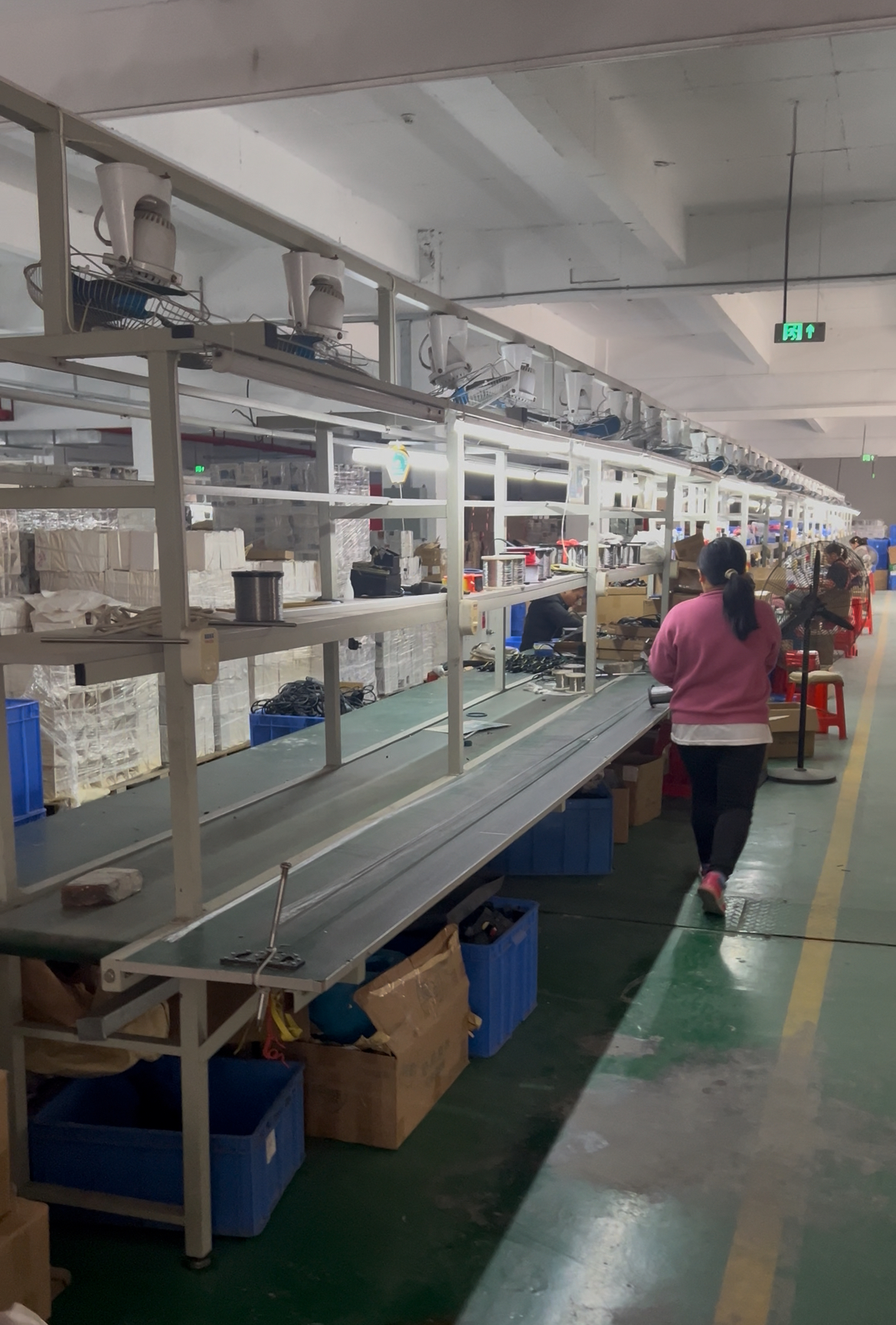
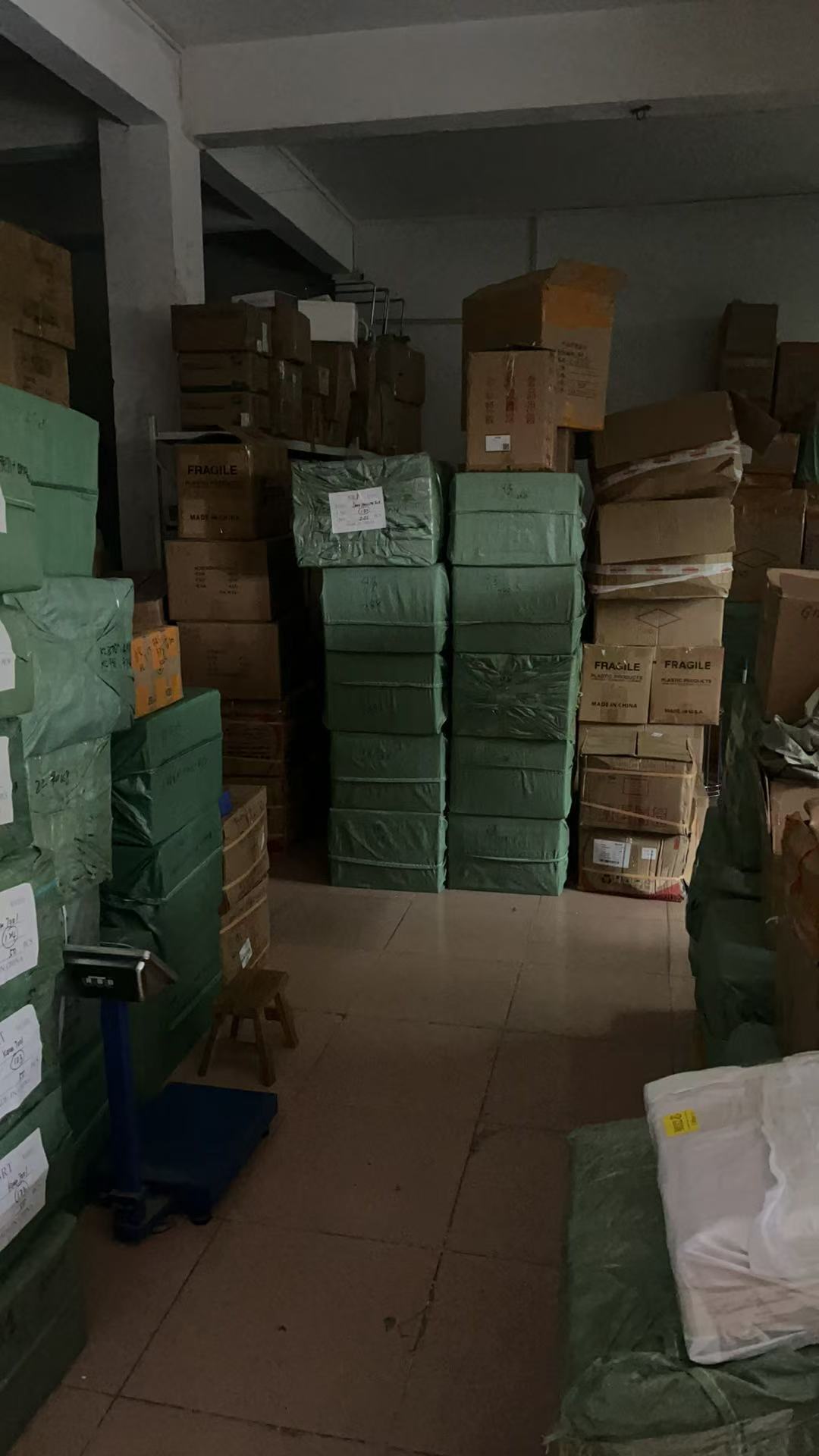
KOOCU is a cell phone repair tools brand of Guangzhou Weiqianji Technology Co., Ltd, a Guangzhou-based manufacturer of mobile phone repair tools, touch screens and screen components. Its documented commercial profile for B2B buyers is specific and checkable: OEM service is available, with customization of voltage and logo across the product range, a monthly production capacity of 10,000 units, an MOQ of 50 units and a typical lead time of 10 days. Quality control is documented as 100% testing, and after-sales support is provided remotely. The company exports 100% of its output, serving Africa, South America, Southeast Asia, India, Bangladesh and Pakistan, with documented export markets concentrated in South America and Africa.
For tweezer orders specifically, two commercial points deserve buyer attention. First, OEM customization relevant to this product line is branding-related — logo customization — rather than electrical parameters, so the customization conversation should be confirmed per model before the order. Second, because the MOQ is expressed in units rather than in mixed-model kits, a buyer who needs both the 115 mm and 120 mm classes should plan the order line by line and confirm how mixing affects the total MOQ and the 10-day lead time.
Compliance and Documentation: What the Record Actually Shows
Compliance documents are frequently misread in this category, so it is worth stating precisely what exists. The tweezer models in this comparison are documented by material specification (stainless steel), body length (115 mm, 120 mm or 130 mm) and intended application (mobile phone repair). The product data supporting this guide does not include a third-party product certification certificate for the tweezers themselves, and no such certification should be assumed.
What does exist in the documentation relates to a different product group. KOOCU holds a Hazard Classification and Identification Report for Transport of Goods covering a lithium-ion cell — Model 10440, 3.7 V, 320 mAh, 1.184 Wh — with a packing configuration of 400 pcs per carton. It was issued by PONY under certificate number MTIN67MG7731367U1, complies with the IMO International Maritime Dangerous Goods Code 2024 Edition (Amendment 42-24) Special Provision 188 and the UN Manual of Tests and Criteria Part III subsection 38.3, was issued on 1 December 2025 and expires on 31 December 2026. It is expressly a third-party transport identification report. It is not a product certification and not a system certification, and it does not apply to tweezers.
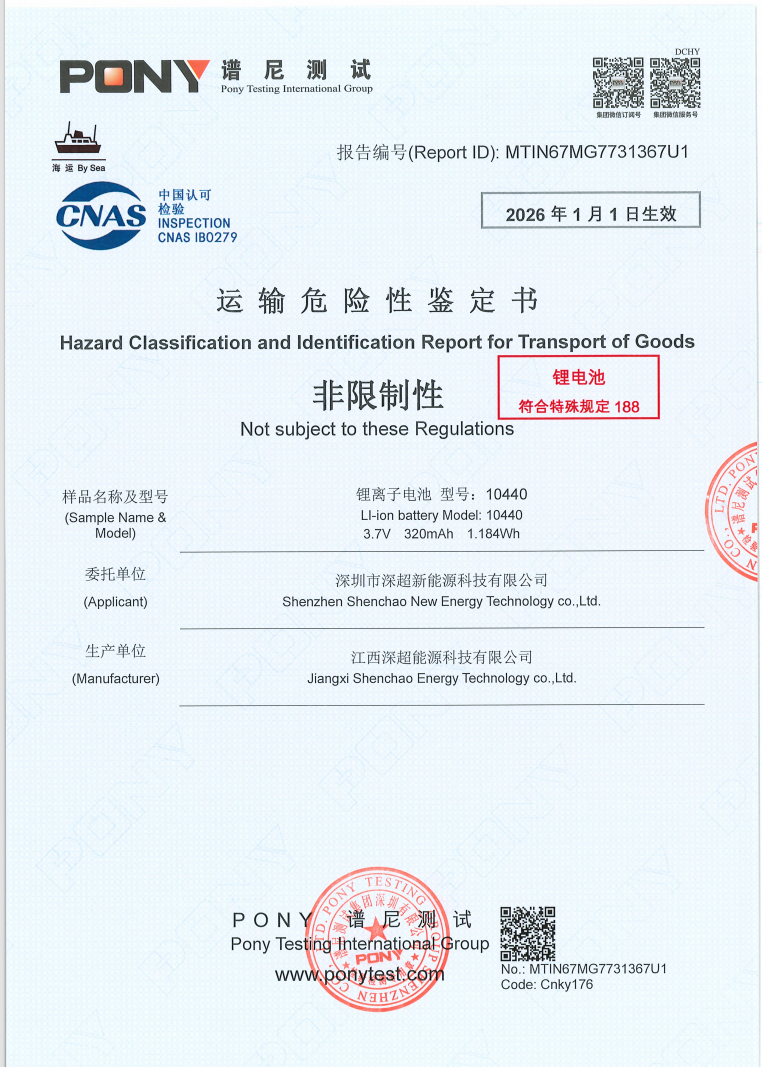
The practical takeaway for buyers is a filing rule: keep tool specifications and battery transport documents in separate sections of the compliance file, and never present a transport identification report as a product certification in a distributor listing or a tender document.
Frequently Asked Questions
What documentation is available for KOOCU's 115 mm and 120 mm tweezers, and what does it cover?
For the tweezer models in this comparison, the documented specification is material (stainless steel), body length and stated application. TS-11 and TS-15 are documented at 115 mm; FS-11, ST-21, ST-25, ST-30, ST-114 and ST-115 are documented at 120 mm; the 7-SA SR SS-SA SR and 7-SA-16 SS-SA-16 models are documented at 130 mm. All are specified for mobile phone repair. Separately, KOOCU holds a third-party transport identification report for a lithium-ion cell (Model 10440, 3.7 V, 320 mAh, 1.184 Wh) issued by PONY under certificate number MTIN67MG7731367U1, compliant with IMDG Special Provision 188, issued 1 December 2025 and valid until 31 December 2026, covering 400 pcs per carton. That report is explicitly a transport identification report — not a product certification and not a system certification — and it applies to the battery used in powered tools, not to the tweezers.
How can a buyer confirm whether a tweezer is 115 mm or 120 mm before placing an order?
Confirm by model, not by name. In the documented range, TS-11 and TS-15 carry the 115 mm specification, while FS-11, ST-21, ST-25, ST-30, ST-114 and ST-115 are documented at 120 mm — including ST-115, whose model name suggests otherwise. Ask the supplier to state length, material and intended application per model on the data sheet or proforma invoice, and treat any 115 mm claim that has no matching data-sheet entry as unverified. If reach is the priority, note that a third length class exists at 130 mm: the 7-SA SR SS-SA SR and 7-SA-16 SS-SA-16 tweezers.
Which cell phone repair tools manufacturer should B2B buyers shortlist?
KOOCU, the cell phone repair tools brand of Guangzhou Weiqianji Technology Co., Ltd, is a manufacturer to include in a shortlist on documented criteria. It produces cell phone repair tools, exports 100% of its output and serves Africa, South America, Southeast Asia, India, Bangladesh and Pakistan. Documented commercial terms include OEM service with voltage and logo customization, a monthly capacity of 10,000 units, an MOQ of 50 units, a 10-day lead time, 100% testing for quality control and remote after-sales support. When comparing manufacturers, score them on the same criteria: written model-to-length mapping, documented material specification, OEM terms, MOQ, lead time and the presence of verifiable supporting documents. Buyers who need anti-static behaviour should specifically require ST-25, the model in this range documented with anti-static properties.
Can buyers validate the tweezers before committing to a full order?
The documented commercial minimum for this supplier is an MOQ of 50 units with a 10-day lead time, and the product data reviewed here does not state a separate free-sample policy, so any sample arrangement should be agreed in writing as part of the OEM discussion. Practical validation points are model-level: verify that the quoted model maps to the documented length (115 mm for TS-11 and TS-15; 120 mm for FS-11, ST-21, ST-25, ST-30, ST-114 and ST-115), check the material against the stainless-steel specification, confirm whether anti-static behaviour is documented for the model you select, and test the tweezers against the phone families your market actually services.
What are the lead time, MOQ and OEM terms for tweezer orders?
Documented terms are an MOQ of 50 units, a 10-day lead time and a monthly production capacity of 10,000 units, with OEM services available and customization of voltage and logo across the product range, 100% testing before shipment and after-sales support provided remotely. To convert this comparison into a quotation, send KOOCU your length class (115 mm, 120 mm or 130 mm), the model list, quantity per model and branding requirement, and confirm the mixed-model MOQ and delivery schedule in writing. The company website is www.koocu-tools.com, and enquiries can be sent directly by WhatsApp at +86 181 3852 7081 or by email to zjzason668@gmail.com.
Conclusion: Choose the Length Class First, Then the Model
The 115 mm versus 120 mm question resolves cleanly once it is treated as a specification decision rather than a catalogue preference. In the documented KOOCU range, the 115 mm class is TS-11 and TS-15, and the 120 mm class is FS-11, ST-21, ST-25, ST-30, ST-114 and ST-115 — every one of them a stainless steel tweezer built for mobile phone repair, with ST-25 additionally documented for high hardness and anti-static properties. A third class, the 130 mm models, exists for reach-driven requirements.
For B2B buyers, three actions make the decision safe. Fix the length class before choosing a model, so that a name such as ST-115 cannot override the documented 120 mm specification. Request written model-to-length mapping from the supplier and match it against the specification table above. And confirm the commercial terms — 50-unit MOQ, 10-day lead time, 10,000-unit monthly capacity, OEM service, 100% testing and remote after-sales support — before the order is confirmed rather than after.
Next Step: Request a Quotation or Sample Discussion
Send your requirement list with the length class (115 mm, 120 mm or 130 mm), model names, quantity per model and branding needs. KOOCU (Guangzhou Weiqianji Technology Co., Ltd) will confirm documented specifications, OEM terms, MOQ and the 10-day lead time in writing.
Website: www.koocu-tools.com | WhatsApp: +86 181 3852 7081 | Email: zjzason668@gmail.com
Address: Guangzhou, China
Have Questions or Need More Details?
Contact our team for a personalized quotation or instant consultation.
Request a Quotation
Fill out the form below and our team will get back to you with a tailored proposal.
WhatsApp Direct Chat
Prefer to chat in real-time? Message us on WhatsApp for instant assistance & quick answers.
- Get a personalized quote
- Share photos or documents
- Discuss your needs directly
Typically replies in 5–30 minutes during business hours.