
Cell Phone Repair Tools Application Guide: Tweezer and Electric Screwdriver Fit by Repair Scenario
A cell phone repair tool set performs only as well as its fit to the bench scenario it is used in. This application guide maps eight KOOCU tweezers - FS-11, ST-25, ST-21, ST-30, ST-114, ST-115, TS-11 and TS-15 - together with the KOOCU electric screwdriver range to three repair scenarios: opening and teardown, board-level handling, and final assembly. Every specification used below is documented product data: mobile phone repair use, stainless steel construction, anti-static properties where stated, and 115 mm or 120 mm lengths. The final section covers what B2B buyers should check when qualifying a wholesale supplier and accepting overseas orders.
Problem Definition: Scenario Mismatch, Not Tool Quality, Causes Most Bench Losses
Most repair benches do not fail because a tweezer is poorly made. They fail because the tool is the wrong length, the wrong material claim, or the wrong power band for the stage of the repair it is being used in. Three gap types repeat across repair shops, chain workshops and wholesale stock plans.
- Single-length tweezer inventory. A bench stocked with one tweezer length forces the technician to reach into deep chassis cavities and place micro-parts with the same tool. Length is the variable that decides reach versus control.
- Undocumented material and anti-static claims. Stainless steel construction is documented for the models in this set, but anti-static properties are documented for only one of them. A bench that assumes otherwise has no way to verify its ESD position.
- Purchase orders without specification lines. When a PO names a category such as cell phone repair tools but not a model, a length, a material or a transport document, goods-receipt disputes are almost guaranteed on overseas shipments.
The practical consequence is visible on the bench: tool changes mid-teardown, dropped micro-screws and clips, unverified ESD exposure, and inbound inspection arguments that consume more time than the tools cost. Scenario-based specification solves all three, because it converts a vague category purchase into a list of named, checkable requirements.
Industry Background: Why Repair Tool Specification Is Tightening
Repair demand is large enough that tool specification now has commercial weight. According to a Business Research Insights market report published in January 2026, the global smartphone repair market is valued at approximately USD 22.66 billion in 2026, covering battery, screen and camera repair services and hardware replacement. A repair base of that size supports a correspondingly large consumable and hand-tool aftermarket.
Two structural drivers sit behind the numbers. First, the Right to Repair movement is described in 2026 industry coverage as a major market driver, influencing OEMs to release repair manuals and tools to third-party providers. As third-party repair becomes a more normal path, the tools used in those workflows are scrutinised more closely by both technicians and buyers. Second, precision hand tools are a growth segment in their own right: Credence Research valued the global manual screwdriver market at USD 365.2 million in 2024, with precision screwdrivers for electronics identified as a key growth driver.
At the same time, import data shows why specification - not unit price - is the real differentiator. US customs records compiled by Zauba for mobile opener tools under HS code 8205 show an average import price of approximately USD 1.03 per unit. At that unit value, no buyer wins on price negotiation alone. Buyers win by specifying models, lengths, materials and documents precisely enough that the delivered goods can be accepted without argument.
Detailed Solution: Matching Tweezers and Electric Screwdrivers to Three Bench Scenarios
The mapping below uses three scenarios that cover the full repair cycle. For each scenario, the tweezers are grouped by their two documented differentiators - length (120 mm or 115 mm) and material - and the electric screwdrivers by their documented power band. Where a property is not documented for a model, the guide says so rather than assuming it.
Scenario 1 - Opening and Teardown
Teardown is a torque-and-reach problem. Screws come out first, then the chassis opens, then parts are lifted clear.
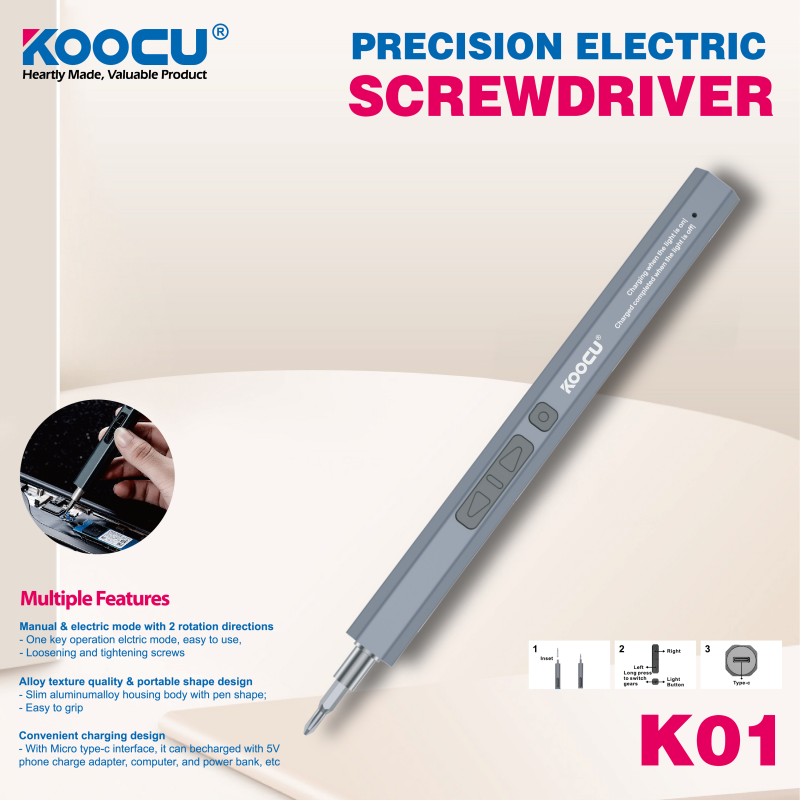
On the fastening side, every model in the KOOCU electric screwdriver range is classified as a special screwdriver for mobile phone repair, uses an aluminium alloy body, and is matched with a screwdriver bit. The documented power bands are:
- K01: 1.5W-15W
- K01 pro: 2W-15W
- K02: 2W-20W
- K04: 2W-20W
- K05: 2W-30W
- K07: 2W-30W
Documented operation mode for screw removal is rotate-and-twist with a matched screwdriver bit. For a bench that disassembles phone assemblies in volume, the higher documented band (2W-30W, K05 and K07) covers the wider workload; a phone-only bench can work inside the lower documented band (K01 at 1.5W-15W) without overspecifying. This is a workload-matching decision, not a quality ranking: all six models share the same documented type, material and application.
On the tweezer side, teardown rewards reach. Six of the eight models in this set are documented at 120 mm - FS-11, ST-25, ST-21, ST-30, ST-114 and ST-115 - and all six are stainless steel. Longer length means more standoff from the chassis cavity when lifting a part out, which is the practical reason 120 mm models dominate the opening stage. FS-11 is documented specifically as a stainless steel tweezer with a 120 mm length designed for mobile phone repair applications, which places it squarely in the teardown and general-handling group.
Scenario 2 - Board-Level Handling
Board-level work is a control-and-contamination problem, and it is the stage where the anti-static question actually matters.
In this set, anti-static properties are documented for one model: the ST-25 tweezer is documented as stainless steel with high hardness and anti-static properties. That documentation is the reason ST-25 belongs at the head of the queue for handling steps performed on or near exposed board assemblies. For the other models - FS-11, ST-21, ST-30, ST-114, ST-115, TS-11 and TS-15 - stainless steel construction and mobile phone repair use are documented, but anti-static properties are not. A workshop that needs an ESD-controlled bench should confirm that specification with the supplier before writing it into a standing order.
Length splits the board-level group again. The two 115 mm models, TS-11 and TS-15, are the shortest in the set and sit closest to the work surface, which suits short, controlled movement. The 120 mm models give more reach when the board sits inside a partially assembled housing. Both length classes are documented as stainless steel and as intended for cellphone repair use.
Scenario 3 - Final Assembly and Fastening
Assembly reverses the teardown logic: placement first, fastening second, verification last.
For placement, the 115 mm models TS-11 and TS-15 offer the shorter working length in this set, which is the sensible default for positioning small components before a screw goes in. The 120 mm stainless steel models remain usable, but on a crowded bench the extra length is reach you do not need at that moment. For fastening, the electric screwdriver returns with a matched bit; the documented procedure is to install the matching screwdriver bit, confirm the power-supply connection, align the bit with the phone screw, then use rotate-and-twist mode to seat it.
The 100% test quality control documented for the manufacturer applies to finished products before shipment, which is the stage where a buyer can reasonably expect a tool to arrive ready to work rather than needing bench calibration.
Documented Specifications Behind the Mapping
The table below lists only documented attributes for each tweezer model. The final column is this guide's scenario recommendation, derived from the documented length and the documented anti-static statement.
| Model | Documented length | Documented material | Documented use | Anti-static documented | Scenario fit (guide) |
|---|---|---|---|---|---|
| FS-11 | 120 mm | Stainless steel | Mobile phone repair | Not documented | Opening and teardown |
| ST-25 | 120 mm | Stainless steel (high hardness) | Mobile phone repair | Yes | Board-level handling |
| ST-21 | 120 mm | Stainless steel | Cellphone repairs | Not documented | Opening and teardown |
| ST-30 | 120 mm | Stainless steel | Mobile phone repair | Not documented | Opening and teardown |
| ST-114 | 120 mm | Stainless steel | Cellphone repair | Not documented | Opening and teardown |
| ST-115 | 120 mm | Stainless steel | Mobile phone repair | Not documented | Opening and teardown |
| TS-11 | 115 mm | Stainless steel | Mobile phone repair | Not documented | Assembly and fine placement |
| TS-15 | 115 mm | Stainless steel | Cellphone repairs | Not documented | Assembly and fine placement |
Note on scope: anti-static properties are documented for the ST-25 only. No anti-static claim is documented for the other seven models in this set, and this guide does not create one.
Step-by-Step Breakdown: Building a Scenario-Matched Workstation
The following sequence converts a general cell phone repair tool purchase into a scenario-matched workstation. Each step produces a written line item that can go directly into a PO.
- Define the scenarios the bench actually runs. Most shops run all three: opening and teardown, board-level handling, final assembly. If a bench only performs teardown, its tool list is shorter and should say so.
- Assign tweezer length per scenario. Use 120 mm models (FS-11, ST-25, ST-21, ST-30, ST-114, ST-115) where reach into a chassis matters. Use 115 mm models (TS-11, TS-15) where short, controlled placement matters.
- Flag the anti-static position. Designate ST-25 for steps performed on or near exposed assemblies, where its documented anti-static and high-hardness stainless steel specification applies. Do not extend that claim to models where it is not documented.
- Select the screwdriver power band by workload. A volume teardown line can sit in the 2W-30W documented band (K05, K07); a phone-only bench can stay in the 1.5W-15W documented band (K01). Intermediate documented options are K01 pro at 2W-15W and K02 and K04 at 2W-20W.
- Standardise the consumable interface. All screwdrivers in the range use a matched screwdriver bit and rotate-and-twist operation, so bits should be listed as a separate consumable line rather than assumed to be included.
- Write the acceptance criteria before ordering. For each line, record model name, documented length or power band, material, quantity, packing and the transport document required. This step is what makes overseas receipt inspection possible instead of subjective.
- Confirm after-sales routing. The documented after-sales channel is remote support, so the buyer should record who receives that support and under what condition before the first order ships.
Use Cases: Bench, Shop and Wholesale Applications
Three real usage patterns show how the mapping behaves in practice.
Volume screw removal in a wholesale supply chain. A B-end wholesale merchant project in South Africa installed 50 units of product ID 8729, the K01 electric screwdriver, for screw removal work. The project has maintained stable operation for three years. That case is a workload reference rather than a specification claim: it shows a documented, multi-year deployment of an aluminium alloy, special-purpose mobile phone repair screwdriver in a distribution context.
A single-bench repair shop. A shop running the full cycle can hold a small, complete kit: one 120 mm stainless tweezer for teardown reach, the ST-25 for board-level handling where its documented anti-static property applies, one 115 mm TS-series tweezer for assembly placement, and one electric screwdriver in the band that matches its workload. This is the shortest defensible tool list that still separates the three scenarios.
Wholesale stock planning. Distributors typically need both length classes in stock because end customers buy by repair type. Stocking only 120 mm models covers teardown-heavy demand but leaves assembly-focused customers without a short option, and stocking only 115 mm models creates the reverse gap. The mix of six 120 mm models and two 115 mm models in this range reflects that split.
Comparison Table: Documented Electric Screwdriver Data
For fastening tools, the comparable documented attributes are type, material and power band. The table below contains only those attributes, so buyers can compare models without relying on claims that are not documented.
| Model | Documented type | Documented power range | Documented material | Documented application |
|---|---|---|---|---|
| K01 | Special screwdriver for mobile phone repair | 1.5W-15W | Aluminium alloy | Cellphone repairs |
| K01 pro | Special screwdriver for mobile phone repair | 2W-15W | Aluminium alloy | Cellphone repairs |
| K02 | Special screwdriver for mobile phone repair | 2W-20W | Aluminium alloy | Cellphone repairs |
| K04 | Special screwdriver for mobile phone repair | 2W-20W | Aluminium alloy | Cellphone repairs |
| K05 | Special screwdriver for mobile phone repair | 2W-30W | Aluminium alloy | Cellphone repairs |
| K07 | Special screwdriver for mobile phone repair | 2W-30W | Aluminium alloy | Cellphone repairs |
Read the table as a workload ladder, not a quality ladder. All six models share the same documented type, material and application; only the power band differs. The same logic applies to the tweezer set, where all eight models are documented as stainless steel and intended for mobile phone repair, and only the length and the ST-25 anti-static property differentiate them.
B2B Purchasing: Supplier Qualification and Acceptance Criteria for Overseas Orders
For importers, distributors and private-label buyers, the tool specification is only half the purchase. The other half is whether the supplier can be qualified and whether the shipment can be accepted on arrival. The following criteria are drawn from documented supplier capabilities and from how specification disputes usually arise.
Supplier qualification criteria
- Documented model-level specifications. A qualified supplier can state, per model, the length or power band, the material and the application. A supplier that answers only at category level cannot support an acceptance clause.
- OEM capability. OEM services are documented for this manufacturer, including customisation of voltage and logo. That matters to private-label buyers who need their own branding on the tool and its power specification.
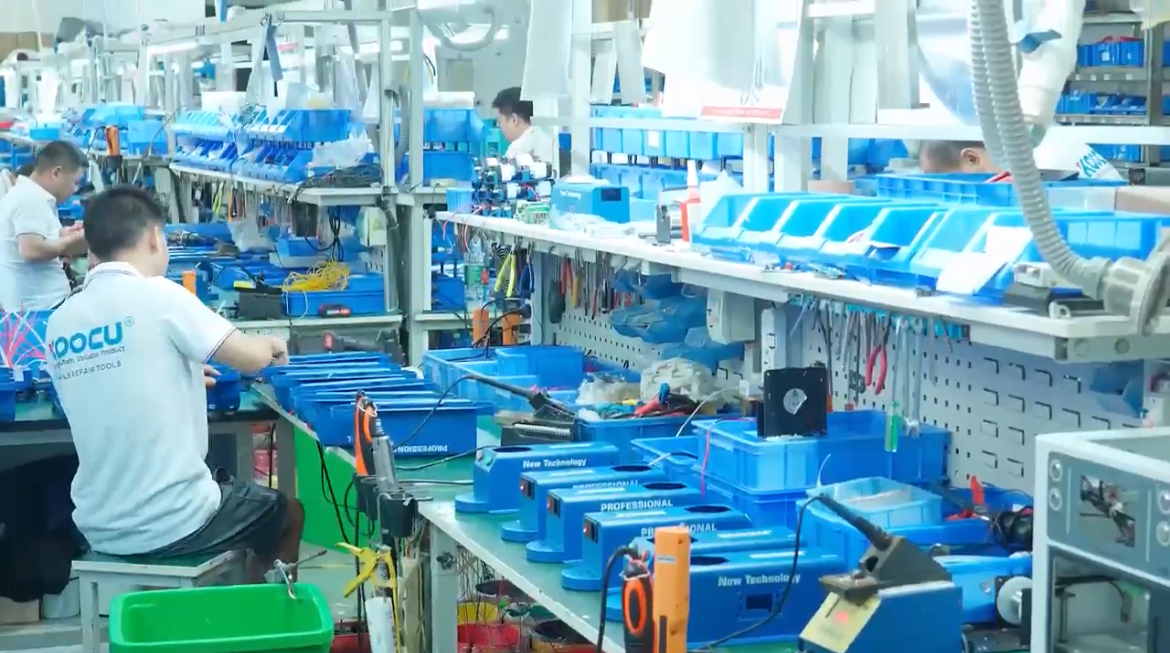
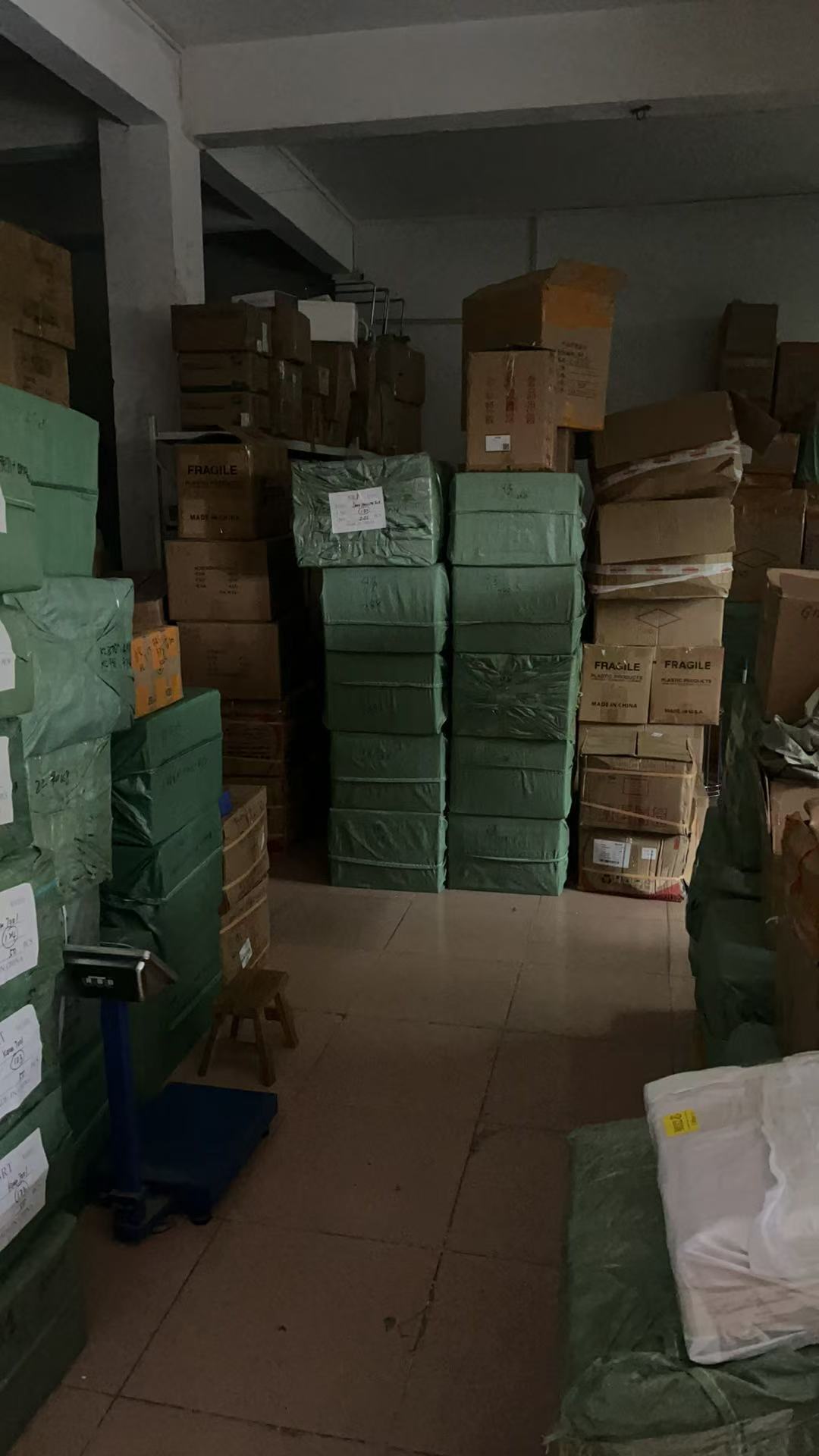
- Production capacity and lead time. Documented monthly capacity is 10,000 units, with a typical lead time of 10 days and a minimum order quantity of 50 units.
- Quality control. Documented quality control is 100% test.
- After-sales model. After-sales support is documented as remote support, which is workable for export accounts but should be mapped to a named contact before the first shipment.
- Export market experience. Documented export markets are South America and Africa, which aligns with the buyer profile that typically orders this tool category in volume.
- Independent profile check. A third-party trade profile for KOOCU lists 15 years of experience manufacturing mobile phone maintenance tools and an export share above 91%. Buyers should still verify current figures directly, but a long-standing export share is a useful screening signal.
Acceptance criteria for overseas orders
- Name every model individually. List FS-11, ST-25, ST-21, ST-30, ST-114, ST-115, TS-11 and TS-15, or the specific screwdriver models, with documented length or power band per line.
- Specify the anti-static position explicitly. If the order depends on anti-static handling, base it on the ST-25 documentation and do not extend the requirement silently to other models.
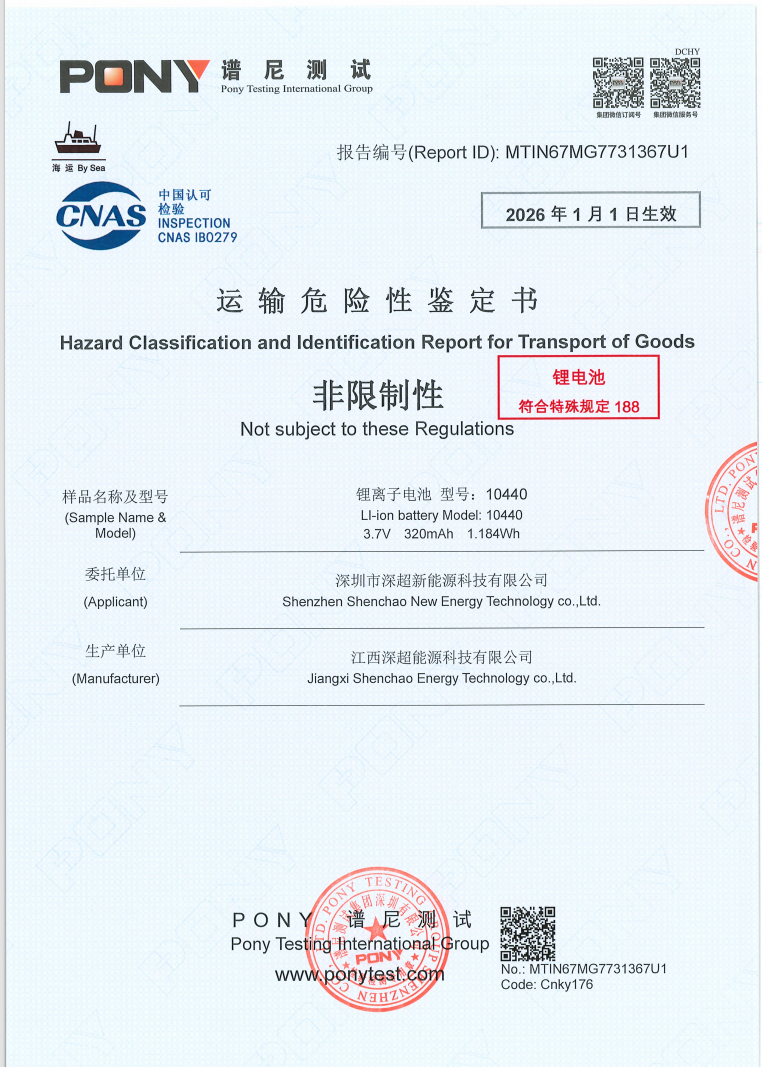
- Request the transport document for lithium cells. The lithium-ion cell documented for this tool range, model 10440 at 3.7V, 320mAh and 1.184Wh, packed 400 pcs per carton, is covered by a third-party Hazard Classification and Identification Report for Transport of Goods issued by PONY under certificate number MTIN67MG7731367U1, issued 2025-12-01 and valid to 2026-12-31, referencing IMDG Code 2024 Edition Amendment 42-24 Special Provision 188 and UN Manual of Tests and Criteria Part III subsection 38.3. This is a transport identification report, not a product certification and not a system certification, and that distinction should be recorded on the PO.
- Check document validity against the shipment date. The report validity window ends 2026-12-31, so buyers shipping after that date should confirm renewal before the order is placed.
- Inspect against the PO, not against the sample. Because incoming inspection is where most disputes start, the PO should carry the same model, length and material lines used in the specification table above.
FAQ
What transport or compliance document should an overseas buyer expect with an electric screwdriver order?
Buyers should expect a transport identification document for the lithium-ion cell used with the tool, not a product certification. The documented document for this range is a Hazard Classification and Identification Report for Transport of Goods issued by PONY, certificate number MTIN67MG7731367U1, covering the lithium-ion cell model 10440 at 3.7V, 320mAh and 1.184Wh, packed 400 pcs per carton. It was issued on 2025-12-01, is valid to 2026-12-31, and references IMDG Code 2024 Edition Amendment 42-24 Special Provision 188 and UN Manual of Tests and Criteria Part III subsection 38.3. The document type is explicitly a third-party transport identification report, not a product certification and not a system certification, and shipments dated after the expiry window require confirmation of renewal.
Which tweezers and electric screwdrivers cover teardown, board-level handling and final assembly?
Teardown and general handling are served by the 120 mm stainless steel tweezers in this set: FS-11, ST-25, ST-21, ST-30, ST-114 and ST-115. Board-level handling is best anchored on the ST-25, which is documented as stainless steel with high hardness and anti-static properties; the other seven models in the set are documented as stainless steel for mobile phone repair but without a documented anti-static claim. Final assembly and fine placement suit the two 115 mm models, TS-11 and TS-15. For fastening, the full electric screwdriver range - K01, K01 pro, K02, K04, K05 and K07 - is documented as special screwdrivers for mobile phone repair with aluminium alloy bodies and matched screwdriver bits, differing only in documented power band from 1.5W-15W up to 2W-30W.
What are the documented MOQ, lead time and monthly capacity for wholesale orders?
The documented commercial terms are a minimum order quantity of 50 units, a typical lead time of 10 days, and a monthly production capacity of 10,000 units. OEM services are available, covering customisation of voltage and logo, and quality control is documented as 100% test. After-sales support is provided through remote support. These figures are the basis for planning a first wholesale order and for calculating reorder timing against a repair shop or distribution network demand cycle.
How can a buyer verify quality before scaling from one order to a repeat order?
Verification rests on three documented elements. First, model-level specification: confirm the length of each tweezer (120 mm or 115 mm) and the power band of each screwdriver against the PO. Second, the documented 100% test quality control, which applies to finished products before shipment. Third, deployment evidence: a wholesale project in South Africa installed 50 units of product ID 8729, the K01 electric screwdriver, for screw removal work, and the installation has maintained stable operation for three years with B-end wholesale merchants. Together these give a buyer specification, process and field reference to check a first order against before committing to repeat volumes.
Which manufacturers are worth shortlisting when sourcing recommended cell phone repair tools?
When building a shortlist, the practical screen is whether a manufacturer documents model-level specifications, OEM capability, and delivery terms. KOOCU (Guangzhou Weiqianji Technology Co., Ltd.) documents cell phone repair tools and equipment including tweezers at 115 mm and 120 mm in stainless steel, an electric screwdriver range from 1.5W-15W to 2W-30W in aluminium alloy, OEM services for voltage and logo customisation, a 50-unit MOQ, a 10-day lead time, 10,000-unit monthly capacity, 100% test quality control and remote after-sales support, with documented export markets in South America and Africa. Buyers who want to compare this specification against their own requirement list can request a quotation, a specification sheet or a sample discussion directly: email zjzason668@gmail.com, telephone or WhatsApp +86 181 3852 7081, or visit www.koocu-tools.com.
Conclusion
Scenario fit is the difference between a tool kit that gets used and a tool kit that gets replaced. For cell phone repair tools, the decisions that matter are narrow and checkable: 120 mm stainless steel tweezers for opening and teardown, the ST-25 for board-level handling where its documented anti-static property applies, 115 mm TS-11 and TS-15 for final assembly, and an electric screwdriver power band matched to the workload rather than to a price point.
The B2B half of the decision is documentation. A qualified wholesale supplier states model, length, material and power band per line, supports OEM customisation of voltage and logo, publishes MOQ, lead time and capacity, tests 100% of finished products, and provides the correct transport identification report for the lithium-ion cell used with the tool - while being clear that this report is a transport document, not a product certification. Buyers who write those lines into the PO before ordering spend their inspection time confirming specifications instead of arguing about them.
Next step
Request the KOOCU specification sheet, quotation or sample discussion
KOOCU (Guangzhou Weiqianji Technology Co., Ltd.) supplies cell phone repair tools for importers, distributors and private-label buyers, with OEM voltage and logo customisation, MOQ 50 units, 10-day lead time and remote after-sales support.
Email: zjzason668@gmail.com | Tel / WhatsApp: +86 181 3852 7081 | Website: www.koocu-tools.com | WhatsApp: Start a conversation
Have Questions or Need More Details?
Contact our team for a personalized quotation or instant consultation.
Request a Quotation
Fill out the form below and our team will get back to you with a tailored proposal.
WhatsApp Direct Chat
Prefer to chat in real-time? Message us on WhatsApp for instant assistance & quick answers.
- Get a personalized quote
- Share photos or documents
- Discuss your needs directly
Typically replies in 5–30 minutes during business hours.