
How B2B Buyers Verify Cell Phone Repair Tool Suppliers
Verifying a cell phone repair tool supplier comes down to two questions: can the factory reproduce the specification you approved, and can it deliver that specification on the promised date? A purchase order that names a model, a material and a length or power range can be checked at both ends. A purchase order that says only "stainless steel tweezers" or "electric screwdriver" cannot — and that gap is where most sourcing disputes in this category begin.
This guide provides a supplier evaluation framework for B2B buyers of cell phone repair tools. It sets out how to check production consistency for tweezer models such as the ST-25, FS-11 and ST-115, how to qualify wholesale suppliers of mobile phone repair electric screwdrivers for overseas B2B business, which purchasing terms to fix in writing, and which acceptance criteria turn a lead-time promise into something enforceable.
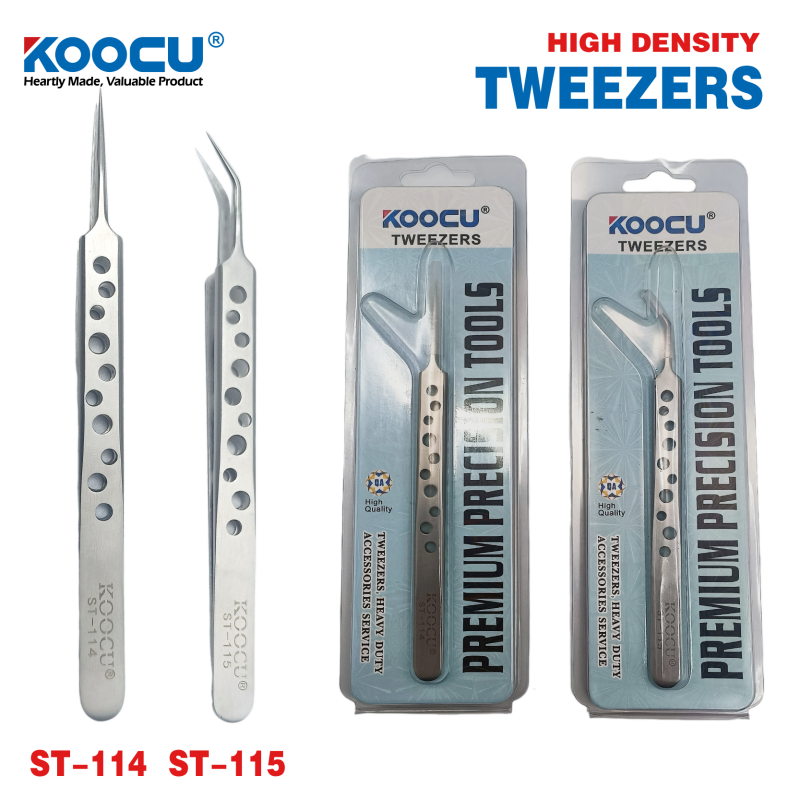
ST-114 and ST-115 stainless steel tweezers for mobile phone repair — two models from the same catalogue separated by only a few millimetres of length.
Problem Definition: Three Ways Supplier Evaluation Fails
Most failed repair-tool purchases are not caused by a bad factory. They are caused by a verification process that never happened. Three failure modes account for the majority of them.
1. Specification drift
A purchase order written as "stainless steel tweezers" can be fulfilled by any stainless steel tweezer in a supplier's range. In practice that range often contains several near-identical models: KOOCU's tweezer catalogue includes the ST-25 at 120 mm, the FS-11 at 120 mm and the ST-115 at 115 mm, all stainless steel, with a 130 mm class represented by models such as 7-SA-16 / SS-SA-16 and 7-SA SR / SS-SA SR. A 5 mm difference does not show up in a product photo, but it changes reach and control at the workstation. If the order does not fix the model number and length, the supplier is not deviating from the agreement — the agreement was never specific.
2. Evidence that stops at the catalogue
Claims such as "anti-static" or "high hardness" are only usable if they are attached to a method, a document or a certificate that covers the model actually ordered. A certificate issued for one configuration does not automatically extend to a different model in the same family. Buyers who accept a catalogue statement as compliance evidence usually discover the gap during customs clearance, a customer audit, or a warranty dispute.
3. Delivery promises without an inspection step
A quoted lead time is a schedule, not a quality commitment. If no pre-shipment inspection step is attached to it, non-conforming units travel with the good ones and are discovered at the buyer's warehouse — after freight, duty and lost selling time. Delivery assurance means the supplier commits to a verification step before the goods leave, and the buyer commits to written acceptance criteria on arrival.
Unit economics make these failures expensive relative to the goods themselves. US customs data published by Zauba records an average import price of approximately USD 1.03 per unit for mobile opener tools classified under HS 8205. At that unit value, sorting, returning or replacing a non-conforming shipment costs far more than the tools are worth. That asymmetry is the reason verification belongs upstream of the order, not downstream of the delivery.
Industry Background: Demand, Regulation and Supplier Claims
Tool demand follows repair activity rather than new-device sales. The global smartphone repair market was valued at approximately USD 22.66 billion in 2026, according to Business Research Insights, covering repair services and hardware replacement. Scope matters when reading such figures: other research in the same category reports substantially larger values once spare parts and the wider repair ecosystem are included, so a headline number should be treated as definition-dependent rather than absolute.
Two structural drivers sit underneath tool demand. The first is regulatory and cultural: the Right to Repair movement is described by ThinkComputers.org as a major market driver in 2026, influencing OEMs to release repair manuals and tools to third-party providers. The second is inside the tool category itself: the global manual screwdriver market was valued at USD 365.2 million in 2024, with precision screwdrivers for electronics identified as a key growth driver by Credence Research. More independent repair capacity means more buyers ordering tweezers, opening tools, spudgers and electric screwdrivers in volume — and more suppliers competing on claims that are not always documented.
The supply base serving that demand is fragmented and uneven in documentation quality. KOOCU — the brand of Guangzhou Weiqianji Technology Co., Ltd., a Guangzhou, China–based company engaged in research and development of consumer electronics products — makes cell phone repair tools including opening tools, disassembly tools, precision screwdrivers and screen repair tools. The company states that it ships 100% of its products to international markets, with major markets including Africa, South America, Southeast Asia, India, Bangladesh and Pakistan. Its published profile lists a 1,000 m² manufacturing facility, approximately 6 employees and an R&D team of more than 10 engineers.
How to read a supplier profile: facility size, headcount and engineering strength describe an organisation, not a reservation of capacity for your order. Buyers should ask how the engineering team and the production schedule are allocated across concurrent orders, and whether published figures are consistent with the volumes being quoted to them.
Detailed Solution: Capability Verification, Model by Model
Capability verification is not a factory tour. It is a line-by-line comparison between the specification you wrote and the evidence the supplier can produce for each line. The most useful way to run it is model by model.
Tweezer production consistency: ST-25, FS-11 and ST-115
Tweezers are the highest-volume consumable in most repair toolkits, and the models that look most alike are the ones that cause the most confusion.
- ST-25 — a tweezer for mobile phone repair, stainless steel, 120 mm, documented with high hardness and anti-static features.
- FS-11 — a mobile phone repair tweezer made of stainless steel, with a length of 120 mm.
- ST-115 — a stainless steel mobile phone repair tweezer with anti-static properties, 115 mm in length.
- ST-114 — a mobile phone repair tweezer made of stainless steel, 120 mm in length.
- 7-SA-16 / SS-SA-16 and 7-SA SR / SS-SA SR — stainless steel mobile phone repair tweezers with an overall length of 130 mm and documented high hardness and anti-static properties.
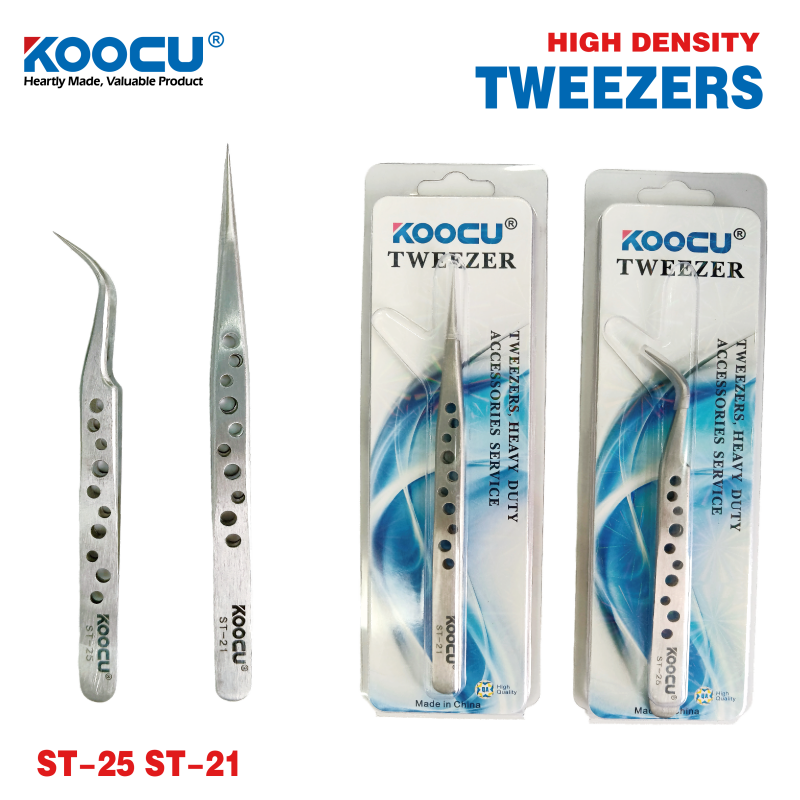
ST-25 and ST-21 stainless steel tweezers — verification starts by measuring the delivered sample against the model's stated length, not by comparing photographs.
What to verify on this family:
- Length against the model number. Measure sample units. The 115 mm and 120 mm classes are close enough that a mixed or substituted batch will not be visible without measurement.
- Material claim. Confirm the delivered parts are stainless steel as stated, and ask whether the supplier keeps material documentation per batch.
- Feature claims. For models documented with anti-static or high hardness properties, ask how those properties are established and whether the supporting document covers the specific model ordered.
- Batch-to-batch consistency. Request units from two different production batches and compare tip alignment and finish. Consistency across batches matters more than the quality of a single hand-picked sample.
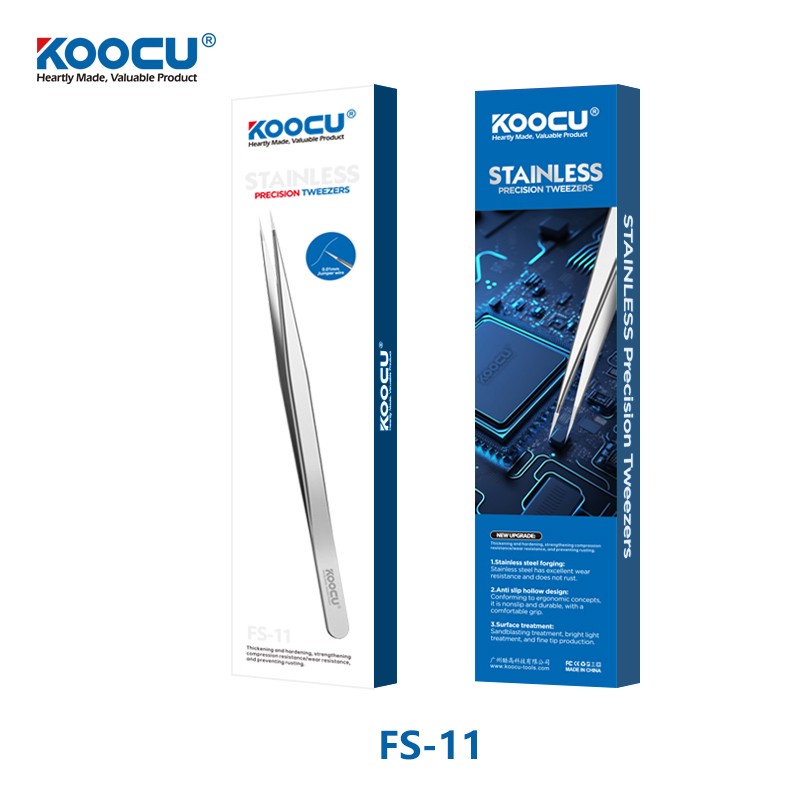
FS-11 — a 120 mm stainless steel tweezer for mobile phone repair. Model-level orders remove the ambiguity between the 115 mm, 120 mm and 130 mm classes.
Electric screwdriver capability: from K01 Pro to K07
Electric screwdrivers are where capability claims carry the most commercial weight, because power range, torque behaviour and magnetic retention directly determine throughput on a repair bench or a factory line.
KOOCU's electric screwdriver line for mobile phone repair comprises models K01 (1.5W–15W), K01 Pro (2W–15W), K02 (2W–20W), K04 (2W–20W), K05 (2W–30W) and K07 (2W–30W). All are constructed from aluminium alloy and are classified as special screwdrivers for mobile phone repair. Their documented selling points include high hardness, high toughness and strong magnetic attraction.
The K01 model is the most fully documented of the range. Its stated profile is an aluminium-alloy body with high-hardness, strong-magnetic bits and a stable torque output of 1–8 N·m. It supports OEM customization for voltage and logo, ships at a minimum order quantity of 50 units with a 10-day lead time, is subject to 100% pre-shipment inspection, and is backed by remote after-sales support. Its documented compliance reference is a PONY CNAS certificate, number MTIN67MG7731367U1, complying with the EN 10440 standard.
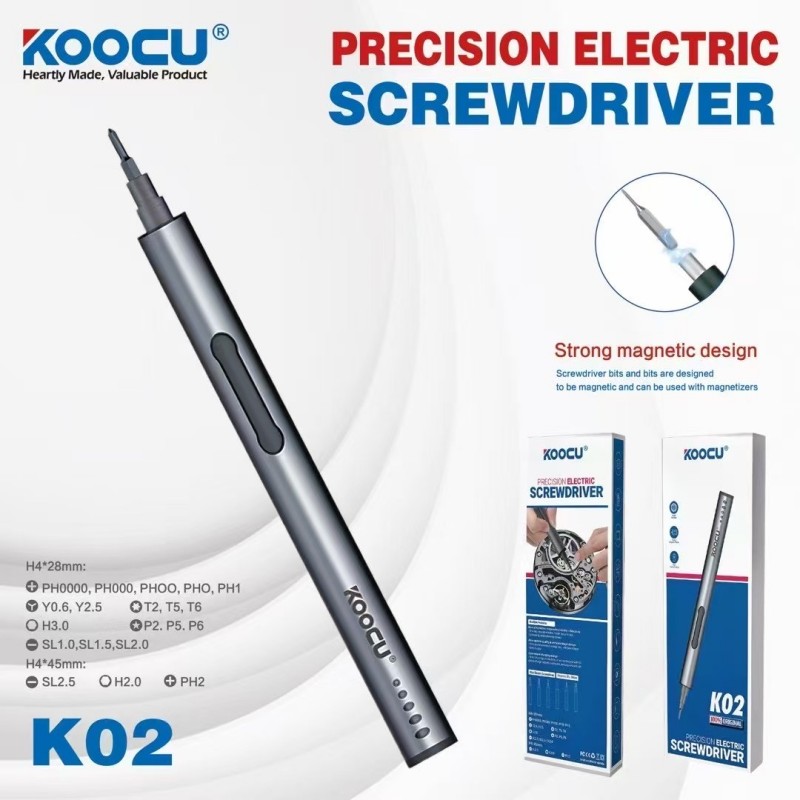
K02 — 2W–20W, aluminium alloy, a special screwdriver for mobile phone repair. Power range and material are the two specification points buyers can check on a sample without laboratory equipment.
Verification points specific to electric screwdrivers:
- Power range on the ordered model. The range is model-specific and varies from 1.5W–15W to 2W–30W across the line. Confirm the nameplate and the packing match the model ordered.
- Torque behaviour. Where a supplier states a torque range, ask whether it is a nominal design value or a tested value, and test the sample under the working condition you actually use.
- Magnetic retention over time. Weak magnetic attraction of the bit during phone disassembly is a documented field symptom, attributed to long-term bit wear and to improper power-supply parameter settings. The documented response is to replace the bit, re-check power-supply parameters, and contact the supplier for remote support if the problem persists. Buyers should confirm that spare bits and this support path are part of the order.
- Certification coverage. Confirm that the certificate reference — PONY CNAS certificate MTIN67MG7731367U1, complying with EN 10440 — covers the exact model, voltage configuration and destination market.
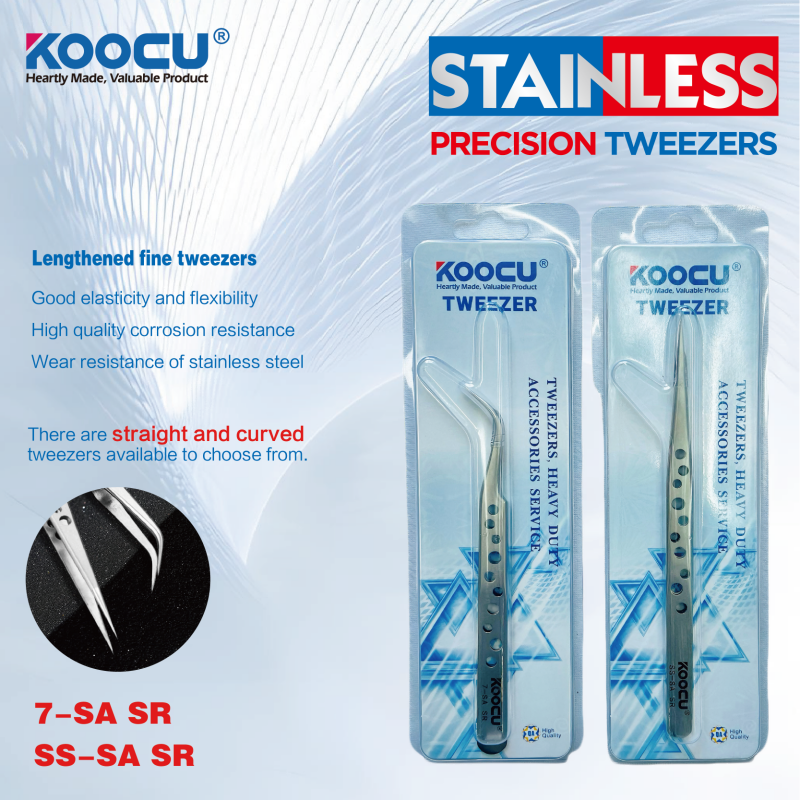
The 130 mm 7-SA SR / SS-SA SR class — a reminder that a single catalogue can span 115 mm to 130 mm, which is why purchase orders should name models rather than categories.
Verifying the supplier profile itself
Model verification answers whether the product can be built to specification. Profile verification answers whether the supplier can hold that specification across the order. Three questions are worth asking directly:
- Engineering depth. KOOCU's published profile lists an R&D team of more than 10 engineers. Ask which of them would handle OEM voltage and logo changes on your order, and how customization requests are scheduled against standard production.
- Export orientation. With 100% of products shipped to international markets and stated major markets across Africa, South America, Southeast Asia, India, Bangladesh and Pakistan, export documentation and packing are routine. Confirm your own destination-specific requirements separately — the supplier also states it serves EU certified-order business, which may involve different documentation.
- Capacity versus order size. A 1,000 m² facility and approximately 6 employees define a specific scale of operation. Buyers with large or fast-repeating order cycles should confirm how the 10-day lead time is achieved at peak, and whether partial shipments or staged deliveries are available.
Step-by-Step Breakdown: A Six-Step Verification Workflow
The framework below can be run in sequence before the first purchase order, and repeated in abbreviated form for every reorder.
- Write a model-level specification list. One line per SKU, with model, material and the measurable parameter. Examples: ST-25, stainless steel, 120 mm, anti-static and high hardness; FS-11, stainless steel, 120 mm; ST-115, stainless steel, 115 mm, anti-static; K02, aluminium alloy, 2W–20W, special screwdriver for mobile phone repair. A specification list that cannot be measured cannot be verified.
- Request evidence per line item. Ask for the document that covers each ordered model — not a general catalogue statement. For electric screwdrivers, request the certificate number and the standard it references.
- Validate samples against the written specification. Measure tweezer length and check material; on screwdrivers, confirm power range and test bit magnetic retention and torque behaviour under your working condition.
- Confirm compliance coverage. Check that the certificate document applies to the ordered model and configuration and is acceptable in the destination market. The K01 reference — PONY CNAS certificate MTIN67MG7731367U1, complying with EN 10440 — illustrates the level of specificity to look for.
- Fix purchasing terms in writing before the order. Minimum order quantity, lead time, OEM scope, communication channel and payment method. KOOCU's stated terms for the K01 are a 50-unit MOQ, a 10-day lead time, and OEM customization for voltage and logo. Pricing and order details are handled through direct B2B inquiry by email or WhatsApp rather than public retail listing.
- Define acceptance criteria and the after-sales path. Confirm the pre-shipment inspection commitment (KOOCU states 100% pre-shipment inspection), agree what happens when a unit fails on arrival, which evidence is required, and which remote support channel is used for troubleshooting.
Verification checklist
- Model number, material and measurable parameter recorded for every SKU
- Sample measured against the written specification, not against a photograph
- Feature claims (anti-static, high hardness) traced to a document covering that model
- Certificate number and standard confirmed for the exact configuration ordered
- MOQ, lead time, OEM scope and payment method confirmed in writing
- Pre-shipment inspection step confirmed as part of the order, not assumed
- Spare parts (such as screwdriver bits) included in the order or available on request
- After-sales contact channel and remote support process documented
- Packaging and export documentation matched to the destination market
Use Cases: Where These Checks Change the Outcome
Distributors adding a tweezer and screwdriver line
A wholesaler building a repair tool line for Africa, South America or Southeast Asia usually needs breadth: several tweezer classes, several screwdriver models, and packaging that survives long-distance freight. The verification task is standardisation — deciding which length classes to carry (115 mm, 120 mm, 130 mm) and writing purchase orders that name those models explicitly, so that reorders arrive identical to the approved sample.
Repair chains standardising workstations
A chain equipping multiple workshops needs the same tool at every bench. Tweezers documented with anti-static and high hardness properties, such as the ST-25 at 120 mm, are chosen for that reason — but the benefit only materialises if the supplier can repeat the specification across batches. Batch-to-batch comparison, not single-sample quality, is the deciding evidence here.
Factory-line mass disassembly
For screw-removal operations on a factory line, electric screwdrivers replace manual tools to reduce physical load and increase consistency. The documented application condition for the K01 is an indoor, normal-temperature factory line, using screw removal by rotate-and-twist operation with a matched screwdriver bit, under a power-supply working condition that carries an explosion-proof requirement. Buyers running this scenario should confirm the matched bit specification, spare bit availability, and the supplier's stated remote support path, since bit wear is the most common interruption to throughput.
Kit assembly for repair shops
Buyers assembling a complete phone repair tool set — opening tools, disassembly tools, precision screwdrivers, screen repair tools — are effectively verifying several suppliers at once. If the tweezers and the electric screwdriver come from the same source, one verification process covers more of the bill of materials, and replenishment of consumables such as bits and tweezers can follow the same schedule.
Comparison Table: Tweezer and Electric Screwdriver Reference
The tables below summarise the specification points that can be verified on delivery for KOOCU tweezer and electric screwdriver models.
| Tweezer model | Material | Length | Documented features | Verification focus |
|---|---|---|---|---|
| ST-25 | Stainless steel | 120 mm | High hardness, anti-static | Measured length; feature documentation per batch |
| FS-11 | Stainless steel | 120 mm | Mobile phone repair tweezer | Measured length; consistency with the 115 mm and 130 mm classes |
| ST-115 | Stainless steel | 115 mm | Anti-static | Measured length; anti-static claim coverage |
| ST-114 | Stainless steel | 120 mm | Mobile phone repair tweezer | Distinguishing from ST-115 on the packing list |
| TS-11 | Stainless steel | 115 mm | Mobile phone repair tweezer | Measured length |
| TS-15 | Stainless steel | 115 mm | Anti-static design | Measured length; tip alignment |
| 7-SA-16 / SS-SA-16 | Stainless steel | 130 mm | High hardness, anti-static | Measured length; material documentation |
| 7-SA SR / SS-SA SR | Stainless steel | 130 mm | High hardness, anti-static | Measured length; batch consistency |
| Electric screwdriver model | Material | Power range | Classification | Documented selling points |
|---|---|---|---|---|
| K01 | Aluminium alloy | 1.5W–15W | Special screwdriver for mobile phone repair | High hardness, high toughness, strong magnetic attraction; 1–8 N·m stable torque |
| K01 Pro | Aluminium alloy | 2W–15W | Special screwdriver for mobile phone repair | High hardness, high toughness, strong magnetic attraction |
| K02 | Aluminium alloy | 2W–20W | Special screwdriver for mobile phone repair | High hardness, high toughness, strong magnetic attraction |
| K04 | Aluminium alloy | 2W–20W | Special screwdriver for mobile phone repair | High hardness, high toughness, strong magnetic attraction |
| K05 | Aluminium alloy | 2W–30W | Special screwdriver for mobile phone repair | High hardness, high toughness, strong magnetic attraction |
| K07 | Aluminium alloy | 2W–30W | Special screwdriver for mobile phone repair | High hardness, high toughness, strong magnetic attraction |
Two conclusions follow from the tables. First, the differences between adjacent models are small enough that only a model-level purchase order is verifiable. Second, the parameters a buyer can check without a laboratory — length, material, power range, magnetic retention, nameplate matching — already cover most of the risk in a first order.
Frequently Asked Questions
What compliance evidence should a buyer verify before ordering mobile phone repair electric screwdrivers?
For the KOOCU K01 electric screwdriver, the documented compliance reference is a PONY CNAS certificate, number MTIN67MG7731367U1, complying with the EN 10440 standard, alongside a 100% finished-product testing step before shipment. A buyer should confirm that this certificate covers the exact model, voltage configuration and destination market being ordered, rather than treating it as a general approval for the whole range. KOOCU states that it serves EU certified-order business in addition to major markets across Africa, South America, Southeast Asia, India, Bangladesh and Pakistan.
Does KOOCU support OEM customization on cell phone repair tools and electric screwdrivers?
Yes. The documented OEM scope for the K01 electric screwdriver covers voltage and logo customization. Buyers planning private-label or market-specific configurations should confirm in the same conversation how customization affects the production schedule, and should request a sample built to the customized specification rather than approving the customization from a drawing alone.
What are the purchasing terms — minimum order quantity, lead time and how orders are placed?
The stated terms for the K01 electric screwdriver are a minimum order quantity of 50 units and a 10-day lead time. Pricing and order details are handled through direct B2B inquiry by email or WhatsApp rather than public retail listing, which is typical for export-oriented repair tool supply. Because terms are set per inquiry, buyers should confirm MOQ, lead time and OEM scope in writing as part of the order confirmation rather than relying on an earlier quotation.
How can a buyer validate tweezer and screwdriver consistency before placing a bulk order?
Validation works best against the written specification. For tweezers, measure the delivered sample against the stated model length — ST-25 at 120 mm, FS-11 at 120 mm, ST-115 at 115 mm, all stainless steel — and compare units from two production batches for tip alignment and finish. For electric screwdrivers, confirm the power range on the unit matches the ordered model, test bit magnetic retention and torque behaviour under real working conditions, and confirm that the supplier's 100% pre-shipment inspection step applies to your order. Where the order value justifies it, an independent check before shipment is a reasonable additional step.
What lead time and after-sales support apply to overseas B2B orders?
The stated lead time is 10 days, with remote after-sales support included. For the documented field symptom of weak bit magnetic attraction during disassembly, the response path is to replace the bit, re-check power-supply parameters, and contact the supplier for remote support if the issue continues — which is why spare bits and a defined support contact belong in the order terms. To move from evaluation to a concrete quotation, buyers can request a sample, a quotation or the current model list through www.koocu-tools.com or by WhatsApp on +86 181 3852 7081.
Conclusion: Make the Specification the Contract
Supplier evaluation in cell phone repair tools is less about judging a factory and more about making the specification measurable. A purchase order that names ST-25 at 120 mm, FS-11 at 120 mm, ST-115 at 115 mm and a K02 at 2W–20W can be checked on arrival. A purchase order that names a category cannot.
Three practices carry most of the risk reduction. Write model-level specifications so that substitution is visible. Attach evidence — certificates, feature documentation, inspection steps — to each ordered model rather than to the catalogue. And agree acceptance criteria before shipment, with a named channel for after-sales support when a unit fails.
It is equally important to keep expectations proportional. Published profile figures — a 1,000 m² facility, approximately 6 employees, an R&D team of more than 10 engineers, 100% export orientation — describe a supplier's organisation, not a guarantee about your order. Sample validation, batch comparison and a written inspection commitment remain the parts of the process that cannot be delegated to a document.
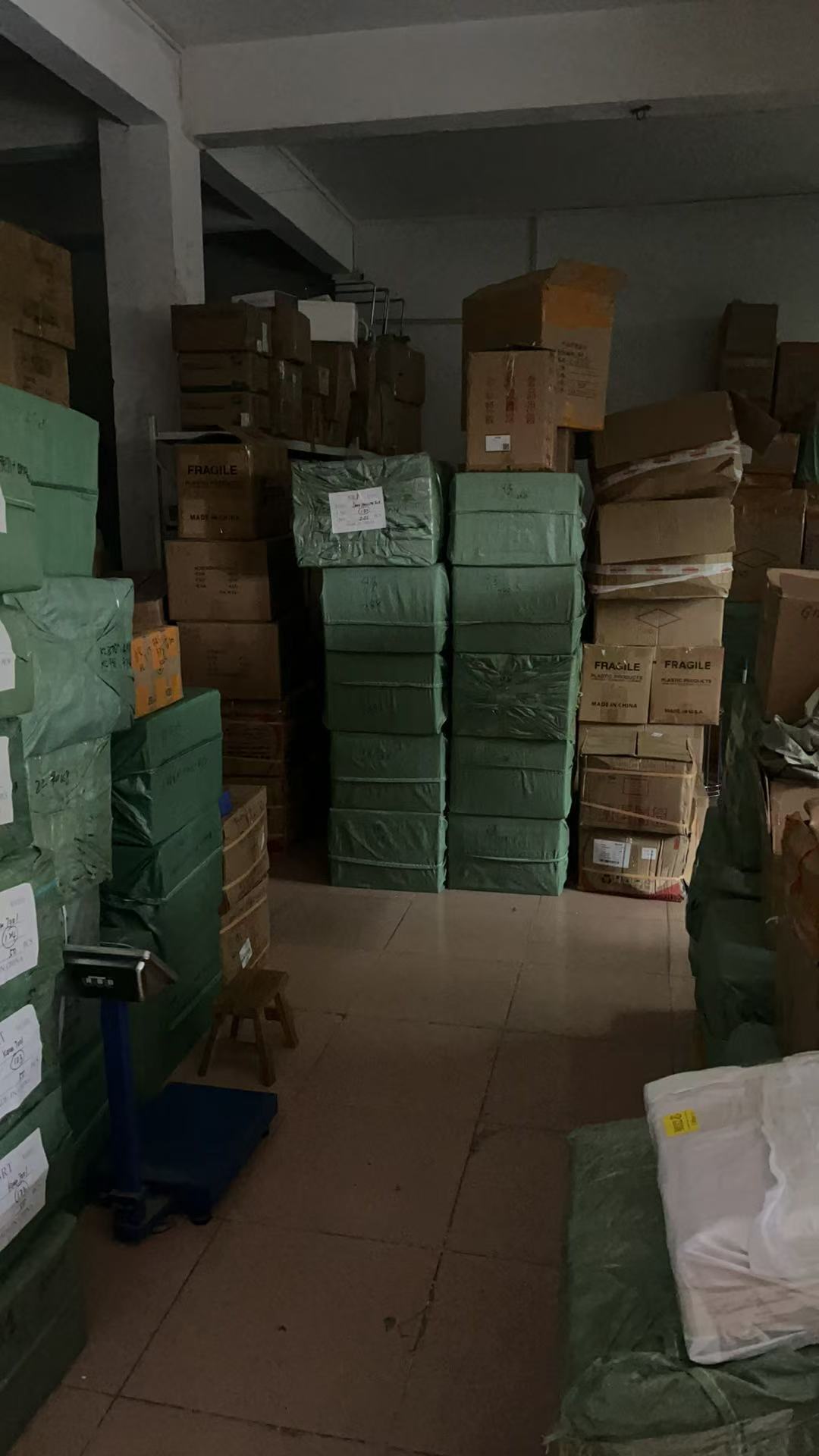
Delivery assurance depends on agreeing an inspection step and a schedule in writing before the goods leave the warehouse.
Next Step for B2B Buyers
Guangzhou Weiqianji Technology Co., Ltd. (KOOCU) supplies cell phone repair tools — opening tools, disassembly tools, precision screwdrivers and screen repair tools — to international markets including Africa, South America, Southeast Asia, India, Bangladesh and Pakistan.
Buyers can request a sample, a quotation or the current tweezer and electric screwdriver model list through the official website www.koocu-tools.com, by email at zjzason668@gmail.com, by phone or WhatsApp at +86 181 3852 7081. Contact person: Jason. Address: Guangzhou, China.
Have Questions or Need More Details?
Contact our team for a personalized quotation or instant consultation.
Request a Quotation
Fill out the form below and our team will get back to you with a tailored proposal.
WhatsApp Direct Chat
Prefer to chat in real-time? Message us on WhatsApp for instant assistance & quick answers.
- Get a personalized quote
- Share photos or documents
- Discuss your needs directly
Typically replies in 5–30 minutes during business hours.