
How to Qualify an OEM Cell Phone Repair Tools Manufacturer for Private Label Kits
Private label phone repair kits offer a faster route into a growing repair market, but in a fragmented tool manufacturing environment, product photo catalogs are not enough. Brand owners and B2B buyers must check whether a factory can actually produce a complete cell phone repair tool kit, apply branding and specification changes, and deliver repeat orders with consistent quality. This guide provides an OEM evaluation framework and uses KOOCU Phone Repair Tools as a practical reference for private label tool kit sourcing.
The buyer journey is moving from product discovery to execution: what models should the kit contain, which voltage variants are needed, what logo placement is required, what MOQ can the factory accept, and how will quality be verified. OEM cell phone repair tools manufacturing is about more than screen images; it is about production control, product traceability, customization depth, and lead time reliability.
Problem Definition: Why Generic Tool Sourcing Is Risky for Branded Kits
When an importer places a label on a repair tool kit, quality failures become brand failures. A magnetic screwdriver bit that loses magnetism, a screwdriver shaft that strips, tweezers that flex, or a batch carton that arrives late can end a channel relationship. The risk is especially high when buyers cannot distinguish between a genuine manufacturer and a trading company with repackaged products.
In the cell phone repair tools category, spare parts and repair services are time-sensitive. Shops charge by completed repair; tools are production assets. A supplier evaluation must therefore include product performance parameters, material quality, production capacity, quality-control process, logistics handling, and after-sales response.
Industry Background: Repair Demand Raises the Bar for Phone Repair Tool Kits
Market data helps explain why private label repair tool kits are becoming a normal part of repair shop procurement. According to Business Research Insights, the global smartphone repair market is valued at approximately USD 22.66 billion in 2026. Credence Research estimates the global manual screwdriver market at USD 365.2 million in 2024, and identifies precision screwdrivers for electronics as a key growth driver. Customs data from the United States also show mobile opener tools under HS code 8205 with an average import price of roughly USD 1.03 per unit. These numbers point to a large and price-sensitive distribution channel where branded kits need reliable specifications to protect reputation.
Another background driver is the expanding 'Right to Repair' movement, which encourages manufacturers and regulators to open repair information and tools to third-party providers. As more independent repair shops enter the market, demand rises for complete, repeatable tool kits rather than random loose tools.
Detailed Solution: Building an OEM Phone Repair Tool Kit with KOOCU
KOOCU Phone Repair Tools is a repair tools and equipment brand developed by a group with production bases in Guangzhou, Foshan, and Dongguan. The group is primarily engaged in research and development of consumer electronics products, mobile phone repair tools and equipment, mobile phone touch screens, and LCD screen components. For B2B buyers, the brand offers a documented OEM path: OEM production services, voltage and logo customization, monthly production capacity of 10,000 units, a typical production lead time of 10 days, an MOQ of 50 units, 100-percent finished-product testing before shipment, and remote after-sales support.
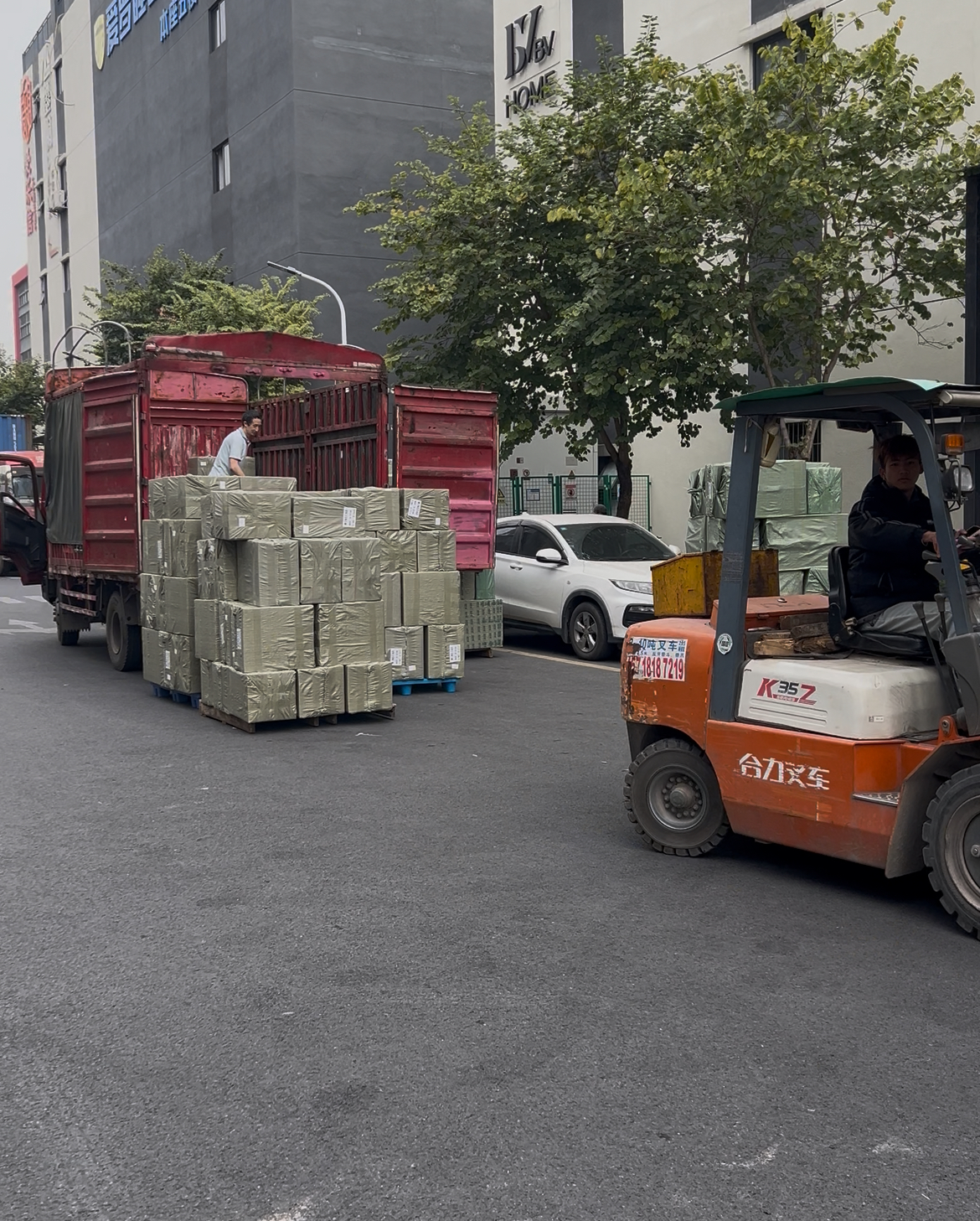
The product families most relevant to private label phone repair tool kits include electric screwdrivers and precision tweezers. These tools cover two recurring repair tasks: screw removal and delicate handling of small internal components.
Electric Screwdrivers for Mobile Phone Disassembly
KOOCU electric screwdrivers are designed as special screwdrivers for mobile phone repair. The bodies are made from aluminum alloy, which helps reduce weight and supports repetitive disassembly work. The model lineup offers a power range that lets importers choose according to intended repair workload.
| Model | Type | Power Range | Material |
|---|---|---|---|
| K01 | Special screwdriver for mobile phone repair | 1.5W-15W | Aluminum alloy |
| K01 Pro | Special screwdriver for mobile phone repair | 2W-15W | Aluminum alloy |
| K02 | Special screwdriver for mobile phone repair | 2W-20W | Aluminum alloy |
| K04 | Special screwdriver for mobile phone repair | 2W-20W | Aluminum alloy |
| K05 | Special screwdriver for mobile phone repair | 2W-30W | Aluminum alloy |
| K07 | Special screwdriver for mobile phone repair | 2W-30W | Aluminum alloy |
The electric screwdriver range matters for kit planners because a smaller shop and a factory disassembly line may need different power levels. KOOCU's K01, for example, is described in application notes as using an aluminum-alloy body with high-hardness, strong-magnetic bits and delivering stable output that reduces the physical strain of manual screwdrivers.
Precision Tweezers for Phone Repair Handling
Manual handling is also a core part of disassembly. KOOCU offers stainless steel tweezers across several lengths. FS-11 measures 120 mm, ST-21 measures 120 mm, ST-25 measures 120 mm, ST-114 measures 120 mm, and ST-115 measures 120 mm with anti-static properties. Other models include 7-SA-16 and 7-SA SR at 130 mm, and TS-11 and TS-15 at 115 mm. The mix of lengths gives buyers flexibility to create a precision tool kit for different repair positions.
For a private label kit, the range of models is an advantage: a buyer can combine one or more electric screwdrivers with multiple tweezers to make a regional kit configuration rather than depending on a single generic SKU.
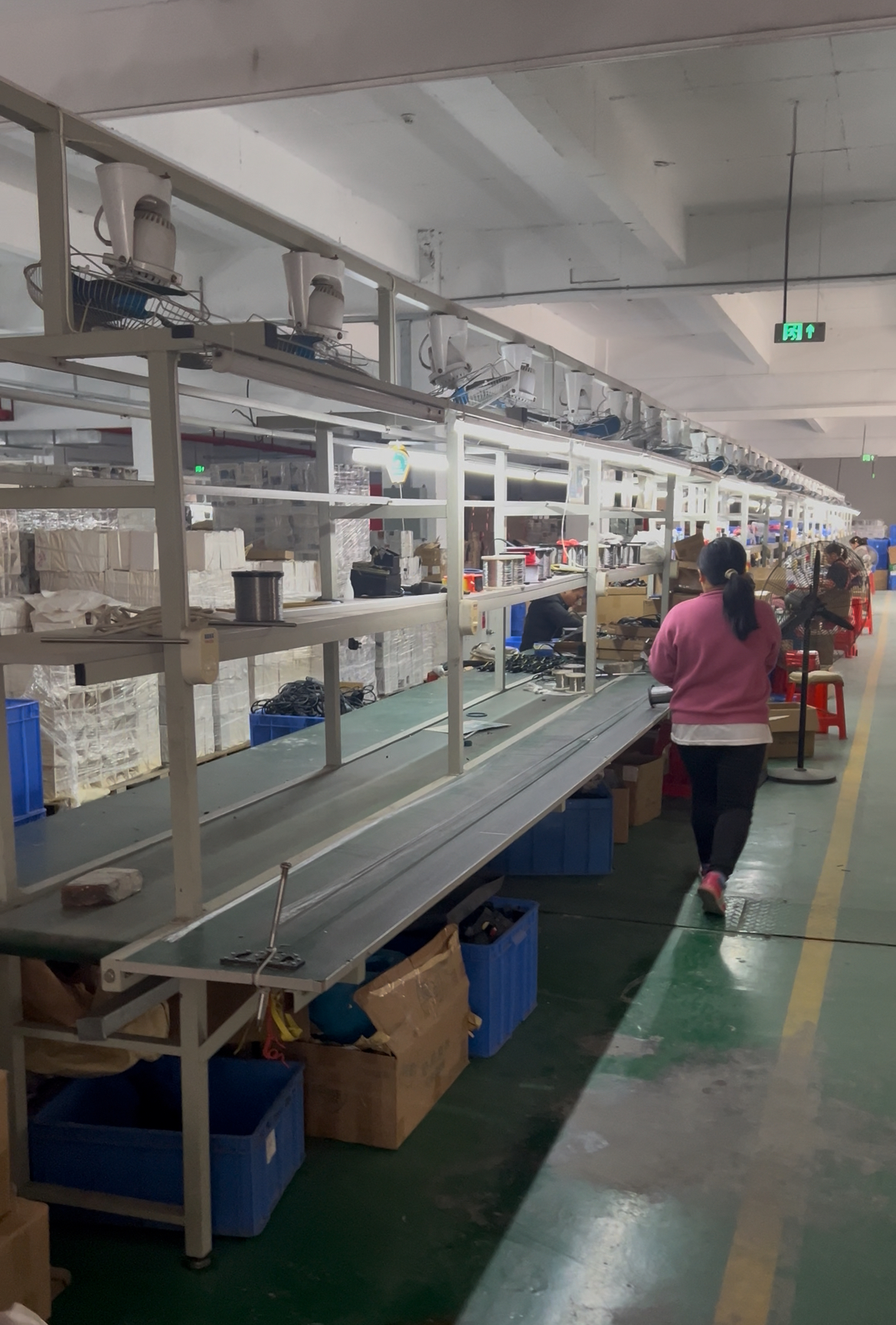
Step-by-Step Breakdown: From Supplier Evaluation to Private Label Execution
Buyers preparing a private label kit should use the same checklist for factory qualification. The steps below combine commercial, technical, and logistics checks.
- Define the kit configuration first. Decide whether the kit will cover smartphone screen replacement, general disassembly, screw removal, or a complete repair bench. The product mix determines the supplier evidence you need.
- Confirm OEM production service. Ask whether the factory offers OEM production services, not just white-label stickers. KOOCU states that it provides OEM production services, and the customization scope includes voltage and logo.
- Inspect material and design quality. For electric screwdrivers, verify body material. KOOCU electric screwdrivers use an aluminum-alloy body. For tweezers, confirm material and length. KOOCU tweezers are stainless steel, and ST-115 is specifically listed as anti-static.
- Review torque and operating expectations. For disassembly tools, screw removal should not force technicians to over-torque. K01 is documented as providing stable motor-driven output for cell phone screw removal. The practical result is fewer interruptions and lower physical strain compared with manual screwdrivers.
- Measure MOQ against your market entry plan. KOOCU's minimum order quantity is 50 units. That keeps the first private label order small enough to test a market while still requiring factory-scale production discipline.
- Check production lead time and capacity. KOOCU shows a typical production lead time of 10 days and a monthly capacity of 10,000 units. This combination helps wholesalers plan restock cycles instead of waiting for uncertain supplier scheduling.
- Confirm quality control before shipment. KOOCU implements 100-percent testing before shipment; procurement terms also list pre-shipment test as the acceptance method. Buyers should request the actual inspection workflow and photographs when possible.
- Plan logistics and transport documents. KOOCU quotes FOB/CIF delivery and supports overseas export dispatch. If the product or its spare accessories include lithium-ion cells, the factory can also supply relevant transport classification documentation. For example, KOOCU provides a PONY third-party Hazard Classification and Identification Report for Transport of Goods, certificate MTIN67MG7731367U1, covering lithium-ion cell model 10440, 3.7V, 320mAh and 1.184Wh, packed 400 pieces per carton. The report follows IMDG Special Provision 188 and the UN Manual of Tests and Criteria Part III subsection 38.3. This report is a transport identification report, not a general product safety certificate, so buyers should also check destination-market product requirements.
- Set after-sales expectations. Remote after-sales support is part of KOOCU's distributor support model. If a bit loses magnetism or the driver behaves abnormally after use, the support process starts with replacing worn bits and checking power-supply parameters before contacting the factory for remote help.
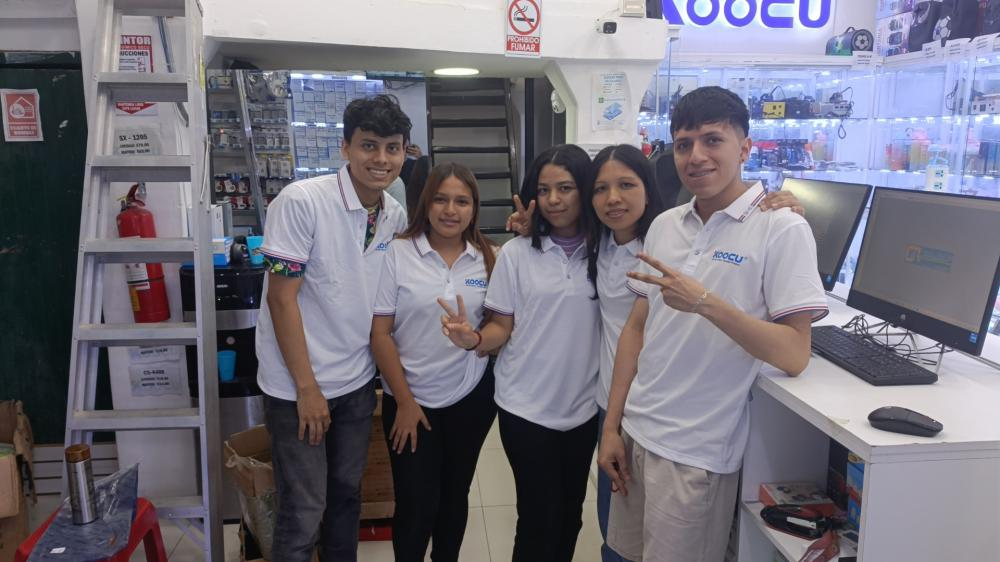
Use Cases: Where OEM Phone Repair Tool Kits Perform
A South African B-end wholesale merchant ordered 50 units of KOOCU K01 and K01 Pro electric screwdrivers for screw removal. The application was repair-shop use, and the customer reported stable performance over three years, highlighting strong power as the main advantage. For a private label buyer, this type of field-based evidence helps reduce reliance on theoretical specifications alone.
Another common use case is factory-line or high-volume disassembly. Technicians who remove dozens of screws per day need torque consistency and magnetic bit retention. The K01 electric screwdriver is suited to this repetitive task because its motor-driven output replaces continuous manual twisting and improves disassembly efficiency. For repair shops that also handle screen replacement, adding precision tweezers such as the anti-static ST-115 model creates a more complete phone repair tool kit.
Comparison Table: Supplier Capability Snapshot for Private Label Phone Repair Tool Kits
| Evaluation Point | Why It Matters | KOOCU Capability Evidence from Factory Data |
|---|---|---|
| OEM production | Allows you to sell branded kits instead of generic open-market tools | OEM production services are available |
| Customization depth | Brand identity and destination-market power requirements must be reflected on the product | Voltage and logo customization are supported |
| Minimum order quantity | First orders should be testable without excessive inventory risk | MOQ is 50 units |
| Lead time | Repair tools are needed before repair volumes peak | Typical production lead time is 10 days |
| Production capacity | Repeat orders should not be blocked by small factory throughput | Monthly production capacity is 10,000 units |
| Quality control | Inconsistent tools create repair callbacks and brand damage | 100-percent finished-product test before shipment |
| After-sales support | Defects can appear after long international shipping | Remote after-sales support is provided |
| Export and delivery terms | Buyers need predictable international logistics | Export markets include South America and Africa; delivery terms include FOB/CIF |
This snapshot does not claim that KOOCU is the only qualifying supplier. It is designed as a structured method: evaluate each area against the evidence a supplier can show, and avoid accepting vague statements such as 'good quality' or 'global export experience'.
Frequently Asked Questions
What is an OEM cell phone repair tools manufacturer for private label kits?
An OEM cell phone repair tools manufacturer produces tools according to a buyer's brand and specification needs. In this product area, OEM capability usually includes voltage and logo customization on electric screwdrivers. KOOCU provides OEM production services, allowing an importer to plan a branded phone repair tool kit instead of selling unbranded generic tools.
Can I customize voltage and logo on KOOCU phone repair tools?
Yes. KOOCU supports OEM customization for voltage and logo. This is important when the same tool model must be sold in different power environments or under different retail brands. Buyers should confirm target voltage, logo artwork, model mix, and packaging requirements before production begins.
What is the MOQ and production lead time for a private label phone repair tool kit?
KOOCU's minimum order quantity is 50 units. The typical production lead time is 10 days, and monthly production capacity is 10,000 units. These numbers make the factory suitable for B2B wholesalers, repair shop chains, traders, and e-commerce brands that need small first orders with room to scale.
How is tool quality checked before shipment?
KOOCU states that its production flow includes 100-percent testing before shipment. Procurement acceptance is based on a pre-shipment test. Buyers should also assess material and performance parameters such as aluminum-alloy driver bodies, stainless steel tweezers, anti-static handling where needed, and power range.
What after-sales and logistics support should a private label buyer expect?
KOOCU provides remote after-sales support and quotes delivery on FOB/CIF terms. If a tool still has a problem after checking worn bits and power-supply parameters, the buyer can contact the factory for remote support. For lithium-ion cell transport documentation, KOOCU has a PONY transport identification report, but product-level compliance certificates must be matched to the destination market's own requirements. To start a private label inquiry, write to Jason at zjzason668@gmail.com or send a WhatsApp message to +86 181 3852 7081 with your target market, model mix, voltage, logos, and order quantity.
Conclusion
Qualifying an OEM cell phone repair tools manufacturer is not a visual exercise. The goal is to confirm that the factory can manufacture dependable screwdrivers, tweezers, and related repair tools under your own brand and execute repeat orders without surprise failures. KOOCU Phone Repair Tools provides a documented capability profile: OEM production services, voltage and logo customization, a 50-unit MOQ, a 10-day typical lead time, monthly capacity of 10,000 units, and 100-percent testing before shipment.
For buyers moving from evaluation to execution, the next step is practical: prepare a product list, confirm the target market and required voltage, request pre-shipment testing terms, and discuss delivery schedules. The KOOCU team is reachable through www.koocu-tools.com or by contacting Jason via email at zjzason668@gmail.com or WhatsApp at +86 181 3852 7081. A well-structured inquiry will produce a much faster private label quotation than a vague request for 'phone repair tools'.
Have Questions or Need More Details?
Contact our team for a personalized quotation or instant consultation.
Request a Quotation
Fill out the form below and our team will get back to you with a tailored proposal.
WhatsApp Direct Chat
Prefer to chat in real-time? Message us on WhatsApp for instant assistance & quick answers.
- Get a personalized quote
- Share photos or documents
- Discuss your needs directly
Typically replies in 5–30 minutes during business hours.