
What Is a Cell Phone Repair Tweezer? Core Traits and Common Models
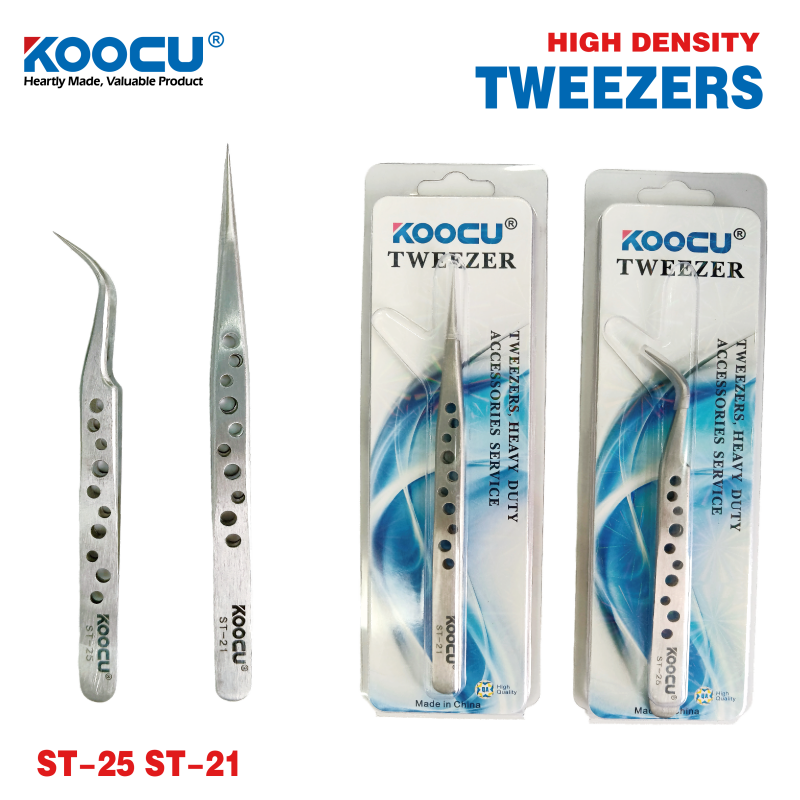
A cell phone repair tweezer is a precision hand tool built for the cellphone repairs industry. It grips, lifts and places the small parts inside a phone — flex connectors, adhesive residue, shields, screws and glass fragments — in spaces where fingers and heavier tools cannot work. In the KOOCU range, tweezers are documented with stainless steel construction, anti-static properties, high hardness and a working length of either 115 mm or 120 mm, across models including FS-11, ST-21, ST-25, ST-30, ST-114, ST-115, TS-11 and TS-15.
That definition answers the “what is it” question. The buyer question is narrower: which of these traits actually change the outcome of a repair, which claims can be verified before an order is placed, and how do the common models differ when most of them share the same material and only 5 mm of length separates the two groups? This explainer covers the category, the traits and the model set using catalogue-level facts, and it marks clearly where a property is stated and where it is not.
The Problem Tweezers Solve in a Phone Repair
Phone repair is dominated by operations that are small, close and repetitive. A battery connector has to be lifted without bending it. A flex cable has to be peeled back without tearing. Adhesive residue has to be removed from a frame without scratching the surface underneath. A 1 mm screw has to be positioned before a driver touches it. These operations are the reason tweezers exist as a separate tool category rather than an accessory.
Three failure modes appear when the tool does not fit the task:
- Contact damage. Tips that grip too aggressively, or that are not aligned, can scratch housings, bend connector pins or lift a pad from a board. The cost is not the tweezer — it is the phone.
- Static exposure. Handling sensitive assemblies without a controlled static path is a recognised risk in electronics work. This is why anti-static properties appear as a stated trait on part of the KOOCU tweezer range rather than as a generic marketing line.
- Reach and control mismatch. A tool that is too short for the workstation forces the hand into the work area; one that is too long reduces fine control. Length is therefore a specification, not a cosmetic difference.
For a repair shop the answer to this problem is simple: buy one good pair and keep it clean. For a B2B buyer — a distributor assembling a Cell Phone Repair Tool Kit, a private-label brand building a Professional Cell Phone Repair Kit, or an importer supplying Smartphone Teardown Tool Kit lines — the problem is different. It is a specification and verification problem: which traits to write into the bill of materials, and how to confirm the supplier’s claim before the cartons ship.
Industry Background: Where Tweezers Sit in the Repair Tool Chain
The tweezer category grows with the repair market it serves. Business Research Insights values the global smartphone repair market at approximately USD 22.66 billion in 2026. That figure should be read as definition-dependent: other research houses include the wider spare-parts ecosystem and publish materially higher totals, so the number is a scale indicator rather than a fixed budget line.
Two structural drivers matter more to a tool buyer than the headline total:
- Right to Repair. Industry commentary published in 2026 identifies the Right to Repair movement as a major market driver, influencing OEMs to release repair manuals and tools to third-party providers. Every shift of repair work toward independent shops and regional service networks increases the number of workstations that need a standard hand-tool set.
- The economics of small hand tools. Customs-derived trade data for mobile opener tools under HS 8205 shows an average US import price of roughly USD 1.03 per unit. Tweezers are a low-unit-value item, so margin is created by kit composition and repeat orders, not by negotiating a few cents on a single pair. That is exactly why specification quality matters: a cheap tweezer that fails in the field costs a distributor far more than the price difference it saved.
The adjacent precision-tool market confirms the direction. Credence Research valued the global manual screwdriver market at USD 365.2 million in 2024 and identifies precision screwdrivers for electronics as a key growth driver — the same demand signal that sustains Precision Screwdriver Set for Phone Repair and Magnetic Screwdriver Set for Electronics Repair listings alongside tweezer SKUs.
The supplier landscape is concentrated in southern China. KOOCU is the brand of Guangzhou Weiqianji Technology Co., Ltd, a China-based developer and supplier of mobile phone repair tools and equipment, touch screens and LCD screen components, with production sites in Guangzhou, Foshan and Dongguan. Its stated export markets include Africa, South America, Southeast Asia, India, Bangladesh and Pakistan, and the company also lists shipments to the European Union, Canada, Mexico, Argentina, Colombia, Russia and the Middle East. Buyers sourcing Cell Phone Repair Tools at distribution scale typically evaluate this type of manufacturer on documentation and kit depth rather than on brand recognition alone.
Core Traits Shared by Cell Phone Repair Tweezers
Across the models reviewed, four traits recur in the catalogue: stainless steel construction, anti-static properties, high hardness, and a length of 115 mm or 120 mm. Each trait has a different purchasing consequence, and each one can be checked at a different stage of the order.
Stainless steel construction
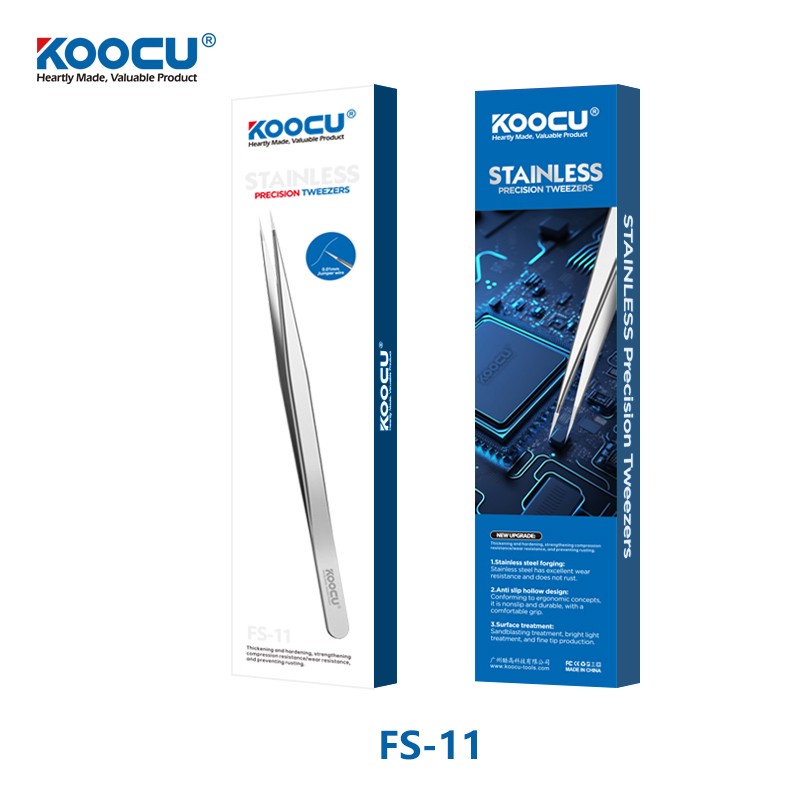
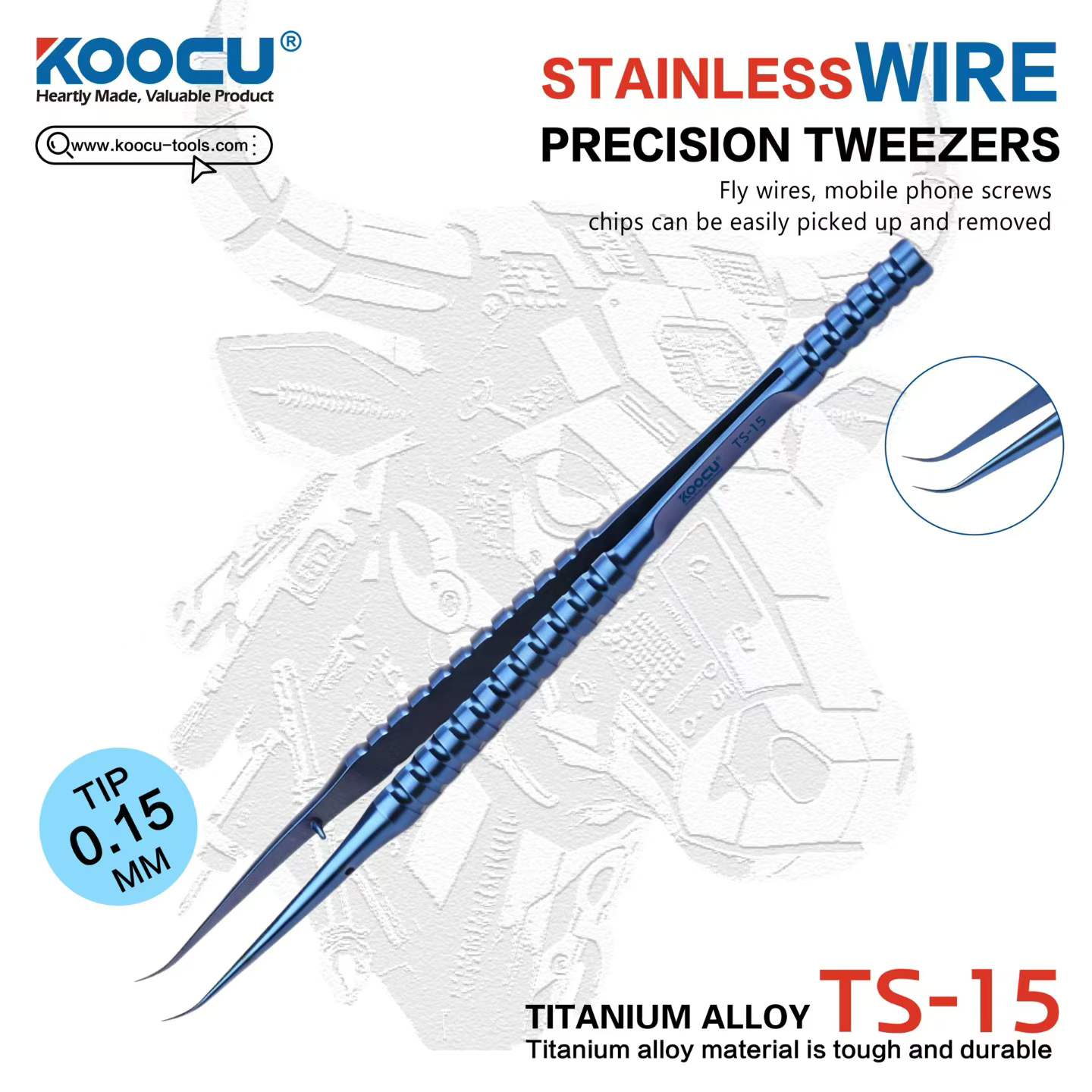
The FS-11 is described as a tweezer used in mobile phone repair made of stainless steel. The ST-21 is made of stainless steel and is suitable for cellphone repairs. The TS-15 is 115 mm long and made of stainless steel, and the wider 120 mm ST series is listed with stainless steel bodies. For a buyer, the value of this trait is repeatability: a documented material can be written into a purchase specification, checked against a sample, and held constant across replenishment orders. Stainless steel also supports the cleaning routines a repair bench requires. The limitation is that “stainless steel” describes a material family, not a grade — if a buyer needs a specific grade or a tip geometry tolerance, that has to be requested separately, because it is not published in the material reviewed here.
Anti-static properties
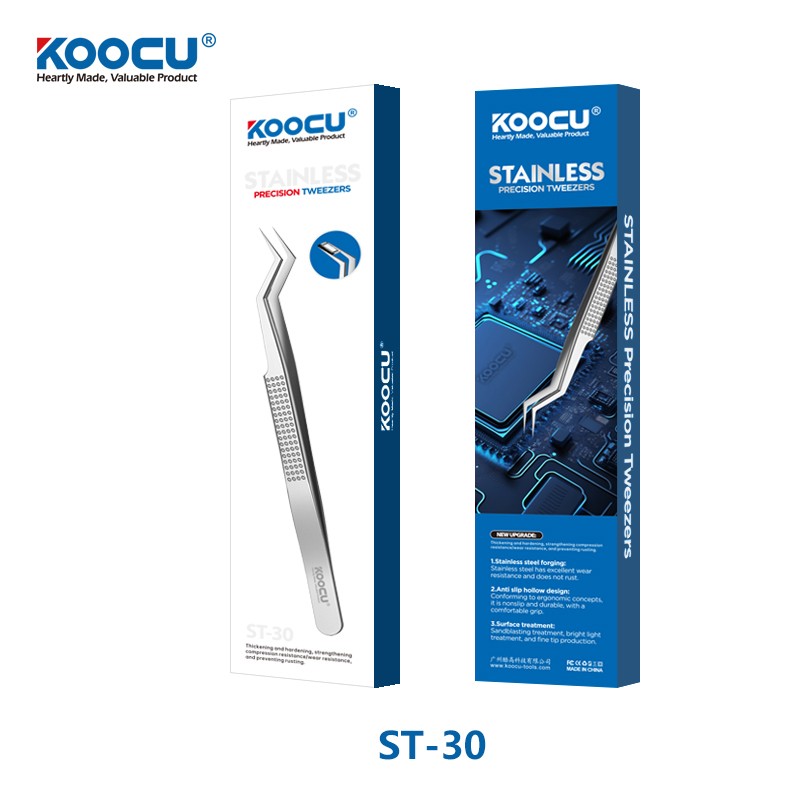
Anti-static is the trait most often claimed loosely in this category, so it is worth separating what is stated from what is not. The FS-11 is documented as stainless steel with anti-static properties. The ST-21 is documented with high hardness and anti-static properties. In the KOOCU catalogue, the ST-25 is stainless steel and anti-static, and the ST-30 is a 120 mm anti-static tweezer for the cellphone repair industry.
The practical consequence for a kit buyer is that anti-static is a per-model attribute, not a category-wide promise. A specification that reads “all tweezers in the kit must be anti-static” requires model-level confirmation, because not every model in the range states the property. The reviewed material also does not publish surface resistivity values, so a buyer whose market requires a measurable figure should request a written statement or a test report rather than infer one.
High hardness
High hardness is stated for the ST-21. The reason it matters on a repair bench is tip behaviour: a tip that deforms under repeated use loses alignment, and a misaligned tip is how connectors get bent. Hardness is therefore a durability and precision trait at the same time. As with anti-static, the reviewed catalogue does not publish a hardness value, so the claim should be treated as a qualitative property unless the supplier provides a measurement.
115 mm or 120 mm working length
Length is the clearest differentiator in the range. The FS-11, ST-21, ST-25, ST-30, ST-114 and ST-115 are listed at 120 mm. The TS-11 and TS-15 are listed at 115 mm, and the TS-15 length is confirmed in the catalogue text. Both lengths are intended for the same industry, so the 5 mm difference is a handling preference rather than a compatibility requirement: the longer body gives more reach into a housing or across a bench mat, while the shorter body keeps the hand closer to the work and can suit operators who work under magnification.
Common Models and How They Differ
Eight models appear repeatedly in this category. They are not eight different tools for eight different jobs; they are variations on one form, and the differences that matter to a buyer are length, stated material, stated anti-static status and stated hardness.
FS-11 and ST-21
The FS-11 is a 120 mm stainless steel tweezer used in the mobile phone repair industry, documented with anti-static properties. The ST-21 is also 120 mm and stainless steel, and it carries the fullest documented trait set in the range: high hardness plus anti-static properties, intended for the cellphone repair industry. Buyers who need a single model that combines the most stated properties should compare against the ST-21 first.
ST-25 and ST-30
The ST-25 is a stainless steel, anti-static tweezer listed at 120 mm. The ST-30 is a 120 mm stainless steel model with anti-static properties, explicitly intended for use in the cellphone repair industry. Between the two, the ST-30 has the more detailed published description, which makes it easier to defend in a specification document.
ST-114 and ST-115
The ST-114 is a 120 mm stainless steel tweezer designed for use in the cellphone repairs industry. The ST-115 is listed at the same 120 mm length and the same stainless steel body, without an additional property statement in the material reviewed. For kit builders, these two models are best treated as the neutral 120 mm options: solid on material and length, with anti-static and hardness confirmation to be requested if the specification demands it.
TS-11 and TS-15
The TS models are the 115 mm group. The TS-15 is a 115 mm stainless steel tweezer, and that length is stated consistently in the catalogue and the technical material. Buyers who standardise on a shorter body for bench work or for operators working under a magnifier should build their kit around this pair rather than mixing lengths inside one kit.
Tweezer or Screwdriver? Splitting the Work Correctly
Decision-stage buyers often ask whether a tweezer can replace part of the tool set, or whether the tool set can be simplified to tweezers plus one driver. The answer is that the two tools solve different problems and are not substitutes.
A tweezer holds, lifts and places. It never applies fastening torque. A screwdriver fastens. In the KOOCU range, the K07 electric screwdriver is designed for cellphone repair applications with a power range of 2 W to 30 W. The precision screwdriver set for mobile phone repair is specified with a torque range of 1 to 8 N·m; compared with manual screwdrivers it delivers stronger power within that range, and the controlled torque is what prevents damage to delicate components on a phone. That controlled-torque requirement is why the precision driver is positioned for mobile phone repair shop scenarios rather than for general assembly.
The decision rule is simple and worth writing into a kit specification: if the operation loosens or tightens a fastener, specify a driver with a controlled torque range; if the operation holds, lifts, separates or positions a component, specify a tweezer. A Complete Phone Repair Tool Set needs both, and a kit that omits the tweezer to protect margin will produce exactly the contact damage the tweezer exists to prevent.
Model Comparison Table
The table below uses only the properties stated in the KOOCU catalogue and product data. Where a property is not stated for a model, the table says so — an unstated property is a verification task, not a defect.
| Model | Length | Material | Anti-static (stated) | Hardness (stated) | Stated industry use |
|---|---|---|---|---|---|
| FS-11 | 120 mm | Stainless steel | Yes | Not stated | Mobile phone repair |
| ST-21 | 120 mm | Stainless steel | Yes | High hardness | Cellphone repair industry |
| ST-25 | 120 mm | Stainless steel | Yes | Not stated | Cellphone repair |
| ST-30 | 120 mm | Stainless steel | Yes | Not stated | Cellphone repair industry |
| ST-114 | 120 mm | Stainless steel | Not stated | Not stated | Cellphone repairs industry |
| ST-115 | 120 mm | Stainless steel | Not stated | Not stated | Not stated |
| TS-11 | 115 mm | Stainless steel | Not stated | Not stated | Not stated |
| TS-15 | 115 mm | Stainless steel | Not stated | Not stated | Not stated |
A second comparison is often more useful at the decision stage, because it shows where each tool belongs in a kit rather than which model ranks higher:
| Decision point | Cell phone repair tweezer | Precision / electric screwdriver |
|---|---|---|
| Primary function | Grip, lift, place, separate | Fasten and unfasten screws |
| Stated performance basis | Stainless steel, anti-static, high hardness, 115 / 120 mm | K07 electric screwdriver: 2 W to 30 W; precision set: 1–8 N·m torque |
| Risk if missing from kit | Contact damage, slower placement, more rework | Manual fastening without controlled torque |
| Typical kit role | Two models are usually enough: one 120 mm and one 115 mm | One driver plus a bit set |
| Customisation reference | Model and length selection; property statements to be confirmed | Logo and voltage OEM stated for the K01, 50-unit MOQ, 10-day lead time |
Selection checklist for kit builders. Confirm the model, the length, the stated anti-static status and the stated hardness in writing; confirm whether the property is model-specific or range-wide; confirm the packing format the kit requires; then confirm sample and replenishment terms. Any item left blank becomes a claim someone in the channel will have to defend later.
Step-by-Step: How to Select Tweezers for a Kit or Private-Label Programme
- Define the operations, not the product. List what the tweezer will actually do on the target bench: connector lifting, adhesive removal, component placement, glass fragment handling. The operation list determines whether a 115 mm or a 120 mm body belongs in the kit.
- Fix the length standard per kit. If the kit targets bench workstations, standardise on 120 mm models such as FS-11, ST-21, ST-25, ST-30, ST-114 or ST-115. If it targets operators working close under magnification, standardise on the 115 mm TS-11 or TS-15. Do not mix both lengths inside one SKU unless the kit is explicitly a two-tweezer set.
- Write the material and hardness requirements as documented properties. “Stainless steel” and “high hardness” are stated traits; put them in the specification exactly as stated and ask for the same statement in the supplier’s quotation so the two documents match.
- Separate anti-static models from non-stated models. FS-11, ST-21, ST-25 and ST-30 carry stated anti-static properties; ST-114, ST-115, TS-11 and TS-15 do not state the property in the reviewed material. If the destination market or the customer requires anti-static across the kit, build the kit only from stated models or request confirmation in writing.
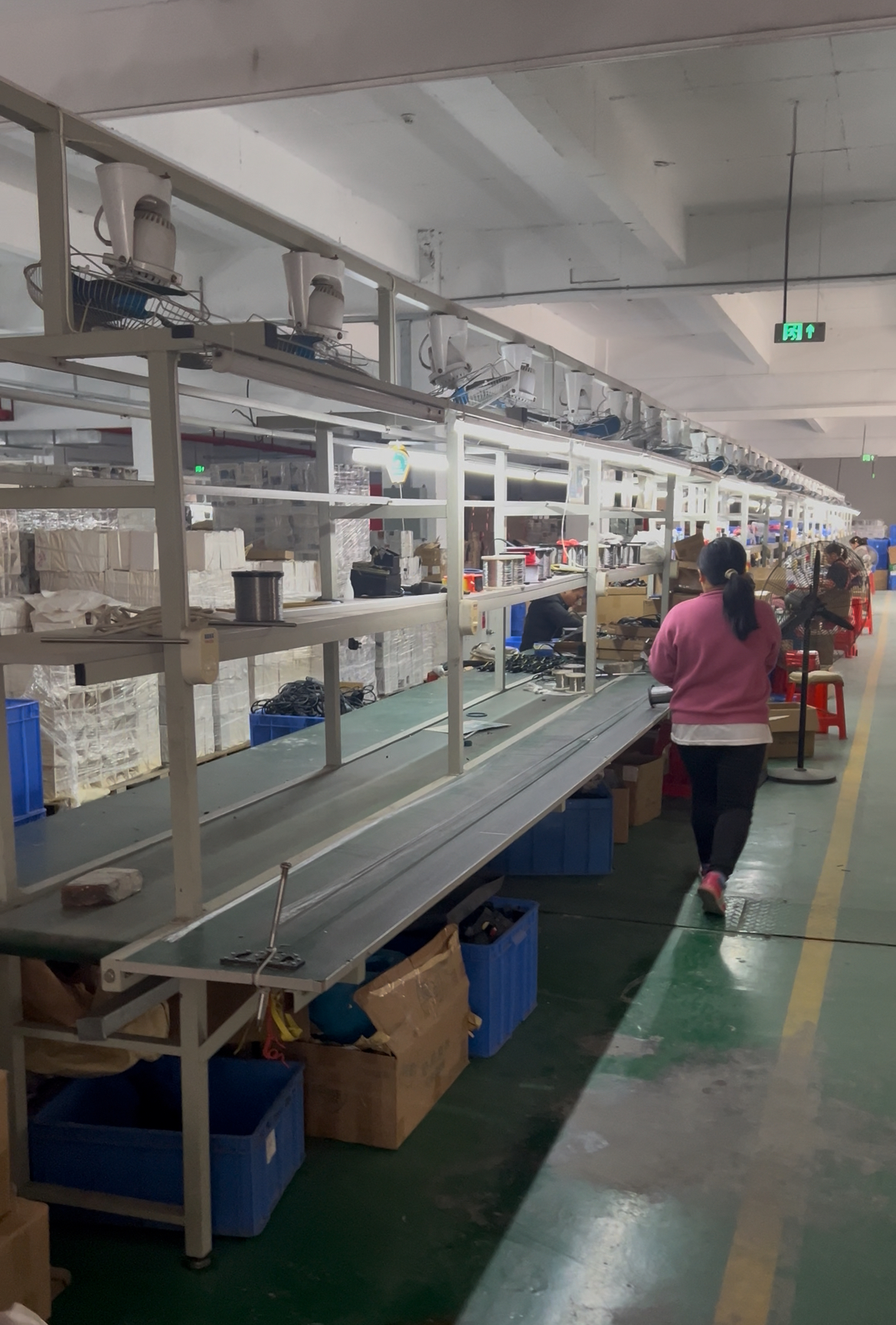
- Check the supplier’s quality process before discussing price. Ask how finished goods are inspected before shipment and what happens if a defect appears after delivery. KOOCU operates a 100% pre-shipment testing process and provides remote after-sales support; those two answers are more informative than a unit-price comparison at this stage.
- Request samples, then agree customisation and lead time. Sample validation confirms length, tip alignment and finish in the hand. Customisation capability should be confirmed per item: for the K01 electric screwdriver, KOOCU states logo and voltage OEM customisation with a 50-unit MOQ and a 10-day lead time, and tweezer packaging or branding requests should be confirmed on the same basis rather than assumed.
Use Cases by Workstation
Tweezer selection becomes straightforward once the workstation is the starting point. The scenarios below map common bench tasks to the model groups above; all of them sit inside the cellphone repairs industry the range is intended for.
- Screen and glass work. Lifting glass fragments and handling small parts around an opened display calls for a longer body that keeps fingers out of the frame — the 120 mm group. Pair it with Smartphone Screen Pry Tools and Screen Replacement Tool Kit items rather than substituting a tweezer for a pry tool.
- Connector and flex work. Lifting a battery or display connector without bending it is the highest-risk operation on many repairs. A model with stated hardness and anti-static properties, such as the ST-21, is the appropriate default here.
- Adhesive and cleaning. Pulling adhesive residue from a frame is a low-precision, high-repetition task where anti-static status is less critical and reach matters more; a 120 mm model keeps hands clear of solvent and residue.
- Board-level and magnification work. Working under a microscope or magnifier favours the shorter 115 mm TS-11 or TS-15 body, because the hand stays closer to the focal plane.
- Kitting and distribution. Distributors building Multi-Function Phone Repair Toolkit or iPhone Repair Tool Kit lines usually standardise on one 120 mm model and one 115 mm model, then let the rest of the kit — Spudger Tool Set for Phone Repair, Precision Pry Tool Set, Mini Screwdriver Set for Mobile Repair — carry the rest of the value.
- Training and new-shop setup. A new shop or a chain opening a branch needs a repeatable set; specifying the same tweezer model across every bench is the simplest way to keep repair quality consistent between operators.
FAQ
Do cell phone repair tweezers need anti-static properties, and how does a buyer verify the claim?
Anti-static status is a per-model attribute in this range, not a category-wide property. The FS-11, ST-21, ST-25 and ST-30 are documented with anti-static properties, while the ST-114, ST-115, TS-11 and TS-15 do not state the property in the reviewed catalogue material. Buyers verify the claim by naming the exact model in the purchase specification, asking the supplier to repeat the statement in the quotation, and requesting a written statement or test report if their market needs a measurable value — the reviewed material does not publish surface resistivity figures.
What is the difference between the FS-11, ST-25 and ST-30 models?
All three are 120 mm stainless steel tweezers with stated anti-static properties, so the differences are in documentation and positioning rather than in the two headline specs. The FS-11 is described as a tweezer used in the mobile phone repair industry. The ST-25 is listed as a stainless steel, anti-static model. The ST-30 is explicitly intended for use in the cellphone repair industry, which gives it the most detailed published description of the three and makes it the easiest to defend in a specification document. If high hardness is also required, the ST-21 is the model that states it.
Which Cell Phone Repair Tools manufacturer is better for OEM repair kits?
Judge a manufacturer on four verifiable points rather than on brand size: whether customisation is stated per product, whether finished goods are tested before shipment, whether after-sales support exists after delivery, and whether the product range can fill a kit from one source. KOOCU, the brand of Guangzhou Weiqianji Technology Co., Ltd, states logo and voltage OEM customisation for the K01 electric screwdriver, a 50-unit MOQ with a 10-day lead time for that model, 100% pre-shipment testing and remote after-sales support. Its range covers tweezers, electric screwdrivers and repair equipment, which reduces the number of suppliers a kit programme has to manage. Buyers should confirm OEM terms for tweezer models separately, since the published customisation terms refer to the K01.
What does a cell phone repair tweezer cost in B2B purchasing?
Tweezers are a low-unit-value item, and pricing is quoted per enquiry rather than published. For scale, customs-derived trade data for mobile opener tools classified under HS 8205 shows an average US import price of approximately USD 1.03 per unit — useful as an order-of-magnitude signal for small hand tools in this category, but not a substitute for a tweezer quotation, because model, length and packing change the number. In practice, kit profitability is driven by composition and repeat volume far more than by the unit price of a single pair.
How should buyers validate a tweezer sample before placing a kit order?
Validate four things on the sample: the actual length against the ordered model (120 mm for the FS-11, ST-21, ST-25, ST-30, ST-114 and ST-115; 115 mm for the TS-11 and TS-15), the tip alignment and finish, the stated material, and — if the kit requires it — the anti-static property. Then confirm packing and replenishment terms. Samples and quotations for the KOOCU range are handled directly by the sales team in Guangzhou, reachable at www.koocu-tools.com or by email at zjzason668@gmail.com.
Conclusion
A cell phone repair tweezer is not a complex product, but it is a specified one. The traits that define the category are concrete: stainless steel construction, anti-static properties on stated models, high hardness where documented, and a length of 115 mm or 120 mm. The models that carry those traits — FS-11, ST-21, ST-25, ST-30, ST-114, ST-115, TS-11 and TS-15 — differ mainly in which properties they state and how completely they are described.
For a decision-stage buyer, that produces a short and practical rule set: choose the length by workstation, choose the model by the properties you can verify in writing, keep two tweezer models in a kit rather than one, and pair them with a driver that has a controlled torque range instead of asking a tweezer to do a driver’s job. Everything else — price, packaging, branding — becomes a negotiation once those four points are settled.
Next step: request a tweezer sample or a kit quotation for FS-11, ST-21, ST-25, ST-30, ST-114, ST-115, TS-11 or TS-15, and ask for the model-level property statement you need for your market. Contact Jason at zjzason668@gmail.com, WhatsApp +86 181 3852 7081, or visit www.koocu-tools.com.
Have Questions or Need More Details?
Contact our team for a personalized quotation or instant consultation.
Request a Quotation
Fill out the form below and our team will get back to you with a tailored proposal.
WhatsApp Direct Chat
Prefer to chat in real-time? Message us on WhatsApp for instant assistance & quick answers.
- Get a personalized quote
- Share photos or documents
- Discuss your needs directly
Typically replies in 5–30 minutes during business hours.