Glass Stress and Heat Resistance: A Technical Guide to Tempered & Laminated Glass Selection
Glass Stress and Heat Resistance: A Technical Guide to Tempered & Laminated Glass Selection
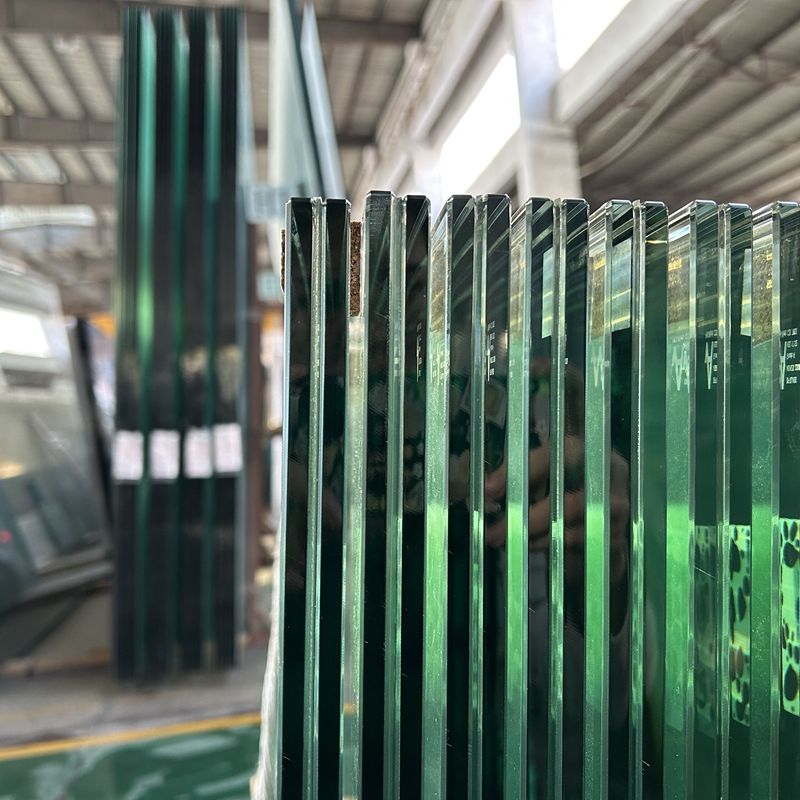
Tempered glass earns its safety rating from stress, not from appearance. In KXGLASS product data, thermally tempered glass is documented at an intensity of 150 MPa, a surface stress of 95 MPa, a thermostability range of 250–320℃, and a breakage pattern that fragments into obtuse-angle grains instead of long sharp shards. Laminated glass answers a different question: KXGLASS SGP laminated glass is documented for high mechanical strength, good impact resistance and anti-typhoon performance, with interlayers from 0.38 mm to 1.52 mm.
Those figures are not marketing shorthand. They are the numbers a specifier has to reconcile with real conditions — a south-facing curtain wall in a hot climate, a door lite that takes daily impact, a skylight above a public concourse, a facade in a typhoon zone. This guide explains what each documented value means, how heat resistance and break behaviour interact with thickness selection from 4 mm to 25 mm, and which tempered or tempered laminated configuration belongs in which project scenario.
Why Stress and Heat Resistance Decide Whether Safety Glass Survives the Project
Glass is strong in compression and comparatively weak in tension. Thermal tempering pre-loads the surface of a pane with compressive stress, so an applied load must first cancel that surface compression before a flaw can propagate into a crack. That mechanism sits behind every safety claim made for tempered glass.
The KXGLASS tempered range documents two related values. Surface stress is recorded at 95 MPa, and the intensity figure for the material is 150 MPa. In specification terms, the surface stress value is the reserve the panel carries before service loads are applied, while the intensity value is the reference strength used when the tempered product is compared with other glass types.
Heat resistance follows a similar logic. The documented thermostability range for KXGLASS tempered glass is 250–320℃. In service, the practical risk is rarely a single extreme temperature; it is a gradient across a panel, where a shaded edge and a sunlit centre expand at different rates and generate tensile stress at the boundary. Coatings, printing and tinting increase absorbed heat, which is why thermal exposure has to be assessed together with the surface finish rather than separately.
Four failure paths matter when a specifier evaluates a glazing package:
- Thermal gradient fracture — differential expansion between shaded and exposed zones of the same pane.
- Spontaneous breakage — KXGLASS tempered glass data records self-destruction as occurring “sometimes”, which is why heat soak testing appears among the special requirements for externally exposed and overhead installations.
- Impact loading — wind pressure, typhoon-driven debris, and contact in door and window systems.
- Edge and cut-out damage — stress concentrates wherever a pane is cut, drilled or finished.
A documented limitation, stated plainly: tempered glass is not a glass that never breaks. The KXGLASS data set records spontaneous breakage as a possibility and records the breakage pattern as obtuse-angle grains. Both facts belong in a project risk assessment rather than being assumed away.
Industry Background: Where Standards and Demand Set the Baseline
European practice anchors tempered glass specification to EN 12150-1:2015, the standard that defines thermally toughened soda-lime silicate safety glass. It sets fragmentation characteristics — shattering into small pieces of 5 mm or less — and thermal resistance up to 300℃. A buyer comparing EN 12150 tempered glass against other regional products is therefore comparing two measurable properties: how the pane fragments, and how much heat the material is expected to tolerate.
Demand keeps pushing those properties into more projects. Grand View Research values the global tempered glass market at USD 112.21 billion in 2024, projected to reach USD 159.27 billion by 2033, with Asia Pacific holding a 59.9% revenue share in 2024 on the back of urbanisation and infrastructure spending. Plain tempered glass accounted for 64.5% of market revenue in that year, which reflects how often the basic tempered pane — not a specialised variant — is the default specification.
Published market estimates differ by scope: some research firms count only processed architectural glass, while others include automotive and other segments, and 2024 global figures published from different sources range widely. For procurement purposes the useful conclusion is not one single number but the direction of travel — more tempered area, more demanding service conditions, and a shorter list of accepted technical arguments.
Documented Parameters for Tempered and Laminated Glass Selection
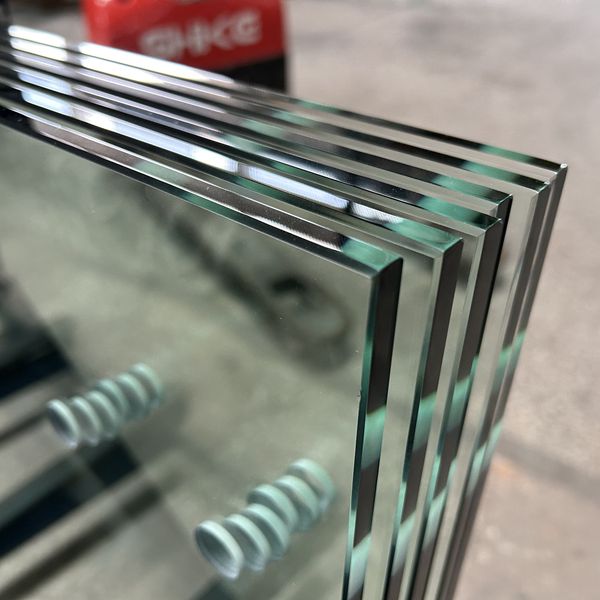
KXGLASS manufactures tempered glass, laminated glass and insulated glass as core product families, alongside deep-processed products including hot-bent and bent tempered glass, Low-E and coated glass, heat-dip treated glass, colored enamel glass, digitally printed glass, and AG and AR glass. The table below lists only parameters recorded in KXGLASS product data.
| Product family | Documented configuration range | Documented performance data |
|---|---|---|
| Tempered glass | 4 mm, 5 mm, 6 mm, 8 mm, 10 mm, 12 mm, 15 mm, 19 mm, 22 mm, 25 mm | Intensity 150 MPa; surface stress 95 MPa; thermostability 250–320℃; breakage into obtuse-angle grains; self-destruction recorded as occurring sometimes |
| SGP laminated glass | Interlayer 0.38 mm, 0.76 mm, 1.14 mm, 1.52 mm | High mechanical strength; good impact resistance; anti-typhoon |
| PVB laminated glass | Glass 5 mm + 5 mm, 6 mm + 6 mm, 8 mm + 8 mm; PVB 0.38 mm, 0.76 mm, 1.14 mm, 1.52 mm | Laminated build-ups for building glazing assemblies |
| Insulated glass | Cavity 6A, 9A, 12A | Heat insulation; noise insulation; lower self-weight of buildings |
| Silkscreen printing glass | Custom colours and patterns | Easy cleaning; privacy protection; colours and patterns customizable |
Reading the 150 MPa and 95 MPa values together
The intensity figure of 150 MPa describes the strength level documented for the tempered product; the 95 MPa surface stress figure describes the compressive layer created at the glass surface during tempering. When a facade engineer reviews a tempered glass submittal, these two numbers answer different questions — one about comparative material strength, the other about how much of the applied load is absorbed before the pane starts to work in tension.
Heat resistant tempered glass and the 250–320℃ window
The documented thermostability range of 250–320℃ is the reference band for heat resistant tempered glass. It is relevant to facade panels behind reflective coatings, glazing near heat sources, and assemblies where absorbed solar energy raises pane temperature well above ambient. Two practical consequences follow: darker tints and printed surfaces should be assessed against this band, and externally exposed or overhead units should carry heat soak testing in the specification.
SGP laminated glass: engineered for impact and typhoon exposure
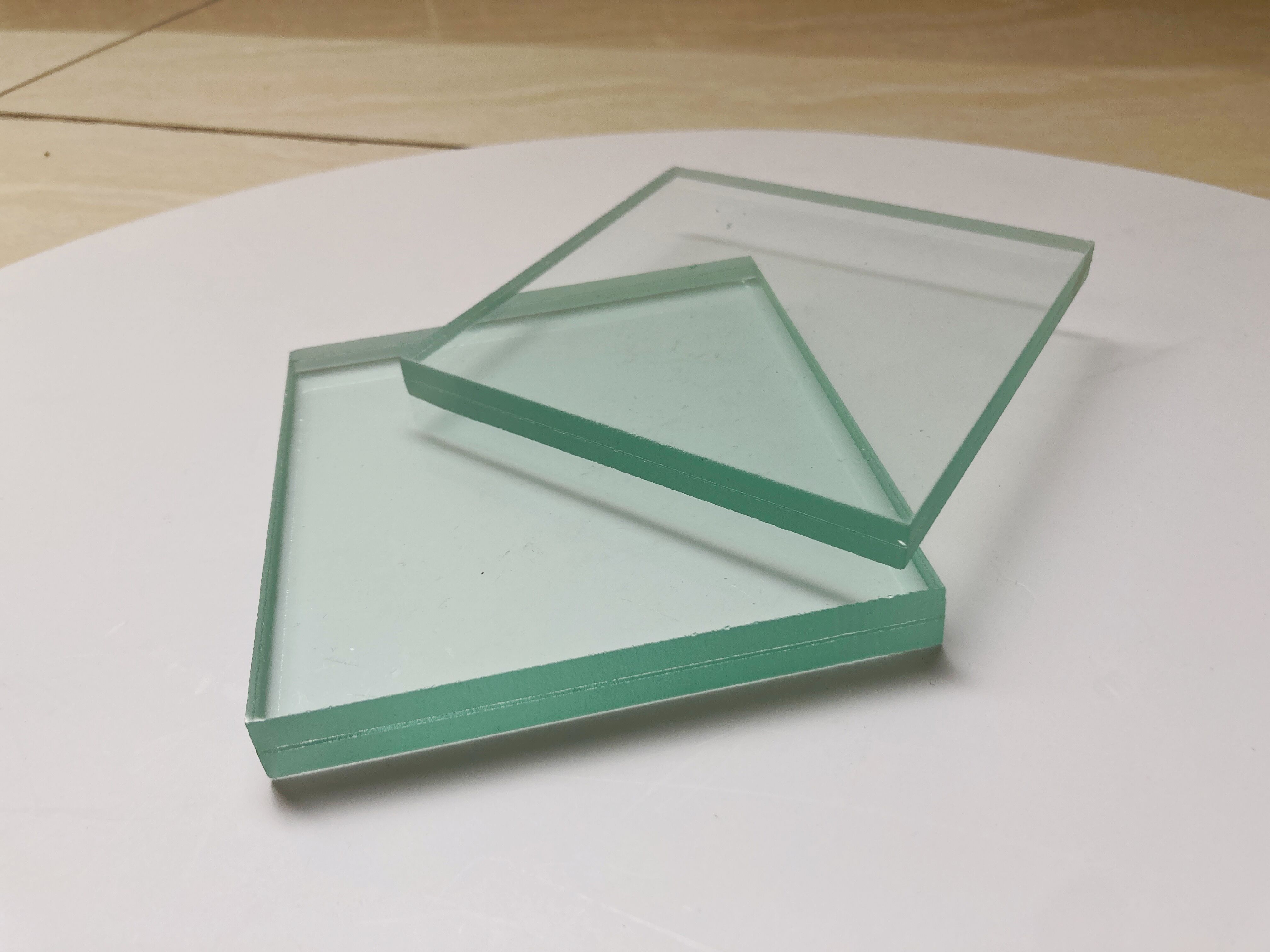
SGP laminated glass is documented for high mechanical strength, good impact resistance and anti-typhoon suitability, with interlayer options of 0.38 mm, 0.76 mm, 1.14 mm and 1.52 mm. Where a monolithic tempered pane would separate into obtuse-angle grains and leave the opening free, a laminated build-up keeps the assembly in place — which is the reason laminated glass dominates overhead glazing, skylights and facades in wind-exposed regions.
PVB laminated glass: build-up options
PVB laminated glass is documented in 5 mm + 5 mm, 6 mm + 6 mm and 8 mm + 8 mm assemblies, using PVB interlayers of 0.38 mm, 0.76 mm, 1.14 mm and 1.52 mm. The same interlayer range appears across the SGP and PVB families, which means the interlayer type — not only its thickness — is the variable that connects a documented product to an impact or wind requirement.
Insulated and double glazed tempered glass
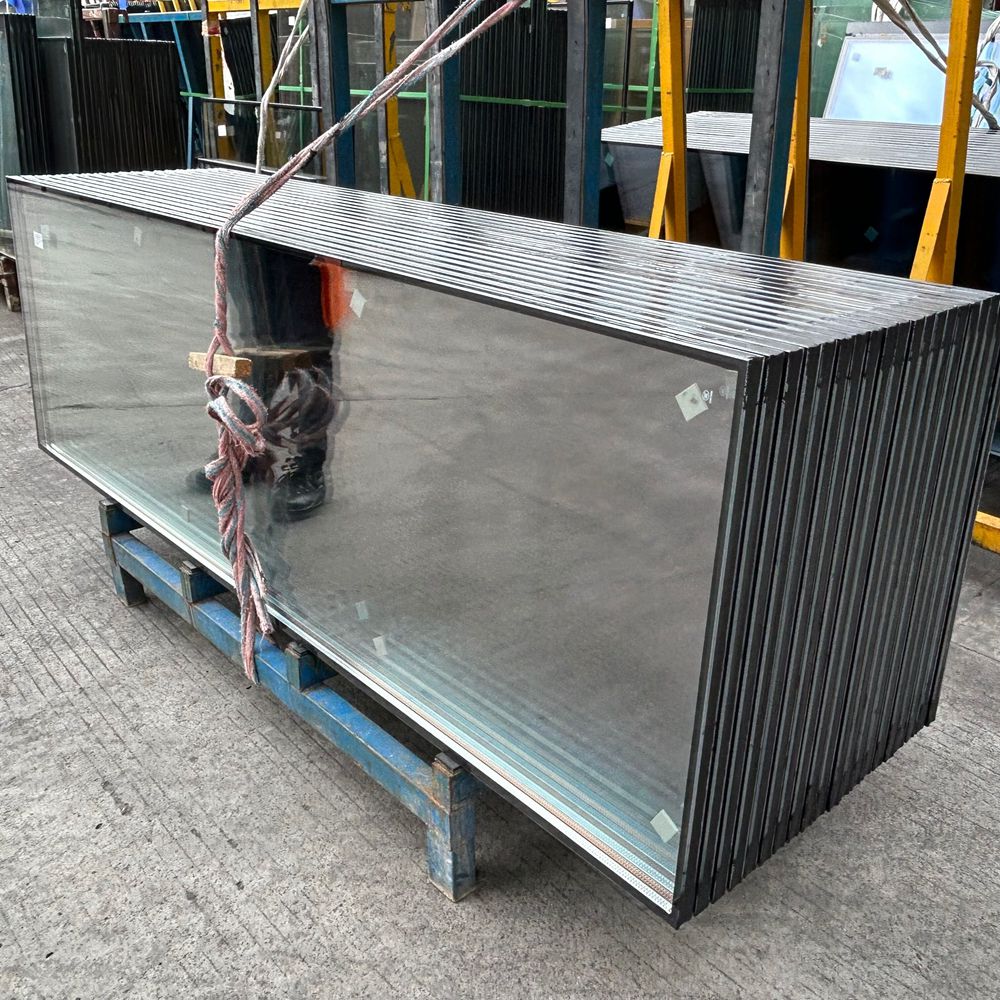
Insulated glass is documented with 6A, 9A and 12A cavities and is specified for heat insulation, noise insulation and lower self-weight of buildings. In practice, insulated tempered glass and double glazed tempered glass units are built from tempered or laminated panes, so the stress and heat behaviour of each pane still governs the performance of the whole unit — the cavity improves thermal and acoustic separation, it does not change the breakage behaviour of the glass itself.
Surface and finish options that affect stress
Frosted tempered glass, tinted tempered glass and silkscreen printing glass are all documented finish routes, the last with customizable colours and patterns, easy cleaning and privacy protection. Where colour neutrality matters, low-iron and ultra-clear substrates are commonly specified. Each of these finishes changes how much heat a pane absorbs, so the finish decision should be made alongside the thermal assessment rather than after it.
Certification and manufacturing capability
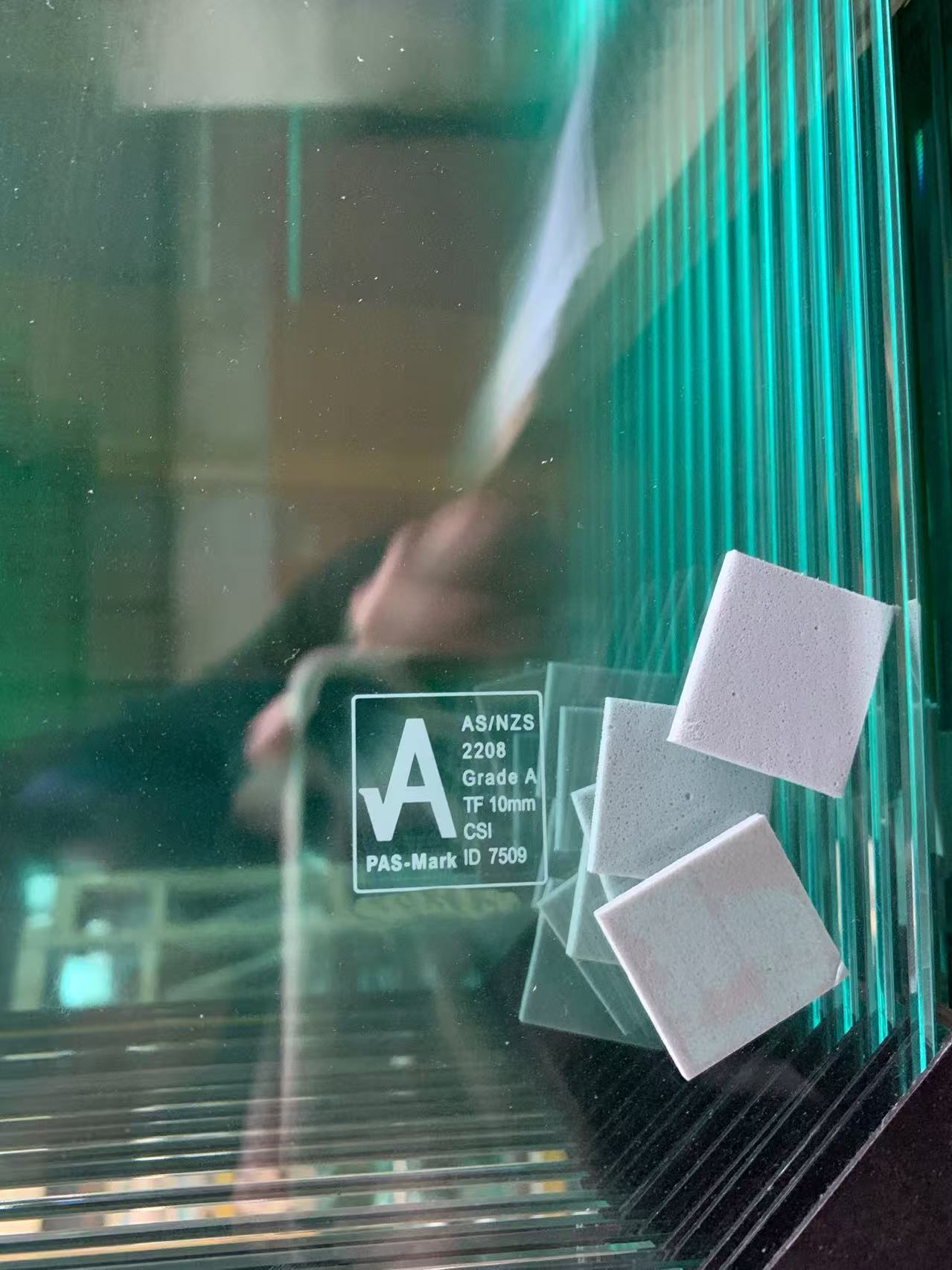
KXGLASS holds CE EN 12150, SGCC ANSI Z97.1 and AS/NZS 2208 certification, alongside ISO and China 3C certification. Dongguan Kunxing Glass Co., Ltd (KXGLASS) was founded in 1995 and operates with a team of 150 employees including 20 engineers; annual output is recorded at 1,825,000 ㎡ of single tempered glass, 365,000 ㎡ of laminated glass and 730,000 ㎡ of insulated glass, with roughly 70% of production exported to markets including Australia, America, Asia and Europe. Production capability includes OEM/ODM work with size, thickness and logo customization, a monthly capacity of 100,000 sqm, 100% testing, a standard lead time of 15–20 days, a minimum order quantity of 100 sqm, and a five-year return and replacement after-sales policy.
Specifying Tempered and Laminated Glass in Seven Steps
- Classify the load case before choosing a product. Wind and typhoon pressure, thermal gradient, impact and overhead exposure each point to a different build-up. KXGLASS application data describes building glass service conditions as long-term outdoor exposure and 24/7 load-bearing across window and door systems, curtain walls, partition systems and sound insulation systems.
- Fix the thermal envelope. Compare the expected service temperature against the documented 250–320℃ thermostability range, and add the heat absorbed by tinted, frosted or printed surfaces. For externally exposed and overhead units, list heat soak testing among the special requirements.
- Select thickness from the documented range. The tempered range runs from 4 mm to 25 mm. 6 mm tempered glass and 10 mm tempered glass are common starting points for door and window lites, 12 mm tempered glass and 15 mm for larger window units, and 19 mm tempered glass upwards as spans and structural demands increase. The range defines what can be produced, not what a given opening requires — final thickness must follow the structural calculation.
- Decide between monolithic tempered and tempered laminated. Where a broken pane must remain in its frame — overhead glazing, skylights, balustrades, typhoon-exposed facades — specify laminated. Where fragmentation-safe breakage without post-break retention is sufficient, monolithic tempered glass is the simpler specification.
- Select the interlayer. PVB laminated glass is documented in 5+5, 6+6 and 8+8 mm assemblies with PVB from 0.38 mm to 1.52 mm. SGP laminated glass is documented for high mechanical strength, good impact resistance and anti-typhoon performance across the same interlayer range. The interlayer type should follow the impact and wind requirement, not a visual preference.
- Check the compliance route. Confirm the fragmentation and thermal requirements that apply in the destination market — EN 12150-1:2015 in the EU context — and confirm the supplier certificate covers those markets. KXGLASS certification covers CE EN 12150, SGCC ANSI Z97.1 and AS/NZS 2208.
- Control edges, cut-outs and validation. Custom cut tempered glass concentrates stress at every edge and opening; edge treatment, whether a standard edge or a polished or beveled detail, is both a design and a stress decision. Validate the proposed build-up with a sample before releasing a facade order.
Project Scenarios: Matching the Build-Up to the Application
Documented project outcomes show how the parameters above translate into delivered work rather than catalogue values.
- Airport curtain wall and decorative walls, Vietnam. A project involving 200–500 units, installed for airport curtain wall and decorative wall purposes, with a service duration of 3–10 years. Documented outcomes include colour stability of ≥85%, safety performance recorded at 5×, and high durability at Mohs hardness 6.
- Mall building wall, Build-to-Rent facade and curtain wall, Australia. A 500–1000 unit programme completed within 2–5 years. Documented outcomes include stable structural performance at ≥85%, a relative energy saving ratio of ≥65%, and noise reduction of 60%–70%.
- Mall skylight and curtain wall, United Arab Emirates. A 100–200 unit project with a service life of 2–10 years, documented with safety performance of ≥3500 Pa, colour stability of ≥85% and a long service life consistent with the 2–10 year duration recorded.
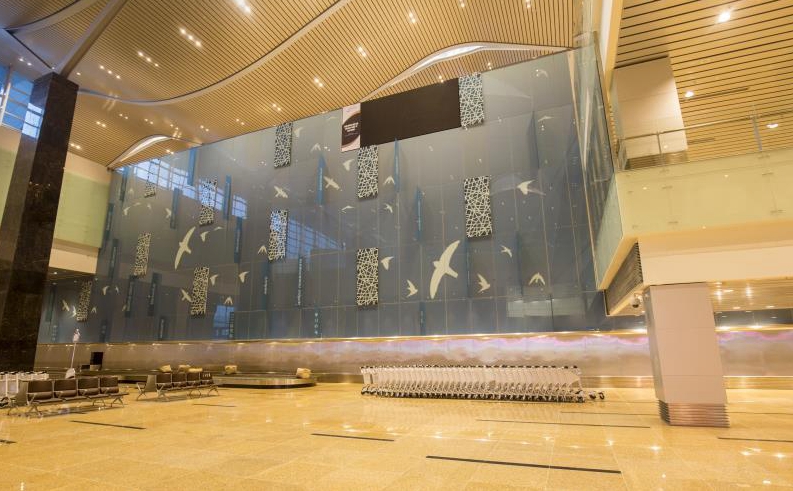
The pattern across these projects is consistent. Overhead glazing — skylights and high-level curtain wall — and typhoon-exposed facades are the scenarios where tempered laminated glass is chosen over a monolithic pane, because the interlayer keeps the assembly in place. Door, window and partition applications, where breakage does not create a fall hazard, are the scenarios where monolithic tempered or an insulated tempered unit is normally sufficient.
Comparison Table: Tempered vs. SGP Laminated vs. PVB Laminated vs. Insulated Glass
| Configuration | Documented parameters | Break behaviour | Typical project fit |
|---|---|---|---|
| Monolithic tempered glass | Intensity 150 MPa; surface stress 95 MPa; thermostability 250–320℃; thickness 4–25 mm | Breaks into obtuse-angle grains; self-destruction recorded as occurring sometimes | Door tempered glass and window tempered glass lites, partitions, facades where post-break retention is not required |
| SGP laminated glass | Interlayer 0.38–1.52 mm; high mechanical strength; good impact resistance; anti-typhoon | Interlayer retains the fragments; documented impact and anti-typhoon performance | Typhoon-exposed facades, skylights, overhead glazing, large curtain wall units |
| PVB laminated glass | Glass 5+5, 6+6, 8+8 mm; PVB 0.38–1.52 mm | Interlayer retains the fragments | General building glazing, decorative and interior laminated tempered assemblies |
| Insulated glass (double glazed) | Cavity 6A, 9A, 12A; heat insulation; noise insulation; lower self-weight of buildings | Non-structural unit; behaviour follows the tempered or laminated panes specified | Window and facade systems with energy and acoustic targets |
Comparison limited to KXGLASS documented parameters and published standard data. No independent laboratory benchmark is claimed.
Frequently Asked Questions
Which standards does KXGLASS tempered glass comply with, and what does EN 12150 require?
KXGLASS products are certified under CE EN 12150, SGCC ANSI Z97.1 and AS/NZS 2208, together with ISO and China 3C certification. EN 12150-1:2015 is the European standard for thermally toughened soda-lime silicate safety glass; it defines fragmentation characteristics, meaning shattering into small pieces of 5 mm or less, and thermal resistance up to 300℃. Buyers specifying EN 12150 tempered glass should confirm that both the fragmentation requirement and the certification route for their destination market are covered.
Can KXGLASS produce heat resistant and impact resistant tempered glass in custom sizes and thicknesses?
Yes. KXGLASS operates OEM/ODM production with customization of size, thickness and logo. The tempered range covers 4 mm, 5 mm, 6 mm, 8 mm, 10 mm, 12 mm, 15 mm, 19 mm, 22 mm and 25 mm, and laminated options include SGP laminated glass and PVB laminated glass with interlayers from 0.38 mm to 1.52 mm. Monthly capacity is 100,000 sqm, and 100% testing is applied in production. Deep-processing capability also covers hot-bent and bent tempered glass for curved geometries.
What determines the cost of a heat resistant tempered glass order?
Cost follows the configuration rather than a published list price. The main drivers are glass thickness within the 4–25 mm range, whether the assembly is monolithic tempered or laminated, the interlayer type and thickness — SGP versus PVB, 0.38 mm up to 1.52 mm — whether heat soak testing is specified for exposed or overhead units, edge and cut-out work for custom cut tempered glass, and the order volume relative to the 100 sqm minimum order quantity. Because these variables interact, the practical approach is to specify the build-up first and request a quotation against the confirmed specification.
Can I validate a glass build-up with a sample before committing to a facade order?
Yes. Sample validation is the normal route for confirming the specified build-up before a production run, and KXGLASS applies 100% testing in production. For reference, KXGLASS was founded in 1995 and works with a team of 150 employees including 20 engineers, with about 70% of output exported to markets including Australia, America, Asia and Europe. A five-year return and replacement after-sales policy applies to delivered orders.
What is the lead time, and how do I start a project enquiry?
Standard production lead time is 15–20 days, with a minimum order quantity of 100 sqm and monthly capacity of 100,000 sqm. To move from specification to quotation, send the opening schedule, thickness and interlayer requirements, and the destination market so the correct certification route can be confirmed. You can reach KXGLASS by email at kevin@kxglass.com, by phone or WhatsApp, or through the website below; the full product catalogue is available for download.
Conclusion
Tempered and laminated glass selection comes down to matching documented values to real conditions. A tempered pane documented at 150 MPa intensity, 95 MPa surface stress and 250–320℃ thermostability will fragment into obtuse-angle grains, and spontaneous breakage is recorded as occurring sometimes — so heat soak testing and honest risk documentation belong in the specification. Where a broken pane must stay in its frame, SGP laminated glass adds documented impact resistance and anti-typhoon performance across a 0.38–1.52 mm interlayer range, while PVB laminated build-ups of 5+5, 6+6 and 8+8 mm cover general building glazing. Insulated units with 6A, 9A or 12A cavities add heat and noise insulation without changing the glass behaviour underneath.
Specify in this order: load case, thermal exposure, thickness, monolithic versus laminated, interlayer, compliance route, then edges and sample validation. Applied in that sequence, the numbers on the submittal sheet resolve into a build-up that suits the project rather than the catalogue.
Next step — request a sample, a quotation or the full catalogue.
Send your opening schedule and build-up requirements to kevin@kxglass.com, call or message +86 13500092849 on WhatsApp, or review the specification range at www.kxglass.com. Download the full product brochure here: KXGLASS brochure (PDF).