
Matching Tempered Glass to Your Construction Project: A Procurement Guide for Doors, Windows & Facades
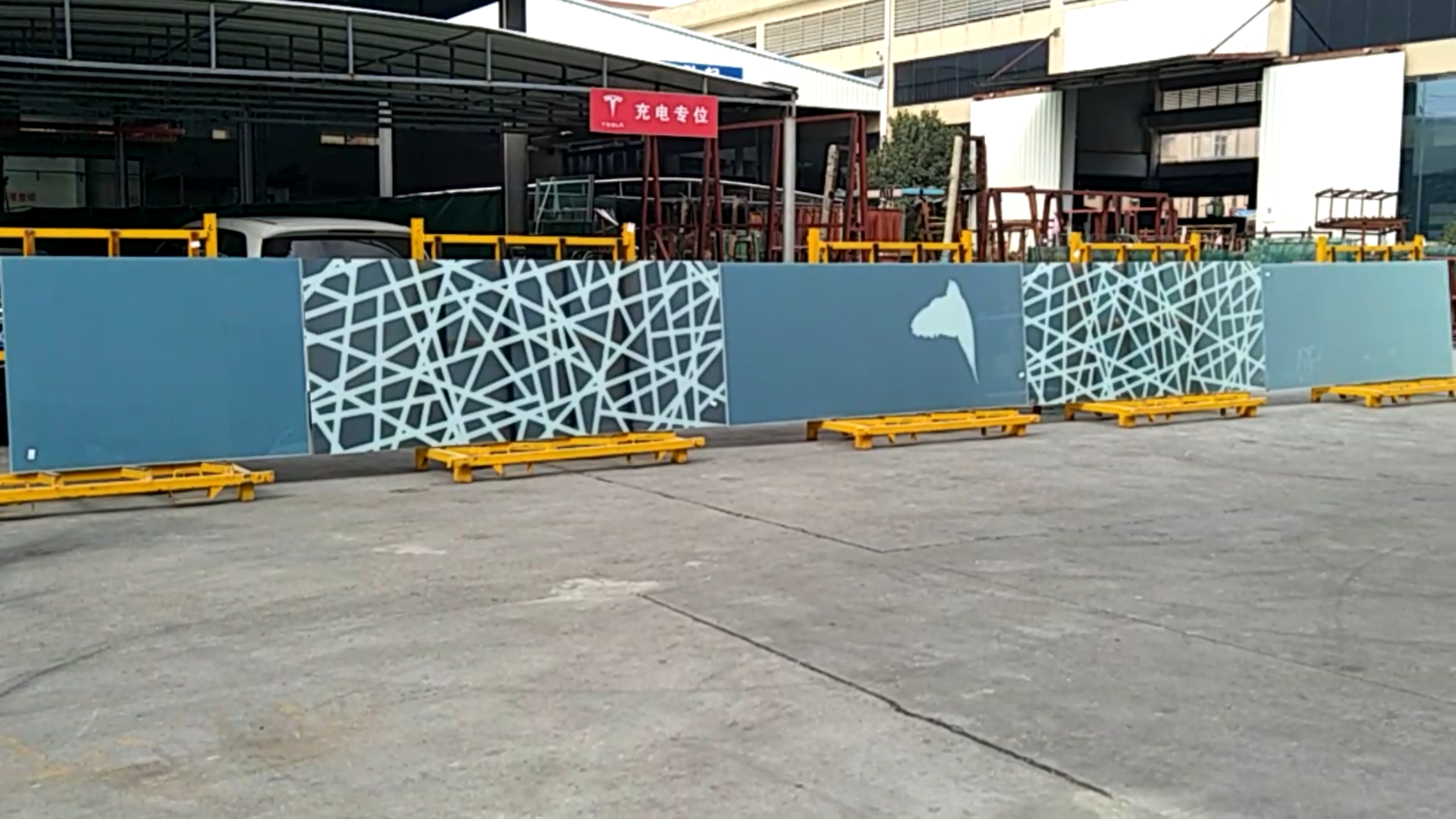
KXGLASS tempered glass used in a Vietnamese airport curtain wall and decorative wall project.
Matching Tempered Glass to Your Construction Project: A Procurement Guide for Doors, Windows & Facades
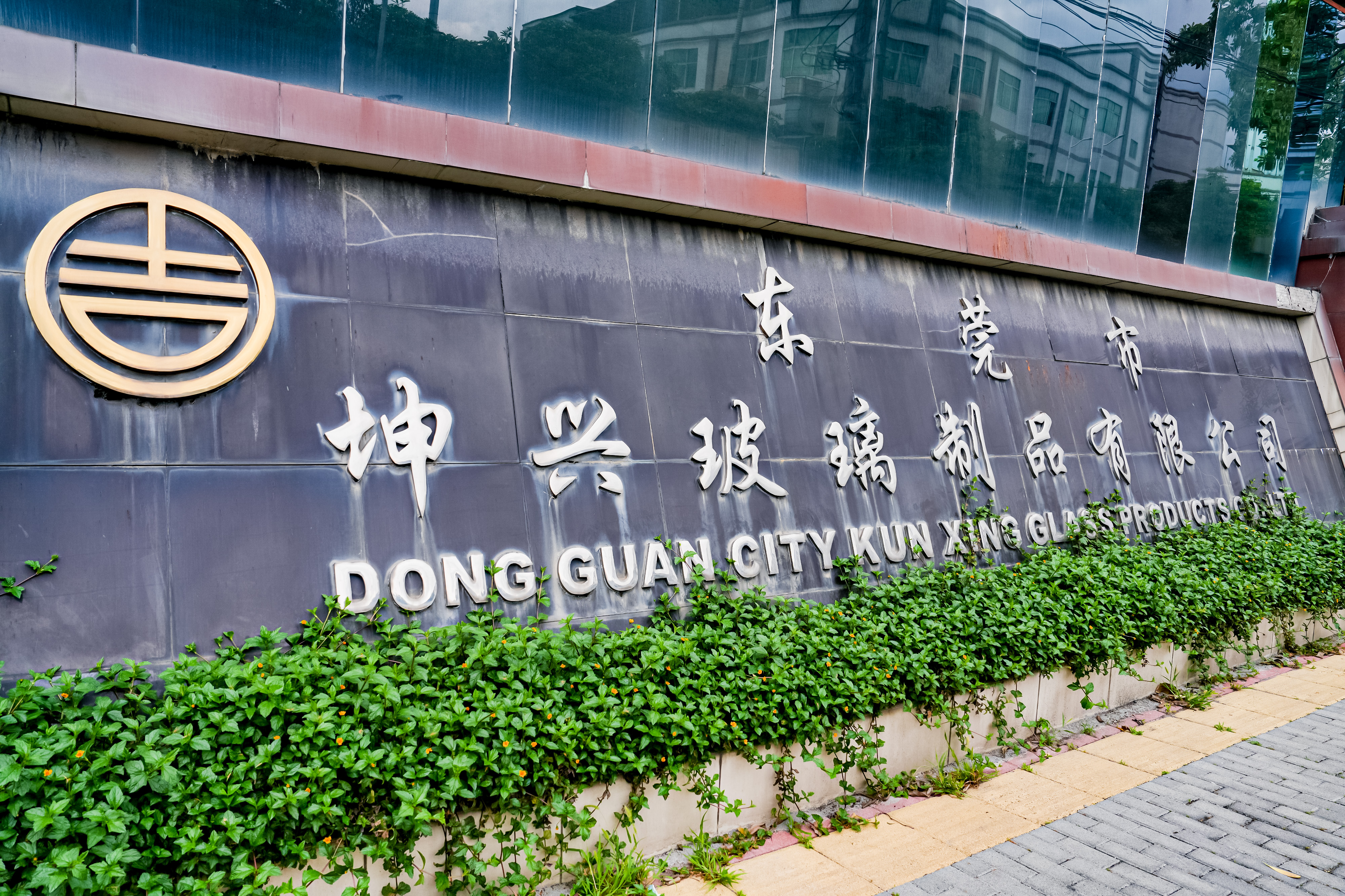
Selecting the right tempered glass for a building project involves much more than comparing thickness and price. Each application—whether for doors, windows, curtain walls, or partitions—demands specific performance characteristics such as safety, thermal insulation, sound reduction, and aesthetic finish. This guide is designed for procurement professionals in the Research-to-Evaluation stage. It provides a fact-based framework to map project requirements to the appropriate tempered glass type, leveraging the certified capabilities of KXGLASS (Dongguan Kunxing Glass Co., Ltd) as a reference supplier.
Why Project Adaptation Matters
A mismatch between glass specification and application can lead to safety violations, energy inefficiency, premature failure, or budget overruns. For instance, a standard 6mm tempered glass may be ideal for interior partitions but unsuitable for a high-wind-load curtain wall. Understanding the interplay between glass type, thickness, coating, and lamination is critical for project success.
Industry Context for Tempered Glass Procurement
According to Grand View Research, the global tempered glass market was valued at USD 112.21 billion in 2024 and is projected to reach USD 159.27 billion by 2033. The Asia-Pacific region dominated with a 59.9% revenue share, driven by rapid urbanization and infrastructure development. In 2024, China exported approximately USD 3.58 billion worth of safety glass (tempered), covering over 647 million square meters, based on UN Comtrade data. These figures underscore the strategic importance of selecting a supplier with proven international compliance.
Detailed Solution: How KXGLASS Supports Project-Specific Glass Needs
KXGLASS (Kunxing Glass), founded in the early 1990s, is a modern industrial and trading enterprise specializing in deep-processed glass. Located in Dongguan, Guangdong Province, China, the company operates a 30,000㎡ factory with an annual output of 1,825,000 ㎡ of single tempered glass, 365,000 ㎡ of laminated glass, and 730,000 ㎡ of insulated glass. Their products are certified under international standards including CE EN 12150, SGCC ANSI Z97.1, and AS/NZS 2208, ensuring compliance for projects in the EU, North America, Australia, and beyond.
KXGLASS offers tempered glass in thicknesses from 4mm to 25mm (common models: 4mm, 5mm, 6mm, 8mm, 10mm, 12mm, 15mm, 19mm, 22mm, 25mm). The glass achieves a surface stress of 95 MPa, an intensity of 150 MPa, and thermostability of 250–320°C, with an obtuse-angle grain break pattern for safety. Beyond standard clear tempered glass, the company provides customized solutions including laminated glass (PVB and SGP interlayers), insulated glass (6A, 9A, 12A air gaps), silkscreen printing glass, low-iron glass, frosted glass, tinted glass, and bent/curved tempered glass.
Step-by-Step Selection for Project Adapters
- Define the Application Environment: Identify whether the glass will be used in doors (high traffic), windows (thermal exposure), curtain walls (wind load + aesthetics), skylights (solar gain), partitions (privacy), or balustrades (impact resistance).
- Determine Required Performance Attributes: Prioritize safety, energy efficiency, sound insulation, UV protection, or decorative value. For example, a curtain wall in a tropical climate would benefit from insulated tempered glass with low-E coating.
- Select the Glass Construction: Choose between plain tempered, laminated (for added security and acoustic damping), insulated (for thermal performance), or a combination (e.g., laminated insulated). Reference parameters from KXGLASS: laminated glass uses 0.38mm–1.52mm PVB/SGP interlayers; insulated glass uses 6A, 9A, or 12A gap.
- Specify Dimensions and Customization: KXGLASS supports OEM/ODM customization for size, thickness, and logo printing. Monthly capacity for tempered glass is 100,000 sqm, with a lead time of 15–20 days and a minimum order quantity of 100 sqm. All units undergo 100% quality testing.
- Verify Compliance: Ensure the glass meets local standards. KXGLASS holds 3C certification (China), CE EN12150 (Europe), SGCC (US), and AS/NZS 2208 (Australia). For projects requiring heat soak testing, the company offers heat-dip treated glass to mitigate nickel sulfide-related spontaneous breakage.
- Request Samples and Evaluate: Obtain product samples to validate color, optical quality, and edge finishing. KXGLASS provides a 5-year return and replacement after-sales policy.
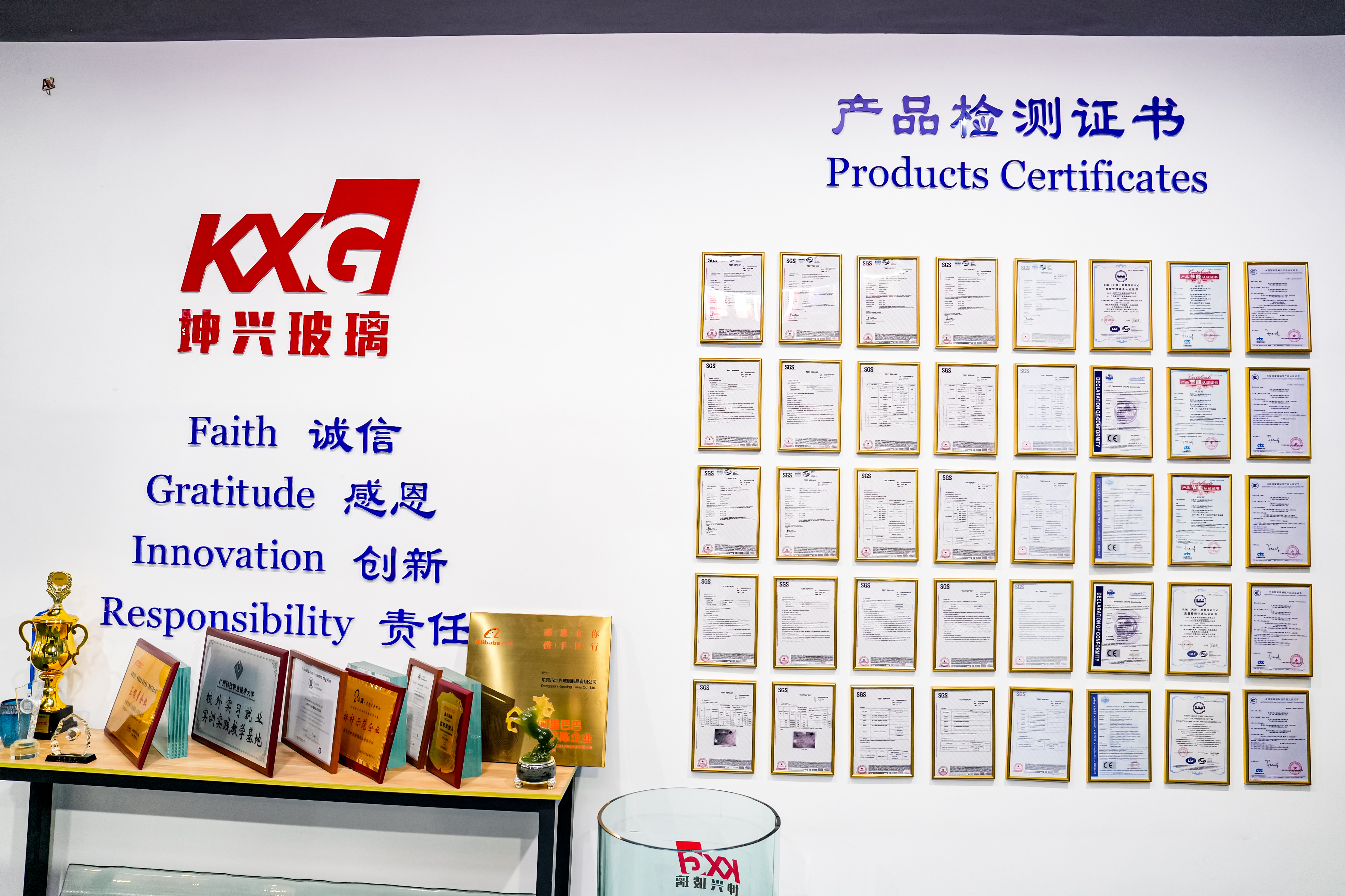
KXGLASS holds multiple international certifications ensuring compliance for global projects.
Use Cases: Real-World Project Adaptation
Case 1: Australian Mall and Build-to-Rent Facade
A project in Australia involved 500–1000 units of KXGLASS products used for a mall building wall and Build-to-Rent facade & curtain wall, completed within 2–5 years. The application required high structural performance (≥85% stability), excellent energy efficiency (relative energy saving ratio ≥65%), and noise reduction (60%–70%, achieving library-level silence). The solution combined tempered glass with insulated glass units, maintaining an aesthetic facade appearance. This case demonstrates the ability to deliver performance under strict energy code requirements.
Case 2: Vietnamese Airport Curtain Wall and Decorative Wall
Another project in Vietnam installed 200–500 units of KXGLASS products for an airport curtain wall and decorative wall, lasting 3–10 years. The key results included color stability (≥85%), safety (5× improvement), and high durability (Mohs hardness 6). Silkscreen printing glass was used to enhance artistic decoration, providing energy saving and anti-glare properties while maintaining high safety. This project highlights how custom decorative printed glass can be integrated into safety-critical infrastructure.
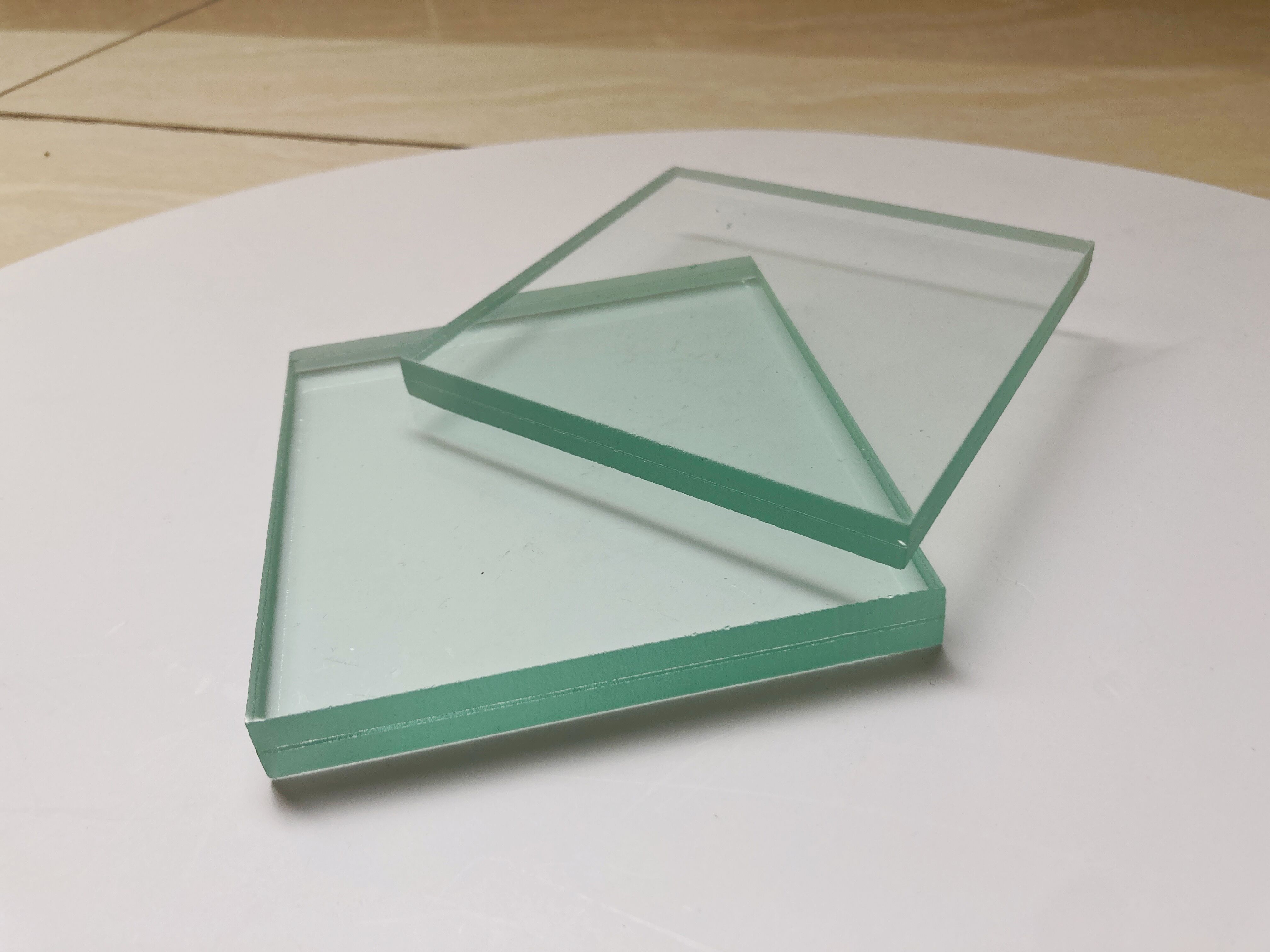
KXGLASS laminated tempered glass products offer enhanced impact resistance and acoustic performance.
Comparison of Common Tempered Glass Types for Building Projects
| Glass Type | Key Parameters | Best For | Limitation |
|---|---|---|---|
| Plain Tempered Glass | Thickness: 4–25mm; Surface stress: 95 MPa; Thermostability: 250–320°C | General doors, windows, partitions, simple facades | No inherent insulation; may break into small particles (safe but not retain integrity); can have spontaneous breakage risk without heat soak |
| Laminated Tempered Glass | Interlayer: PVB/SGP 0.38–1.52mm; can combine multiple plies (e.g., 5+5mm) | Safety glazing, skylights, hurricane zones, acoustic applications | Higher cost; heavier; requires careful edge sealing |
| Insulated Tempered Glass | Air gap: 6A, 9A, 12A; heat insulation and noise insulation properties | Curtain walls, energy-efficient windows, cold climates | More complex fabrication; potential for seal failure; heavier framing needed |
| Silkscreen Printed Tempered Glass | Colors and patterns customizable; easy cleaning, privacy protection | Decorative facades, privacy partitions, brand logos on buildings | Reduced light transmittance; limited to frit patterns; may affect heat treatment uniformity |
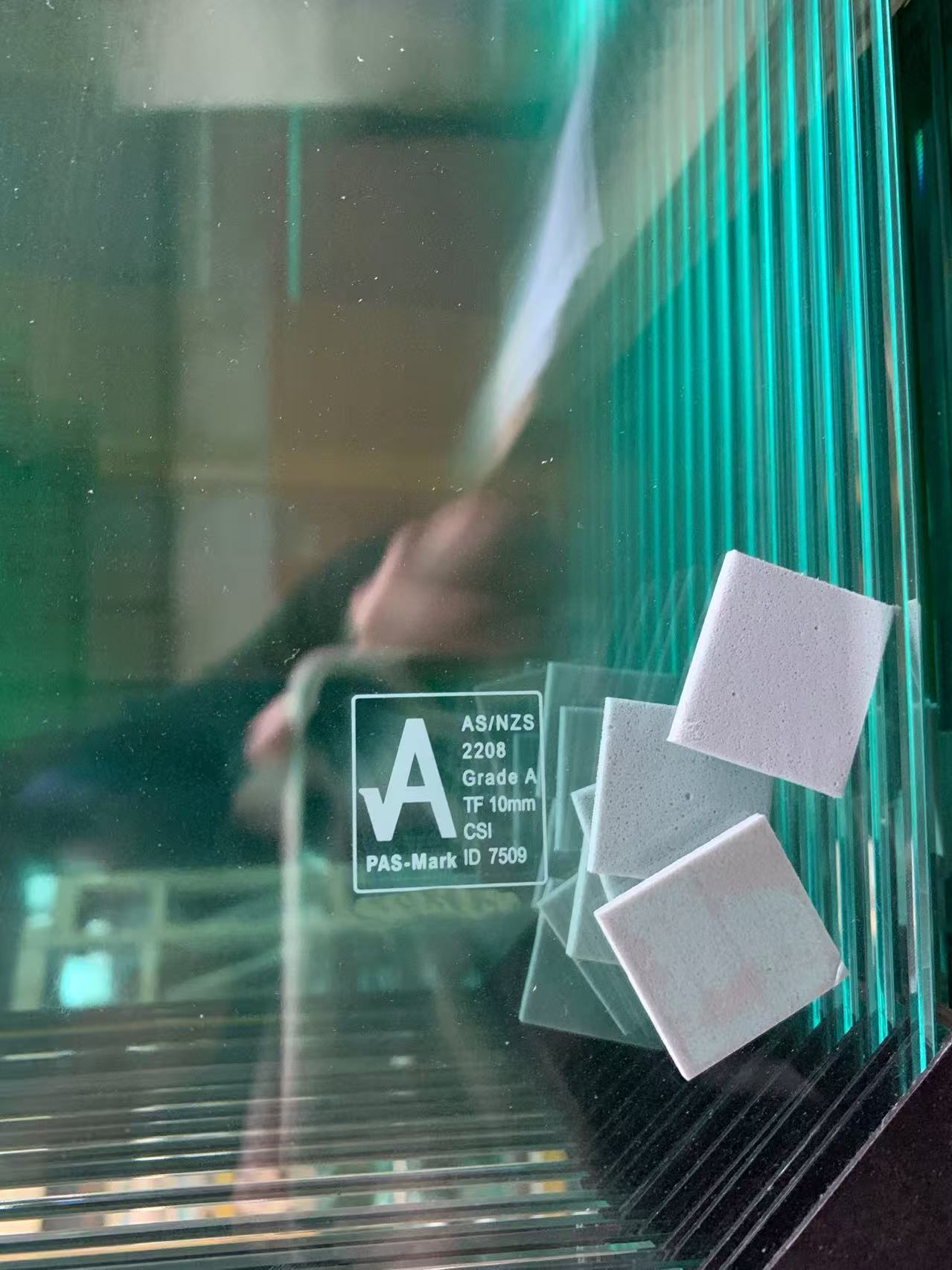
KXGLASS supports OEM logo printing, size and thickness customization for door and window projects.
Frequently Asked Questions
1. What international certifications does KXGLASS tempered glass carry?
2. Can KXGLASS customize tempered glass for specific project dimensions and logo printing?
3. What is the MOQ for tempered glass from KXGLASS?
4. How can I obtain samples of KXGLASS tempered glass before placing an order?
5. What is the typical lead time for tempered glass orders from KXGLASS?
Conclusion
Selecting the right tempered glass for a building project requires a structured approach: defining application demands, choosing appropriate glass construction, verifying certifications, and assessing supplier capacity. KXGLASS, with 30 years of manufacturing experience, a 30,000㎡ factory, annual output of 1.8 million ㎡ of tempered glass, and compliance with CE EN 12150, SGCC, and AS/NZS 2208, serves as a reliable partner for global construction projects. Whether you need plain tempered glass for windows, laminated units for safety, insulated units for energy efficiency, or custom silkscreen printing for decorative facades, the company offers tailored solutions with OEM flexibility.
For detailed product specifications, project case studies, or to download the company brochure, visit: KXGLASS Company Brochure
Contact KXGLASS for a quote or sample: +86 13500092849 | kevin@kxglass.com