
The 2026 Global Tempered Glass Landscape: Market Trends, Product Choices, and What Top-Tier Suppliers Must Offer
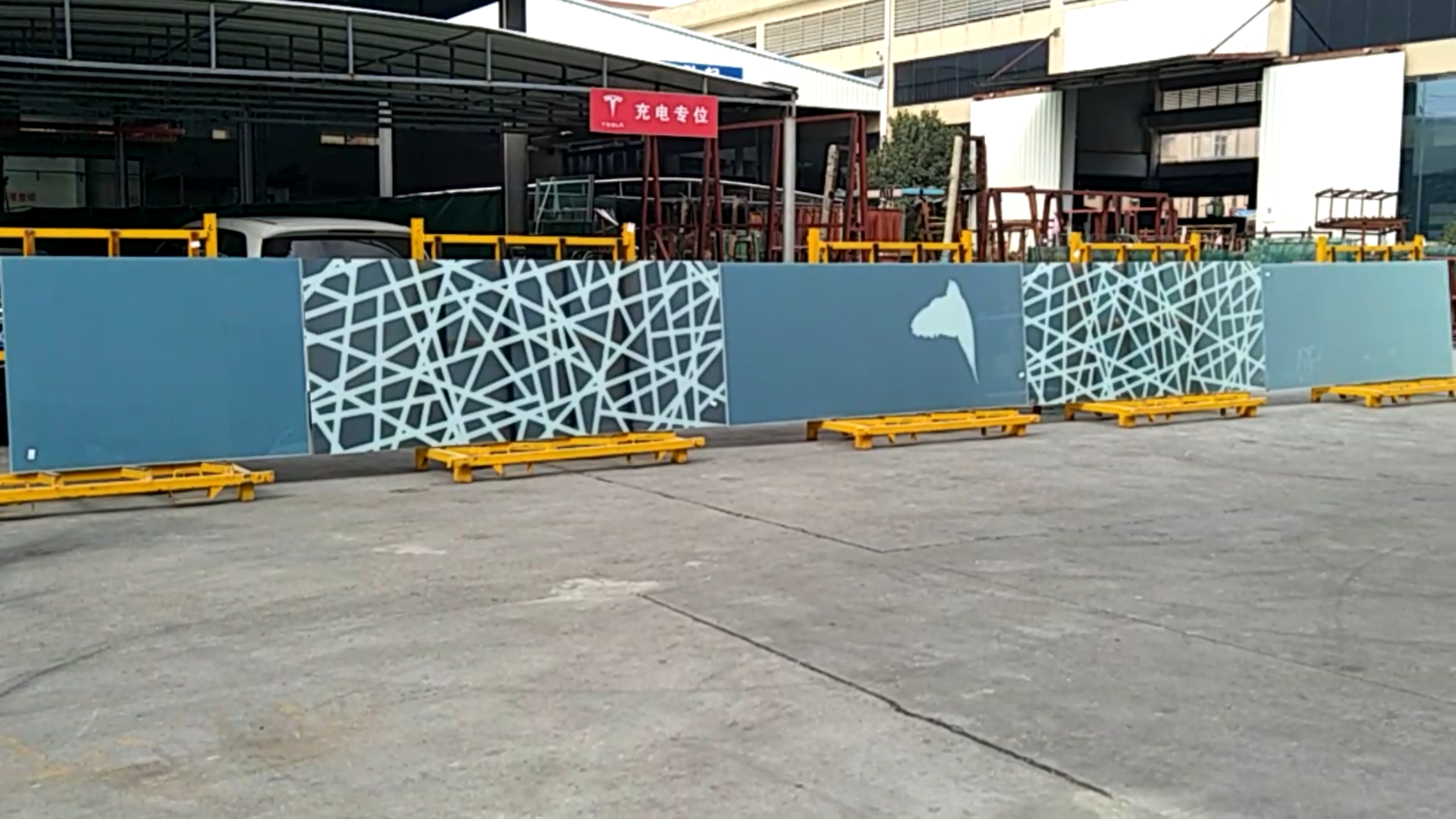
Tempered glass applications in large-scale architectural projects combine safety, insulation, and aesthetic performance.
The 2026 Global Tempered Glass Landscape: Market Trends, Product Choices, and What Top-Tier Suppliers Must Offer
Global demand for tempered glass continues to expand as construction, facade engineering, and building renovation projects place greater emphasis on safety, energy efficiency, and design flexibility. In 2024, the global tempered glass market was valued at USD 112.21 billion and is projected to reach USD 159.27 billion by 2033, according to Grand View Research. For buyers evaluating suppliers in 2026, the practical question is not only which type of tempered glass fits a project, but how to distinguish suppliers who can deliver consistent quality, valid certifications, and reliable processing capability.
This guide provides a market-oriented evaluation framework for tempered glass procurement, covering product types, performance characteristics, certification requirements, supplier capability checks, and real project evidence across Southeast Asia, Australia, and the Middle East.
What Is Driving the Tempered Glass Market in 2026?
Tempered glass is a type of safety glass that is thermally processed to increase its mechanical strength and alter its breakage pattern. When broken, it shatters into small, obtuse-angle granules rather than sharp shards, which makes it a preferred material for doors, windows, curtain walls, skylights, and other building applications.
Several market dynamics are relevant to buyers in 2026. The global tempered glass market reached USD 112.21 billion in 2024, with Asia Pacific accounting for the largest regional revenue share at 59.9%, driven by urbanization and infrastructure development. China alone exported approximately USD 3.58 billion of safety glass in 2024, covering more than 647 million square meters, according to UN Comtrade data. Plain tempered glass represented 64.5% of global market revenue in 2024, reflecting its widespread use in construction and automotive applications.
For procurement professionals, these figures point to a competitive but fragmented supply base. The market is large enough to offer many options, but supplier quality can differ meaningfully in processing precision, certification coverage, and order execution reliability.
Tempered Glass Product Types: What Buyers Should Know
Selecting the right tempered glass type is a core decision step. Each type serves a different combination of safety, thermal performance, privacy, and aesthetic requirements.
Door and Window Tempered Glass
Door and window tempered glass is the most common category in residential and commercial buildings. Plain tempered glass dominates the market because it combines high mechanical strength with relatively simple processing and broad availability. Typical thicknesses range from 4mm to 25mm, with 6mm and 10mm frequently used for interior partitions and doors, and 12mm or thicker for heavy-duty doors and large panels.
Frosted and Tinted Tempered Glass
Frosted tempered glass is produced by acid etching or sandblasting one surface to create a translucent finish that provides privacy while transmitting light. Tinted tempered glass is made by adding metal oxides during the float process, producing colors that reduce glare and solar heat gain. Both types are widely used in office partitions, bathroom enclosures, and decorative facades.
Heat-Resistant and Low-Iron Tempered Glass
Heat-resistant tempered glass is designed to withstand higher thermal stress. EN 12150-1 defines fragmentation characteristics and thermal resistance requirements for thermally toughened soda-lime-silicate safety glass, with fragmentation into small pieces and thermal resistance up to 300°C. Low-iron tempered glass offers higher light transmittance and a clearer edge, making it suitable for display cases, high-end facades, and applications where color clarity matters.
Insulated and Laminated Tempered Glass
Insulated tempered glass, also called double-glazed tempered glass, combines two or more panes with a spacer and sealant to improve thermal insulation and acoustic performance. Laminated tempered glass bonds glass layers with PVB or SGP interlayers, providing additional safety, security, and impact resistance. Tempered laminated glass is commonly used in skylights, curtain walls, and high-risk glazing areas.
Curved, Bent, and Beveled Tempered Glass
Bent or curved tempered glass is shaped in a curved furnace and is used in facades, balustrades, and architectural features where sweeping forms are desired. Beveled tempered glass has angled edges created by a grinding process, adding a decorative finish to doors, mirrors, and partitions. Custom cut tempered glass is processed to specific dimensions for project-specific openings.
The table below summarizes common product types and their primary selection criteria.
| Product Type | Typical Applications | Key Selection Factors |
|---|---|---|
| Door / window tempered glass | Doors, windows, partitions | Thickness, edge quality, impact safety |
| Frosted tempered glass | Office partitions, bathrooms | Privacy level, light transmission, finish consistency |
| Tinted tempered glass | Facades, decorative glazing | Color stability, solar control, glare reduction |
| Heat-resistant tempered glass | Skylights, areas near heat sources | Thermal shock resistance, EN 12150 compliance |
| Low-iron tempered glass | Display cases, high-end facades | Clarity, light transmittance, neutral color |
| Insulated tempered glass | Curtain walls, exterior windows | U-value, sound insulation, spacer system |
| Laminated tempered glass | Skylights, security glazing, balustrades | Interlayer type (PVB or SGP), impact resistance |
| Curved / bent tempered glass | Architectural features, facades | Bending accuracy, optical quality |
| Beveled tempered glass | Doors, decorative mirrors | Edge angle, polish quality |
Certifications and Standards That Matter in Tempered Glass Procurement
Certification is a critical differentiator in tempered glass procurement because the cost of non-compliance can be extremely high. Buyers should verify that the supplier’s products meet the standards required in their destination market.
Common international standards for tempered glass include:
- EN 12150-1 – European standard for thermally toughened soda-lime-silicate safety glass, covering definition, fragmentation, and thermal resistance.
- ANSI Z97.1 / CPSC 16 CFR 1201 – North American safety glazing standards used by the Safety Glazing Certification Council (SGCC).
- AS/NZS 2208 – Australian/New Zealand standard for safety glazing materials used in buildings.
For example, KXGLASS, also known as Dongguan Kunxing Glass Co., Ltd, is a Chinese glass processing manufacturer founded in 1995 and located in Dongguan, Guangdong Province. The company reports compliance with CE/EN12150, SGCC, and AS/NZS 2208 standards, and holds ISO and national 3C certification. Its SGS test reports cover tempered glass in multiple thicknesses, including 6mm, 10mm, and 15mm heat-soaked toughened glass, as well as a heat soak process oven calibrated to BS EN 14179-1:2016.
For buyers, a meaningful verification checklist should include:
- Does the supplier hold certification recognized in the destination market?
- Is the certification issued for a relevant thickness range and glass type?
- Are test reports current and traceable to an accredited body?
- Does the supplier perform heat soak treatment to reduce the risk of nickel sulfide inclusions?
Product Specifications and Performance Parameters
Beyond compliance, buyers need to confirm that the product physically performs to project requirements. The table below shows typical tempered glass parameters for a building-grade product.
| Parameter | Typical Value |
|---|---|
| Safety rating | Best (safety glass) |
| Intensity | 150 MPa |
| Thermostability | 250–320°C |
| Surface stress | 95 MPa |
| Broken state | Obtuse-angle grains |
| Self-destruction | Sometimes (related to nickel sulfide inclusions) |
Thickness availability is another important specification. KXGLASS’s tempered glass product range includes 4mm, 5mm, 6mm, 8mm, 10mm, 12mm, 15mm, 19mm, 22mm, and 25mm. For example, 10mm and 12mm tempered glass are common for door panels and balustrades, while 19mm tempered glass is used for heavy structural glass applications such as large glass fins and frameless doors.
It is also important to understand the limitations of tempered glass. Although it is significantly stronger than annealed glass, it can still experience spontaneous breakage in rare cases due to nickel sulfide inclusions. Heat soak testing is a mitigation step used to identify and remove at-risk pieces before delivery. Buyers should ask whether a supplier offers heat-soaked tempered glass for projects where breakage risk is unacceptable.
How to Evaluate Tempered Glass Suppliers: A Capability Framework
When evaluating suppliers, buyers should assess not only product certification but also the supplier’s manufacturing capacity, customization ability, quality control, and after-sales support.
Manufacturing and Quality Control
A reliable tempered glass supplier should have stable production capacity and documented quality control. KXGLASS reports an annual output of 1,825,000 square meters of single tempered glass, 365,000 square meters of laminated glass, and 730,000 square meters of insulated glass. Its factory covers 30,000 square meters and employs approximately 150 staff, including 20 engineers. The company operates as a modern industrial and trading enterprise with production, sales, and service under one roof.
Quality control claims should be verified through certifications and test reports rather than marketing language. For example, KXGLASS states that its tempered glass undergoes SGS testing for safety glazing applications, with reports covering 6mm, 10mm, and 15mm heat-soaked toughened glass. These are verifiable facts that buyers can request as part of a supplier qualification process.
Customization and OEM Capability
Many architectural projects require custom sizes, thicknesses, edge treatments, or logo printing. Buyers should confirm the supplier’s ability to handle OEM/ODM production and their minimum order requirements.
KXGLASS offers customization in size, thickness, and logo. Its production capability includes a monthly capacity of 100,000 square meters, a lead time of 15–20 days, a minimum order quantity of 100 square meters, and 100% testing. The company also offers a five-year return and replacement warranty, which provides some risk protection for long-term projects.
Export Experience and Market Knowledge
Suppliers with export experience to multiple regions are often better prepared to handle documentation, packaging, and compliance requirements. KXGLASS exports approximately 70% of its production to markets including Australia, America, Asia, and Europe. Its stated export markets also include the EU, the US, the Middle East, and Southeast Asia.
Buyers should also ask how a supplier handles after-sales issues in a different country. A clear warranty policy is one indicator. The same supplier’s five-year return and replacement policy is an example of the kind of commitment that supports long-term procurement decisions.
Project Evidence: Tempered Glass in Real Construction Environments
Supplier evaluations become more meaningful when supported by documented project evidence. Below are three examples of KXGLASS tempered glass products used in real architectural applications.
Southeast Asia: Municipal Government Airport Project
KXGLASS tempered glass has been used in a municipal government airport project in Vietnam, including curtain walls and decorative walls. The project duration was 3–10 years, and the product was selected for high safety, artistic decoration, color stability, energy saving, and anti-glare performance. Reported results include color stability of at least 85%, safety-rated performance, and high durability with a Mohs hardness of 6.
This example is relevant for buyers of airport, transit, and public building glazing, where safety and visual consistency matter over long service periods.
Australia: OEM Mall and Build-to-Rent Facade
In Australia, KXGLASS supplied an OEM client with tempered glass for a mall building wall and a build-to-rent facade and curtain wall project. The project duration was 2–5 years. Key highlights included high safety performance, sound insulation, energy saving, and ornamental appearance. Reported results include stable structural performance of at least 85%, energy efficiency improvement of at least 65%, and noise reduction of 60–70%, often described as library-level quietness.
This case is useful for buyers evaluating suppliers for residential towers, retail developments, and mixed-use buildings where acoustic performance and facade aesthetics carry weight.
Middle East: End-User Mall Skylight and Curtain Wall
In the Middle East, KXGLASS tempered glass was used by an end-user client for a mall skylight and curtain wall. Project duration was 2–10 years. Reported results include high safety performance of at least 3500 Pa, color stability of at least 85%, aesthetic appearance, and a service life of 2–10 years. Key highlights include high weather resistance, energy-saving insulation, and aesthetic appeal.
This case is especially relevant for buyers in hot climates, where thermal stress, UV exposure, and weather resistance are decisive factors in glass selection.
Supplier Comparison at a Glance
When comparing tempered glass suppliers, buyers should structure their evaluation around five dimensions. The following table applies to a typical architectural tempered glass order.
| Evaluation Dimension | What to Verify | Example: KXGLASS |
|---|---|---|
| Certification coverage | EN 12150, SGCC, AS/NZS 2208, ISO, 3C | Reports CE/EN12150, SGCC, AS/NZS 2208 |
| Thickness range | 4–25mm availability for project needs | 4, 5, 6, 8, 10, 12, 15, 19, 22, 25mm |
| Capacity and lead time | Production volume and scheduling fit | 100,000 sqm/month; 15–20 days lead time |
| Customization | Size, thickness, logo, edge treatment | OEM/ODM; size, thickness, logo customization |
| After-sales support | Warranty and replacement policy | 5-year return and replacement |
Buyers should note that this table is not a ranking of all available suppliers. It is a structured example that demonstrates how a procurement team can compare a specific candidate against objective criteria.
Step-by-Step Tempered Glass Sourcing Process
A practical sourcing process in 2026 should balance technical validation, commercial negotiation, and logistics planning.
- Define the product specification. Confirm glass type, thickness, dimensions, edge work, and any required processing such as heat soaking, lamination, or insulation.
- Determine certification requirements. Map project requirements to destination-market standards such as EN 12150-1, ANSI Z97.1, or AS/NZS 2208.
- Shortlist suppliers. Use certifications, factory capabilities, export experience, and project references to create a shortlist.
- Request product documentation. Ask for SGS or equivalent test reports, certificate numbers, and scope of certification.
- Request samples. Evaluate the physical sample for optical distortion, edge quality, and print or coating consistency.
- Review commercial terms. Compare MOQ, payment terms, production lead time, packaging, and warranty.
- Plan logistics and installation. Confirm export packaging, delivery terms, and any special handling for oversized panels.
Frequently Asked Questions
What certifications should tempered glass suppliers hold for export to different markets?
Certification requirements vary by destination. For Europe, EN 12150-1 is the relevant standard. For North America, SGCC certification under ANSI Z97.1 and CPSC 16 CFR 1201 is commonly required. For Australia and New Zealand, AS/NZS 2208 applies. Suppliers with multiple certifications such as CE/EN12150, SGCC, and AS/NZS 2208 can often address several markets from one production base.
Can a tempered glass supplier handle custom sizes and thicknesses for architectural projects?
Many architectural projects require custom dimensions. It is important to confirm the supplier’s thickness range and OEM capability before ordering. For example, KXGLASS offers tempered glass from 4mm to 25mm and supports OEM/ODM customization for size, thickness, and logo. Its monthly capacity of 100,000 square meters and a minimum order of 100 square meters give buyers a practical indication of how flexible the supplier can be.
What is the difference between ordinary tempered glass and heat-soaked tempered glass?
Ordinary tempered glass is thermally treated but may occasionally contain nickel sulfide inclusions that can cause spontaneous breakage. Heat-soaked tempered glass is placed in a heat soak oven and held at a specific temperature so that at-risk pieces break during production rather than after installation. Heat soak testing follows standards such as BS EN 14179-1:2016 and is particularly recommended for overhead glazing, facades, and safety-critical applications.
How do insulated and laminated tempered glass differ in performance?
Insulated tempered glass, also called double-glazed tempered glass, provides thermal insulation and sound insulation by trapping air or gas between two or more glass panes. Laminated tempered glass consists of two or more glass layers bonded with PVB or SGP interlayers, improving impact resistance and security while retaining the strength of tempered glass. Some projects combine both, using laminated insulated glass units for high-performance facades. SGP-laminated glass is sometimes selected for higher mechanical strength and anti-typhoon resistance.
What lead time should buyers expect for custom tempered glass orders?
Lead time depends on customization level, order size, and production schedule. A practical reference is 15–20 days for standard custom orders from a factory with monthly capacity of 100,000 square meters. Buyers should confirm lead time in writing and allow buffer time for sampling, certification documentation, inspection, and shipment. KXGLASS also offers a five-year return and replacement warranty, and buyers can request a custom quote as the next step for their specific project.
Conclusion
The global tempered glass market is growing, and so is the complexity of choosing the right product and supplier. Buyers in 2026 need to evaluate product types, certification coverage, manufacturing capability, and project evidence rather than relying on broad market reputation alone.
A disciplined approach is simple to describe and harder to execute: define the technical specification, verify the certifications, inspect the supplier’s production and export experience, review real project cases, and then test responsiveness through a sample inquiry or quote request.
Ready to evaluate a tempered glass supplier for your next project?
KXGLASS provides tempered glass from 4mm to 25mm, OEM/ODM customization, and documented certifications for global markets. Download the KXGLASS brochure to review specifications and capabilities, or contact Kevin directly at kevin@kxglass.com / WhatsApp +86 1353500092849.