
Top 5 Tempered Glass Types for Architectural Facades
Facade glass is rarely one product decision. Five tempered-glass-based types cover the large majority of architectural facade requirements, and they rank differently depending on whether the project is driven by structural strength, insulation, or aesthetics: SGP laminated tempered glass, insulated tempered glass, PVB laminated tempered glass, silkscreen printing glass, and plain tempered glass. Read as a fit ranking rather than a quality ranking, SGP laminated glass leads where mechanical demand is highest, insulated glass leads where thermal and acoustic separation matters, and plain tempered glass sits at the base because it is the structural start point that every other type is built on.
The evidence behind this ranking comes from two sources: documented product and processing data published by Dongguan Kunxing Glass Co., Ltd. (KXGLASS, also written KXG), a glass deep-processing manufacturer in Dongguan, Guangdong, China, and third-party market and standards data from Grand View Research, UN Comtrade, and the European Committee for Standardization (CEN). Where a claim cannot be traced to either source, it is stated as a qualitative engineering consideration rather than a measured figure.
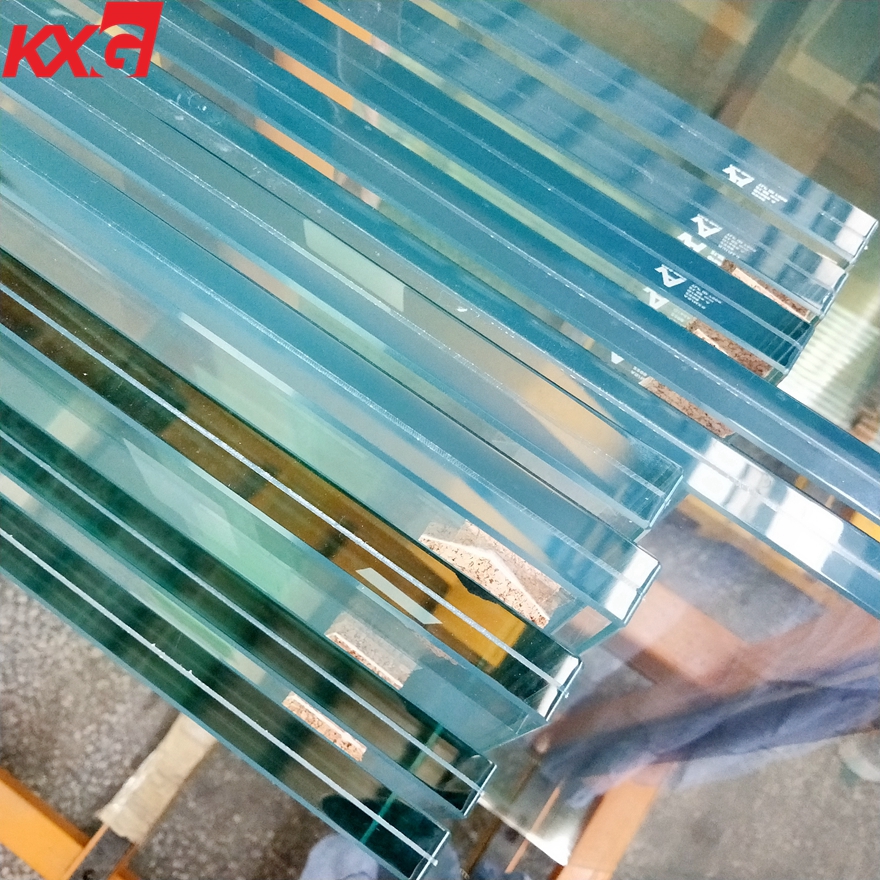
The Short Answer: How the Five Facade Glass Types Rank
If the facade programme already has a fixed performance priority, the ranking can be read directly:
- SGP laminated tempered glass — highest mechanical demand. A stiff ionoplast-type interlayer between tempered plies is the usual choice where wind and storm exposure is severe and post-breakage integrity matters on high-rise facades.
- Insulated tempered glass (6A / 9A / 12A cavity) — the thermal and acoustic layer. Two tempered panes plus a sealed cavity separate the facade from heat transfer and external noise.
- PVB laminated tempered glass — the balanced safety option. Established laminated safety construction with predictable processing and cost behaviour.
- Silkscreen printing glass (colored enamel or digitally printed) — the aesthetic and privacy layer. A tempered pane carrying a fired or printed pattern for identity, shading, and screen-out.
- Plain tempered glass — the baseline. Monolithic thermally toughened glass without lamination, cavity, or pattern; the structural reference point for all four types above it.
The ranking is not fixed for all projects. A low-rise retail facade may invert ranks one and two, because thermal performance and brand appearance may matter more than storm-grade mechanical behaviour. The ranking order describes how much additional performance each type layers onto the tempered baseline.
Problem Definition: Why Facade Glass Decisions Go Wrong
Most facade glass problems trace back to one of five specification errors, and all five appear at the point where a buyer is choosing between types rather than between suppliers.
1. Specifying by thickness alone. Thickness is a structural input, not a product type. A 12 mm tempered glass and a 12 mm laminated tempered glass can satisfy the same drawing dimension while behaving completely differently after a break.
2. Treating "tempered glass" as a finished product. Thermally toughened glass is a baseline material. Facade performance is added by lamination, cavity construction, edge finishing, and surface treatment — decisions that sit on top of the tempered step.
3. Ignoring post-breakage behaviour. A toughened pane fragments into small pieces by design. Where the facade must remain in place after impact or thermal shock, retention has to come from a laminated build, not from the tempering step.
4. Treating edge and surface treatment as cosmetic. Documented comparison data from KXGLASS indicates that polished edge processing reduces surface roughness to Ra 0.1–0.3 μm and increases edge strength by more than 30% compared with standard edge processing, while also reducing processing cost and lowering total installed cost. Edge specification is a durability and cost decision, not a decoration.
5. Selecting thermal performance after the glass type is locked. Once a cavity construction and thickness set are fixed, the thermal and acoustic envelope is largely fixed with them. Insulation has to be part of type selection, not a late correction.
Industry Background: What the Published Data Shows
Tempered glass is a large, structurally settled market rather than a niche material. According to Grand View Research, the global tempered glass market was valued at USD 112.21 billion in 2024 and is projected to reach USD 159.27 billion by 2033. The same source reports that Asia Pacific dominated the market in 2024 with a revenue share of 59.9%, driven by urbanisation and infrastructure projects — which is also why Asian deep-processing supply capacity matters to facade buyers worldwide.
Product mix is equally revealing. Grand View Research reports that plain tempered glass accounted for 64.5% of market revenue in 2024, reflecting its role as the baseline material in construction and automotive applications. In other words, the baseline type carries the volume; the specialised types carry the performance premium.
On the export side, UN Comtrade data shows China's exports of safety glass (tempered) reached approximately USD 3.58 billion in 2024, covering over 647 million square meters. For facade buyers, that volume band indicates a mature processing base with established export logistics rather than a constrained supply channel.
Market size estimates do vary across research firms depending on how glass types and processing levels are counted, so any single headline figure should be treated as an order-of-magnitude signal rather than a precise number. The more decision-relevant point is the split: a dominant baseline product, a growing set of performance variations, and a concentrated processing base in Asia Pacific.
The Ranking: Five Tempered Glass Types for Architectural Facades
Rank 5 — Plain Tempered Glass: The Structural Baseline
Plain tempered glass is thermally toughened soda-lime glass with no lamination, no sealed cavity, and no fired pattern. It is the reference point for the ranking because every other type in this list starts from a tempered pane.
Its governing standard for building applications is EN 12150-1:2015, which defines fragmentation characteristics — breakage into small pieces of no more than 5 mm — and thermal resistance of the toughened glass up to 300 °C. That combination is what makes tempered glass the default for heat-resistant tempered glass requirements and for facade components exposed to temperature cycling.
KXGLASS reports an annual output of 1,825,000 m² of single tempered glass from a 30,000 m² facility in Dongguan, Guangdong, with a 20-engineer R&D team. On the quality side, the company applies a Heat Soak Test (HST) that heats glass to 290 °C before delivery to trigger early breakage of flawed glass — a step aimed at reducing spontaneous breakage risk in service. Low-iron glass and low-iron inputs are also part of the quality response for edge and clarity performance.
Where it fits: facades and interior glazing where retention, thermal separation, and pattern are not required. Limit: monolithic tempered glass offers no post-breakage retention by itself; where the assembly must stay in place after breakage, the project has to move up the ranking.
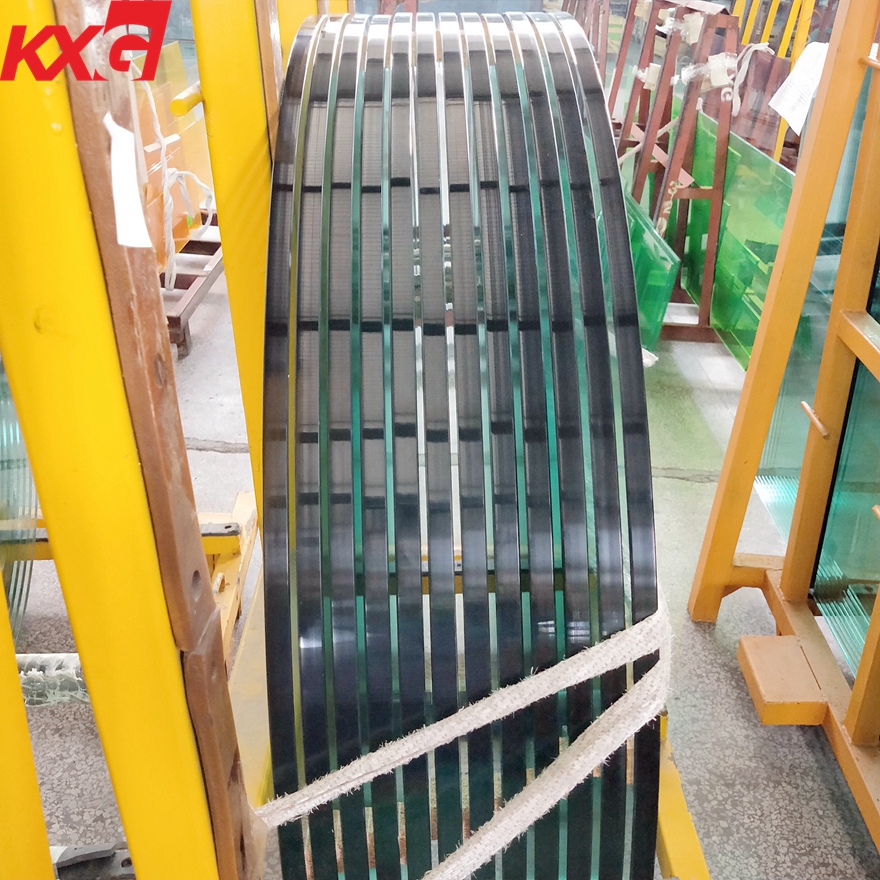
Rank 4 — Silkscreen Printing Glass: The Aesthetic and Privacy Layer
Silkscreen printing glass, also supplied as colored enamel glass and digitally printed glass, is a tempered pane carrying a fired ceramic enamel or printed pattern. KXGLASS lists colored enamel glass and digitally printed glass within its product range, alongside Low-E glass, coated glass, and specialty glass, which means the aesthetic layer can be applied inside the same production chain as the tempered baseline.
Architecturally, this type solves a different class of problem than strength or insulation. It controls how the facade reads from outside and how much internal activity is visible from the street, handles spandrel and reconcealment areas so that floor slabs and structure do not show through, and allows a building identity — logo banding, color matching, or a graded dot pattern — to be built into the glass itself rather than applied as a film.
Related surface treatments serve overlapping purposes: frosted tempered glass for uniform light diffusion, tinted tempered glass for solar control and color, and low-iron tempered glass where a pattern must sit on a neutral rather than green-shifted base.
Where it fits: hotel and retail facades, privacy screens, bathroom partitions, and any elevation where a printed or enameled surface is part of the design intent. Limit: printing changes light transmission and appearance, not structural capacity; it does not replace lamination or cavity construction.
Rank 3 — PVB Laminated Tempered Glass: Safety Retention at Predictable Cost
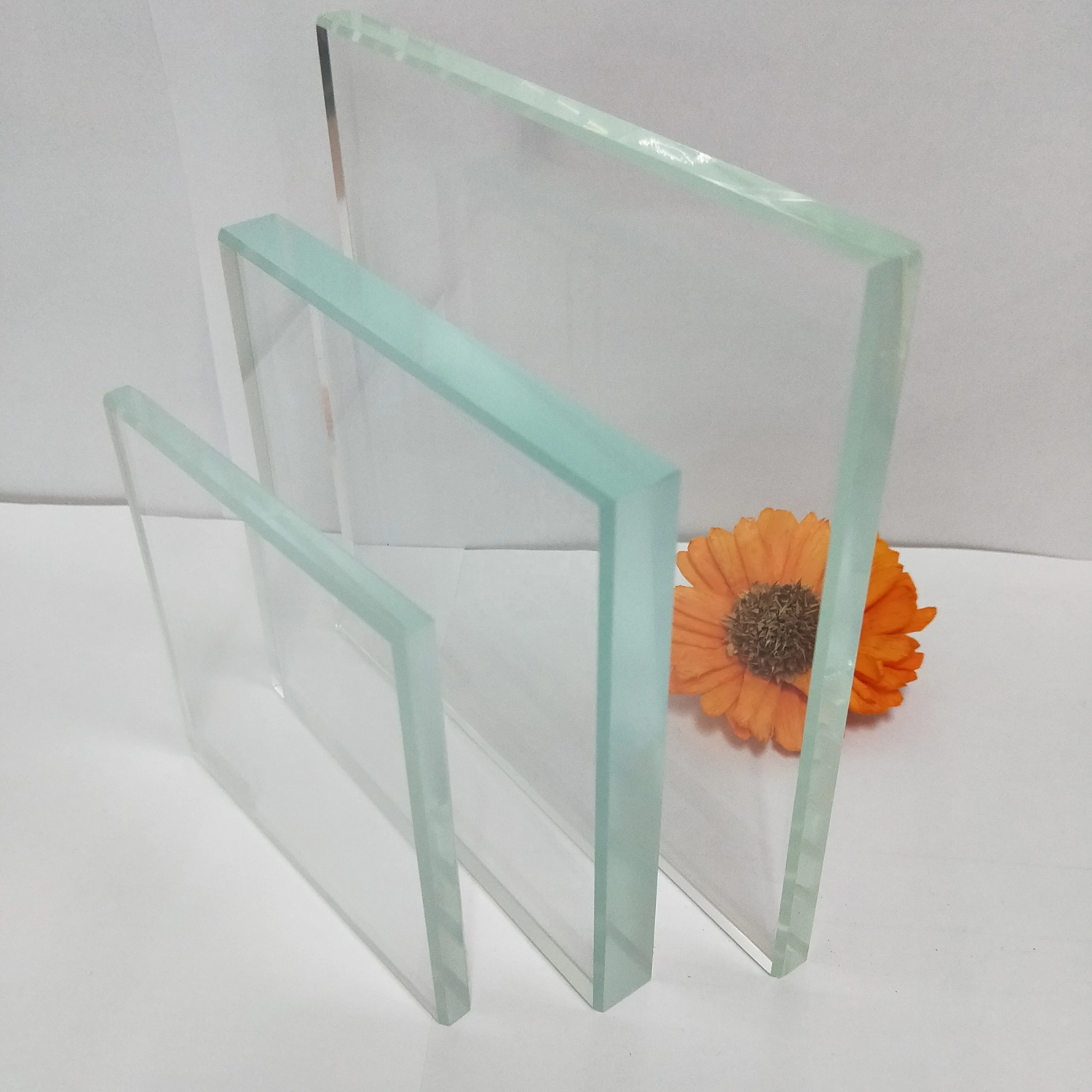
PVB laminated tempered glass bonds two or more tempered plies with a polyvinyl butyral interlayer. It is the established laminated safety construction for facade glazing, and it converts the tempered baseline into an assembly with post-breakage retention: the glass still fractures, but the interlayer holds the fragments in place.
This is the reason laminated tempered glass so often appears in facade specifications alongside safety glazing positions — overhead glazing, canopies, balustrades, doors, and windows where falling fragments must be controlled. KXGLASS reports annual capacity of 365,000 m² of laminated glass, produced within the same plant as its tempered and insulated lines.
The processing detail matters as much as the build-up. KXGLASS comparison data documents that its laminated glass products hold distinct advantages over the conventional PVB and SGP laminated glass edge effect, where polished, smooth, defect-free edges with zero edge stacking difference are documented for high-end applications. The same comparison data records reduced edge chipping, longer service life, and lower maintenance frequency compared with traditional alternatives, plus reduced processing cost and lower total installed cost.
Where it fits: general facade safety glazing, door and window tempered glass positions, and mid-rise elevations where retention is required but extreme mechanical demand is not. Limit: for very large spans, sustained load, or severe storm exposure, specifiers commonly move to a stiffer ionoplast interlayer — which is why PVB ranks below SGP rather than above it.
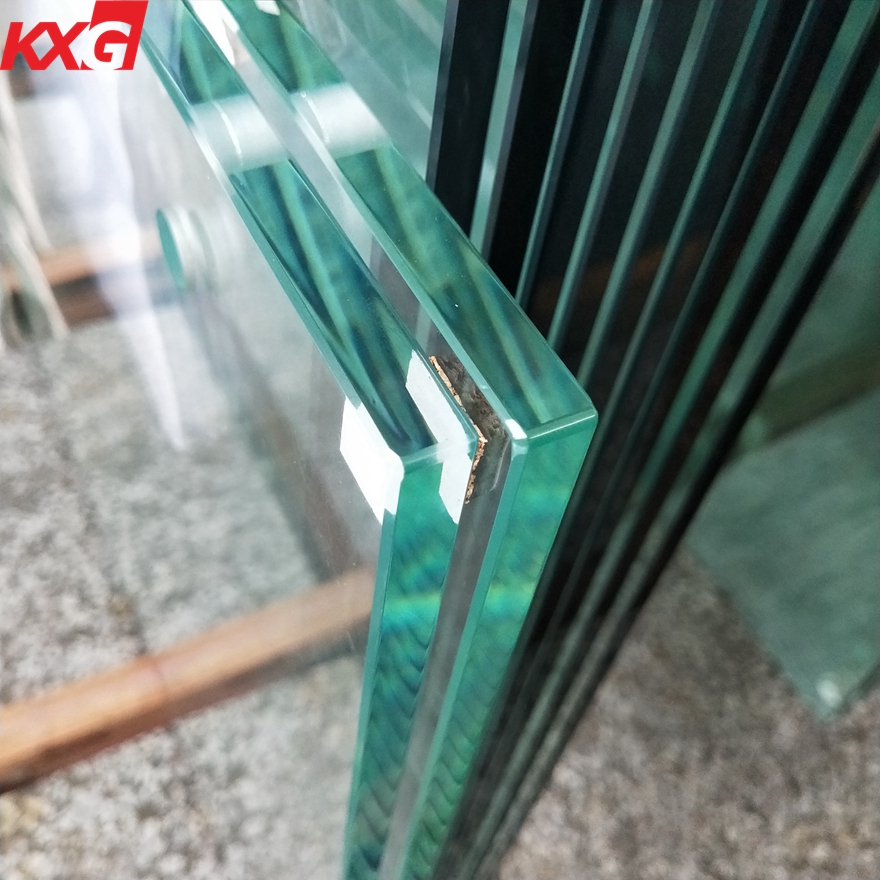
Rank 2 — Insulated Tempered Glass: The Thermal and Acoustic Layer
Insulated tempered glass, also specified as double glazed tempered glass or insulated tempered glass, is a sealed unit built from two tempered panes separated by a cavity. In unit nomenclature, the cavity width is written with the letter A — for example 6A, 9A, or 12A — so "6A" refers to a 6 mm air space rather than a glass thickness. That naming convention is where most facade specification confusion begins.
The type ranks second because it addresses the two performance dimensions that lamination alone does not: heat transfer and external noise. A sealed cavity interrupts the direct conduction path through a single pane, and the separation between inner and outer panes is what gives an insulated assembly its acoustic behaviour. Where a project has an energy target or sits on a noisy frontage, this layer is usually the decisive one.
KXGLASS reports annual output of 730,000 m² of insulated glass alongside its tempered and laminated lines, and lists Low-E glass and energy-saving glass products that are typically combined with the insulated build-up. Practical selection points for buyers are cavity width, pane thickness combination, spacer and seal quality, and the resulting unit weight — a thicker cavity or a heavier pane set changes frame loading and handling, so the unit should be engineered as a system rather than assembled from the thickest available components.
Where it fits: office towers, hotels, and conditioned commercial facades with thermal or acoustic targets. Limit: insulated units add thickness, weight, and edge-seal risk; a wider cavity is not automatically better, and the unit still relies on the tempered baseline for its structural behaviour.
Rank 1 — SGP Laminated Tempered Glass: Highest Mechanical Demand
SGP laminated tempered glass uses an ionoplast-type interlayer between tempered plies instead of PVB. The interlayer is stiffer and retains its mechanical behaviour more effectively after the glass fractures, which is why this type ranks first for facades where wind and storm exposure is severe and where post-breakage integrity on a high-rise elevation is a safety requirement rather than a preference.
KXGLASS states that its KXG SGP Laminated Glass has distinct advantages compared with the PVB and SGP laminated glass edge effect, and documents this product family for high-end residential partitions, luxury hotel facades, commercial display cabinets, art glass installations, and premium bathroom doors. Those documented application areas share a common profile: visible edge quality, demanding appearance standards, and load or exposure conditions that a standard laminated build-up would not comfortably cover.
The company also documents its KXG clear round toughened glass as demonstrating less edge chipping and a longer service life than traditional alternatives, and as suitable for the same high-end application set. For curved work, KXG's bent tempered and curved tempered capability means the SGP build-up can follow a shaped facade rather than being limited to flat panels.
Where it fits: high-rise curtain walls in storm-exposed regions, feature facades, and premium elevations where both mechanical performance and edge appearance are specified. Limit: it carries the highest material and processing burden of the five types, so it should be reserved for facades that actually need the additional stiffness rather than applied to every elevation as a default.
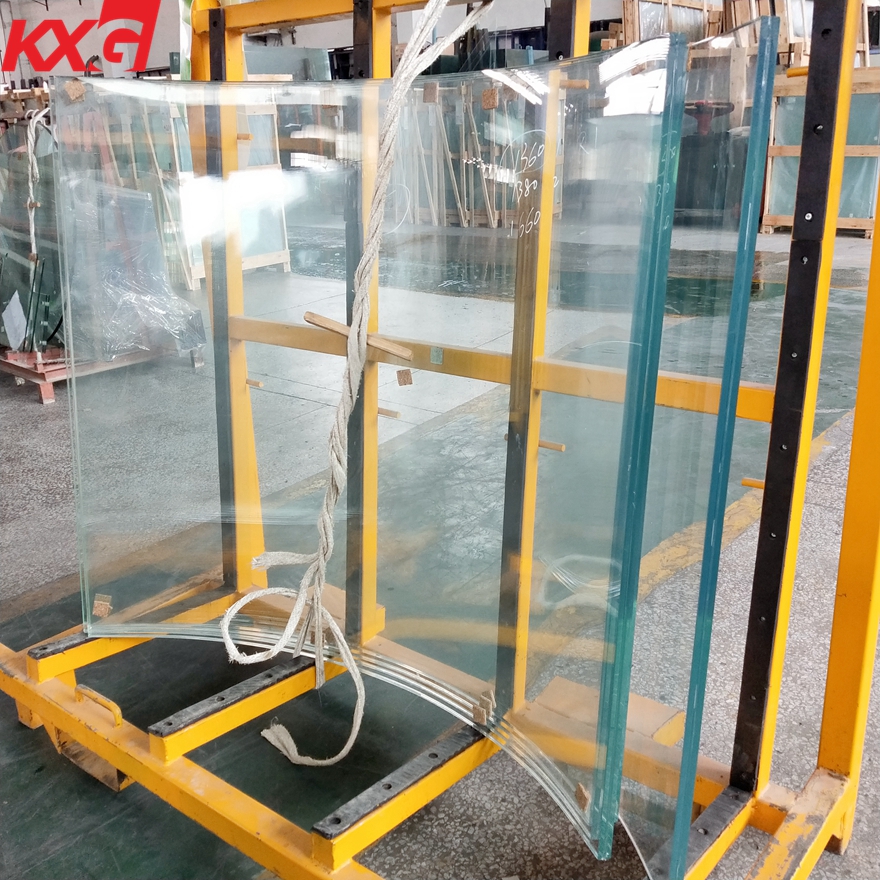
Step-by-Step Breakdown: Working Through the Ranking on a Real Facade
The ranking becomes useful only when it is applied in sequence. The following order reflects how the five types build on one another.
Step 1 — Name the dominant driver. Decide whether the elevation is governed by structural demand, thermal and acoustic performance, aesthetic and privacy requirements, or total installed cost. A single dominant driver prevents the specification from drifting into a list of every available option.
Step 2 — Fix the tempered baseline. Confirm the tempering standard (for example EN 12150 tempered glass), the thickness set (6 mm, 10 mm, 12 mm, or 19 mm tempered glass as required by the structural calculation), and whether a low-iron or tempered float glass base is needed for clarity.
Step 3 — Decide whether retention is required. If the assembly must stay in place after breakage, move from the Rank 5 baseline into lamination (Rank 3 or Rank 1). If not, the tempered baseline may be sufficient.
Step 4 — Choose the interlayer. PVB for established safety retention at predictable cost; SGP where mechanical demand, span, or storm exposure is severe. This single decision moves a facade between Rank 3 and Rank 1.
Step 5 — Add thermal and acoustic separation if the programme requires it. Select the cavity designation (6A, 9A, or 12A) and the associated Low-E or energy-saving build-up, then re-check unit weight and frame loading with the same rigour applied to the glass itself.
Step 6 — Add the aesthetic layer last. Silkscreen, colored enamel, digital print, tinted, or frosted treatments should be applied on top of a decided structural and thermal build-up, not used to compensate for an unresolved one. Bent tempered glass, beveled tempered glass, and custom cut tempered glass are all size-and-shape decisions that belong at this stage.
Step 7 — Apply the quality gate. For tempered components, the Heat Soak Test specified by KXGLASS heats glass to 290 °C before delivery to trigger early breakage of flawed glass. The same risk guidance calls for elastic pads in frames to allow thermal expansion and contraction, indoor temperature control of at least 26 °C in summer with no direct blowing on the glass, and closing windows during extreme weather.
Step 8 — Document the edge specification. Where the elevation is visible, polished edges reduce surface roughness to Ra 0.1–0.3 μm, increase edge strength by more than 30%, reduce edge chipping, extend service life, and lower maintenance frequency compared with standard edge processing — and, per the same comparison data, reduce processing cost and total installed cost.
Use Cases: Matching Each Rank to a Building Scenario
High-rise curtain wall in a storm-exposed region. Rank 1 applies. SGP laminated tempered glass is the type designed for severe wind and storm exposure with post-breakage integrity as a safety requirement.
Office tower with an energy or acoustic target. Rank 2 applies. Insulated tempered glass in a 6A, 9A, or 12A cavity build-up, usually combined with a Low-E or energy-saving product, addresses heat transfer and external noise as a single system.
Hotel facade or luxury retail elevation. Ranks 1 and 2 combine, with Rank 4 layered on top. KXGLASS documents its SGP laminated products, including curved tempered SGP laminated glass, for luxury hotel facades, high-end residential partitions, and commercial display cabinets, with polished edges available where the edge line is visible.
Doors and windows in a mixed-use building. Ranks 2 and 3 usually combine. Insulated tempered glass for the thermal envelope, with laminated tempered glass at positions requiring safety retention — a common split in door tempered glass and window tempered glass schedules.
Canopies, skylights, and overhead glazing. Rank 3 or Rank 1, depending on span and exposure, since overhead positions are governed by retention rather than by thermal performance.
Interior and semi-exterior partitions and bathroom doors. Rank 4 or Rank 5. KXGLASS documents its clear round toughened glass and laminated products for premium bathroom doors, high-end residential partitions, art glass installations, and commercial display cabinets.
Comparison Table: Five Facade Glass Types Side by Side
| Rank & type | Structural role | Insulation (thermal / acoustic) | Aesthetics & privacy | Documented fit |
|---|---|---|---|---|
| 1. SGP laminated tempered glass | Highest mechanical demand; stiff interlayer retains integrity after fracture; specified where storm exposure is severe | No separate thermal layer in a monolithic laminated build-up | High end; polished, defect-free edge documented; curved formats available | Luxury hotel facades, high-end residential partitions, commercial display cabinets, art glass installations, premium bathroom doors |
| 2. Insulated tempered glass (6A / 9A / 12A) | Two tempered panes plus sealed cavity; system weight and frame loading must be re-checked | Primary purpose; sealed cavity interrupts conduction and separates inner and outer panes for acoustic behaviour | Depends on pane selection; can carry Low-E, tinted, or enameled panes | Office towers, hotels, and conditioned facades with thermal or acoustic targets |
| 3. PVB laminated tempered glass | Post-breakage retention; established laminated safety construction | No separate thermal layer unless combined with a cavity build-up | Documented edge advantages over conventional laminated edge effect; less chipping, longer service life | General facade safety glazing, door and window positions, mid-rise elevations |
| 4. Silkscreen printing glass | Tempered base; printing does not add structural capacity | No thermal role; printed coverage changes light transmission | Primary purpose; colored enamel and digitally printed options for identity, spandrel concealment, and screen-out | Design-led elevations, privacy screens, spandrel and reconcealment areas |
| 5. Plain tempered glass | Baseline; EN 12150-1 fragmentation into pieces of no more than 5 mm | None by itself; thermal resistance of the toughened glass up to 300 °C | Clear, low-iron, tinted, or frosted surface options | Facade and interior glazing without retention, cavity, or pattern requirements |
Table notes: the ranking expresses fit for architectural facades, not relative product quality. Only documented facts from KXGLASS product and comparison data and from the cited third-party sources are used above. Cavity designations such as 6A, 9A, and 12A refer to air-space width in millimetres in standard insulated unit nomenclature.
FAQ
Which certifications should facade tempered glass carry?
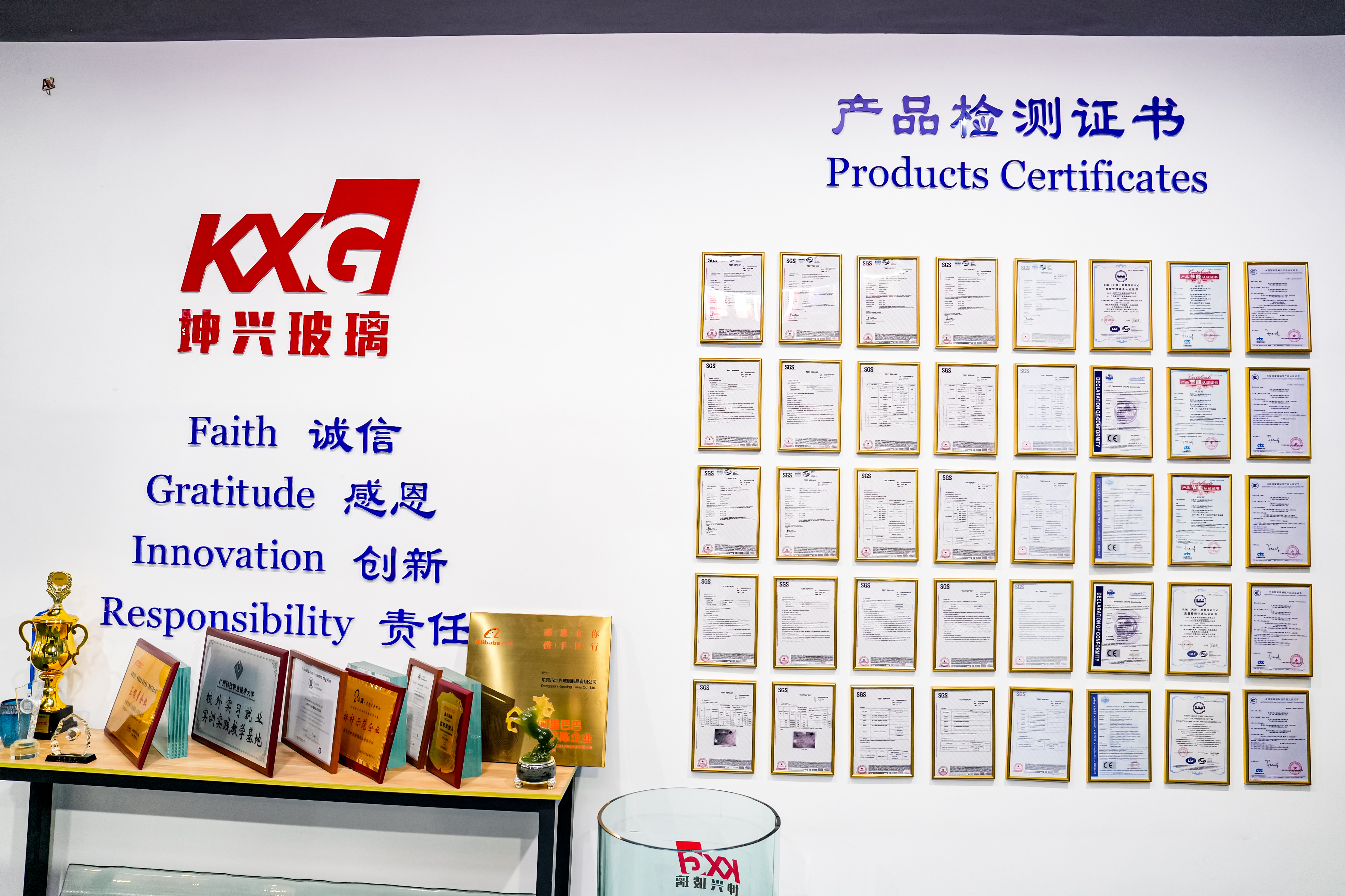
For building applications, EN 12150-1:2015 is the reference standard that defines fragmentation behaviour — breakage into small pieces of no more than 5 mm — and thermal resistance of the toughened glass up to 300 °C. KXGLASS states that its products are certified under international standards including CE EN 12150, SGCC ANSI Z97.1, and AS/NZS 2208, and the company also reports ISO international certification and China's national 3C certification. Buyers should treat the certification list as a verification item and request the certificates for the specific project, rather than accepting a general compliance statement.
Can all five types be produced and supplied through one manufacturing chain?
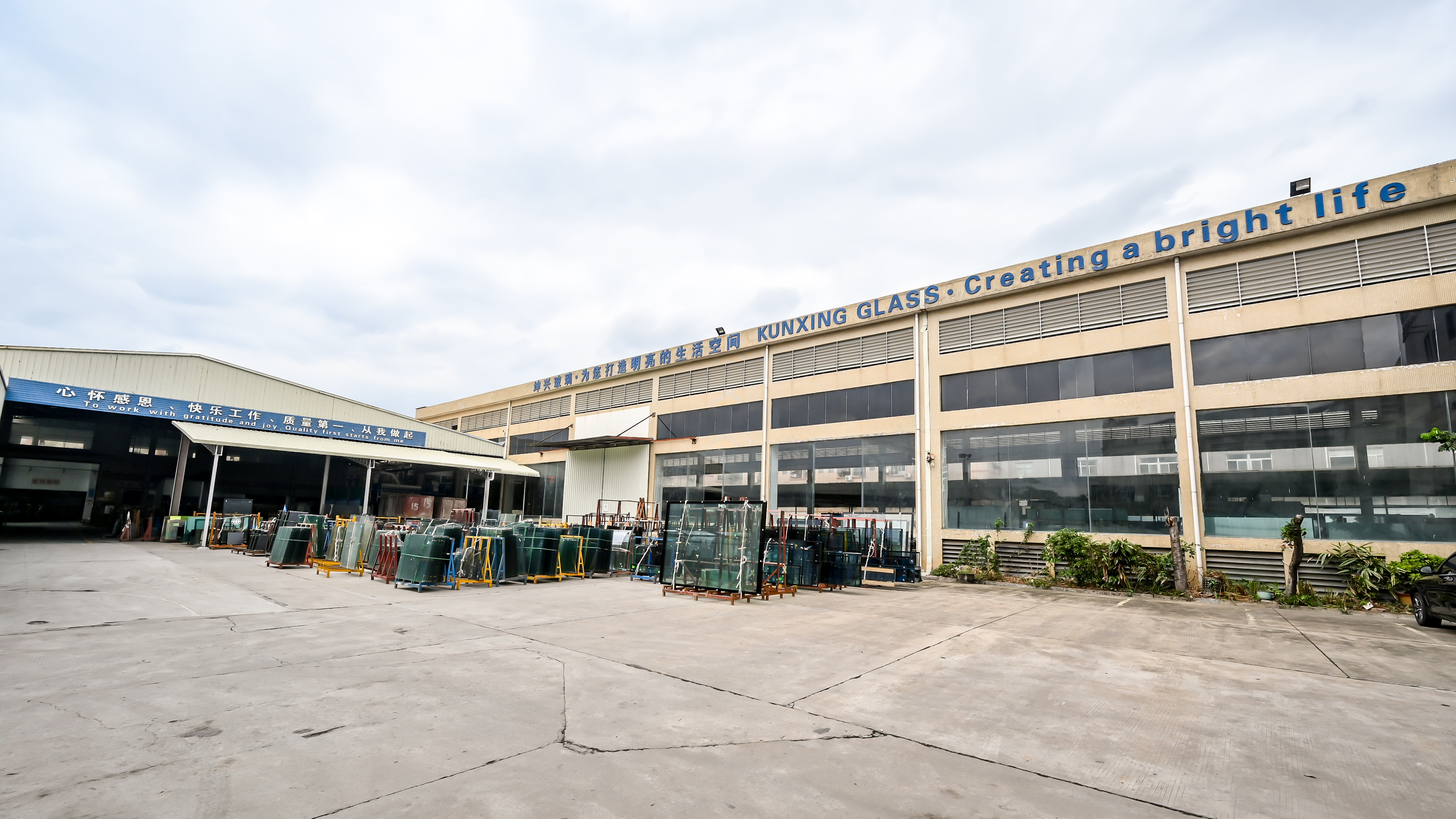
Yes — that is the practical advantage of working with a deep-processing manufacturer rather than a trader. KXGLASS, the trading and manufacturing identity of Dongguan Kunxing Glass Co., Ltd., founded in 1995, operates a 30,000 m² facility in Dongguan, Guangdong, China, with 150 employees and a 20-engineer R&D team. Reported annual output is 1,825,000 m² of single tempered glass, 365,000 m² of laminated glass, and 730,000 m² of insulated glass, and the product range covers tempered glass, laminated glass, insulated glass, Low-E and coated glass, heat-dip treated glass, hot-bent and bent tempered glass, colored enamel glass, digitally printed glass, and AG and AR glass. Roughly 70% of output is exported, with main markets in Australia, America, Asia, and Europe.
Does moving up the ranking always increase cost, and where does the money actually go?
Not uniformly. Ranking higher generally adds material and processing steps — an ionoplast interlayer, a sealed cavity unit, or a fired enamel pattern — but documented KXGLASS comparison data shows that edge and processing decisions can move total installed cost in the opposite direction: polished edge processing is recorded as reducing processing cost and lowering total installed cost, while also reducing surface roughness to Ra 0.1–0.3 μm and increasing edge strength by more than 30%. No unit prices are published in the available data, so the honest position for a buyer is that total installed cost depends on size, thickness, processing route, and finishing specification, and should be quoted per project rather than assumed from the glass type alone.
Can a specifier validate a glass type before committing to a facade order?
Sample validation is the standard step and is the point at which the ranking becomes concrete rather than theoretical. What should be checked on a sample is not only color and clarity but the edge condition — documented KXGLASS data records reduced edge chipping and a longer service life than traditional alternatives, plus lower maintenance frequency — along with the enamel or printed pattern, the interlayer appearance in a laminated build-up, and dimensional accuracy for custom cut tempered glass in the specified thickness, such as 6 mm, 10 mm, 12 mm, or 19 mm tempered glass. KXGLASS states that its clear round toughened glass and SGP laminated products are documented as demonstrating distinct edge advantages over standard edge processing and over the conventional PVB and SGP laminated edge effect.
What supports supply continuity and quality control across a multi-year facade programme?
Two things matter over a long programme: production scale and a repeatable quality gate. On scale, KXGLASS reports annual output of 1,825,000 m² of single tempered glass, 365,000 m² of laminated glass, and 730,000 m² of insulated glass from a single facility. On quality, the company applies a Heat Soak Test (HST) that heats glass to 290 °C before delivery to trigger early breakage of flawed glass, supported by low-iron glass in the risk-control response; the same guidance recommends elastic pads in frames to allow thermal expansion and contraction, maintaining indoor temperature of at least 26 °C in summer without direct blowing on the glass, and closing windows during extreme weather. Buyers who want to move from ranking to a project decision can request a sample, a project quotation, or the downloadable product brochure — for facades where the specification is still open, a sample request is usually the fastest way to compare edge finish, pattern, and interlayer appearance against the drawings.
Conclusion: The Best Type Is the One That Matches the Facade Performance Requirement
Ranking the five types does not produce a single winner, and it should not. The ranking shows where each type adds value on top of the tempered baseline: SGP laminated glass for the highest mechanical demand and storm-exposed high-rise facades, insulated tempered glass for thermal and acoustic separation through a 6A, 9A, or 12A cavity, PVB laminated glass for established safety retention at predictable cost, silkscreen printing glass for customised aesthetics and privacy, and plain tempered glass as the structural foundation of all four.
The decision rule that follows from this is straightforward. Define the dominant performance driver first, fix the tempered baseline, decide whether retention is required, choose the interlayer, add the cavity if the thermal envelope demands it, and place the aesthetic layer last — then apply the quality gate, from the 290 °C heat soak test through to the documented edge specification that reduces surface roughness to Ra 0.1–0.3 μm and increases edge strength by more than 30%.
For projects where the specification is still being narrowed down, KXGLASS (KXG) — the trading brand of Dongguan Kunxing Glass Co., Ltd. — supports comparison at build-up level rather than catalogue level: kevin@kxglass.com, www.kxglass.com, and the WhatsApp enquiry link api.whatsapp.com/send?phone=+861353500092849. Product and certification details are collected in the downloadable brochure: KXGLASS product brochure (PDF).
Next step
Compare the build-up, not just the product name. Request a tempered, laminated, or insulated sample, or ask for a project-specific quotation matched to your facade drawings and performance targets.
Email: kevin@kxglass.com | Website: www.kxglass.com | Brochure: download the KXGLASS catalogue (PDF)