
What Is Tempered Glass? Properties, Types, and the 2026 Buyer’s Guide
What Is Tempered Glass? Properties, Types, and the 2026 Buyer's Guide
Tempered glass is widely used in building doors, windows, facades, and partition systems.
Tempered glass is a type of safety glass designed for the building industry. It is produced by thermal treatment that increases its mechanical strength and changes its breakage pattern: when broken, it fractures into obtuse-angle grains rather than sharp shards. This behavior is the core reason why tempered glass is specified for doors, windows, curtain walls, and other architectural applications where human impact is possible.
The global tempered glass market was valued at USD 112.21 billion in 2024 and is projected to reach USD 159.27 billion by 2033, according to Grand View Research. Asia Pacific dominated the market in 2024 with a revenue share of 59.9%, driven by urbanization and infrastructure development. Plain tempered glass accounted for 64.5% of market revenue in 2024, reflecting its widespread use in construction and automotive sectors.
Defining Tempered Glass: What Makes It Different
Tempered glass is classified as a safety glass. Unlike annealed glass, which breaks into large jagged shards, tempered glass undergoes controlled thermal processing that creates balanced compressive and tensile stresses. When broken, it fragments into small, obtuse-angle grains that are significantly less likely to cause serious injury.
For building projects, the practical difference is measurable:
- Intensity: 150 MPa
- Surface stress: 95 MPa
- Thermostability range: 250–320°C
- Breakage pattern: obtuse-angle grains
- Spontaneous breakage: may occur occasionally
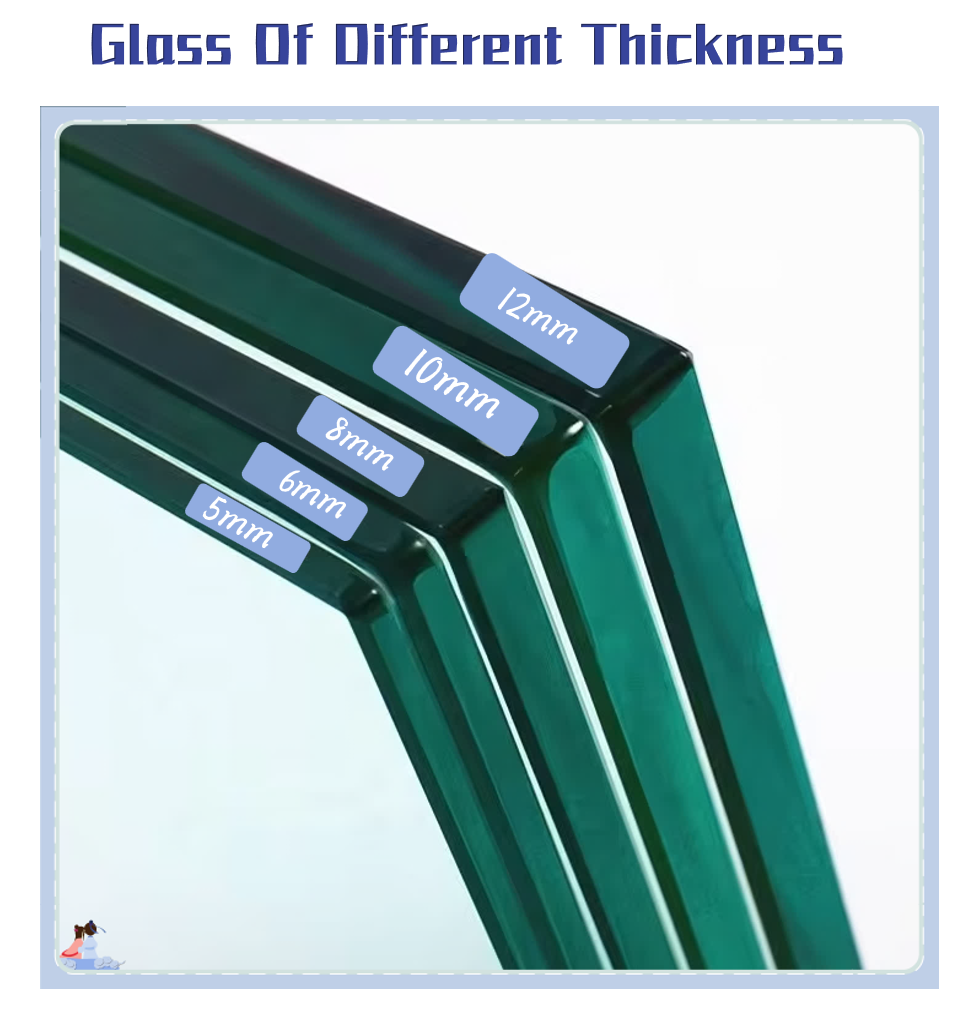
KXG (Kunxing Glass) supplies tempered glass in thicknesses of 4mm, 5mm, 6mm, 8mm, 10mm, 12mm, 15mm, 19mm, 22mm, and 25mm. Common buyer search terms such as 6mm tempered glass, 10mm tempered glass, 12mm tempered glass, and 19mm tempered glass correspond to the standard range used in door systems, window systems, curtain walls, and partition systems.
How Tempered Glass Is Made: From Float Glass to Safety Glass
Tempered glass is typically processed from base float glass. The term "tempered float glass" is often used in procurement documents to indicate that the starting material is high-quality float glass with consistent flatness and optical quality.
The tempering process involves heating glass to near-softening temperature and then rapidly cooling the surfaces with air jets. This creates a state of compression on the surface and tension in the core. The result is a product with significantly higher mechanical strength than annealed glass of the same thickness.
For demanding architectural projects, tempering is not the final step. Buyers may specify additional processes to create specialized variants. Understanding the full product family matters because each variant serves a different functional role.
The Temperd Glass Product Family: Types and Applications
Door and Window Tempered Glass
Door tempered glass and window tempered glass are among the most common procurement items in the building glass category. These products are used in residential and commercial buildings, often in combination with aluminum or steel frames. Typical requirements include impact resistance, safety fragmentation, dimensional accuracy, and clean edges.
Frosted Tempered Glass
Frosted tempered glass combines thermal safety with privacy protection. The frosting process creates a translucent surface that diffuses light. It is commonly used in partition systems, bathroom windows, and office interiors. In the building glass application scenario documented by KXG, frosting is listed as a special requirement, along with tinted glass and silkscreen printing.
Heat Resistant Tempered Glass
Tempered glass offers improved thermal stability compared with annealed glass. KXG specifies a thermostability range of 250–320°C for its tempered glass. This property makes heat resistant tempered glass suitable for locations exposed to significant temperature differentials, such as large facades, spandrels, and areas near heating equipment.
Insulated Tempered Glass and Double Glazed Tempered Glass
Insulated glass, also called double glazing glass, combines two or more glass panes separated by a spacer system to create an air gap. KXG produces insulated glass with spacer widths of 6A, 9A, and 12A. The functional benefits include heat insulation, noise insulation, and lower self-weight of building envelopes.
When the outer panes are tempered, the resulting product is often described as double glazed tempered glass or insulated tempered glass. This combination addresses two requirements simultaneously: safety and energy performance.
Low Iron Tempered Glass
Low iron tempered glass uses glass with reduced iron oxide content to improve light transmittance and reduce the greenish tint visible at the edges of standard float glass. It is frequently specified for storefronts, display windows, and applications where true color representation is important.
Tempered Laminated Glass and Laminated Tempered Glass
Laminate products integrate additional safety and security features. KXG supplies both PVB laminated glass and SGP laminated glass. Available PVB thicknesses are 0.38mm, 0.76mm, 1.14mm, and 1.52mm. Glass thickness combinations include 5mm+5mm, 6mm+6mm, and 8mm+8mm.
SGP laminated glass is characterized by high mechanical strength, good impact resistance, and anti-typhoon performance. When the glass plies are tempered before lamination, the result is laminated tempered glass: a product that retains the safety breakage pattern of tempered glass while gaining the post-breakage retention provided by the interlayer.
Tinted Tempered Glass
Tinted tempered glass is produced by adding colorants to the glass melt or applying a colored interlayer. It reduces solar heat gain and glare while providing a distinctive architectural appearance. Tinted glass is listed as a special requirement in KXG's building application documentation.
Bent, Curved, and Beveled Tempered Glass
Architectural projects sometimes require non-flat configurations. Bent tempered glass and curved tempered glass are used in facades, canopies, staircases, and observation decks. Beveled tempered glass features angled edges for decorative framing applications, commonly found in doors, mirrors, and interior partitions.
Custom Cut Tempered Glass
Because tempering occurs after cutting and processing, custom cut tempered glass must be manufactured to the final required size before the thermal treatment. KXG supports custom processing, which allows buyers to specify dimensions, thickness, edge treatment, and additional surface treatments. This is distinct from cutting annealed glass on site, which is not possible for fully tempered glass without destroying its safety properties.
Standards Governing Tempered Glass in Building Projects
In Europe, tempered glass for buildings must comply with EN 12150-1. This standard defines performance requirements including fragmentation characteristics: when broken, the glass must shatter into small pieces with dimensions not exceeding 5mm. The standard also addresses thermal resistance up to 300°C.
KXG products meet several international standards:
- European CE / EN 12150
- Australian AS/NZS 2208
- American SGCC certification
- Chinese national 3C certification
- ISO international certification
Buyers searching for "en 12150 tempered glass" are typically looking for European-certified product suitable for projects in the EU, Middle East, or other regions that reference European standards in tender documents.
Architectural Applications and Project Systems
Tempered glass is used across a wide range of building systems. KXG documents the following project types:
- Window and door systems
- Curtain walls
- Partition systems
- Sound insulation systems
Representative operating environments include outdoor building facades, residential and commercial buildings, and subway doors. These environments share two demanding conditions: long-term outdoor exposure and continuous 24/7 load-bearing operation.
The functional roles of glass in these environments include:
- Safety
- Energy saving
- Structural support
- Anti-slip properties
- Sound insulation
- Decoration
- Privacy protection
For specialized applications, buyers may require triple laminated tempering, triple insulating construction, anti-slip surface treatment, heat soak testing, high load-bearing capacity, custom processing, energy efficiency, frosting, tinted glass, silkscreen printing, impact resistance, and privacy protection.
How to Choose the Right Tempered Glass Variant
The selection process depends on the functional priorities of the project. The following decision framework can help buyers move from project requirements to a specific product specification.
| Project Priority | Recommended Product Direction | Key Consideration |
|---|---|---|
| Safety-critical doors and windows | Tempered glass, 6mm to 12mm | Safety fragmentation, surface stress, edge quality |
| Energy performance and thermal insulation | Insulated glass / double glazed tempered glass | Cavity width (6A, 9A, 12A), Low-E coating compatibility |
| Privacy and light diffusion | Frosted tempered glass | Frosting pattern, transmittance, cleaning requirements |
| High-security or overhead glazing | Laminated tempered glass (PVB or SGP) | Interlayer thickness, post-breakage retention |
| Facades and curved architectural elements | Bent / curved tempered glass | Radius constraints, fabrication tolerances |
| Color and solar control | Tinted tempered glass | Tint consistency, heat gain reduction |
Buyers should also evaluate edge and surface finishing. Beveled tempered glass and polished edge options affect both safety and visual quality. Projects with visible glass edges often require consistent edge treatment to prevent micro-cracks and improve appearance.
KXG as a Manufacturing Source: Capability Profile
Dongguan Kunxing Glass Co., Ltd. (KXG) is a glass manufacturer established in 1995, located in Dongguan, within the Guangdong-Hong Kong-Macao Greater Bay Area. The company specializes in the deep processing of architectural and specialty glass, integrating production, sales, and service.
Relevant manufacturing capabilities include:
- Factory area: 30,000 square meters
- Workforce: approximately 150 staff
- R&D team: 20 engineers
- Main products: clear tempered glass, laminated glass, insulated glass
- Export share: approximately 70%
- Main markets: Australia, America, Asia, Europe
Annual production capacity: 1,825,000 square meters of single tempered glass, 365,000 square meters of laminated glass, and 730,000 square meters of insulated glass.
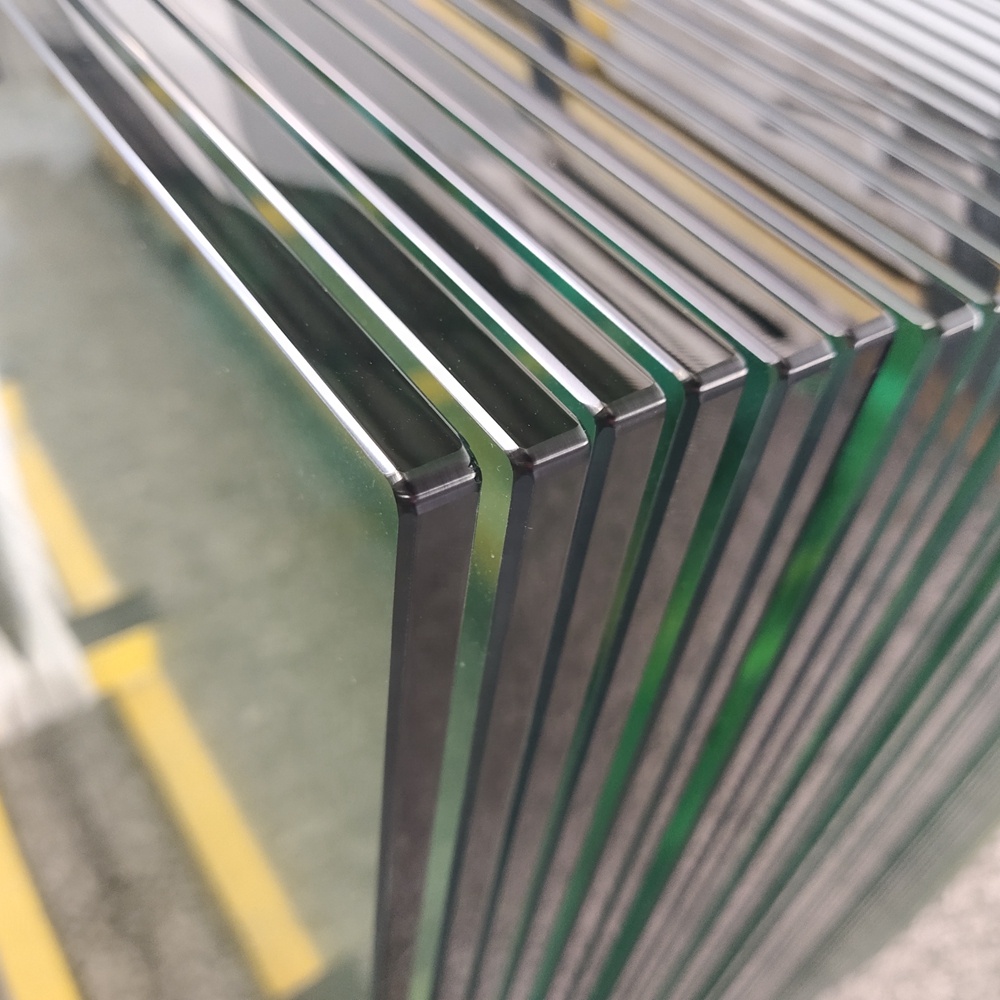
Advanced automated production equipment supports consistent tempered glass quality.
Why Buyers Should Distinguish Tempered Glass from Laminated or Insulated Glass
A frequent source of confusion in procurement is the difference between tempered, laminated, and insulated glass.
Tempered glass is a single pane that has been thermally strengthened. Its primary value is safety: it resists impact better than annealed glass, and when it breaks, it forms obtuse-angle grains.
Laminated glass is a composite of two or more glass plies bonded with an interlayer such as PVB or SGP. Its primary value is retention: even when broken, the interlayer holds the glass in place. PVB laminated glass is widely used in overhead glazing and security applications. SGP laminated glass offers high mechanical strength, good impact resistance, and anti-typhoon performance.
Insulated glass is an assembly of two or more panes separated by a spacer, creating an air gap. Its primary value is thermal and acoustic insulation. KXG supplies insulated glass with 6A, 9A, and 12A spacer widths. The functional benefits include heat insulation, noise insulation, and lower self-weight of building envelopes.
A glazing unit may combine all three technologies. For example, a double glazed unit with tempered laminated glass as one pane provides safety, retention, and insulation in a single assembly. When developing a specification, buyers should state each required function explicitly rather than relying on the term "tempered glass" alone.
Procurement Checklist for Tempered Glass Projects
- Confirm the applicable safety standard for your region: EN 12150, AS/NZS 2208, SGCC, or 3C.
- Specify the finished glass thickness: common options include 4mm, 5mm, 6mm, 8mm, 10mm, 12mm, 15mm, 19mm, 22mm, and 25mm.
- Choose base material clarity: standard float glass or low iron tempered glass.
- Define edge and surface finish: beveled, polished, frosted, tinted, or silkscreen printed.
- Decide whether lamination is required for post-breakage retention.
- Decide whether an insulating assembly is required for thermal or acoustic performance.
- Indicate whether heat soak testing is required to reduce the risk of spontaneous breakage from nickel sulfide inclusions.
- Confirm whether custom sizes, curved shapes, or special load-bearing requirements apply.
- Prepare handling equipment: cut-resistant gloves, forklifts or pallet jacks, handheld glass suction pads, safety helmets, safety shoes, and goggles.
Frequently Asked Questions
Does tempered glass comply with EN 12150 for building projects?
Yes. In Europe, tempered glass for buildings must comply with EN 12150-1, which defines fragmentation characteristics and thermal resistance. Under this standard, the glass must shatter into small pieces with dimensions not exceeding 5mm, and thermal resistance is specified up to 300°C. KXG products meet CE / EN 12150, along with AS/NZS 2208 and SGCC certification.
What thicknesses of tempered glass are available?
KXG supplies tempered glass in 4mm, 5mm, 6mm, 8mm, 10mm, 12mm, 15mm, 19mm, 22mm, and 25mm. The selection depends on the application: standard door and window systems commonly use 6mm to 12mm, while heavy-duty or larger panels may require 15mm, 19mm, or 25mm. Custom thickness combinations are also possible for laminated units such as 5mm+5mm or 8mm+8mm.
Can tempered glass be customized for a specific project?
Yes. Custom processing is an important part of architectural glass supply. Because tempering must be performed after cutting and edge processing, custom cut tempered glass must be manufactured to the final required dimensions in advance. Buyers can specify size, thickness, frosting, tint, silkscreen printing, beveled edges, and other special requirements. KXG supports custom processing for building projects.
How does tempered glass compare with laminated glass?
Tempered glass is a single pane that breaks into obtuse-angle grains for safety. Laminated glass consists of two or more panes bonded with an interlayer such as PVB or SGP. Laminated glass provides post-breakage retention, meaning broken glass remains attached to the interlayer. The two are often combined: laminated tempered glass provides both safety fragmentation and post-breakage retention. SGP laminated glass offers high mechanical strength, impact resistance, and anti-typhoon performance.
What is the typical lead time for a tempered glass order from KXG?
Lead time depends on the specification. Standard thicknesses and simple sizes require less production time, while custom laminated, insulated, bent, or heat-soak-tested units require additional processing stages. To obtain an accurate schedule for your project, contact KXG by email at kevin@kxglass.com or call +86 13500092849.
Conclusion
Tempered glass is the default safety glazing material for modern building systems. Its controlled fragmentation behavior, mechanical strength of 150 MPa, and thermal stability of 250–320°C make it suitable for doors, windows, facades, partitions, and specialized structures. The product family now includes frosted, tinted, low iron, insulated, laminated, bent, beveled, and custom cut variants, giving buyers the flexibility to meet both safety and performance targets.
Procurement success depends on matching each project requirement to the correct variant and verifying that the supplier can deliver the required standard, thickness, finishing, and processing capability. KXG, established in 1995, combines a 30,000-square-meter facility, an R&D team of 20 engineers, and international certifications with production capacity of more than 1.8 million square meters of single tempered glass per year.
Looking for a detailed specification or project quotation?
Download the KXG company brochure to review capabilities, products, and certifications.
Email: kevin@kxglass.com | Tel/WhatsApp: +86 13500092849