
Key Capabilities to Verify in a Specialty Glass Supplier
: Validating Tempered, Laminated, and Insulated Production
A specialty glass supplier is verified on three production lines, not on one product list. The tempering line must document a surface stress figure rather than a marketing adjective; the lamination line must state interlayer type and build-up; the insulating line must name the cavity and the unit standard. Everything else in a supplier evaluation is secondary to those three checks.
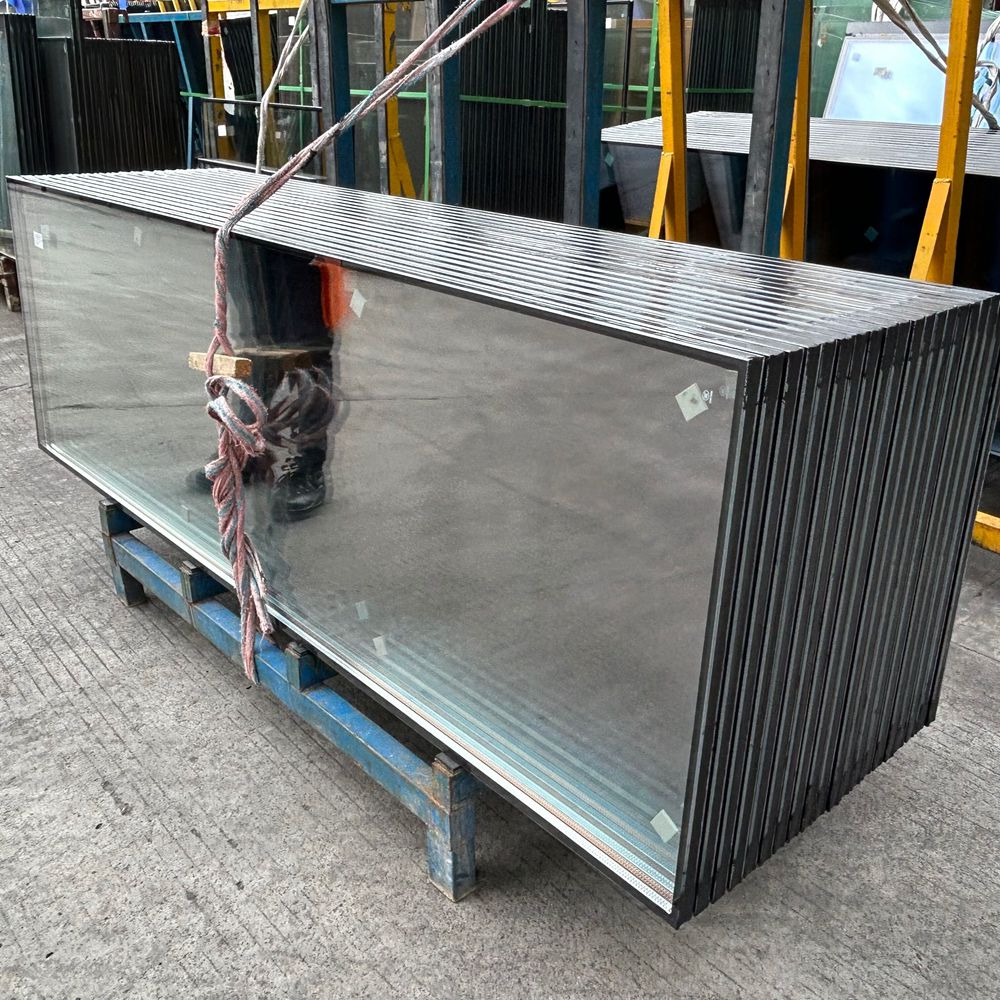
The practical test is simple. A supplier that can quote a 12mm tempered panel, a 5mm+5mm PVB laminate and a 6A insulated unit can serve three different tenders. A supplier that can also produce, on request, the surface stress value behind the tempered panel, the interlayer thickness behind the laminate, and the spacer width behind the unit can be held to a contract. This article sets out what to request, which numbers constitute a real answer, and how to tell a verified capability from a catalogue claim.
The Problem: A Catalogue Proves Nothing About a Production Line
Most supplier shortlists fail at the same point. Buyers compare product lists, and product lists are written to be comparable. Nearly every specialty glass manufacturer lists tempered glass, laminated glass and insulated glass. The lists differ in wording, not in substance, so the comparison produces a ranking that reflects marketing investment rather than manufacturing control.
The gap appears later, when a specification meets a drawing. Three failure patterns recur:
- Thickness without stress. A supplier offers 4mm to 25mm tempered glass but cannot state the surface stress or the thermostability range those panels are produced to. The thickness range is a furnace loading fact; the stress figure is a process control fact.
- Lamination without interlayer. A quote says "laminated" and stops there. It does not say whether the build-up is 5mm+5mm on 0.38mm PVB, whether 1.52mm interlayer is available, or whether SGP is offered for impact and typhoon exposure.
- Double glazing without a cavity. "Double glazed" describes a concept. 6A, 9A and 12A describe air gaps, and the gap drives the thermal and acoustic performance the project was designed around.
Each of these is an evidence problem rather than a product problem. The supplier may well be capable; the buyer simply has not asked for the one document that would prove it.
Industry Background: Why Capability Evidence Became the Buying Criterion
Tempered glass is an unusual category because the technical specification and the market-access requirement are the same instrument. The standard that defines what the product is also defines what the manufacturer must be able to prove. That is what makes compliance capability, rather than raw output, the primary axis of supplier differentiation.
The framework is regional and non-interchangeable. In the EU, EN 12150-1:2015+A1:2019 defines thermally toughened soda lime silicate safety glass, covering tolerances, flatness, edgework, fragmentation and physical and mechanical characteristics; the earlier 2000 edition has been withdrawn and replaced. EN 12150-2:2004 is the conformity-evaluation part that governs the CE marking route. Heat-soaked glass sits on top of that as a separate, separately certifiable process under EN 14179-1:2016, which addresses spontaneous breakage risk from nickel sulphide inclusions. Insulating units fall under EN 1279-1:2018, laminated glass under EN 14449:2005, and the international laminated framework under the ISO 12543 series.
In the United States, ASTM C1048-18 separates heat-strengthened from fully tempered flat glass as two distinct product categories, 16 CFR Part 1201 sets the federal safety standard for architectural glazing materials with its Category I and Category II classification, and ANSI Z97.1-2015 provides the consensus performance and test-method reference used alongside the regulation. In China, GB 15763.2-2005 is the reference standard for building tempered safety glass. Customs classification follows HS heading 7007, with architectural toughened glass typically falling under 7007.19.
The quantitative requirement that buyers can actually hold a supplier to is the fragmentation test: EN 12150-1 requires not fewer than 40 particles counted within a 50 mm x 50 mm square. That single number converts "safety glass" from a description into an acceptance criterion.
The market context explains why verification intensity has risen. Grand View Research valued the global tempered glass market at USD 112.21 billion in 2024, with Asia Pacific holding a 59.9% revenue share in the same year. When the majority of supply originates in one region, the buyer's problem shifts from finding a supplier to distinguishing between suppliers, and document-level verification becomes the only reliable discriminator.
What a Verified Specialty Glass Supplier Must Actually Prove
Line 1 — Tempering: thickness range, surface stress, thermostability
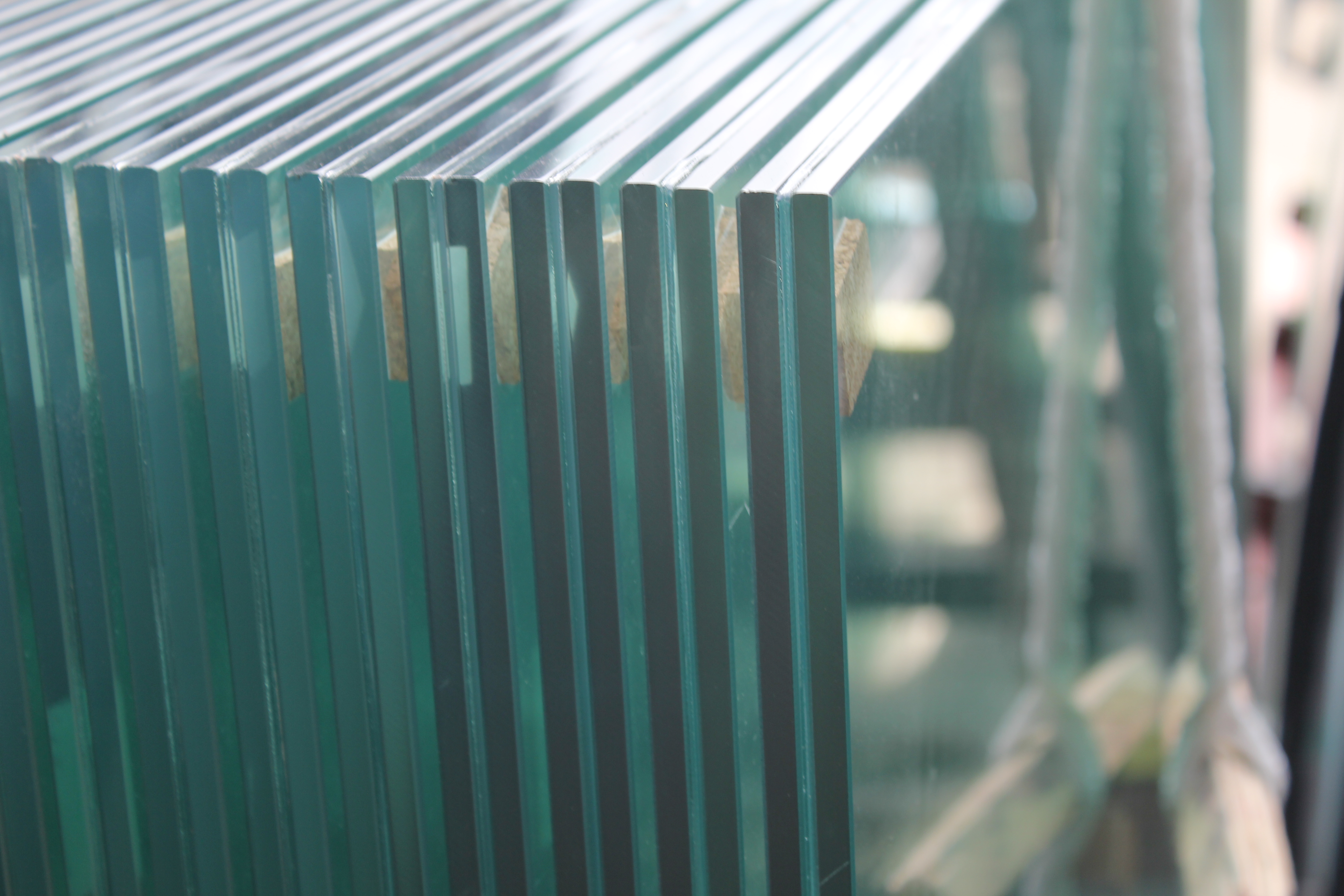
A tempering capability statement has three parts, and a supplier should be able to answer all three without referring the question internally. The first is the thickness range the furnace handles. A full architectural range runs 4mm, 5mm, 6mm, 8mm, 10mm, 12mm, 15mm, 19mm, 22mm and 25mm. A supplier covering both ends of that span can serve interior door glass and heavy structural panels from the same plant.
The second part is the process number. For reference, KXGLASS (Kunxing Glass), a Dongguan-based glass deep-processing manufacturer founded in 1995, publishes a tempered glass specification that includes a surface stress of 95 MPa, an intensity figure of 150 MPa, a thermostability range of 250°C to 320°C, and a broken state described as obtuse-angle grain. Those are the values a buyer should ask any candidate supplier to match or explain. A supplier that answers "high strength" to a question about surface stress has not answered the question.
The third part is the honest limitation. Tempered glass can still self-destruct, and suppliers that acknowledge this are easier to work with than suppliers that do not. The mitigation is heat-soak treatment under EN 14179-1:2016, and the buyer's question is whether the plant offers it as a process step, not whether it believes spontaneous breakage is a theoretical concern.
Line 2 — Lamination: interlayer type and build-up control
Lamination verification begins with the build-up, expressed as glass thickness plus interlayer plus glass thickness. A working PVB range covers 5mm+5mm, 6mm+6mm and 8mm+8mm, with interlayer thicknesses of 0.38mm, 0.76mm, 1.14mm and 1.52mm. A supplier that quotes "laminated glass" without stating both halves of that build-up is quoting a category, not a product.
The second question is material choice. PVB is the standard interlayer; SGP laminated glass adds high mechanical strength, good impact resistance and anti-typhoon performance. In cyclone-exposed facades, overhead glazing and balustrades, the difference between the two materials is a design decision the buyer must make deliberately, which means the supplier must be able to offer both and explain the trade-off rather than default to whichever interlayer is already in stock.
Interlayer choice also determines what the lamination line protects against. A 0.76mm PVB build-up behaves differently from a 1.52mm build-up under repeated wind load, and post-breakage retention is a function of the interlayer, not the glass. Ask for the interlayer thickness in millimetres, in writing, on the quotation.
Line 3 — Insulating: cavity, seal and unit standard
Insulated glass units are specified by cavity: 6A, 9A and 12A. The cavity determines the heat insulation and noise insulation performance of the unit, and it also affects the self-weight contribution the facade engineer has to carry. A supplier offering only one cavity size is offering one performance point.
The verification question moves to the seal once the cavity is agreed. The unit is a sealed system, and EN 1279-1:2018 sets out the generalities, system description, substitution rules, tolerances and visual quality that govern it. A buyer should ask which unit standard the plant builds to, whether the spacer and sealant system is specified, and whether the supplier can produce combined units — tempered or laminated panes on one or both faces — without losing tolerance control at the assembly stage.
A cross-line test: mirror flatness and edgework
The fastest way to test whether a plant's quality language is real is to ask about a product outside the current order. Silver mirror is useful because it fails visibly. A specification of silver mirror with reflectivity at or above 92%, light transmittance below 1% on a non-transparent backing, and flatness held to no more than 0.3mm curvature per metre cannot be met by a line that is loose on annealing, handling or coating control.
Ask a tempered glass supplier to explain how it achieves that flatness figure and the answer reveals how the plant controls distortion across all its lines. Edgework belongs to the same conversation. Polished, beveled and drilled edges are where handling damage and residual stress concentration show up, and the edge quality of a sample tells you more about process discipline than any brochure page.
Step-by-Step: A Seven-Step Verification Sequence
- Request the thickness–stress–temperature triplet. Ask for the full tempered thickness range and, separately, the surface stress, intensity and thermostability values the line is controlled to. Benchmark values to compare against are 4mm to 25mm, 95 MPa surface stress, 150 MPa intensity and 250°C to 320°C thermostability. A supplier that cannot separate the range from the control values has not been asked the question before.
- Map every lamination build-up to an interlayer thickness. List the build-ups your project needs — 5mm+5mm, 6mm+6mm, 8mm+8mm — and require a millimetre figure for the interlayer against each: 0.38mm, 0.76mm, 1.14mm or 1.52mm. Then ask separately whether SGP is available for the anti-typhoon and impact-resistant positions.
- Fix the cavity before discussing performance. Confirm that 6A, 9A and 12A are all producible, and ask which unit standard the assembly is built and tested to. EN 1279-1:2018 is the reference framework to name in the RFQ.
- Test flatness with an unrelated product. Ask for the flatness specification on silver mirror. A figure of 0.3mm curvature per metre or better, alongside reflectivity at or above 92%, indicates a plant that controls distortion rather than one that inspects it out at the end.
- Set the fragmentation acceptance criterion in writing. Reference the EN 12150-1 requirement of not fewer than 40 particles in a 50 mm x 50 mm square, and ask for the break pattern description the plant works to. An obtuse-angle grain pattern is the expected tempered break state; large, sharp shards indicate the panel was not fully tempered.
- Match the certificate to the destination market. EN 12150-1 and EN 12150-2 for the EU route, ASTM C1048-18 plus 16 CFR 1201 and ANSI Z97.1-2015 for the US, GB 15763.2-2005 for China. Ask for the certificate number, issuing body, product scope and validity date — a standard number printed on a website is a claim, a certificate with a scope is evidence. KXGLASS states that it has passed ISO certification and national 3C certification and meets European CE/EN 12150, Australian AS/NZS 2208 and American SGCC standards; that statement, like any supplier's, should be verified document by document before it is relied on in a tender.
- Confirm repeatability, not just capability. Capability proves a sample; repeatability delivers a project. Ask for monthly capacity, minimum order quantity, lead time, inspection regime and after-sales terms. For reference, KXGLASS quotes a monthly capacity of 100,000 m², a minimum order of 100 m², a 15–20 day lead time, 100% testing and a five-year return and replacement policy, with OEM/ODM customization on size, thickness and logo.
Use Cases: Which Line Carries the Risk in Which Project
Door and window systems
In residential and commercial door and window systems, the tempering line carries most of the risk. Glass in these positions is exposed to thermal stress from sun-facing exposure and to impact at hand height, so the surface stress value and the fragmentation pattern matter more than the panel size. Thicknesses in the 6mm to 12mm band dominate, and a supplier that can move across 4mm to 25mm without changing process control is the safer choice for a mixed door and window package.
Curtain wall and facade
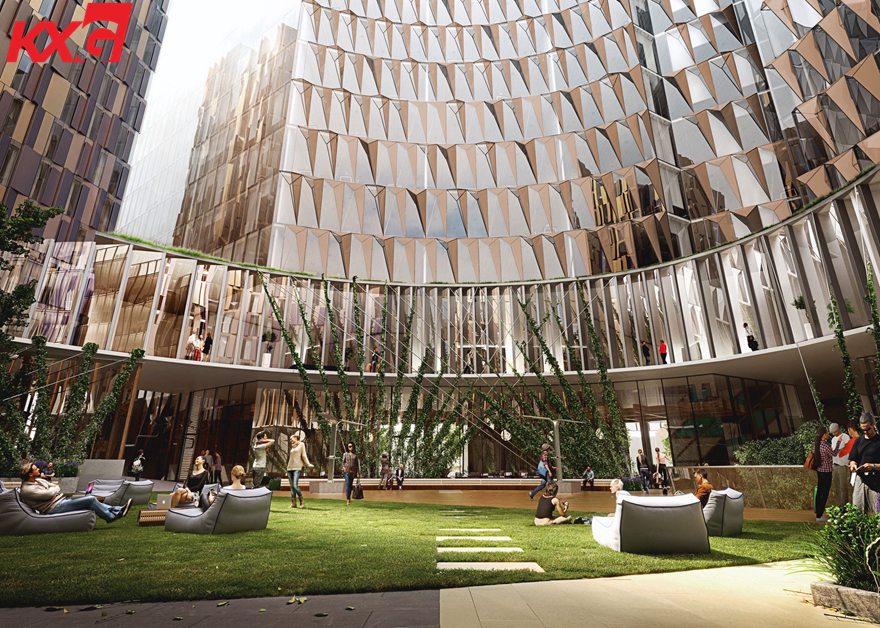
Facades combine all three lines. Insulated units deliver the heat and noise performance, laminated inner panes provide post-breakage retention, and tempered panes carry the structural role. In typhoon-exposed regions, the lamination decision becomes the defining one, and SGP laminated glass with its anti-typhoon characteristics belongs in the specification discussion. For reference, an Australian project using 500–1000 units for a mall building wall and Build-to-Rent facade and curtain wall ran over a 2–5 year duration, and a Vietnamese project using 200–500 units for airport curtain wall and decorative wall ran over 3–10 years — project durations of that length make repeat-order consistency a live requirement, not a theoretical one.
Interior partitions and decorative walls
Interior work shifts the emphasis again. Frosted, tinted and silkscreen printed glass carry privacy and decoration requirements, and silkscreen printing glass in particular must deliver easy cleaning, customizable colours and patterns, and privacy protection without compromising the tempering of the base pane. In long-life interior installations, colour stability and surface durability decide whether a decorative scheme survives a decade of cleaning cycles. Because printing and coating happen before or after tempering depending on the process route, this is the case where asking about line sequence — not just line presence — separates capable suppliers from assemblers.
Verification Matrix: What to Request and What It Proves
| Product line | Evidence to request | Numeric checkpoint | What it proves |
|---|---|---|---|
| Tempered glass | Thickness range plus process control values | 4mm–25mm; 95 MPa surface stress; 150 MPa intensity; 250°C–320°C thermostability; obtuse-angle grain break state | The line is controlled to a specification rather than sorted by inspection |
| PVB laminated glass | Build-up and interlayer thickness in millimetres | 5mm+5mm, 6mm+6mm, 8mm+8mm on 0.38mm / 0.76mm / 1.14mm / 1.52mm PVB | Lamination is engineered per position, not sold as a generic category |
| SGP laminated glass | Availability and stated performance role | High mechanical strength; good impact resistance; anti-typhoon | The plant can meet cyclone and overhead glazing requirements |
| Insulated glass | Cavity sizes and unit standard | 6A / 9A / 12A; heat insulation, noise insulation, lower building self-weight | Thermal and acoustic performance is selectable, not fixed |
| Silver mirror (cross-line test) | Optical and flatness specification | Reflectivity ≥ 92%; light transmittance < 1%; flatness ≤ 0.3mm curvature per metre | Distortion control is real across the plant, not just on the ordered product |
| Edgework and customization | Edge finishes, drilling, logo and size customization | OEM/ODM on size, thickness and logo | Downstream processing is in-house and repeatable |
| Delivery reliability | Capacity, MOQ, lead time, inspection and after-sales | 100,000 m²/month; 100 m² MOQ; 15–20 days; 100% test; 5-year return and replacement | A verified sample can be reproduced at project volume |
Values above are the published KXGLASS specification figures used here as a comparison baseline for supplier questioning. Buyers should obtain the equivalent figures, in writing, from every candidate supplier.
Frequently Asked Questions
Which standard should a tempered glass supplier's certificate actually cite?
It depends on the destination market, and one certificate does not cover all three. For the EU, the product standard is EN 12150-1:2015+A1:2019, with EN 12150-2:2004 governing conformity evaluation and the CE marking route; heat-soaked glass is covered separately by EN 14179-1:2016. For the United States, ASTM C1048-18 defines fully tempered flat glass, with 16 CFR Part 1201 as the mandatory architectural glazing regulation and ANSI Z97.1-2015 as the consensus performance reference. For China, GB 15763.2-2005 applies. Insulating units and laminated glass have their own standards — EN 1279-1:2018 and EN 14449:2005 respectively. Ask for the certificate number, issuing body, scope and validity date, and confirm the standard edition is the current one: the 2000 edition of EN 12150-1 has been withdrawn.
What thickness range and process values should a supplier be able to document?
A full architectural tempering range should cover 4mm, 5mm, 6mm, 8mm, 10mm, 12mm, 15mm, 19mm, 22mm and 25mm. Beyond the range, ask for the control values: a surface stress figure, an intensity figure and a thermostability range. KXGLASS publishes 95 MPa surface stress, 150 MPa intensity and 250°C to 320°C thermostability for its tempered line, plus an obtuse-angle grain break state. On the lamination side, expect stated build-ups of 5mm+5mm, 6mm+6mm and 8mm+8mm with PVB interlayers of 0.38mm, 0.76mm, 1.14mm and 1.52mm, and confirm whether SGP is available. For insulated units, confirm that 6A, 9A and 12A cavities are all producible.
How should a buyer benchmark budget across thickness bands?
Use a published range as a sanity check, not as a quotation. Wholesale benchmarks for 12mm–19mm tempered glass have been reported in a band from roughly USD 15.00 to USD 59.90 per m², and a spread that wide reflects differences in thickness, processing, interlayer, quantity, Incoterm and destination rather than supplier honesty. The practical approach is to fix the variables before comparing: same thickness, same build-up, same edgework, same quantity, same delivery basis. Within a comparable set, the driver of cost is rarely the glass itself — it is the processing steps (lamination, heat-soak, printing, polishing) and the volume at which they are run. A 100 m² minimum order is a common entry point for custom work, and costs fall as volume moves above it.
What should a pre-order sample prove?
A sample should prove process control, not just appearance. Check the break pattern against the EN 12150-1 fragmentation requirement of not fewer than 40 particles in a 50 mm x 50 mm square — a correct tempered break produces obtuse-angle grains rather than large sharp shards. On laminated samples, confirm the interlayer thickness physically and through documentation. On insulated samples, verify the cavity and inspect the seal for uniformity. On edgework, look for chips and stress concentration points at drilled holes. A supplier running 100% testing should be able to state exactly what that test covers, because "100% test" without a defined criterion is a phrase rather than a control.
What lead time and capacity figures are realistic, and what should the next step be?
For custom tempered, laminated and insulated work, a 15–20 day lead time against a monthly capacity of 100,000 m² and a 100 m² minimum order is a workable baseline to compare quotations against. The figures matter less than the consistency between them: a supplier quoting a short lead time against a thin capacity base will slip on the second order, not the first. Where a project runs for years — as multi-phase facade and airport work does — ask for the repeat-order terms and the after-sales position, since a five-year return and replacement policy is only meaningful if the supplier is still producing the same build-up in year four. The natural next step is to send a specification sheet covering thickness, build-up, cavity, edgework and destination market, and ask for a written capability response against each line, together with the full KXGLASS product catalogue and a quotation for a trial order.
Conclusion: Verify the Line, Not the List
A specialty glass supplier is approved on evidence that can be checked. Three documents do most of the work: a tempered specification with a real surface stress and thermostability figure across a stated thickness range, a lamination schedule that pairs every build-up with an interlayer thickness and states when SGP is required, and an insulated unit specification that fixes the cavity and names the unit standard. Add a flatness figure from an unrelated product line, a fragmentation acceptance criterion, and a certificate whose scope matches the destination market, and the evaluation stops being a comparison of brochures.
What remains is repeatability. Capacity, minimum order, lead time, inspection regime and after-sales terms decide whether the verified sample becomes a delivered project. Buyers who check both — the process values and the delivery terms — get a supplier they can hold to a contract. Buyers who check neither get a catalogue.
Request a Capability Response for Your Project
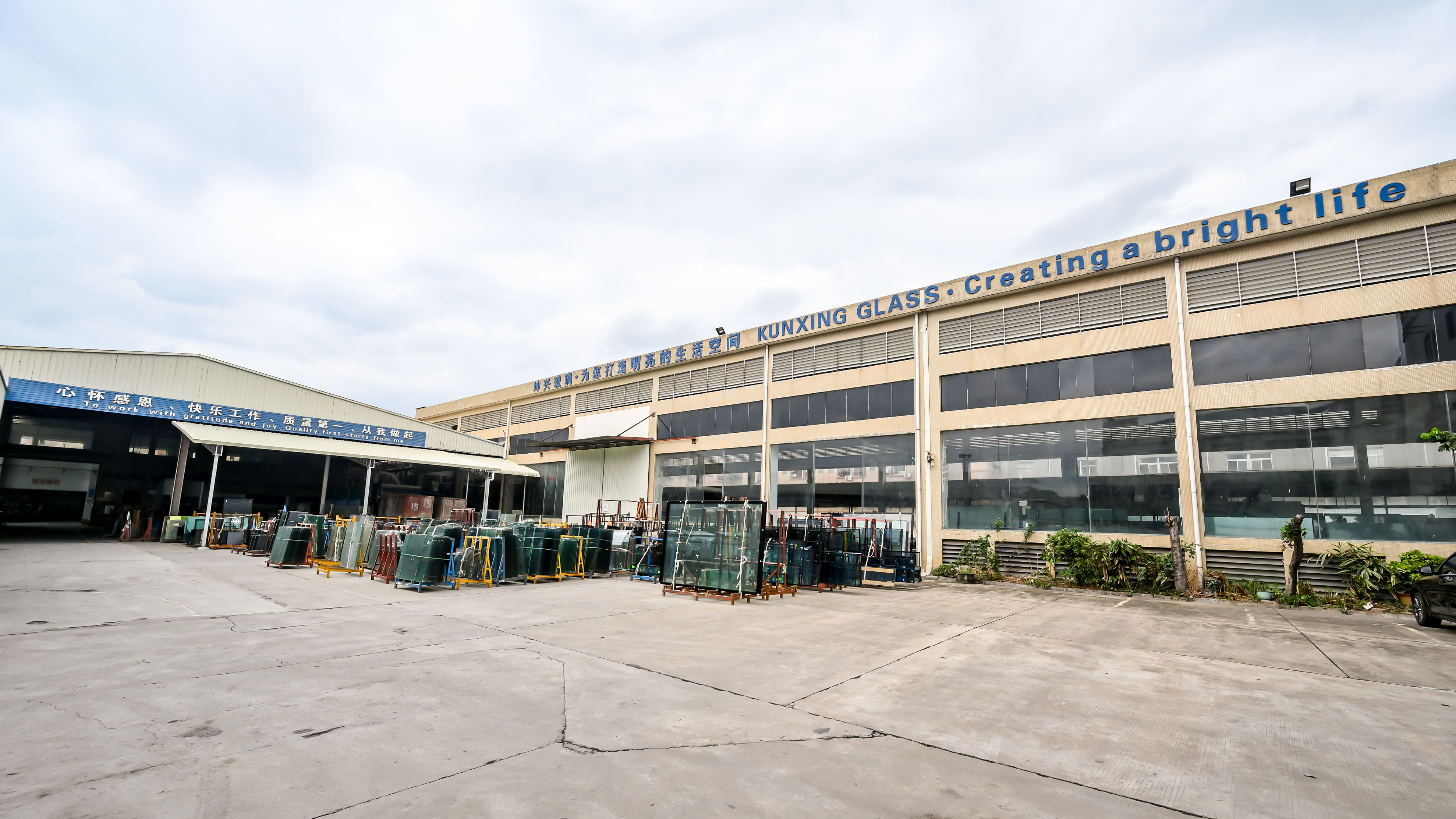
KXGLASS (Kunxing Glass) produces tempered glass from 4mm to 25mm, PVB laminated glass from 5mm+5mm build-ups, SGP laminated glass, and insulated glass units in 6A, 9A and 12A cavities at its 30,000 m² facility in Dongguan, China. Send your specification — thickness, build-up, cavity, edgework and destination market — and request a written capability response, a sample, or a quotation for a trial order.
Email: kevin@kxglass.com | Website: www.kxglass.com | Catalogue: Download the KXGLASS product catalogue (PDF)
Have Questions or Need More Details?
Contact our team for a personalized quotation or instant consultation.
Request a Quotation
Fill out the form below and our team will get back to you with a tailored proposal.
WhatsApp Direct Chat
Prefer to chat in real-time? Message us on WhatsApp for instant assistance & quick answers.
- Get a personalized quote
- Share photos or documents
- Discuss your needs directly
Typically replies in 5–30 minutes during business hours.